The bird in "Hi Ho, Cherry-O" is not a named species singing sweetly in a lyric line. It is a penalty space on the game's spinner. When you land on the Bird, you take two cherries out of your bucket and put them back on your tree. The bird ate your cherries. That is the whole meaning, and it is that simple. If you were searching because someone told you there's a chickadee, a cheel, or some other specific bird named in the words of the chant, that claim is almost certainly coming from a misremembered version or a regional adaptation, not the original game rules.
What Does the Bird Mean in Hi Ho Cherry-O?

Marcus Whitley
12 Apr 2026
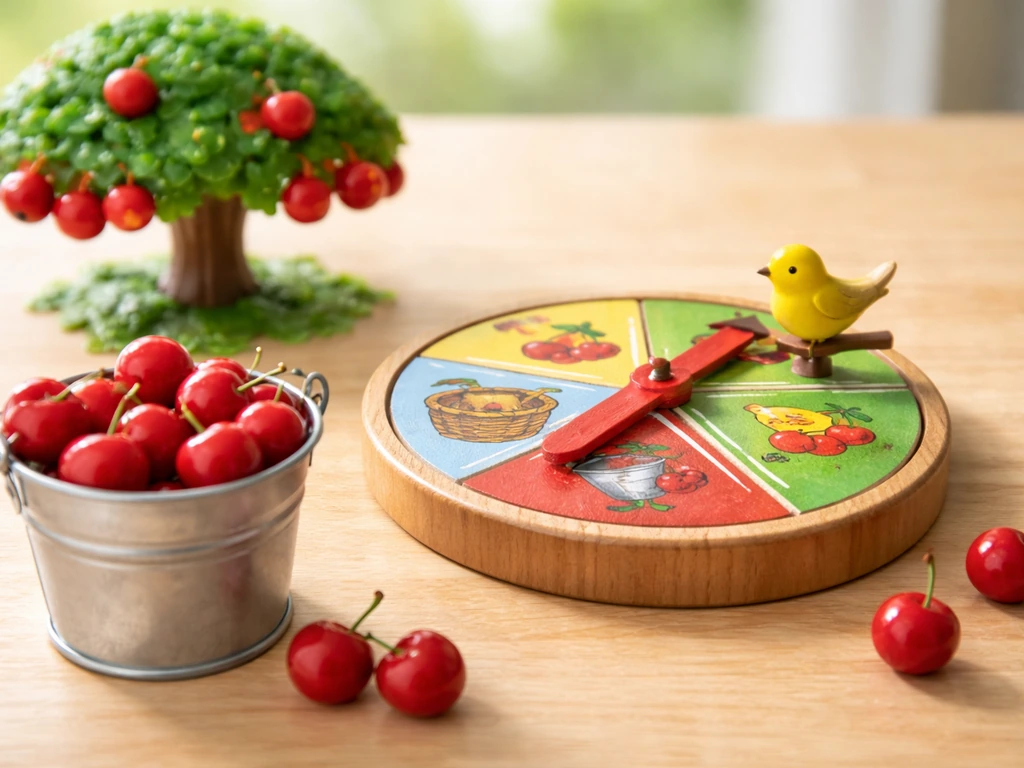
The bird's role in Hi Ho, Cherry-O, plain and simple
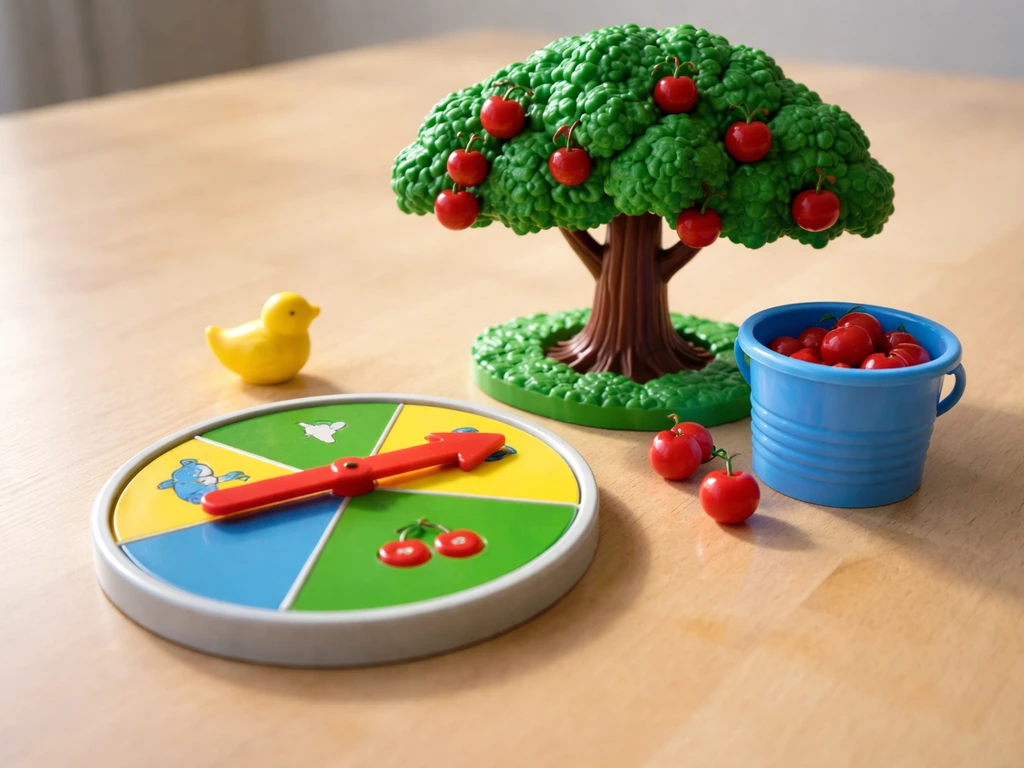
"Hi Ho! Cherry-O" is a board game first published in 1960. The premise is straightforward: players spin a spinner and either pick cherries off a plastic tree into a bucket or lose some. The spinner has several categories, and the Bird is one of the loss categories. The official rules phrasing goes something like this: on Bird or Dog, take two cherries from your bucket and place them back on your tree. The first player to collect all ten of their cherries wins, and they shout "Hi-Ho! Cherry-O!" as the victory call.
So the bird is not a character with a name. It is not described as a robin, a sparrow, or anything else. It is simply "Bird," a hungry intruder that undoes your progress. Its function in the game is identical to the Dog's: both cause you to lose two cherries. The symmetry there is telling. The bird and dog are just two culturally recognizable nuisance animals in the context of a fruit tree, and they both exist to add a setback element to what would otherwise be a pure counting exercise for small children.
What the bird symbolizes in the song and chant
Even though the bird in Hi Ho, Cherry-O is just a rule mechanic, it carries real symbolic weight that connects to a long tradition of bird imagery in children's folk culture. Birds raiding fruit trees is an ancient and universal frustration for farmers and gardeners. Scarecrows exist specifically to address this. The image of a bird eating your harvest is so common and so instantly understood that game designers could drop it in without any explanation, and every child immediately gets it.
In the context of a children's song or chant tied to a picking game, the bird functions as a symbol of unpredictable loss. You were doing well, you had cherries in your bucket, and then the bird came. That is the same symbolic role birds play in a huge range of folk stories and nursery rhymes: blackbirds in a pie, magpies carrying off shiny things, crows picking over fields. The bird is a trickster figure here, not a dangerous predator but a sneaky opportunist. There is even a gentle humor to it. A bird eating two cherries is not a catastrophe; it is a minor setback that makes a child laugh and groan.
That tonal quality, a bird as a playful obstacle rather than a threat, is quite different from how birds appear in, say, cheel bird meaning in English, where the kite is a symbol tied to scavenging and predatory associations that carry more cultural weight. In Hi Ho, Cherry-O, the bird is deliberately generic and non-threatening, because it is aimed at two-year-olds.
Why people disagree on which bird is being described
This is where it gets interesting. A lot of the confusion comes from the fact that "Hi Ho, Cherry-O" exists as both a board game and, over the decades, as various adapted songs, recordings, and classroom chants. Different educators and musicians have taken the theme and expanded it into actual lyric lines, and some of those versions do name a specific bird. A teacher might write a harvest song that includes a chickadee pecking at the cherries. A children's album might have a verse about a robin. Those adaptations get heard, remembered, and then conflated with the original.
There is also the matter of mishearing. Kids who grew up playing this game remember "Bird or Dog" from a spinner, not from a sung word, and when they try to recall the details as adults, memory fills in gaps with whatever bird felt right. The hi ho cherry o bird meaning question shows up repeatedly online precisely because people are trying to reconcile what they think they remember with what the rules actually say.
Another layer of disagreement comes from international and regional versions of the game. "Hi Ho! Cherry-O" has been adapted and licensed in various markets, and some foreign editions replace the bird with a different animal entirely. If someone grew up with a version that had a specific bird printed on the spinner card, they may believe that bird is canonical when it is actually an edition-specific illustration.
Cultural and historical context: birds and the harvest
Cherry picking as a cultural image goes back centuries in European and American folk tradition. Cherries ripen quickly and attract birds intensely, which made cherry orchards a common battleground between growers and wildlife. Bluebirds, robins, cedar waxwings, and starlings all raid cherry trees with enthusiasm. The phrase "the birds got to them" is something any gardener who grows cherries will recognize immediately.
When the game was designed in the early 1960s, it was pulling from a very familiar cultural script. Children's games of that era often included animals as stand-ins for real-world forces, keeping the stakes low and the characters recognizable. The bird in Hi Ho, Cherry-O fits into the same tradition as the crow in a cornfield or the fox in a henhouse: a recurring animal figure that represents natural competition for food resources, translated into something safe and fun for young children to engage with.
This is distinct from the kind of symbolic depth you find in cultures where specific birds carry spiritual or philosophical meaning. The chill bird meaning in certain dialects refers to something far more layered, tied to mood and personality, not to agricultural disruption. The Hi Ho, Cherry-O bird sits firmly in the practical, folk-agricultural tradition, not the symbolic or spiritual one.
Lyrics vs adaptations: how to tell which bird you're dealing with
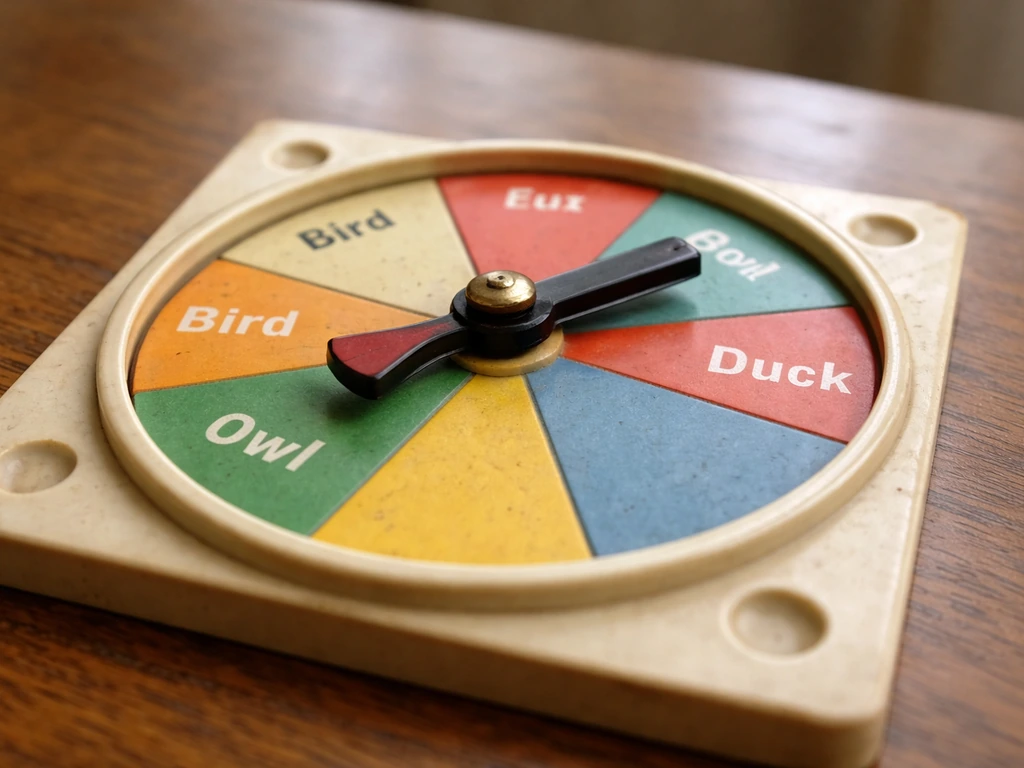
Here is a practical way to sort this out. The original Hi Ho, Cherry-O game does not have a lyric line that names a bird species. The word "Bird" appears only on the spinner and in the rules. If you are hearing an actual song with a verse like "the little chickadee ate my cherry" or anything that names a specific species, you are almost certainly listening to an adapted children's song or a classroom variation built around the game's theme, not the original game itself.
To identify which version you have, check a few things. First, look at the physical game if you have it. The spinner will show either a bird silhouette or a named bird depending on edition. Second, if you are working from a song recording, check the album credits and the songwriter. If it is not the original game publisher (Whitman, later Western Publishing), it is a derivative work. Third, search for the exact lyric line you remember and see if it traces back to a specific educational recording or curriculum.
The species question matters more in some contexts than others. If you are writing a lesson plan or creating activity materials, knowing whether the source uses a generic bird or a named species like a chickadee helps you stay consistent. The chickadee bird meaning carries its own associations, particularly in North American folk culture, so using a chickadee in a cherry-picking context would bring in connotations of cheerfulness and small scale that are different from a generic blackbird or starling.
| Version type | Bird named? | Bird's role | Source to check |
|---|---|---|---|
| Original board game (1960s) | No, just 'Bird' | Spinner penalty: lose 2 cherries | Game rulebook or original spinner |
| Common classroom song adaptations | Sometimes (e.g., chickadee, robin) | Character in a lyric verse | Album credits or lesson plan source |
| Regional/international editions | Varies by edition | May use a different animal entirely | Edition-specific packaging or rules |
| Memory/oral retelling | Often misremembered | Conflated from multiple sources | Check original rules against memory |
What to take away and how to verify your specific version
The short answer you can use right now: in the original Hi Ho, Cherry-O game, the bird means a setback. Land on it, lose two cherries, move on. It symbolizes the classic folk image of a harvest bird stealing your fruit, and it carries that meaning with zero ambiguity in the rules. No species is named. No deeper spiritual or cultural symbolism is intended beyond the cheerful frustration of a game mechanic for toddlers.
If someone told you the bird is specifically a chickadee, a cheel, or another named species, ask them which version of the song or game they are referencing. That claim is probably coming from an adapted recording, a regional edition, or a half-remembered childhood experience rather than the canonical game. To verify your own version, pull out the physical game and look at the spinner. Hasbro’s official HiHo! Cherry-O instructions confirm the game’s mechanics, including taking pretend fruit from the tree and placing it into a basket, which can help you verify you have the right edition verify your own version by checking the spinner. If you are working from a song, track down the recording and check its credits against the original 1960 game publishing history.
Once you know which version you are dealing with, the meaning snaps into focus quickly. Whether it is the original generic bird or a named species from an adaptation, the role is the same: the bird is the obstacle, the cherry thief, the small comic villain of a very simple story about picking fruit and filling your bucket before anyone else.
FAQ
Is the bird in Hi Ho, Cherry-O ever a “good” space, like a bonus?
In the standard game, the Bird is a setback category (same as the Dog). You take two cherries back from your bucket to the tree, so it is always a loss moment, not a reward.
What should I do if I land on Bird but my bucket has fewer than two cherries?
Game rules assume you have cherries to pull from your bucket, but in practice you should follow your set’s specific instructions or treat it as “remove up to two” without going negative. If your version includes a special note for low counts, that note overrides general play.
Does the bird only appear on the spinner, or does it appear in the song lyrics too?
In the original board game, the bird is just a spinner/rules label. If lyrics you hear name a specific bird species, that typically comes from an adapted classroom song or derivative recording, not from the baseline game.
How can I tell whether I have the original game version or an adaptation?
Check whether the spinner shows a generic “Bird” versus a printed named species, and compare the look of the spinner cards and instruction sheet with what came from the original publisher era. Named-species versions usually indicate a later adaptation or regional change.
Why do some people swear the lyric says “chickadee,” “cheel,” or another species?
Most of these claims come from misremembered childhood lyrics, or from specific recordings made for schools and albums that added their own bird imagery. The canonical game uses a generic bird label, so the “named bird” detail is version-dependent.
Does landing on Bird affect both players, or only the active player?
It affects only the player whose turn it is. The active player moves cherries by taking two from their bucket back onto the tree.
Are there any differences between regional markets that change the bird meaning?
Yes, some editions replace the bird with a different animal or change the spinner illustration. The core meaning stays the same (a two-cherry setback), but the specific pictured animal can vary by edition.
If I am using this for a classroom, should I teach the bird as “generic” or as a specific species?
Use “generic Bird” if you want to match the original game rules and avoid unintended associations. If you choose a named species for a lesson, make sure it matches the exact recording or worksheet you are using, so children are not mixing versions.
What is the simplest “tell” that I should correct someone who is citing a specific bird species?
Ask them where they got that species from (which song recording or which edition). Then compare it to the spinner in the physical set, where you will see whether it says “Bird” or prints a named species.
Does the bird’s symbolism matter for gameplay, or is it just narrative?
For gameplay, symbolism does not change the mechanics. The only thing that matters is the spinner category: Bird means you lose two cherries (back to the tree).
Next Article
Perched Bird Meaning, Literal, Symbolic, Usage, Examples
Perched bird meaning: clear literal and symbolic definitions, usage differences, examples, and quick reference.