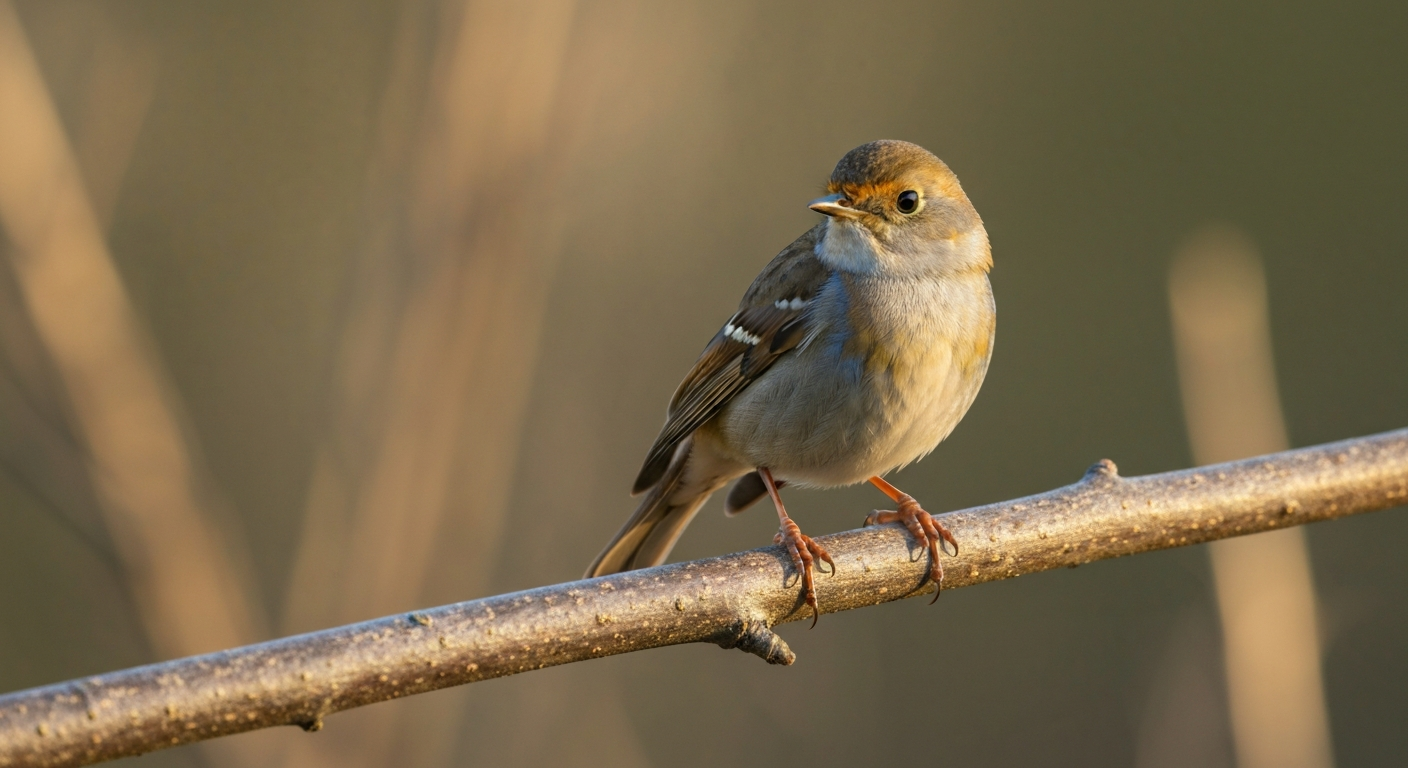
If you searched 'buxom bird meaning,' you probably came across the phrase somewhere and weren't quite sure whether it was describing an actual bird, a person, a character, or something else entirely. Here's the short answer: 'buxom bird' is not a fixed idiom with one locked-in definition. It's a descriptive phrase built from two words that each carry their own layered meanings, and how you interpret it depends almost entirely on the context in which you found it. Let's break it down piece by piece so you can figure out exactly what was meant in your specific case.
Buxom Bird Meaning: What People Mean and How to Tell

Marcus Whitley
19 Apr 2026

What 'buxom' actually means in plain English
Cambridge Dictionary defines buxom as '(of a woman) healthy-looking and slightly fat, with large breasts.' Merriam-Webster frames it similarly, describing a woman with 'a pleasingly rounded body with large breasts,' and even adds a warmer example: 'a buxom warm friendly woman.' Oxford points to the same body-descriptive core. So in everyday modern English, buxom is an adjective applied to women that describes a full-figured, curvy physique, particularly one associated with large breasts. It reads as descriptive rather than harshly insulting, though it is unambiguously a physical description.
What's interesting is that buxom hasn't always meant this. The word carries a long etymological journey. It comes from Middle English buxsum, which traces back to Old English būhsum, derived from būgan meaning 'to bend.' Early uses had nothing to do with body shape at all. The word originally meant 'obedient' or 'pliant,' as in someone who bends to another's will. Over time, via senses like 'lively,' 'brisk,' and 'gay' (in the older sense of cheerful), it drifted toward describing physical vitality and then eventually settled on the rounded, full-bodied meaning we use today. The Saturday Evening Post's language column notes that older dictionaries like Webster's included 'lively, brisk, gay' among buxom's meanings before the body-descriptive sense took over entirely. That drift from 'compliant/pliant' to 'full-figured' is one of the more fascinating semantic shifts in English.
When 'bird' isn't a bird

Here's where things get interesting for this phrase. 'Bird' in British and some broader English slang means a young woman, often a romantic partner or someone of sexual interest. In Merriam-Webster's slang sense, “bird” is chiefly British for “girl.” chiefly British slang sense of bird meaning “girl.”. Cambridge Dictionary explicitly lists this sense: 'a young woman.' Collins goes further, noting separate slang senses including 'a girl or young woman' alongside prison-time rhyming slang ('do bird,' meaning to serve time, from 'birdlime'). Green's Dictionary of Slang documents the 'young woman' sense with historical citations, and also notes that in some contexts 'bird' has carried more pointed connotations, including 'a promiscuous woman.' That range matters because it means 'buxom bird' could be a perfectly lighthearted compliment in one speaker's mouth and something with a sharper, more objectifying edge in another's.
So when someone says or writes 'buxom bird,' they might not be talking about a feathered creature at all. They could be using 'bird' as a slang term for a woman and layering buxom on top as a physical descriptor. The phrase then becomes the equivalent of 'a full-figured woman' or 'a curvy woman,' with the warmth or edge of that description hinging on tone and context.
The phrase vs. the description: is 'buxom bird' actually a set expression?
Strictly speaking, 'buxom bird' is not a widely fixed idiom the way 'early bird' or 'a little bird told me' are. You won't find it in major idiom dictionaries as a standalone entry with a stable figurative meaning. Instead, it's a descriptive combination that appears in several distinct ways. One example: IMDb lists a 2025 TV episode titled 'Buxom Bird,' showing the phrase used as a title in contemporary media, which suggests it carries enough cultural legibility to name something. Wikipedia's article on The Goose Goes South describes a character as 'a buxom songbird,' pairing the adjective with a bird-themed noun in a straightforwardly descriptive way. A Montclair Local news post uses 'buxom bird sighting' in an observational, playful tone, describing what appears to be an actual bird in a humorous register. These examples show that the phrase can operate literally (describing a plump bird), descriptively with slang intent (describing a full-figured woman using 'bird' as slang), or as a tongue-in-cheek title or label.
Where you're most likely to run into it

The contexts where 'buxom bird' appears fall into a few clear categories, and knowing which one you're in helps enormously with interpretation.
- Historical or period fiction: Writers describing female characters in a historical setting often use buxom as a flavor word alongside other period-sounding descriptors. 'A buxom bird' in this register is usually an affectionate or admiring portrait of a woman, leaning into the older sense of 'healthy and lively.'
- Comedy, satire, or playful dialogue: British sitcoms, stand-up routines, and casual banter frequently pair 'bird' as slang with a modifier like buxom for comic effect. The humor comes from the informal, slightly old-fashioned texture of both words together.
- Online posts and social media: Someone might describe a person or even a literal large bird they spotted using this phrase. Without more context, these uses tend to be playful rather than malicious.
- Media titles and character names: As the IMDb listing shows, 'Buxom Bird' can be used as a title, suggesting a character type or visual gag rather than a direct insult.
- Literary or descriptive narration: Authors describing a character's physical presence may pair buxom with bird-as-slang for rhythmic or stylistic reasons. Cambridge's own examples show 'buxom matron' and 'buxom young woman' as typical narrative usages.
Compliment, flirtation, humor, or something sharper? Reading the intent
This is the question most people actually want answered. The same phrase can land very differently depending on who says it, to whom, and in what setting. Here's a practical framework for reading the intent.
| Context / Tone | Likely Intent | Respectful or Objectifying? |
|---|---|---|
| Period fiction or historical narrative | Descriptive compliment, conveying vitality and full figure | Generally neutral to admiring, not intended as objectifying |
| Casual British slang between friends | Affectionate or flirtatious description | Often meant warmly, but depends on relationship and delivery |
| Comedy or satire (TV, stand-up, screenplay) | Humorous, often self-aware character type | Playful, though can reinforce body-based stereotypes |
| Online description of a literal bird | Purely observational, describing a plump or large bird | Neutral, no human subject involved |
| Used dismissively or mockingly about a real person | Reductive body commentary, possibly objectifying | Objectifying, reduces the person to physical appearance |
| Flirtatious compliment in conversation | Admiration with physical focus | Intent may be positive; reception depends on context and consent |
The key insight from language and gender scholarship is that body-descriptor terms like buxom sit in a genuinely ambiguous zone. Merriam-Webster's thesaurus treats buxom as a physical descriptor without a harshly negative charge, and Cambridge's framing of 'healthy-looking' reinforces that it isn't inherently insulting language. But when buxom gets applied via 'bird' (slang for a woman) rather than to the woman directly by name, the pairing can tip toward objectification because it reduces a person to a physical type. The context of who's speaking, who's being described, and what the power dynamic is will always be the deciding factor.
How this fits with other bird slang and related phrases

It helps to see 'buxom bird' alongside other bird-related phrases to understand what makes it distinctive. 'Bird' as slang for a woman is a specifically British and Irish English usage, which is why pairing it with buxom gives the phrase a particular regional and cultural flavor. If you're reading American English, 'bird' in 'buxom bird' is more likely to mean an actual bird than a person, unless the text is clearly imitating British slang or a period style.
Other terms in this space behave quite differently. The booby, for instance, is a real seabird whose name doubles as an old insult for a foolish person, which creates a very different kind of double meaning, one rooted in taxonomy rather than gender slang. Booby bird meaning can also be confusing, because the word “booby” has its own separate history and senses. The boobrie is a Scottish mythological bird creature with no meaningful connection to gender or body description at all. The bonny bird, as seen in the folk song 'The Bonny Birdy,' uses 'bird' in an older poetic sense that's affectionate but not gendered slang. And a 'demi bird' or 'bohemian bird' typically invokes identity or lifestyle framing rather than physical description. A demi bird is often connected to the term bohemian, carrying lifestyle or identity meaning rather than a strictly physical description. 'Buxom bird' stands apart from all of these because it specifically combines a body-descriptor adjective with the gendered slang sense of 'bird,' which is what gives it its particular interpretive complexity.
How to pin down exactly what it meant in your case
If you came across 'buxom bird' somewhere specific and want to confirm the intended meaning, here's how to verify it systematically.
- Identify the source type first. Is it a book, a TV episode, a social media post, a news article, or dialogue? The medium shapes the register enormously. A TV episode title like the 2025 'Buxom Bird' IMDb listing operates differently from a comment on a birding forum.
- Check whether 'bird' has a human referent or a literal one. Look at surrounding sentences. Is a person being described, or is an actual animal? If there's no human subject, the literal interpretation (a plump or large bird) is almost certainly correct.
- Look at the nationality and dialect of the author or speaker. British and Irish English slang uses 'bird' for a woman far more commonly than American English does. If the source is clearly British, slang intent is more plausible.
- Consider the time period. 'Buxom' in texts from before the 20th century may carry older senses ('lively,' 'cheerful,' 'healthy') rather than the narrowly physical modern sense. Period fiction using 'buxom' as a compliment to a woman's vitality is different from a modern post using it to describe a woman's body.
- Read the tone around it. Is the surrounding text playful and affectionate, clinical and descriptive, or dismissive and reductive? Tone is the strongest signal of whether buxom functions as admiring, neutral, or objectifying.
- Search the exact source. If you found it in a show, search the episode or character name. If it was in a quote, look up the full passage. The phrase rarely exists in isolation, and the surrounding text will almost always resolve the ambiguity.
Once you've worked through those steps, you'll almost always land on a clear answer. 'Buxom bird' is genuinely one of those phrases where context does all the heavy lifting. The words themselves don't lock in a single meaning, but the situation they appear in almost always does. A plump wading bird spotted at a nature reserve, a cheerful full-figured character in a period comedy, a flirtatious aside in a British sitcom, they all use the same two words to mean something noticeably different, and now you have the tools to tell them apart.
FAQ
Does “buxom bird” ever mean a real bird? If so, how can I tell quickly?
Yes, but only when the surrounding text points to birds. If the sentence includes habitat terms (nest, feathers, wing, flock) or location cues (pond, reserve, wetlands), “bird” is almost certainly literal, and “buxom” likely means round-bodied or plump (or the line is intentionally humorous).
If “bird” is slang for a woman, what clues in a sentence tell me that?
In British and some Irish usage, “bird” can mean a young woman, especially in informal speech or dialogue. A quick check is whether the grammar fits a person (being addressed directly, described with personality traits, or matched with pronouns like “she” and “her”). If yes, “buxom” is probably describing body shape, not literal feathers.
Why do some uses of “buxom bird” feel friendly, while others feel objectifying?
Tone matters. A compliment framed as kindness (warm, friendly, affectionate setting) usually reads as playful physical description. If it appears as a checklist of attractiveness, it targets appearance in a way that can feel objectifying, particularly if the speaker has social power over the person described (boss, stranger, character with authority).
Is “buxom bird meaning” the same in all English varieties (US vs UK)?
The phrase is not a standard fixed idiom, so single-word dictionary lookups do not fully solve it. You need to interpret it as an adjective plus a slang noun, and then check whether the text uses British slang conventions. If the writing is American or formal, “bird” is less likely to be slang unless the source is explicitly imitating older or UK dialogue.
Is “buxom” inherently an insult?
A common mistake is assuming “buxom” automatically means “insult.” Modern definitions treat it as a physical descriptor, often “healthy-looking” or “pleasingly rounded.” The sharper edge comes from the slang and how the phrase is used, not from “buxom” by itself.
Does the meaning change if it’s used as a title or just as dialogue?
Look for capitalization and context. Titles and labels (for episodes, characters, or posts) can be tongue-in-cheek, so the phrase may be deliberately playful rather than a serious comment about body type. Dialogue, on the other hand, is more likely to reflect the speaker’s attitude and the social dynamic.
What should I check if I’m unsure whether it’s literal or slang?
If “bird” could be literal, you should also check for other bird-related signals, like species names (robin, swan), actions (perched, flying), or descriptive verbs tied to animals. If those are absent and the text includes dating or attraction cues, the slang reading becomes more likely.
How would I translate “buxom bird” into plain English without losing the nuance?
“Buxom bird” can be read as “curvy woman” in slang contexts, but the phrase can carry extra social flavor (flirtiness, regional slang feel, or period-comedy vibe). If you are trying to translate it, choosing “curvy woman” may lose that specific British slang texture.
Can “buxom bird” imply promiscuity by default?
Be cautious about reporting it as meaning “promiscuous.” That is only one possible meaning historically tied to “bird,” and it is not the default. Unless the surrounding context explicitly references sexual behavior or judgment, the safer interpretation is simply “a young woman” with “buxom” describing body shape.
What’s a practical way to confirm meaning when I only have one or two sentences?
If you want to verify intent fast, compare “bird” in the same text: does it appear elsewhere meaning “young woman,” or do other uses clearly refer to animals? Repeated slang usage strongly indicates the “woman” reading for that document or author.
Next Article
Perched Bird Meaning, Literal, Symbolic, Usage, Examples
Perched bird meaning: clear literal and symbolic definitions, usage differences, examples, and quick reference.