When someone searches 'duck bird meaning,' they're usually after one of two things: either they want to know what kind of creature a duck actually is (the literal bird), or they're trying to decode what 'duck' means in a phrase like 'sitting duck,' 'duck and cover,' or 'duck out.' Both are completely valid questions, and the word 'duck' genuinely lives in both worlds at once. The short version: as a bird, a duck is an aquatic waterfowl in the family Anatidae, known for webbed feet, broad bills, and comfort on the water. As language, 'duck' almost always signals one of three things: vulnerability, avoidance, or evasion.
Duck Bird Meaning: What Ducks Are and What They Symbolize

Marcus Whitley
30 Jun 2026
What a duck actually is (the literal bird)
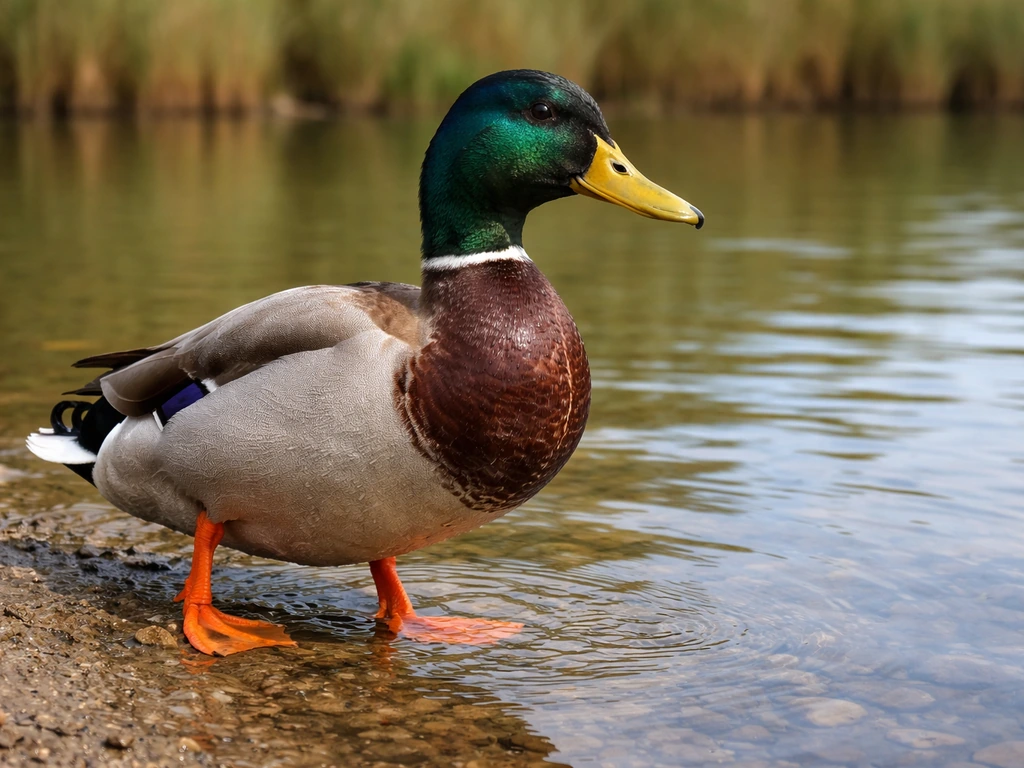
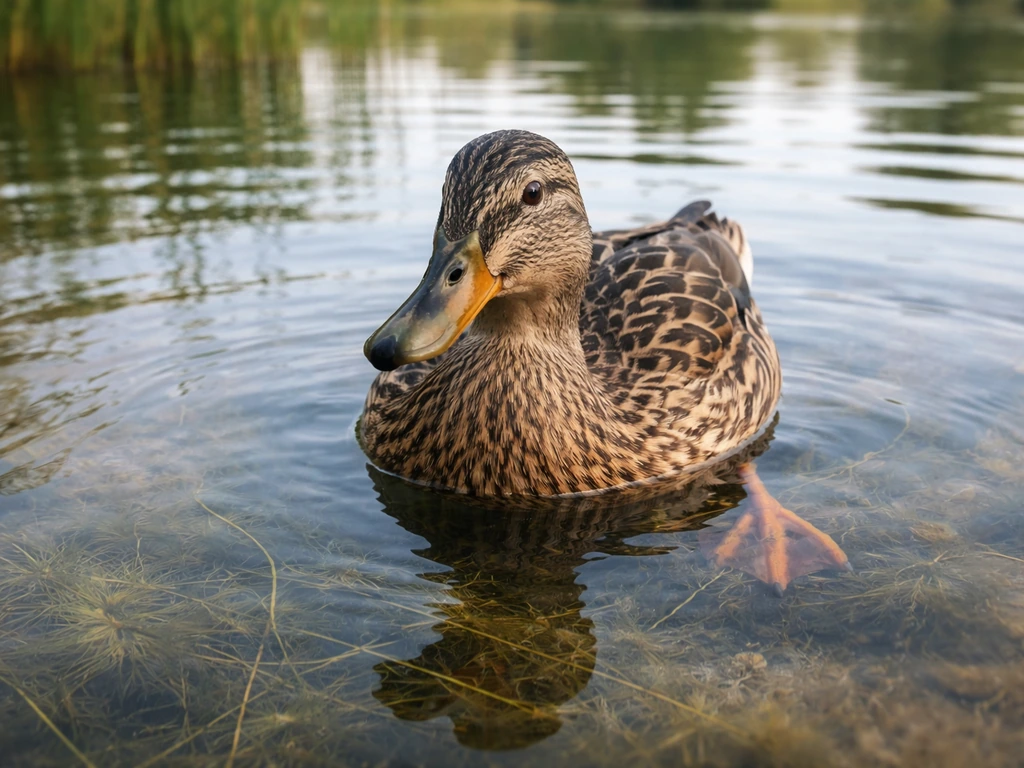
Ducks belong to the family Anatidae, the same group that includes geese and swans. What makes them ducks specifically is a combination of features: webbed feet on the front three toes, a broad and often flat bill with a comb-like inner edge (called lamellae), and feathers that shed water rather than soaking it up. Most ducks are noticeably smaller than geese and swans, and many species show strong sexual dimorphism, meaning the male and female look quite different. The classic example is the mallard: the male has that iconic iridescent green head, while the female is mottled brown all over.
Ducks are genuinely aquatic birds. Their legs are set far back on their bodies (which is why they walk with that waddling gait), and their diet ranges from aquatic plants and seeds to invertebrates, worms, and snails. Mallards, for instance, eat duckweeds, pondweeds, and smartweeds, but will also raid cornfields and soybean crops. The key thing to understand about ducks behaviorally is that they live on the boundary between water and land, which is exactly where a lot of their symbolic weight comes from. In many cultures, a wild bird meaning is also tied to freedom, alertness, and adapting to change.
The word 'duck' itself has an interesting origin. It comes from Old English roots connected to the idea of diving or bending down, which is also where the verb 'duck' (meaning to lower your head quickly) comes from. The bird and the action of ducking are etymologically the same word, which is why the language around ducks so naturally blurs into idioms about avoidance and evasion.
Common phrases and idioms using 'duck'
This is where most people's questions actually live. 'Duck' shows up in everyday English constantly, and once you see the patterns, the meanings become easy to read at a glance.
Sitting duck
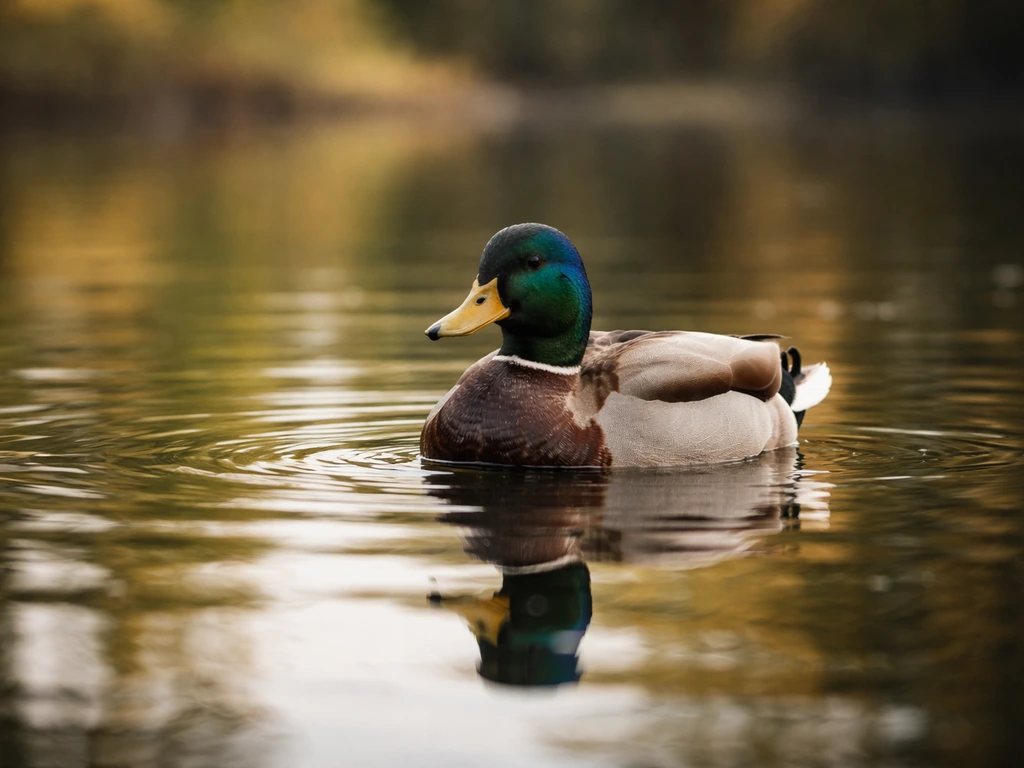
A 'sitting duck' means someone or something that is an easy, defenseless target. The phrase comes directly from hunting: a duck sitting still on the water is far easier to shoot than one in flight. When you hear it today, it almost always means vulnerability, not an actual duck. 'If we announce the plan early, we'll be a sitting duck for the competition' or 'parked illegally, my car was a sitting duck for a ticket.' The hunting image is still the engine behind the phrase, even when the sentence has nothing to do with birds or water.
Duck and cover
'Duck and cover' carries two distinct meanings depending on context. In a literal safety sense, it means to crouch down and shield your head from a physical threat. The phrase became iconic Cold War language in the 1950s when the U.S. Federal Civil Defense Administration used it as the core instruction in civil-defense drills and educational films, training schoolchildren to drop under their desks and cover their heads in the event of a nuclear blast. Cambridge Dictionary also notes a broader figurative use: 'duck and cover' can mean to avoid dealing with a difficult situation, essentially hiding from something you don't want to face. You'll see it used both ways in modern headlines and conversation.
Duck out
'Duck out' is a phrasal verb meaning to leave suddenly and quietly, usually without telling anyone. Merriam-Webster's contemporary usage examples include things like slipping out of a meeting early or 'ducking out on paying the bill,' which adds a layer of shirking responsibility. In sports and political journalism, you'll see lines like 'shed salary and duck out of the tax,' where the sense is clearly about evasive avoidance rather than any physical crouching.
Duck (as a verb on its own)
When used as a plain verb, 'duck' means to lower your head or body quickly to avoid something, or more broadly to dodge something entirely. blank" rel="noopener noreferrer">Oxford defines it directly as a synonym for 'dodge.' 'She ducked the question,' 'he ducked out of the way,' 'they ducked the hard decision.' In every case, the core meaning is the same: rapid, intentional avoidance.
Duck symbolism and cultural associations
Beyond specific idioms, ducks carry a set of recurring symbolic associations that show up in literature, folklore, and contemporary writing. Writers also commonly reuse the “serene on the surface, paddling beneath” symbolism theme for ducks, an association echoed by mainstream spirit-animal sites like mymythos.org. None of these are rigid or universal, but they're patterns worth knowing.
- Calm on the surface, busy underneath: This is probably the most frequently repeated duck metaphor in modern writing. A duck gliding serenely across a pond while its feet churn constantly below the waterline has become a go-to image for quiet effort, hidden work, or keeping composure under pressure. 'She seemed perfectly calm, all duck-on-a-pond composure, but she was working overtime behind the scenes.'
- Adaptability and ease: Ducks move between water, land, and air with apparent ease. This has made them a symbol of adaptability and going with the flow, someone who is comfortable in multiple environments without being thrown off.
- Vulnerability and exposure: Thanks largely to 'sitting duck,' ducks in cultural shorthand often represent someone who is exposed, unprotected, or positioned badly. This is a more negative association and usually only activates in a conflict or competition framing.
- Water and fertility: In older folk traditions and some cross-cultural symbolism, ducks are connected to water, and by extension to fertility, renewal, and the natural cycles of the seasons. This is less common in everyday English but shows up in literature and nature symbolism.
- Avoidance and evasion: The verb sense of 'duck' bleeds into how the bird is perceived symbolically. Calling someone a 'ducker' or using duck imagery in a context about someone who always dodges responsibility carries a specific, slightly unflattering implication.
Ducks also appear in lighter cultural contexts without heavy symbolism, including 'duck, duck, goose' (a children's game), comedy characters, and internet memes, which can make the word feel playful or absurd rather than weighted. That tonal range is part of what makes 'duck' such a flexible word in English.
How to read 'duck' in context
The fastest way to decode what 'duck' means in any given sentence is to ask: is there a bird present, or is someone moving, avoiding, or being targeted? Here are a few real-world scenarios with quick interpretations.
| Example phrase or sentence | What 'duck' means here | Category |
|---|---|---|
| 'The startup was a sitting duck for acquisition.' | Easy, defenseless target | Idiom: vulnerability |
| 'She ducked out of the meeting early.' | Left quietly and suddenly | Phrasal verb: avoidance/exit |
| 'Duck and cover when you see the flash.' | Crouch down and shield yourself | Idiom: physical protection |
| 'He's been ducking that question for weeks.' | Deliberately avoiding/dodging | Verb: evasion |
| 'The mallard duck glided across the pond.' | The actual aquatic bird | Literal: animal |
| 'She kept her duck-on-a-pond composure throughout.' | Calm surface, hidden effort | Metaphor: composed under pressure |
| 'Duck and cover with a good summer read.' | Retreat and escape (figurative) | Idiom: avoidance (casual/figurative) |
If the sentence has a bird in it, or involves water, nature, or wildlife, you're almost certainly in literal territory. If the sentence involves a person doing something, especially moving, leaving, hiding, or being targeted, the figurative or idiomatic sense is almost always the right read.
Duck vs. other water birds you might be mixing up
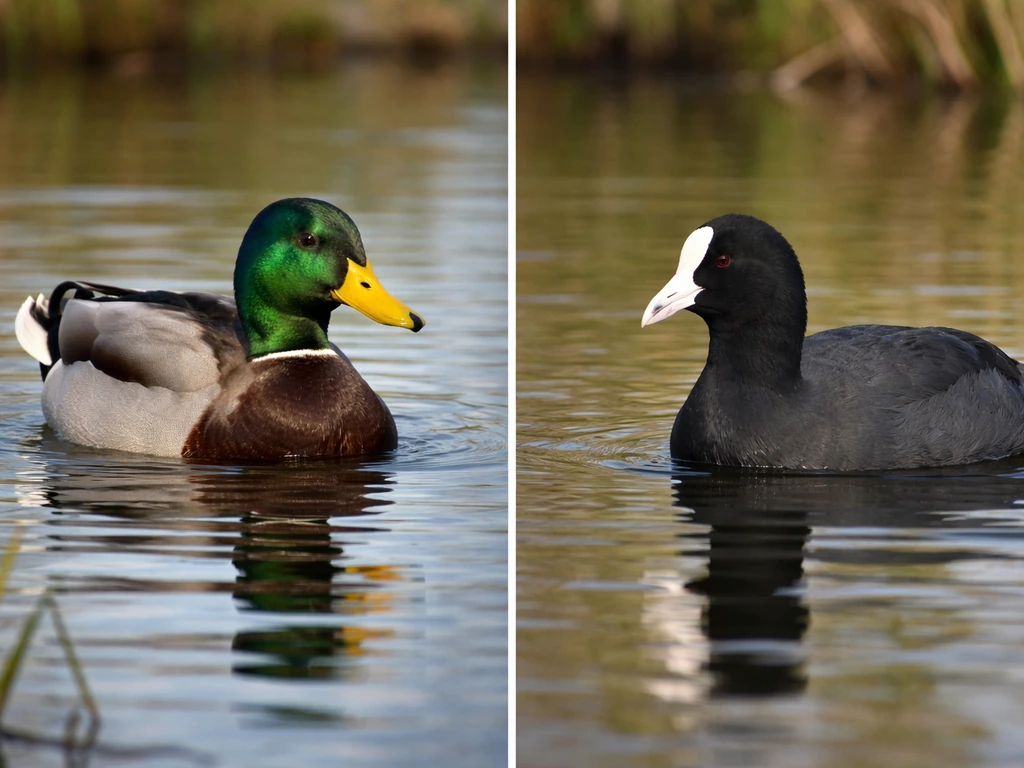
One common source of confusion with 'duck bird meaning' is that ducks aren't the only birds people associate with water, and some look-alike species get misidentified as ducks all the time. A wood bird meaning search can point you to the symbolism and cultural interpretations tied to that specific species duck bird meaning. This matters both for literal identification and for understanding water bird symbolism more broadly.
The most frequently confused bird is the American coot. Coots swim like ducks, live on ponds like ducks, and look duck-sized at a glance, but they are not ducks at all. The key difference is the feet: ducks have webbed toes, while coots have lobed toes (each toe has individual flaps rather than a continuous web). Coots are also in a completely different bird family. If you're trying to identify a 'duck' at a local pond and it has a white bill and a chicken-like head, it's probably a coot.
Geese and swans are actual relatives of ducks (all Anatidae), but they carry different symbolic weight in most cultures. Geese tend to be associated with loyalty, vigilance, and migration, while swans carry elegance, transformation, and sometimes tragedy. The broader world of water bird symbolism, including native American water bird traditions and the meanings carried by specific aquatic species, often gets folded into duck searches when what someone actually wants is a more targeted look at a specific bird or tradition.
If you landed here looking for something closer to wild bird symbolism in general, or the meaning of specific water birds in Indigenous traditions, those are genuinely different conversations from what 'duck' typically signals in everyday English. “Erosion bird meaning” is also a phrase people search for when they want the symbolism tied to a particular bird or nature concept, rather than the everyday idiom uses of “duck.”. The duck, as both bird and word, occupies a specific niche: everyday, adaptable, occasionally vulnerable, and surprisingly evasive.
FAQ
Does “duck” in everyday phrases always mean the bird, or can it be purely figurative?
In most cases, no. If the sentence uses “duck” with a target, threat, or avoidance (for example “duck the question” or “duck out of the meeting”), it is almost always figurative. If you see water, ponds, or an actual bird species, it is literal.
What’s the difference between “duck” as safety behavior and “duck” as avoidance? It seems confusing in headlines.
“Duck” can sound like “ducking” in safety instructions, but in “duck and cover” the intent is to lower quickly and protect the head, not to flee the area. In other contexts, “duck” means to dodge or avoid, so the surrounding verbs (crouch, shield vs. leave, evade) are the clue.
When someone says “duck and cover” today, how do I know if they mean physical cover or metaphorical avoidance?
“Duck and cover” can be interpreted both ways because many modern writers use it as shorthand for refusing to face something. A quick check is whether the sentence includes a real physical danger cue (blast, explosion, attack) versus a social problem cue (debate, lawsuit, difficult conversation).
If I hear “sitting duck” in conversation, should I assume it is always about vulnerability?
When used as a noun phrase, “sitting duck” almost always means an easy target, not a literal duck. Watch for words like “competition,” “ticket,” “target,” or “easy” to confirm it is the vulnerability meaning.
Does “duck out” mean rude or just a quick exit?
“Duck out” typically implies leaving sooner or quietly, often without permission or communication. If the context suggests a brief exit is handled respectfully (for example “duck out to take a call and return”), it may be softer, but the default tone is discreet or evasive.
Is “duck” only used in set phrases, or does it work as a normal verb in sentences?
Yes. “Duck” can be used transitively (“duck the ball,” “duck the question”), and it often means a deliberate, last-second maneuver. If there is no clear object, it is usually about dodging generally (“He ducked quickly”).
I saw a “duck” on a pond, how can I avoid misidentifying a similar species?
Look-alikes can be nearly impossible at distance, so focus on field marks. For distinguishing ducks from similar water birds like coots, toe structure matters (webbed front toes for ducks). Also note bill shape and overall body silhouette, not just color.
What should I search if I want symbolism for a specific duck species rather than the general word meaning?
If you want the bird-specific symbolism, “duck bird meaning” might not be narrow enough. Search terms often need a species or region, for example “mallard symbolism,” “waterfowl symbolism,” or “Indigenous teachings about ducks in [area].” Without that, results tend to mix everyday idioms with general water-bird meanings.
Should I treat duck symbolism as universal, or is it culture-dependent?
The “duck” family link (Anatidae) can help you understand literal identification, but symbolism can shift by culture and era. If you are using duck symbolism for writing or art, decide whether you need the generic pattern (adaptation, boundary between water and land, vulnerability/avoidance in language) or a culture-specific interpretation.
Next Article
Wild Bird Meaning: Literal Definition and Symbolism Explained
Find the wild bird meaning: literal definition, common symbolism by species and culture, idioms, and how to interpret co