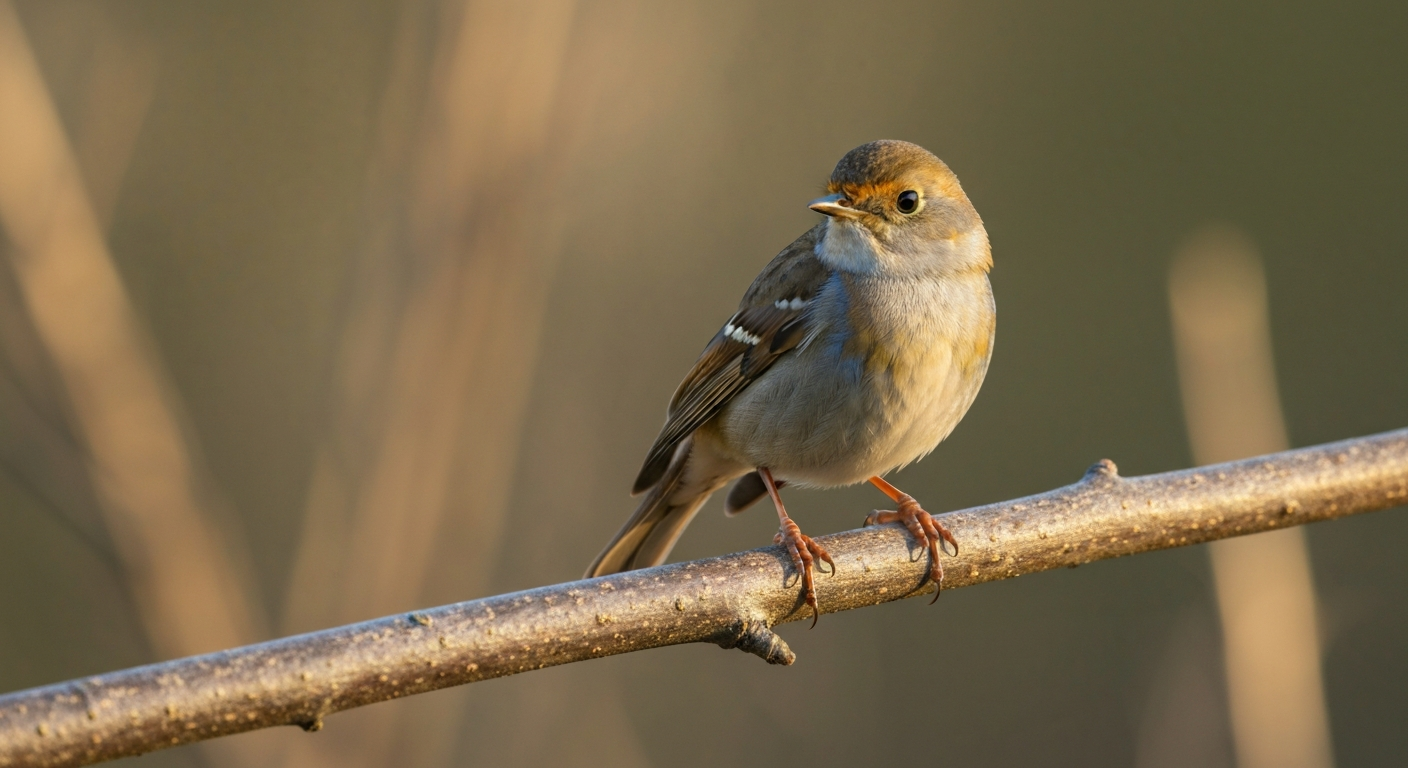
A wild bird is any bird living freely in nature, not domesticated or kept in captivity. That is the plain, literal meaning. But when most people search for "wild bird meaning," they are usually after something more: the symbolic weight that wild birds carry in dreams, sayings, literature, and spiritual traditions, where they tend to stand for freedom, untamed instinct, transition, and the unpredictable forces of the natural world. Which meaning applies to you depends entirely on the context you are working with, and this guide will help you figure that out quickly.
Wild Bird Meaning: Literal Definition and Symbolism Explained

Marcus Whitley
27 Jun 2026
What 'wild bird' literally means
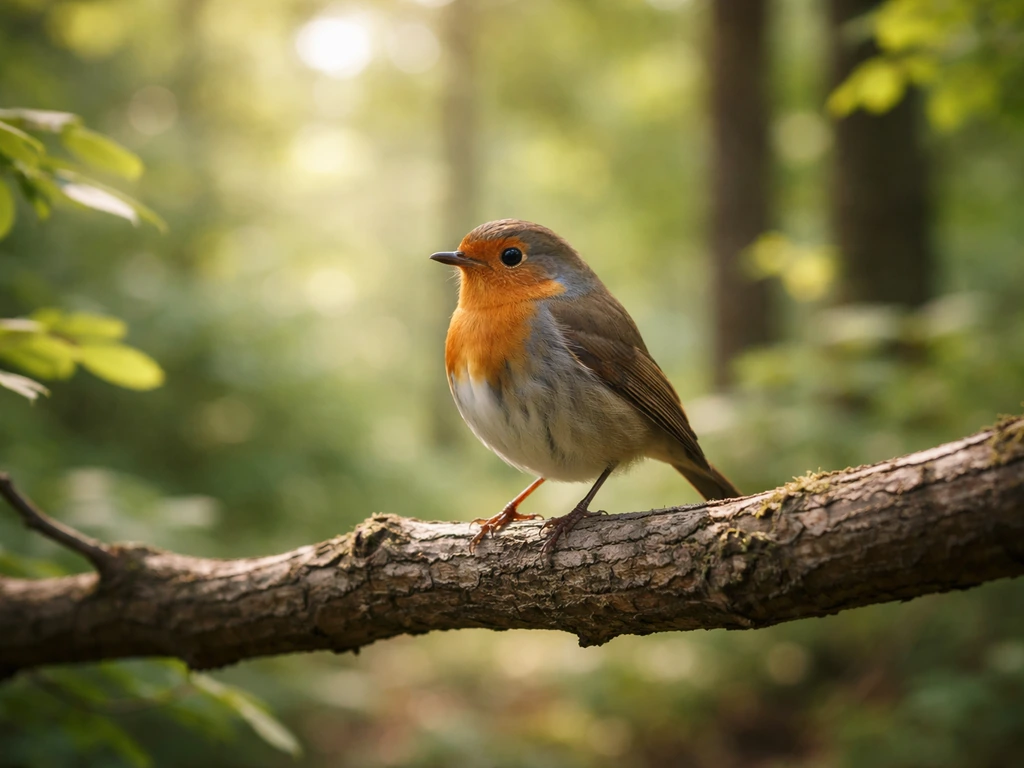
The word "wild" in English has a very consistent core definition when it applies to animals: living in natural surroundings, not controlled or tamed by people. A wild bird is simply a bird in its natural, unconfined state. This is how Cambridge Dictionary defines "wild" for animals, and it is also how US federal law frames it.
The Migratory Bird Treaty Act, for instance, defines migratory birds as all wild birds native to North America that are "in an unconfined state," meaning not in captivity. Oregon's administrative law goes further and spells out that "wild birds" means all species that typically exist in a wild state, while noting that different laws use different terms.
Wildlife rehabilitators use the same logic: they treat wild birds (native, non-domesticated species) and release them back into the wild, precisely because those birds belong in a free, unconfined existence.
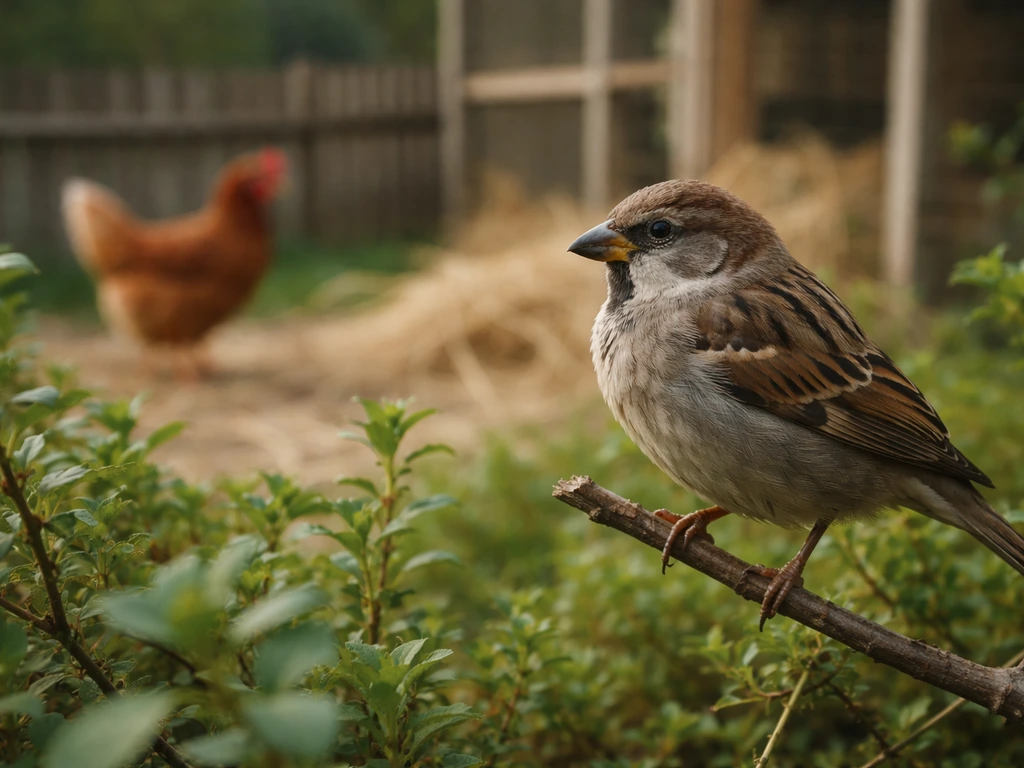
The practical contrast is always with domesticated birds. A chicken in a coop, a pet parrot, or a captive-bred canary are not wild birds in this sense. Birdwatching is defined as the activity of observing wild birds in their natural surroundings, which underlines just how thoroughly "wild" functions as shorthand for "not human-kept." So on the strictly literal level, if you see "wild bird" in a nature guide, a legal document, or a wildlife rehabilitation notice, the phrase is doing technical work: it is telling you the bird is free-living and native to its environment.
How 'wild bird' shows up in everyday speech
Outside of legal and scientific contexts, people use "wild bird" in a more relaxed, almost poetic way. You will hear it in phrases like "he's a wild bird, you'll never pin him down" to describe someone who resists routine or commitment. You will also see it in idioms that do not use the exact phrase but clearly draw on wild bird imagery.
The classic "free as a bird" is exactly this: it describes being completely unrestrained, and the bird it pictures is obviously not a caged one. Meanwhile, "a bird in the hand is worth two in the bush" uses bird imagery to caution against chasing uncertain possibilities, and the birds in the bush are very much wild ones, uncertain and unpredictable.
One important caution here: idioms do not work by adding up the dictionary meanings of their individual words. If you break down "wild bird" word by word, you will not automatically arrive at what a specific phrase or saying intends. The emotional tone of the whole sentence, and the cultural tradition it comes from, matter far more than the individual words. This is worth keeping in mind any time you encounter "wild bird" in a metaphorical or figurative context.
What wild birds symbolize across themes
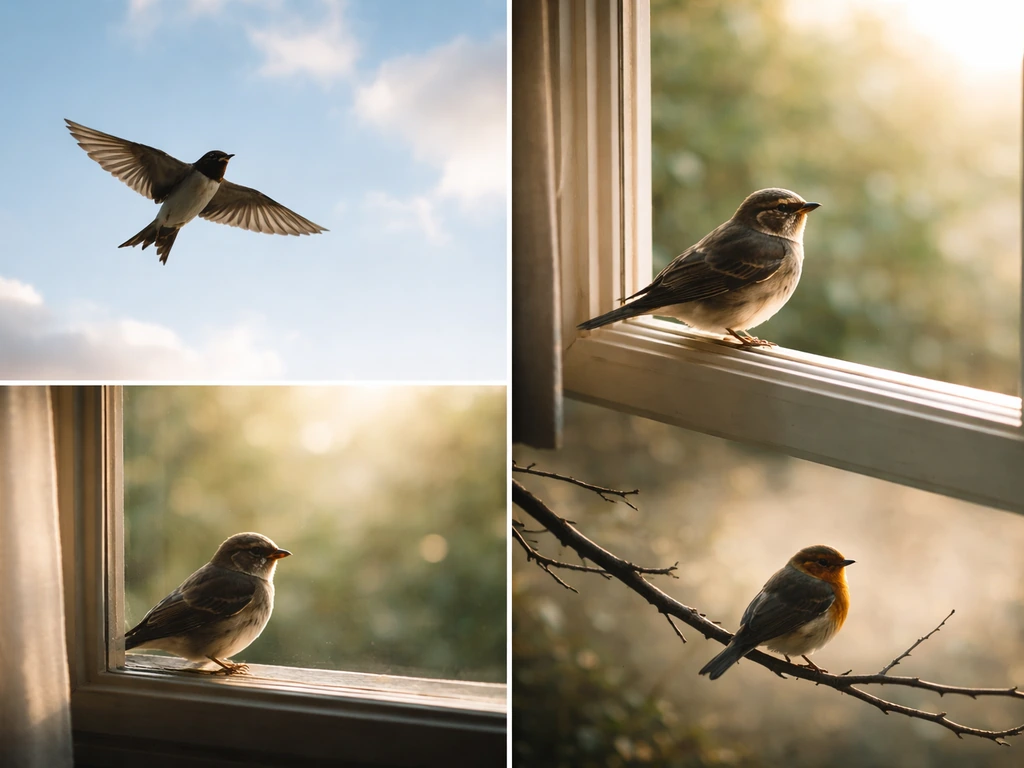
Across cultures, literature, and spiritual traditions, wild birds tend to cluster around a handful of recurring symbolic ideas. If you are trying to understand the erosion bird meaning specifically, you will want to connect the image to the context, feelings, and tradition it appears in Wild birds tend to cluster around a handful of recurring symbolic ideas.. These are not universal rules, but they are the patterns that show up most consistently.
- Freedom and independence: This is the dominant association in most Western contexts. A wild bird is unconfined by definition, so it naturally becomes a stand-in for personal freedom, self-determination, and the refusal to be controlled.
- Instinct and untamed energy: Wild birds act on instinct, not on human schedules. In metaphorical speech, calling someone or something "wild" in this sense suggests raw, unfiltered energy that has not been socialized or constrained.
- Transition and change: Birds migrate. They arrive and depart with the seasons. Many cultures read birds as symbols of movement, transition, and the arrival of something new, whether a new season, a life change, or a message from another realm.
- Unpredictability and risk: Wild birds cannot be reliably held or directed. In sayings and literature, this makes them stand-ins for chances you cannot guarantee, outcomes you cannot control, and people who will not be tamed.
- Survival and resilience: Wild birds find their own food, navigate weather, avoid predators, and persist without human support. This gives them a symbolic connection to self-sufficiency and endurance.
- Messengers and guides: Across many traditions, birds are seen as intermediaries between the human world and something beyond it, whether that is the spirit world, the subconscious, or the divine. Dream-symbol frameworks frequently describe birds as messengers bridging the unconscious and waking life.
In dream interpretation specifically, "wild bird" is commonly mapped to freedom and independence on many popular dream sites. But it is worth knowing that other dream sources connect wild birds to lost opportunities, emotional depletion, or missed connections. This is not a contradiction so much as a reminder that symbolism is not a fixed code.
Wikipedia’s overview of dream interpretation describes this academic approach as assigning meaning to dreams while treating dream images and symbols symbolically rather than as literal events symbolism is not a fixed code. Dream researchers and psychologists consistently emphasize that the emotion you felt in the dream, and your personal associations with the image, shape the meaning more than any generalized symbol list.
Treat any interpretation as a working hypothesis, not a verdict.
Why the specific bird changes everything
"Wild bird" as a general phrase carries broad symbolism, but the moment a specific species enters the picture, the meaning sharpens considerably, and sometimes shifts entirely. Here is how some of the most commonly encountered species compare across traditions.
| Bird | Common symbolic associations | Cultural notes |
|---|---|---|
| Crow / Raven | Life transitions, warning, intelligence, mystery | Often linked to overlooked threats or significant change in modern dream interpretation; trickster figure in many Indigenous traditions; ill omen in some European folklore |
| Dove | Peace, purity, love, the divine | Deeply embedded in Western Christian tradition as a symbol of the Holy Spirit; used almost universally in Western contexts to represent peace |
| Owl | Wisdom, foresight, the night | Connected to Athena and Minerva in Greco-Roman tradition, making it a classical symbol of wisdom; also read as a harbinger of death or ill omen in several other cultures, showing how the same bird can split sharply across traditions |
| Swallow | Return, home, good luck, loyalty | Historically associated with sailors returning safely home; in many European folk traditions, a swallow nesting on your house is considered good fortune |
| Crane | Longevity, good fortune, fidelity | Strongly associated with long life and luck in East Asian cultures, particularly Japan and China; less common as a symbol in Western traditions |
| Eagle | Power, authority, national pride, vision | National symbol of the United States and several other countries; in many Indigenous traditions, a sacred bird connected to the Creator and to spiritual vision |
The takeaway here is practical: if your source, dream, text, or idiom names a specific bird, look up that bird's symbolism rather than relying on the general "wild bird" category. The difference between a wild dove and a wild crow in a poem or a dream can point in completely opposite directions symbolically. This is also why related topics like the meanings attached to water birds, wood birds, or native species from particular traditions deserve their own focused attention rather than being folded into a single catch-all answer.
Wild birds in culture, literature, and spiritual contexts
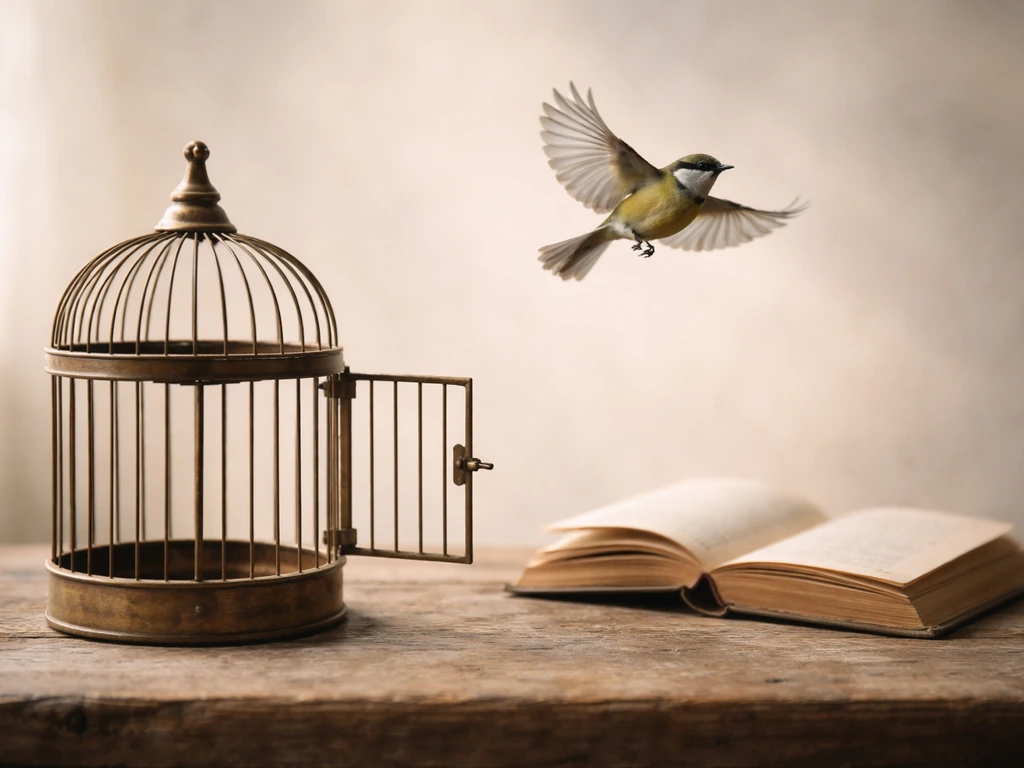
In literature, wild birds have been doing symbolic heavy lifting for centuries. The caged bird versus the wild bird is one of the most durable contrasts in poetry and prose, standing for the tension between freedom and confinement, between natural self-expression and enforced silence. Maya Angelou's most famous work draws directly on this contrast. The Romantic poets treated wild birds as embodiments of pure creative inspiration untouched by civilization. Keats's nightingale and Shelley's skylark are essentially wild birds as symbols of transcendent beauty that human beings can hear but never fully possess or replicate.
In spiritual and folk traditions, wild birds frequently function as omens, portents, or messengers. A bird flying into your house is treated as a sign in many European folk traditions, sometimes of death, sometimes of an incoming visitor or message, depending on the region and the species. In various Indigenous traditions across North America, specific birds carry sacred roles as intermediaries between the human and spirit worlds, and those roles vary significantly by nation and bird species.
If you are looking for native American water bird meaning, the specific species and the nation's tradition are what determine the message or symbolism Indigenous traditions across North America. In Western Christian tradition, the wild dove descending at the baptism of Jesus is one of the most loaded symbolic moments in the entire faith, crystallizing the idea of the dove as a vehicle for the divine.
Teach About the Bible explains that the dove symbol in Christian tradition is commonly associated with the Holy Spirit and peace the dove as a vehicle for the divine. Celtic traditions treated certain birds, particularly wrens and ravens, as creatures moving between worlds.
In dream interpretation, the wild bird tends to appear as a symbol of something the dreamer is either seeking or has lost. Freedom, a relationship, an unexplored part of the self, a transition that has not yet been made. But as noted above, the emotion in the dream and the dreamer's personal associations are doing at least as much work as the bird image itself. Psychology Today's guidance on dream interpretation specifically flags affect (the feelings experienced in the dream) and personal subjective associations as the most important interpretive tools, over and above any generalized symbol dictionary.
How to figure out what 'wild bird' means in your specific situation
If you have landed here because you encountered "wild bird" somewhere specific and want to know what it means in that context, here is a practical method for working it out. Check these four things in order.
- Is a specific species named or implied? If so, look up that species specifically. "Wild crow," "wild dove," and "wild crane" carry very different symbolic histories. General wild-bird symbolism is a starting point only; species-level symbolism is where the real meaning usually lives.
- What is the emotional tone of the surrounding text, image, or experience? Is the bird depicted as joyful, threatening, mournful, or awe-inspiring? Emotional tone shapes meaning as much as the image itself, especially in dreams and poetry. A wild bird flying freely above an open landscape points somewhere different from a wild bird trapped against a window.
- What culture or tradition does the source come from? Owl symbolism in ancient Greece points toward wisdom. Owl symbolism in certain other traditions points toward death. Dove symbolism in a Western Christian context means peace and the divine. Dove symbolism in a different cultural context might have an entirely different weight. Always ask: whose tradition is this text drawing from?
- What is the surrounding sentence or scene actually doing? Symbolism does not float free of context. A wild bird in a legal document is doing technical definitional work. A wild bird in a poem about a failed relationship is almost certainly a metaphor for something lost and unrecoverable. A wild bird in a folk saying is telling you something about risk or value. Read the whole sentence before you commit to a meaning.
One final practical note: if you are working with a dream, do not stop at a symbol dictionary entry. Those entries are useful starting points, but they cannot account for your personal history with birds, what a bird meant to someone you loved, or what was happening in your life the day of the dream. Use the general symbolism as scaffolding, then ask what the image personally means to you. That combination of cultural context and personal association is where the most useful interpretation comes from.
The phrase "wild bird" is genuinely versatile, which is exactly why it can seem hard to pin down. But it is not mysterious once you know which register it is operating in: literal (a free-living, undomesticated bird), metaphorical (freedom, instinct, unpredictability), or tradition-specific (where the species and cultural context define the meaning). And if your question is more specific, the same approach applies to duck bird meaning, since the exact bird and context can shift the interpretation. Run through the four checks above and you will almost always arrive at an answer that fits your context.
FAQ
Does “wild bird meaning” change in legal or wildlife rehabilitation contexts?
In legal, wildlife, or rehab contexts, “wild bird” usually means the bird is living unconfined and is not a domesticated species kept as an animal. If the text talks about permits, native status, or release obligations, treat it as literal rather than symbolic, because symbolism is not the working definition there.
How can I tell if “wild bird” is meant literally or symbolically in a sentence?
If the phrase appears in a poem, saying, or dream, focus first on the surrounding sentence or scene. For example, if “wild bird” is paired with caged, caught, silent, or restrained language, it is likely contrasting freedom versus limitation, not merely describing an animal you would find in nature.
What details matter most when “wild bird” appears in a dream or story?
Symbol dictionaries are most reliable when the bird behaves like a symbol in the full image, not when it is just mentioned once. If the dream or text includes actions like landing, flying away, singing, or being injured, those details often carry the emotional meaning more than the general “wild” label does.
Why do dream interpretations of “wild bird” differ so much between people?
In dream work, treat the emotion and your personal association as priority data. If you felt fear, it often points to loss, risk, or being unable to control something, while calm or joy can point to independence, opportunity, or readiness for change.
What should I do if the source names a specific bird, like dove, crow, or sparrow?
When the phrase names a species, the meaning can shift dramatically, even if it is still “wild.” A wild dove and a wild crow are often read through different cultural associations and typical behavioral imagery, so search the bird-by-bird symbolism rather than staying at the broad category.
Can “wild bird” mean “not tamed” even if the bird is not native?
Don’t assume “wild” in English always implies “native to your region” in everyday writing. Some sources use “wild” loosely to mean “not tamed,” even if the species can be non-native. If the context mentions conservation, migration, or jurisdiction, then native or jurisdictional status may become important.
What if I saw a wild bird indoors, does that always have symbolic meaning?
If you are trying to interpret a real-world encounter, check practical factors first. A bird flying into a home can have environmental causes like light attraction or window reflections, and different regions treat it differently symbolically. Use symbolism as meaning-making, but handle safety first (for example, ventilate, darken other rooms, and guide the bird out).
Why doesn’t a word-by-word lookup always work for “wild bird” idioms?
A common mistake is translating “wild bird” word-by-word into the intended phrase. Idioms work as a whole, so if the sentence uses an idiom or metaphor, interpret the entire expression and its emotional tone, not the separate meanings of “wild” and “bird.”
What’s a quick step-by-step way to interpret “wild bird” for my own situation?
If you are using “wild bird” as a guide for your own meaning, write down three quick notes: what the bird did, where it was, and how you felt. Then compare that to the main themes you see in the category you are in (literal description, freedom versus confinement, or tradition-specific message).
Next Article
Perched Bird Meaning, Literal, Symbolic, Usage, Examples
Perched bird meaning: clear literal and symbolic definitions, usage differences, examples, and quick reference.