
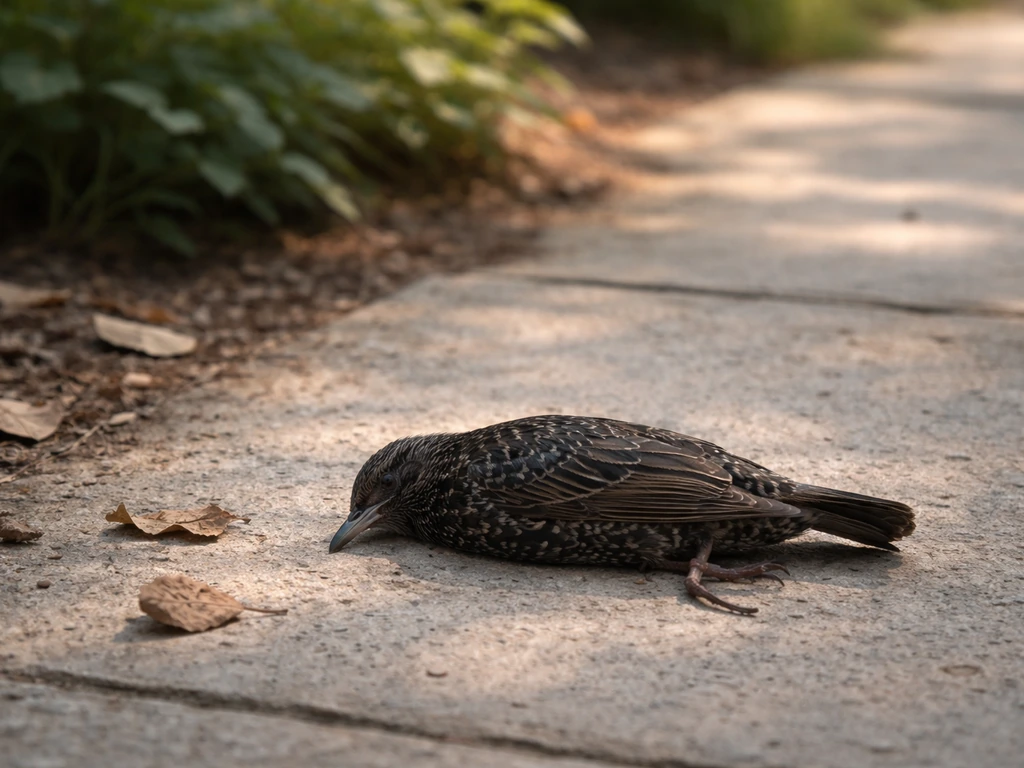
Finding a dead starling usually means one of two things depending on who you ask: either the bird hit a window, got caught by a cat, or succumbed to disease (the overwhelmingly common explanations), or it carries symbolic weight around endings, transition, and change, which is the folk and spiritual reading many people are searching for. Both answers are legitimate, and this guide covers both so you can decide which lens fits your situation and what to actually do next.
Dead Starling Bird Meaning: Spiritual and Practical Guide

Marcus Whitley
5 Jul 2026
What 'dead starling bird' actually means in everyday speech
In plain English, 'dead starling bird' is just a literal descriptor: a starling that has died. Merriam-Webster treats 'dead bird' as precisely that, a bird regarded as killed or lifeless, without any built-in supernatural reading. Most people who type this phrase into a search engine have just found one in their yard or on a sidewalk and are doing what anyone does: looking for context. Some want to know if it's an omen. Some want to know if they should pick it up. Many want both answers at once.
The phrase doesn't carry an established idiomatic meaning the way 'a dead duck' does in English (meaning something doomed or finished). It's not a widely circulated saying or metaphor. That said, dead birds as a category do show up in figurative language and death imagery across many cultures, so the urge to look for meaning is completely understandable and has deep historical roots in ornithomancy, the ancient practice of reading omens from bird behavior.
Starlings as symbols, and what death adds to that picture

Starlings on their own carry a distinctive symbolic profile. They're birds of adaptability, sociability, and collective intelligence, famously known for murmurations, those huge shape-shifting flocks that move as one organism. In folklore and literary tradition, starlings often represent community, chatter, mimicry, and the capacity to thrive in difficult or unfamiliar environments. They're also birds associated with messengers and communication, partly because they can mimic human speech. Shakespeare even referenced a starling's mimicking ability in Henry IV Part 1, and the bird has had cultural weight in European tradition for centuries.
In many spiritual frameworks, when a bird dies, its usual symbolic meaning gets filtered through a lens of conclusion, warning, or transition. So if a living starling represents community and adaptability, a dead one might be read as a warning that a social bond is ending, that a period of constant motion and noise is coming to a close, or that you need to pay attention to communication breaking down around you. That's the interpretive logic many people apply, not a fixed rule, but a symbolic grammar that makes internal sense.
How different cultures and folk traditions read dead birds
The omen interpretation of dead birds is genuinely widespread, but it varies significantly by tradition. In some European folk traditions, a dead bird near your home, particularly one that appears without an obvious cause, was treated as a warning of misfortune or death coming to the household. In contrast, some Native American traditions read the death of a bird as a completion of a natural cycle rather than a negative sign, with the spirit of the bird carrying a message from one world to another.
In modern spiritual and New Age interpretations, a dead starling is often framed as a signal of personal transformation: something old in your life is ending so something new can begin. In that context, an ahsoka bird meaning search often points to the idea of transformation and messages, rather than a purely literal interpretation. This is a softer, less fatalistic reading than the classical omen tradition, and it's the framework you'll encounter most often in contemporary spiritual writing. Neither reading is objectively 'correct.' They reflect different cultural systems of meaning, and the interpretation that resonates most with you depends heavily on your own beliefs.
What's consistent across most traditions is that a dead bird demands acknowledgment. Whether that means a brief moment of reflection, a small ritual of gratitude, or simply taking the event seriously rather than dismissing it, most folk traditions agree you shouldn't just walk past it without noticing.
The real-world reasons starlings die (and why they matter)
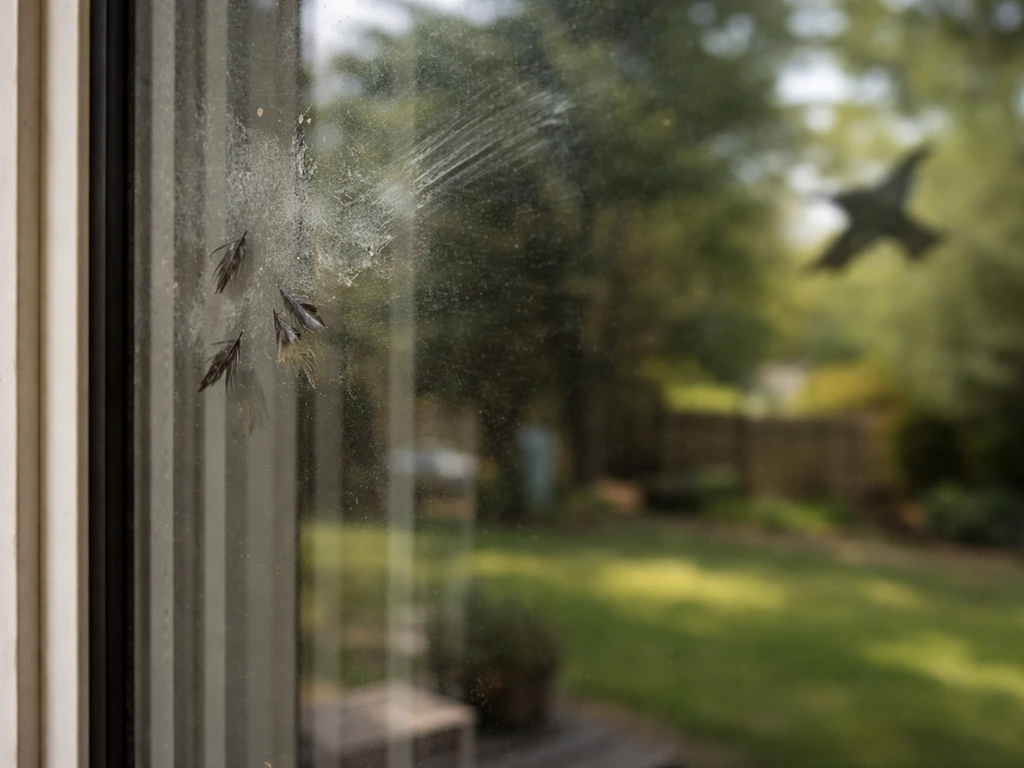
Before you invest too much in the symbolic reading, it's worth knowing that starlings die from entirely ordinary causes all the time. Understanding the likely cause actually helps you interpret the situation more accurately, whether symbolically or practically.
- Window and glass collisions: One of the most common causes of bird death in urban and suburban areas. Starlings often don't perceive glass as a barrier and fly into windows at full speed. A dead starling directly below a window is almost certainly a collision victim.
- Predation: Cats, hawks, and other raptors kill starlings regularly. You might find a carcass with feathers scattered nearby, which is a clear sign of predator activity.
- Disease: Starlings are susceptible to avian influenza, salmonellosis, and other diseases. A bird that died from illness may look undamaged externally, which can make it feel more mysterious but is actually one of the most medically significant scenarios for humans nearby.
- Starvation and harsh weather: Young starlings, especially fledglings in late spring and early summer, often don't survive their first weeks. Extreme heat or cold snaps can also kill birds that are otherwise healthy.
- Toxic exposure: Pesticides, rodenticides, and contaminated water sources kill birds in large numbers. If you find multiple dead starlings in the same area, environmental toxins should be your first hypothesis.
- Old age and natural death: Starlings in the wild live roughly 2 to 3 years on average, and natural deaths do occur, though finding one that died of old age without any external stressor is relatively uncommon in most settings.
What to do right now if you've found a dead starling
This is the part most people need most urgently. Here's what to do safely and responsibly.
- Don't handle it with bare hands. Even if the cause looks obvious, dead birds can carry bacteria, parasites, and in rare cases, viruses like avian influenza that you don't want to transfer. Use gloves or double-bag your hands with plastic bags if you need to move it.
- Place it in a sealed plastic bag. If you need to dispose of it, double-bag the bird and put it in the trash. Most municipalities consider this the standard safe disposal method for a single wild bird.
- Wash your hands thoroughly afterward, even if you only touched the ground near it.
- If you find multiple dead starlings in the same area, don't touch any of them. Multiple dead birds clustered together is a reportable event. Contact your local wildlife authority, state wildlife agency, or the USDA Wildlife Services hotline. This can indicate disease outbreak or environmental contamination worth tracking.
- If the bird hit a window, consider adding window decals, tape strips, or external screens to that window to prevent future collisions.
- If you suspect pesticide or rodenticide poisoning (common if you find birds near recently treated lawns or grain storage areas), report it to your local environmental agency.
Does a dead bird actually 'mean' something? A straight answer
Here's the honest take: a dead starling means something if you belong to a tradition or belief system where it does, and it doesn't if you don't. If you are specifically asking about the hotspur bird meaning, the same idea applies: look at your context and the tradition you’re following. There's no universally agreed-upon meaning that transcends culture. A popular English-language explainer notes that [interpretations of dead birds as omens can differ across cultures](https://enviroliteracy.
org/does-finding-a-dead-bird-mean-anything/), making the symbolism culturally variable rather than a guaranteed warning. What we do know is that humans have always assigned meaning to dead birds, that this impulse is ancient and well-documented, and that the meanings people assign tend to reflect the symbolic values they already associate with living birds of that species.
If you find yourself looking for symbolic meaning, that impulse is worth honoring as part of how humans process encounters with mortality and nature. But it doesn't need to be at the expense of practical action. You can hold both: take care of the physical situation responsibly, and sit with the symbolic question separately. If you're wondering about the skewer bird meaning, the most helpful approach is to separate the practical cause from the symbolic interpretation. One doesn't cancel the other.
Reading your specific situation: location, condition, and timing

If you want a framework for interpreting what you found, these three factors are the most useful to consider, both practically and symbolically.
| Factor | What it suggests practically | What it suggests symbolically |
|---|---|---|
| Location: directly under a window | Window collision is the almost certain cause | A barrier not seen until too late; communication interrupted |
| Location: in the middle of a yard or open space | Predator drop, disease, or weather-related death | Death in open air; transition in progress, not hidden |
| Location: near a treated lawn or agricultural area | Possible pesticide or rodenticide poisoning | Toxic environment; a warning about surroundings |
| Condition: no visible injury | Disease or internal injury from collision | Symbolic death can feel this way: no obvious wound, but something ended |
| Condition: feathers scattered nearby | Predator kill, likely a cat or hawk | A struggle concluded; predator and prey dynamic in your environment |
| Single bird vs. multiple birds | Single: normal mortality. Multiple: investigate for disease/toxin | Single: personal message or transition. Multiple: collective, environmental, or community-level change |
| Timing: fledgling season (May to July) | Young bird likely starved or fell from nest | Beginnings that didn't take root; something new that needed more support |
| Timing: winter or during cold snap | Weather-related death common | A difficult passage; the hardest part of a cycle |
Run your situation through those three filters and you'll have a much clearer picture of what you're actually dealing with, practically and, if that matters to you, symbolically. Most of the time, the practical story and the symbolic one end up pointing in the same direction anyway.
Your next steps, in plain terms
Dispose of the bird safely using gloves and a sealed bag. If there are multiple birds, report to your local wildlife authority before touching anything. If you found it under a window, address the window. If you want to sit with the symbolic meaning, the framework of ending, transition, and a call to pay attention to communication and community is a reasonable and culturally grounded place to start.
This is where the sports bird meaning conversation fits in, since people often look for signals in what they find ending, transition, and a call to pay attention to communication and community. And if you're interested in how other birds carry layered meanings in folk and cultural traditions, starlings are just one entry point into a much richer conversation that spans ravens, crows, doves, and many others with equally complex symbolic histories.
FAQ
How can I tell whether the death is more likely a window strike, cat predation, or illness?
Start by checking for obvious trauma or hazards: a window strike usually leaves a body near a pane or downed area, and a cat predation case often looks torn or partially missing. If you did not see the bird and there are no signs of an impact or predator, illness is more plausible. If possible, note the location, time, and any weather events (storms, heat waves, heavy rain) since these can affect survival.
Is it okay to touch or move a dead starling if I want to inspect it or collect something?
Yes, but only in ways that reduce risk. Use gloves if you touch it, avoid breathing dust or feather particles, and double-bag in a sealed bag. If it is fresh or leaking fluids, keep it contained and minimize handling. If you want to keep a symbolic object (like a feather), do it only after you confirm nothing is in the area that still poses risk (for example, more birds nearby).
What should I do if I find more than one dead starling, or several over a few days?
If you see multiple dead birds in a short period, or you find a cluster in one area, treat it as a potential wildlife health or environmental issue. Do not handle them beyond safe containment. Contact your local wildlife authority or public health agency so they can advise reporting and whether the area needs investigation.
Do I have to report a single dead starling, or is it always safe to just dispose of it?
If it is on your property, you can usually dispose of it safely yourself, but some regions have specific rules about handling wildlife or carcasses. As a practical rule, if there is any uncertainty (school, shared community space, large numbers, or you are not comfortable handling it), contact local wildlife services for the correct disposal route.
If it hit a window, what can I do to stop starlings from striking the same window again?
If the bird is directly under a window, the first priority is preventing repeat incidents. Add or adjust window mitigation such as exterior screens, decals at appropriate spacing, or turning off interior lights at night during peak migration periods. Keeping curtains closed during low-light hours also reduces the “light attraction” effect.
How do I balance the spiritual interpretation with practical action without getting anxious?
In most spiritual traditions, the “meaning” is not meant to override practical safety. The healthiest approach is to do two tracks: handle the physical situation responsibly first (containment and disposal), then do any reflection you want afterward. If you feel distressed, focus the reflection on concrete next steps (communication with others, repairing broken routines) rather than fear-based predictions.
Could a dead starling be a disease risk to my family or pets, and what precautions should I take?
If you are worried about disease, the safest response is to avoid contact and use barriers (gloves, sealed bags) if disposal is necessary. Wash hands thoroughly afterward. If you have pets, keep them away from the carcass until it is contained, and avoid letting them sniff or carry it.
What’s a practical way to interpret the “ending or transition” symbolism without forcing it to match my life?
Most people get stuck when they treat the event as a fixed, universal omen. A more useful approach is to ask, “What communication or community issue is already on my mind?” Then look for alignment between your real-life context and the symbolism (ending, transition, attention to chatter or signals) instead of forcing a prediction.
What simple checklist can I use to decide whether the symbolic reading fits my situation?
If you want a framework, use a short checklist: (1) cause likelihood (window, predator signs, weather or illness context), (2) environment details (where it was found, time of day), and (3) your personal context (what changes are happening in your relationships, communication, or routines). If two or three items point to the same theme, the interpretation is more grounded.
Next Article
Ahsoka Bird Meaning: What It Likely Refers To and How to Read It
Understand Ahsoka bird meaning: real bird ID vs Star Wars Ahsoka Tano slang, plus symbolism checklist to confirm context