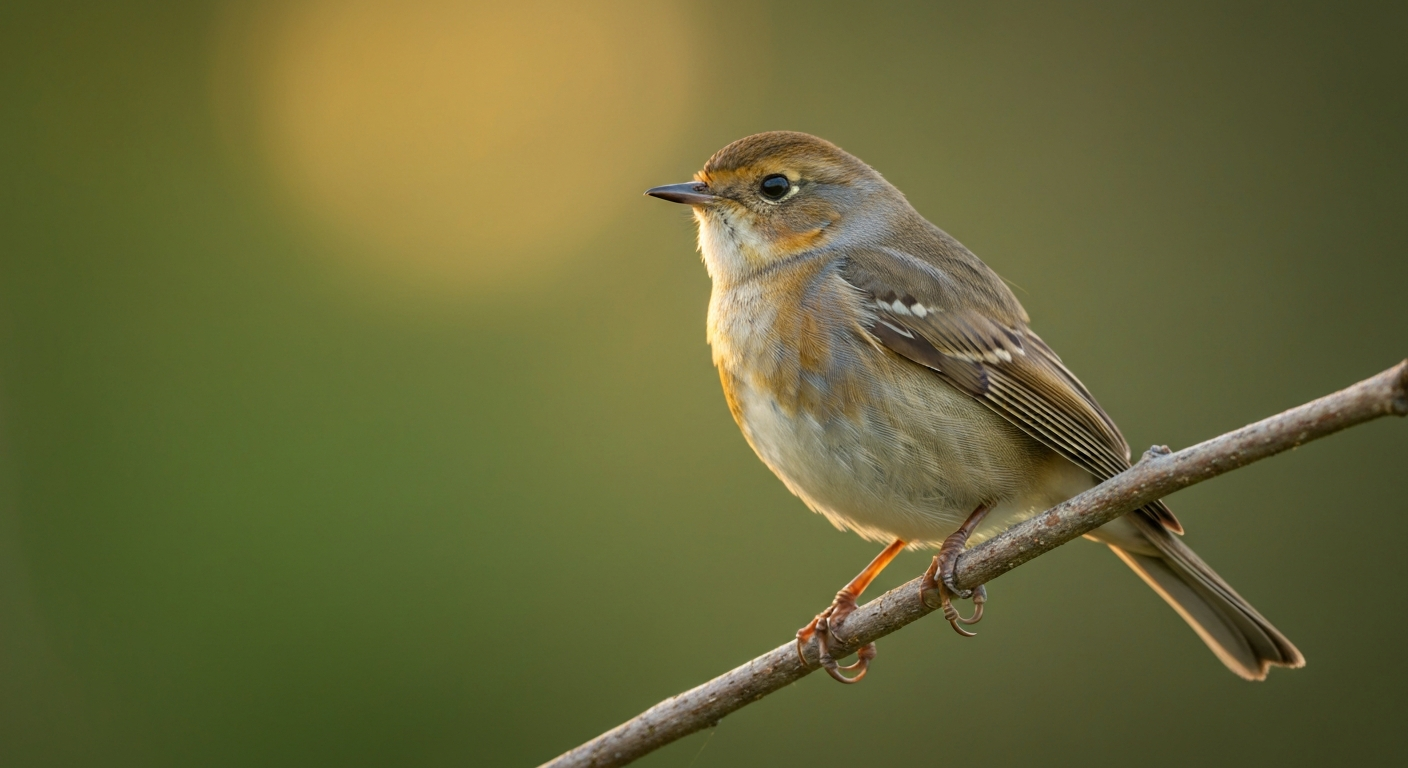
There is no bird species officially called the "Hotspur bird." When you see or hear that phrase, it is almost always a vivid nickname or metaphor being applied to a real bird that displays fiery, bold, aggressive, or restless behavior. The word "hotspur" itself means an impulsive, rash, high-tempered person, and when someone slaps that label onto a bird, they are telling you something very specific about how that bird carries itself: fast, fearless, and not particularly interested in backing down.
Hotspur Bird Meaning: What It Usually Refers To and How to Tell

Marcus Whitley
18 Jun 2026

Where the word "Hotspur" comes from
"Hotspur" started as a personal nickname. It belonged to Sir Henry Percy (1364-1403), a medieval English nobleman whose hair-trigger temper and reckless battlefield courage earned him the epithet during his lifetime. The name really cemented itself in cultural memory through Shakespeare's Henry IV Part 1, where Hotspur is the play's most electrifying character: brilliant, impulsive, contemptuous of caution, and ultimately undone by his own inability to slow down. Shakespeare used Hotspur as a dramatic foil, and the name became synonymous with that exact personality type.
By the time the word entered standard English dictionaries, it had shed the specific person and kept the personality. Oxford, Collins, and Dictionary.com all define "hotspur" the same way: an impetuous or reckless person, someone who acts on heat rather than thought. That is the raw material being imported when anyone calls a bird a Hotspur. It is a character judgment, not a species classification.
"Hotspur bird" as a nickname: which birds actually get called this
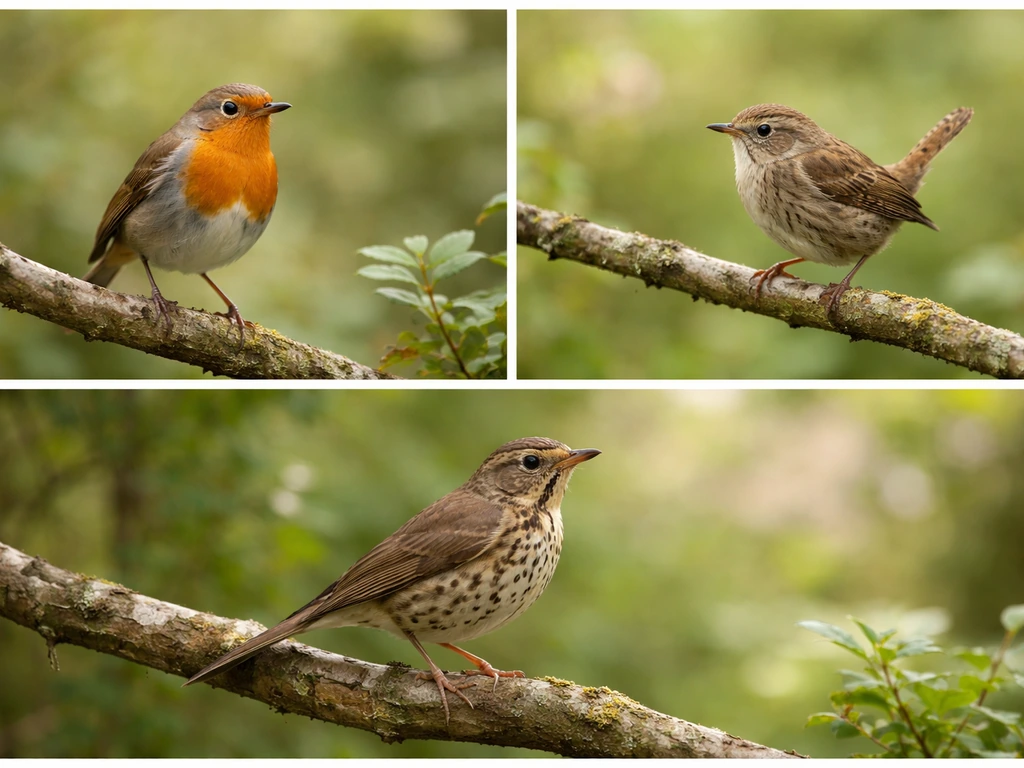
Because the phrase is informal, different people use it for different birds depending on what they are observing. That said, there are a handful of bird types that attract this kind of label repeatedly, and they all share the same core traits: territorial aggression, explosive speed or movement, or an outsized confidence relative to their size.
- Robin (especially the European robin): Famous for being aggressively territorial. Despite its small size and friendly garden reputation, the robin will attack other birds without hesitation and hold its ground against much larger animals. Calling one a "hotspur" is completely earned.
- Northern Mockingbird: Relentlessly aggressive in defense of its nest, known to dive-bomb cats, dogs, and humans repeatedly. The restless, never-backs-down energy fits the Hotspur label precisely.
- Red-winged Blackbird: Males in breeding season are notoriously bold attackers, swooping at anything that enters their territory regardless of the size difference.
- Kingfisher: The darting, fast-strike hunting style and solitary territorial behavior give it a Hotspur quality in regions where people use the nickname this way.
- Wren (especially the Eurasian wren): Comically aggressive for its size, with a loud, explosive song used to challenge rivals. Many folk traditions already associated wrens with outsized boldness.
- Any raptor described in context: Hawks and falcons sometimes attract "hotspur" as a descriptor in falconry writing or wildlife journalism when the bird is especially impulsive or aggressive in its hunting.
The specific bird being called a "Hotspur" will always depend on where you encountered the phrase and what behavior was being described. There is no single answer, which is exactly why context clues matter so much here.
What it means when a bird gets called a Hotspur
Calling a bird a Hotspur is a compliment and a warning rolled into one. It carries a specific cluster of traits that the speaker wants you to picture immediately.
| Trait | What it looks like in a bird | Emotional tone of the label |
|---|---|---|
| Boldness | Approaches threats instead of fleeing, holds its ground | Admiring |
| Aggression | Attacks unprovoked or disproportionately, dives at larger animals | Cautionary |
| Impulsiveness | Acts before assessing risk, reactive rather than strategic | Slightly comic |
| Speed/energy | Fast takeoff, explosive movement, never seems to rest | Energetic, vivid |
| Territorial intensity | Defends space obsessively, returns repeatedly to challenge | Dramatic |
The symbolism behind the nickname is not purely negative. Hotspur the historical figure was also admired for his courage, and that admiration travels with the word. When someone calls a bird a Hotspur, they usually find it entertaining and impressive, even as they are also maybe telling you to watch your head if you walk too close to its nest. It is the bird-world equivalent of calling someone a firecracker.
Where you are likely to see this phrase used

"Hotspur bird" shows up in a few distinct contexts, and knowing which one you are dealing with changes how you interpret it.
Informal speech and local dialect
In parts of Britain especially, where the word "hotspur" has deeper cultural roots, you might hear older locals use it as a genuine folk nickname for a particularly aggressive garden bird. It is the kind of regional nickname that never makes it into field guides but gets passed down verbally. If someone in a village pub tells you there is a "real hotspur" nesting in their hedge, they almost certainly mean a robin or a wren that has been terrorizing the neighborhood.
Social media, captions, and wildlife posts
On Instagram, TikTok, or X (formerly Twitter), "hotspur" might appear in a caption describing a bird video where a small bird is dramatically chasing off a much larger one. The person using it is almost always reaching for a punchy, historically-flavored word to describe bold behavior. In this context it is pure metaphor, not a species name, and you can usually tell the actual bird from the photo or video itself.
Wildlife writing and journalism
Nature writers sometimes use "hotspur" as a descriptive adjective or nickname within a piece, especially when they want to convey personality without using flat scientific language. A sentence like "the hotspur of the hedgerow" is using the word the same way Shakespeare used it, to compress a whole personality into a single striking word.
Fiction, folklore, and storytelling
In folk tales and fantasy fiction, a bird character might be named or described as a Hotspur to signal their personality role in the story immediately. Think of it as a shorthand character note. If a bird in a story is called Hotspur, you already know before the plot unfolds that this character will act first and regret it later, or alternatively will succeed through sheer audacity.
How to figure out which specific bird is being referenced

If you have encountered the phrase and you genuinely need to identify the bird being talked about, work through these steps in order.
- Check the location first. Where was the speaker, writer, or poster located? A British garden context points heavily toward European robin or Eurasian wren. A North American backyard context points toward mockingbird, red-winged blackbird, or American robin. Location narrows the field dramatically.
- Look for behavioral clues in the text or caption. Words like "dive-bombing," "chasing," "wouldn't back down," or "attacked my cat" are diagnostic. Match that behavior to the birds known for it in that region.
- Check for a photo or video. If the original post or story includes any visual, that is your fastest answer. Run it through a bird identification app like Merlin or iNaturalist if you are unsure of the species.
- Ask about size and color if you can. A small brown bird with a red breast is almost certainly a robin. A medium black bird with red-and-yellow shoulder patches is a red-winged blackbird. These details alone resolve most cases.
- Consider the tone of the source. If it is clearly metaphorical or poetic, the person may not be describing a single identifiable bird at all. They might be using "hotspur bird" to describe a person's energy, a sports team's mascot resonance, or a character trait. In that case, you are not looking for a species, you are interpreting a comparison.
The literary and cultural roots that make this metaphor stick
The reason "Hotspur" works so well as a bird descriptor is that Shakespeare already did most of the heavy lifting. In Henry IV Part 1, Hotspur's defining characteristic is that he is magnificent and exhausting in equal measure. He talks too fast, fights without calculating odds, and refuses every offer of patience or diplomacy. Those are exactly the traits people find both admirable and ridiculous in a small bird that squares up to a crow or a cat. The metaphor maps perfectly because the original character mapped perfectly.
There is also a long tradition in English literature and folklore of assigning human character types to birds. The owl gets wisdom, the dove gets peace, the raven gets mystery. The Hotspur role, the reckless, courageous hothead, was always a natural fit for certain birds. It just needed the right word, and "hotspur" was already in the dictionary waiting. This is similar to how other bird-based terms carry character weight: a "sport bird" implies vigor and spectacle, while a "dead starling" in storytelling carries an entirely different set of ominous connotations. Bird metaphors tend to compress a lot of cultural meaning into very few words.
The Tottenham Hotspur football club, named after the same historical figure, helped keep the word alive and familiar in British culture well into the modern era. That visibility means British audiences in particular arrive at the word "Hotspur" with strong existing associations: energy, fight, and a certain scrappy refusal to yield. When those readers see it applied to a bird, the resonance lands immediately.
Clearing up the most common misunderstandings
Is there an actual bird species called a Hotspur?
No. There is no bird with "Hotspur" as part of its official common name or scientific name in any recognized ornithological classification. If you search for it in a field guide or the Cornell Lab of Ornithology database, you will not find it. Any use of "Hotspur bird" is either a folk nickname, a metaphor, or an informal descriptor. If you are wondering what “skewer bird meaning” refers to, it is also typically a nickname used to describe a bird’s attitude or behavior rather than an official species name folk nickname.
Does it have anything to do with the Tottenham Hotspur mascot or logo?
Tottenham Hotspur's badge features a cockerel, which is sometimes called the Spurs cockerel or just "the bird on the badge." If someone is searching "Hotspur bird" in a sports context, they might be asking about that cockerel. The cockerel has its own meaning rooted in fighting spirit and vigilance, but that is a separate conversation from the general "hotspur bird" metaphor. If the context is football, the bird in question is a cockerel. If the context is nature writing or general conversation, it almost certainly is not.
Can "Hotspur bird" ever describe a person rather than an actual bird?
Yes, and this comes up more than you might expect. In casual speech, calling someone a "hotspur" or describing their behavior as "hotspur energy" is a way of saying they are impulsive and combative. In the Collins American English Thesaurus, “hotspur” is defined as “blank" rel="noopener noreferrer">an impulsive or reckless person,” which matches how the word is used for a fiery, reckless personality. Adding "bird" to it is often dialect or slang (in British English, "bird" can mean a person, particularly a woman, though the usage is old-fashioned). If you see the phrase in a text or social media comment directed at a person rather than describing an animal, that is the interpretation to apply. If you meant “Ahsoka bird meaning,” that phrase is a different cultural reference, and it helps to look at where it appears in the story or fandom.
What if I cannot figure out the context at all?
Default to the most common usage: someone is describing a real bird they observed behaving in an aggressive, bold, or restless way, and they chose "hotspur" as their descriptor because it captures the energy perfectly. The phrase is often misunderstood, but the dead starling bird meaning is usually about what people assume when they see a starling lying still. That interpretation will be correct the vast majority of the time. The metaphor is intuitive enough that even readers unfamiliar with the Shakespearean origin understand it immediately, which is exactly what makes it such a durable and useful piece of bird language.
FAQ
If I want to figure out the exact bird behind “hotspur bird,” what clues should I use first?
It is almost never an official species name, so you should identify the bird by what it looks and does (size, shape, calls, location), then decide whether “hotspur” fits its behavior (bold approaches, territorial chasing, quick startle reactions). If you cannot see the bird clearly, rely on the habitat and the described behavior rather than assuming a single species.
Does “hotspur bird” usually refer to the smaller bird or the bigger bird in a chase video?
In many posts, people use “hotspur” to mean a bird is asserting itself, but the “other animal” might be the real focus. When a video shows a small bird driving off a larger one, “hotspur” is usually describing the smaller aggressor, unless the caption explicitly says the larger one is the hothead.
Is there a single bird species most commonly called “Hotspur” in birdwatching circles?
Not reliably. Different speakers apply the label to different species depending on what they personally experience (a particular garden bird, a nest-guarder, a territorial winter visitor). The only consistent meaning is the attitude bundle: fast, fearless, and prone to confront rather than avoid.
Could “hotspur bird” mean the Tottenham Hotspur cockerel instead of a real bird attitude?
If someone uses “hotspur bird” in a sports context, they may be referring to the “bird on the badge” for Tottenham Hotspur (a cockerel), which is a different concept than the general metaphor for fiery behavior. A quick check is whether the surrounding text mentions the club, matches, or supporters.
How can I tell if “hotspur bird” is being used as slang for a person?
Yes, sometimes it targets a person rather than an animal. “Hotspur” can be used for impulsive, combative behavior, and in some dialects “bird” can be slang for a person. If the sentence includes human actions (arguing, provoking, running off), treat it as a social nickname.
What specific behaviors make the “hotspur” label fit most (nesting, chasing, something else)?
Look for nesting or territorial cues. If the behavior includes dive-bombing, relentless chasing, or repeated scolding flights near a specific spot, the speaker is likely labeling that nest-guard behavior as “hotspur.” If the bird is simply active or feeding normally, the metaphor may be more about personality than aggression.
If I see “Hotspur” as a bird character in a book or game, should I try to match it to a real species?
Because it is descriptive language, not a taxonomy term, it can be used for birds in fiction without matching real-world species behavior. In stories, “Hotspur” often signals a character trait (acts first, regrets later) more than accuracy about aggression levels or typical nesting habits.
What’s the most common way people misinterpret “hotspur bird meaning,” and how should I correct it?
Common mistake: taking it literally and searching field guides for “Hotspur bird.” Instead, treat it like a personality tag. A practical workflow is, first identify the bird species from marks or call, then compare the observed behavior to the hotspur traits (reckless boldness, territoriality, speed).
When I see “hotspur” in social media captions, is it likely metaphor or a hidden species name?
If the phrase shows up in captions, it is usually a tone word. The surrounding sentence matters: phrases like “chasing,” “squares up,” “won’t back down,” or “terrorizing” typically mean metaphor for attitude, not an attempt to name a species.
Does “hotspur” in bird descriptions always feel complimentary, or can it be a warning too?
The word “hotspur” comes from Shakespeare’s Hotspur, but that does not guarantee the same intent every time. If a post is clearly praising boldness, it is likely complimenting courage and energy; if it highlights danger near a nest or constant aggression, it is also a warning to back off.
Next Article
Perching Bird Meaning in English: Definition & Examples
Perching bird meaning in English: definition, anatomy, perching vs perched, usage examples and cultural notes.