"Quail" has two completely separate meanings in English, and which one you need depends entirely on context. If you see it in a sentence like "He quailed before his boss," that's the verb form meaning to shrink back in fear or lose courage. If you see it in a sentence like "We had quail for dinner" or "quail hunting season," that's the bird: a small, round, ground-dwelling game bird found across most of the world. Most people searching "quail bird meaning" are either trying to settle this exact confusion or confirm which sense applies to a specific sentence they've encountered.
Quail Bird Meaning and What Quail Means in English

Marcus Whitley
5 May 2026
Quail as a word: definition vs the bird
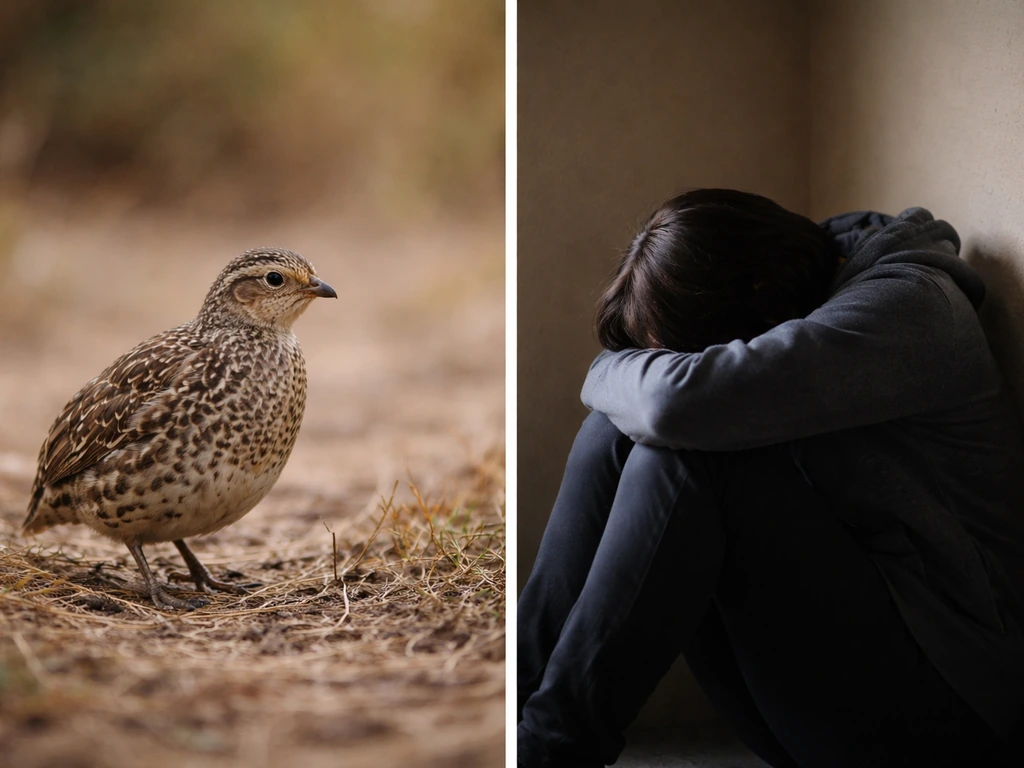
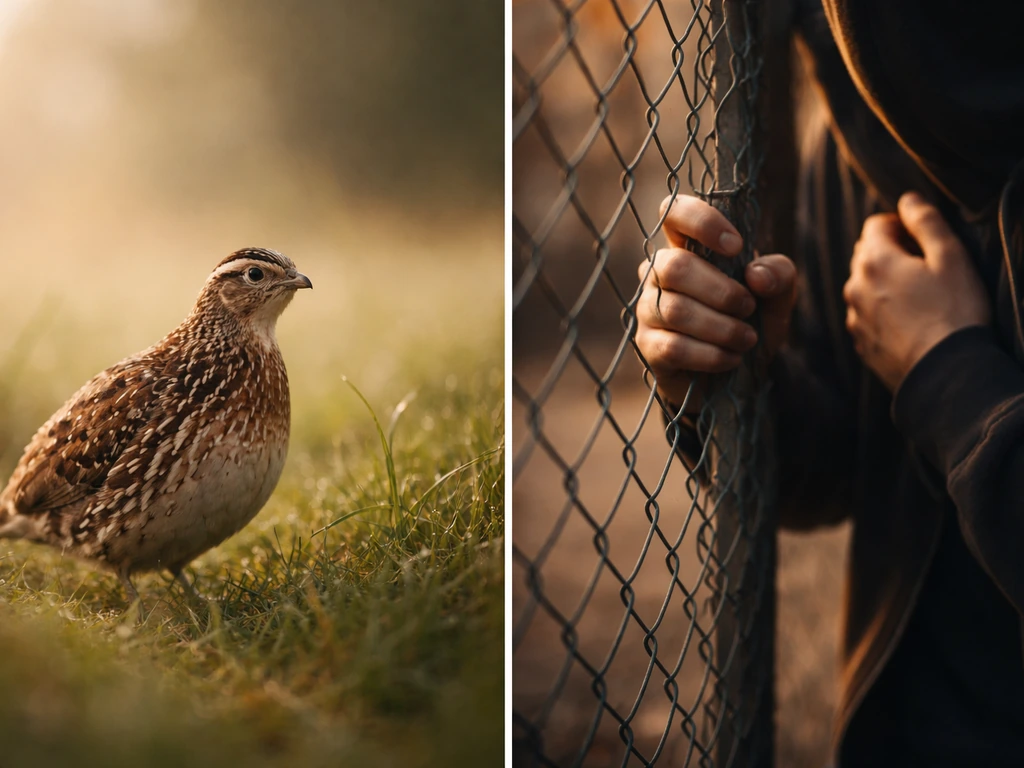
Here's the interesting thing about "quail": it functions as both a noun and a verb in English, and those two senses have nothing to do with each other. They're not related by metaphor, they don't share an origin story, and one didn't grow out of the other. They just happen to be spelled and pronounced the same way. That makes "quail" what linguists call a homonym, two entirely separate words that look identical on paper.
When you look the word up, major dictionaries like Merriam-Webster and Britannica explicitly split it into two numbered entries: "1 of 2" for the noun (the bird) and "2 of 2" for the verb (the fear behavior). The Free Dictionary even includes a "not to be confused with" note. So the confusion you're feeling when you search "quail bird meaning" is real and well-documented. You're not missing something obvious. The word genuinely does double duty.
"Quail" meaning in English: the verb, the noun, and everyday usage
The verb: to lose courage or shrink in fear
As a verb, "quail" means to recoil in fear, to cower, or to lose heart. Merriam-Webster defines it as "blank" rel="noopener noreferrer">to recoil in dread or terror." Oxford Learner's Dictionary calls it a literary term meaning "to feel frightened or to show that you are frightened. Oxford Learner’s Dictionaries defines “quail (at/before somebody/something)” as feeling or showing fear to feel frightened or to show that you are frightened. " It's intransitive, which means you don't quail something, you just quail. The sentence structure almost always pairs it with "at" or "before": you quail at the thought of something, or you quail before someone intimidating.
This is the less common of the two meanings in everyday conversation, but it shows up regularly in writing, especially older or more formal prose. It carries a strong sense of visible, physical shrinking, not just internal worry. Collins Dictionary puts it well: it implies hesitation born from fear. Some real examples from major dictionaries capture this well: "Other politicians quailed before him." "Charlie quailed at the sound of his mother's angry voice." "His courage never quailed." You can see the pattern immediately: the verb is emotional and reactive, never about animals or food.
The noun: the word in non-bird contexts
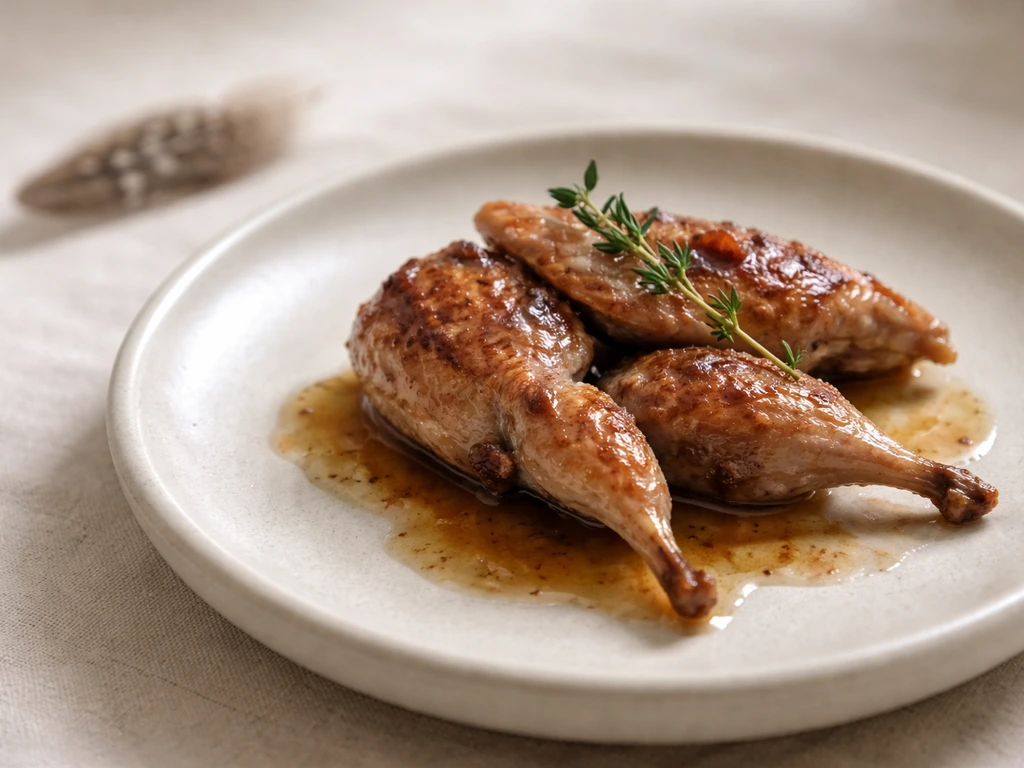
As a noun, "quail" refers to the bird (covered in full below), and in food contexts it can also refer to quail meat specifically. Cambridge includes "the meat of this bird" as part of the noun definition. So "we had quail for dinner" and "quail eggs are considered a delicacy" both use the noun form, referring to the animal or its produce. There isn't a separate noun form of "quail" meaning fear. The noun is always the bird.
How "quail" shows up in phrases and idioms
The verb form has produced a handful of common idiomatic patterns that you'll recognize once you know what to look for. The most frequent ones follow these structures: "quail at the thought/idea/prospect of" something, and "quail before" a person, enemy, or authority figure. WordReference lists real-world collocation examples like "quailed before the opponents," "quailed at his words," and "we quailed at the notion of shutting down the company." These are the natural habitats of the verb.
What these phrases imply culturally is a kind of moral or emotional failure under pressure. To say someone quailed before a challenge is to say they flinched, backed down, or lost their nerve. It carries a slightly judgmental tone in most contexts. Historically, this made it a useful word in political writing and drama, where showing or concealing fear had real social stakes. You'll find it in Shakespeare and 19th-century literature quite often. When modern writers reach for it, they're usually aiming for a slightly elevated or literary register.
On the bird side, "quail" doesn't anchor many English idioms the way pigeons, ravens, or doves do. You won't find "quail" in common proverbs the way you find "early bird" or crane symbolism. The bird's cultural footprint in English is more practical than symbolic, tied to hunting, cooking, and rural landscapes rather than metaphor. That said, quail do carry symbolic weight in some traditions. In certain Native American cultures, the quail represents family, protection, and community, partly because of its habit of traveling in groups called coveys and its strong parental behavior toward chicks. If you meant “lucy qinnuayuak a bird steals a fisherman meaning,” that is a separate phrase with its own interpretation, so it helps to look at the story or context it comes from. The zaouli bird is known in some traditions and descriptions, but its “meaning” depends on the source you’re using zaouli bird meaning.
Quail bird definition: what species people usually mean
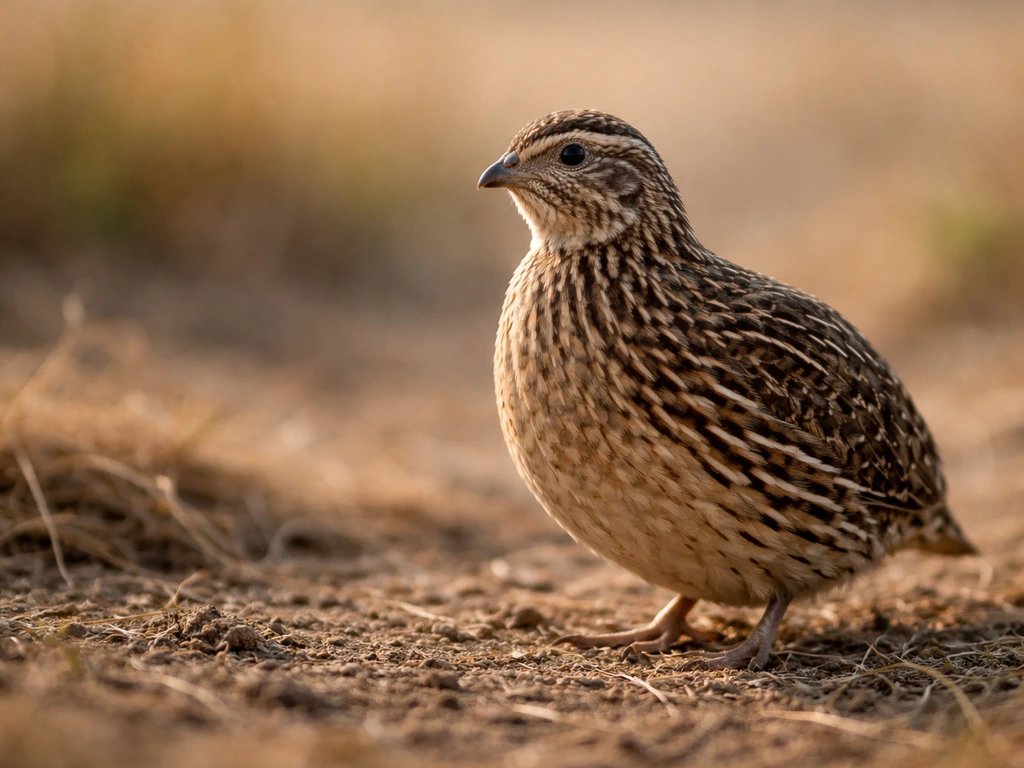
When someone says "quail" meaning the bird, they're usually referring to one of roughly 130 species of small, round, ground-dwelling game birds belonging to the families Phasianidae and Odontophoridae, in the order Galliformes. Britannica describes them as resembling partridges but generally smaller. They prefer open country and brushy borders, they're fast runners, and they nest on the ground. The hen typically lays around 12 eggs per clutch.
Which specific quail people picture depends a lot on where they are. In North America, the most familiar species are the bobwhite quail (named for its distinctive call), the California quail (also called the valley quail, Callipepla californica), and the Gambel's quail (sometimes called desert quail). In Europe and parts of Asia and Africa, the common quail (Coturnix coturnix) is the dominant species, and the Japanese quail (Coturnix japonica) is widely farmed for both eggs and meat. In 2007, the United States alone produced 40 million quail commercially.
In everyday use, when someone says "quail" without further specification, they usually mean whatever species is local to them. In American English contexts, that's most often the bobwhite or one of the western species. In British and European contexts, it's usually the common quail. In food and restaurant contexts globally, farmed Japanese quail is the most common source of quail eggs and meat.
Common confusion: the word "quail" vs the bird "quail"
The confusion between these two meanings is genuine, and it's not a sign of missing vocabulary. Even native English speakers can pause at a sentence like "She saw the quail and quailed" (grammatically valid, if deliberately playful). The honest reason the two senses coexist so quietly is that they almost never appear in the same genre of text. The verb sense lives in literary fiction, formal essays, and historical writing. The noun sense lives in hunting guides, recipes, wildlife field guides, and casual conversation about food and nature.
The search phrase "quail bird meaning" itself is a clue to the confusion. The phrase "bird quaaludes meaning" uses an unusual keyword, but it likely refers to the idea of decoding slang terms or misheard phrases quail bird meaning. The person adding "bird" is essentially flagging that they're aware "quail" could mean something else, and they want the animal definition specifically. Or they've encountered both meanings and want someone to sort it out for them. Either way, the disambiguation is straightforward once you know both senses exist. Zuni bird meanings can vary by tradition and context, but they are often explained through symbolism tied to specific birds.
Quick take: how to tell which meaning you need
The fastest way to determine which sense of "quail" is being used is to look at the words immediately around it. Here are the clearest signals:
| Context signal | Which meaning | Example |
|---|---|---|
| Followed by "at" or "before" | Verb (fear/cowardice) | "He quailed before the judge." |
| Followed by "eggs," "meat," "hunt," or "flock" | Noun (the bird) | "Quail eggs are a delicacy." |
| Conjugated with -ed, -ing, -s as a verb | Verb (fear/cowardice) | "She quailed at the news." |
| Preceded by "a," "the," or a number | Noun (the bird) | "A quail ran across the trail." |
| In a hunting, cooking, or wildlife context | Noun (the bird) | "Quail season opens in October." |
| In an emotional or dramatic scene | Verb (fear/cowardice) | "His courage never quailed." |
A few realistic examples to practice with: "The children quailed at the sound of thunder." That's the verb, fear, no bird involved. "We spotted three quail near the fence line." That's the noun, the animal, no emotion involved. "The quail scattered as we approached, and I quailed at the thought of missing the shot." That one actually uses both, the bird (noun) and the feeling of dread (verb), in the same sentence.
If you're still unsure after checking the surrounding words, the simplest next step is to ask whether the sentence is describing an animal or a feeling. If there's movement through physical space, nesting, eggs, hunting, or eating, it's the bird. If there's an emotional reaction to a threat, a person, or a situation, it's the verb. If the sentence is describing an emotional reaction to a threat, a person, or a situation, it's the verb, and you might also be interested in how other animal-name searches like huitlacoche bird meaning rely on context quail. There's almost no overlap between those two worlds in practice.
One more practical tip: if you're looking up "quail" in a dictionary and you see two separate entries or numbered senses, always check which part of speech the word is playing in your sentence before reading the definition. That single check will save you from a misread almost every time. The same approach works for any word that carries both a bird meaning and a separate figurative meaning, a pattern that shows up across plenty of other bird-related terms in English.
FAQ
How can I tell in a specific sentence whether “quail” means the bird or the verb?
Yes. The sentence “He quailed before his boss” uses the verb, while “We had quail for dinner” uses the noun (the bird or its meat). If you want to sanity check quickly, look for nearby context like eggs, hunting, or cooking (noun) versus a person or threat causing fear (verb).
Is “quail” (the fear verb) transitive or can it take an object?
The verb is usually intransitive, so it does not take a direct object. You typically say “quail at the thought” or “quail before someone,” not “quail him” or “quail it.”
In modern writing, is the verb sense (“quail” meaning fear) still common?
In everyday speech, the bird sense is much more common, but the fear verb still appears in formal writing. If you see “quailed” in an essay, novel, or historical text, it is far more likely to mean “cowered” than “a quail bird.”
Is “quail bird” a correct term to use when I mean the animal?
“Quail bird” is not a standard unit of meaning in most dictionaries, because “quail” already covers both senses. Adding “bird” usually clarifies you mean the animal, but it is not required for correct grammar.
When restaurants say “quail,” does it usually mean wild quail or farmed quail?
Food labeling can be confusing. When a menu says “quail,” it often refers to farmed Japanese quail in eggs and meat contexts, even if local wild species are different. The safest approach is to check the menu description (wild versus farmed) if that matters to you.
What keywords reliably point to the bird meaning versus the fear meaning?
If the text mentions coveys, eggs, nesting on the ground, hunting, or species names like “bobwhite” or “common quail,” you are almost certainly in the noun world. If it mentions hesitation, fear, or backing down in response to a person or threat, you are in the verb world.
Can “quail” be used as both bird and verb in the same sentence?
“Quail” can appear in the same sentence for both meanings (for example, a person hears gunfire, you spot the bird, and then the person feels dread). This is uncommon but valid, so if both physical-action terms and fear terms show up, expect a deliberate dual use.
What are common mistakes when I try to look up “quail bird meaning”?
If you mistype “quail” or rely on autocorrect, you can end up with the wrong meaning while still reading fluently. Double check spelling, especially if the sentence includes one word that suggests fear (at, before, dread) alongside words that suggest an animal (near, fence line, eggs).
When using a dictionary, what should I check to avoid picking the wrong “quail” definition?
To disambiguate in dictionaries, check the part of speech listed for the entry that matches your sentence. The same spelling can correspond to different numbered senses, so confirming whether it’s being used as a noun or a verb prevents choosing the wrong definition.
Next Article
Perching Bird Meaning in English: Definition & Examples
Perching bird meaning in English: definition, anatomy, perching vs perched, usage examples and cultural notes.