A "bird of bad omen" is a bird believed to signal that something unfortunate is about to happen. It's a figure of speech rooted in ancient divination practices, but it's also used literally in many cultures today. When someone calls a bird a bad omen, they mean it's a warning sign, not a guaranteed curse. The difference matters: an omen is a sign of things to come, not a direct cause of them.
Bird of Bad Omen Meaning: What It Signifies and Why

Marcus Whitley
2 May 2026
What "bird of bad omen" actually means in everyday English
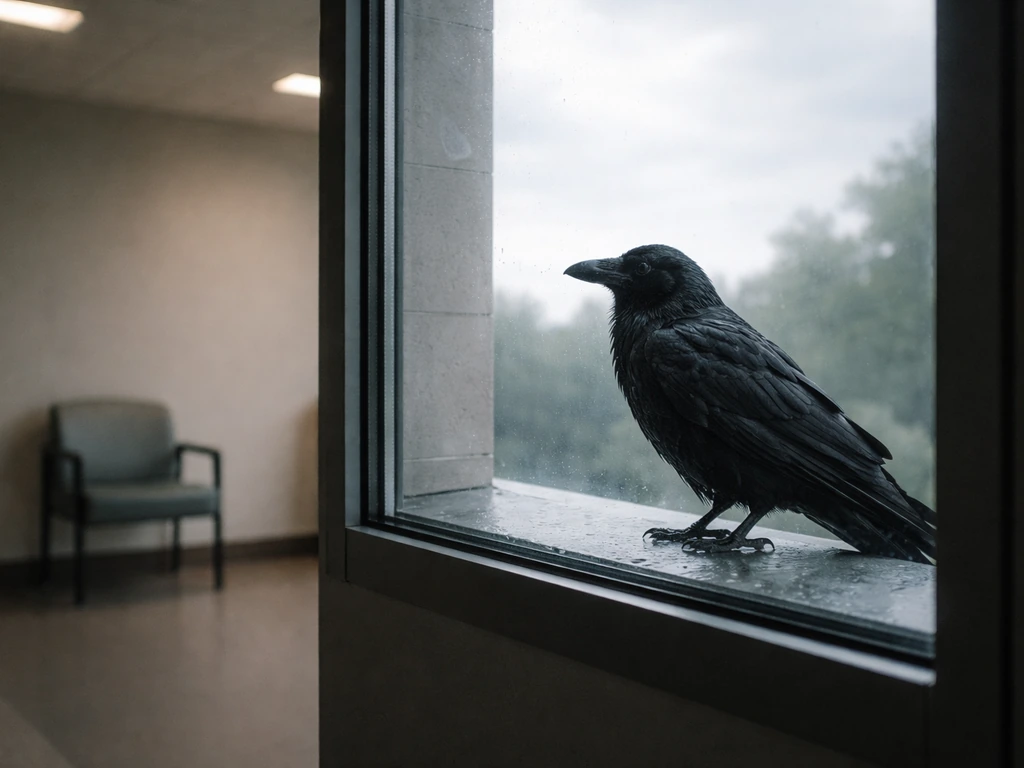
The phrase shows up in everyday conversation, literature, and folklore. If someone spots a raven perched outside a hospital window and mutters "that's a bird of bad omen," they're drawing on a long tradition of treating certain birds as living symbols of coming misfortune. Cambridge Dictionary defines a bad omen as "something considered to be a sign that something bad will happen in the future," and specifically uses a black bird like a crow as the go-to example. That's not a coincidence. The phrase has real staying power in English because the birds most associated with it are genuinely striking and memorable.
Technically, an omen can be good or bad. Merriam-Webster defines it as "an occurrence or phenomenon believed to portend a future event." But in practice, when people say "bird of bad omen," they've already made the judgment: this bird spells trouble. The phrase leans on the word "ominous," which shares the same Latin root as "omen" but has hardened into almost exclusively negative meaning in modern English. Literary tradition reinforces this. In Wuthering Heights, for example, a bird appears as a piece of imagery explicitly labeled "a bird of bad omen," signaling foreboding rather than literal prophecy.
It's also worth noting what the phrase doesn't mean. Calling a bird a bad omen is not the same as saying the bird causes misfortune. The belief is that the bird arrives as a warning or herald, not that it makes bad things happen. That distinction actually makes the folklore more interesting: our ancestors weren't claiming birds had supernatural powers. They were treating birds as messengers from nature or the spirit world, reading animal behavior the way we might read a weather forecast.
Which birds are actually considered bad omens, and where
The short list of classic "bad omen" birds looks similar across many cultures, though the specific associations shift depending on region and era. Here's how the major candidates break down.
Ravens and crows
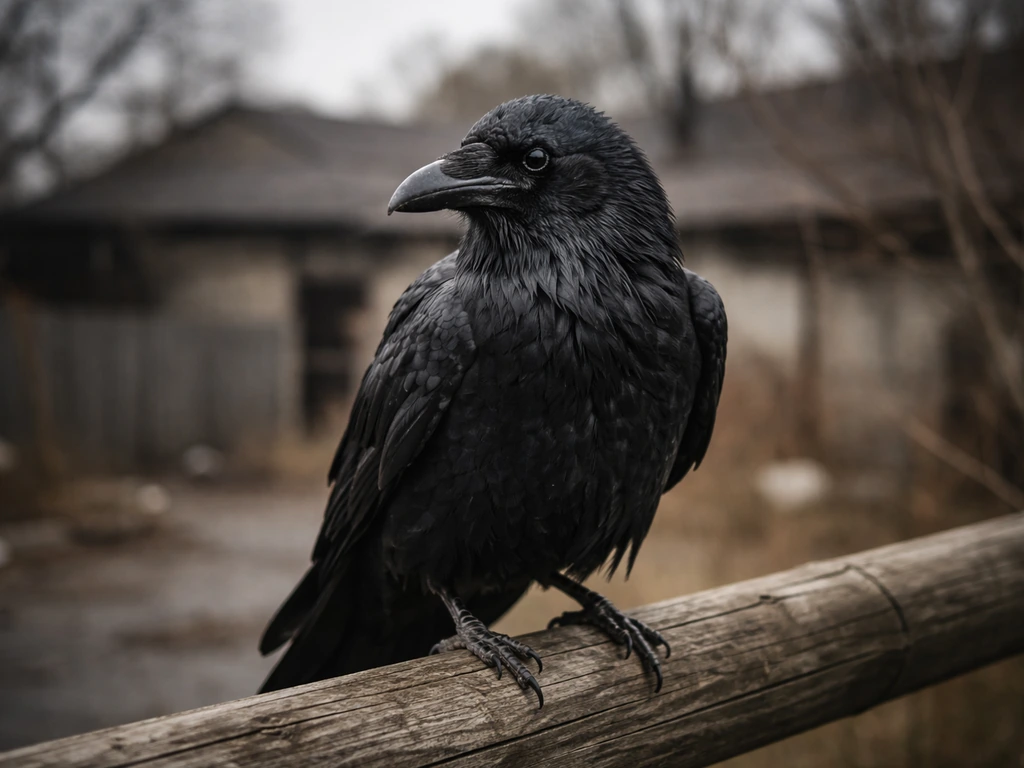
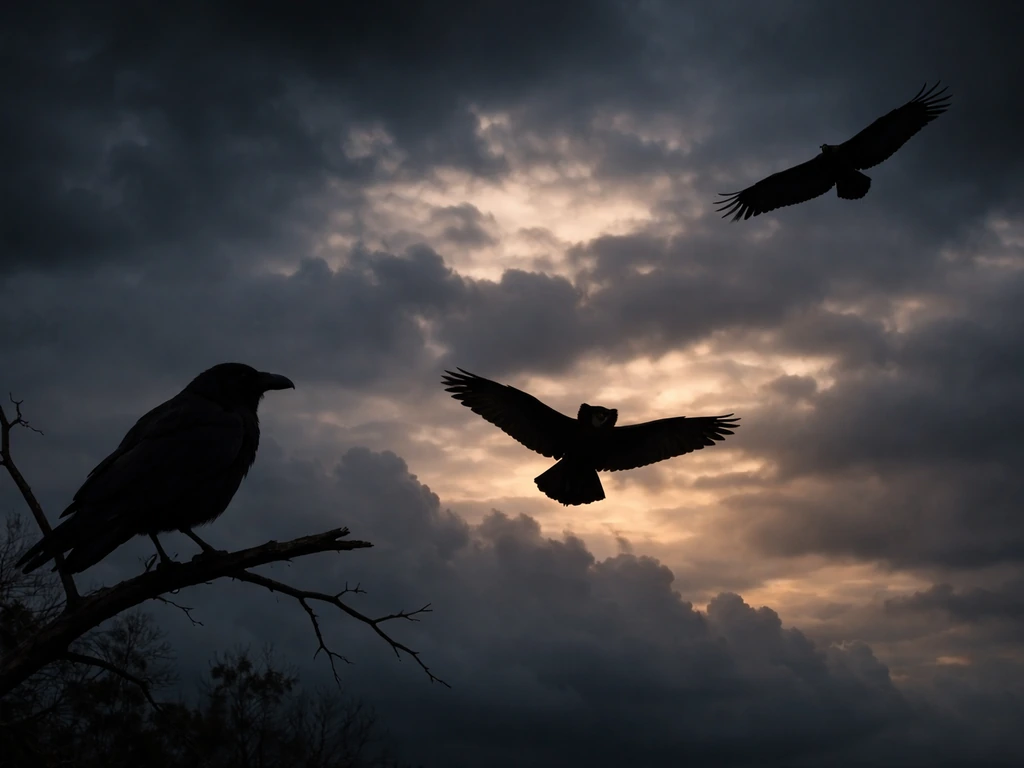
Ravens are probably the most globally recognized bird of bad omen in Western tradition. Their black plumage, intelligence, and historical association with battlefields and carrion gave them an eerie reputation early on. In many European traditions, ravens were linked to death, ill fate, and evil. Edgar Allan Poe didn't invent that connection. He just captured it perfectly. Crows carry similar symbolism, and the two are often grouped together in folklore, though ravens tend to carry more weight in formal myth while crows show up more in everyday superstition.
Owls
Owls are another heavy hitter in bad-omen lore, particularly in South Asian, African, and some European traditions. An 1894 folklore text records the belief directly: "a screech owl hooting near the house is a sign of death." In Sri Lanka, a creature called the "devil bird" (likely a barn owl or related species) was believed to foretell death when heard at night. Welsh folklore has the "Aderyn y Corff" or corpse bird, which modern accounts often identify as an owl-like species. The common thread: owls are nocturnal, their calls can sound eerily human, and they hunt other animals. All of that feeds the ominous reputation.
Storm petrels

Sailors historically called the European storm petrel a "bird of bad omen" because it tends to appear during stormy weather at sea. The association made practical sense: sailors noticed the birds before storms arrived, so the bird became a herald of disaster in maritime culture. It's a great example of real-world pattern recognition getting wrapped in superstition. The bird wasn't causing storms. It was tracking them.
Vultures and buzzards
Vultures circling overhead have an obvious connection to death and decay. American folklore has even produced the "belled buzzard," a creature whose bell-ringing is treated as an omen of disaster. Vultures don't kill their prey, they arrive after something is already dead, but that association with death is enough to earn them a place in the bad-omen canon.
Magpies and blackbirds
Magpies get their own omen tradition, most famously captured in the English nursery rhyme "One for Sorrow." The rhyme traces back to ornithomancy (divination by bird behavior), and seeing a single magpie is considered unlucky in British folklore. Blackbirds appear in various European traditions as well, often carrying more ambiguous symbolism that can shade toward bad news depending on context.
| Bird | Primary Region | Bad Omen Association | Practical Basis |
|---|---|---|---|
| Raven / Crow | Europe, North America | Death, ill fate, evil | Carrion-feeding, dark coloring, presence at battlefields |
| Owl | South Asia, Africa, parts of Europe | Death, disease, foreboding | Nocturnal, human-like calls, predatory behavior |
| Storm Petrel | Maritime Europe | Storms, disaster at sea | Appears before storms, associated with rough weather |
| Vulture / Buzzard | Americas, Africa | Death, decay | Scavenging behavior, circling above dead animals |
| Magpie | UK, Ireland | Bad luck (especially one bird alone) | Ornithomancy traditions, nursery rhyme culture |
| Strix (mythological) | Classical antiquity | Death, violence | Folklore creature feeding on flesh |
Why people connected certain birds to bad news in the first place
The association between birds and omens isn't random, and it isn't purely superstitious either. There are two threads worth pulling: the practical and the psychological.
On the practical side, many bad-omen birds have real behavioral signals embedded in them. Owls hooting more frequently during certain seasons, vultures gathering near sick livestock, storm petrels appearing before rough weather: these patterns gave ancient observers real information. Wrapping that information in omen language was their version of a warning system. The folklore encoded observational knowledge in a memorable, transmissible form.
On the psychological side, research on superstition and belief formation shows that humans are pattern-seeking creatures. When something bad happens after an unusual bird sighting, the brain tends to remember and connect the two events. It discounts the many times the same bird appeared without consequence. This is confirmation bias in action: we filter evidence to support a story we already believe. Scholars studying superstition note that it helps people replace a seemingly random world with a coherent causal narrative. If a raven appears and then something goes wrong, the omen framework gives that experience meaning and (in theory) predictive power.
Fear conditioning adds another layer. Certain bird behaviors, especially at night, can trigger a learned alarm response in people raised in cultures where those sounds carry ominous meaning. The screech of an owl near a house isn't just a sound. For someone raised hearing that it signals death, the brain processes it as a threat cue. That's not irrational, it's conditioned learning that persists across generations through cultural transmission.
How to interpret a bird sighting today without spiraling
If you've just seen a bird that feels ominous, here's the most useful thing to remember: an omen is a sign, not a sentence. Even within the folklore traditions that take bird omens seriously, the point is awareness and preparation, not doom. You are not cursed. But let's also work through what's actually happening when an unusual bird shows up.
Start with the simple explanations. Ravens and crows show up in urban and suburban areas more than ever because they're highly adaptable and intelligent. Owls may hoot near your house because your yard has good hunting ground (mice, voles, small animals). A vulture circling doesn't mean death is coming for you. It means something nearby may already be dead, which is just nature doing its job. Storm petrels near shore during a storm are doing exactly what storm petrels do.
Context matters enormously. A single crow on a fence is not the same as a large murder of crows mobbing a specific spot. A barn owl calling at dusk is its normal behavior. A bird repeatedly flying into your window is reacting to a reflection, not delivering a message. Before reaching for supernatural explanations, ask: what would a naturalist say about this? That reframe takes most of the fear out of the sighting.
If the sighting genuinely unsettles you, sit with the feeling rather than suppressing it. Bird-omen traditions often worked as prompts for reflection. "Something feels off" is sometimes the brain's way of flagging environmental details you noticed but haven't consciously processed yet. The folklore gave people permission to slow down and pay attention. That's still useful.
When the bird's behavior might actually signal a real-world issue
Sometimes a bird's unusual behavior really does indicate something worth acting on. Just not in a supernatural way.
Window strikes
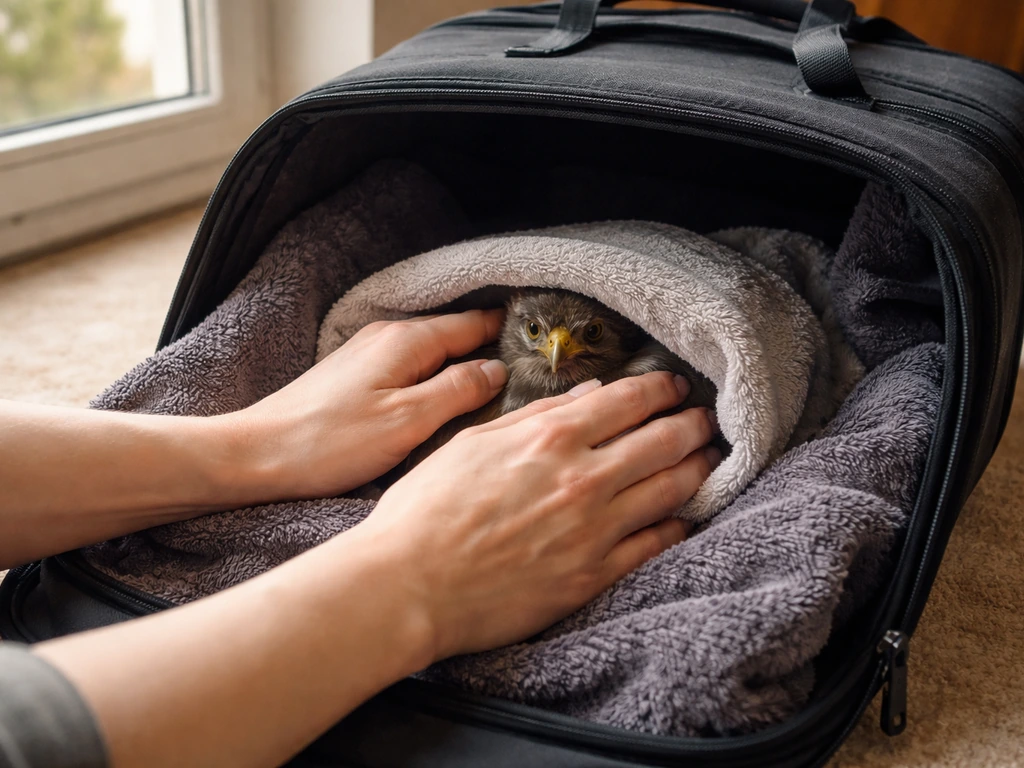
Window collisions are one of the most common causes of bird injury and death. Birds hit glass because they see reflections of sky and habitat and fly straight into it. If a bird is dazed or stunned on your porch or near your window, that's not an omen: it's a bird that needs help. Place it in a dark, quiet container (a cardboard box works), keep it away from pets, minimize handling, and check on it after an hour or two. If it hasn't recovered, contact a licensed wildlife rehabilitator. Tufts Wildlife Clinic and the Audubon Society both recommend this exact approach. The Fish and Wildlife Service also advises reducing interior light visible through windows, which draws birds in at night.
Dead birds near power lines
If you find dead birds under or near power infrastructure, that's a bird electrocution hazard, documented by USGS and the Avian Power Line Interaction Committee (APLIC). Birds can be electrocuted when their body bridges an energized part and a grounded component. This can also cause power outages. It's worth reporting to your local utility or fish and wildlife office, not as an omen, but as an infrastructure and wildlife safety issue.
Injured or orphaned birds
If you find a bird that appears injured (broken wing, visible bleeding, cat bite wounds, inability to fly), the right move is to contact a licensed wildlife rehabilitator. State wildlife agencies in Virginia, Washington, California, and Massachusetts all point toward the same path: minimize handling, provide a quiet temporary space, and get professional help. Don't attempt DIY rehabilitation. The CDC and state wildlife departments consistently advise calling a wildlife rehab facility or your state wildlife agency. If it's a public safety emergency involving a dangerous animal, contact WDFW enforcement or 911.
- If a bird hits your window and is stunned: place it in a dark, quiet box, keep it warm, check after 1-2 hours, contact a wildlife rehabilitator if it doesn't recover
- If you find a dead bird near power infrastructure: report to your local utility or state fish and wildlife office
- If a bird appears injured (broken bones, bleeding, bite wounds): contact a licensed wildlife rehabilitator, do not attempt home care
- If a baby bird has fallen from a nest: observe from a distance to see if parents return; contact a rehabilitator if no return after several hours or if there are obvious injuries
- If it's a public safety emergency: contact your state wildlife agency's enforcement line or 911
Related idioms and omen wording you'll run into
"Bird of bad omen" is the clearest form of the phrase, but it appears in variations across English and other languages. Bird meanings can also vary by region and culture, which is why you may see different birds paired with similar omen ideas Bird of bad omen. "Bird of ill omen" is equally common and older-sounding. "Harbinger" is the formal word for any creature (or event) that signals something is coming, and it's often attached to specific birds: "harbinger of doom," "harbinger of death." The word "ominous" itself comes from the same Latin root as "omen," and when people describe a bird as "ominous," they're using the same conceptual framework.
"Bird of doom" is a close sibling phrase with a slightly heavier emphasis on inevitability. You'll also encounter "death bird," "devil bird" (especially in South Asian contexts), and "corpse bird" in regional folklore. The nursery rhyme "One for Sorrow" is a perfect example of omen language baked into casual culture: most people who recite it don't consciously think of ornithomancy, but the rhyme is built entirely on the idea that magpie sightings can be read as signs.
In literature, "bird of bad omen" functions as an imagery device. Writers use it to signal foreboding without spelling out what's coming. When a bird of bad omen appears in a novel, the reader is being told: pay attention, something is shifting. That narrative function mirrors what the folklore was doing in real life: flagging a moment that might matter, creating a pause for reflection before events unfold.
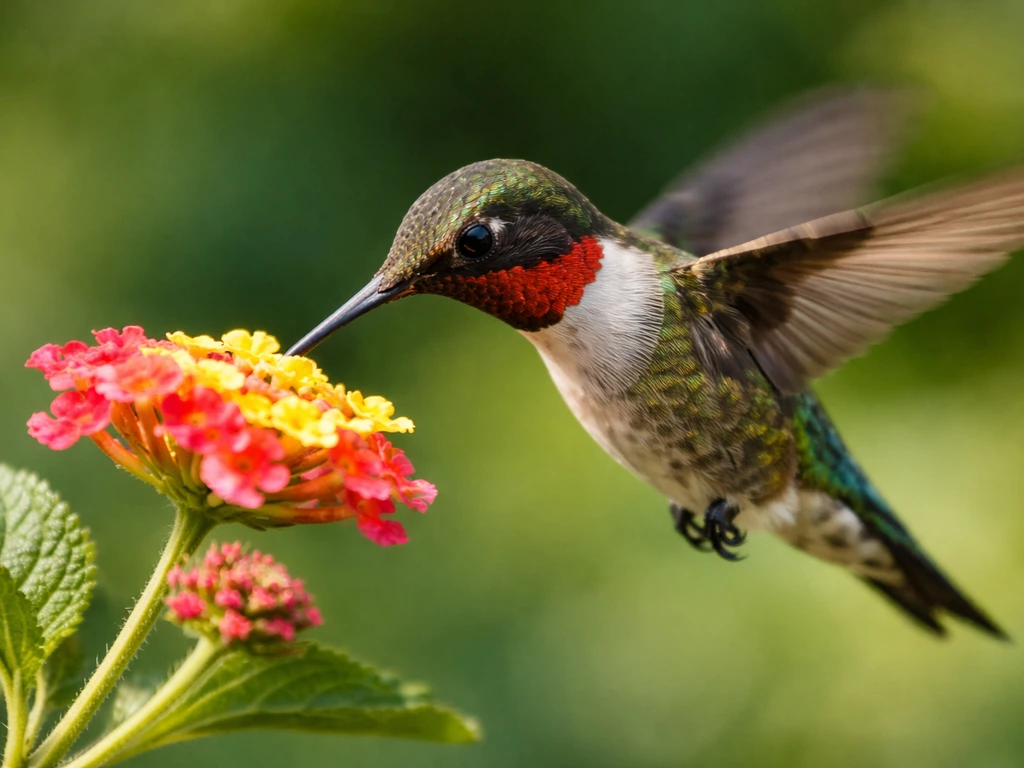
If you're exploring bird omens more broadly, the general category of bird omen meaning covers positive and negative signs across traditions, which gives useful context for understanding why the "bad" qualifier matters so much in this phrase. And if you're curious about specific birds that carry distinct symbolic weight on their own terms, the deeper symbolism of individual birds like owls, ravens, and storm birds each deserves its own unpacking. If you're curious about specific birds that carry distinct symbolic weight, the moon-bird meaning is another adjacent interpretation worth exploring alongside owls, ravens, and storm birds. Humming bird omen meaning is often treated as a sign related to guidance, hope, and change rather than a guaranteed warning of bad luck. In the same spirit, some people also look for patterns in hummingbirds and ask what their symbolism might mean in a broader “bird meaning” context.
FAQ
Is a “bird of bad omen” always a specific bird species?
Not always. The phrase can be used loosely for any striking or unusual bird, especially when someone already expects trouble. In that case, the meaning comes from context (location, timing, behavior) and the speaker’s cultural frame, not from the bird being a universally agreed “type.”
If I see a bird of bad omen, does that mean a curse or guaranteed event will happen?
No. In the traditions behind the phrase, the bird is treated as a sign, not an active cause. A useful way to think about it is like a warning light, it might prompt you to check conditions or pay attention, but it does not force a specific outcome.
What’s the safest way to interpret a “bad omen” sighting at night?
Nighttime increases the chance of misreading normal behavior as ominous, especially with owls and other nocturnal birds. First check if the sound or flight pattern matches typical hunting or calling times in your area, then look for practical factors like nearby light sources, pets, and reflective windows.
How can I tell the difference between a meaningful sign and normal bird behavior?
Look for repeatable, non-random patterns. For example, a barn owl calling at dusk in the same area is likely routine, while a bird repeatedly hitting a window is a navigation problem. If the bird’s behavior matches a known natural explanation, that usually reduces the need for omen-based interpretation.
Does a flock or “murder” of crows mean more than one crow?
Often people assume intensity equals inevitability, but the number alone rarely tells the full story. A larger group can mean feeding, territorial behavior, or mobbing a local threat to the crows, so it is helpful to observe what the birds are reacting to nearby.
Are birds that circle overhead always a bad omen?
Not in a literal sense. Vultures and similar scavengers commonly circle because they are searching for carcasses, which can happen without it having anything to do with you personally. The more relevant question is whether something might be dead nearby, such as on road edges or in fields.
What should I do if the bird seems dazed or is found near my window?
Treat it as an injury or collision case, not a message. Put the bird in a dark, quiet container, keep it away from pets, and minimize handling. If it does not improve after about an hour or two, contact a licensed wildlife rehabilitator.
Can dead birds near power lines indicate danger even if it feels like an omen?
Yes, and it should be handled as a safety issue. A dead bird near energized infrastructure can point to electrocution risk and may also contribute to outages. Report it to your local utility or relevant wildlife or fish and wildlife office rather than assuming it predicts personal misfortune.
Is it ever appropriate to call emergency services for a “bird omen” situation?
Call 911 or local emergency services only if there is immediate public safety risk, such as a dangerous animal situation. For most bird encounters, the correct next step is wildlife rehab or the state wildlife agency, especially when the bird is injured or unresponsive.
What’s a common mistake people make when interpreting bird omens?
Overgeneralizing from one coincidence. People often remember the times a bird appeared before something bad and ignore the many times nothing happened. A practical countercheck is to ask, “What natural explanation best fits the behavior I saw?”
How should I react emotionally if the sighting genuinely unsettles me?
Instead of immediately concluding disaster, treat the feeling as a signal to slow down and check details you may have overlooked (noise source, lighting, animals nearby, environmental changes). If the fear persists or interferes with daily life, grounding it in observable facts can help.
What does “bird of ill omen” add compared with “bird of bad omen”?
It is essentially the same idea with a slightly older tone. The key distinction is emphasis: “ill omen” often sounds more formal or traditional, but the underlying meaning still points to an interpreted warning sign rather than proof of a guaranteed curse.
Next Article
Hummingbird Bird Meaning: Symbolism, Spiritual Signs, and Dreams
Explore hummingbird bird meaning in symbolism, folklore, and dreams, plus how context like color and behavior changes th