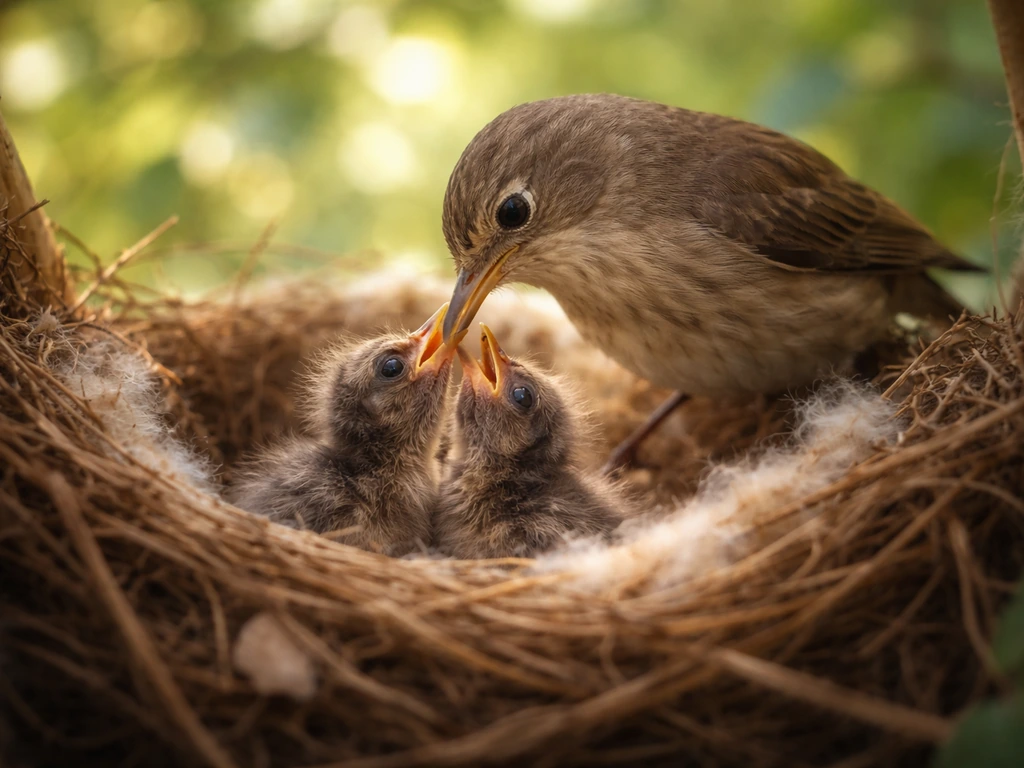
A 'mother bird' is, at its most literal, a female bird doing what birds do: sitting on eggs to keep them warm, feeding nestlings, brooding over newly hatched chicks, and protecting her young from threats. That's the plain biological sense, and it's the starting point for nearly every metaphorical use you'll encounter. When people use the phrase figuratively, they're almost always reaching for one of four ideas: nurturing, protection, instinct, or home. The image of a bird sheltering chicks under her wings is one of the oldest and most universal caregiving symbols in human language.
Mother Bird Meaning: Literal Definition and Symbolism

Marcus Whitley
7 May 2026
What 'mother bird' actually means in plain English
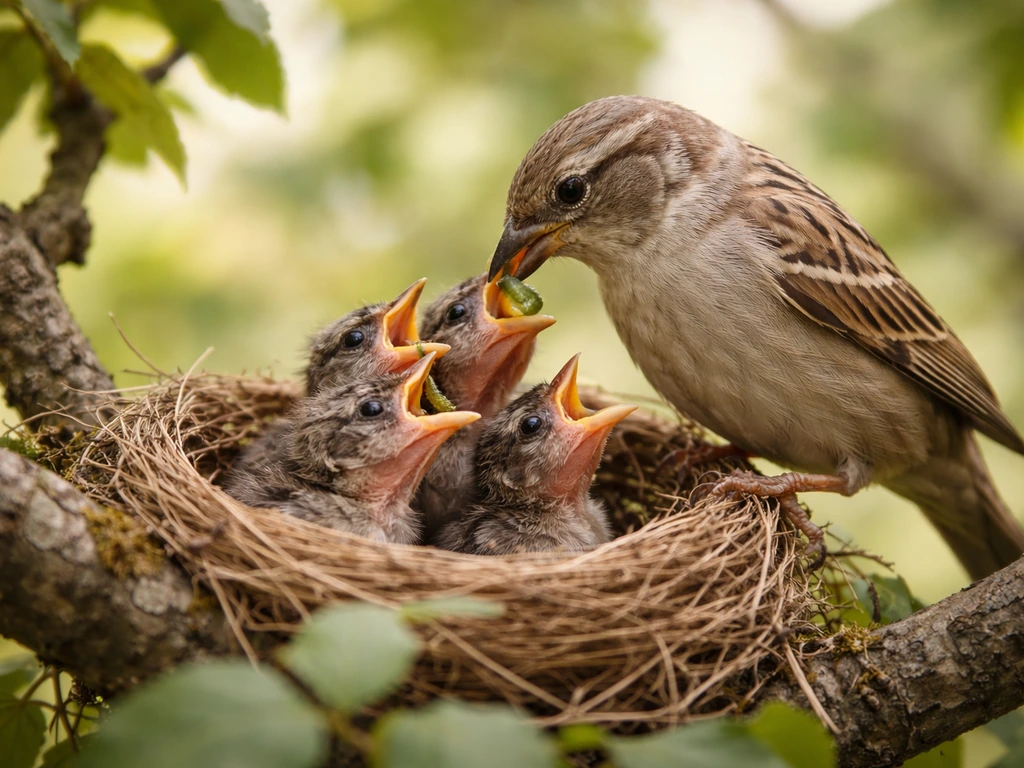
Wiktionary lists 'mother-bird' as a standard English compound (plural: mother-birds), and Dictionary.com uses it in example sentences like 'I watched as the mother bird fed her baby.' That tells you something useful: this isn't a technical term or a poetic invention, it's everyday language for a bird in a maternal role. Biologically, the mother bird's core jobs are incubation (sitting on unhatched eggs to keep the embryo warm), brooding (sitting on hatched chicks to keep them warm), and feeding (delivering food directly to the nestlings, often regurgitated). In species like the American goldfinch, the mother bird feeds her young regurgitated seeds and insects as they develop. In many species, the male assists with some of these tasks, but the female's role tends to be most closely associated with the 'mother bird' label.
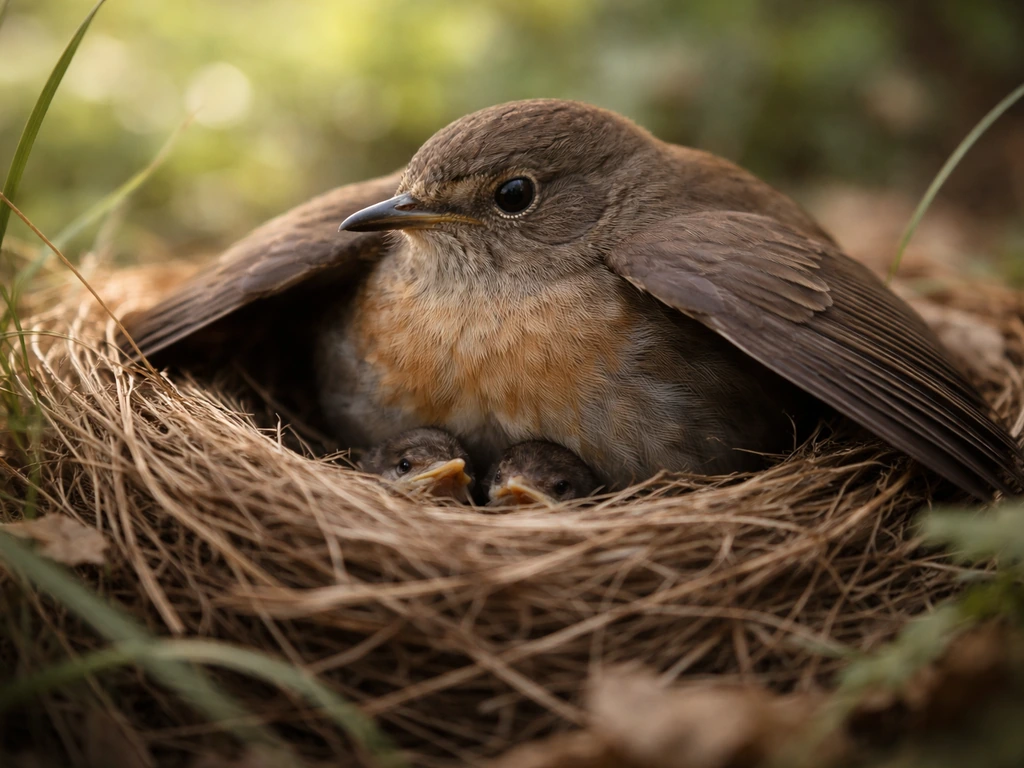
One useful distinction worth knowing: incubation and brooding are two different behaviors. Incubation happens before hatching, the mother sits on eggs to maintain the warmth the embryo needs to develop. Brooding happens after hatching, she covers the chicks to regulate their body temperature. Most people use 'mother bird' to describe both stages without differentiating, and that's fine in everyday language. The important thing is that the phrase always implies active, hands-on care, not just genetic parenthood.
The symbolism packed into the mother bird image
The reason 'mother bird' carries so much symbolic weight is that the behaviors are so visually dramatic and emotionally legible. A bird spreading her wings over chicks, sitting on a nest through rain, or diving at a predator to defend her young, these are instinctive acts that humans have interpreted as love, courage, and devotion for thousands of years. Four symbolic themes come up again and again:
- Protection: The wing-covering gesture is the central image. A mother bird physically shields her young with her own body, making her a natural symbol for refuge and safety.
- Nurturing: Feeding nestlings is patient, repetitive, and total—the mother bird gives everything she has to sustain fragile life. That maps directly onto human ideas of selfless caregiving.
- Instinct: A mother bird doesn't deliberate. She acts. That quality—pure, unthinking devotion—is what makes 'mother bird' feel like a symbol of primal love rather than calculated affection.
- Home and return: The nest itself is part of the symbol. The mother bird doesn't just protect her young; she creates the environment they return to. That makes her an emblem of home, belonging, and origin.
These four themes overlap constantly, which is why 'mother bird' works so well as a shorthand. When a writer or speaker reaches for the image, they're usually drawing on all of them at once rather than just one.
Cultural and mythic associations across traditions
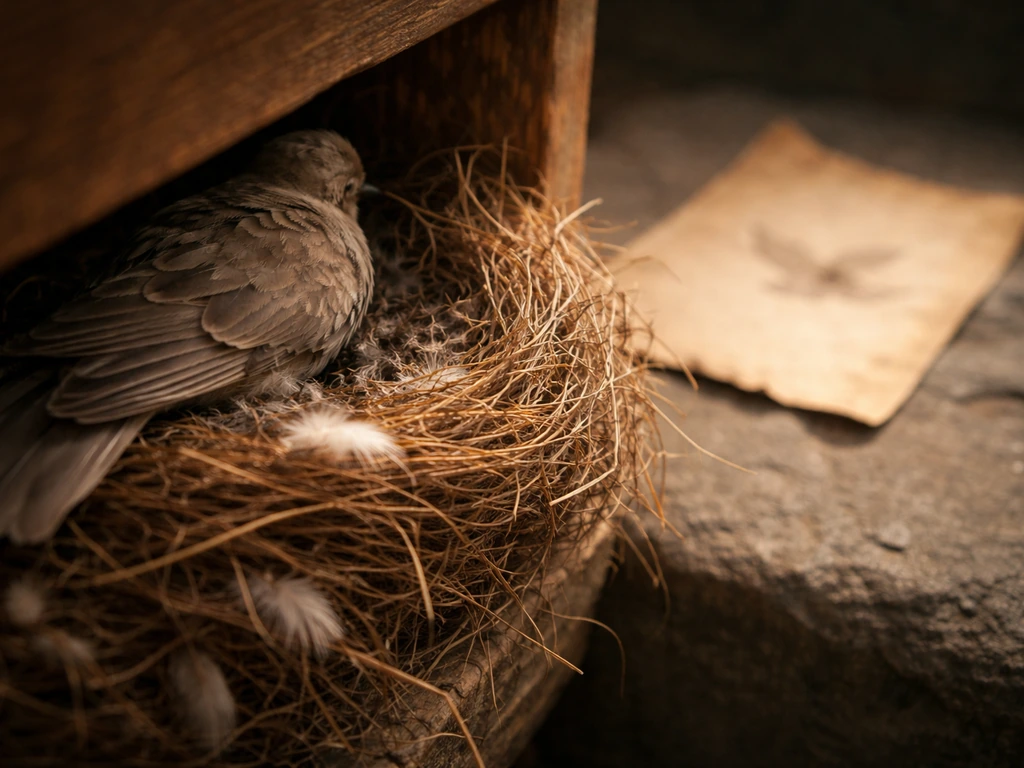
The mother bird symbol appears across cultures with remarkable consistency, which suggests it's tapping into something genuinely universal about human experience. In the Hebrew Bible, Deuteronomy 22:6 explicitly describes a scene where a mother bird sits on her chicks or eggs in a nest, the physical reality of incubation and brooding used as a moral anchor point. The verse commands compassion for the mother bird, which tells you the culture understood her protective presence as something worth honoring. That same imagery feeds directly into Psalm 91:4, where God is described as covering the faithful 'under his wings', a metaphor that only works if the audience already understood what a mother bird under whose wings her chicks shelter looks like. Christian sermon traditions and devotional writing have used the 'shelter of the mother bird' frame for centuries to communicate the idea of divine protection and refuge.
In Isaiah 31, religious scholarship has identified what it explicitly calls 'the metaphor of the mother bird', protective, hovering, shielding. The image of a mother duck covering ducklings under her wings appears in Messianic and Christian devotional texts to illustrate the same idea. This isn't coincidental. The mother bird is one of the few animal images that crossed seamlessly from literal observation into theological metaphor because the behavior itself, sheltering fragile life with your own body, is such a clean visual argument for protection and love. Outside the biblical tradition, bird mother figures appear in Indigenous folklore, East Asian symbolism, and European folk tales, usually anchoring the same themes: care, home, guidance, and the fierce protectiveness of a parent.
How people actually use 'mother bird' in language
In everyday usage, 'mother bird' functions in a few distinct ways depending on context. Here's how to recognize each one:
| Usage context | What 'mother bird' is doing | Example |
|---|---|---|
| Biological/descriptive | Literal subject term for a female bird performing parental care | 'The mother bird feeds her young regurgitated seeds and insects as they grow.' |
| Educational/informational | Practical label in nature writing or Q&A content | 'Will the mother bird return if you touch the nest?' |
| Poetic/literary | Personified image carrying emotional weight about grief, guardianship, or love | 'She sat with brooding wing'—from a published poem about loss and devotion |
| Religious/spiritual | Metaphor for divine protection, shelter, and refuge | 'Take refuge under the wings of the mother bird' as an image of God's care |
| Casual/social | Affectionate label for a nurturing person or caregiver | 'She's such a mother bird about making sure everyone is fed.' |
Notice that the casual social use, calling a person a 'mother bird', tends to be warm and affectionate rather than critical. That's one of the key ways it differs from 'mother hen,' which we'll get to in a moment. A NASA publication uses the phrase in a straightforward informational way, asking rhetorically whether a mother bird will return to a nest after human contact, showing that even in professional nonfiction, 'mother bird' stays grounded in its literal behavior while carrying an implied emotional weight (the return, the concern for the young).
Mother bird vs. mother hen: knowing the difference
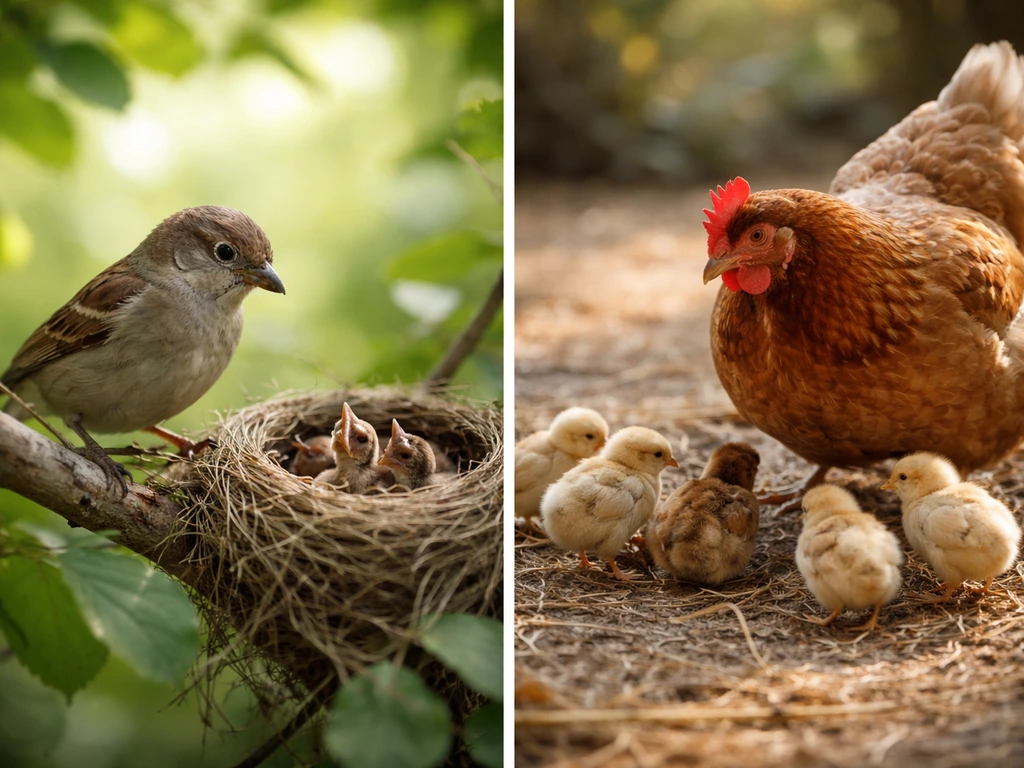
These two phrases look similar and share caregiving territory, but they work very differently in language. 'Mother bird' is primarily a literal descriptor that can extend into warm metaphor. 'Mother hen' is a fixed idiom with a specific, often slightly negative, figurative meaning. Merriam-Webster defines 'mother hen' as a person who assumes an overly protective maternal attitude, fussy, smothering, hovering in an unwanted way. Britannica and Dictionary.com are consistent on this: 'mother hen' implies the protection has tipped over into something excessive or annoying. Collins Dictionary similarly defines blank" rel="noopener noreferrer">“mother hen” as a person who is protective toward others, often to a degree considered excessive.
When you call someone a 'mother bird,' you're usually being affectionate or admiring. When you call someone a 'mother hen,' there's almost always a gentle criticism tucked in, this person is overprotective, overinvested, treating adults like chicks who can't manage on their own. That distinction matters when you're interpreting how either phrase is being used in context. 'She's such a mother bird to her students' reads as a compliment. 'She's such a mother hen about everything' reads as a mild complaint.
| Phrase | Primary register | Connotation | First known formal use |
|---|---|---|---|
| Mother bird | Literal, then warm metaphor | Nurturing, protective, instinctive (positive) | Long-standing compound; standard English |
| Mother hen | Fixed figurative idiom | Overprotective, fussy (mildly negative) | Early 1950s (Merriam-Webster) |
The concept of 'mama bird' overlaps closely with 'mother bird', both are used literally and affectionately, though 'mama bird' tends to feel more casual and colloquial. If you're exploring that territory, the related idea of mama bird carries its own nuances worth looking at separately.
How to interpret 'mother bird' in quotes, poems, and sayings
When you encounter 'mother bird' in a poem, quote, or caption and you're trying to figure out what it means, here's a practical framework. If you also want to know what “mother bird” means in a specific context, start by looking at the surrounding words and the tone of the quote. Start with the context clues around the phrase and ask three questions:
- Is there a nest, eggs, or chicks mentioned nearby? If yes, the phrase is likely operating literally or in close parallel to the literal—the writer wants you to picture the actual bird and then feel the emotion that image carries.
- Is the 'mother bird' a human being, or is it describing a bird that represents a human? If the subject is human, you're in full metaphor territory and the meaning is almost certainly about nurturing, protection, or fierce devotion.
- What's the emotional tone of the surrounding text? Grief, guardianship, and love are the most common emotional registers for 'mother bird' in literary contexts. A brooding wing image in a poem is rarely just ornithology—it's almost always about emotional weight, loss, or fierce protective instinct.
A published poem titled 'The Mother Bird' (Prescott) uses the phrase alongside imagery like 'the mother sat' and 'brooding wing', personifying the bird to carry themes of grief and guardianship. That's a clean example of how the literal bird behavior (sitting, brooding) becomes the vehicle for human emotion. In religious writing, when you see 'mother bird' paired with 'wings' and 'shelter' or 'refuge,' the writer is almost certainly drawing on the Psalm 91 or Deuteronomy tradition of divine protection, the literal nest becomes a metaphor for safety under God's care.
In everyday sayings and captions, think social media or casual speech, 'mother bird' usually signals admiration for someone's caregiving instincts. It's warmer and less ironic than 'mother hen,' and it tends to emphasize the instinctive, selfless quality of the care rather than its intrusiveness. If someone calls you a mother bird, take it as a compliment: they see you as someone who shows up, protects, and nurtures without being asked. If you are curious about the meaning of the mother bird expression more broadly, the idea usually points to caregiving, protection, and an instinctive home-like shelter.
FAQ
Does “mother bird” always mean a literal bird, or can it be purely metaphorical?
In writing, the phrase can work as a label for real parent behavior even when the subject is metaphorical (for example, “mother bird” as a stand-in for a caregiver), but you can usually tell by whether the sentence includes incubation, feeding, brooding, nesting, or wing-sheltering language. If those biological actions are invoked, the meaning stays closer to the literal caregiving image.
Can “mother bird” ever sound negative, like “mother hen”?
If the tone is critical or ironic, “mother bird” can shift from affectionate to pointed, especially when it highlights control or constant hovering. Use context clues like complaints about micromanaging, lack of trust, or guilt pressure, and compare it to “mother hen,” which is more likely to carry that negative edge even without extra hints.
What’s the difference between “mother bird” and just saying someone is a mother?
A quick check is whether the speaker is talking about protecting dependents (nurturing, sheltering, feeding) or about a person’s role as a biological or adoptive parent. “Mother bird” in most idioms emphasizes hands-on care and protective action, so references to genetics without caregiving behaviors usually do not fit as well.
How do I choose between “mother bird” and “mother hen” when I’m writing?
In most everyday uses, “mother bird” is affectionate and admiring, but “mother hen” is the better match when the speaker complains that someone’s protectiveness feels excessive or smothering. If you want to convey appreciation, “mother bird” is the safer choice; if you want to convey criticism, “mother hen” is more idiomatic.
How can I tell whether a text means incubation, brooding, or feeding when it says “mother bird”?
Incubation is pre-hatching, brooding is post-hatching, and feeding is the ongoing delivery of food to nestlings, often including regurgitated food in many species. If a text mentions “sitting on eggs” it is usually incubation, if it mentions “covering chicks” or warmth regulation it is usually brooding.
When “mother bird” appears in religious or spiritual writing, what nuance is most likely intended?
In quotes that pair “mother bird” with refuge, covering, or shelter, writers often mean the protective imagery under wings, drawing on a long religious tradition. If the passage also uses “under” language (under her wings, under God’s covering) the metaphor of safety is usually the main point.
In everyday captions and social media, what does “mother bird” typically mean?
If the phrase appears in a caption or social post, it often functions like a compliment to caretaking, showing up for someone, or offering steady support. The meaning is more likely positive when the surrounding words mention students, babies, patients, or kindness, and less likely positive when the surrounding words mention control or refusal to let others learn.
What is the correct plural form of “mother bird,” and does it matter in formal writing?
Yes, “mother-birds” follows normal compound pluralization, though you will see it less often in informal speech. If you are writing a formal caption or description and need plural, use “mother birds” as the most readable option.
Next Article
Mama Bird Meaning: Definition, Examples, and Symbolism
What mama bird meaning is, with clear definitions, examples, and symbolism for nurturing, protection, and guidance.