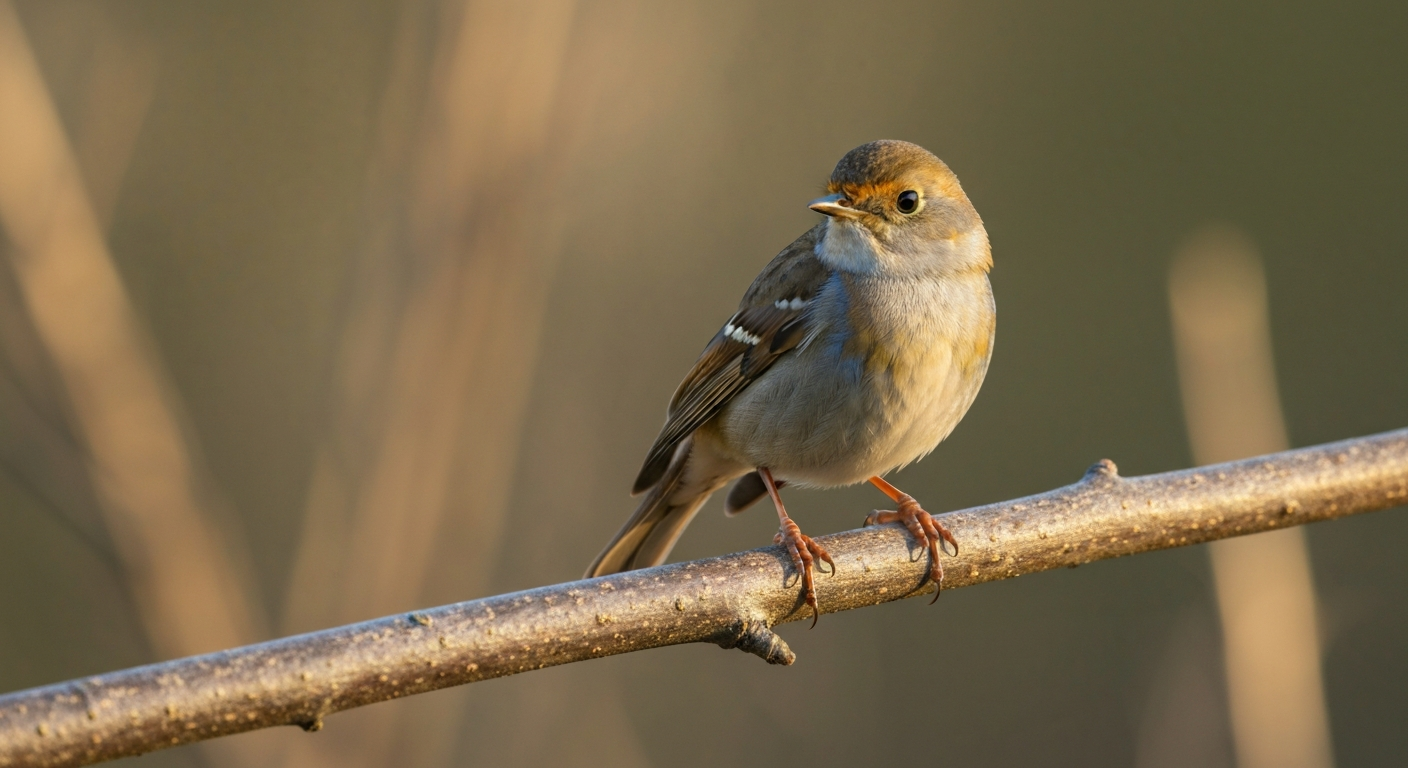
"Mama bird" means a mother bird, plain and simple. But in everyday conversation, it almost always means more than that. People use it as a warm, intuitive shorthand for nurturing, protection, and the kind of instinctive caregiving that humans associate with birds tending their nests. Whether you've seen it in a children's book, heard a parent describe themselves as a "mama bird" watching over their kids, or spotted it in a song lyric, the core meaning is the same: someone who provides, protects, and guides.
Mama Bird Meaning: Definition, Examples, and Symbolism

Marcus Whitley
17 Apr 2026
What "mama bird" usually means
"Mama bird" is a descriptive noun phrase, not a fixed idiom. You won't find it listed in Merriam-Webster the way you'd find "early bird" or "bird's-eye view." It's built from two simple pieces: "mama" (a nursery word for mother, widely used in informal English) and "bird." Put them together and you get a casual, affectionate way to refer to a mother bird or, by extension, anyone who acts like one.
Because it's not a codified idiom, "mama bird" is flexible. Its meaning shifts based on context. In a nature documentary or a children's story, it describes an actual bird. In a parenting blog or a text from a friend, it's almost certainly a metaphor. That flexibility is actually what makes the phrase so useful and so enduring in everyday language.
The literal meaning: real birds, real caregiving
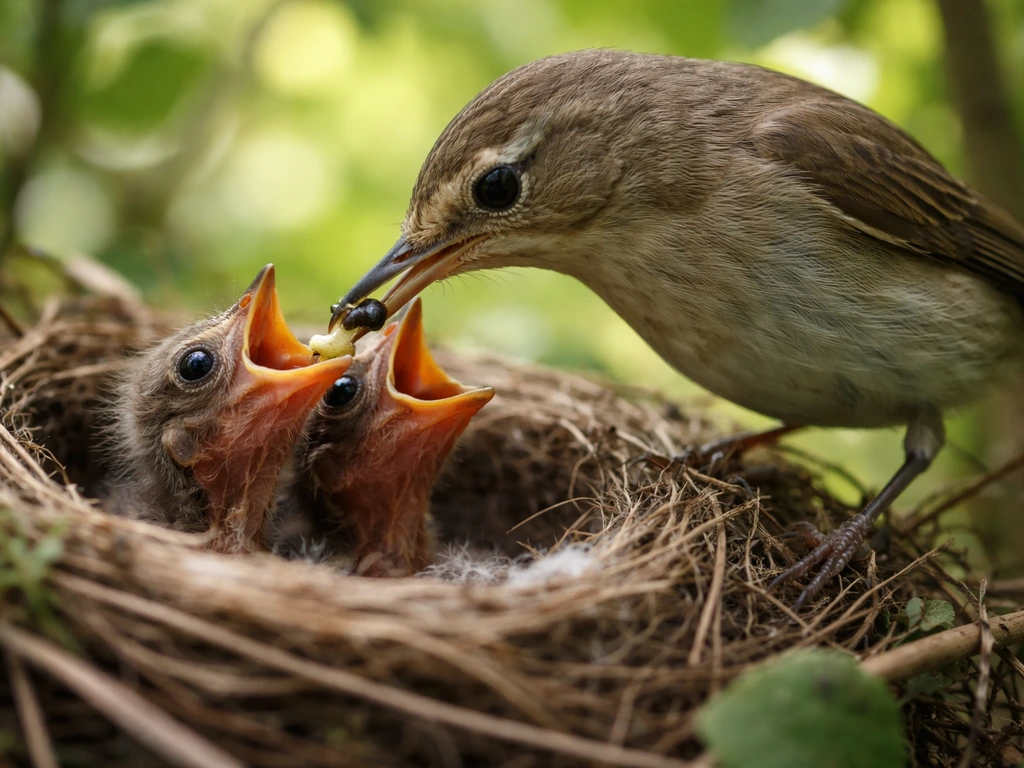
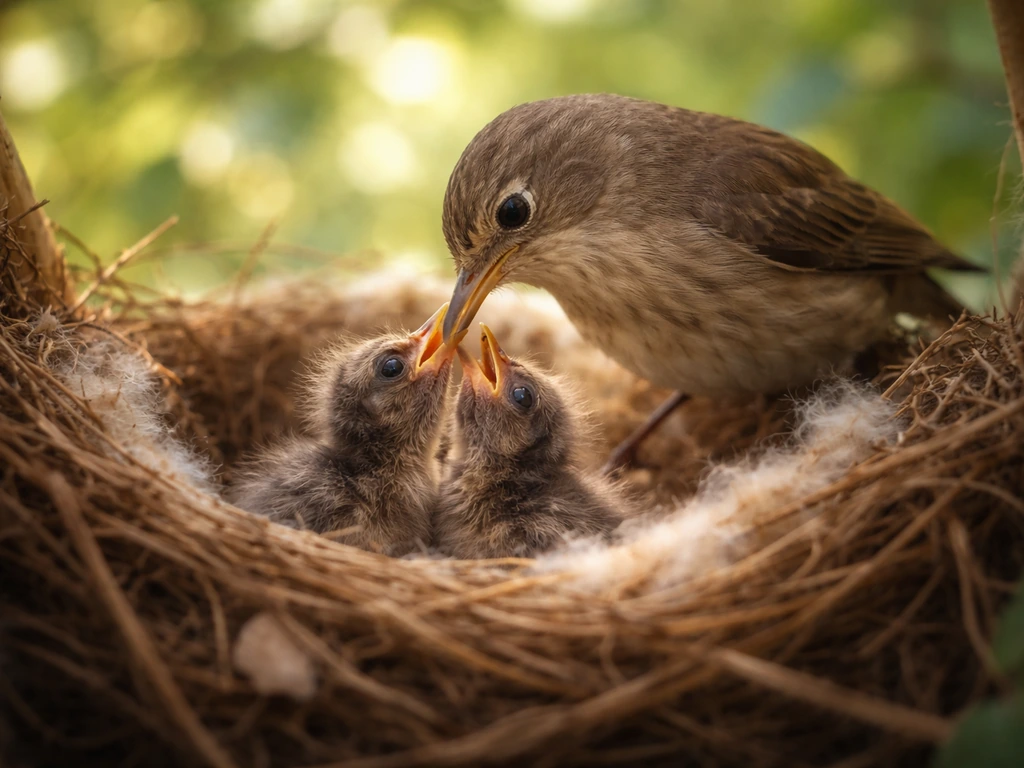
In its most straightforward sense, "mama bird" refers to a female bird caring for her young. In kid-focused picture stories like this one, the “mama bird” character is framed as protective and concerned for babies, mirroring the common literal usage in children’s content children's book. Bird maternal behavior is genuinely remarkable, and it's worth understanding why the imagery stuck so hard in human language. Most bird species share incubation duties, but in many familiar backyard species, the female does the lion's share of brooding, feeding, and protecting the nest. She regurgitates food for hatchlings, shields them from predators with her own body, and coaxes fledglings out of the nest when they're ready to fly.
The specific act of a mama bird feeding chicks by transferring food from her beak to theirs has even given English a figurative verb: to "mama bird" something means to pre-process or hand-deliver information in the simplest possible form. You'll occasionally see this in tech or education slang, though it's not widespread. The underlying image, a bird passing nourishment directly and carefully, does all the communicative work.
It's worth noting that not every bird species follows the same pattern. In some species the male does most of the brooding; in others, both parents share equally. But the cultural shorthand of "mama bird" draws on the most visible and familiar examples: robins, sparrows, wrens, and similar species where the female's nest-tending behavior is conspicuous and easily observed. The phrase reflects human perception of bird behavior as much as it reflects ornithological fact.
The figurative meaning: nurturing, protection, and guidance
When people apply "mama bird" to humans, they're leaning on a specific set of qualities: unconditional care, protective instinct, and the kind of attentiveness that anticipates needs before they're even voiced. A parent who hovers at the playground is a "mama bird." A teacher who checks in on struggling students outside of class is described as being "like a mama bird." A friend who makes sure everyone in the group gets home safely plays the mama bird role.
Notice the phrasing people use: "like a mama bird" is far more common than just "she's a mama bird" in figurative speech, which is a clue to how the phrase works linguistically. It functions most naturally as a simile, drawing a comparison rather than a direct label. That said, using it as a direct nickname ("oh, she's the total mama bird of this friend group") is completely natural and widely understood.
The figurative meaning also carries a subtle second layer: the idea that a mama bird eventually has to let go. The image of pushing fledglings from the nest is a well-worn parenting metaphor for releasing children into independence. So "mama bird" can describe both the act of deep, hands-on caregiving and the bittersweet moment of stepping back. Both ends of the parenting spectrum, from total immersion to deliberate release, are embedded in the phrase.
Where you'll actually see this phrase
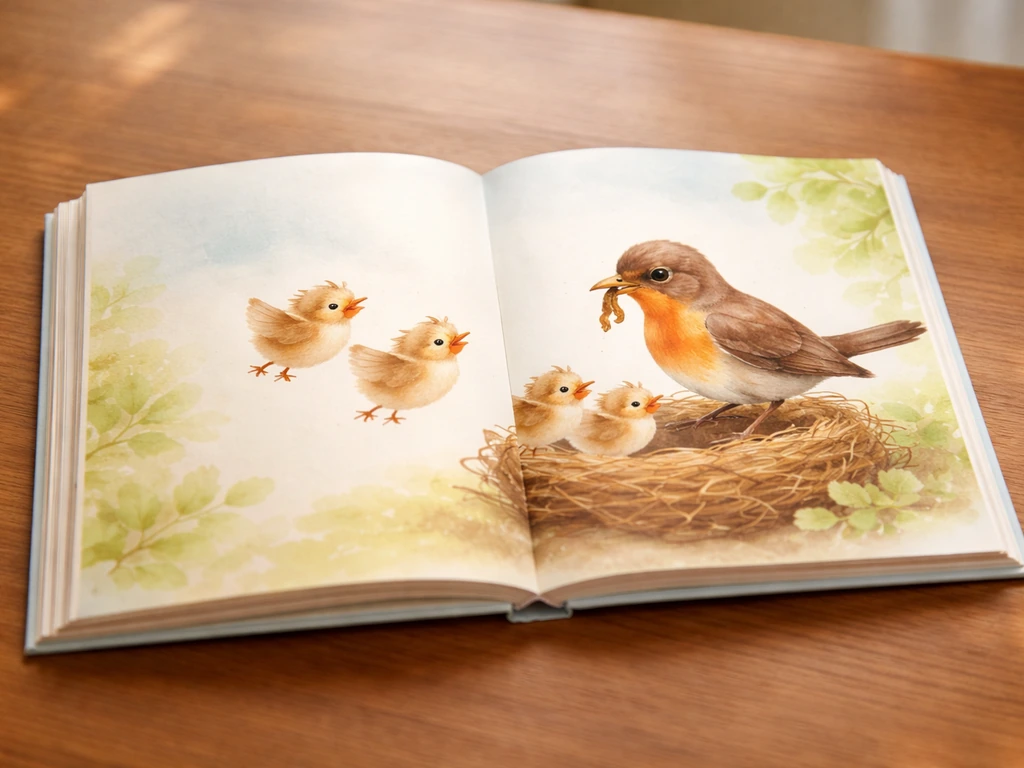
"Mama bird" shows up in a few predictable places. Children's books and early-reader stories use it constantly. For example, educational reading materials use the literal nesting sense of a “mama bird” staying by the chicks Children's books and early-reader stories use it constantly.. Think of the classic pattern: small animals return to their mother after an adventure, and "mama bird" is the warm, safe anchor they come home to. The phrase carries zero complexity for young readers and communicates everything they need to understand about the relationship.
In parenting content, blogs, and social media, it's used as a self-identifier and a term of affection. A parent calls themselves a mama bird in the context of worrying, over-preparing, or coddling. It's often self-deprecating and fond at the same time: "I'm fully in mama bird mode over here, packing three extra snacks for a two-hour trip."
You'll also find it in song lyrics and pop culture, usually in emotional or nostalgic contexts. It appears in folk and country music as a symbol of home and unconditional love, and in story-driven songs where the mama bird figure represents everything the narrator left behind or is trying to return to. In all of these cases, the symbolism is consistent: safety, warmth, and belonging.
One adjacent term worth understanding is mother bird meaning, which carries the same core concept but with slightly more formal or literary weight. "Mama bird" is warmer and more colloquial; "mother bird" can appear in both casual and more elevated contexts. The emotional register is the main difference.
Symbolism and cultural connections
The mama bird as a symbol of nurturing is ancient and cross-cultural. In ancient Egypt, the vulture goddess Mut (whose name literally means "mother") was depicted in bird form as the protective mother of the pharaoh. In Native American traditions across many nations, birds who tend their young are associated with creation, protection, and the transmission of wisdom across generations. The image of a bird sheltering chicks under her wings appears in the Hebrew Bible, in Buddhist art, and in countless folk traditions worldwide.
In Western literary tradition, the mama bird figure often represents the tension between protection and freedom. This is probably why the "pushing out of the nest" metaphor resonates so deeply: birds are creatures of flight, creatures of freedom, and yet the first phase of their existence is complete dependence on a caregiver. The mama bird holds both realities at once, and that's exactly why the symbol is so emotionally rich.
Some birds carry specific symbolic weight in this context. The wren, for example, is associated in European folklore with fierce maternal protection despite her tiny size. The eagle mother, in Indigenous North American symbolism, represents strength and vision passed from parent to child. If you're interested in how specific birds map to these kinds of meanings, the myna bird meaning is a useful comparison point: myna birds, associated with mimicry and communication, show how individual species accumulate their own symbolic layers on top of shared bird archetypes.
It's also interesting to look at how closely related terms develop their own distinct symbolic identities. The meaning of mynah bird, for instance, draws on the bird's real-world characteristics (its vocal mimicry, its social intelligence) to build a symbolic profile that's quite different from the generalized mama bird archetype, even though both fall under the broad category of bird symbolism.
How to tell which meaning applies
When you encounter "mama bird" in a sentence, the context usually makes it obvious within a few words. Here are the clearest signals:
- If the sentence describes animal behavior, a nest, eggs, or a specific bird species, it's literal. Example: "The mama bird returned to the nest with a worm."
- If the sentence involves a human being compared to a bird, or uses "like a mama bird," it's figurative. Example: "She hovered like a mama bird while her kids played near the pond."
- If it's a direct label applied to a person ("You're such a mama bird"), it's figurative and affectionate, usually meaning protective or nurturing.
- If it appears in a children's book or nature writing aimed at young readers, it's most likely literal even if the prose is anthropomorphized.
- If it appears in song lyrics, poetry, or personal essays without a specific bird species mentioned, it's almost certainly symbolic.
One quick disambiguation test: ask whether the sentence would still make sense if you replaced "mama bird" with "a real female bird tending her nest." If yes, it's probably literal. If it sounds bizarre, you're looking at a metaphor. This same interpretive lens applies to lots of bird phrases, including some surprising ones: what does "mine that bird" mean is a good example of a bird phrase that sounds literal but actually has a specific figurative history behind it.
The bottom line: "mama bird" is doing something quite specific in English. It takes the observable behavior of a mother bird caring for her young and uses it as a ready-made image for human caregiving at its most instinctive and unconditional. Whether you're reading it in a picture book, a parenting forum, a poem, or a text message, that core meaning, protection, nourishment, and love, is always what's doing the work.
FAQ
How can I tell if “mama bird” is literal or metaphorical in a sentence?
In most writing, you can treat it as metaphor unless the surrounding sentence names a species, a nest, incubation, feeding chicks, or an actual scene outdoors. If it appears in a message about parenting, worry, or guidance, it almost always means the human caregiver role.
Can “mama bird” mean different things depending on the context, or is it always the same?
Because it is informal and not a fixed idiom, it can shift from “mother bird” to “protective caregiver” and even to “supportive instructor.” A simple way to avoid misreading is to look for verbs (hover, pack, guide, teach) that point to people rather than birds.
What does it usually mean when someone calls themselves a “mama bird”?
Yes. People often use it as self-deprecating affection, especially when they are over-preparing, checking repeatedly, or monitoring safety. If you are responding to someone who says this, mirroring with encouragement (not correction) usually fits the tone.
Does “mama bird” always refer to a biological mother, or can it be used for other caregivers?
It can be gendered and biological, but many speakers use it more about caregiving behavior than strict gender. In practice, it can still apply to any adult who plays the nurturing, protective “nest-tender” role, so don’t assume it refers only to the biological mother.
Is “mama bird” associated with gentle parenting only, or can it imply strict protection too?
In figurative use, “mama bird” does not necessarily imply permissiveness or gentle parenting. It can include firm protection, close supervision, and decisions made to prevent harm, which is why it sometimes shows up in discussions about boundaries and safety.
What’s the difference in tone between “mama bird” and “mother bird”?
A close cousin is “mother bird,” which reads slightly more formal or literary, while “mama bird” reads warm and casual. If you need a tone that is softer and more chatty, “mama bird” is usually the better fit, but “mother bird” can sound more elevated in essays or narration.
Is it more correct to say “like a mama bird” or “she’s a mama bird”?
Yes, because it is commonly used as a simile, “like a mama bird” is often the safest phrasing if you want to compare without making a direct claim. “She’s a mama bird” is also understandable, but it can sound more like a playful nickname.
How should I use “mama bird” in writing so readers don’t misinterpret it?
If you are writing for a younger audience, keep it clear by including context cues like “in the nest,” “the chicks,” or “the mother bird.” For older audiences, adding a parenting or caregiving action near the phrase usually prevents confusion.
When does “mama bird” include the “letting go” symbolism, not just protection?
The phrase can carry the “let go” idea, but not always. When the sentence mentions releasing, letting them go, encouraging independence, or watching from a distance, that second layer is likely active.
Can “mama bird” be used for someone who is not a parent?
People sometimes extend the “mama bird” idea to teachers, mentors, or close-knit community members, especially when the text emphasizes monitoring, guidance, and making sure everyone is okay. However, if the sentence focuses on emotional symbolism rather than care routines, it may be more metaphorical than literal caregiving.
Next Article
Perched Bird Meaning, Literal, Symbolic, Usage, Examples
Perched bird meaning: clear literal and symbolic definitions, usage differences, examples, and quick reference.