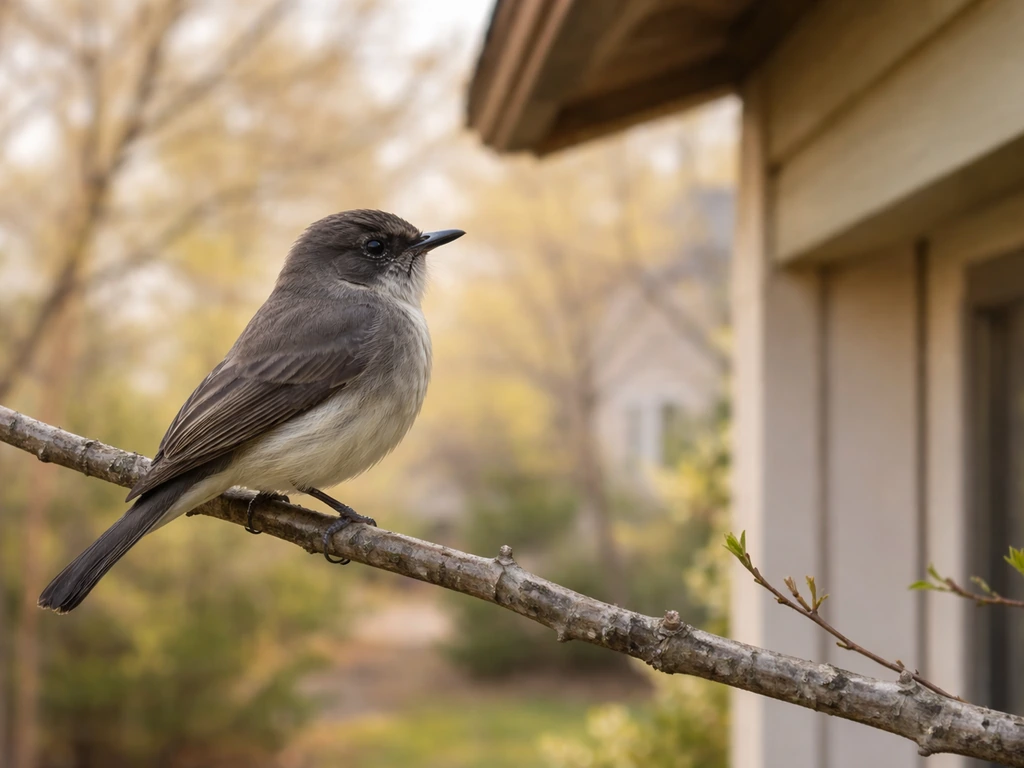
When someone searches "khope bird meaning," they are almost always looking for help with a simile from Timwa Lipenga's short story "Swimming Partners," a set text in South African Grade 11 English First Additional Language (EFAL) literature. In the story, Linda's mother compares Linda to a khope bird, a bird that lets itself be carried in whatever direction the wind chooses to blow. The simile means Linda is easily influenced by others, particularly her sister Aisha, and does not make her own decisions. That is the core of it.
Khope Bird Meaning: What It Refers to and How to Verify

Marcus Whitley
25 Jun 2026

What "khope bird" actually refers to

The term "khope bird" is not a widely catalogued species name in mainstream ornithology, and you won't find it in a standard bird field guide. It appears in the text of "Swimming Partners" as a culturally specific reference, most likely drawn from a southern or central African regional name for a bird known for being carried along by wind currents rather than flying with strong direction of its own. The name is used in the story as a literary device, not as a scientific identifier. What matters here is the behavior the name evokes: a bird that drifts, that follows the wind, that has no fixed course.
Some readers and study guides have connected the khope bird to birds in the same category as the hoopoe, a bird also widely discussed for its symbolic weight across cultures. The hoopoe, for example, carries deep meaning in African, Middle Eastern, and South Asian traditions, often associated with wisdom and guidance. Whether or not the khope bird is directly related to the hoopoe or a variant regional name for a similar species, the way Lipenga uses it is focused entirely on the wind-following behavior, not on any wisdom symbolism.
Where the term comes from and how it is used
"Khope" appears to be a regional or dialect name used in the Malawian or southern African context from which Timwa Lipenga writes. Lipenga is a Malawian author, and "Swimming Partners" is grounded in that cultural setting. The name likely originates from a local language tradition where birds are named by their behavior or their sound, rather than by Linnaean taxonomy. The word "khope" itself does not map to a standard English bird name, which is exactly why so many students end up searching for its meaning online.
In the story, the simile comes from Linda's mother, not from Linda herself. The mother uses it as a form of criticism, observing that Linda, like the khope bird, goes wherever external forces take her. The educational materials from the National Examinations Council (NEC/NAPT) and Grade 11 EFAL summaries consistently paraphrase it the same way: "A Khope bird flies where the wind takes it." That phrasing has become the standard exam-ready interpretation.
The symbolism packed into this bird

Within the context of "Swimming Partners," the khope bird carries two layers of symbolic meaning that are worth separating. The first is the negative reading that most study guides emphasize: Linda is passive, easily influenced, and lacks the agency to make her own choices. She lets Aisha steer her, much like the bird lets the wind steer it. This is the interpretation most exam answers require.
The second layer is more generous, and it shows up in literary analysis of the story. Some readers, including commentary on analysis blogs, suggest the khope bird can also represent a kind of freedom: no fixed direction, no rigid plan, open to wherever life leads. This is a more sympathetic reading of Linda's character, one that sees her as free-spirited rather than simply weak-willed. Lipenga's writing leaves room for both readings, which is part of what makes the simile effective. In an exam context, though, the "easily influenced" interpretation is the one you need.
Across southern African cultures broadly, birds that are associated with wind and movement tend to appear in oral traditions as symbols of restlessness or spiritual openness. The idea that a person "goes where the wind blows" is not unique to this story. It maps onto a wider idiom used across many languages and cultures to describe someone without a strong internal compass. In that sense, the khope bird fits naturally into a long tradition of bird-based metaphor, sitting alongside other culturally loaded bird references like the potoo bird (associated with haunting or mourning in Caribbean and Latin American traditions) or the shoebill (which carries associations of stillness and patience in East African symbolism).
The khope bird as a figure of speech
The khope bird reference in "Swimming Partners" functions specifically as a simile, not a metaphor, even though some study materials label it loosely as a metaphor. The distinction matters for exams: a simile makes a direct comparison using "like" or "as." Linda is compared to the bird. She is not called the bird outright. The simile works because it gives a concrete, visual image (a small bird being tossed around by wind) to describe an abstract quality (being easily influenced).
Outside of this story, you are unlikely to encounter "khope bird" used as a standalone idiom or slang expression in everyday speech. It is not the kind of phrase that has migrated into casual conversation the way something like "early bird" or "rare bird" has. If you see "khope bird" in a social media caption or a quote outside of a literature class, it is almost certainly a direct reference back to Lipenga's story, or a borrowing of the same image by someone familiar with that text.
Common confusion around the term

The biggest source of confusion around "khope bird" is spelling. You will see it written as "khope," "khope," "kho pe," and occasionally with alternate vowel arrangements. All of these refer to the same word from the same story. If you are reading a study guide or exam memo and the spelling looks slightly different from what you have in your text, don't panic. They are the same reference.
A second confusion point is whether the khope bird is the hoopoe. The hoopoe has a similarly unusual name, appears in African and South Asian literature with heavy symbolic weight, and is sometimes called by regional names that sound phonetically close to "khope" depending on dialect. The hoopoe's symbolism, however, is quite different: it tends to represent wisdom, loyalty, and guidance, not passive drifting.
The hoopoe bird meaning is often discussed in literature and folklore, especially where it symbolizes wisdom and guidance. If the surrounding text in your source talks about wind and direction and being led by others, you are dealing with the khope bird from Lipenga's story. If the symbolism is about wisdom or spiritual guidance, you are more likely looking at a hoopoe reference.
Here is a quick checklist to confirm you have the right reference:
- Is the source material connected to "Swimming Partners" by Timwa Lipenga, a Grade 11 EFAL set work? If yes, the khope bird means passive, wind-directed behavior.
- Does the surrounding text mention wind, direction, being carried, or being influenced? That confirms the "Swimming Partners" interpretation.
- Is the symbolism about wisdom, loyalty, or spiritual guidance instead? You may be looking at a hoopoe reference, not the khope bird.
- Check spelling variants: khope, khope, kho pe all point to the same word in the same story.
- Is the context African literature or a Malawian cultural reference? That narrows it firmly to Lipenga's usage.
- Is the term appearing outside any literary context entirely, in casual speech or social media? It is almost certainly a direct callback to the Lipenga simile.
How this plays out in real sentences
Seeing how the khope bird comparison actually appears in the text and in exam answers makes it much easier to use or interpret correctly. Here are practical examples of how the term shows up and what each version is doing:
| Example sentence | What it means | Context |
|---|---|---|
| "Linda is like a khope bird that lets itself be carried in any direction the wind chooses to blow." | Linda has no strong will of her own; she follows whoever directs her. | Direct quote / paraphrase from "Swimming Partners" |
| "A khope bird flies where the wind takes it." | Standard exam-ready paraphrase meaning someone is easily influenced. | NEC/NAPT EFAL study materials |
| "She lets Aisha tell her what to do, just like a khope bird." | Linda's passivity and dependence on her sister's decisions. | Student essay or exam response |
| "The khope bird can also be seen to represent freedom, following the wind without constraint." | A more generous, literary reading of the same image. | Literary analysis / The Sitting Bee commentary |
| "He's such a khope bird, always going along with whatever his friends decide." | Casual use of the simile outside the story to describe someone who lacks independent judgment. | Everyday speech borrowing from the Lipenga reference |
The pattern is consistent across all these examples: the khope bird means someone or something that follows external direction rather than its own internal course. In English, the papiha bird meaning is often explained as a bird that goes wherever external forces take it khope bird. Whether that reads as a flaw (passive, easily manipulated) or a quality (free, open, unattached) depends entirely on the framing the writer or speaker chooses.
In an exam on "Swimming Partners," the intended reading is the critical one: Linda is being controlled by Aisha, and her mother disapproves. Course Hero memo materials reproduce the simile comparison, quoting the “khope bird…lets the wind blow it all over the place” line and tying it to Linda letting herself be influenced or controlled Linda is being controlled by Aisha.
What to do with this information
If you are preparing for a Grade 11 EFAL exam or writing an essay on "Swimming Partners," your answer should connect the khope bird directly to Linda's character and her relationship with Aisha. If you are trying to get the “opaline bird meaning,” focus on how “khope bird” is used as a behavior-based image in the story. Explain that the simile compares Linda to a bird that has no chosen direction, and link that to specific moments in the story where Linda follows Aisha's lead rather than making her own choice. That connection between the figurative language and the character's behavior is exactly what exam memos reward.
If you encountered the term somewhere outside of that story, such as a caption, a quote, or someone using it in conversation, the meaning is almost certainly borrowed from Lipenga's simile. Use the checklist above to confirm, and then interpret it the same way: the speaker is calling someone wind-directed, easily led, without a firm internal compass. It is a pointed comparison, and now you know exactly what it means. Phoebe bird meaning is a separate symbolism topic you can explore to understand how different bird imagery is used in culture and interpretation.
FAQ
Is “khope bird” ever used as scientific bird terminology?
In everyday language and literature study, “khope bird” should be treated as a story reference, not a scientific species name. If you see it in a bird guide or a taxonomy-like context, double-check the source, because “khope bird” is tied to the simile in “Swimming Partners,” not standardized ornithology.
How can I tell whether an answer should use the “passive and easily influenced” meaning or the “freedom and openness” meaning?
For Grade 11 EFAL exam responses, default to the negative reading unless your question specifically asks about alternate interpretations. If the prompt focuses on characterization, relationships, or criticism by Linda’s mother, use the “wind-directed, lacks agency” interpretation and back it with Linda and Aisha actions from the text.
Does the simile wording matter in an exam answer?
Yes. Exams usually expect you to state that Linda is compared “like/as” a bird that goes where the wind takes it. If your response talks about the bird as if it directly replaces Linda (a metaphor-style claim), you may lose marks for precision about figure of speech.
What if my version of the text spells it differently, for example “kho pe” or another split?
Spelling variants do not automatically change meaning. Treat “khope,” “kho pe,” and similar spellings as the same reference if the surrounding text matches the wind and being carried theme, especially if it appears in “Swimming Partners” or a study memo summarizing it.
Could “khope bird” be a misheard or mistaken “hoopoe bird” reference?
Often, yes, especially in audio or casual quotes. Use the context test: hoopoe discussions usually emphasize guidance, wisdom, or loyalty, while “khope bird” in this story emphasizes drifting with external forces (wind, direction, being led). If the prompt talks about choices and influence, it is almost certainly “khope bird.”
How should I cite evidence in my essay if the simile is only one line?
Link the simile to specific behavior patterns, not just the sentence itself. Identify moments where Linda follows Aisha’s lead, delays her own decisions, or responds to external pressure, then explain how those moments match “goes where the wind blows.”
If “khope bird” is used outside the novel, how do I avoid using the wrong meaning?
Assume it is still a borrowed image from “Swimming Partners” until proven otherwise. Confirm by checking whether the caption or quote also includes themes of direction without choice, being steered by others, or wind-like influence. If it instead focuses on wisdom or spiritual guidance, revise your interpretation.
What common mistake should I avoid when defining “khope bird meaning”?
Avoid describing it as “a bird with special magical powers” or as having a fixed cultural symbolism like wisdom. The story’s key point is behavior, not an emblem of knowledge. Keep your definition grounded in “following external forces rather than internal direction.”},{
Should I mention the “two layers” in an EFAL exam answer?
Usually only if the question asks for more than one interpretation. If the task is standard characterization or exam-style meaning, mention the intended reading first (easily influenced), then briefly note that some readers view it more sympathetically, but only if you have marks allocated for deeper analysis.
Next Article
Phoebe Bird Meaning: Symbolism and How to Identify the Bird
Learn Eastern Phoebe meaning and identify the bird or cultural use of Phoebe as a symbol, with practical tips.