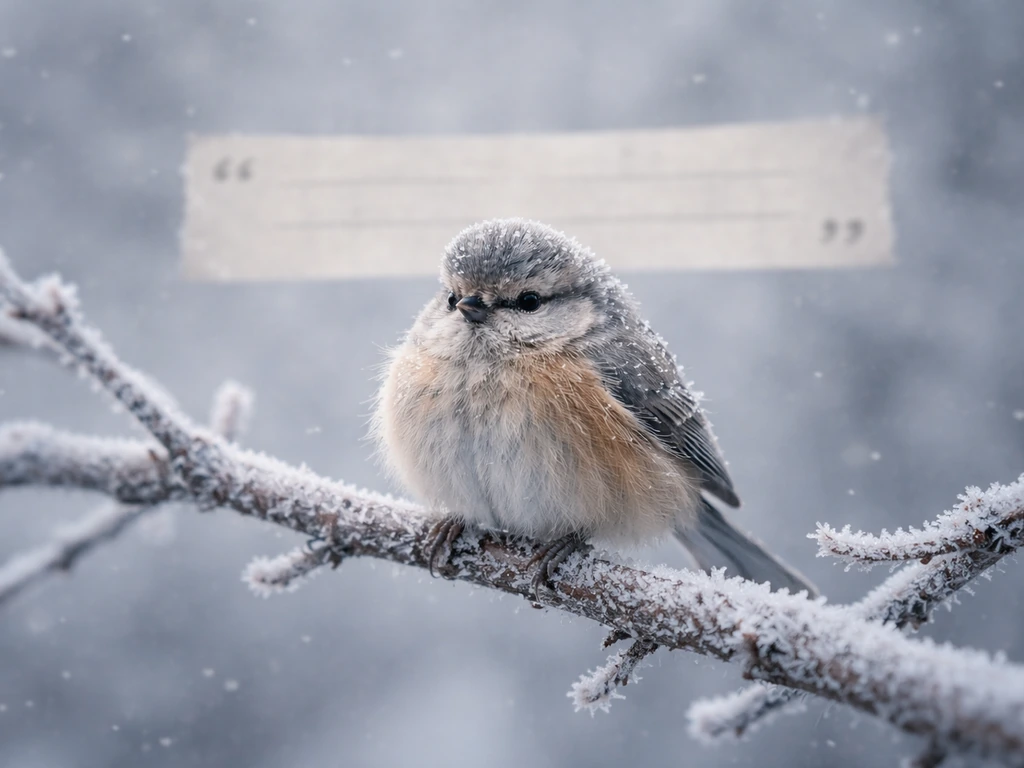
"Pretty bird" most often means exactly what it sounds like: a warm, affectionate acknowledgment that something (or someone) is beautiful, delicate, and worth admiring. Whether it's directed at an actual bird, a pet, or a person, the phrase lands somewhere between a compliment and a term of endearment. The tricky part is that the same two words can mean very different things depending on who's saying them, how they're saying them, and who's in the room. This guide breaks all of that down so you can figure out exactly what it means in the specific moment you're trying to decode.
Pretty Bird Meaning: How It’s Used as a Compliment

Marcus Whitley
17 May 2026
How "pretty bird" actually gets used every day
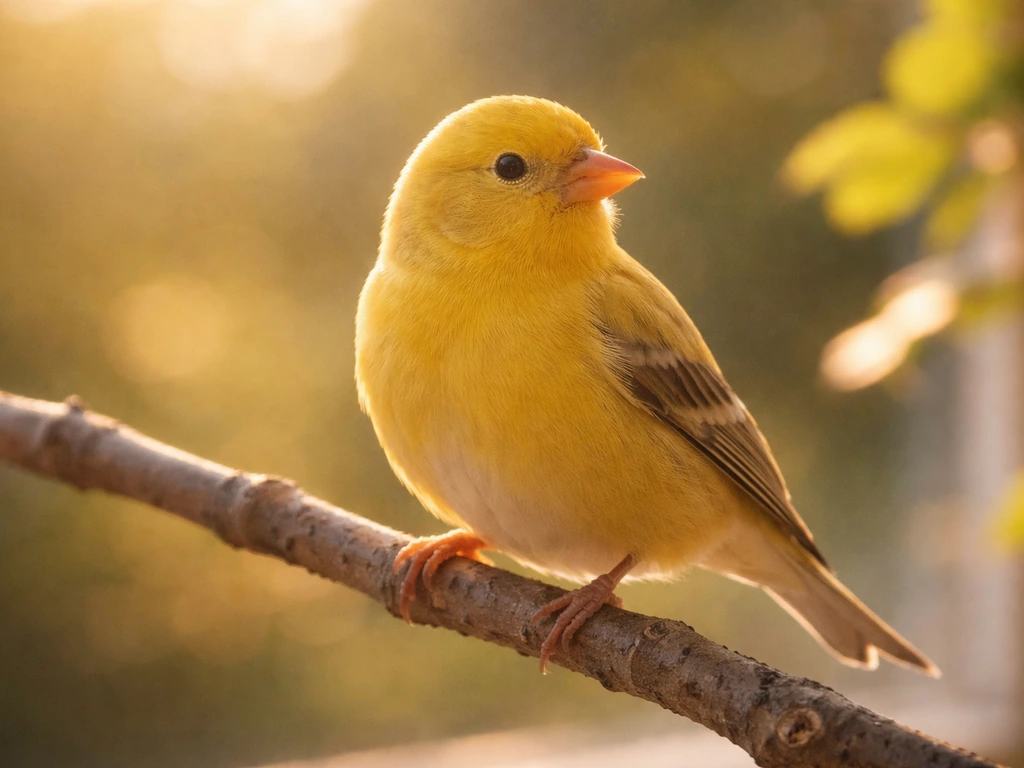
The most literal use is exactly what you'd hear in a nursery rhyme or at a pet store: someone spots a bird and says "pretty bird" the way you'd say "good dog" to a dog. The old nursery rhyme "Mary Had a Pretty Bird" uses the phrase this way, treating a caged canary as something to admire and coo over. It's simple, affectionate, and deeply tied to a childlike or caretaker register, the kind of tone adults use when they're speaking to animals or small children.
Pet owners take this a step further. If you've spent time around parrots, cockatiels, or budgies, you've heard "pretty bird, pretty bird" used as a bonding and training phrase. It's one of the first things people teach a parrot to say back to them. The repetition is intentional: it creates a call-and-response rhythm that reinforces connection. A similar call-and-response pattern is also described in real-world animal-caregiver speech, where “pretty bird” is repeated as a cue the bird may be trained to respond to or even mimic call-and-response pattern for caregiver speech to animals using “pretty bird”. In that context, "pretty bird" is less about objective beauty and more about affection and routine. The phrase becomes a ritual.
Outside the literal bird world, people use it as a playful nickname or soft compliment toward other people, usually someone they find attractive, gentle, or a little otherworldly in their beauty. It shows up in flirtatious conversation, in music (Jhene Aiko's "Pretty Bird" uses the imagery to explore vulnerability and emotional freedom), in poetry, and in casual everyday speech when someone wants to say "you're beautiful" but with a softer, more whimsical edge. If you’re wondering about the pretty bird Jhene Aiko meaning, it often points to vulnerability, emotional freedom, and love that isn’t fully guarded Jhene Aiko's "Pretty Bird".
Is it a compliment, flirting, or something more tender?
Here's where context does all the heavy lifting. "Pretty bird" can function as three distinct things depending on who's using it and how.
| Usage type | What it signals | Typical tone |
|---|---|---|
| Straightforward compliment | You look beautiful, graceful, or striking | Warm, admiring, light |
| Endearment/pet name | I feel affection for you; this is our thing | Soft, intimate, habitual |
| Flirtation | I find you attractive and I'm signaling it playfully | Teasing, slightly charged, suggestive |
A compliment version sounds like something said once, in the moment, in response to how someone looks. An endearment version is repeated, personalized, and usually part of an established relationship pattern. The flirtatious version carries a different energy: there's often eye contact, a drawn-out delivery, or a smirk behind it. The word "bird" itself can add a slightly coy or playful quality that "pretty girl" doesn't quite have, which is part of why people reach for it when they want to flirt without being too direct.
There's also a subtler dimension worth naming: in some cases, calling someone a "pretty bird" can carry a faint note of playful dominance or possessiveness, the way you might say it to a bird in a cage. It's rarely mean-spirited, but it can imply "you're beautiful and I'm the one appreciating you." Whether that reads as flattering or uncomfortable usually depends entirely on the relationship.
"Pretty bird" as a nickname: what it says about the relationship
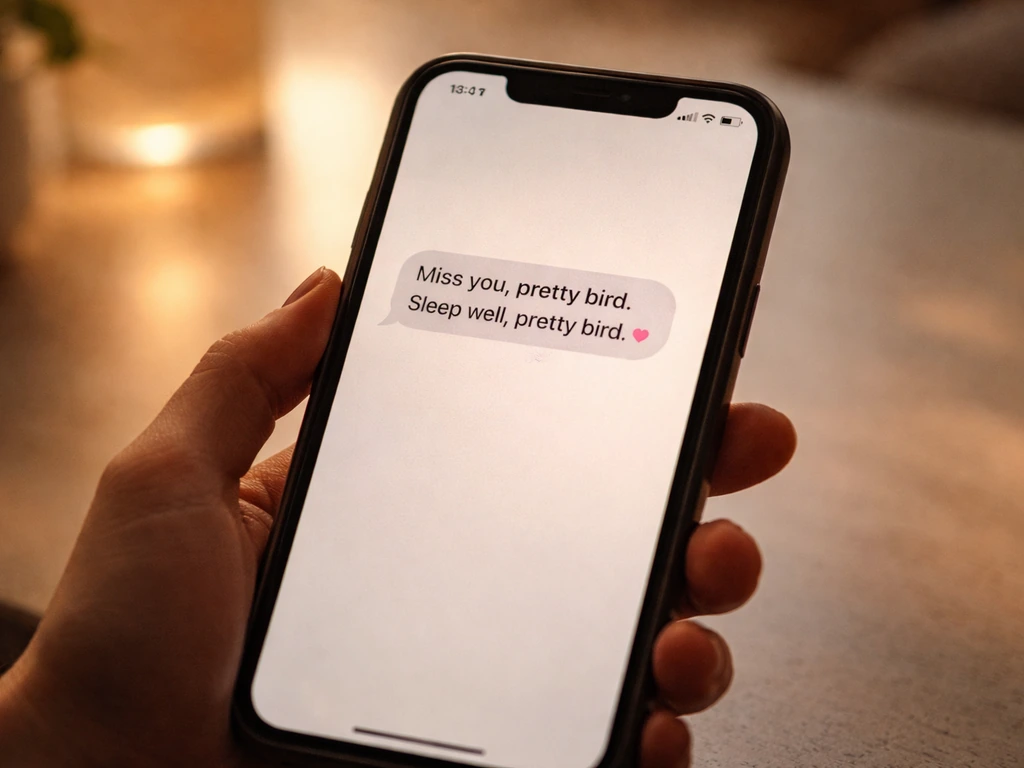
When someone uses "pretty bird" as a recurring nickname rather than a one-off comment, it's doing something more specific. Nicknames signal intimacy and a kind of private language between two people (or between a person and their pet). A pet owner who calls their cockatiel "pretty bird" every morning is building a bond through repetition. A partner who calls you "pretty bird" has usually chosen that phrase because it fits something specific about how they see you: delicate, bright, a little free-spirited.
Who tends to use it as a nickname? Typically people who are comfortable with poetic or slightly old-fashioned language, people who want an alternative to generic pet names like "babe" or "honey," and people who associate the person they're addressing with bird-like qualities: lightness, beauty, movement, a kind of untamed energy. It's a nickname that implies admiration more than ownership, even if there's a gentle possessiveness underneath it.
What bird imagery and "pretty" actually bring to the phrase
Birds carry a lot of symbolic weight across cultures, and when you pair "pretty" with "bird," you're tapping into some of that without necessarily meaning to. Birds commonly symbolize freedom, lightness, the soul, and the capacity to rise above earthly things. A "pretty bird" in this symbolic register isn't just visually appealing; it's something rare, a little wild, maybe hard to hold onto.
In Western folk tradition, a caged pretty bird (like the canary in the nursery rhyme) takes on a more melancholic quality: beauty that is contained, admired but not free. This tension shows up in literature and poetry pretty consistently. The "pretty bird poem" tradition plays on exactly this: beauty and captivity, admiration and loss. Jhene Aiko's song explores a similar emotional space, using the pretty bird image to talk about someone beautiful but vulnerable, someone who might fly away.
None of this symbolic depth is necessarily in the mind of someone saying "pretty bird" casually. But it's worth knowing that the phrase carries this resonance, especially when it appears in creative or emotionally loaded contexts. If someone uses it in a poem, a song, or a heartfelt message, the bird symbolism is probably doing some of the work.
Slang, regional variations, and related terms to know
In British and Australian English, "bird" on its own is common slang for a woman or girl, used casually and sometimes affectionately. Adding "pretty" in front of it, "pretty bird," intensifies the compliment but keeps the same informal register. This usage is noticeably different from American English, where "bird" doesn't carry the same gendered slang meaning, so "pretty bird" sounds more like a literal or poetic phrase than street-level slang.
It's also worth separating "pretty bird" from a few related expressions people sometimes mix it up with. "Early bird" is purely about behavior and timing, no beauty implied. "Rare bird" means someone exceptional or unusual, which overlaps with "pretty bird" in suggesting someone stands out, but the emphasis is on uniqueness rather than looks. "Painted bird" (the title of a well-known novel) evokes something more disturbing: a creature made different and therefore made a target. That's a very different emotional territory from the warmth of "pretty bird. The term “painted bird meaning” often comes up because people connect it with the darker, more symbolic side of bird imagery. "
- "Pretty bird" (US/general): compliment, endearment, or pet talk; warm and affectionate
- "Pretty bird" (UK/Australian slang context): can double as a casual compliment to a woman
- "Rare bird": admiration for someone unusual or exceptional, less about physical beauty
- "Painted bird": literary/symbolic, implies being marked as different, often with darker connotations
- "Bird" alone (British/Australian slang): informal reference to a woman or girlfriend, no "pretty" required
How to figure out what it means in your specific situation
The fastest way to nail down what "pretty bird" means in a given moment is to run through a quick mental checklist. The phrase almost never exists in a vacuum, and five quick questions will get you to the right interpretation almost every time.
- Who said it? A stranger, a romantic partner, a close friend, or a pet owner talking to their bird? The relationship changes everything.
- How did they say it? Drawn out and suggestive, or quick and warm? Tone carries as much meaning as the words.
- Who (or what) was it directed at? A literal bird, a pet, or a person? If it's a person, do they remind the speaker of something bird-like?
- Was it a one-time comment or part of a pattern? A repeated nickname means something different from a spontaneous observation.
- What was the context? Playful banter, a tender moment, a flirty exchange, or literal bird-watching?
Three quick examples
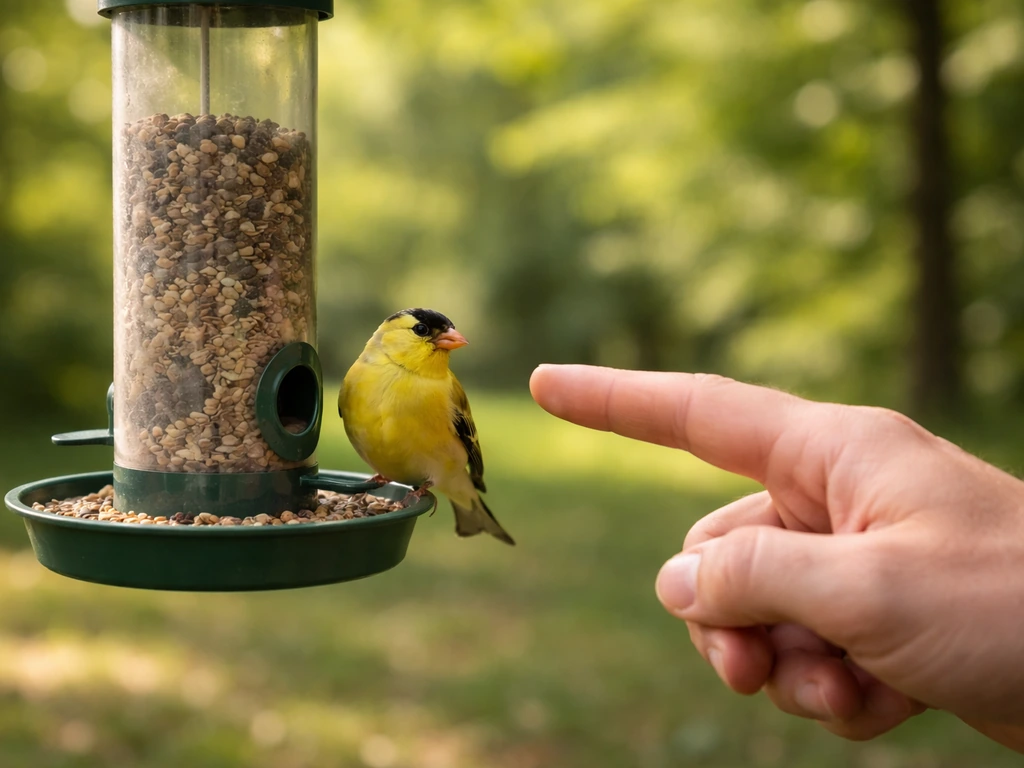
Scenario 1: You're at a park and someone points at a goldfinch and says "look at that pretty bird." That's purely literal. No hidden meaning, no social signal beyond shared appreciation for something beautiful in nature.
Scenario 2: Someone you've been seeing for a few weeks sends you a photo reaction saying "pretty bird" after you post a picture of yourself in a new outfit. The “pretty bird” meaning can also show up in online slang and quote-style captions like the ones people reference when they search for “G.I. Jane” and bird imagery G.I. Jane quote bird meaning. That's almost certainly flirtatious, using the bird image to compliment you in a slightly playful, oblique way rather than just saying "you look hot."
Scenario 3: Your grandmother calls you "pretty bird" every time she sees you, the same way she's done since you were five. That's pure endearment with zero romantic charge. It's a term of affection that's become a fixed part of how she relates to you, the same way a pet owner says it to their parrot every morning. The phrase here is about love, habit, and connection, not beauty in any analytical sense.
The phrase is flexible enough to carry all of these meanings genuinely. Once you know the speaker, the tone, and the relationship, "pretty bird" becomes very easy to read correctly.
FAQ
Is “pretty bird” ever an insult, or always a positive compliment?
It is usually affectionate or admiring, but tone can flip it. If it’s delivered with mockery, a rolling sarcasm, or paired with comments about “keeping you” or “being trapped,” the implied meaning may shift toward objectification or control rather than pure admiration.
What if I’m unsure whether someone means flirting or just endearment?
Watch for two signals: escalation and exclusivity. Flirting often includes more effort than a one-off (extra messages, prolonged eye contact, personalization to your appearance), while endearment tends to stay consistent across many conversations and people, especially in family-style relationships.
How does the meaning change in text messages compared to in person?
In writing, delivery replaces facial cues. A short caption like “pretty bird” is often flirtatious or playful, while “pretty bird” repeated with affectionate emojis (heart, bird, cozy faces) leans toward endearment. If it’s tagged to a specific photo or outfit, it usually points to attraction or admiration, not symbolic bird lore.
Can “pretty bird” be used as a pet training phrase with humans?
Yes, some people use it like a playful ritual to build bonding, but it works best when the relationship already supports that dynamic. If you are not close with the person, using a repetitive “pretty bird, pretty bird” style can feel infantilizing or too intimate.
What does “pretty bird” mean when it’s posted as a caption on social media?
If it’s aimed at the viewer, it often functions as a gentle, whimsical compliment to appearance or vibe. If it’s written about someone else in a story, it can mean admiration without wanting direct confrontation, especially if paired with limited context or distant tagging.
Does “pretty bird” have different meanings in British or Australian English?
Yes, because “bird” can be slang for a girl or woman in those regions. “Pretty bird” can sound more like everyday informal flirtation or affection rather than a literal animal reference, and it can feel closer to a casual street-level compliment than a poetic phrase.
Is there a difference between “pretty bird” and similar phrases like “rare bird” or “early bird”?
Yes. “Early bird” is about timing only. “Rare bird” emphasizes uniqueness or being standout, not looks. “Pretty bird” centers on attractiveness or charm, so if the context is performance or competence, you may be dealing with “rare bird” energy instead of “pretty bird” meaning.
What should I do if someone says “pretty bird” and I feel uncomfortable?
Treat it as feedback. You can ask directly with low pressure, like “Do you mean it as a joke or a compliment?” or set a boundary by switching to neutral language. Discomfort doesn’t always mean the speaker is malicious, but you still get to control what tone you accept.
Could “pretty bird” imply possessiveness, even if it’s not mean?
Sometimes. The cage-related undertone can surface if the speaker uses it alongside ownership cues, like “my pretty bird,” “don’t go,” or constant monitoring. Without those cues, it’s more likely admiration or endearment, not a real possessive threat.
Next Article
G.I. Jane quote bird meaning explained in context
Explains the G.I. Jane quote bird meaning, disambiguates the film vs quote, and decodes the metaphor in context.