A partridge is a small, ground-dwelling gamebird in the pheasant family (Phasianidae), and when people search 'partridge bird meaning,' they're usually after one of three things: what kind of bird it actually is, what it symbolizes culturally or spiritually, or what a phrase like 'a partridge in a pear tree' really means. The short version: partridges symbolize concealment, family protection, wisdom, and in some traditions, trickery. The bird has been a figure of speech, a religious metaphor, a medieval moral lesson, and a Christmas carol staple for centuries. Which meaning applies to you depends entirely on the context where you encountered it.
Partridge Bird Meaning: Definition, Symbolism, and Uses

Marcus Whitley
1 May 2026
What a partridge actually is
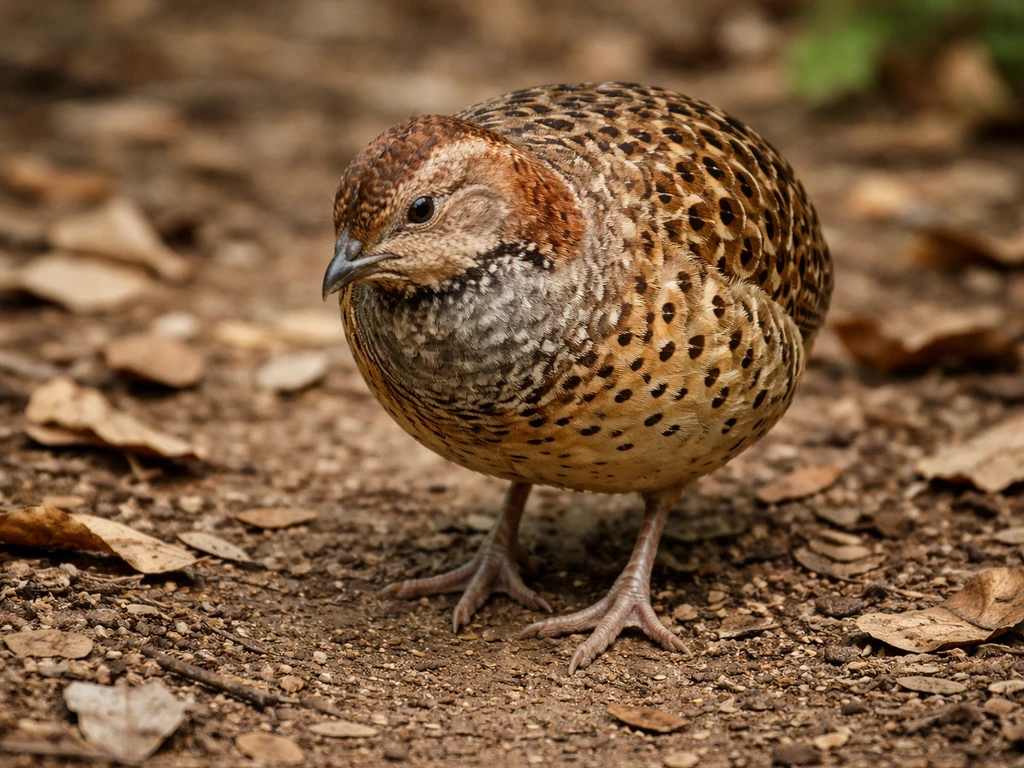
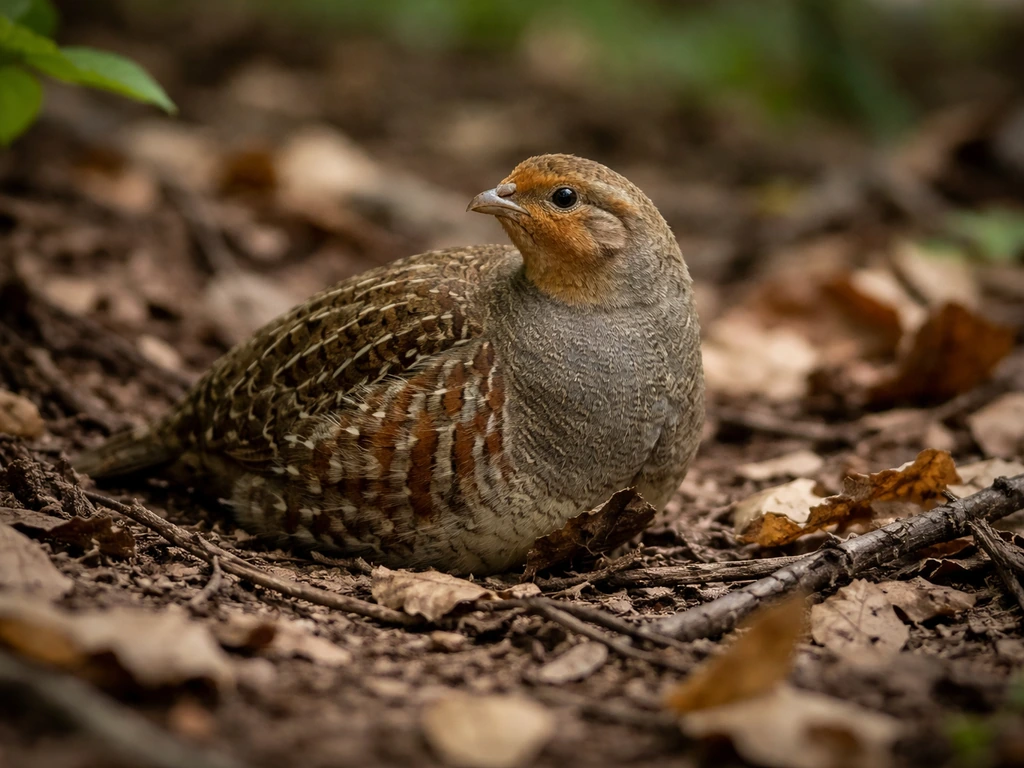
The word 'partridge' has been in English since the 14th century, and it refers to a cluster of small game birds native to the Old World: Europe, Asia, and Africa. They sit in the family Phasianidae (the pheasant family) within the order Galliformes, which puts them alongside pheasants, quail, and turkeys. Two of the main groups you'll see referenced are the 'true partridges' in genus Perdix (like the gray partridge, Perdix perdix, with its rusty face and streaked camouflage plumage) and the rock partridges in genus Alectoris. These aren't the same bird, but both get called 'partridge.'
The one thing all partridges share is that they live on the ground. They use strong legs and claws to dig for seeds, insects, and plant material. They don't perch in trees. They nest in shallow scrapes in the ground lined with vegetation, and males typically stand guard nearby while females incubate eggs. That ground-life behavior is central to nearly every symbolic meaning the bird carries.
If you're in North America and someone calls a bird a 'partridge,' there's a reasonable chance they're actually talking about a grouse. In New England especially, the ruffed grouse is commonly called a partridge even though it isn't one taxonomically. Similarly, 'snow partridge' is a name applied in many regions to birds that are actually ptarmigan, though the term is technically reserved for Lerwa lerwa, a ptarmigan-like Asian species. And pheasants, which are relatives, are noticeably larger than true partridges. If you're trying to identify a specific bird, these regional naming habits are the main source of confusion.
What the partridge symbolizes across cultures
Because partridges are ground-dwellers with excellent camouflage, their core symbolic associations revolve around concealment, groundedness, and close family bonds. The nesting behavior alone, where the female stays low and hidden while the male guards from a distance, has made the bird a natural stand-in for protection, domestic care, and vigilance. In cultures where hunting was a daily reality, the partridge also carried associations of being prey: hunted, cautious, and always alert.
Medieval bestiaries added another layer. The Rochester Bestiary, written around 1230, explicitly associated the partridge with 'wisdom and prudence. The Rochester Bestiary entry describes the partridge in both moral terms, including wisdom and prudence alongside an egg-stealing association tied to trickery. ' This wasn't just a casual observation; medieval readers took bestiary entries as moral lessons, and the partridge's careful, hidden lifestyle made it an emblem of thoughtful restraint. At the same time, the same bestiary tradition included a competing claim: that partridges steal eggs from other birds' nests. In that reading, the bird flips to a symbol of trickery, deception, and ill-gotten gain. So even within medieval Europe, the partridge carried contradictory meanings depending on which story you followed.
Seasonality is another thread. Because the partridge is most visible (and most hunted) in autumn and early winter, it became linked to harvest time, the end of the year, and transition. That seasonal association feeds directly into its Christmas carol appearance. In some European folk traditions, the partridge was also read as a symbol of fertility and family, partly because of the large clutches of eggs females lay and the communal care behavior of the birds.
Partridge in idioms and sayings
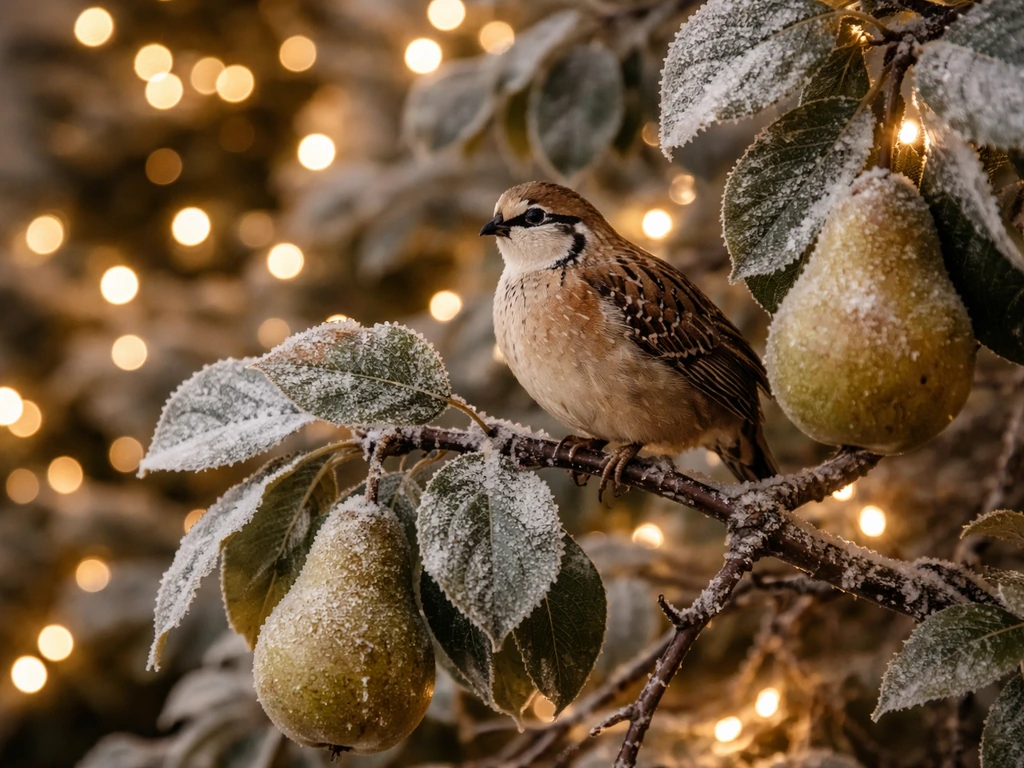
The phrase most people know is 'a partridge in a pear tree,' from the Christmas carol 'The Twelve Days of Christmas. ' In the song, a partridge in a pear tree is the gift given on the first day. The lyric is so familiar that it functions almost as a standalone idiom for the holiday season, for over-the-top gift-giving, or for things that accumulate in an absurd list. But here's the thing: it's ornithologically nonsense.
Partridges are ground-nesting birds. They don't sit in trees. National Geographic has explicitly pointed this out as a mismatch between the carol's imagery and the bird's actual behavior. The lyric probably worked because 'pear tree' rhymes with 'partridge' in French ('une perdrix'), suggesting the phrase may have roots in a French-language original where the wordplay made more sense.
Outside of the carol, 'partridge' appears less frequently in common idioms compared to birds like ravens or doves, but the bird does surface in hunting-related sayings across British and European folk speech, usually in the context of being flushed out, hidden, or pursued. The image of a partridge sitting tight in cover (refusing to flush) fed into expressions about staying still under pressure or keeping a low profile.
Partridge in literature, religion, and folklore
The partridge appears twice in the Bible, and both references are figurative. The most quoted is Jeremiah 17:11, which uses the image of a partridge sitting on eggs it didn't lay as a metaphor for ill-gotten wealth: the idea being that just as a partridge can't really claim those eggs as its own, someone who accumulates riches through dishonesty doesn't truly own what they have. This connects directly to the medieval bestiary 'egg-stealing' tradition and suggests that association predates the Christian era.
In Greek mythology, the name Perdix (the source of the genus name Perdix perdix) comes from a legend about Daedalus and his nephew. The nephew, Perdix, was a talented apprentice whom Daedalus threw from a cliff out of jealousy. The goddess Athena transformed the falling boy into a partridge. The myth explains why partridges fly low and avoid high places, linking back to the bird's actual ground-level behavior. The Folger Shakespeare Library notes this mythological backstory in the context of how earlier classical lore shaped the partridge's literary identity, even if Shakespeare himself didn't directly dramatize the story.
In medieval bestiaries, the partridge's moral meaning was contested and layered. The Rochester Bestiary (c. 1230) promoted the 'wisdom and prudence' reading, connecting the bird's careful habits to virtuous living. Other bestiary accounts leaned into the egg-stealing story as a cautionary tale about greed and false possession. Both readings circulated, which meant medieval authors could deploy the partridge as either a positive or negative symbol depending on what moral they wanted to make.
In folk tradition across Britain and parts of Europe, the partridge was tied to autumn hunting culture, harvest festivals, and the approach of winter. Its appearance in seasonal art and decoration reinforced its identity as a transitional bird: present at the threshold between one period and the next. This is likely part of why it found its way into Christmas iconography.
Modern usage: slang, place-names, and common mix-ups
In everyday modern usage, 'partridge' shows up most often as a surname and a place-name rather than as active slang. The Partridge Family, the 1970s American TV show, made the name broadly familiar as a pop-culture reference, and 'Partridge' as a surname appears across the UK and US. Place-names using 'partridge' are common in regions where the bird was historically hunted, particularly in Britain.
In British slang and informal speech, 'bird' itself carries its own layer of meaning (a person, often a woman, in British English), but 'partridge bird' isn't a recognized slang compound. If you were actually searching for a parrot bird meaning, the symbolism shifts because parrots are read differently across cultures. The phrase 'partridge bird' that people search is almost always someone adding 'bird' to clarify the word 'partridge,' not a distinct slang term.
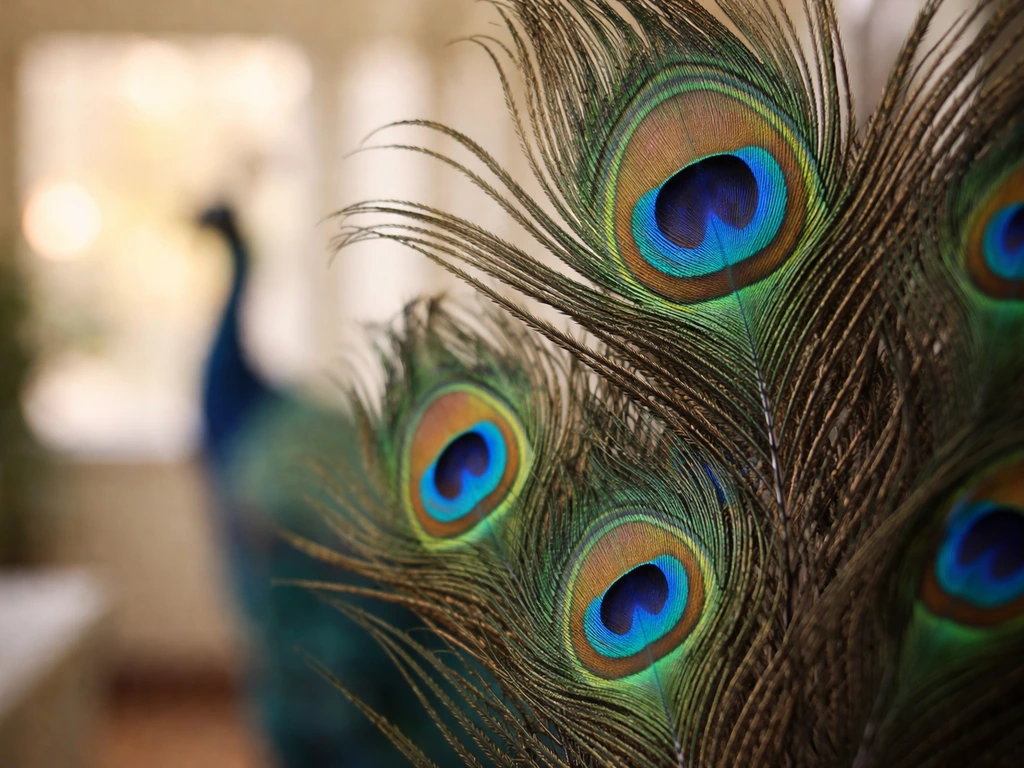
The most common practical confusion today is the species one: North Americans calling ruffed grouse 'partridges,' or people in Asia and the Middle East using 'snow partridge' to mean what others call a ptarmigan. If you're doing any kind of wildlife identification, bird watching, or habitat research, it's worth confirming the actual species in question, because the ecological and behavioral details (and thus the symbolic weight) can differ. Compared to showier birds like peacocks or parrots, the partridge operates in the background: understated, ground-level, and easy to overlook unless you know where to look. Peacock bird meaning is often discussed in terms of beauty, pride, and symbolism across cultures.
How to figure out which meaning applies to you
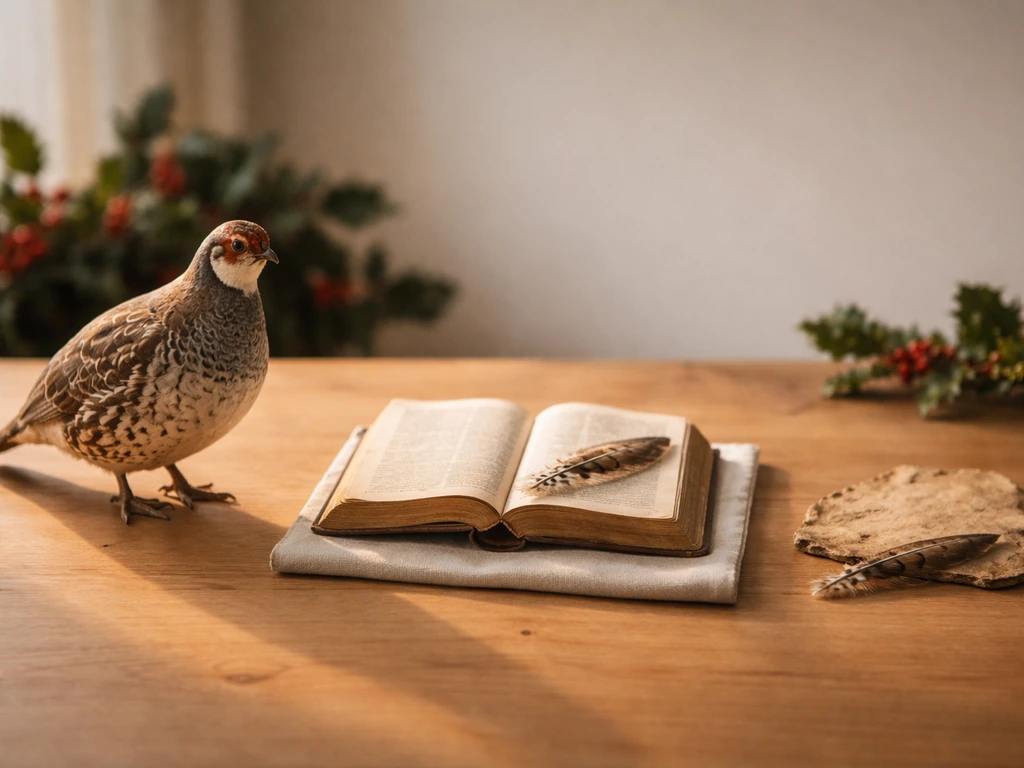
The partridge sits at an interesting crossroads: it can mean a real bird, a biblical metaphor, a medieval moral lesson, a Christmas carol punchline, or a regional nickname for a completely different species. The macaw bird meaning is also often interpreted through context, such as culture, setting, and the specific message you want to emphasize. Here's a quick checklist to narrow it down for your specific situation.
- Is the context a Christmas carol, holiday decoration, or seasonal gift reference? You're dealing with 'a partridge in a pear tree,' which is primarily a cultural/seasonal symbol. The bird represents the first day, the start of something, and by extension the holiday itself. The tree-sitting image is a lyric convention, not biology.
- Is the context a religious text or biblical quote? Check Jeremiah 17: 11 specifically. If so, the partridge is being used as a figure of speech for unearned possession or false wealth.
- Is the context medieval, bestiary-style, or connected to pre-modern European symbolism? The meaning is most likely 'wisdom and prudence' (Rochester Bestiary reading) or possibly trickery/deception (egg-stealing reading). Knowing which source the reference comes from will tell you which interpretation was intended.
- Is the context a tattoo, dream, or personal symbol? Look at the emotional texture: ground-dwelling, hidden, protective, cautious. Partridge symbolism in personal contexts tends to cluster around themes of staying grounded, protecting what matters, moving quietly through life, or seasonal transition.
- Is the context a wildlife guide, natural history text, or North American regional reference? Confirm whether the bird being described is actually a partridge (Phasianidae, Old World origin) or a regional nickname for a grouse, ptarmigan, or quail. Size and habitat are the fastest clues: if it's described as large and colorful, it may actually be a pheasant; if it's in snowy alpine terrain, it may be a ptarmigan.
- Is the context a surname, place-name, or pop-culture reference? This is almost certainly not a symbolic usage at all, just a name with historical hunting-culture roots.
The partridge doesn't carry the dramatic, instantly recognizable symbolism of a raven or a peacock. It's quieter than that. But that quietness is kind of the point: the bird's whole identity is built around staying close to the ground, keeping still, and being more present than it appears. If you've encountered a partridge reference and it felt subtle or understated, that's probably not a coincidence. If you meant the umbrella bird in particular, its meaning is usually tied to how its name is used in language and symbolism umbrella bird meaning.
FAQ
How can I tell which “partridge bird meaning” I’m looking at (symbolism, Bible metaphor, or the real bird)?
Use the context anchor. If you saw it in a Christmas lyric or holiday caption, it almost certainly means the “gift list” vibe, not real bird behavior. If you saw it in a Bible passage or a moral text, it is being used as a metaphor for false possession or unjust gain. If it was in a birdwatching or hunting context, it refers to a ground gamebird, but the exact species may vary by region.
What’s the biggest reason people get the partridge meaning wrong when they’re talking about a specific bird?
Common identification mistake is treating every “partridge” as the same species. In North America, “partridge” often means ruffed grouse, and in other regions “snow partridge” can refer to ptarmigan. If you are trying to connect symbolism to the bird, confirm the species first, because ground behavior and camouflage fit the partridge idea but the animal’s ecology differs.
Is “a partridge in a pear tree” supposed to be literal, or just poetic? That is the partridge bird meaning in the carol.
No. The phrase “a partridge in a pear tree” is historically fun wordplay and rhyming, not a literal description of how partridges live. If you encounter it in quotes, memes, or gift-giving posts, interpret it as exaggerated accumulation or an absurd list element, not as an accurate ornithology reference.
In the Bible context, what does the partridge actually symbolize beyond “bad behavior”?
If the reference is from Jeremiah 17:11 (or a paraphrase of that idea), the symbol centers on ill-gotten wealth, the mismatch between what something appears to provide and what it truly “owns.” You can think of it as a warning about property that is gained through wrongdoing, not just general greed.
Why do medieval stories treat the partridge as both wise and tricky, is there one correct meaning?
Medieval bestiaries used the partridge in contradictory ways, so you have to match the moral lesson to the version you’re reading. If the text focuses on careful restraint and prudence, it is a positive moral emblem. If it emphasizes egg-stealing, the meaning shifts to deception and false possession.
When “partridge” appears in folk art or seasonal writing, how do I know if the meaning is about harvest or protection?
The season cue matters. Because partridges were most associated with hunting and visibility in autumn and early winter, you may see them used to represent harvest time, year-end transition, or the approach of winter. If the reference is about timing, the “transition” layer is usually the intended meaning.
If I see “Partridge” in modern writing, should I assume it’s the bird meaning, or could it just be a name?
In modern everyday language, “partridge” is much more likely to be a surname, place-name, or pop-culture reference than a live metaphor. So if you saw “Partridge” capitalized, or in a family-name context, the bird symbolism probably is not the point unless the surrounding text explicitly makes it one.
Are there any practical clues from bird behavior that help interpret partridge-related sayings in everyday speech?
Look for indirect bird-behavior clues, especially “stay hidden” or “don’t flush.” Since partridges are ground-nesting and reluctant to expose themselves, sayings about keeping low, holding still under pressure, or refusing to “show yourself” often connect back to that temperament.
Next Article
Peacock Bird Meaning: Symbolism and Spiritual Insights
Peacock bird meaning and peacock bird spiritual meaning: symbolism, shadow lessons, dream and real-life guidance to inte