When you see a pelican, the most common symbolic reading ties to themes of self-sacrifice, devoted parenting, grace, and renewal. That's the short version. The longer version is that pelicans carry one of the richest symbolic histories of any bird in Western culture, rooted in a medieval Christian legend that cast them as the ultimate self-sacrificing parent, and that image has stuck for centuries across art, heraldry, literature, and everyday spirituality. Whether you spotted one on a shoreline, saw one in a painting, or just keep running into the word, here's how to make sense of what pelicans actually represent.
Pelican Bird Meaning: Symbolism, Omens, and What to Look For

Marcus Whitley
30 Apr 2026
What pelicans commonly symbolize today
In modern everyday symbolism, pelicans are most frequently associated with sacrifice, protection, healing, and grace. Spirit animal and archetype communities tend to frame the pelican as a symbol of putting others first, prioritizing family over self, and giving without expecting anything in return. These aren't random associations. They flow directly from the centuries-old Christian legend about pelicans feeding their young with their own blood (more on that in a moment). What's interesting is that even outside explicitly religious contexts, the core ideas have held: pelicans still show up as symbols of devotion and generous care rather than anything threatening or ominous.
Renewal and transformation also appear regularly in modern pelican symbolism. Some interpretations tie this to the death-and-rebirth arc of the original legend, where the pelican's blood literally revives dead chicks. In a more secular frame, that maps onto personal transformation, recovery, and the idea that something meaningful can come out of hardship. If you're drawn to the pelican as a personal symbol, these themes of generosity, resilience, and cyclical renewal are what most people are working with.
The Christian symbolism runs deep
No conversation about pelican meaning can skip the Christian angle, because it's the anchor for almost everything else in Western culture. The key image is called the "pelican in her piety," and it depicts a mother pelican curling her beak down to her breast, with blood dripping onto the open mouths of her chicks below. Wikimedia Commons’ “Pelican in her piety” category page curates museum and illustration references and filenames for this motif, which can help when sourcing images and double-checking captions blank" rel="noopener noreferrer">The key image is called the "pelican in her piety,". It's striking, visceral, and completely unlike any actual pelican behavior, which is exactly why it became such a powerful symbol.
The legend itself appears as early as the Physiologus, a Greek didactic text from around the 3rd or 4th century. The account describes a scenario where the chicks are killed (sometimes by striking the parents), the mother mourns for three days, and then revives them by opening her breast and letting her blood flow over them. Medieval theologians latched onto this as a direct allegory for Christ's sacrifice: just as the pelican gives her blood to save her young, Christ shed his blood to redeem humanity. Thomas Aquinas even addressed Christ directly as "Lord Jesus, Good Pelican" in his Eucharistic hymn "Adoro te devote." That's how embedded this image became.
The visual motif spread through church art, liturgical objects, doorways, altars, and crosses throughout medieval Europe. Major museum collections, including the Met and the Saint Louis Art Museum, hold pieces formally titled "The Pelican in Her Piety," showing how fully institutionalized the image became. It also made it into heraldry, where the pelican-in-her-piety appears as a recognized heraldic charge associated with charity, self-sacrifice, and noble care. Queen Elizabeth I was even depicted in what's known as the "Pelican Portrait," connecting the symbolism to royal imagery of maternal protection and devotion.
One important note: the legend was never accurate natural history. Wikipedia points out that medieval observers may have been visually confused by a pelican dipping its bill toward its chest or resting its large bill pouch against its breast. The symbolism grew from a misread image that became allegorized. That's actually common in how bird symbolism works: the visual impression matters more than the biology.
Pelicans in mythology, folklore, and literature
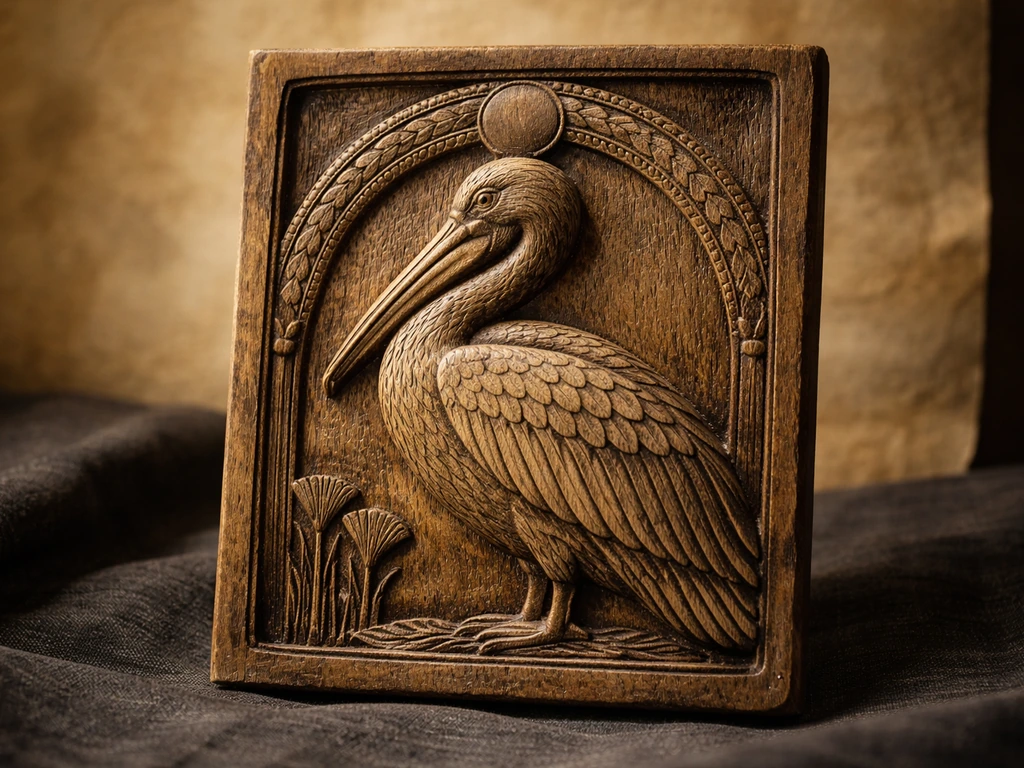
Beyond Christian tradition, pelicans appear in several other cultural contexts worth knowing. In ancient Egypt, the pelican was known as Henet and was associated with death and the afterlife. It appeared in tomb art and funerary texts, most often as a protective symbol, particularly against snakes. That's a notably different energy than the Christian sacrifice theme: here the pelican is a guardian figure in the underworld rather than a symbol of generous motherhood.
Among some Indigenous communities in North America, pelicans appear in clan and totem traditions. The Ojibwe, for example, have a Pelican clan called "Zhedeg." Australian Aboriginal traditions also hold pelicans as significant, framing them within their own knowledge systems rather than European symbolism. It's worth being careful with secondhand aggregated sources on these traditions: the specific meanings are tied to particular communities and shouldn't be generalized too broadly.
In literature, the pelican appears most recognizably through the Christian lens. Shakespeare used the pelican-in-her-piety as a conventional allusion that his audience would have recognized immediately. When a character invokes the pelican in a literary context, the intended meaning is almost always sacrifice or a parent being consumed by ungrateful children, not a literal bird description. The Folger Shakespeare Library has written about how Shakespeare used this symbolism as a shorthand for audiences who already knew the image well.
What pelican behavior tells you symbolically
Pelican behavior adds another layer to interpretation that's genuinely interesting, especially if you're trying to make sense of a specific sighting. Three behaviors stand out symbolically: cooperative feeding, intense parental brooding, and the dramatic plunge-dive.
Great white pelicans are known to feed cooperatively, forming horseshoe formations in the water to corral fish together before scooping them up. This kind of coordinated group effort maps naturally onto symbolism around community, teamwork, and collective provision. If you saw a group of pelicans working together on the water, that cooperative dynamic is the real behavioral fact underneath the symbol.
Parental care is intense and measurable in pelicans. American white pelican chicks hatch altricial (helpless and dependent), and parents provide nearly continuous brooding to keep them warm. The symbolism of the self-sacrificing pelican parent isn't completely divorced from reality: pelican parents genuinely invest enormous energy in brooding and feeding their young. That biological reality gave the legend somewhere solid to land.
The plunge-dive, most associated with brown pelicans, is visually striking: a bird folding its wings and dropping from height into the water to catch fish. Symbolically, this maps onto themes of bold commitment, precision, and not holding back. If you see a brown pelican diving, the image it creates is one of decisive action rather than cautious hesitation.
Does color matter? Brown vs. white pelicans
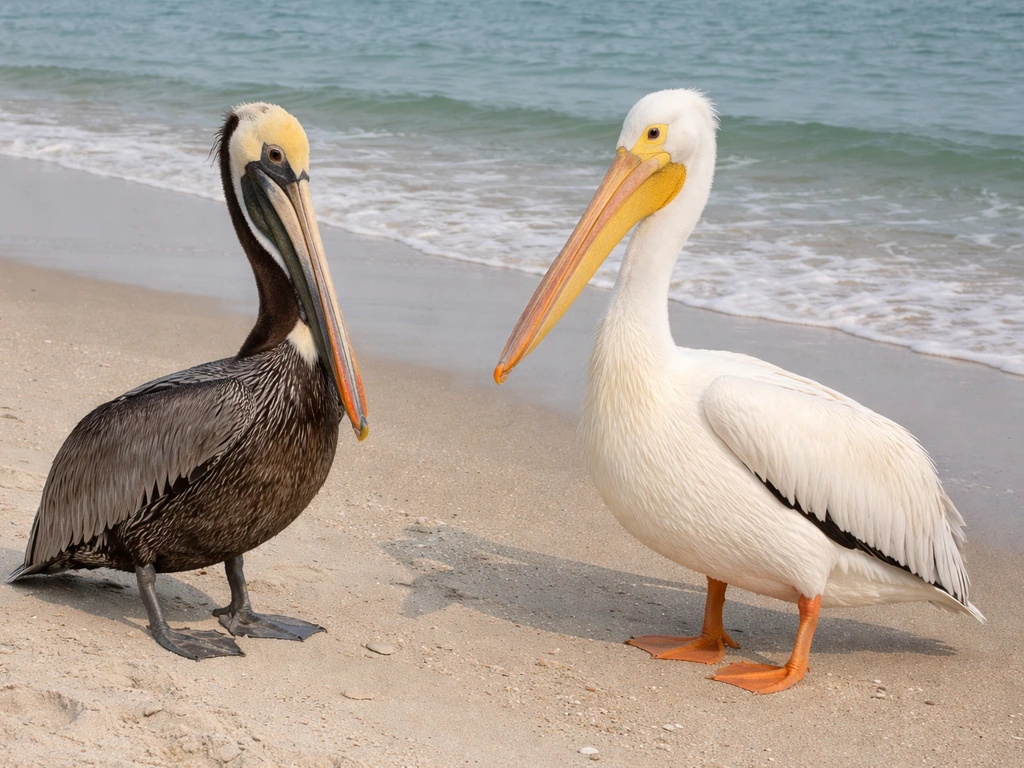
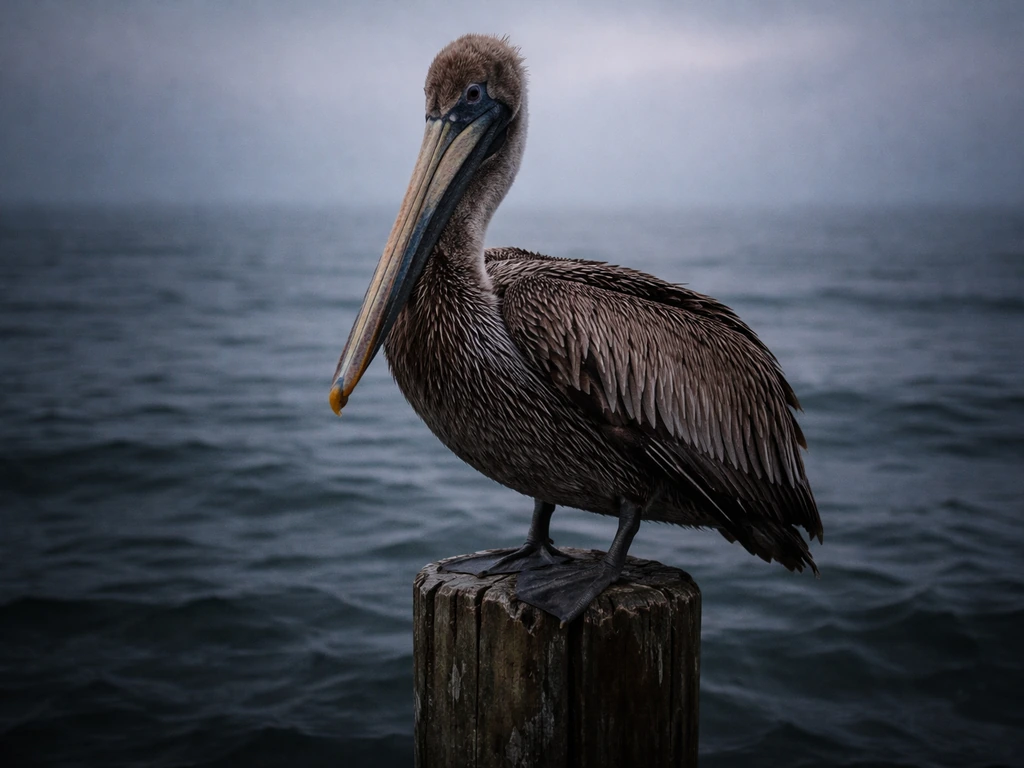
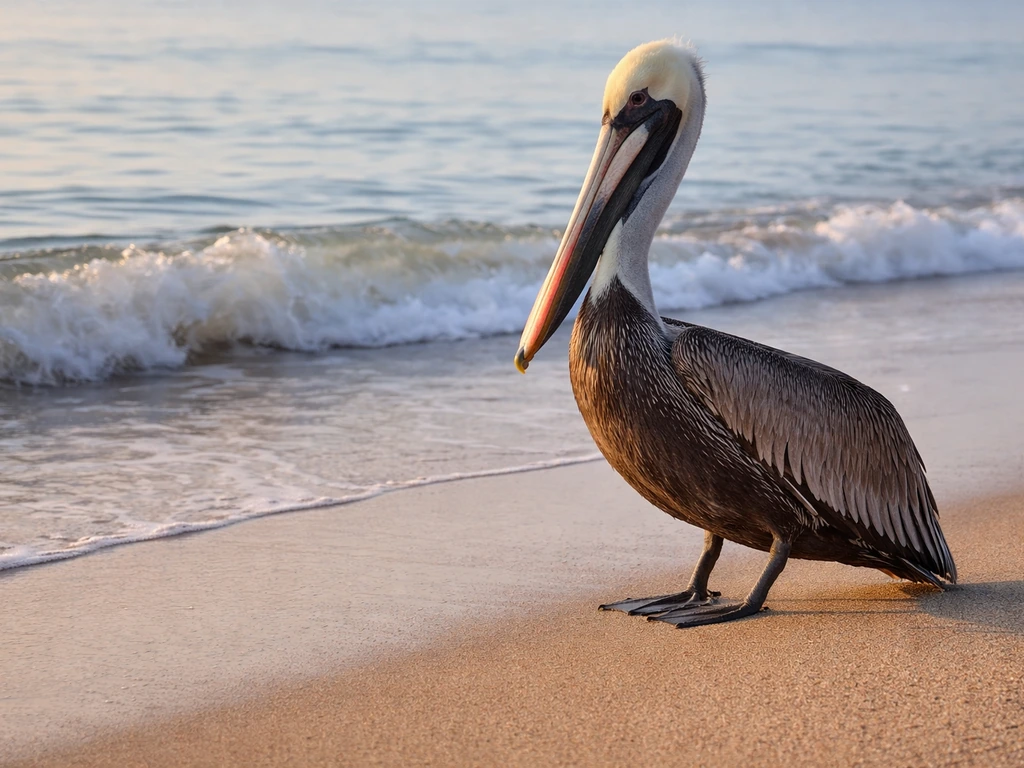
In the U.S., the two most commonly spotted pelicans are the brown pelican and the American white pelican, and they behave quite differently. Brown pelicans are year-round coastal residents in places like Florida, diving solo into the surf for fish. American white pelicans are migratory, larger, and feed cooperatively on calmer inland and coastal waters. If you're trying to interpret a sighting contextually, knowing which bird you saw actually matters.
| Feature | Brown Pelican | American White Pelican |
|---|---|---|
| Color | Dark brown/gray with pale neck | Mostly white with black wing tips |
| Feeding style | Solo plunge-diving from height | Cooperative surface feeding in groups |
| Habitat | Coastal, saltwater shorelines | Lakes, inland waters, calmer coasts |
| Residency (U.S.) | Year-round in many southern coastal areas | Migratory |
| Symbolic overlay | Bold action, decisiveness, solitary effort | Community, cooperation, collective care |
In terms of color symbolism, white birds broadly carry associations with purity, peace, and spiritual clarity in many traditions, while brown tends to feel more grounded and earthly. But pelican symbolism doesn't hinge heavily on color the way dove symbolism does, for example. The behavioral and legendary associations are more central. If you want to draw meaning from a white pelican sighting specifically, community and grace are reasonable themes to lean on. For a brown pelican, the diving behavior and coastal resilience feel more relevant.
How "pelican" shows up in language, names, and phrases
The word "pelican" comes from the Ancient Greek pelekan, derived from pelekys, meaning "axe." It's a descriptive name, likely referencing the shape of the bill, not a symbolic origin. In everyday English, "pelican" functions mostly as a plain bird noun. It doesn't carry idiomatic weight the way "pigeon" does (as slang for a gullible person) or the way "dove" does (as a peace symbol in political speech).
Where pelican does appear in language, it tends to be in proper names rather than idioms. Place names like Pelican Island in Florida and Pelican Island in Barbados reflect descriptive ecology: pelicans were there, so the place got named after them. Brand names like Pelican Products (makers of protective cases) use the bird's association with durability and protection rather than any omen-like meaning. And popular-culture uses like the film and novel "The Pelican Brief" are simply proper nouns with no bird-symbolism implication at all.
The one phrase that does carry genuine symbolic weight is "pelican in her piety," which you'll encounter in art history, church architecture, heraldry, and occasionally in literary analysis. When you see that phrase, it always points back to the self-sacrifice and devotion theme. Outside of that specific expression, don't read too much into the word "pelican" appearing in a name or title as if it's a coded message.
It's also worth mentioning that pelican symbolism shares some thematic ground with other birds you might be exploring. The pigeon and the paloma (Spanish for dove) both carry peace and community themes. If you came across the paloma bird meaning angle too, that dove-adjacent symbolism often leans into peace and community rather than the pelican's sacrifice focus. If you're also looking into pigeon bird meaning, you can compare how its symbolism for peace and everyday messages differs from the pelican's sacrifice-and-devotion themes. The pheasant brings in different cultural threads around beauty and good fortune. The pheasant bird meaning often focuses on beauty, confidence, and luck, though it varies by culture and tradition. Polynesian bird symbolism opens up navigation and spiritual messenger themes. In Polynesian bird meaning, different birds can function as spiritual messengers and markers of guidance within specific traditions Polynesian bird symbolism. The pelican's particular niche is that intersection of sacrifice, devoted care, and communal grace, which makes it distinct even among symbolically rich birds.
So you saw a pelican today: here's how to interpret it
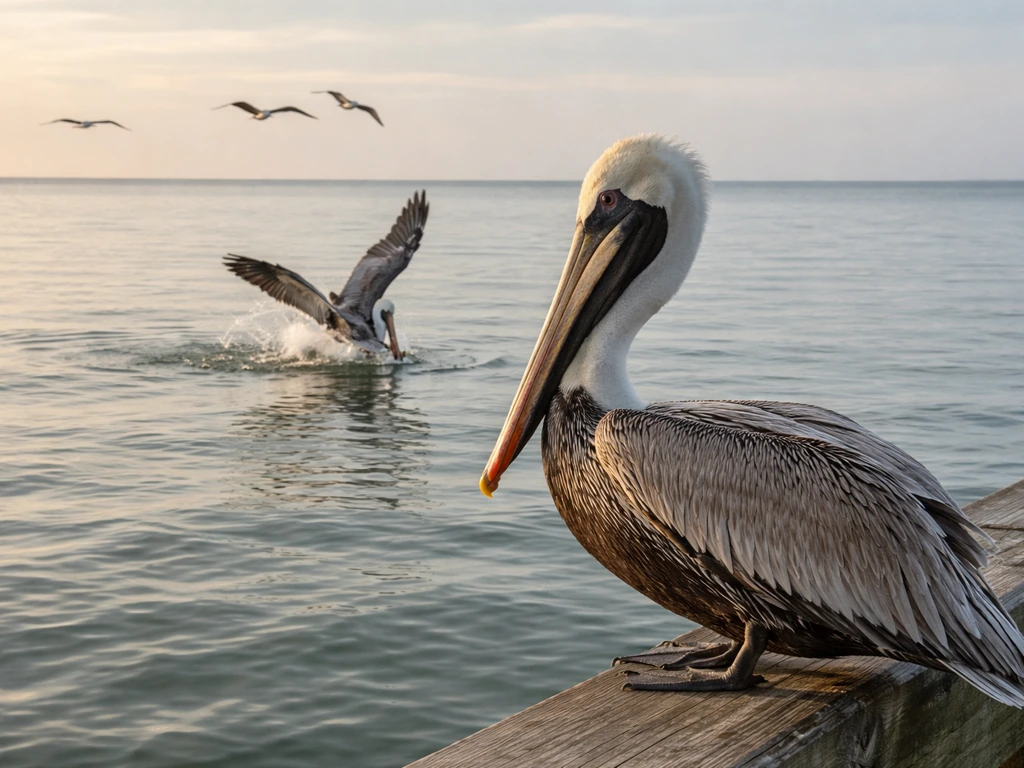
If you saw a pelican and want to think about what it might mean for you personally, the most useful approach is to notice the specific details of the sighting and match them to the most relevant symbolic themes rather than reaching for a generic "it's a sign" interpretation. If you came here specifically for the phrase “pura bird meaning in English,” it’s best to treat it as a name or term that may be tied to a particular culture or usage, so the context where you saw it matters.
- Note the behavior: Was the pelican diving alone? Feeding cooperatively with a group? Sitting still on a post or rock? Solitary diving leans toward themes of decisive action. Group feeding points to cooperation and community. Stillness often connects to patience and watchful grace.
- Note the color and species: Brown pelican on the coast reads as grounded, resilient, and bold. A large white pelican on calmer water reads more as peaceful, communal, and spiritually oriented if you're drawn to that framing.
- Consider the context of your life right now: Symbolism resonates when it matches something you're already working through. Themes of sacrifice, devotion, family care, or renewal are the pelican's core range. If one of those themes fits where you are right now, that's the connection worth sitting with.
- Don't over-literalize: The "pelican in her piety" legend was built on a visual misunderstanding of actual bird behavior. The meaning was never in the bird's literal action. Pelicans don't actually feed young with their blood. Treat any pelican sighting as an invitation to reflect on those themes, not as a literal prediction or omen.
- Keep the ecology honest: Pelicans are genuinely fascinating birds with real cooperative behaviors and intense parental investment. Grounding your interpretation in what pelicans actually do (cooperative fishing, devoted brooding, dramatic diving) keeps the symbolism connected to something real rather than purely invented.
The most grounded way to use pelican symbolism is to treat the bird as a prompt rather than a message. You're not receiving a verdict from the universe; you're being offered a set of themes, sacrifice, care, grace, renewal, community, and invited to consider which of those is most relevant to what you're navigating right now. That's how bird symbolism has always worked at its best: not as prediction, but as reflection.
FAQ
Is “pelican bird meaning” always about the Christian legend (blood feeding chicks)?
Not necessarily. That image is the biggest Western anchor, but everyday pelican symbolism is often used more generally for themes like devoted parenting, protection, and grace. If your sighting is coastal or you saw a group feeding, the “community and cooperative provision” angle may fit better than a direct sacrifice reference.
If I see a pelican alone versus in a group, does the meaning change?
Usually yes in practical interpretation. Solitary sightings tend to be read as focused commitment or individual responsibility (for example, persistent care or resilience), while multiple pelicans working together commonly maps to teamwork, shared effort, and collective support, especially if you notice coordinated feeding.
How can I tell whether I should think “brown pelican” or “American white pelican” symbolism?
Use location and behavior. Brown pelicans are often coastal, diving solo into surf, which makes “bold action and precision” a stronger fit. American white pelicans are larger and more migratory, often forming cooperative feeding efforts on calmer waters, which supports “community and grace” readings.
What if I saw the bird’s bill pouch or it appeared to dip its bill toward its chest, should I assume a “piety” link?
Be cautious. The famous “pelican in her piety” image is not about typical behavior. Real sightings that resemble a bill dip or resting the pouch against the breast can easily be misread into legend imagery, so it’s usually better to rely on the visible context (diving, brooding, group feeding) rather than assuming the medieval scene.
Are pelican meanings ever considered ominous or bad luck?
In Western popular symbolism, pelicans are usually framed positively (sacrifice, protection, healing, renewal). If you encounter a negative vibe, it is often coming from a different cultural tradition or from projection, not from the dominant Western association. When in doubt, default to the “reflection prompt” approach rather than treating it as a warning.
What does it mean if I keep noticing pelicans repeatedly?
Repetition often points to a personal theme you are currently circling rather than a literal prediction. A useful check is to write down what was changing in your life around the dates you noticed them, then match the most consistent theme (care, recovery, community, decisive action) to what’s most relevant.
Does pelican color (white versus brown) automatically change the message?
Color can guide nuance, but it is not the primary driver of meaning in most pelican symbolism. The article’s core themes are more strongly tied to the legendary motif and the behavior you observe (cooperative feeding, parental care, diving). Treat color as a secondary detail, not the main key.
Is it meaningful to find the word “pelican” in a place name or product name?
Usually it is descriptive rather than symbolic. Place names like Pelican Island and brands with “pelican” in the name typically reflect ecology or product branding (such as protection or durability), not coded omens. Symbolic meaning is more justified when you encounter the bird itself or the specific phrase “pelican in her piety.”
What if I’m drawn to pelican symbolism but don’t relate to sacrifice themes?
That’s normal. The symbolism can function as a set of options, not a single required message. If sacrifice feels heavy, consider adjacent themes like renewal after hardship, protective care, grace, or resilience. You can also focus on the behavior you saw (for example, teamwork if it was a group feeding) instead of the legend.
Is “pelican in her piety” the only phrase with strong symbolic weight?
It is the most consistently recognized phrase in Western art and literature. If you see the exact wording, it typically points back to the sacrifice and devotion theme. If you see “pelican” in other contexts (titles, casual conversation, headlines), it may simply be a proper noun with no intentional symbolism.
Next Article
Pigeon Bird Meaning: Literal and Symbolic Meanings
Literal pigeon definition plus symbolic uses, idioms, and how context changes meaning vs doves and other birds.