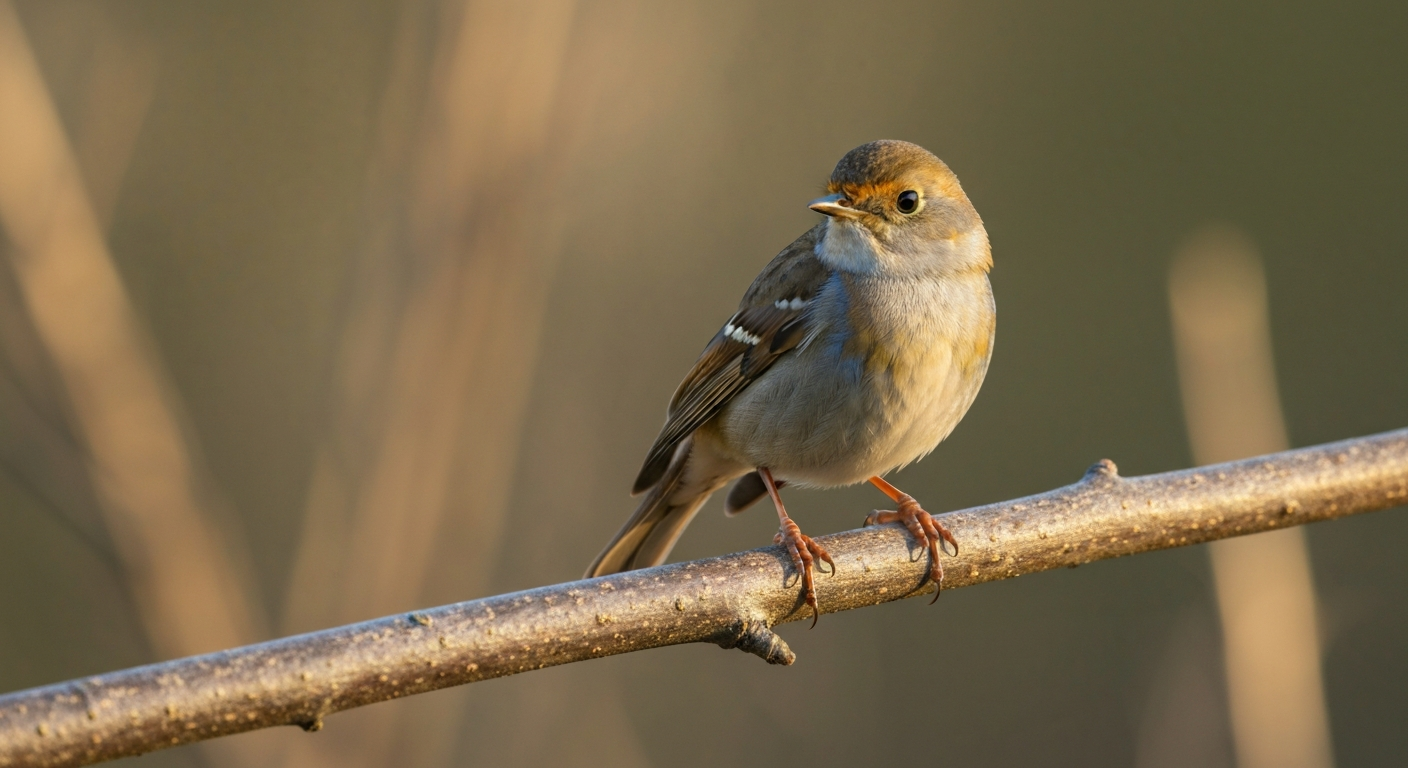
When someone searches 'bird in Asia meaning,' they're almost never looking for a single tidy definition. If you're not sure you're looking at cultural symbolism, this quick check also helps with related queries like summer bird meaning. The phrase is genuinely ambiguous, and it lands in a few very different places depending on context: it could mean the cultural symbolism of a specific bird (cranes for longevity, doves for peace, swallows for spring), a proverb or folk expression from China, Japan, Korea, India, or elsewhere, a lyric or literary reference using a bird as a metaphor, a slang or nickname usage, or occasionally a literal species found across Asia. The fastest way to help yourself is to pin down where you saw the phrase first, then match it to the right layer of meaning. Samdi bird meaning in English is usually about the specific bird reference you have seen in a cultural or slang context pin down where you saw the phrase first. This guide walks through all of them.
Bird in Asia Meaning: Metaphors, Symbols, and Slang Explained

What 'Bird in Asia' Could Actually Mean

The phrase 'bird in Asia' doesn't have a fixed, dictionary-style meaning the way 'early bird gets the worm' does. It's more of a search-engine shorthand people use when they've encountered a bird reference in an Asian cultural context and want to decode it. That means the phrase is acting as a container for several distinct questions at once.
The three main interpretations you're likely dealing with are: (1) cultural symbolism, meaning you want to know what a specific bird represents in a particular Asian tradition; (2) a proverb, idiom, song lyric, or literary metaphor where a bird is standing in for something else entirely; or (3) a literal species question, where someone genuinely wants to identify a bird that lives in Asia, like the Asian koel or the hwamei (the Melodious Laughing Thrush). There's also a smaller but real fourth category: slang, where 'bird' carries a colloquial meaning in local or regional English usage. Each of these points in a completely different direction, which is why the phrase feels so slippery.
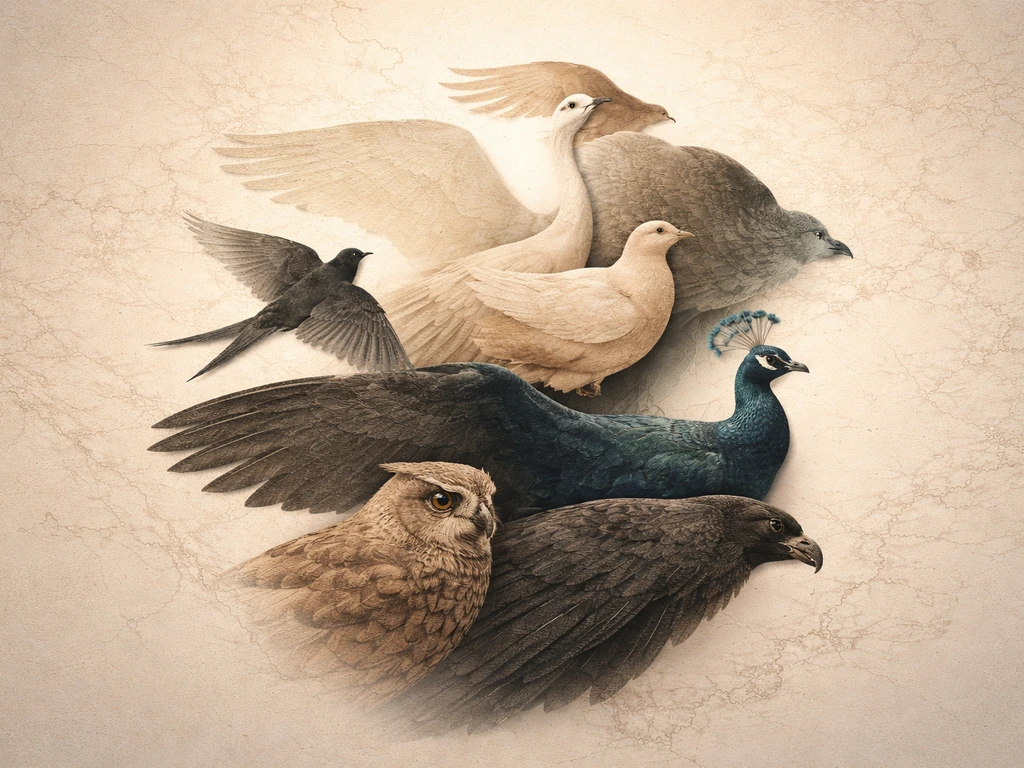
Major Asian Birds and What They Actually Symbolize
If you're trying to decode a cultural symbol, this is your reference section. Asian bird symbolism is rich and remarkably specific: the same bird can mean entirely different things depending on whether you're looking at it through a Chinese, Japanese, Korean, Indian, or Southeast Asian lens. Here's a breakdown of the most commonly referenced birds and their meanings across the region.
Crane

The crane is probably the single most symbolically loaded bird across East Asia. blank" rel="noopener noreferrer">In Chinese tradition, the crane is closely linked to longevity and immortality, appearing in classical texts and visual art alongside Taoist sages and pine trees (another longevity symbol). The red-crowned crane in particular is considered auspicious, and its image shows up on everything from porcelain to wedding gifts. In Japan, the crane carries the same long-life associations, plus the folk belief that folding 1,000 origami cranes (senbazuru) grants a wish. Japanese also has the fixed expression 鶴の一声 (tsuru no hito-koe), meaning 'one voice from the crane,' used to describe an authoritative statement that settles a debate. In Korea, crane symbolism shares the longevity thread and appears prominently in traditional folk paintings called minhwa. If someone says a crane means longevity or is referencing a crane in an Asian context, they're almost certainly drawing on one of these traditions.
Swallow
The swallow is a seasonal bird in Chinese and broader East Asian symbolism, strongly associated with spring, renewal, and good fortune arriving. In classical Chinese poetry and art, swallows nesting under eaves were a positive omen for the household. The Korean folk song Sae Taryeong (Bird Song) includes swallows alongside other birds, using their calls and seasonal arrivals as a kind of poetic register of the natural world. If you see a swallow referenced in an Asian cultural text, the default reading is spring or returning good luck, similar to how swallow symbolism works in the European tradition too.
Dove
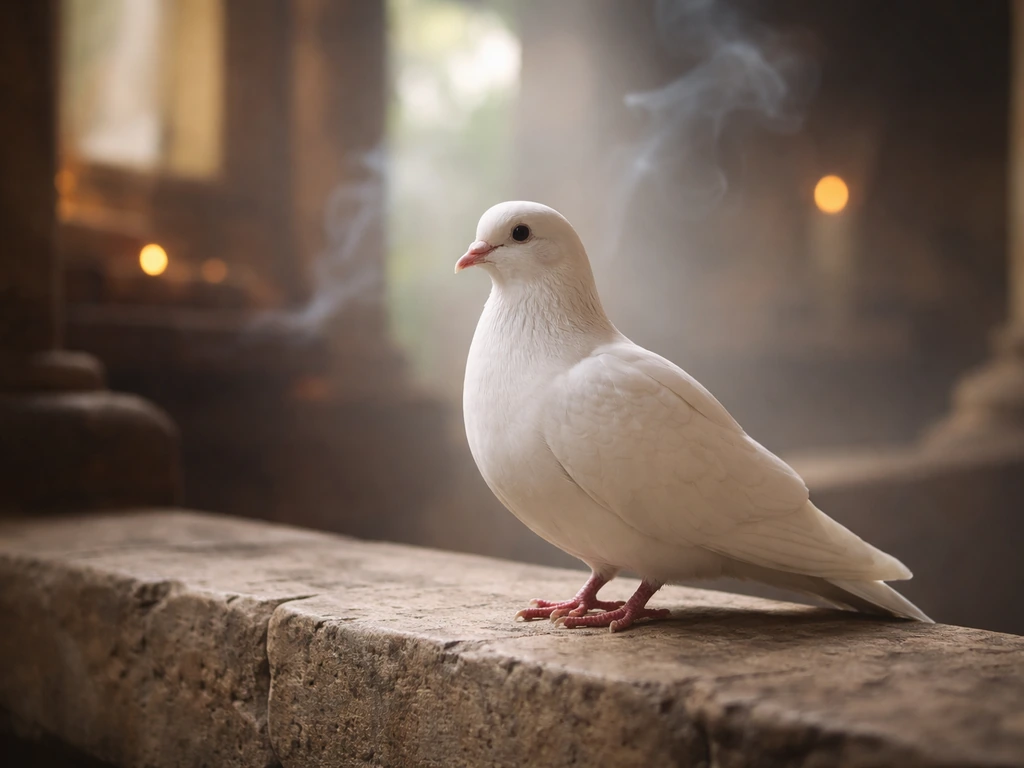
The dove's connection to peace is nearly universal and shows up in Asian traditions as well, partly through religious channels. In Buddhist and Hindu contexts, doves and birds generally carry associations with the soul, gentleness, and non-violence. The peace-symbol reading of the dove is so dominant globally that when a dove appears in an Asian cultural product (a mural, a poster, a song), the peace interpretation is almost always the right one unless something specific signals otherwise.
Peacock
The peacock has a documented cult following across South and Southeast Asia. In India, the peacock is the national bird and is sacred in Hindu tradition, associated with the god Kartikeya and with Saraswati. In Buddhist iconography, the peacock's ability to eat poisonous plants without being harmed made it a symbol of the capacity to transform negative forces. In Central and Southeast Asian folk traditions, the peacock appears as a protective symbol. If someone's tattoo, brand name, or artwork features a peacock in an Asian context, the most likely readings are royalty, beauty, protection, or spiritual transformation.
Eagle
Eagles across Asia broadly symbolize power, vision, and nobility, consistent with their symbolic weight in most world cultures. In Central Asian nomadic traditions, eagles carry an especially elevated status, tied to falconry cultures (Kazakh eagle hunters are a well-known example) and to the concept of freedom and martial strength. In Korean and Japanese contexts, the eagle also appears as a symbol of national pride and courage.
Owl
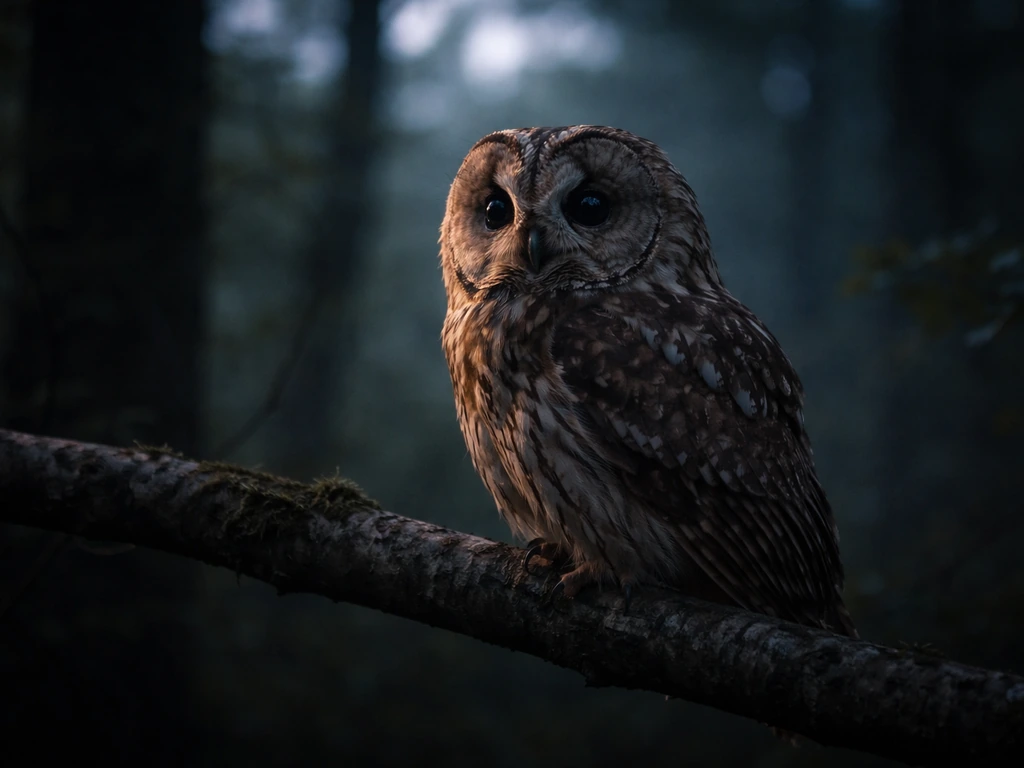
The owl's symbolism in Asia is more mixed than in Western traditions. In Chinese folk belief, owls were historically considered bad omens, associated with death or misfortune. In parts of India, owls are linked to Lakshmi (the goddess of wealth), making them a positive symbol there. In Japan, the owl (fukurou) is actually a good luck charm: the word sounds similar to words meaning 'no hardship' and 'luck coming your way,' so owl imagery is popular on protective amulets and gifts. Context and country matter a lot with owls.
Phoenix and Mythological Birds
The Fenghuang (often called the Chinese phoenix) is distinct from the Western phoenix and from the Japanese Ho-oh. The Fenghuang represents harmony, virtue, and imperial femininity, traditionally paired with the dragon (which represents masculine imperial power). The Phoenix in Korean tradition (Bonghwang) carries similar meanings of grace and high moral character. These mythological birds are technically not 'birds in Asia' in a literal sense, but they are extremely commonly referenced in cultural symbolism searches and are worth knowing.
| Bird | Key Symbolism | Primary Region(s) | Common Context |
|---|---|---|---|
| Crane | Longevity, immortality, authority | China, Japan, Korea | Art, gifts, idioms, origami |
| Swallow | Spring, renewal, good fortune | China, Korea, broader East Asia | Poetry, folk songs, seasonal art |
| Dove | Peace, gentleness, the soul | Pan-Asian, especially South Asia | Religious art, political imagery |
| Peacock | Beauty, royalty, protection, transformation | India, Southeast Asia, Central Asia | Religious iconography, tattoos, brands |
| Eagle | Power, vision, freedom, nobility | Central Asia, Korea, Japan | National symbols, falconry, martial imagery |
| Owl | Varies: bad omen (China) / good luck (Japan) / wealth (India) | Region-specific | Amulets, folk belief, gifts |
| Fenghuang/Phoenix | Harmony, imperial femininity, virtue | China, Japan, Korea | Classical art, logos, names |
| Sparrow | Humility, community, everyday life | Korea, China | Proverbs, folk songs |
| Asian Koel | Spring arrival, longing, persistence | South and Southeast Asia | Poetry, literature, birdsong references |
Birds in Asian Proverbs, Folk Sayings, and Everyday Language
Birds are one of the most productive metaphor sources in Asian languages, appearing in proverbs (속담 in Korean, 成语 chéngyǔ in Chinese), folk songs, and everyday idioms. These are not just poetic flourishes: they function as compressed life lessons, social observations, and cultural values packed into short, memorable phrases.
One well-documented Korean proverb is 'Sparrow following a crane,' which describes the danger or absurdity of trying to imitate someone far beyond your capabilities, often at your own expense. The crane and sparrow aren't random: the crane's prestige and the sparrow's humbleness are already culturally understood, so the image lands immediately for Korean listeners. This is how proverbs work: they borrow symbolic weight that already exists around a bird and use it as shorthand.
In Chinese, the four-character idiom tradition (chéngyǔ) is full of bird references. The crane appears in expressions about standing out from a crowd (鹤立鸡群, hè lì jī qún: 'crane standing among chickens,' meaning someone exceptional in an ordinary group). Swallows and sparrows appear in sayings about social class and ambition. In Japanese, the crane idiom 鶴の一声 mentioned earlier is used in workplaces and social settings to mean an authoritative word from a senior figure that ends all discussion.
In South Asia, birds like the koel (Asian koel) are embedded in poetry and literature as symbols of longing and the arrival of spring. The koel's distinctive, persistent call is so culturally familiar that referencing it in Urdu, Hindi, or Bengali poetry immediately evokes an entire emotional landscape without further explanation. The Oriental Dollarbird is another example: its Chinese and Japanese names literally translate to 'Three Treasures Bird,' embedding cultural meaning directly into the name itself.
In Central Asian folklore, a protective bird symbol called the Sotdae (a carved bird on a pole, used in Korean shamanic traditions and related Central Asian practices) shows that bird symbolism can be hyperlocal and tied to specific rituals rather than general cultural symbolism. This matters when you're trying to decode a phrase: regional specificity is real, and a 'bird' meaning in one country may not transfer cleanly to a neighboring one.
Slang and Nickname Uses of 'Bird' in an Asian Context
Outside of cultural symbolism, 'bird' carries several slang meanings that can show up in Asian English contexts, online communities, and social media. Knowing these helps you avoid misreading a casual or colloquial usage as a deep cultural reference.
- In British English slang (which has influenced many Asian English-speaking regions including India, Singapore, Hong Kong, and Malaysia), 'bird' is informal for a woman or girlfriend. This usage is casual and sometimes considered dated or slightly dismissive depending on context.
- In online slang across Asian social media communities, 'bird' can be a euphemism for the middle finger gesture (particularly in American-influenced internet culture), which is completely unrelated to symbolism.
- In some Southeast Asian and South Asian English contexts, 'bird' is used as a playful or affectionate nickname, particularly in families where a child is small or light.
- On social media, phrases like 'the bird in Asia' or 'a bird over Asia' occasionally appear as lyric fragments or poetic captions rather than symbolic statements. One documented case involves a Taylor Swift lyric reference ('flap its wings over in Asia'), used by fans to describe geographic or emotional reach, not Asian bird symbolism at all.
- In business and brand contexts, 'bird' appears in company names, product names, and logos across Asia, often chosen for its positive symbolic associations (crane-based brands especially) without necessarily intending a specific proverb or folklore reference.
The practical takeaway: if you saw 'bird in Asia' on social media, in a comment thread, or in a song lyric, there's a real chance it's one of these casual uses rather than a deep cultural symbol. Check the tone and the community before assuming you're dealing with formal symbolism.
How to Figure Out Exactly What It Means: A Context Checklist
Here's the fastest way to narrow down which interpretation you're dealing with. Work through these checkpoints in order.
- Where did you see the phrase? A tattoo studio consultation, a social media caption, a proverb list, a song lyric, a book, a brand logo, and a meme all point to very different meanings. Note the source type before anything else.
- Is a specific bird named? 'Bird in Asia' is vague; 'crane in China' or 'owl in Japan' is specific enough to decode almost immediately. If a species is named, start with that species and the relevant country.
- Is this from a specific cultural or national context? Chinese symbolism, Japanese idioms, Korean proverbs, and Indian folk traditions do not always agree. A peacock means different things in India than in China. Pin down the region if you can.
- Is there a sentence or phrase around it? If you have the full sentence, look for a lesson, moral, or emotional tone. Proverbs usually carry a clear message. Literary metaphors have emotional coloring. Slang is usually context-flat or jokey.
- Is the word 'bird' being used generically or is it referring to a specific bird? 'A bird flew over Asia' (generic, metaphorical) is very different from 'the crane represents longevity in China' (specific, symbolic).
- What platform or community is this from? A bird symbolism post on a tattoo forum, a pop music fan community, a folklore archive, or an Asian art history account all use 'bird' differently. Community context shapes interpretation.
- Can you get the original image, quote, or link? If the phrase came from a specific source, going back to the original is always faster than guessing. A photo of a tattoo design, a screenshot of a lyric, or the title of the book or song will cut your research time dramatically.
Real Examples: How These Meanings Show Up in Practice
Seeing these meanings in action makes them much easier to recognize. Here are concrete examples of how 'bird in Asia' or specific bird references appear in real usage.
Example 1 (Proverb usage): Someone shares a Korean proverb in a self-improvement post: 'A sparrow following a crane will only break its legs.' The commenter means: don't try to copy someone whose abilities are far beyond yours; know your level. The birds here are pure metaphor, and neither sparrow nor crane is being literally described.
Example 2 (Tattoo symbolism): A tattoo client asks for 'a bird tattoo with Asian meaning.' The artist asks what they're looking for: longevity and wisdom (crane), spring and luck (swallow), peace (dove), or power (eagle). Each gives a completely different design. The client saying 'Asian meaning' without specifying a bird or country is exactly the kind of ambiguity this article is meant to resolve.
Example 3 (Literary reference): A user on a music forum posts: 'what does it mean when she says the bird flaps its wings over Asia? A similar user-level interpretation comes up in the Taylor Swift community, where people connect the “bird in Asia” line to “flap its wings over in Asia” as a lyric reference. ' The answer here has nothing to do with cultural bird symbolism: it's a lyric about scale, reach, or the butterfly effect applied globally. Reading it as a crane-longevity symbol would be a misreading.
Example 4 (Idiom in conversation): A Japanese speaker at work says 'tsuru no hito-koe,' and a colleague translates it as 'the boss just gave his one word.' The phrase means an authority figure's decisive statement ends all debate. If you only knew 'crane means longevity,' you'd miss this idiomatic usage entirely.
Example 5 (Species identification): Someone on a birding forum posts 'what is that loud bird in Asia that sounds like it's calling its own name?' They're asking about the Asian koel, a well-known species across South and Southeast Asia whose distinctive call is referenced in poetry and folklore. This is a literal species question, not a symbolism question, even though the koel does carry cultural meaning.
Common Misreadings and How to Catch Them
A few false interpretations come up repeatedly when people search 'bird in Asia meaning,' and they're worth flagging directly so you don't go down the wrong path.
- Assuming all birds mean the same thing across all Asian cultures: they don't. The owl is a good luck charm in Japan, a bad omen in traditional Chinese belief, and associated with wealth in India. Always check the specific country or tradition before settling on a meaning.
- Treating a slang or lyric usage as deep cultural symbolism: if the phrase showed up in a casual tweet, a pop song, or a meme, it's probably not referencing classical Chinese iconography. Apply the context checklist first.
- Assuming the 'bird in Asia' is always a metaphor: sometimes it genuinely is a literal species question. If the surrounding text describes sounds, behavior, or location, it might be a birding or identification question rather than a symbolism one.
- Conflating Chinese and Japanese symbolism: these traditions overlap significantly but are not identical. The Fenghuang is not the same as the Japanese Ho-oh. The crane idioms in Japanese are different in phrasing and usage context from Chinese crane symbolism, even though the core symbolic value is similar.
- Assuming the Western meaning transfers: doves mean peace pretty universally, but ravens (associated with death and mystery in Western tradition) don't carry the same weight across Asia, where they might be interpreted differently depending on region. Don't map Western bird symbolism onto Asian cultural references.
If you're unsure whether your interpretation is right, the most reliable move is to go back to the original source. If it's a tattoo design, ask the designer or studio for the cultural reference they used. If it's a quote, find the original text and check the language it was written in. If it's a song, look up whether the artist has explained the lyrics. If it's a proverb from a book or folklore collection, check whether the source gives a country of origin. The original source almost always resolves the ambiguity faster than any general explanation can.
If you're exploring broader territory here, bird symbolism that's tied to seasons (spring birds, summer birds), specific celestial or weather associations (sun birds, weather birds), or names that carry bird meanings in specific languages (Chinese names meaning 'bird') all branch off from the core symbolism covered here and each has its own layer of cultural nuance worth digging into separately. For more on that idea, see the sun bird meaning and how people use it in different cultural contexts. Weather bird meaning can refer to birds interpreted through seasons or sky and weather clues, so context like the source and region matters weather birds.
FAQ
How can I tell if “bird in Asia” is slang versus cultural symbolism?
Look for signals of casual, conversational framing. Slang usually appears in memes, chat comments, dating posts, or informal English where “bird” is doing a new job (nickname, label, metaphor for a person or behavior). Cultural symbolism is more likely to be tied to a specific bird species name, a country, an art style, or a recognizable proverb or artwork context.
What should I do if the post mentions a specific bird, but not the country?
Treat the bird name as the anchor, then infer the most likely tradition by the platform language and surrounding cues. For example, crane, dove, and swallow are common cross-region symbols, but their exact idiom usage differs by China, Japan, Korea, and India. If you cannot find the original source, ask for the country or source text rather than guessing.
Is “bird in Asia” ever referring to a literal bird identification?
Yes, especially when the text includes sound descriptions (call type), habitat clues (forest, rice fields, coast), or a question framed like “what bird is this?” Species options people often mean include well-known Asian birds such as Asian koel or hwamei. If the phrase is paired with audio (recording) or birding keywords, it is probably literal rather than symbolic.
What are common mistakes people make when decoding bird proverbs?
The biggest mistake is treating each bird as having one fixed meaning everywhere. In proverbs, the “prestige” bird (often crane) and the “humble” bird (often sparrow) are doing a specific comparative role inside that saying. Another common mistake is translating the proverb word-for-word and losing what the original culture intended.
If I see “tsuru no hito-koe,” does it always mean a crane-related symbol like longevity?
No. In Japanese, that phrase is an idiom used for an authoritative decisive remark that ends discussion. Longevity crane symbolism is a separate, more general association. If the context includes workplace authority, hierarchy, or someone “settling” a debate, use the idiom meaning, not the longevity one.
Can a single bird have different meanings depending on medium, like tattoos versus poetry?
Yes. The medium changes what people emphasize. Tattoo artists and clients often pick the most emotionally “portable” meanings (peace for dove, longevity for crane). Poetry and lyrics may use birds primarily as seasonal or mood signals, where the bird supports longing, spring arrival, or place rather than a clean virtue-label.
How should I interpret “phoenix” type phrases found in Asia?
Be careful about the specific myth system. The Chinese Fenghuang is distinct from the Western phoenix, and Korean Bonghwang is also its own tradition. If the text mentions pairing with a dragon, harmony, virtue, or imperial femininity, it likely points to Fenghuang rather than a generic “phoenix = rebirth” idea.
What is the fastest way to avoid misreading a song lyric that uses bird imagery?
Check whether the lyric is describing scope, transformation, or an event, rather than using birds as symbols you can map to a single virtue. If the surrounding lines talk about scale (reach across places), global change, or cause and effect, it is often metaphorical storytelling, not a direct “crane means longevity” decoding.
I only saw “bird in Asia meaning” without any bird name. How do I narrow it down responsibly?
Collect 2 or 3 context facts first: the platform language (English, Korean, Chinese characters), the medium (tattoo, quote, lyric, comment), and any other keywords in the post (crane, dove, swallow, phoenix, spring, wish, authority). Without those, the safest assumption is that the phrase is search shorthand for multiple possibilities, and you should request the missing detail.
Where do region-specific bird symbols like Sotdae fit into the meaning puzzle?
They are hyperlocal and tied to particular rituals, so they do not “transfer” cleanly between countries. If the wording includes a term that sounds like a specific name for a carved bird, shamanic practice, or ritual object, treat it as regional folklore rather than a general East Asian symbolism entry.
Perched Bird Meaning, Literal, Symbolic, Usage, Examples
Perched bird meaning: clear literal and symbolic definitions, usage differences, examples, and quick reference.