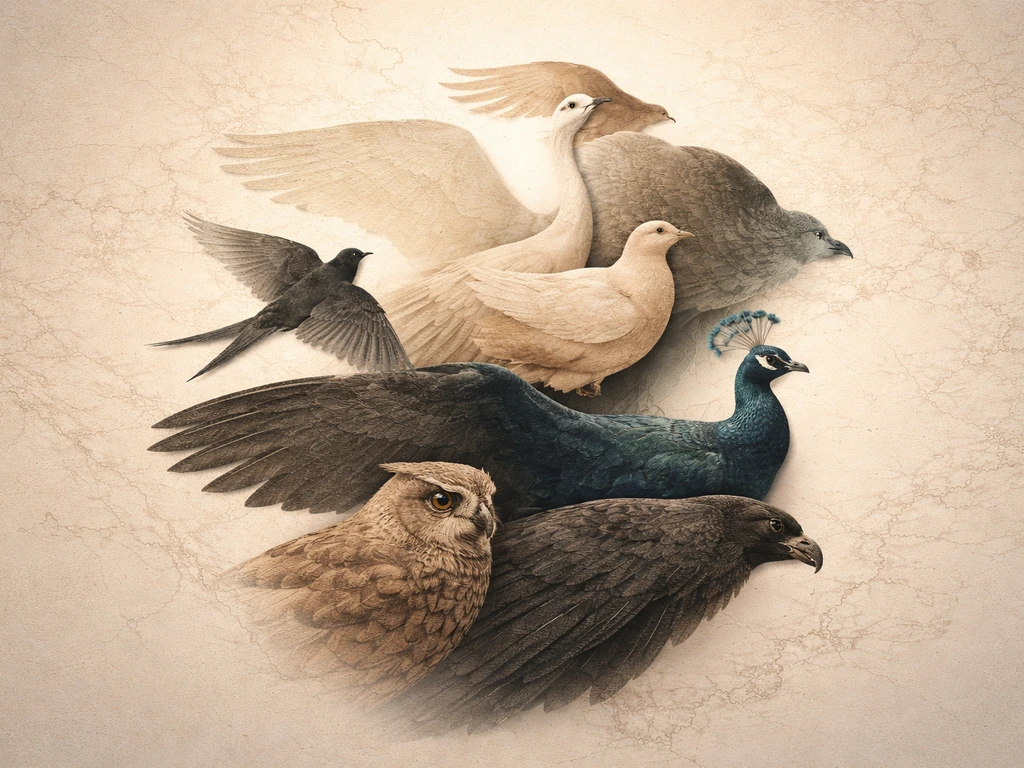
A Chinese name that seems related to 'bird' could contain any one of a dozen different characters, each with its own meaning, radical, and cultural weight. The sound alone tells you almost nothing. To figure out what a specific name actually means, you need the exact Chinese character, not just the romanized spelling, because pinyin like 'niao' or 'que' can map to multiple characters with completely different symbolism. Once you have the character, the meaning unlocks quickly, and it's usually rich: birds in Chinese naming tradition carry ideas of freedom, auspiciousness, longevity, and aspiration that go back thousands of years.
Chinese Name Meaning Bird: Characters, Symbolism, and How to Verify

Marcus Whitley
19 Jun 2026
Why 'bird' in Chinese names can mean different characters
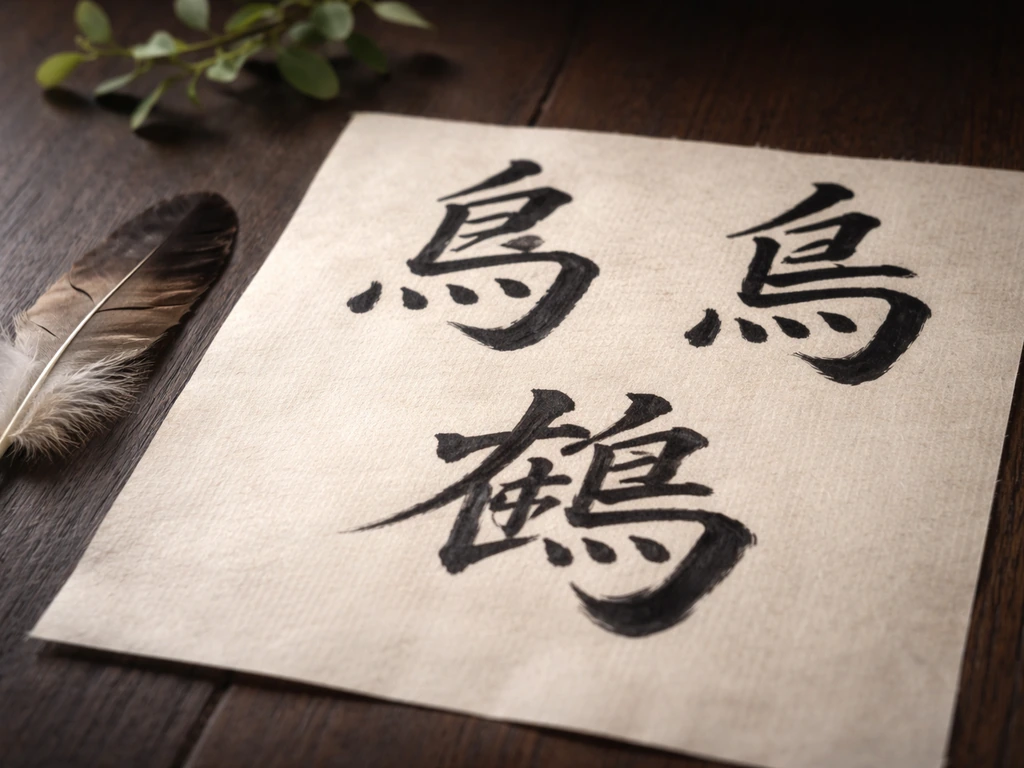
The first thing to understand is that Chinese writing is character-based, not alphabet-based. A single sound in Mandarin can correspond to many different characters, and a single concept like 'bird' doesn't map neatly to one syllable or one character. The most direct character for 'bird' is 鸟 (simplified) or 鳥 (traditional), both pronounced niǎo in Mandarin. But parents choosing a name rarely use the generic word for bird. They're more likely to pick a specific bird, a bird-adjacent concept like feathers or flight, or a character that evokes bird imagery without literally saying 'bird.'
This matters enormously for interpretation. Someone named 翔 (Xiáng) has a character built around the 羽 radical, which means feather or wing, and the character itself means 'soar' or 'fly.' Someone named 鹊 (Què) carries the magpie, one of the most auspicious birds in all of Chinese culture. Someone named 雁 (Yàn) is named for the wild goose, a bird steeped in poetry and the symbolism of seasonal migration and long-distance messages. These are completely different characters, completely different connotations, and none of them are literally spelled or pronounced the same way as 鸟. The romanized name alone will not tell you which one you're dealing with.
There's also the simplified versus traditional question. Mainland China uses 鸟; Taiwan and Hong Kong use 鳥. If someone's name was published in a romanized form without the original character, you genuinely can't be sure which version their official ID uses. That distinction matters if you're trying to verify an identity document or write someone's name accurately in a formal context.
How to identify the exact character in a name (and why pronunciation isn't enough)
Pinyin is a romanization system, not a character system. When you see a name written as 'Niao,' 'Xiang,' or 'blank" rel="noopener noreferrer">Que,' you're seeing a guide to pronunciation, not the actual name. The same pinyin syllable can represent multiple characters. Niǎo with the third tone does specifically suggest 鸟/鳥, but in practice, very few people are named with the bare character for 'bird' because it's considered too plain or even unlucky in some contexts. More often, you're encountering a character that belongs to the broader family of bird-related imagery.
The only reliable method is to find the original Chinese characters. Here are the practical ways to do that:
- Ask the person directly (if possible). Anyone who knows their own Chinese name can write the characters or type them for you.
- Check official documents. PRC resident identity cards and Taiwanese national ID cards contain the full name in Chinese characters. If you're working with a document that shows only pinyin, the character version likely exists somewhere.
- Use a Hanzi lookup tool like Zdic (汉典), HanziCraft, or HanziDict. Search by pinyin and tone, and you'll get a list of possible characters. Then cross-reference with context clues from the name.
- Look at the full name structure. Chinese names are typically surname plus one or two given-name characters. Knowing which character is the surname (usually the first character in mainland names) helps isolate the bird-related character for analysis.
- Use the radical index. If you have the character but aren't sure of the meaning, look it up by its radical. Bird characters often fall under 鸟部 (bird radical, Radical 196), 羽部 (feather radical, Radical 124), or 隹部 (short-tailed bird radical). The radical tells you the character family.
One common trap: online Chinese name generators and meaning-checker tools can be fun to explore, but their output doesn't necessarily match what a real person's official name card says. Treat those as approximate. When accuracy matters, go to the source.
Common bird-related name characters and their core meanings
Here's a practical reference for the bird and bird-adjacent characters you're most likely to encounter in Chinese given names, with their pronunciation, radical, and what they actually mean when someone's parents chose them.
| Character | Pinyin | Core Meaning | Radical | Name Connotation |
|---|---|---|---|---|
| 鸟/鳥 | niǎo | Bird (generic) | 鸟部 (Radical 196) | Rare in names alone; sometimes appears in compound given names |
| 翔 | xiáng | Soar, glide, fly | 羽部 (Radical 124) | Aspiration, freedom, high ambition |
| 鹊 (鵲) | què | Magpie | 鸟部 (Radical 196) | Good fortune, happiness, auspiciousness |
| 雀 | què | Sparrow | 小/隹 components | Cheerfulness, adaptability, vitality |
| 雁 | yàn | Wild goose, migratory bird | 隹部 | Faithfulness, poetic longing, seasonal journeys |
| 鸣 (鳴) | míng | Bird cry, to call/sing | 鸟部 (Radical 196) | Voice, expression, being heard |
| 鹰 (鷹) | yīng | Eagle, hawk, falcon | 鸟部 (Radical 196) | Sharpness, power, keenness of vision |
| 羽 | yǔ | Feather, wing | 羽部 (Radical 124) | Grace, flight, artistic sensitivity |
Notice that 翔 and 羽 don't use the bird radical at all. They fall under 羽部, the feather radical. This is exactly why you can't assume 'bird-sounding name' equals 'uses the bird radical.' The character family for flying and bird imagery in Chinese is genuinely spread across multiple radicals, and each branch carries its own shade of meaning.
Cultural symbolism: what bird imagery tends to suggest in Chinese naming
Chinese naming is not casual. Parents evaluate candidate characters by meaning, sound, visual balance, and cultural association, sometimes consulting a fortune teller or a naming specialist. When they choose a bird-related character, they're usually reaching for a specific set of ideas that bird carries in Chinese cultural memory.
The crane (鹤, hè) is the classic longevity bird in Chinese mythology. Some sources also explicitly describe cranes as the “bird of longevity,” reinforcing their long association with longevity symbolism in Chinese culture [The crane (鹤, hè) is the classic longevity bird in Chinese mythology. ](https://www. sohoinchina.
com/what-do-cranes-represent-in-chinese-culture/). It's called the 'divine bird' and appears in art, poetry, and embroidery alongside pine trees and clouds as a symbol of immortal life.
The term “weather bird meaning” usually points to how certain bird symbols are interpreted in relation to forecasts or seasonal change. A name using 鹤 carries that whole tradition. The magpie (喜鹊, xǐquè) is the happiness bird: its call was traditionally believed to announce good news, and the image of a magpie perched on a plum branch (喜鹊登梅) is one of the most beloved auspicious motifs in Chinese visual culture.
If you see 鹊 in a name, someone was hoping for joy and good fortune to follow that person through life.
Flight characters like 翔 point more toward aspiration and personal achievement. That symbolic bird meaning also depends on which specific character is used, not just the general idea of “bird.”. The imagery is of a bird circling high in thermals, effortless and free, which makes it a popular choice for boys' names suggesting ambition and capability. 羽 (feather) skews slightly more artistic and graceful, associated with music (the pentatonic scale system in classical Chinese music uses 羽 as one of its five tones) and delicacy. 鹰, the eagle or hawk, brings a sharper edge: the phrase 鹰视 ('hawk-eyed') captures the connotation of piercing perception and focused intelligence.
The wild goose, 雁, sits in a completely different emotional register. In classical Chinese poetry, geese flying in formation overhead were a standard image for letters carried over long distances, for the ache of separation, and for the turning of seasons. A name containing 雁 tends to have a literary, poetic quality rather than a purely auspicious one. It suggests someone with depth and sensitivity rather than raw ambition.
This connects to a broader pattern you'll find across Asian bird symbolism, where the specific bird chosen tells you almost as much as the word 'bird' itself. If you’re trying to interpret a bird name beyond Chinese, it helps to know what a bird in Asia meaning can signal in broader regional symbolism Asian bird symbolism.
Step-by-step method to interpret a specific person's name you found

Let's say you've come across a Chinese name that you think might be bird-related, but you only have the romanized version. Here's the exact process to work through it. If your name includes a sun-bird reference, the sun bird meaning depends on which Chinese character is used and how it connects to cultural symbolism.
- Get the Chinese characters. This is non-negotiable. Everything else depends on it. Try the person directly, check any document that might show the original characters, or search for the full name in Chinese online if the person is a public figure.
- Identify the structure: surname vs. given name. In mainland Chinese names, the surname comes first. Most surnames are one character. The given name is typically one or two characters that follow. Isolate the given-name character(s) before you analyze meaning.
- Look up each given-name character individually in a Hanzi dictionary (汉典 at zdic.net is reliable and free). Note the character's radical, its core definition, and any secondary or figurative meanings listed.
- Check which radical the character uses. If it's 鸟部 (Radical 196), you're in direct bird territory. If it's 羽部 (Radical 124), you're in feather/wing/flight territory. If it's 隹部, you're dealing with the short-tailed bird family, which includes characters like 雀 and 雁.
- Read the full given name as a unit. If the given name is two characters, the meaning comes from the combination, not just one character alone. A name like 翔宇 (Xiáng Yǔ) means something like 'soaring through the universe,' where 宇 (yǔ) means sky/cosmos. The bird character amplifies the second character and vice versa.
- Cross-check the tone. If you originally had only pinyin, confirm the tone matches the character. Niǎo (3rd tone) points to 鸟/鳥. Míng (2nd tone) points to 鸣. A tone mismatch suggests you may have the wrong character.
- Consider generational naming patterns. In families that use a generation poem (排行诗), one character of each sibling's name is fixed by tradition. If the bird character is the shared generational character, it may be chosen more for its phonetic fit than its symbolism alone.
Common mistakes to avoid when translating or romanizing Chinese names
These are the errors that come up again and again when people try to interpret bird-related Chinese names without the original characters.
- Treating pinyin as the name itself. Pinyin is a pronunciation guide. 'Xiang' could be 翔 (soar), 香 (fragrance), 祥 (auspiciousness), or many other characters. Never interpret a name from romanization alone.
- Assuming 'niao' in a name means the character 鸟. While niǎo (3rd tone) does correspond to 鸟/鳥, it's an unusual choice for a personal name. More commonly, what sounds 'bird-like' uses a specific bird character (翔, 鹊, 雁) rather than the generic word for bird.
- Conflating simplified and traditional forms. 鸟 (simplified) and 鳥 (traditional) are the same character in different writing systems. Mixing them up in a document or formal context is a real error, especially for names registered in Taiwan or Hong Kong versus mainland China.
- Assuming bird radical = bird character. Characters like 翔 and 羽 are deeply bird-adjacent but use the feather radical, not the bird radical. Searching only under 鸟部 will miss them entirely.
- Reading a two-character given name as two separate meanings. The characters work together. Translating each one in isolation and then adding them up often produces nonsense or misses the intended poetic image.
- Trusting automated name-meaning generators without verification. These tools are inconsistent and sometimes simply wrong about which character a specific person's name uses. Always verify against the actual character if the meaning matters.
- Ignoring tone when searching by pinyin. The pinyin syllable 'que' at 4th tone (què) points to 雀 (sparrow) or 鹊 (magpie). These are different birds with different symbolism. The tone is part of the identity of the character.
One last thing worth keeping in mind: bird symbolism in Chinese names doesn't exist in isolation. The same cultural logic that puts cranes on birthday scrolls and magpies on wedding decorations is what shapes which bird characters parents reach for when naming a child. If you've spent time exploring how birds carry meaning across Asian cultures more broadly, you'll find the naming layer clicks into place quickly. Summer bird meaning is part of the same symbolism system, where season and bird imagery shape what a name or character can suggest birds carry meaning. The characters are specific, but the symbolic vocabulary behind them is one most people in Chinese-speaking cultures absorb from childhood.
FAQ
If I only know the pinyin for a Chinese name that sounds like “bird” (niǎo), can I still reliably guess the character?
Usually no. Even though “niǎo” in Mandarin often points to 鸟/鳥, real given names rarely use that generic character alone. A reliable approach is to cross-check with the person’s written name on documents, their signature style, or how the family writes the name in Chinese characters (for example on school records or ID).
What if the person’s name is written in English letters in different ways, like Niao, Nyao, or Nieu, across documents?
Multiple romanizations can refer to the same Chinese characters, or they can hide different characters that share a similar pronunciation. When you need certainty, prioritize the original Chinese character from a stable source, and do not rely on spelling variations in English letters because they are not standardized across all systems.
How can I tell whether a name uses the bird radical (bird/niao radical) versus a bird-related meaning character like 羽 or 羽部?
Do not infer the radical from the name’s English meaning or from the overall “bird vibe.” For example, 翔 is pronounced xiáng and relates to flight and aspiration, but its structure comes from the feather/wing radical family (羽), not the bird radical. The only dependable method is to look up the exact character and confirm its radical and component.
If someone’s name uses 鳥 (traditional) versus 鸟 (simplified), does that change the meaning?
In most everyday naming contexts, the core meaning and symbolism of the character are the same, but official spelling can differ by region and by the character set used in forms. When accuracy matters (IDs, genealogy, or official correspondence), match the character set used by the person’s issuing authority.
Are bird characters in Chinese names always positive, auspicious, or “lucky”?
Not automatically. Many bird-related characters are auspicious (like magpie for joy), but some characters can carry a sharper or more specific connotation tied to imagery, personality, or historical usage. Interpreting a name correctly requires the exact character, because “bird” symbolism is nuanced rather than uniformly good or bad.
What should I do if the person’s Chinese name is missing characters on a form, only showing romanization?
Request the Chinese characters in writing. If the person cannot provide them, you can still reduce risk by asking for extra identifiers that correlate with the name, such as the full Chinese name from a photo of the document, a family name plus given name character order, or a screenshot from an official profile where Chinese characters are displayed.
Can a single character be interpreted multiple ways, so I might get the “meaning” wrong from a dictionary entry?
Yes. Many characters have several senses depending on usage, era, and whether they are part of a compound. In names, the intended meaning often comes from the cultural associations tied to that character, so dictionary definitions alone can be incomplete. If you need interpretation for a specific personal name, confirm typical name usage for that character and how it is read in context.
If the name includes a specific bird like crane (鹤) or wild goose (雁), are the symbolism themes consistent across all regions?
They are broadly consistent, but emphasis can vary. For example, crane often links to longevity imagery in traditional culture, while wild goose is commonly associated with poetry, seasonal change, and long-distance letters. Still, modern naming trends and family preferences can shift the emphasis, so the character is the anchor, not the generalized theme.
What is the safest way to verify a Chinese name meaning for “chinese name meaning bird” without relying on generators?
Use the exact character from a credible primary source, then verify with multiple independent references for character structure and pronunciation, and finally reconcile any discrepancy with how the name is actually used in names. If the character is not given, verification is speculative at best, so treat generator results as tentative until you confirm the character.
Next Article
Bird in Asia Meaning: Metaphors, Symbols, and Slang Explained
Meaning of bird in Asia, from common bird symbols to slang, plus quick steps to identify the exact reference.