When people search for 'Native American water bird meaning,' they are usually asking one of two related questions: what does a specific water bird symbolize in Indigenous traditions, or what does it mean when a particular tribe treats a water bird as sacred, a clan marker, or a ceremonial figure? The honest answer is that there is no single unified meaning, water birds carry different roles and significance depending on the tribe, region, language, and context. But there are clear, well-documented patterns, and once you understand how Indigenous symbolic systems actually work, the meaning of each bird becomes genuinely usable rather than vaguely spiritual.
Native American Water Bird Meaning: Symbolism by Species

Marcus Whitley
18 Jul 2026
What 'Native American water bird' actually covers
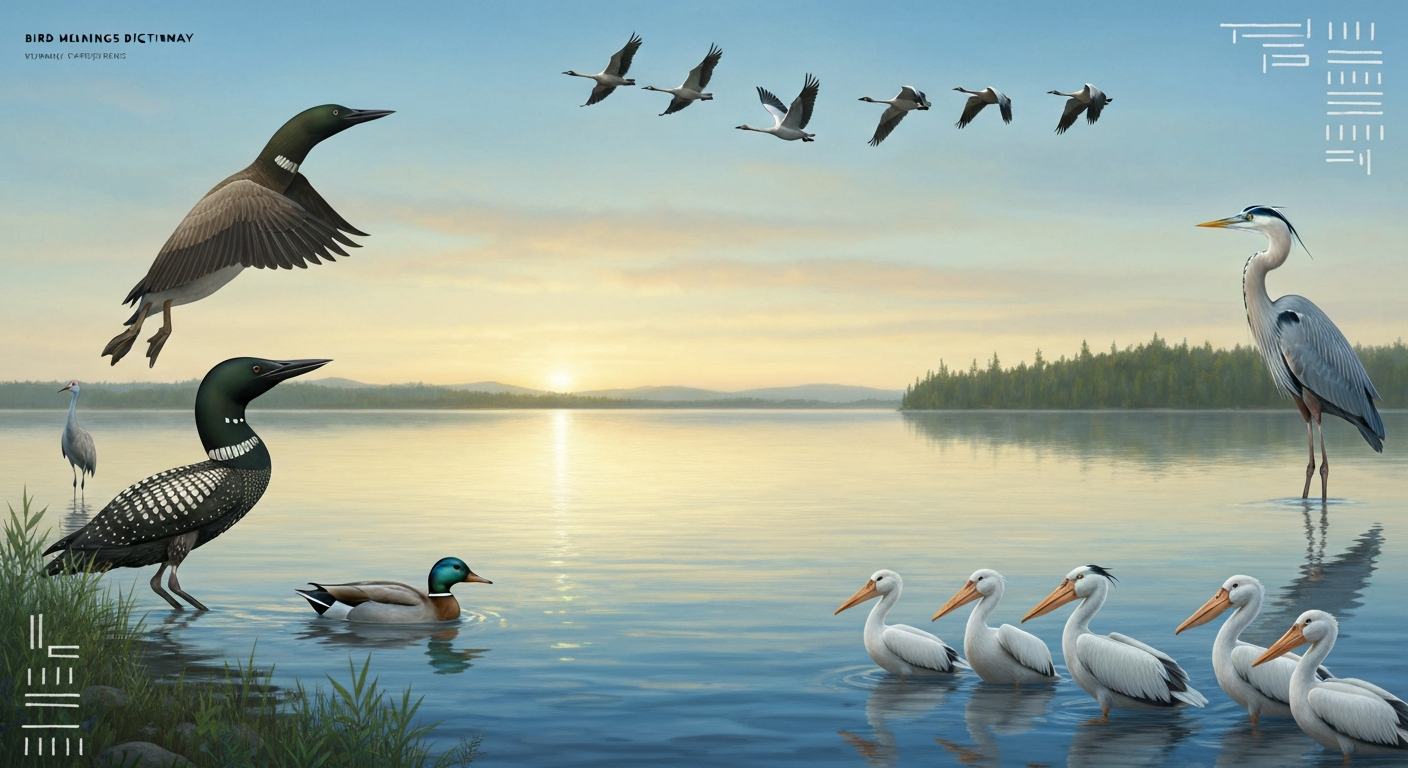
The phrase bundles together a very wide range of birds, loons, herons, egrets, ducks, swans, geese, cranes, pelicans, and shorebirds, and an equally wide range of cultural systems. North America is home to hundreds of distinct Indigenous nations, each with its own language, oral traditions, clan structures, and ceremonial practices. That means a heron in a Tlingit story from the Northwest Coast carries a completely different cultural load than a heron in an Ojibwe fishing song from Minnesota. Treating all of these as one thing would be like saying 'European bird symbolism' and expecting it to cover both Norse ravens and Italian doves equally.
This article approaches the subject with that complexity in mind. Rather than flattening everything into generic 'Native American spirituality,' it works species by species and culture by culture, using documented tribal-language examples, ethnographic records, and oral tradition sources. The goal is a reference you can actually use, whether you encountered a water bird in a piece of literature, want to understand a tattoo design, are interpreting a dream, or simply want to know what the loon meant to the Ojibwe before you put it on a wall.
The core definition: what the phrase means in cultural context
In cultural and symbolic terms, a 'Native American water bird' is any aquatic or semi-aquatic bird that holds documented significance within one or more Indigenous North American traditions, whether as a clan totem, a ceremonial figure, a character in oral literature, a place-name element, or a being associated with specific spiritual powers. The significance is almost always rooted in the bird's observable behavior. Loons dive deep and surface in unexpected places, so they become earth-divers in creation stories. Herons stand motionless for long stretches before striking precisely, so they become figures of patience and focused skill. The symbolic meaning is not arbitrary, it grows out of close, long-term observation of how these birds actually live.
How water-bird symbolism works across Indigenous cultures
Before going species by species, it helps to understand the different symbolic roles a bird can play in Indigenous contexts, because the same bird might function differently depending on which register it appears in.
- Clan totems (doodems): In Great Lakes traditions like the Ojibwe (Anishinaabe), a bird species names a hereditary clan that carries governance, ceremonial, or social functions. Being born into the Loon Clan (Maang doodem) is a kinship identity, not a personal spirit choice.
- Crest systems: On the Northwest Coast (Haida, Tlingit, Tsimshian), bird images on house poles, regalia, and masks signal lineage ownership and social rights. A heron or eagle on a crest object means 'this clan owns this story, territory, or ceremonial right.'
- Katsina spirits: Among Hopi and other Pueblo peoples, birds appear as katsinam — personified spirit beings who intercede for rain, crops, and seasonal balance. A duck katsina is a ceremonial figure with agricultural and meteorological associations.
- Oral literature characters: Across nearly all traditions, water birds appear in creation stories, trickster tales, and cosmological accounts. Their roles range from heroic (the loon who retrieves mud from the bottom of the primordial ocean) to comic to cautionary.
- Place names: Bird terms are embedded in landscape names throughout North America. Ojibwe compound words like maang-minis ('Loon Island') and maang-ziibiins ('Loon Creek') preserve both ecological observation and cultural memory in the geography itself.
- Ritual and ceremonial imagery: Plains cultures, for example, use a generalized 'water bird' motif — often a long-necked diving or wading figure — in peyote ceremony iconography and vision contexts, sometimes without strict species identification.
Understanding which register a bird appears in changes the meaning significantly. If someone tells you the loon is 'their clan bird,' that is a hereditary kinship statement. If a loon appears in a vision narrative, that is a different kind of encounter entirely. Context is the key that unlocks what the bird actually means in any given instance.
Species-by-species overview: patterns in water-bird symbolism
Despite the cultural variation, certain symbolic themes do appear consistently across many tribes for the same species. The table below maps the most commonly documented water birds to their recurring symbolic associations. These are starting points, not complete definitions, each bird gets a fuller treatment in the sections that follow.
| Bird | Ojibwe name | Primary symbolic themes | Key tribal contexts |
|---|---|---|---|
| Common Loon | Maang | Leadership, creation, deep knowledge, world-between | Ojibwe (clan totem), northern woodland traditions (earth-diver) |
| Great Blue Heron | Mooshka'osi | Patience, precision, fishing skill, threshold between worlds | Ojibwe, Tlingit, coastal and inland tribes broadly |
| Duck (general) | Zhiishiib | Adaptability, resourcefulness, rain, balance between water and land | Ojibwe, Hopi (duck katsina), Lakota, Navajo |
| Trumpeter Swan | Waabizii | Beauty, grace, purity, long journeys, transformation | Ojibwe, northern Plains, Great Basin |
| Canada Goose | (various) | Community, loyalty, navigation, seasonal renewal | Plains, Great Lakes, subarctic nations |
| American White Pelican | Zhage | Abundance, communal fishing, generosity | Ojibwe, Great Plains, southern coastal nations |
| Sandhill/Whooping Crane | Ajijaak | Leadership, ceremony, long life, oratory | Ojibwe (leadership clan), Plains nations, Southeast |
| Egret | (regional) | Purity, clarity, spiritual attention, omens | Coastal tribes, Southeast, Southwest |
The loon: earth-diver, leader, and voice of the north
The common loon is probably the most symbolically loaded water bird in the Great Lakes and northern woodland traditions, and it earns that role through behavior that is genuinely striking. Its tremolo call carries for miles across still water in a way that sounds, as many people have noted, like laughter, like mourning, or like something calling from just below the surface of reality. It dives to extraordinary depths and surfaces far from where it went under. For cultures living in close relationship with northern lakes, that combination of haunting voice and mysterious disappearance made the loon an obvious candidate for cosmological roles.
Ojibwe: Maang, the clan, and the creation story
In Anishinaabemowin (Ojibwe language), the common loon is maang. This is not just a bird name, it is one of the most important doodem (clan) names in Ojibwe social organization. The Maang doodem (Loon Clan) sits alongside the Ajijaak doodem (Crane Clan) as one of the two primary leadership clans in many Ojibwe communities. Traditional accounts describe a division of governance roles between them: the Crane Clan often held external leadership and oratory functions while the Loon Clan held internal or sub-chief roles. Some accounts reverse this or describe them as complementary rather than hierarchical, the point is that these two water birds structured political identity for entire communities.
Loon imagery also appears in Ojibwe ceremonial material. Midewiwin (Grand Medicine Society) birch-bark scrolls and sacred songs include water-bird imagery, with the loon present in initiation contexts and cosmological accounts. This places the bird not only in governance but in the deepest ceremonial registers of Anishinaabe life. The place-name compounds maang-minis (Loon Island) and maang-ziibiins (Loon Creek) show the bird woven into landscape as well, anywhere Ojibwe people lived and named territory, the loon was likely close by.
Earth-diver creation stories
Across northern and woodland tribes more broadly, the loon appears in what comparative folklorists call the 'earth-diver' creation motif. In these stories, the world begins covered in water. Various animals dive to retrieve mud or earth from the bottom, which is then used to build the land. The loon is a recurring volunteer in these stories, sometimes succeeding, sometimes failing, but consistently chosen because its real-world diving ability makes the mythological role believable. Ernest Ingersoll's early-20th-century comparative survey of birds in legend documented this motif across multiple northern traditions, and it remains one of the most consistent loon-associated narrative types in North American oral literature.
Interpreting loon symbolism in sightings, dreams, tattoos, and literature
If you are reading a novel set in northern Minnesota or Canada and a loon call punctuates a significant moment, the author is almost certainly drawing on the bird's association with solitude, the liminal, and voices that carry across great distances. In contemporary Indigenous literature specifically, the loon often signals connection to ancestral knowledge or the presence of something that crosses between worlds. For tattoo purposes, a loon design drawn from Ojibwe or woodland aesthetic traditions carries leadership and clan associations, it is worth knowing that for many Ojibwe people, clan animals are not available to everyone as personal symbols, so approaching this with cultural awareness matters. In dreams, the loon's symbolic register tends toward depth, hidden knowledge, and the need to surface something that has been submerged.
Heron and egret: the patient ones at the edge of things
The Great Blue Heron is called mooshka'osi in Ojibwe, a name that appears in the ethno-ornithological record of Anishinaabe bird knowledge. The heron occupies a distinctive symbolic space because of its physical posture and hunting method, it stands at the boundary between water and land, completely still, for long periods, then strikes with sudden precision. This edge-dwelling quality has made the heron a recurring figure for threshold spaces, patience, and the ability to move between different states or worlds.
Northwest Coast: heron in Tlingit narrative
On the Northwest Coast, raven and eagle dominate the crest system, but heron does appear in the narrative repertoire. Collected Tlingit oral texts include stories featuring herons and shorebirds, one documented story title, 'The Shaman Who Went into the Fire, and the Heron's Son,' suggests heron figures in shamanic and transformational narratives. This is worth noting because Northwest Coast bird symbolism works differently from Great Lakes clan symbolism: here the bird encodes lineage rights and property rather than personal or governance identity. A heron on a Tlingit crest object signals that the lineage holding that crest owns the associated story, territory, and ceremonial right.
Coastal versus inland differences
Coastal and inland tribes encounter herons in very different ecological contexts, and that difference shows up in the symbolism. Coastal tribes see herons as marine-adjacent fishers, part of a seabird and shorebird landscape. Inland Ojibwe communities encounter the Great Blue Heron at riverbanks and lake edges during the same seasons they fish themselves, making the heron a companion and parallel figure in the human activity of reading water for food. The inland heron is more often associated with fishing skill, seasonal knowledge, and reading natural signs. The coastal heron is more likely to appear in stories about transformation, disguise, and the boundary between the terrestrial and ocean worlds.
Interpreting heron and egret encounters
In literary uses, a heron appearing at a threshold moment, a character standing at a riverbank deciding something, or watching a heron take flight at dawn, almost always invokes the patience-then-precision symbolic register, whether the author is drawing consciously on Indigenous symbolism or not. The egret, being white and more conspicuous than the heron, tends toward purity and clarity associations in both Indigenous and broader symbolic traditions. In dream interpretation contexts, both birds tend to signal a need to wait, observe, and act decisively when the moment arrives, the behavioral root of the meaning is always present.
Duck bird meaning in Native American traditions
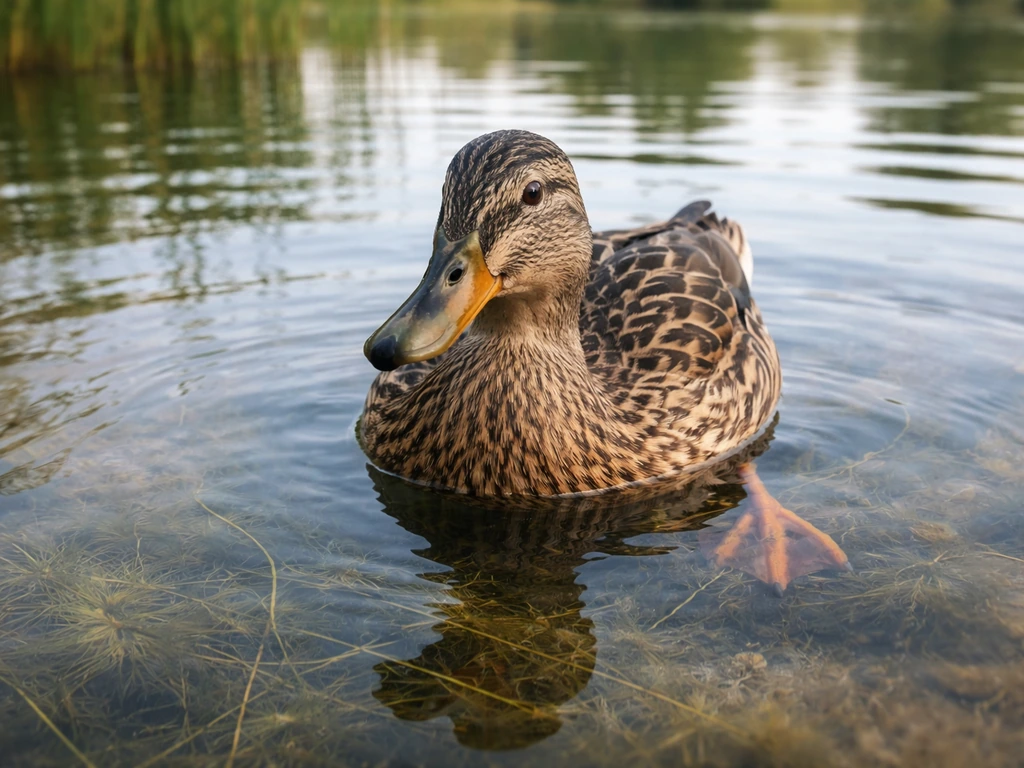
Duck bird meaning in Native American contexts refers to the symbolic roles ducks play across multiple Indigenous traditions, where they typically represent adaptability, the balance between water and land, resourcefulness, and, in some ceremonial contexts, rain and agricultural abundance. Ducks live comfortably in two elements, move between water and air, and appear in nearly every climate zone across North America, which makes them broadly meaningful across a wide range of cultures.
Ojibwe duck language and meaning
The Ojibwe People's Dictionary gives zhiishiib as the general Ojibwe word for duck and ininishib for mallard specifically. The presence of distinct lexical entries for different duck species, mallard, merganser, teal, shows that Ojibwe ecological knowledge was species-level precise, not generic. In narrative and everyday cultural life, ducks appear as resourceful characters: birds that manage both worlds, neither fully aquatic like a fish nor fully terrestrial like a land bird. This between-ness gives them a trickster-adjacent quality in some stories.
Hopi duck katsina
Among Hopi, the duck katsina (a personified spirit figure) is one of many bird katsinam used in rain-making and agricultural ceremonies. Documented in museum collections at the Museum of Northern Arizona and the Heard Museum, duck katsinam appear in ceremonial dances and as educational carved dolls. The connection here is direct: ducks live on water, and water is the central agricultural concern in the arid Southwest. The duck katsina is not decorative, it is an intercessor for precipitation and seasonal renewal.
Lakota and Navajo contexts
Among Plains nations including the Lakota, ducks appear in oral stories and ceremonial contexts with an emphasis on seasonal migration and the renewal of water sources. Navajo (Diné) clan identity, it is worth noting, does not organize around animal totems the way Ojibwe clans do, Navajo clans like Tódích'íinii (Bitter Water Clan) are named for places and kinship origins rather than animal spirits. So when a Navajo person references a duck in ceremonial or narrative contexts, it does not carry the same clan-identity weight it would in an Ojibwe context. The bird still appears in Diné oral tradition, but its role is usually narrative or ceremonial rather than genealogical.
Practical guidance for interpreting duck symbolism
If you are researching duck symbolism for a tattoo, dream interpretation, or literary reference, the core consistent meanings are: adaptability between elements or states of being, comfort with change, and an association with water's generative and renewing qualities. In contexts where the duck is a katsina or rain-associated figure, add intercession, abundance, and agricultural hope to that list. For deeper reading on how duck meaning specifically works as a phrase and concept, the duck bird meaning topic explores species-specific symbolism in greater detail.
Swan and goose: beauty, community, and the long journey
Swan symbolism: Waabizii and the Ojibwe tradition
The Trumpeter Swan is called Waabizii in Anishinaabemowin. Swans in northern and Great Lakes traditions carry associations of beauty, grace, and transformation, partly because of their striking white appearance, partly because their size and flight make them memorable presences on the landscape, and partly because their seasonal arrivals and departures mark significant points in the natural calendar. In some oral traditions, swans are associated with journeys of great distance and with beings or people who have the ability to transform between forms. The swan's white plumage gives it associations with purity and spiritual attention that appear across many cultures, and Indigenous Great Lakes traditions are no exception.
Swan imagery in Plains traditions tends to emphasize the bird's rarity and beauty as markers of spiritual significance, a swan sighting in a vision or dream context carries weight because the bird itself is uncommon enough to demand attention. In northern and subarctic traditions, the arrival of swans in spring is a genuine seasonal event, and the birds are associated with renewal, the return of warmth, and the reopening of waterways after winter.
Goose symbolism: the navigator and the community
The Canada Goose carries a different symbolic weight from the swan. Where swans tend toward the individual and the beautiful, geese are community birds, their V-formation flights, communal nesting, and loud vocalizations make them figures of cooperation, shared navigation, and seasonal reliability. Across Plains, Great Lakes, and subarctic nations, geese signal the changing of seasons with a precision that made them natural calendar markers long before written records. The goose that leads the V, rotating with other birds to share the effort, appears in some oral traditions as a model of leadership through service rather than dominance.
Swans and geese in names, place names, and art
Like the loon, both swan and goose terms appear in Indigenous place names across the continent, preserving ecological memory in landscape language. Personal names drawn from these birds tend to emphasize their dominant symbolic qualities: Swan names often signal beauty and transformation; Goose names often signal reliable navigation, community leadership, or seasonal knowledge. In Northwest Coast art, swan and goose appear less frequently than eagle, raven, or killer whale in major crest systems, but they do appear in smaller narrative contexts. On the Plains and in the Great Lakes region, both birds appear in beadwork, quillwork, and painted hide designs, often in contexts celebrating seasonal renewal or communal strength.
The American White Pelican and crane: abundance and oratory
Two more water birds deserve specific attention. The American White Pelican, zhage in Ojibwe, is a communal fisher that drives fish into shallow water in coordinated groups. This cooperative hunting behavior gives it natural associations with communal abundance and generosity, and those associations are reflected in how the bird appears in Ojibwe ecological and narrative knowledge. The pelican is not typically a major clan or ceremonial animal, but it is a present and recognized figure in the landscapes where Ojibwe communities lived.
The crane, ajijaak in Ojibwe, is the leadership clan bird that pairs with the loon in Ojibwe governance structure. Where the Loon Clan (Maang doodem) often held internal leadership, the Crane Clan (Ajijaak doodem) frequently held external/oratory roles, and this maps directly onto the crane's real behavior. Sandhill and Whooping Cranes are extraordinarily loud, with calls that carry for miles. The crane as orator, as public voice, as the bird that addresses the world at full volume, is one of the most behaviorally grounded symbolic associations in the entire water-bird tradition.
Water birds versus wild birds and wood birds: where these categories overlap
It is worth briefly noting how 'Native American water bird' sits relative to neighboring concepts. Wild bird meaning in Indigenous contexts covers the full range of non-domesticated birds, including forest and grassland species, water birds are a subset of wild birds, but they carry their own distinct symbolic registers because of their relationship to water as a sacred, life-giving element. Wood bird meaning typically refers to forest-dwelling species like woodpeckers, owls, and songbirds that carry their own set of woodland and forest-spirit associations in Great Lakes and eastern woodland traditions. For a fuller discussion of forest species and their symbolic roles, see wood bird meaning for species-level explanations of woodland birds. Water birds and wood birds can appear together in some oral traditions, the loon on the lake and the owl in the pines, as complementary voices marking different zones of the natural world.
Some readers arrive at this topic via the search term 'erosion bird,' which appears in unrelated engineering and environmental contexts (birds associated with shoreline erosion monitoring or habitat management). That usage has nothing to do with Indigenous symbolism, it is a technical environmental term, and the two topics should not be conflated.
Using this knowledge well: a note on interpretation
If you are using water-bird symbolism for personal meaning, a tattoo, a dream journal, a piece of writing, the most useful approach is to start with the behavioral root of the symbol. What does this bird actually do that made it meaningful to people who watched it closely for thousands of years? The loon dives and surfaces unexpectedly. The heron waits and strikes. The duck navigates between elements. The crane calls loudly across open space. Those behaviors are the original symbolic texts. Indigenous oral traditions, clan systems, and ceremonial practices built on top of that foundation, but the foundation itself is accessible to anyone who takes the time to watch the bird.
What is not appropriate is lifting a specific clan symbol, like the Ojibwe Maang doodem or the Crane Clan's eagle feather staff, as a personal identity marker without that hereditary connection. The cultural meaning and the personal interpretation meaning are different things, and recognizing that difference is both accurate and respectful. You can be moved by the loon's call and understand its cosmological role in Anishinaabe tradition without claiming it as your personal totem. Both things can be true at once.
FAQ
What does the phrase “Native American water bird” mean in general?
It refers to birds that live on or near water (loons, herons, ducks, swans, geese, cranes, pelicans, etc.) as they appear in Indigenous North American languages, stories, art, clan systems, ceremonies and place names. The term signals culturally specific relationships—symbolic roles, clan identity, ritual use, ecological knowledge and place-based memory—rather than a single universal spiritual meaning. Meanings vary by species, community, region and historical context.
How do meanings differ by species (brief species-by-species guide)?
Loon: often associated with leadership, water knowledge, singing and creation/dive motifs in Great Lakes/woodland traditions (Ojibwe). Heron/Great Blue Heron: fishing skill, patient watchfulness, liminal/shoreline presence (appears in Great Lakes and Northwest tales). Duck: social bonds, family, navigation of wetlands and migration cycles (see detailed 'duck' entry). Swan/Trumpeter Swan: grandeur, long-distance migration, connections to ceremonial scale and sometimes treaty-era memory in northern tribes. Goose: community, coordinated movement, protection and seasonal return. Crane: leadership and public ceremonial roles in some Anishinaabe accounts (crane–loon complementary leadership). Pelican and coastal seabirds: generosity, feeding, abundance, and specific Northwest/Northern Plains coastal story associations. Note: these are general tendencies — local stories and languages give precise senses.
How does the Ojibwe (Anishinaabe) tradition illustrate water-bird meanings?
Ojibwe lexical and clan systems are explicit: maang (loon) is a named doodem/clan with leadership associations; ajijaak (crane) and maang (loon) often form complementary leadership roles. Ojibwe place names and songs encode bird terms (e.g., 'Loon Island'), and ethnographies record loon imagery in ceremonial registers (Midewiwin). Ojibwe wordlists distinguish many water‑bird species, linking names to stories, seasonal sites and governance roles.
What about Plains and Northwest Coast tribes (Haida, Tlingit) — how do water birds function there?
Plains groups sometimes use a generalized 'water‑bird' motif in vision and ritual imagery rather than strict species crests. Northwest Coast nations (Haida, Tlingit, etc.) emphasize crest systems and lineage representation in art: seabirds and shorebirds appear as family crests and legal markers on poles, masks and regalia. On the Northwest Coast, a bird image signals clan identity and property/ceremonial rights as much as spiritual meaning.
Do Hopi and other Pueblo peoples use water-bird symbolism?
Yes. Hopi katsinam (katsina figures) include bird personifications—duck, hummingbird and other avian katsinam—linked to rain, agriculture and seasonal cycles. These figures appear in dances, carved dolls and ceremonies associated with water and crop fertility.
How do Navajo (Diné) traditions compare regarding animal/water-bird symbolism?
Navajo social organization is clan-based but not organized around animal totems in the same way as Ojibwe or Northwest Coast crests. Bird figures appear in ceremonial songs, sandpaintings and stories (often tied to place, kinship and ritual practice), but clan names are typically kinship/place-based (e.g., Bitter Water Clan) rather than animal‑doodem systems.
Next Article
Duck Bird Meaning: What Ducks Are and What They Symbolize
Duck bird meaning: traits of ducks plus idioms like duck and cover, sitting duck, and duck out, and common symbolism.