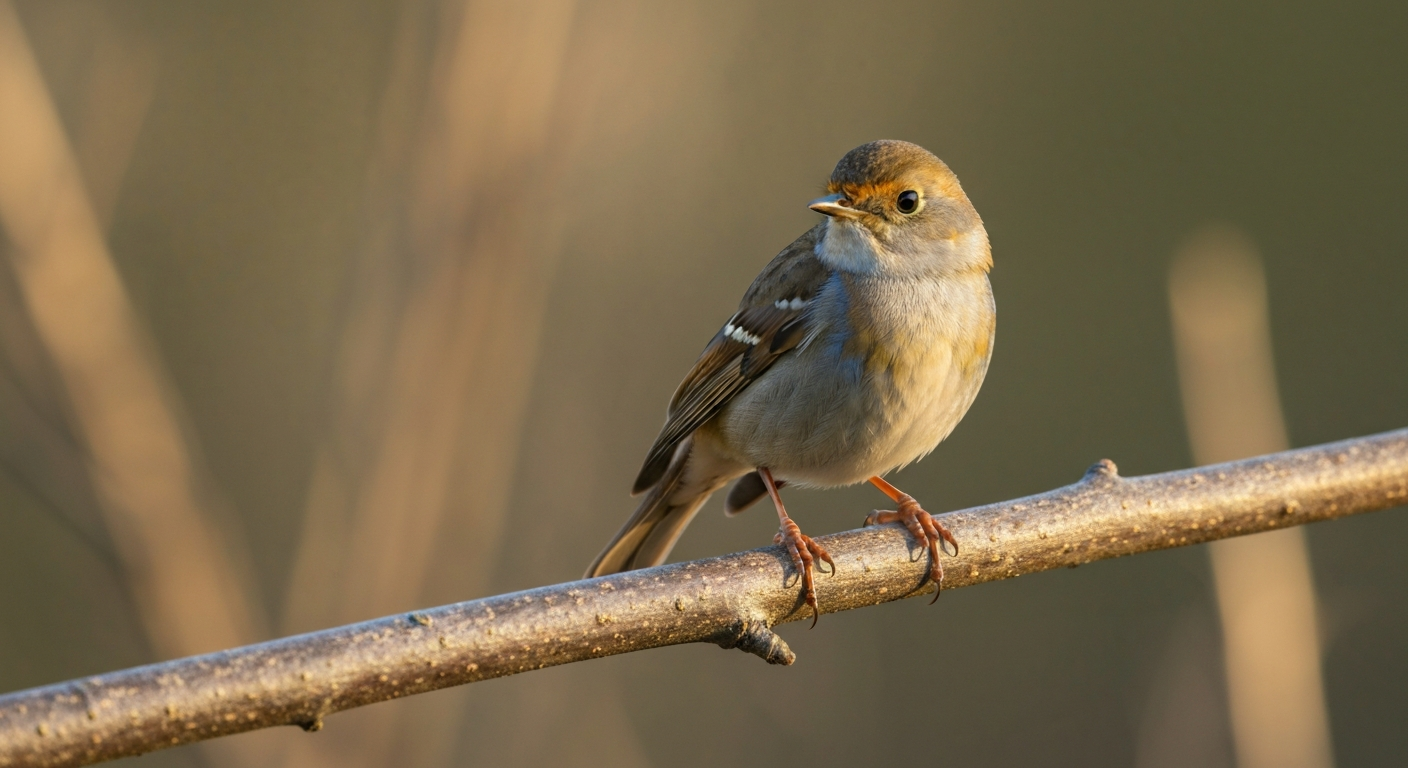
When someone says "winter bird," they usually mean one of three things: a literal bird species that shows up during cold months (like the dark-eyed junco or common redpoll), a symbolic figure representing resilience, solitude, or survival in harsh conditions, or a specific cultural reference like a song title or poem. Merriam-Webster actually defines "winter bird" as a general noun phrase meaning "any of several birds seen chiefly in winter", citing the black-legged kittiwake as one example. So there is no single bird locked into that label. Context does most of the heavy lifting, and this guide will help you figure out exactly which meaning applies to whatever brought you here.
Winter Bird Meaning: Literal Species and Symbolic Use

Marcus Whitley
10 Apr 2026
What people actually mean by "winter bird"
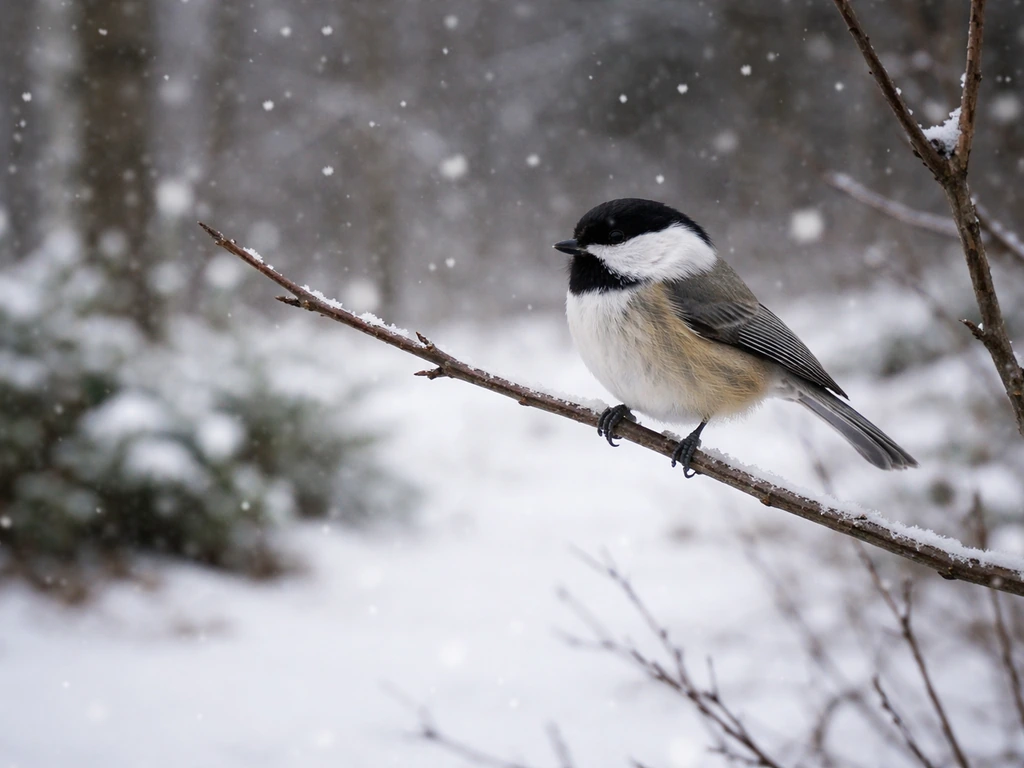
The phrase works on two tracks simultaneously, and it helps to separate them before going further. On the literal side, a winter bird is any species that either stays put through cold weather or migrates into temperate regions from the boreal north for the winter months. These birds are defined by their seasonal presence: you see them in November and they are gone by April. On the metaphorical side, a "winter bird" is a figure used to evoke everything cold weather implies, which is endurance, stillness, isolation, and occasionally a kind of stark beauty that is only visible when everything else has been stripped away.
The literal and metaphorical meanings are not really separate in practice. When a poet puts a junco on a snow-covered branch, they are using a real, verifiable bird, but they are also loading it with meaning that has nothing to do with ornithology. This layered usage is exactly what makes "winter bird" worth unpacking, it shows up in birdwatching checklists and in literary analysis, and knowing which context you are reading changes everything.
The birds most commonly called "winter birds"
Five species come up over and over when birders and naturalists talk about winter birds in North America. Each one has its own behavior, range, and symbolic weight.
Dark-eyed junco
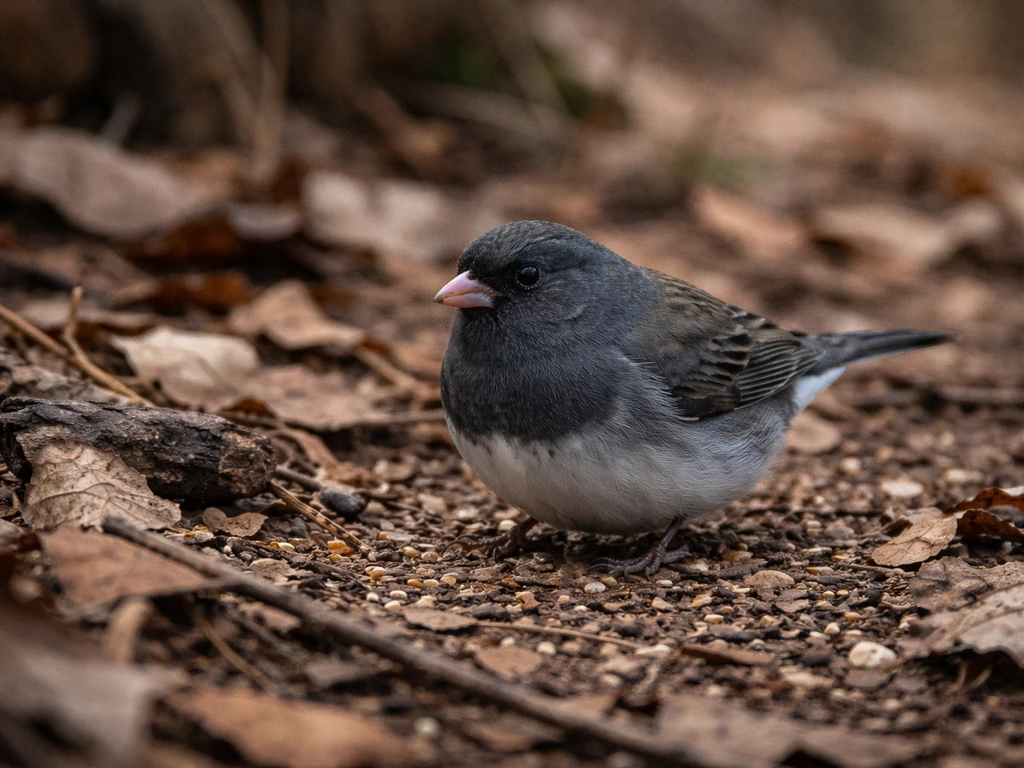
The dark-eyed junco is the quintessential winter bird for most people in the eastern and midwestern United States. It nests in Canada and migrates south to spend the colder months in woodland edges, suburban yards, and parks. Audubon North Carolina describes it as one of the most reliably common overwintering birds in the region, feeding mainly on seeds and insects and foraging directly on the ground. In winter, juncos form fairly large flocks according to Cornell Lab's All About Birds, hopping (not walking) across leaf litter and making sharp ticking calls when they flush up into nearby shrubs. The Missouri Department of Conservation calls it the "snowbird" outright: dark above, white below, with a pinkish bill, it nests in northern lands and "comes here to spend the winter." That nickname, snowbird, has been attached to the junco since at least the 19th century. An 1897 natural history book published through Project Gutenberg refers to it directly as "the Snowbird," describing its sparrow-like call and its seasonal arrival from a summer home farther north.
Common redpoll
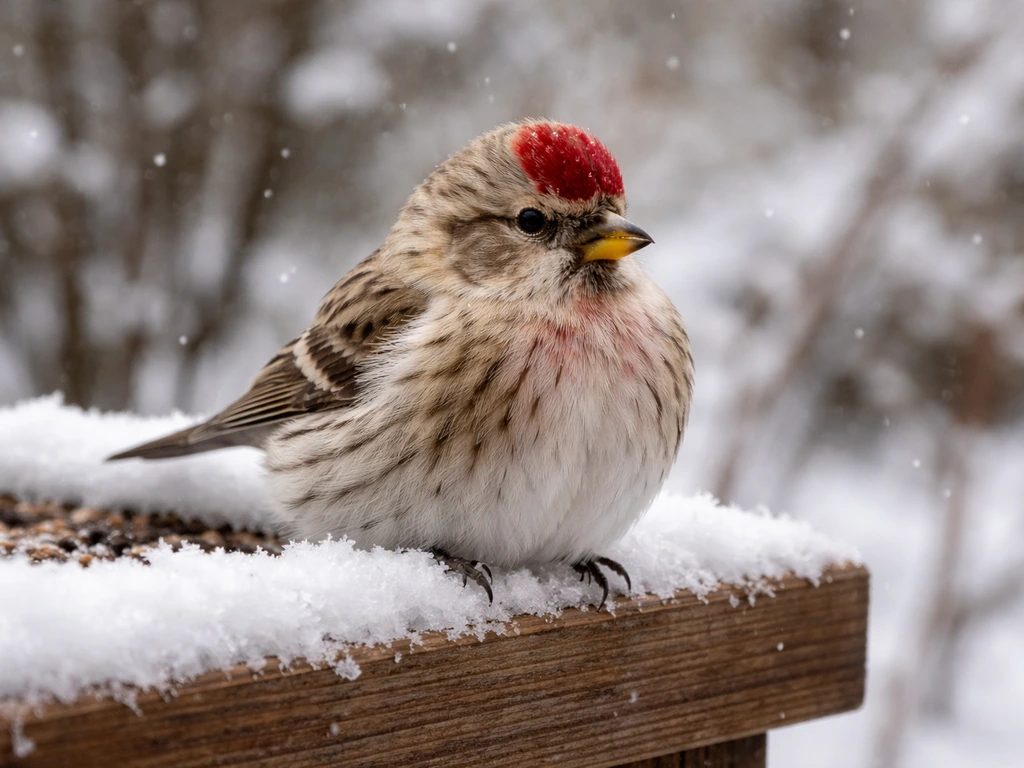
The common redpoll is what birders call an irruptive species, meaning it does not show up every winter on a predictable schedule. Instead, it invades the Lower 48 roughly every other winter when boreal tree seed crops fail up north, a pattern Cornell Lab describes in detail. In good years you may never see one; in a superflight year your feeders might suddenly be full of small streaky finches with red caps. Redpolls survive harsh northern winters by eating birch and alder seeds that stay accessible even through deep snow, according to Audubon's BirdNote content, which is why they do not always need to move south. When they do appear, their arrival is read as a signal that food conditions in the boreal forest were genuinely poor that year.
Black-capped chickadee
The black-capped chickadee is a year-round resident rather than a seasonal migrant, but it becomes more conspicuous in winter when deciduous trees drop their leaves and the bird's cheerful calls carry further through bare branches. At about 10 grams, it survives cold weather partly through intelligent food caching, stuffing seeds into bark crevices and remembering where they are stored all winter. Cornell Lab's K-12 education materials put it plainly: "the chickadee has a stash of seed all winter." That behavioral resourcefulness makes the chickadee a natural symbol of practical resilience, the bird that does not flee or dramatize but simply prepares.
Red-breasted nuthatch
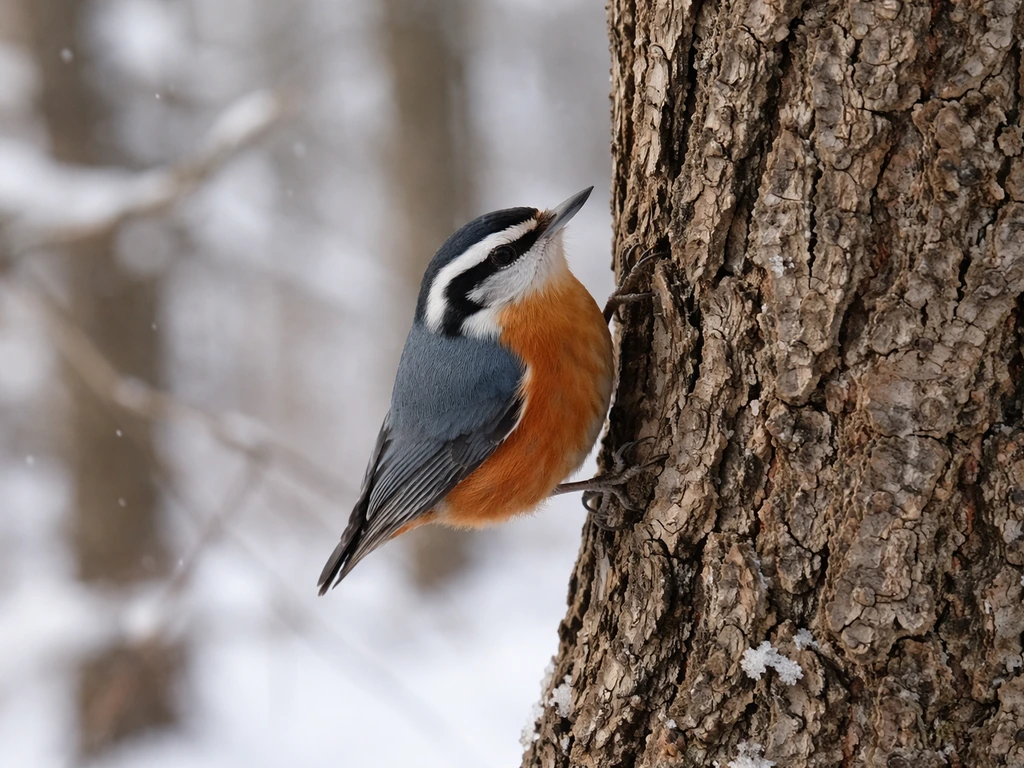
The red-breasted nuthatch is primarily a full-time resident of northern and subalpine conifer forests, but it undergoes irruptive movements when winter food supply fails in the boreal zone. When that happens, it can migrate hundreds of miles south and turn up in orchards, scrub, parks, and shade trees, essentially any wooded habitat, though it gravitates toward conifers when available. Like the redpoll, its southward appearance at feeders tends to signal a rough winter up north. Cornell Lab notes it also caches food in bark crevices, covering stored seeds with bark, lichen, or pebbles, which is a practical strategy worth appreciating whether you are a birder or a writer looking for a metaphor.
Winter wren
The winter wren is the only species on this list that literally carries "winter" in its common name. Audubon's field guide describes it as a bird that stays close to the ground, moves with direct and rapid wingbeats, and prefers the understory of mature, old-growth forests. Cornell Lab emphasizes its dependence on intact forest habitat. It is a small, mouse-like bird that most people only hear rather than see, its explosive song completely out of proportion to its tiny body. The winter wren's very name signals its cultural association with cold, quiet, difficult seasons.
A quick comparison of the five core winter birds
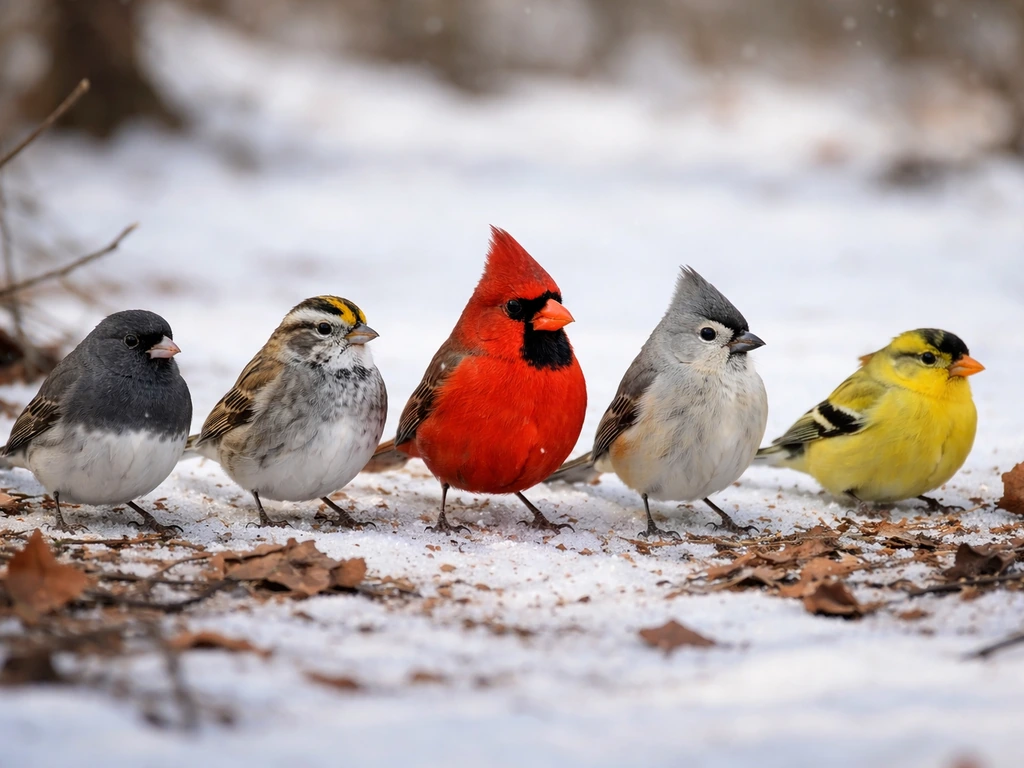
| Species | Seasonal pattern | Where you see them | Symbolic association |
|---|---|---|---|
| Dark-eyed junco | Migrates south from Canada each winter | Ground in woodland edges, suburban yards | Endurance, seasonal return, "snowbird" |
| Common redpoll | Irruptive (shows up some winters, not others) | Feeders, birch/alder thickets | Unpredictability, boreal hardship, scarcity |
| Black-capped chickadee | Year-round resident, more visible in winter | Mixed woods, feeders, backyards | Practical resilience, resourcefulness |
| Red-breasted nuthatch | Irruptive from northern conifers | Conifer forests, feeders, parks | Adaptability, storing against hardship |
| Winter wren | Present year-round but associated with winter | Dense forest understory, old-growth | Hidden strength, solitude, cold silence |
What "winter bird" signals in sayings and stories
Winter birds carry a specific symbolic vocabulary that recurs across folk traditions, poetry, and everyday speech. The core themes are resilience and survival (the bird that stays when everything else leaves), solitude (a single bird against a grey sky), endurance under hardship (small body, harsh conditions), and the bittersweet beauty of something that only exists because winter exists. A summer bird can be beautiful, but a winter bird is beautiful despite something, which gives it a different emotional register entirely.
In folk imagery, seeing a bird in winter was often read as a message. Some traditions treated it as a sign of luck or resilience; others read it as a warning or an omen of things to come. The solitary bird on a bare branch became a shorthand image for isolation, contemplation, or the feeling of being the only one left. This is why "winter bird" works so naturally in song titles, poem titles, and character names: it already arrives pre-loaded with emotional connotations that writers do not have to explain.
Compare this to something like what the bulbul bird means in South Asian and Middle Eastern traditions, where the bird is a symbol of love and longing regardless of season. The winter bird is almost the inverse: where the bulbul sings of warmth and passion, the winter bird sits quietly in the cold, signaling endurance rather than desire. Both are powerful symbols, but they pull in completely different emotional directions.
In contemporary usage, calling someone a "winter bird" in conversation can mean they thrive in difficult conditions, that they are a quiet presence who does not need warmth or approval to function, or that they represent something rare and worth noticing precisely because the conditions around them are hostile. The phrase has a respectful, even admiring tone when used this way.
How to identify the winter bird you are actually seeing
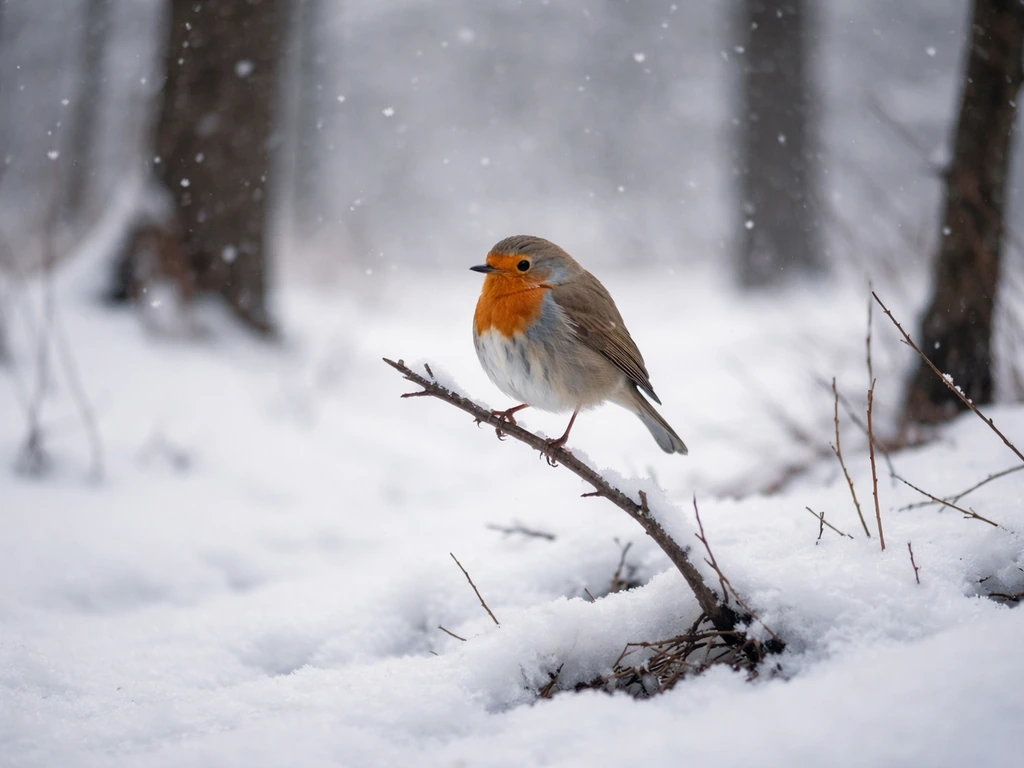
Cornell Lab's recommended approach to bird ID starts with four things: size and shape, color pattern, behavior, and habitat. Get those four right before you worry about fine details, and you will narrow the field dramatically. For winter birds specifically, there are a few additional shortcuts worth knowing.
- Start with size and shape. Is it sparrow-sized and round (junco, redpoll) or tiny and mouse-like (winter wren)? Is it compact and neckless (nuthatch) or alert and perky (chickadee)?
- Watch the behavior. Juncos hop on the ground and scratch at leaf litter. Nuthatches walk headfirst down tree trunks. Chickadees move acrobatically through branches. Redpolls feed in small, twitchy flocks in trees. Winter wrens creep close to the ground in dense cover.
- Note the habitat. Are you in an open suburban yard (junco, chickadee, redpoll at feeders) or deep in old-growth forest understory (winter wren)? Is there a conifer component (nuthatch)? Habitat alone often cuts the list in half.
- Check color pattern. Juncos: dark hood and back, white outer tail feathers, pale belly. Redpolls: streaky brown with a small red cap and sometimes a rosy chest. Chickadees: black cap and bib, white cheeks. Nuthatches: blue-gray back, rusty orange underparts, white face with a black eye stripe. Winter wrens: very small, brown, heavily barred, with a short cocked tail.
- Confirm with field marks. Cornell Lab specifically calls out wingbars — stripes across the folded wing — as a confirmatory detail once you have already narrowed down the type. Redpolls and pine siskins have wingbars; juncos do not.
If you are not in the field but are trying to identify a bird in a text, poem, or story, look for behavioral clues the author gives. A bird that hops on snow-covered ground and flies up with a ticking call is almost certainly a junco. A tiny brown bird creeping through tangled roots in a winter forest is almost certainly a winter wren. Writers who know their birds tend to embed accurate behavioral details even when they are not explicitly naming the species.
Disambiguation: when "winter bird" is a title, nickname, or quote
Before applying any symbolic interpretation, it is worth checking whether the "winter bird" you encountered is actually a proper noun. Wikipedia's disambiguation page for "Winter Bird" lists multiple media uses of the phrase as a title, including a song simply called "Winter Bird" and Paul McCartney's "Long Tailed Winter Bird," an instrumental track on his 2020 album McCartney III. According to Wikipedia, McCartney's title refers to a long-tailed duck he spotted in a bird book, not a symbolic construct. If you saw that title in a playlist or article and started looking for symbolic meaning, you would be chasing the wrong thread entirely.
Regional nicknames add another layer. "Snowbird" as a nickname for the dark-eyed junco is well established and appears in conservation literature from organizations like Conservation Corps Minnesota and Iowa, which cites Cornell Lab in confirming the traditional label. But "snowbird" in modern informal English has also come to mean a retiree who moves south for the winter, borrowed directly from the bird's migratory behavior. If you hear someone called a "snowbird" in conversation, they are almost certainly being compared to a winter migrant in the human sense, not literally identified with the junco. Understanding the layered history of that nickname makes both usages clearer.
The term also overlaps with how people talk about birds that are primarily associated with their home territory. The home bird meaning in British English, for example, describes someone who prefers to stay close to familiar surroundings rather than venture out, which is almost the opposite of a winter bird's pattern of seasonal movement. Knowing the distinction helps when you encounter either phrase in a piece of writing.
Using winter bird symbolism in writing and interpretation
Once you have identified the specific bird being referenced, mapping it to its symbolic meaning is fairly straightforward if you work from behavior and habitat rather than guessing. The junco's annual reappearance makes it a natural symbol of cyclical endurance, the thing that always comes back. The redpoll's irruptive pattern makes it a symbol of scarcity and the unexpected visitor. The chickadee's caching behavior makes it a symbol of quiet preparation. The nuthatch's headfirst tree-walking makes it a symbol of approaching problems from an unconventional angle. The winter wren's outsized song in a tiny body makes it a symbol of hidden power or voice that surprises you.
For creative writers, the most useful thing to know is that specificity pays off. Saying "a winter bird" is evocative but vague. Saying "a junco scratching through ice-crusted leaves" or "a redpoll clinging to a frozen birch" gives the reader both the symbolism and the sensory grounding. The image does more work when the species is identifiable, even if you never name it directly. This is something good nature writers consistently do: they choose the bird that matches the emotional register they need, then render it accurately enough that a knowing reader recognizes it.
If you are interpreting a quote or passage, pay attention to what the winter bird is doing. A bird that stays and survives signals something different from a bird that has just arrived from far away, which signals something different from a solitary bird singing when all others are silent. The behavior is the meaning. This same interpretive approach applies when you are exploring how an intro bird functions as a symbolic opening device in a text, where the first bird mentioned is often a deliberate framing choice by the author.
Cross-culturally, winter birds tend to carry themes of endurance and spiritual presence in traditions that developed in cold climates. In East Asian poetry and painting, the bird on a winter branch (often a small passerine, sometimes a wagtail or sparrow) represents the persistence of life within apparent desolation. In Northern European folk traditions, a bird singing in winter was often treated as anomalous and therefore significant, either protective or ominous depending on the species. In North American Indigenous traditions, specific winter birds were associated with specific spiritual roles that varied by nation and region, so applying a single symbolic interpretation across all traditions would be inaccurate.
Practical next steps: verify, track, and apply the meaning
Here is the fastest path from "I saw or read something about a winter bird" to a confident, accurate interpretation.
- Determine the context first. Is this a literal bird sighting, a metaphor in a piece of writing, a song or book title, or a nickname someone used in conversation? Each requires a different approach.
- For a literal sighting, use the size, shape, behavior, and habitat method described above. Cornell Lab's All About Birds is the most reliable free resource for confirming species identification in North America. Enter the field marks you observed and work through the options systematically.
- For a written reference, look for behavioral or visual details in the text that point to a specific species. If none are present and the author writes "winter bird" as a symbolic phrase, apply the core themes: resilience, solitude, endurance, beauty in harsh conditions.
- For a title or media reference, check whether "Winter Bird" or "Snowbird" is a proper title before assuming symbolic content. Paul McCartney's Long Tailed Winter Bird, for example, is about a specific duck, not a metaphor for anything.
- Track your sightings if you are watching winter birds regularly. Project FeederWatch is a Cornell Lab citizen science program that counts feeder birds through the winter; it is free to join and its annual data shows which species are showing up in your region compared to historical averages. This is how you distinguish a normal winter for your area from an irruption year for redpolls or nuthatches.
- When writing or interpreting, anchor the symbolism to the species' actual behavior. The meaning is more convincing and more accurate when it grows from what the bird actually does, not from a generic association with "winter."
One final thing worth knowing: some birds have accumulated symbolic meaning so specific that the bird's name alone carries a full cultural reference. The hook bird meaning is a useful example of how a single term can carry precise connotations once you know where it comes from. Winter bird has not condensed into that kind of fixed idiom yet, it still operates more as a descriptive phrase than a set phrase, but its symbolic vocabulary is consistent enough that you can use it with confidence once you know the species and behavior involved.
FAQ
If someone says “winter bird” in a story, how can I tell whether they mean a specific species or just a metaphor?
“Winter bird” by itself is usually not enough to lock onto a single species or a single symbol. If the text mentions timing (arrives in November, gone by April), behavior (hops on snow, caches seeds, sings loudly near the ground), or habitat (conifer understory, woodland edge, bare branches), use those clues first, then map to the most likely of the common North American species discussed in the article.
Can I identify a winter bird by location alone, or do I need to rely on behavior?
Yes, because multiple “winter birds” can appear in the same place. For example, a junco is often associated with ground-feeding and flocks, while a chickadee is more tied to calls and seed caching and can be present year-round. When you have only a few seconds to observe, prioritize behavior (hopping versus climbing, calling versus silence) and habitat (open woodland edge versus conifer stands).
What should I assume if I see the term “snowbird” in an article or conversation?
A “snowbird” can refer to the dark-eyed junco, but in everyday English it can also mean a person who migrates south in winter. If the surrounding sentence mentions retirement or living arrangements, treat it as the human idiom. If it mentions feeders, flocks, ground foraging, or birdwatching, treat it as the bird nickname.
How do I avoid confusing a media title like “Winter Bird” with the phrase’s symbolic meaning?
When it is used as a proper title, “Winter Bird” may point to a specific song, instrumental track, or other media rather than a symbolic image. A quick check is to look for formatting or context that signals media (album track listing, playlist, quoted title), then stop the symbolic interpretation unless the text itself describes winter behavior.
What does it mean if a winter bird shows up unusually, like every few winters or in a sudden wave?
Irruptive species can create a misleading first impression. If a redpoll or nuthatch shows up unexpectedly, it often reflects a rough food situation in the boreal zone rather than a “normal” seasonal schedule. So if you are interpreting the symbolism in a piece, consider “scarcity or surprise” as the more accurate emotional direction, not just “endurance.”
In writing, should the symbolism change depending on whether the bird is arriving or already present?
“Winter bird” symbolism is easiest to apply when the passage emphasizes what the bird is doing, not just that it is winter. A bird arriving from far away can imply transition or an outside shock, while a bird already present all season can imply steady resilience. If the author highlights stillness, solitude, or harsh quiet, align the metaphor with that behavior.
Is the symbolic meaning of “winter bird” the same across cultures, or can it vary a lot?
Yes, especially in cross-cultural contexts. Some traditions attach winter-branch bird imagery to persistence of life, others treat singing in winter as anomalous and therefore significant, and Indigenous meanings can be nation- and region-specific. If the passage does not name the cultural frame, avoid assuming a single “resilience” interpretation for all traditions.
What is the best way to write “winter bird” in a way that feels vivid but not vague?
If you are trying to use the phrase in a caption, poem, or character description, the most effective approach is to specify one concrete sensory detail tied to a species-level behavior (ground hopping and flocks for a junco, seed caching and calls for a chickadee, bark crevices for caching nuthatch, or an explosive song from low understory for winter wren). This reduces ambiguity while keeping the emotional register winter is meant to evoke.
How can I tell what “home bird” is doing if the text also uses winter-related imagery?
“Home bird” and “winter bird” are often opposites in tone because one suggests staying close to a familiar territory and the other often suggests seasonal movement or seasonal survival. If a text contrasts them, treat that contrast as intentional, meaning “preference for stability” versus “capacity to endure changing or hostile conditions.”
When “winter bird” is used to describe a person, what kinds of traits does it usually imply?
If the passage uses “winter bird” to describe a person, the key is to decide whether the comparison is about behavior under hardship (quiet endurance, self-sufficiency, preparing) or about social presence (a solitary presence, not needing approval). The phrase is often admiring, but it can turn sharp if the story contrasts the person with community, so check for whether the tone is supportive or isolating.
Next Article
Perched Bird Meaning, Literal, Symbolic, Usage, Examples
Perched bird meaning: clear literal and symbolic definitions, usage differences, examples, and quick reference.