
The killdeer is a ground-nesting shorebird whose symbolism centers on one core theme: fierce, selfless protection. When people search for killdeer bird meaning after spotting one, what they've usually just witnessed is either that piercing 'kill-deer' cry cutting across a parking lot or field, or the bird's legendary broken-wing display, where it drags itself along the ground pretending to be injured to lure you away from its nest. Both behaviors map almost perfectly onto the symbolic meanings people assign to this bird: vigilance, parental devotion, strategic courage, and the instinct to guard what you love even when you're outmatched.
Killdeer Bird Meaning: Symbolism, Folklore, and What It Signals

Marcus Whitley
23 Apr 2026
Quick ID: How to Know You're Looking at a Killdeer
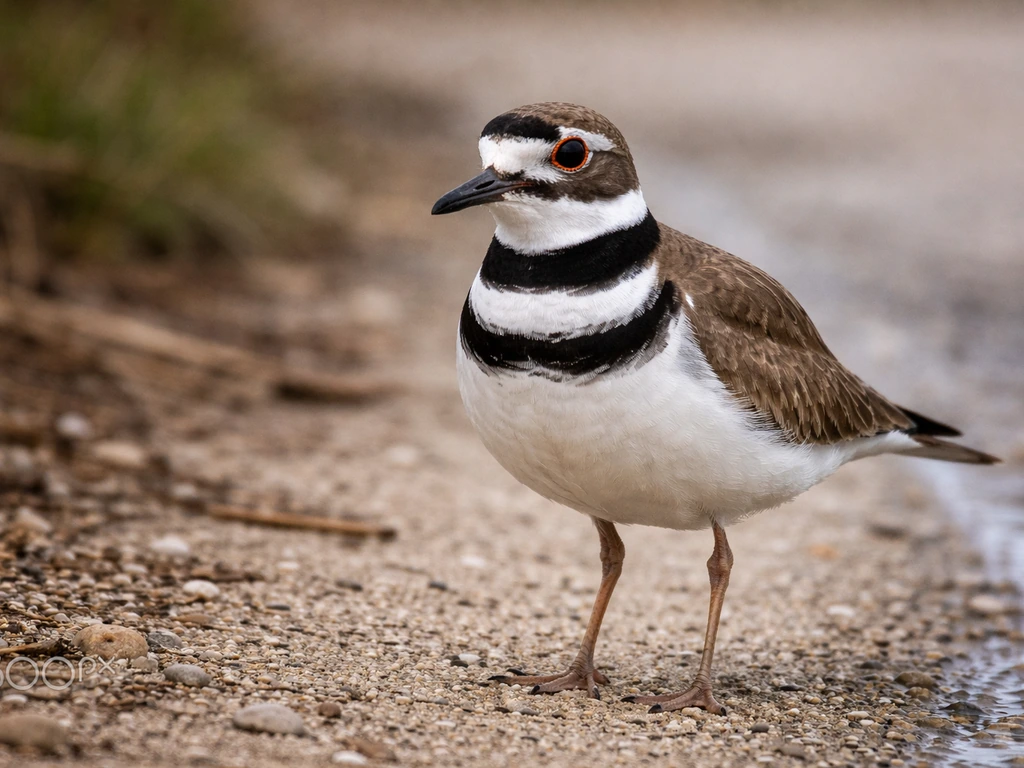
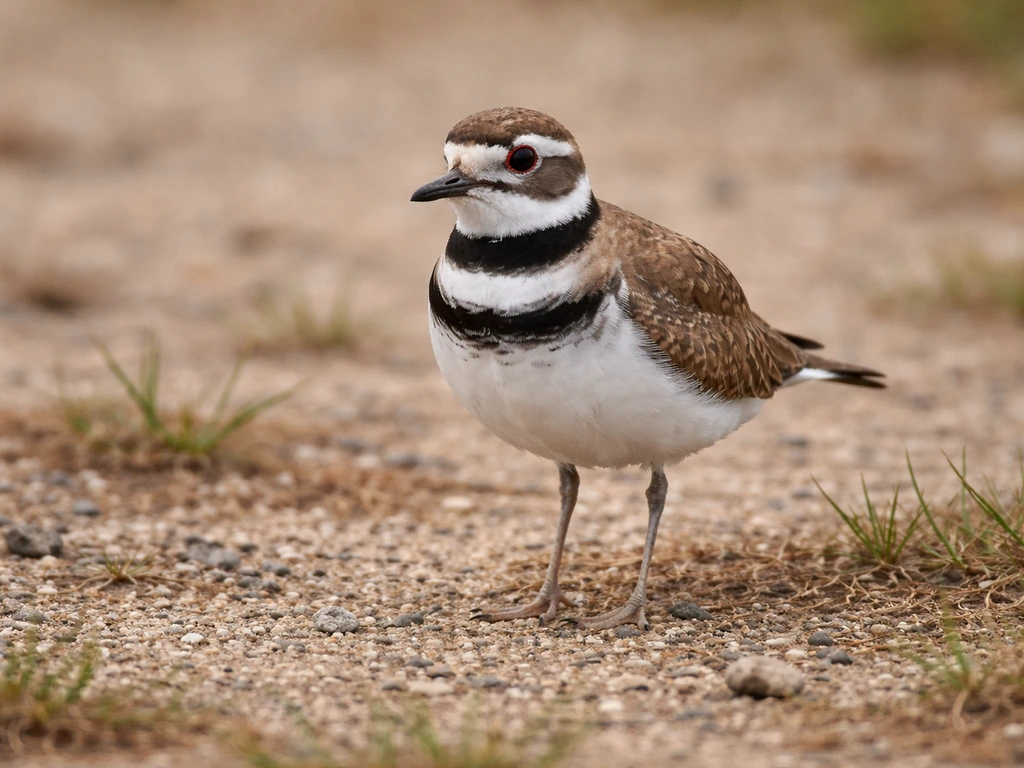
Killdeer are medium-sized plovers, and they're hard to miss once you know what to look for. The most reliable field mark is the two bold black breast bands on a white chest, like the bird is wearing a double necklace. The back and wings are a warm dark brown, and the face has a distinctive black-and-white striped pattern. They're ground birds, so you'll find them walking quickly across lawns, gravel lots, athletic fields, and open shorelines rather than perched in trees.
The call is genuinely unmistakable once you've heard it. It's a loud, shrill, repeated 'kill-deer' or 'k-dee' cry that carries a long distance, often described as urgent or plaintive. Males in flight repeat a shorter two-part version. If you're in a parking lot in spring or summer and suddenly hear a frantic, high-pitched alarm call from the ground, there's a good chance you've just walked close to a killdeer nest.
One quick ID note: similar plovers like Wilson's Plover and Piping Plover only have a single breast band, not two. Younger killdeer chicks also show just one band while still downy, which can confuse people briefly. But an adult killdeer's double-band pattern, combined with that call and the broken-wing behavior, makes it one of the most recognizable birds on the continent.
What the Killdeer Symbolizes
The meanings people attach to the killdeer are almost entirely rooted in its behavior, which makes this bird's symbolism unusually coherent and grounded. You're not projecting meaning onto something passive, the bird is actively doing something dramatic right in front of you, and the symbolism follows naturally from that.
- Vigilance and alertness: The killdeer is almost always the first to notice a disturbance and the loudest to announce it. That alarm call is a warning to everything in earshot, not just its own chicks. People interpret seeing or hearing a killdeer as a nudge to pay attention — something is changing around you, or something needs your full awareness right now.
- Fierce protection of home and family: The broken-wing display is one of the most recognized parental defense behaviors in the bird world. The killdeer deliberately puts itself in apparent danger to shield its young. The symbolic message is straightforward: you'll go to great lengths for the people (or things) you love, even when the odds look bad.
- Strategic courage over brute force: The killdeer doesn't attack a predator head-on. It outsmarts it. That clever misdirection reads symbolically as resilience and resourcefulness — knowing when to stand your ground and when to redirect the threat.
- Persistence and resilience: Killdeer nest in exposed, often vulnerable spots — gravel lots, flat rooftops, bare soil — and return season after season. That persistence in the face of obvious risk carries a meaning of staying the course and protecting what matters despite an unfriendly environment.
- Sounding a necessary alarm: The killdeer's call is sometimes interpreted as a message to speak up, to be the one who warns others even when it draws attention to yourself.
Why These Meanings Actually Fit: The Behavior Behind the Symbolism
Most bird symbolism works by loose association, a raven is dark, so it gets associated with mystery. The killdeer is different because its traits are specific and its behaviors are dramatic enough that the symbolism essentially writes itself. When you understand what the bird is actually doing, the meanings become almost self-evident.
The Broken-Wing Display
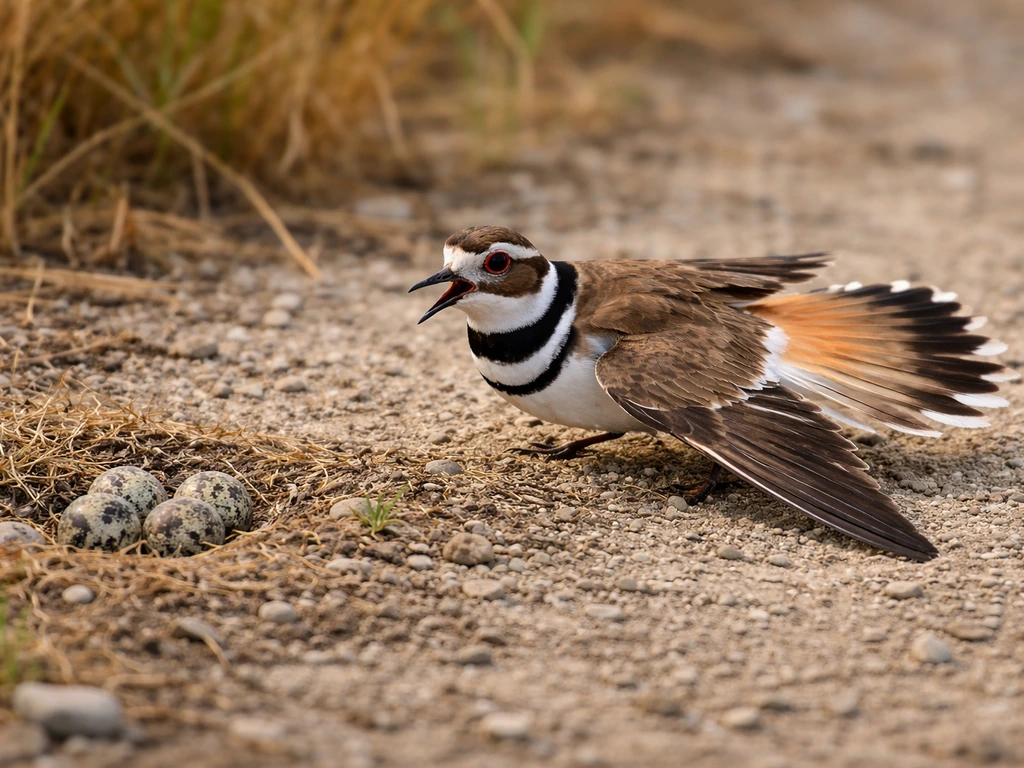
This is the behavior that defines the killdeer in most people's minds. When a predator or a human gets too close to a nest, the adult killdeer moves away from the eggs, drops one wing, fans its tail, and begins dragging itself along the ground as though severely injured. The goal is to make the threat follow it instead. Once the bird has lured you far enough away, it recovers instantly and flies off. It's a deliberate, calculated act of self-sacrifice and deception in service of protection. That combination, putting yourself at apparent risk to safeguard something more important, is the heart of the killdeer's symbolic identity.
Ground Nesting in Plain Sight
Killdeer don't nest in hidden, protected locations. They choose open ground with good visibility, bare soil, short grass, gravel roads, even flat gravel rooftops. Their nests are shallow scrapes in the ground, often with no camouflage except the speckled eggs themselves. After egg-laying begins, killdeer may add extra materials such as rocks, shell bits, sticks, or even trash to their shallow ground-scrape nest shallow scrapes in the ground. They rely on constant alertness and fast reaction rather than concealment. That choice of vulnerable, visible territory reinforces themes of exposure and courage: the bird has nothing to hide behind and knows it, yet shows up and defends its ground anyway.
The Call Itself
The shrill, insistent 'kill-deer' cry isn't background noise. It's a broadcasting alarm, and it's loud enough to stop people in their tracks. The bird uses its voice as a first line of defense, announcing danger before the physical distraction display begins. Symbolically, this maps onto speaking up, issuing fair warning, and being willing to make yourself heard even when it's uncomfortable. Kiskadee bird singing meaning can also be tied to how you interpret a bird's vocal behavior and what it seems to be signaling in its territory speaking up, issuing fair warning. Meaning of kiwi bird ki-dee.
What It Could Mean When You Actually Spot One
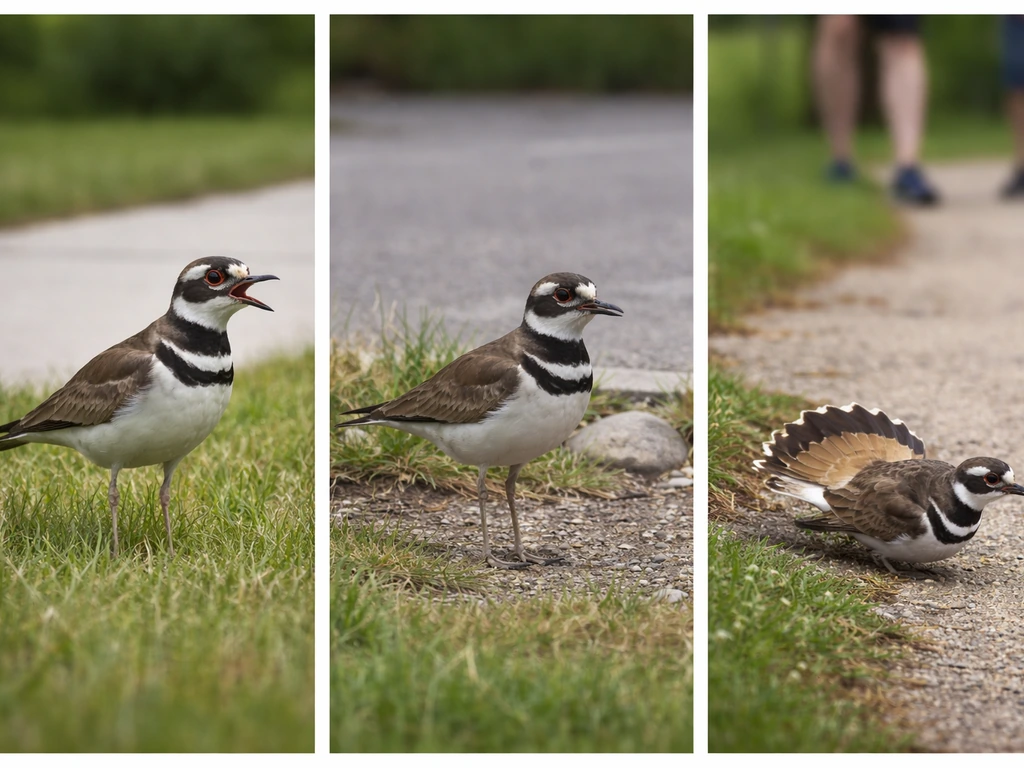
If you've found this article because you just had a killdeer encounter and you're wondering what to make of it, here's a practical way to think through the different scenarios. The keel bird meaning is often about grace and calm presence in how you show up in everyday situations.
| What You Observed | Common Symbolic Interpretation | What's Likely Happening |
|---|---|---|
| Bird crying loudly from the ground near you | A warning or call to attention in your own life | You may be near a nest; the bird is sounding an alarm |
| Bird dragging a wing and acting injured | Deep protective instinct; willingness to sacrifice for others | Active broken-wing display — nest or chicks are very close |
| Bird circling and calling overhead | Vigilance; watching over something important | Monitoring the area near eggs or young from above |
| Killdeer in an unexpected urban spot (parking lot, rooftop) | Resilience; protecting what matters in a tough environment | Ground nest in that location — a surprisingly common occurrence |
| Killdeer call heard but bird not visible | A message or warning that needs your attention | Bird reacting to a perceived threat nearby |
If you're inclined toward personal reflection or journaling, a killdeer sighting is a genuinely useful prompt. Ask yourself: What am I currently protecting or defending? Am I using the right strategy, or am I attacking head-on when a more indirect approach would work better? Is there a warning I should be issuing, or hearing, that I'm currently ignoring? Those questions are rooted directly in the bird's actual behavior, not wishful projection.
Cultural and Regional Differences, Plus Where the Name Comes From
Killdeer don't carry the same weight of formal mythology that ravens, cranes, or owls do across world cultures. Their symbolic meaning is more folk-level and behavior-driven, which means it varies somewhat by region and personal tradition rather than following a single canonical interpretation.
In North American Indigenous traditions, the killdeer's dramatic behaviors were observed and incorporated into local storytelling, often as examples of clever survival strategies or devoted parenting. The specific interpretations vary widely by community and region, and it's worth being cautious about claiming a single 'Indigenous meaning' here, the killdeer's range spans most of North America, and the cultures within that range are enormously diverse.
In broader contemporary usage, the killdeer appears most often in nature writing and birdwatcher culture as a symbol of parental intensity and ground-level persistence. Farmers and rural communities often have strong practical associations with the bird because killdeer nest so frequently in agricultural fields and farm lanes. In those contexts, the bird is sometimes seen as a seasonal marker of spring and a signal that nesting season is underway, equal parts neighbor and inconvenience.
The name origin is genuinely interesting. 'Killdeer' is an imitative name, what linguists call onomatopoeia. Early observers heard the call and rendered it as 'kill-deer,' which stuck even though the bird has no relationship to actual deer. Merriam-Webster and etymology sources confirm it directly: the name is how humans heard and interpreted that shrill two-syllable cry. The name has no violent meaning; it's just phonetic transliteration. Some sources note the call was also heard as 'ki-dee,' but 'killdeer' was apparently more memorable and won out. This is worth knowing because the name sometimes creates confusion, people occasionally wonder if the bird hunts deer, which it absolutely does not.
If you enjoy exploring bird symbolism across species, the killdeer's hyper-alert temperament and ground-level presence puts it in interesting contrast with aerial birds like the kite, which carries associations with soaring perspective and freedom, or the kingfisher, whose meanings tend toward precision and clarity. A kite bird meaning can similarly connect to how you interpret height, motion, and the feeling of freedom in what you notice around you the kite. If you meant a kite bird, its symbolism can relate to height, motion, and the feeling of freedom A kite bird meaning. The killdeer is firmly a ground-level bird in both behavior and symbolism, immediate, urgent, and close to home.
If a Killdeer Is Nesting Near You: Safe, Practical Steps
This is the section for people who didn't just find meaning in a killdeer sighting, they found an actual killdeer nest in their driveway, gravel lot, or backyard and need to know what to do. This situation is more common than most people realize, because killdeer actively seek out open ground near human activity.
- If the bird is doing the broken-wing display near you, leave the area immediately. Walk away calmly. The display is a stress response, and every moment you stay means the parent is away from the eggs or chicks. The NPS specifically recommends leaving so the bird can return to the nest.
- Locate the nest only if you need to avoid it, and then stay well clear. The nest is a shallow ground scrape, and the eggs are speckled to blend in — they're easy to step on accidentally. Once you know where it is, mark the area if needed (a circle of small stones or a simple sign) so other people don't stumble into it.
- Do not touch or move the eggs. Killdeer eggs and nests are protected under the Migratory Bird Treaty Act in the United States. Moving the nest is illegal without a permit and is very likely to cause nest abandonment.
- If the nest is in a spot with vehicle traffic (a gravel parking area is a classic location), place visible markers around it and route traffic away if possible. The incubation period is roughly 24 to 28 days, and the chicks become mobile almost immediately after hatching, so the disruption is genuinely short-lived.
- Keep cats indoors. Killdeer nesting on the ground are especially vulnerable to domestic cats, which are the single most preventable threat in residential areas.
- Avoid repeated visits to check on the nest. Human presence near the nest stresses the parents and can attract predators. Once you know it's there, give it space and let the birds do their job.
The whole practical situation mirrors the symbolism pretty neatly: the killdeer is asking you to be aware, to respect boundaries, and to give protection its space. If you back off and let the bird do what it does, the nest usually succeeds. Reddit users specifically advise not to move or handle killdeer nests or eggs because they are protected under the Migratory Bird Treaty Act If you back off and let the bird do what it does, the nest usually succeeds.. That's a reasonable metaphor to carry with you too.
FAQ
What should I do if I think I just found a killdeer nest on my property?
If you see the broken-wing display, stay back and avoid walking directly over the nest area. The bird often lures you away only briefly and then returns, so keep pets leashed and consider rerouting foot traffic until you are sure the bird is no longer alarm-calling.
Can I relocate a killdeer nest or cover the eggs to help them?
Do not try to move eggs or cover the nest yourself. Nests are shallow scrapes in open ground, and disturbing them can reduce survival and may be protected under local wildlife rules. The safer approach is to temporarily block access (for example, cones or a simple barrier) and watch from a distance.
How can I tell whether a killdeer is just nearby or actively warning about a nest?
The call is often the fastest clue. An urgent, repetitive “kill-deer” or “k-dee” from the ground, especially in spring or summer, is frequently an alarm response to nearby threats, most commonly people or pets getting too close to eggs.
What’s the quickest way to avoid confusing killdeer with similar plovers?
Wilson’s Plover and Piping Plover are the most common sources of confusion, since both can look plover-like at a distance. The killdeer’s two bold black breast bands on a white chest are the key adult ID marker, and chicks can show only one band while downy.
Is the broken-wing behavior ever a sign the bird is actually hurt?
If the bird appears “injured,” that is usually the distraction strategy, not a real injury. Killdeer often recover instantly once the threat is far enough away, and they can resume calling or continue their display depending on where you are standing.
Why do killdeer nests show up in places like driveways and gravel rooftops?
Yes. Killdeer nest in open, high-visibility areas that humans treat as everyday space, like lawns, gravel roads, athletic fields, and sometimes flat gravel rooftops. That means the nest might be closer to where people walk than you would expect from the symbolism alone.
Is killdeer nesting more likely at certain times of year?
Spring and summer are the big windows for most nesting activity, so encounters then are more likely to involve eggs or chicks. If you hear alarm calls repeatedly in the same spot across multiple days, assume nesting and take boundary precautions.
What makes killdeer nests hard to spot even when I’m looking closely?
Because killdeer rely on visibility and fast response rather than concealment, you may see them standing very near the nest area while still acting defensive. The nest may be easy to overlook because it is a shallow scrape, often with speckled eggs as the main visual feature.
How far and how long should I back off after seeing the alarm or broken-wing display?
If you step back and the bird stops alarming, but you return soon after, it can restart the display because it still considers you a threat. The bird’s behavior is responsive to real-time distance and movement, so “giving it space” often means staying away long enough to let the eggs settle safely.
Who should I contact if a killdeer nest keeps interfering with daily routines or safety?
If you are repeatedly encountering an active nest in a high-traffic area, contact a local wildlife rehabilitator, birding organization, or animal control for guidance on non-harmful exclusion steps. They can advise on temporary fencing or timing to minimize risk to chicks without escalating disturbance.
Next Article
Meaning of Kiwi Bird: Literal Identity and Symbolism
Learn the meaning of kiwi bird: New Zealand flightless bird plus symbolism like resilience, uniqueness, and national ide