When someone asks about the meaning of the kiwi bird, they are usually asking one of two things: what exactly this bird is (a flightless, nocturnal New Zealand native with some genuinely bizarre biology), or what it represents symbolically (national identity, quiet resilience, uniqueness). Sometimes they are also trying to untangle the word "kiwi" itself, which does a lot of heavy lifting in everyday language. This guide covers all three angles so you leave with a clear answer no matter which one you were looking for.
Meaning of Kiwi Bird: Literal Identity and Symbolism

Marcus Whitley
14 Apr 2026

What the kiwi bird actually is
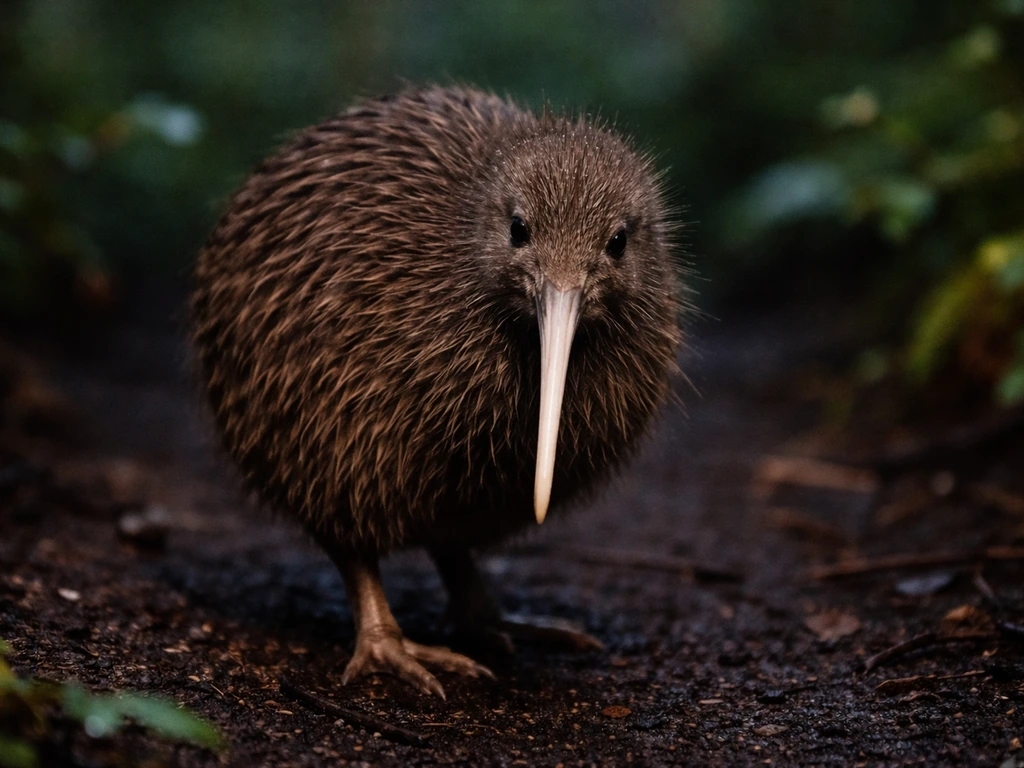
The kiwi (genus Apteryx) is a flightless bird native to New Zealand. The Department of Conservation describes it as "unique and curious," and that description earns its keep fast once you look at the bird closely. It has loose, hair-like feathers instead of the smooth plumage most birds carry, strong legs built for digging and running, and no tail. Its [nostrils sit close to the tip of a long, curved bill](https://www.
australiangeographic. com. au/topics/wildlife/2016/11/the-oddest-bird-on-earth-the-kiwi/) rather than at the base, which is practically unheard of in the bird world and gives it an unusually strong sense of smell for hunting invertebrates in leaf litter. It is roughly the size of a domestic hen and is entirely nocturnal, navigating forest floors in the dark across multiple species that range from the North Island brown kiwi to the great spotted kiwi.
One of its most talked-about traits is its egg. A kiwi egg can account for around 20 percent of the mother's body weight, with the yolk making up roughly 65 percent of the egg itself. For context, that is among the largest egg-to-body ratios of any bird on the planet. The Smithsonian notes that habitat pressure from forest clearing has pushed kiwi into partially timbered agricultural areas, which is part of why conservation has become so central to the bird's cultural story. The Department of Conservation runs an active campaign under the banner "Save our Iconic Kiwi," framing the bird's survival as tied to New Zealand's broader goal of becoming predator-free.
Why the kiwi matters so much to New Zealand
The kiwi is the national icon of New Zealand and its unofficial national emblem. That status was not handed down overnight. According to NZ History, by around 1908 the kiwi had become the dominant symbol for New Zealand in cartoons, particularly sporting ones, replacing older imagery like moa, fern leaves, and a lion cub. As early as 1899, observers were already arguing that the kiwi was the accepted national bird. During the World War I era, cartoonists leaned heavily on the bird to represent the country, and Te Ara documents that the kiwi's image appeared on banknotes, postage stamps, and advertisement chromos. That kind of material culture penetration is how a symbol graduates from niche to universal.
For Māori, the kiwi carries additional weight. The Department of Conservation frames it explicitly as a taonga, a Māori concept meaning treasure or something of great cultural value. Kiwi feathers were woven into ceremonial cloaks called kahu kiwi, worn by people of high rank. Te Papa describes kahu kiwi as highly prized taonga Māori that carry the wairua of the kiwi whose feathers make up the cloak [kahu kiwi, worn by people of high rank](https://www.
tepapa. govt. nz/discover-collections/read-watch-play/kiwi-the-national-bird-of-aotearoa-new-zealand). This dual layer of meaning, both as a national emblem for the country at large and as a taonga within Māori culture, is exactly why the image of the kiwi and the image of Aotearoa New Zealand have become so tightly fused.
You really cannot talk about one without implying the other.
What the kiwi bird symbolizes

Symbolism attached to the kiwi bird grows directly out of its actual traits, which is usually how the best animal symbolism works. Because the bird is genuinely unusual and found nowhere else on earth, it has come to represent uniqueness and individuality. Because it survives in difficult conditions, navigates in total darkness, and has outlasted centuries of predation pressure, it carries associations with resilience and quiet strength. Because it stays firmly on the ground and forages methodically rather than relying on flight or flash, it reads as grounded and practical. These are not arbitrary projections; they map onto the bird's real biology.
- Uniqueness: the kiwi exists nowhere else in the world and has no close visual parallel among other birds
- Resilience: surviving as a flightless ground bird through centuries of predation pressure and habitat loss
- Groundedness: literally rooted to the earth, navigating the forest floor rather than the sky
- National pride: used institutionally and culturally to represent Aotearoa New Zealand's identity
- Taonga (treasure): a concept from Māori culture marking the bird as something precious, not just practical
- Conservation flagship: the kiwi is used to front broader messaging about New Zealand's ecological identity and predator-free goals
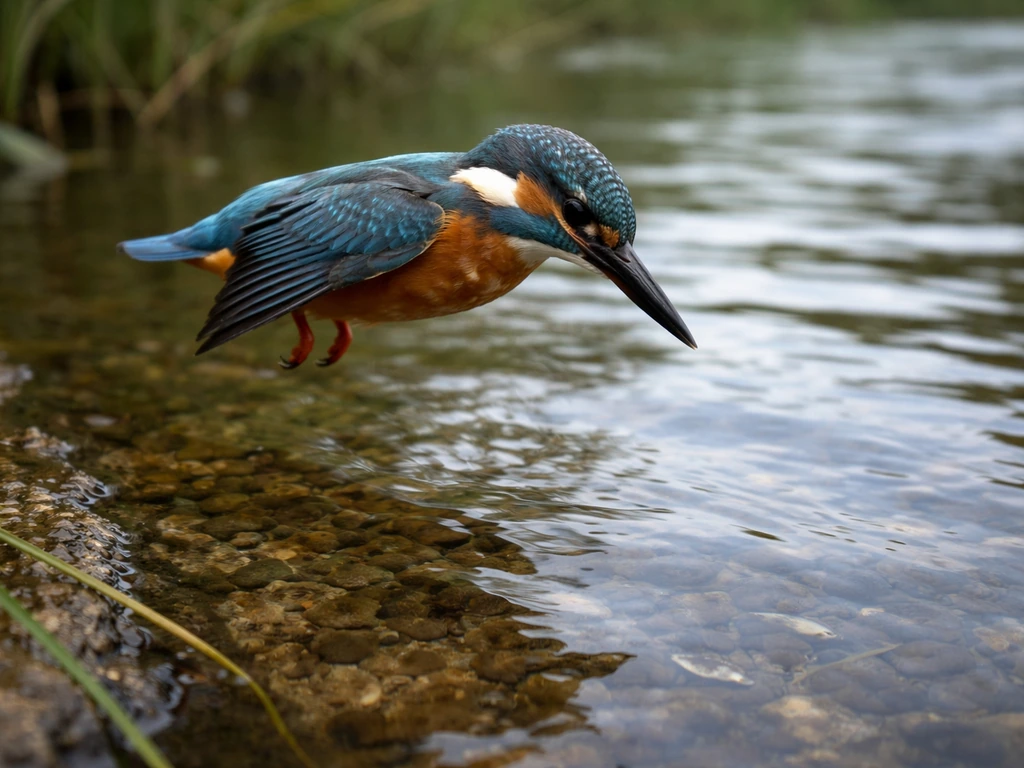
It is worth noting that the kiwi's symbolism functions a bit differently than, say, the eagle or the phoenix. Those birds draw on dramatic visual power, soaring flight, or mythological fire. The kiwi's symbolic pull comes from its oddness and its stubborn persistence. That makes it a much quieter but equally compelling symbol, one that rewards people who look closely. If you enjoy exploring that contrast with other birds that carry rich symbolic weight, the meaning of the kingfisher bird offers an interesting counterpoint, since the kingfisher's symbolism leans hard into brilliance and precision rather than groundedness.
Kiwi bird vs kiwi the fruit vs Kiwi the person
This is where most people get tangled up, and it is worth being direct about it. The word "kiwi" carries at least three distinct meanings in everyday use, and context is everything.
| Term | What it means | Where you'll hear it |
|---|---|---|
| Kiwi bird | The flightless native bird of New Zealand (genus Apteryx), the country's national icon | Nature documentaries, conservation discussions, symbolism contexts, this site |
| Kiwi (fruit) | Kiwifruit, the small oval fruit with brown skin and green flesh, rebranded for the U.S. market around June 15, 1959 | Grocery stores, recipes, casual food conversation |
| Kiwi (nickname) | An informal term for a New Zealander, used since at least World War I and now common in official contexts like Kiwibank and KiwiSaver | Sports, travel, casual conversation in NZ and Australia |
The fruit's name is borrowed, not original. Kiwifruit was rebranded for the American market in the late 1950s, with the name drawing on "kiwi" as an already-established informal term for New Zealanders and their country. So the fruit was named after the people nickname, which was itself named after the bird. The chain runs: bird, then people, then fruit. Merriam-Webster captures this layering in a single entry, listing the flightless bird alongside the nickname usage. Oxford and Cambridge do the same, treating the bird definition as primary and the fruit as a secondary meaning within the same word.
The people nickname took root during World War I. By 1917, New Zealanders were being called Kiwis, partly because the bird was already being used on military badges to represent the country. Britannica notes that the connection between the bird and the country grew so strong that New Zealanders adopted "Kiwi" as a genuine term of endearment and national identity, and it has since become official enough to appear in the names of state-owned enterprises. In New Zealand and Australia, the word "kiwi" alone can refer to the bird or to a New Zealander depending entirely on context, which is why the more specific phrase "kiwi bird" exists and why people search for it.
How "kiwi" and "kiwi bird" actually show up in everyday language

You encounter the kiwi across a wide range of everyday references, and knowing what you are looking at changes how you read each one. In sports, the New Zealand national rugby league team is nicknamed the Kiwis, a label that dates back to at least 1926. In that context, "Kiwis" clearly means the people and their team, not the bird itself, though the team logo often features the bird anyway. The National Library of New Zealand holds a cartoon image of a kiwi bird wearing an All Blacks jersey, which is a perfect example of how the animal and the national identity get layered on top of each other deliberately.
In institutional naming, "Kiwi" works as a shorthand for New Zealand values and identity. Kiwibank (established 2001), KiwiSaver, and KiwiRail all use the prefix to signal national character rather than anything to do with the bird's biology. When you see "Kiwi" as a brand prefix, the bird is the background reference point, but the foreground meaning is national pride and local ownership.
In symbolism and bird-motif contexts, such as logos, tattoos, stories, or cultural references, the kiwi bird is more often invoked for its traits than for its name. Someone choosing a kiwi motif is usually reaching for something that says: genuinely unique, not showy, quietly strong, and distinctly from this specific place. That is a different register from, say, seeing a kite bird, whose symbolism tilts toward freedom and vision rather than groundedness.
In casual conversation between New Zealanders and Australians, "kiwi" as a people-term is often preferred over the full phrase "New Zealander," much as "Aussie" shortens "Australian." Britannica points out that in informal speech, "Kiwis" is simply the go-to demonym. This is useful to know when you are reading travel writing, sports coverage, or casual online conversation where "Kiwis" appears without any bird imagery at all.
How to read kiwi bird references when you spot them
When you come across a kiwi bird reference in text, a logo, a story, or a casual remark, a few quick questions help you decode what the speaker or writer actually means.
- Is there bird imagery, or just the word? If it is visual (a drawing, a cartoon, a logo with a feathered figure), it almost certainly refers to the actual bird as a national symbol. If it is just the word in conversation, check for context clues.
- Is the context about New Zealand identity, sports, or politics? If yes, "Kiwi" likely refers to New Zealanders as people, with the bird as a background reference rather than the foreground subject.
- Is it a food or grocery context? Then it is kiwifruit, full stop, and the bird meaning is not relevant.
- Is the text about symbolism, resilience, or uniqueness? That is when you are squarely in kiwi-bird-as-symbol territory, where traits like groundedness and survival carry the meaning.
- Is there a Māori cultural frame, or conservation language? Then the taonga and flagship-species framing applies, and the symbolism carries deeper cultural weight than a general "national pride" reading would capture.
- Is the reference historical, especially from around 1908 to 1917? That is the formative period when the bird transitioned from a nature curiosity to a national emblem, and references from that era are almost always about country identity rather than people nickname.
Context also matters when comparing the kiwi to other birds with layered meanings. Some birds, like the killdeer, carry symbolism built around behavior rather than national identity, which makes their meaning more portable across cultures. The kiwi's meaning is unusually place-specific: strip away New Zealand and you lose most of what the bird symbolizes beyond basic biological curiosity.
One practical tip: when you see "kiwi bird" written out with both words, the writer is almost always making a deliberate effort to specify the animal rather than the fruit or the people-nickname. The phrase "kiwi bird" is essentially a disambiguation tool that native English speakers reach for when they want to be unambiguous. If you see just "kiwi" in a sentence, you need to read the surrounding words before you settle on a meaning.
A quick comparison with similar bird symbolism
The kiwi sits in an interesting category among birds with strong symbolic identities because its power comes from biological oddness and national specificity rather than universal archetypes. Compare it to a few others from the same symbolic register and the distinction becomes clear.
Birds that carry loud, dramatic symbolism, like the kite bird with its soaring associations, tend to project power outward and translate easily across cultures. The kiskadee bird, whose symbolism is tied to its distinctive singing and assertive personality, works differently again, drawing meaning from sound and visibility rather than from national identity. The kiwi, by contrast, is nocturnal, nearly silent in the popular imagination, and famously refuses to fly. Its symbolism is almost entirely about what it does not do conventionally, and about where it comes from. That is a rarer and more culturally rooted kind of symbolic meaning.
If you are building a broader understanding of bird symbolism across similar species, it is also worth looking at how ground-dwelling or regionally specific birds develop meaning. The keel bird is another example of a bird whose meaning requires knowing its specific ecological and cultural context before the symbolism clicks into place.
The short version, if you need it fast
The kiwi bird is a flightless, nocturnal New Zealand native with hair-like feathers, no tail, nostrils at the tip of its bill, and one of the largest eggs relative to body size of any bird alive. It is the national icon of New Zealand, a taonga (treasure) in Māori culture, and a conservation flagship species. Symbolically, it represents uniqueness, resilience, groundedness, and New Zealand national identity.
The word "kiwi" on its own can also mean a New Zealander (nickname in use since at least World War I) or kiwifruit (a rebranding from the late 1950s). When interpreting any kiwi reference, the key move is to identify context first: bird, people, or fruit. In a symbolism or bird-motif context, you are almost always dealing with the actual animal and the rich national and cultural identity it carries.
FAQ
If I see “kiwi” in a sentence, how can I tell whether it means the bird, the people, or the fruit?
Look for grammatical clues. “A kiwi” used like an object or subject of behavior (runs, hunts, nocturnal, flightless) usually points to the bird. “Kiwis” as a sports or travel label (team, fans, at the match, from here) points to the people. “Kiwi” with eating or grocery terms (fruit, smoothie, peel) points to the fruit, and dates like “rebranded” or “market” often indicate the fruit name trail.
What does “kiwi bird” mean in contexts like logos, tattoos, or merchandise?
It usually functions as a deliberate disambiguation and a symbolism choice, meaning the animal traits, not the demonym or fruit. If the design includes recognizable biology, like the long curved bill or the ground-foraging look, it is more likely “quiet resilience and uniqueness” than “New Zealander identity” or “edible fruit.”
Are there other kiwi “birds” people might confuse with the New Zealand kiwi?
Yes, name collisions happen. Some people mix up “kiwi bird” with other birds that have “kiwi” as part of a common name, or they generalize “kiwi” as a type of bird without specifying the New Zealand species. When you want the intended species, prioritize the phrase “New Zealand kiwi” or the “Apteryx” genus, especially in scientific or educational content.
Does kiwi symbolism carry the same meaning in other countries, or is it mostly New Zealand-specific?
Most of the strong symbolic meanings tied to national identity and taonga status are place-specific. Outside New Zealand, the deeper “Aotearoa identity” layer often fades, and the bird may be read more generally as an underdog or an “odd but admirable” creature. If the context includes New Zealand institutions, conservation messaging, or Māori cultural references, then the full local meaning is more likely intended.
Is it ever inaccurate to say the kiwi represents “predator-free” New Zealand?
It can be oversimplified. The article notes conservation framing, so “predator-free” is part of the public narrative, but the real-world situation is ongoing (predator control is continuous, not a one-time achievement). A safer interpretation is “linked to conservation and survival efforts,” rather than implying eradication is already complete.
What is the most common mistake when interpreting the “meaning of kiwi bird” search results?
Assuming the result is automatically about the bird when the query contains “kiwi” without acknowledging the word’s other meanings. Many search pages, product listings, or social posts use “kiwi” for people nicknames or fruit, so you should verify whether nearby terms suggest biology (night, feathers, egg) versus identity (team, Kiwis) versus food (fruit, juice).
When “Kiwis” appears in sports coverage, can it still refer to something bird-related?
Usually no. In sports contexts, “Kiwis” typically means New Zealanders, especially when paired with team names or match language. However, logos may show a kiwi bird anyway, so you can see the bird image while the text meaning refers to the people, not the animal.
Does the Māori taonga meaning change how a non-Māori reader should interpret kiwi imagery?
It should add caution and respect around cultural framing. Even if the visual looks like a general national emblem, the taonga layer signals that it is more than decoration. If the image or description mentions ceremonial weaving, high-rank clothing, or “treasure,” treat the motif as culturally grounded rather than purely aesthetic or generic nationalism.
Next Article
Meaning of Kingfisher Bird: Symbolism, Folklore, and What It Means
Explore the meaning of the kingfisher bird: symbolism, folklore, and what it can mean in sightings, dreams, and art.