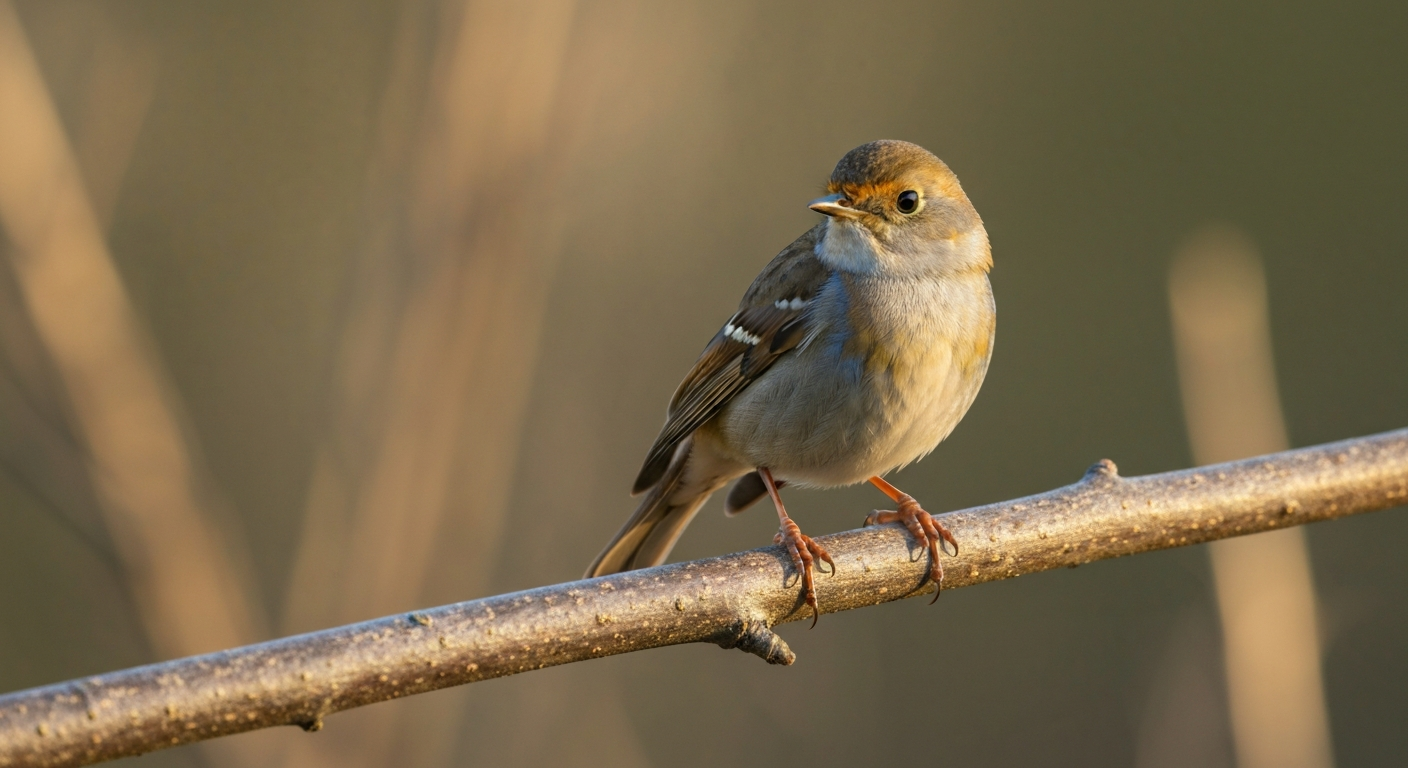
The kingfisher bird means speed, precision, calm, and good fortune in most symbolic traditions, but its deepest meaning comes from how the bird actually behaves: it waits, watches, and then acts with sudden, flawless accuracy. That combination of stillness and decisive action is what people are really pointing to when they invoke the kingfisher as a symbol, whether they're reading a dream, interpreting a sighting, or unpacking a piece of literature. If you're curious about a different bird's symbolism, the meaning of kiwi bird is another helpful comparison point when you're reading animal signs.
Meaning of Kingfisher Bird: Symbolism, Folklore, and What It Means

Marcus Whitley
8 Apr 2026
What a kingfisher actually is (the literal starting point)
There are roughly 90 species of kingfishers split across three families: Alcedinidae, Halcyonidae, and Cerylidae. They're found on almost every continent, which partly explains why so many cultures independently developed kingfisher symbolism. The birds range from the jewel-bright common kingfisher of Europe and Asia to the chunky, rattling Belted Kingfisher you'll see along North American streams and rivers.
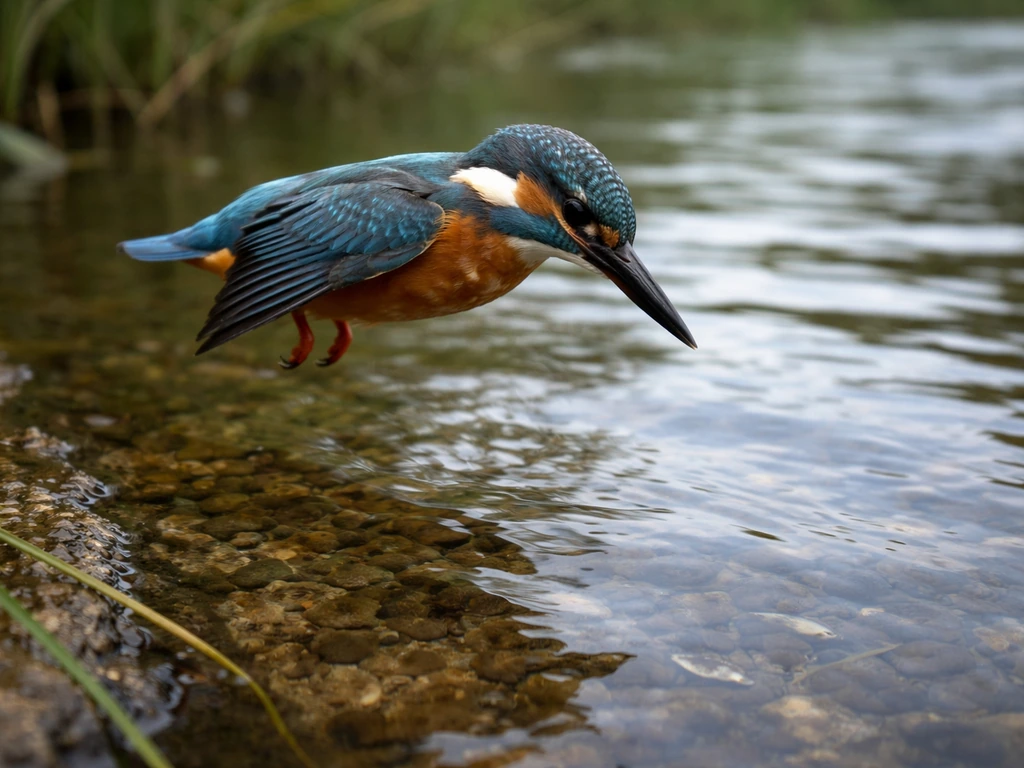
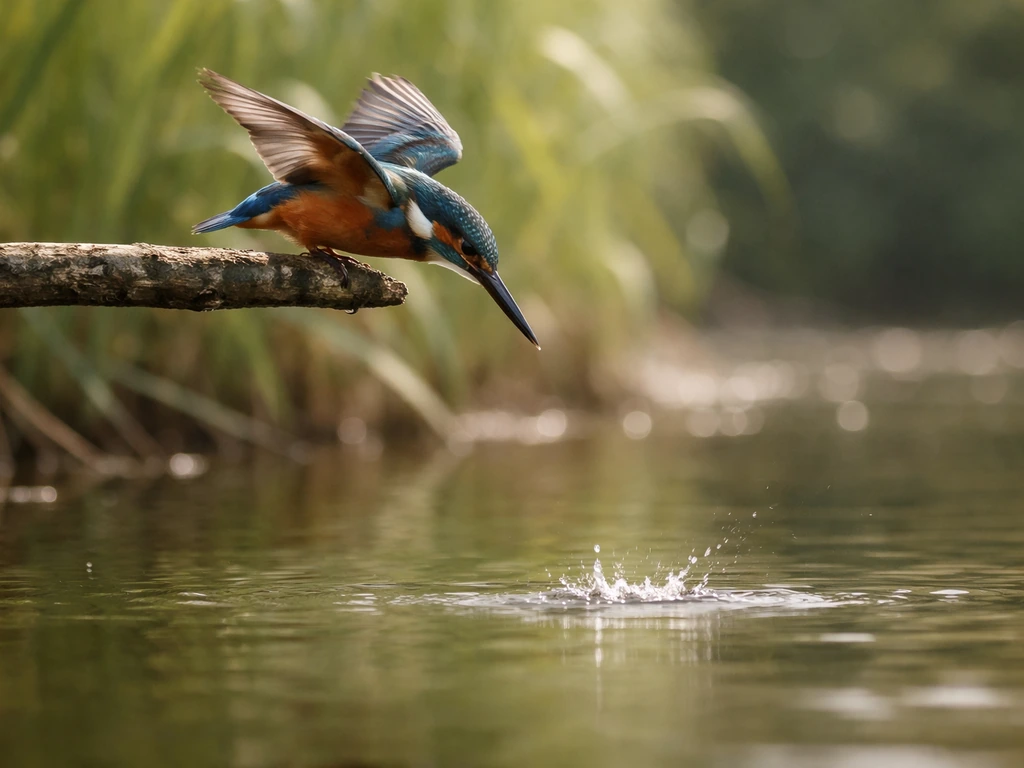
The hunting behavior is what makes the kingfisher so visually striking, and it's the engine behind almost all the symbolism. A kingfisher spots prey from a perch overhanging water, or by hovering in place mid-air, and then plunges in bill-first to snatch fish, crabs, shrimps, or aquatic insects. Many species can actually compensate for water's refractive distortion, meaning they judge underwater depth accurately despite the optical tricks water plays. During the dive itself, a blank" rel="noopener noreferrer">membrane covers their eyes and they rely on touch to snap their bill shut at exactly the right moment. That's not casual fishing. That's precision built into the body.
One thing worth knowing: not every kingfisher is a fish specialist. Some species eat mostly insects or other small prey, and none in one entire subfamily primarily eat fish. This matters because symbolism sources that treat the kingfisher as exclusively a "master fisher" are oversimplifying. The deeper behavior, the watching, the timing, the decisive strike, applies broadly even when fish aren't on the menu.
Why kingfishers carry such strong symbolic weight
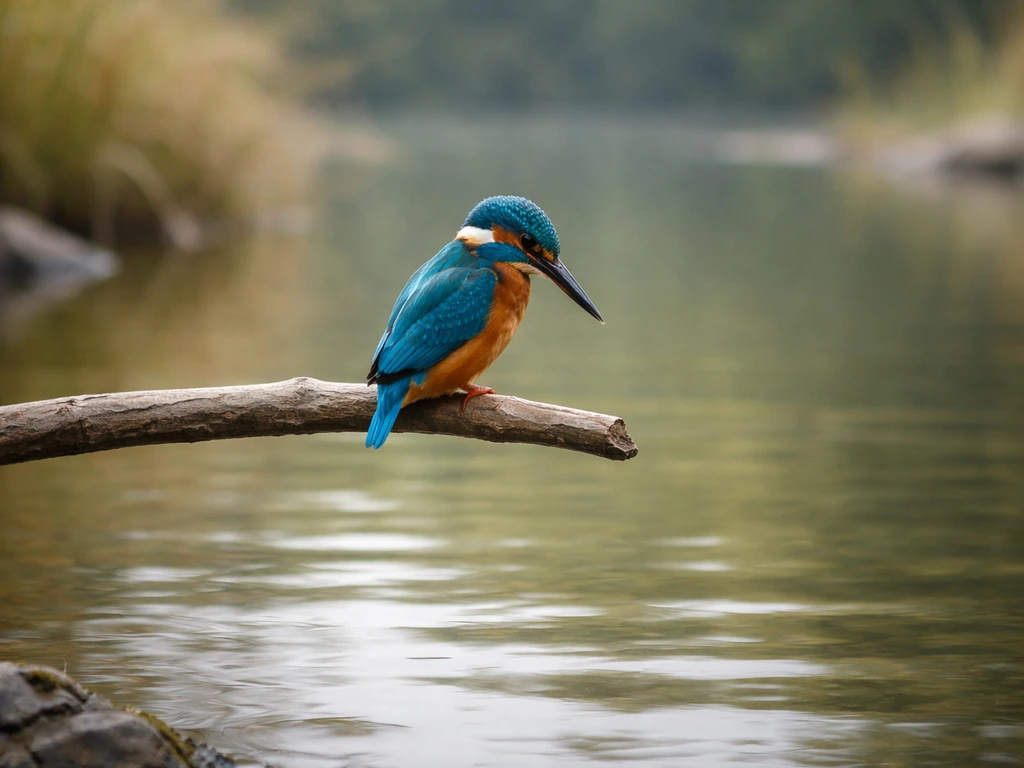
Most symbolic meaning doesn't come from nowhere. It comes from watching an animal and reading what you see. With kingfishers, the behavior-to-meaning pipeline is unusually clean. Consider the sequence: the bird perches or hovers in apparent stillness, shows zero impatience, and then strikes with total commitment. You never see a kingfisher half-heartedly attempt a dive. Every quality people assign to the kingfisher, patience, precision, perfect timing, calm amid movement, is directly visible in how the bird hunts.
- Patience and stillness: the perch-and-watch phase before the dive
- Precision and accuracy: the ability to judge underwater depth despite optical distortion
- Decisive action: no hesitation once the moment arrives
- Adaptability: some species hover, some perch-dive, based on conditions
- Speed and agility: the actual dive is explosive and brief
- Connection to water: virtually all species hunt near or in water, linking the bird to emotional depth, the unconscious, and flow in symbolic systems
These traits map almost perfectly onto human ideals around focus, timing, and reward for patience, which is why so many independent cultural traditions landed on the kingfisher as a positive symbol. It's not coincidence; it's observers drawing honest conclusions from the bird's actual behavior.
Cultural and folklore meanings across traditions
Greek mythology and the origin of "halcyon days"
The most durable kingfisher meaning in Western tradition comes from Greek myth. Alcyone (also spelled Alkyone) and her husband Ceyx were transformed into kingfishers after Ceyx drowned at sea. The myth holds that Alcyone's grief was so great that the gods calmed the winter seas for two weeks around the solstice so the birds could nest safely on the water. That's where the phrase "halcyon days" comes from, those legendary two weeks of calm. Merriam-Webster traces the word directly to this myth, and the scientific family name Halcyonidae preserves it. When someone says "those were halcyon days," they're invoking this kingfisher story whether they know it or not.
The myth layers multiple meanings onto the bird: transformation (humans becoming birds), grief resolved into peace, and divine protection of a calm period. The kingfisher in this tradition is less about the fishing and more about the calming of chaos, which runs interestingly parallel to the bird's behavioral stillness.
European and Irish folk traditions

Irish and broader European folk tradition treated the kingfisher as a luck-bringer and weather predictor. Irish fishermen considered a kingfisher sighting before setting out to sea a positive omen, and the bird was associated with calm seas and safe journeys. Medieval European households reportedly hung dried kingfisher bodies in their homes for protection against storms, and some accounts describe suspended dried birds being used like a compass to indicate wind direction. Ernest Ingersoll's folklore compilations document these weather-prediction and house-protective uses, showing how thoroughly the bird's "calm" association was taken literally.
Indigenous traditions: Māori and Australian First Nations
Kingfisher meaning gets more specific and place-rooted in Indigenous traditions. The Māori phrase "Te Rerenga Kōtare" (flight of the kingfisher) describes the native kingfisher as a bird that strives to complete tasks and protect its own, a meaning centered on purposeful effort and protection rather than luck or calm. This is a meaningfully different emphasis from European traditions, and it's worth sitting with that difference rather than flattening it into a single "universal" kingfisher meaning.
In Indigenous Australian traditions, the kingfisher appears in Dreaming stories connected to specific places and communities. The Japingka Aboriginal Art Gallery documents the "Kingfisher (Luurn)" creation story, and the Australian Museum has recorded First Nations accounts (from Birpai Traditional Owners, among others) where the kingfisher's role in knowledge-sharing and trust is culturally specific. These meanings aren't portable in the way that Greek myths or generic "spirit animal" symbolism often gets treated. The point here is that kingfisher meaning can be community-specific and shouldn't be assumed to travel cleanly across cultural lines.
Regional omen traditions (not always positive)
Here's a case where the symbolism flips. For the Dusun people of Borneo, spotting an oriental dwarf kingfisher on the way to battle was considered a bad omen, serious enough that warriors who saw one were expected to turn back. This is a useful reminder that positive kingfisher symbolism is not universal. Species, context, and cultural framework all determine what the bird means in a specific tradition. If you're researching kingfisher meaning across cultures, that variation is part of the honest picture.
Spiritual and animal-symbol meanings in contemporary use
In modern spiritual and spirit-animal frameworks, the kingfisher is consistently associated with a cluster of related qualities. These interpretations draw heavily from the bird's behavior, as you'd expect, and tend to frame the kingfisher as a guide for decision-making, emotional clarity, and timing.
| Symbolic Theme | Behavioral Source | What It Suggests to You |
|---|---|---|
| Patience and stillness | Perching motionless before the dive | Wait for the right moment; don't force action before you're ready |
| Perfect timing | The strike is only attempted when success is likely | Trust your instincts about when to commit |
| Precision and decisiveness | Anatomical adaptations for accurate strikes | When you act, act fully; half-measures don't work |
| Prosperity through patience | Consistent food source for waiting birds | Sustained effort + good timing yields reward |
| Clarity amid chaos | Calm surface behavior despite speed of dive | Stay centered when situations feel turbulent |
| Transformation | Rooted in the Alcyone/Ceyx metamorphosis myth | Change, especially after loss, can lead to peace |
| Adaptability | Multiple hunting strategies (hover vs. perch-dive) | Adjust your approach without losing your purpose |
Spirit-animal traditions often frame the kingfisher as a messenger, specifically connecting the bird's dive to willingness to go beneath the surface of things. If you treat the kingfisher as a spirit guide, the typical instruction is to listen to your intuitions and be willing to pursue what you want with full commitment once the moment is right. Astrology.com's spiritual framing sums it up well: stillness and clarity in the midst of chaos. That's the core of it. Think of it similarly to how seeing a kite bird tends to carry messages about vision and perspective from above, whereas the kingfisher is about depth and precision below the surface.
What it means if you see a kingfisher today
A sighting in nature
If you spot a kingfisher in the wild, near a river, lake, coastal area, or any body of water, the practical first step is to register that these birds are genuinely hard to see even though they're vividly colored. They're fast, they spend time perched quietly, and many people walk past them without noticing. If you noticed one, it's at least worth pausing on. In cultural and folk terms, most traditions would read a kingfisher sighting as a positive sign, linked to good luck, calm ahead, or a signal that patience is about to pay off. Irish tradition specifically frames it as a favorable omen before journeys or ventures.
In a more secular but still reflective reading: a kingfisher sighting near water often functions as a natural cue to slow down and watch. The bird itself is demonstrating patience and focus. If you're in a period of waiting for something, a kingfisher showing up is easy to read as a confirmation to hold steady and trust your timing.
A kingfisher in a dream

Dream interpretation for kingfishers is heavily context-dependent, and any honest source will tell you that. A kingfisher fishing peacefully on a calm river tends to suggest emotional nourishment, rest, and peace. A kingfisher diving cleanly and catching prey is usually read as success through decisive action or a sign to double your efforts toward a goal. A restless or unsuccessful kingfisher in a dream may suggest feeling caught between choices or waiting for a sign that hasn't arrived yet. The Alcyone and Ceyx myth has made the kingfisher a recurring dream image for transformation after grief, and people do still consciously or unconsciously link the two, particularly around the winter solstice period.
The underlying interpretive principle is consistent: what is the kingfisher doing in the dream? Hovering and watching suggests a period of gathering clarity. Diving suggests it's time to commit. Emerging successfully from a dive, the image of the bird breaking the water's surface with prey in its bill, is almost universally read as reward following courage and effort. DreamDecoder's framing captures this well: entering difficult or deep "waters" and emerging stronger and more rewarded.
It's also worth comparing bird dream symbolism across species to calibrate your interpretation. For instance, killdeer bird meaning runs in a different direction symbolically, with themes around distraction and protection, while the kingfisher stays consistently in the territory of focus and decisive action.
Kingfisher symbolism in literature and language
The most famous literary kingfisher appears in Gerard Manley Hopkins' poem "As Kingfishers Catch Fire," and if you've encountered the kingfisher as a literary symbol, this poem is almost certainly the source or something downstream of it. Hopkins uses the kingfisher's vivid flash of color and perfectly precise action as an image for the idea that every being expresses its own essential nature completely and without apology. LitCharts frames it as being exactly what you are and doing exactly what you do. The GM Hopkins Archive goes further, reading the bird's behavior as a symbol of divine presence and the imperative to dedicate all action to purpose.
The kingfisher's appearance in Hopkins also connects back to the Latin and Greek naming tradition, with Halcyon associations threading through the scientific and poetic language simultaneously. Comment Magazine's analysis of the poem makes this crossover explicit, treating the kingfisher as a point where natural history, myth, and language all converge. The bird "catches fire" in the poem the same way it catches light in real life: suddenly, brilliantly, completely.
Beyond Hopkins, "halcyon days" is the kingfisher's most lasting contribution to everyday language. The phrase has almost completely detached from its bird origins in common usage, but it still means a calm, happy, golden period in the past. When someone says "halcyon days," they're unwittingly channeling Alcyone's grief and the gods' gift of calm seas to a pair of mythological kingfishers. That's a remarkably long symbolic chain for a bird to maintain.
The kingfisher has also lent its name to organizations, sports teams, and brands globally, usually when the intended association is speed, precision, or elegance. This kind of naming is its own form of metaphor use, and it tracks exactly with the core symbolic cluster: accuracy, swiftness, beauty in motion.
How kingfisher meaning compares to related birds
If you're building out a sense of how different birds carry different symbolic weight, it helps to place the kingfisher in context. The meaning of the kite bird tends toward themes of freedom and far-sighted vision, the bird that soars and surveys rather than strikes with precision. The kiskadee bird's singing carries symbolism rooted in its bold, loud declaration of presence, which is nearly the opposite of the kingfisher's patient silence before the strike. The meaning of the kiwi bird runs toward themes of groundedness and hidden depth, also interesting to compare since both the kiwi and kingfisher are associated with depth but in very different ways, one earthbound, one water-diving.
The keel bird's meaning is worth a look too if you're exploring birds associated with purpose and direction, since like the kingfisher it carries associations with focused forward movement, though without the water-and-precision layer the kingfisher brings. These comparisons help sharpen what's distinctively kingfisher about kingfisher symbolism: it sits at the precise intersection of stillness and action, water and air, waiting and commitment.
Putting it all together: what the kingfisher means, practically
The kingfisher's meaning, whether you're reading a sighting, a dream, a poem, or a cultural reference, almost always comes back to the same core: patience in the waiting phase, total commitment in the action phase, and reward for those who time it right. The halcyon dimension adds a gentler layer: the bird also symbolizes calm, peace, and restoration after difficulty. Those two threads, decisive action and earned calm, aren't contradictory. The kingfisher earns its rest by hunting well.
If you're trying to apply this personally: a kingfisher appearing in your life (in any form) is most commonly read as a prompt to assess your timing. Are you still in the watching-from-the-perch phase? Or is it time to dive? The bird's symbolic message is usually one of those two things, and the details of the encounter (what the bird is doing, what's happening in your own life) tell you which one applies. Trust the behavior over the abstraction. That's where the kingfisher's meaning has always lived.
FAQ
What’s the difference between kingfisher symbolism and “kingfisher as a fish-eating bird” symbolism?
The bird’s meaning shifts when you focus only on what it catches. Many traditions treat it as a master fisher, but several kingfisher species mainly eat insects or other small prey, and no single subfamily is exclusively fish-focused, so the most reliable takeaway is the waiting, watching, and perfectly timed strike.
If I see a kingfisher perched but not diving, does that change the meaning?
Yes. A still, scanning posture is commonly read as the “watch and gather clarity” phase, especially in personal timing readings. A successful dive is more often interpreted as the go-signal, so note whether the encounter ended with action or stayed in preparation.
What should I do if I keep seeing kingfishers, but in the wrong place for me (no water nearby)?
Consider alternative contexts rather than forcing a universal omen. Check whether there’s nearby water access you might be overlooking (streams, drainage ditches, ponds), and treat the repetition as a prompt to reassess timing and attention rather than assuming the specific “good luck on a sea journey” meaning from older European or coastal traditions.
How can I interpret a kingfisher sighting during a stressful or rushed moment?
Use it as an instruction to slow your response cycle. Many kingfisher readings emphasize calm amid motion, so the practical “next step” is to pause before committing to a decision, then act decisively once you have a clear target.
Do kingfisher dream meanings change if the bird fails to catch prey?
They often do. A clean, successful strike is typically read as reward for decisive effort, while repeated unsuccessful dives can reflect hesitation, feeling stuck between choices, or waiting for the right conditions, which aligns with the bird’s focus on timing rather than effort alone.
Is “halcyon days” always directly about the kingfisher myth?
It usually echoes that calming-two-weeks association, but in everyday speech it often functions as a generic phrase for a pleasant past period. If you want the richer meaning, pair it with the myth theme, grief resolved into peace and a protected calm time that follows a disturbance.
Can kingfisher meaning be negative?
It can be, depending on culture and context. For example, some Borneo (Dusun) accounts treat a kingfisher encountered en route to battle as a serious bad omen. So if you’re researching interpretations, confirm the cultural setting and species context rather than assuming all meanings are favorable.
Should I treat “spirit animal” interpretations as universal?
Not automatically. Spirit-animal frameworks often generalize from the dive and stillness themes, but the article’s deeper point is that meanings can be community-specific. If you’re using the symbolism personally, treat it as a reflective lens (timing, clarity, commitment) rather than a fixed rule.
How do I tell whether my kingfisher encounter is “patience” or “commitment” symbolism?
Look for the matching phase in both the real-world encounter and your life. If the bird is hovering, perched, or repeatedly scanning, it maps to watching and waiting. If it dives successfully or appears in a moment where you already have enough information, it maps to committing and following through decisively.
What’s a common mistake people make when interpreting kingfisher symbolism?
Overgeneralizing one storyline, such as always treating the kingfisher as only about fishing or only about luck. The more accurate approach is to anchor interpretation in observed behavior (watch, timing, decisive strike) and then layer cultural specifics, like weather or grief-to-peace narratives, on top.
Next Article
Perched Bird Meaning, Literal, Symbolic, Usage, Examples
Perched bird meaning: clear literal and symbolic definitions, usage differences, examples, and quick reference.