
The Bennu is an ancient Egyptian divine bird, essentially the original version of what the Greeks later turned into the phoenix. It was a solar deity, closely linked to the sun god Ra and the creator god Atum, and it symbolized creation, rebirth, and the eternal renewal of life. When people search "bennu bird meaning" today, they're usually trying to understand one of three things: the mythology itself, what the Bennu symbolizes in a piece of art, writing, or tattoo design, or how it differs from the Greek phoenix. The short version: Bennu means resurrection and the undying power of the sun, and it's older and more nuanced than the phoenix most people picture.
Bennu Bird Meaning: Symbolism, History, and Usage Guide

Marcus Whitley
29 Apr 2026
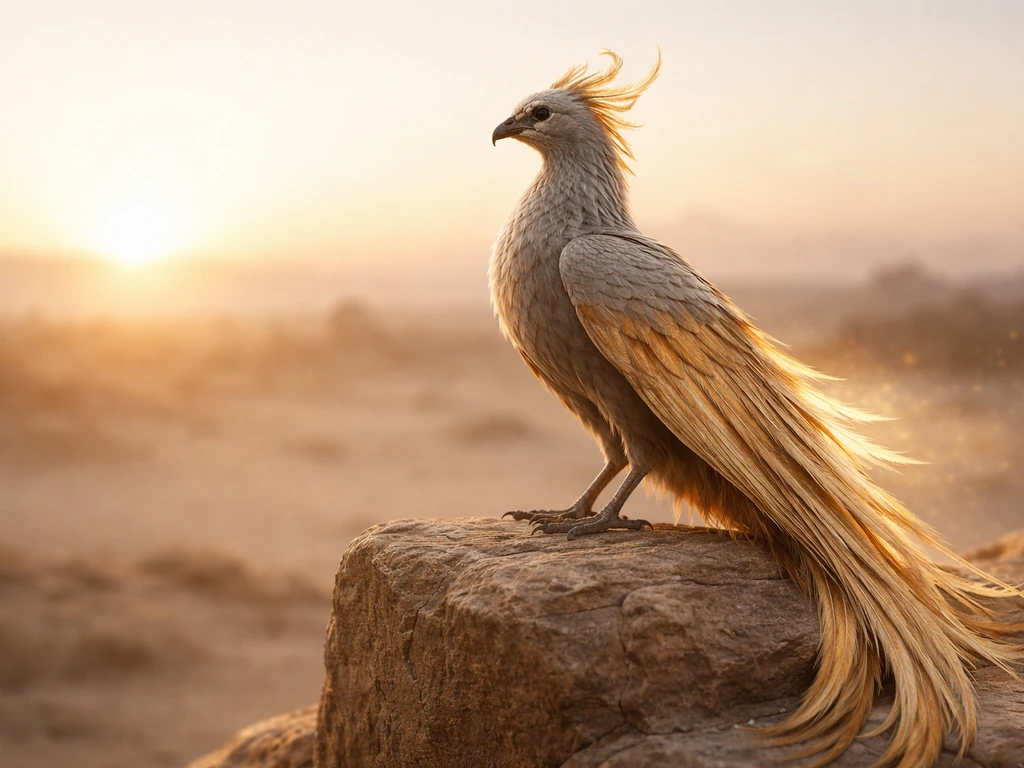
What exactly is the Bennu bird
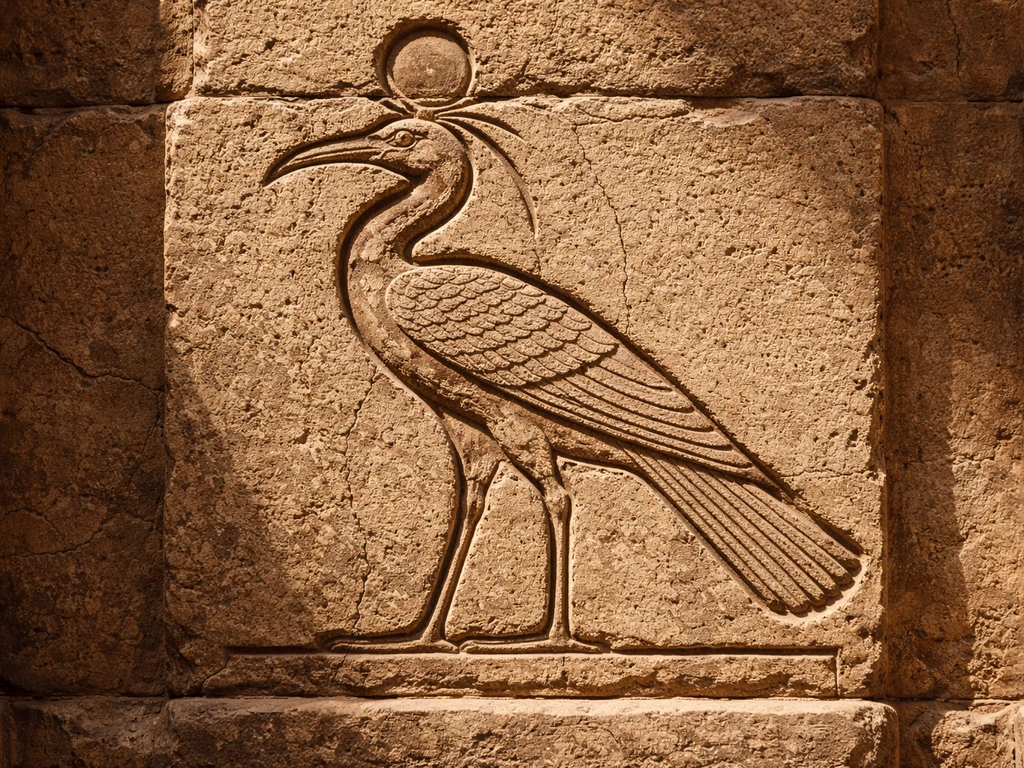
The Bennu comes out of ancient Egyptian religion, specifically from Heliopolis, the great center of sun worship in Egypt. It was a deity in its own right, not just a mythological creature, and it was associated with both Ra (the sun god) and Osiris (the god of the afterlife). In practice, that combination made the Bennu a bridge between two of the biggest ideas in Egyptian cosmology: the daily renewal of the sun and the promise of life after death.
Despite what many illustrated books suggest, Egyptians did not picture the Bennu as a brilliant, flame-colored eagle. NASA, which named an asteroid "Bennu" and researched the imagery carefully, notes that the bird was typically depicted as a gray heron. If you're specifically looking up the junco bird meaning, that symbolism comes from a different cultural and natural context than the Egyptian Bennu myth. Scholars connect it specifically to the yellow wagtail or the heron species common to the Nile, given that herons were associated with the primordial rising of the sun over the waters of creation. The Bennu was said to have lived on the Benben stone, the sacred pyramidal stone at the heart of the Heliopolitan temple, or alternatively on a holy willow tree, both of which were symbolic points of creation at the beginning of time.
In Egyptian funerary texts, including spells from the Book of the Dead, the Bennu holds a striking role. There are entire spells dedicated to "Making the Transformation into the Benu Bird," where the deceased person essentially assumes the form and identity of the Bennu as part of their journey through the afterlife. This is not a metaphor, at least not in the way Egyptians understood it: the soul was believed to literally merge with the bird's sacred essence, sharing in its divine immortality. Academic texts from the University of Chicago's work on Egyptian religious iconography describe the Bennu as linked to Re's heart, placing the bird at the very center of solar theology.
What the Bennu symbolizes: sun, rebirth, and renewal
The Bennu's core symbolic territory covers three overlapping themes, and they all reinforce each other in the Egyptian worldview.
- Solar renewal: The Bennu was thought to appear at the moment of creation when the sun first rose over the primordial waters. Every sunrise was, in a sense, a repetition of that first dawn, and the Bennu embodied that daily miracle of light returning after darkness.
- Resurrection and immortality: Through its association with Osiris, the Bennu carried the promise that death was not final. The Book of the Dead spells around the Bennu made it a vehicle for the deceased's rebirth into eternal life.
- Creation itself: The Bennu was sometimes called the "soul of Ra" and was connected to the very first act of creation, the moment when existence emerged from nothingness. It sits at the origin point of the Egyptian cosmological story.
The etymology reinforces all of this. The word "Bennu" (or "Benu") is linked to the ancient Egyptian root "weben" (wbn), meaning "to rise," "to shine," or "to rise in brilliance." That root captures both the sunrise and the idea of something ascending out of obscurity into radiant existence. It's a name that was built to carry its meaning, and it does.
Where Bennu shows up today
The Bennu has moved well beyond ancient temple walls. Today you'll run into it in several different contexts, and knowing the mythology helps you read each one more clearly.
Science: the asteroid named Bennu

NASA's OSIRIS-REx mission traveled to a near-Earth asteroid called Bennu, formerly catalogued as 1999 RQ36. The name was chosen in 2013 by nine-year-old Michael Puzio, who connected the spacecraft's design to the Egyptian bird deity. The University of Arizona's Lunar and Planetary Laboratory news item on Bennu notes that the name evokes attributes of the Egyptian bird deity, including heron-like associations, and links Bennu with Osiris connected the spacecraft's design to the Egyptian bird deity. NASA later announced that features on the asteroid would be named after mythological birds from various traditions, keeping the Egyptian-mythology naming theme alive throughout the mission. It's a good example of how ancient bird symbolism gets recruited into modern scientific storytelling, the asteroid is a carbon-rich body that may hold clues about the origins of life, which makes the "rebirth and creation" name feel less arbitrary than it might seem.
Art and tattoos
Bennu imagery in tattoos and artwork almost always leans into the rebirth and transformation angle. You'll see it used similarly to phoenix tattoos but with a specifically Egyptian aesthetic: heron-like birds, hieroglyphic elements, solar discs, and Osirian iconography. A Wikimedia Commons category for the Bennu bird hieroglyph points to common cataloging context (including Gardiner G31) used for this Egyptian bird hieroglyph in images and metadata hieroglyphic elements). People choose Bennu imagery when they want to signal "resurrection" or "rising from hardship" but want something with historical depth that stands apart from the more common phoenix or firebird designs.
Writing, fiction, and gaming
The Bennu appears in fantasy fiction and mythology-inspired games fairly regularly. In the Shin Megami Tensei: Persona game series, for example, there's a persona called Bennu that draws directly on the Egyptian bird myth, with the character associated with underworld and rebirth themes. Interestingly, the game's Japanese text refers to it as "Phoenix," which says a lot about how casually the Bennu-phoenix equivalence gets used in popular culture, even when the underlying source material is specifically Egyptian.
Bennu vs Phoenix vs other mythic rebirth birds
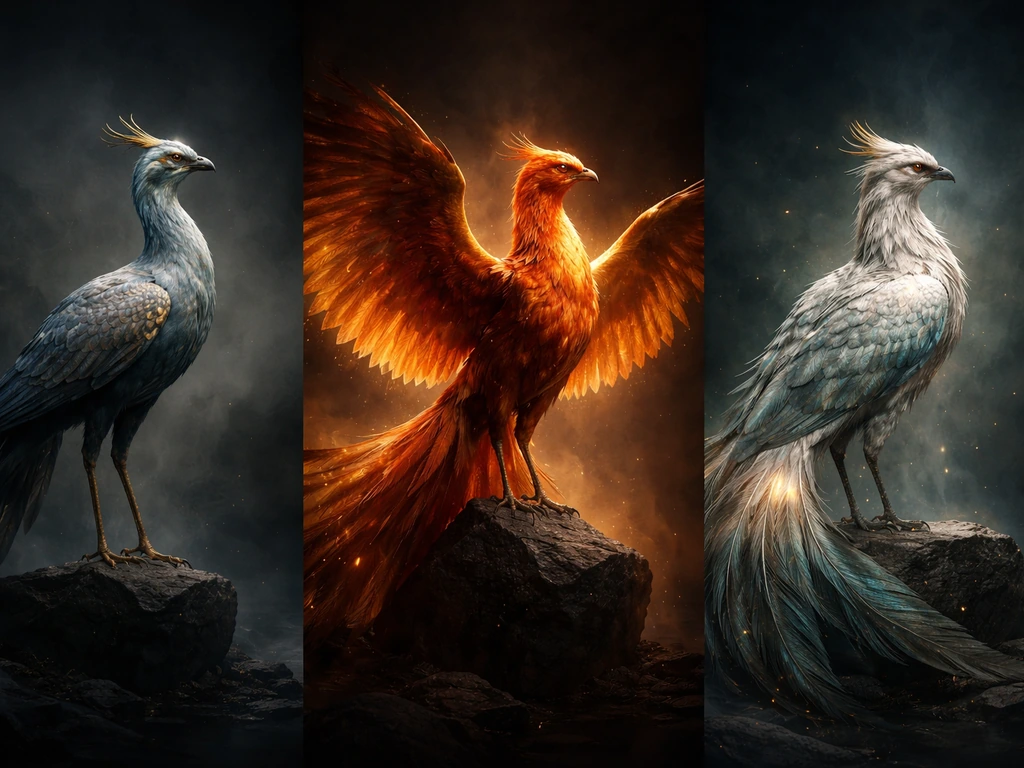
This is where a lot of confusion happens, and it's worth clearing up directly. The Bennu and the Greek phoenix are related but not the same, and treating them as interchangeable flattens some real differences.
| Feature | Bennu (Egyptian) | Phoenix (Greek) |
|---|---|---|
| Origin | Ancient Egypt, primarily Heliopolis | Ancient Greece, later Roman tradition |
| Appearance | Gray heron, sometimes with solar crown | Brilliant, flame-colored eagle or peacock-like bird |
| How rebirth works | Associated with solar renewal and funerary transformation, not a specific death-and-revival ritual | Dies in flames or pyres, rises from its own ashes after a fixed cycle (500 years in some accounts) |
| Primary associations | Ra, Atum, Osiris, creation, the Benben stone | Fire, the sun (secondarily), cyclical time |
| Religious role | A deity and sacred form the deceased could assume | A mythological symbol in Greek/Roman literature |
| Modern confusion level | Often mistakenly described as 'the Egyptian phoenix' | The more familiar Western image of the rebirth bird |
The World History Encyclopedia is clear that the Bennu served as a model for the Greek phoenix, not the other way around. But the phoenix tradition developed its own distinctive drama, the fire, the ashes, the 500-year cycle, none of which are original features of the Bennu mythology. Egyptian sources do not describe the Bennu burning itself to death and rising from ashes. That self-immolation story is Greek. The Bennu's rebirth is quieter and more cosmic: it's tied to the sunrise, to funerary rites, and to the soul's transformation rather than to a dramatic death-by-fire event.
Other mythic rebirth birds are worth a quick mention. The Simurgh of Persian mythology, the Huma bird of Sufi tradition, and the Fenghuang of Chinese mythology all occupy related symbolic space but draw on completely separate cultural traditions. If you're exploring bird symbols across cultures, the quetzal bird carries its own powerful renewal symbolism in Mesoamerican tradition, and the Zimbabwean bird (the African fish eagle-like figure on Zimbabwe's national emblem) represents a different kind of elevated, nationally sacred bird symbol. If you’re also wondering what a quetzal bird meaning is in symbolism, it’s often tied to beauty, renewal, and spiritual significance in Mesoamerican stories. Each tradition builds its rebirth bird differently.
How to interpret Bennu when you encounter it
When you see "Bennu" in a piece of writing, a name, a design, or a cultural reference, here's a practical framework for reading what it's actually signaling.
- If the context is Egyptian mythology or ancient religion: Bennu means a solar deity linked to creation and the afterlife, not simply a flashy rebirth creature. It signals deep time, cosmological origins, and the soul's journey. Think of it as carrying the weight of "where everything began."
- If the context is a tattoo or personal symbol: The person is almost certainly drawing on the rebirth and transformation angle. The Bennu is chosen because it says "I have risen" or "I carry the energy of renewal" with an Egyptian gravitas that the word 'phoenix' no longer quite conveys in an oversaturated market.
- If the context is fiction or gaming: Bennu usually functions as a stand-in for phoenix-like rebirth powers, but the Egyptian framing adds underworld and afterlife associations that go slightly darker and older than a standard fire-rebirth story.
- If the context is a proper name (person or brand): "Bennu" is used as a name specifically because of its connotations of rising, brilliance, and new beginnings. The asteroid naming is the most famous example, but you'll see it as a business or personal name for similar reasons.
- If something is described as 'the Egyptian phoenix': This is a shorthand, not a precise translation. Treat it as a pointer toward Bennu mythology, but understand that the actual Egyptian concept is richer and less fire-centered than the phoenix label implies.
A quick example: if you're reading a novel and a character is described as having a Bennu tattoo after surviving a serious illness, the author is reaching for something specific. The Bennu doesn't just say "I came back to life." It says "I aligned myself with something ancient and solar, with the soul's capacity to rise the way the sun rises every single morning." That's a different emotional register than a phoenix, and it's worth honoring when you encounter it.
The names, spellings, and terminology you'll see
The spelling and naming around this bird are less consistent than you might expect, so here's what you'll commonly encounter.
- Bennu: The most common anglicized spelling. Used in encyclopedias, NASA documentation, and most popular sources.
- Benu: An alternate transliteration from the Egyptian hieroglyphic original. Academic Egyptology texts often use this spelling, and the University of Chicago's work on Egyptian birds uses "benu-bird" consistently.
- Benben: A related but distinct term. The Benben is the sacred conical stone on which the Bennu was said to perch at Heliopolis. It's connected to the same Heliopolitan creation tradition but refers to the stone, not the bird.
- Weben (wbn): The Egyptian verb root meaning "to rise" or "to shine," from which Bennu's name is derived. You'll see this in etymological discussions and on ancient-language reference sites.
- The Gardiner sign G31: This is the specific hieroglyphic sign catalogued in Egyptological reference systems that represents the Bennu bird. Useful if you're researching the hieroglyphic form.
- "Benu bird" or "benu-bird" (hyphenated): Common in academic papers and in Book of the Dead translations, particularly in spell headings like "Making the Transformation into the Benu Bird."
One thing to keep in mind: older general-audience books sometimes describe the Bennu flatly as "the phoenix," treating them as synonyms. That's a simplification that scholars have largely moved past, but you'll still see it in popular history books and some illustrated mythology guides. When a source says "Bennu is the Egyptian phoenix," read it as: the Bennu is the Egyptian precursor and probable inspiration for the Greek phoenix, with a distinct mythology that predates and differs from the Greek story. That framing keeps the Bennu's own richness intact rather than flattening it into something it isn't.
FAQ
Is “Bennu bird meaning” the same as “phoenix meaning” when I see it in a tattoo or story?
Not exactly. Bennu symbolism usually points to sunrise, solar renewal, and funerary transformation, while many phoenix references lean on a cyclical death-by-fire and rebirth narrative. A Bennu design often signals alignment with ancient Egyptian cosmic order, not just “coming back to life.”
How can I tell if an artwork is aiming for Bennu specifically, versus just a generic phoenix?
Look for Egyptian cues. Gray, heron-like bird form, solar discs, hieroglyph-style motifs, and Osirian funerary imagery tend to indicate Bennu intent. If it is clearly flaming, ash-related, or uses a classic fire-and-resurrection cycle, it is more likely phoenix-inspired.
What is the most common mistake people make when interpreting Bennu symbolism?
Treating Bennu and the Greek phoenix as interchangeable. That flattens differences, especially the absence of a self-immolation-by-fire event in the Egyptian tradition, where the “rising” is more tied to sunrise and the soul’s transformation in funerary rites.
Does Bennu always mean literal resurrection, or can it be used for personal growth?
It can be used more broadly, but the “freshest” meanings are transformation, rising, and enduring renewal. If the context is illness survival, grief recovery, or a major life reset, readers often interpret Bennu as “rise with an ancient solar power” rather than a purely medical or literal miracle.
What should I do if I’m unsure whether the text is talking about Bennu the deity or a real-world name like the asteroid?
Check the setting and keywords. If the context involves space missions, an asteroid catalog number, or scientific naming, it is the NASA object. If it involves funerary spells, Ra/Osiris, or Egyptian temple imagery, it is the mythic bird.
Why do some sources spell it “Bennu” and others “Benu” or treat it as “phoenix”?
Transliteration varies across translators and eras, so “Bennu” and “Benu” are common spelling variants of the same Egyptian term. Confusing it with “phoenix” often happens in general-audience summaries that collapse the two traditions into one label for convenience.
Is Bennu more about the afterlife, the sun, or both?
Both, but with an interaction. Egyptian sources tie the bird’s symbolism to solar theology (daily renewal) and to funerary transformation (the deceased joining the bird’s immortal essence). In practice, Bennu often communicates “sun-renewal” plus “soul-rise.”
If a game calls Bennu a “Phoenix” in translation, does that mean the myth is wrong?
It usually means the localization used a familiar umbrella term. The underlying character concept often keeps the Egyptian-linked themes of rebirth and underworld transformation, even if the label “Phoenix” is used for readability.
Are there any rebirth-bird symbols I might confuse with Bennu besides the phoenix?
Yes, several nearby “renewal bird” motifs exist across cultures, like Simurgh, Huma, and Fenghuang. They share the broad theme of renewal or transcendence, but their stories and cultural meanings are distinct, so you want to avoid assuming one-to-one symbolism transfer.
In writing, what’s a quick way to choose the right symbolism between Bennu and phoenix for a character arc?
Ask what mechanism you want. If the character’s change is framed as cosmic alignment, sunrise-style renewal, or funerary transformation, Bennu fits best. If the arc is dramatized around fiery destruction and ash-cycle rebirth, phoenix language is usually the closer match.
Next Article
Junco Bird Meaning: Symbolism, Sighting Tips, and Facts
Junco bird meaning explained with symbolism, common messages, and reality-based sighting tips.