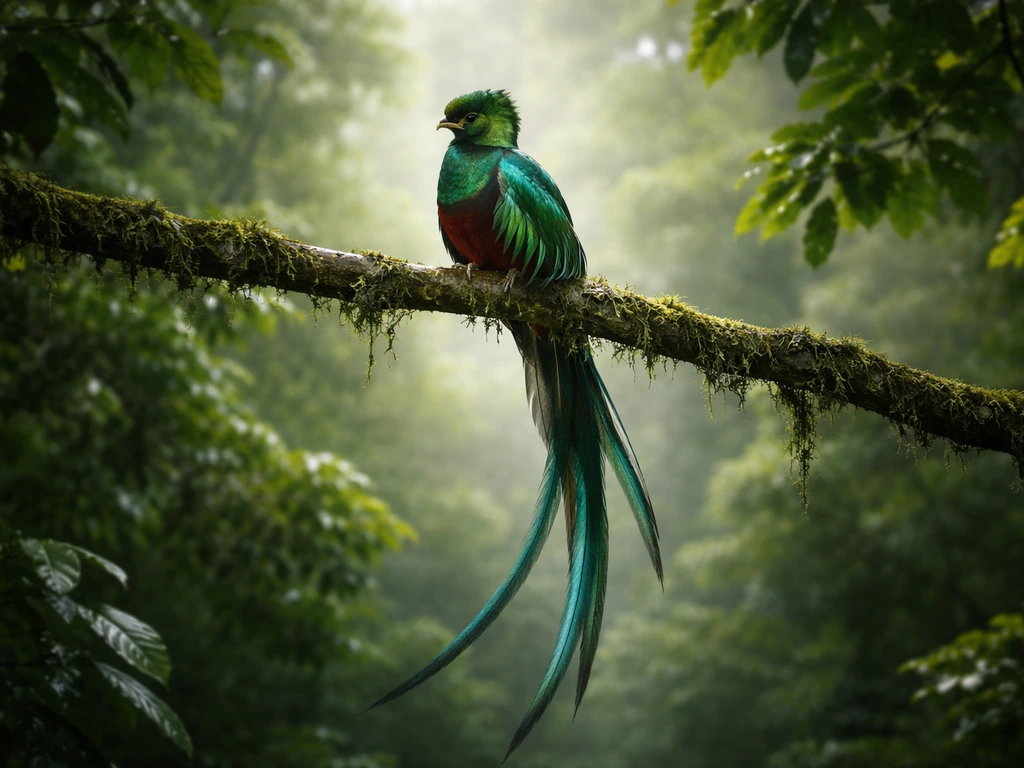
The quetzal bird symbolizes freedom, sacredness, beauty, and transformation. Those are the core meanings, and they're rooted in thousands of years of Mesoamerican tradition rather than modern spiritual trend-setting. If you're here because you're considering a quetzal tattoo, trying to understand what the bird means spiritually, or both, this guide breaks it all down practically so you can actually use the symbolism for something, whether that's choosing a design, setting an intention, or just satisfying genuine curiosity.
Quetzal Bird Meaning: Symbolism, Spiritual Significance, Tattoos

Marcus Whitley
5 Apr 2026
What the quetzal bird actually is
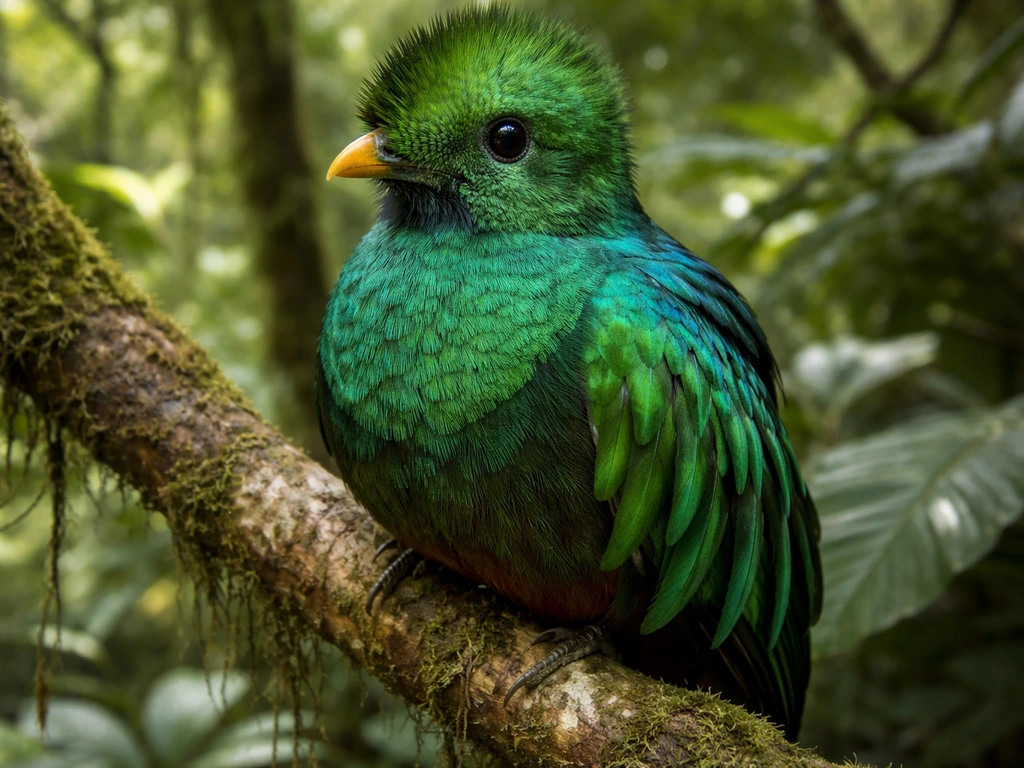
Before diving into symbolism, it helps to know what you're working with. The word 'quetzal' refers to several species of birds, not just one, spread across the Neotropics including Central and parts of South America. But when people talk about quetzal meaning, they almost always mean the resplendent quetzal (Pharomachrus mocinno), the species tied to ancient Mesoamerican culture. This bird lives in mountainous tropical forests of Central America and is genuinely one of the most visually striking animals on the planet.
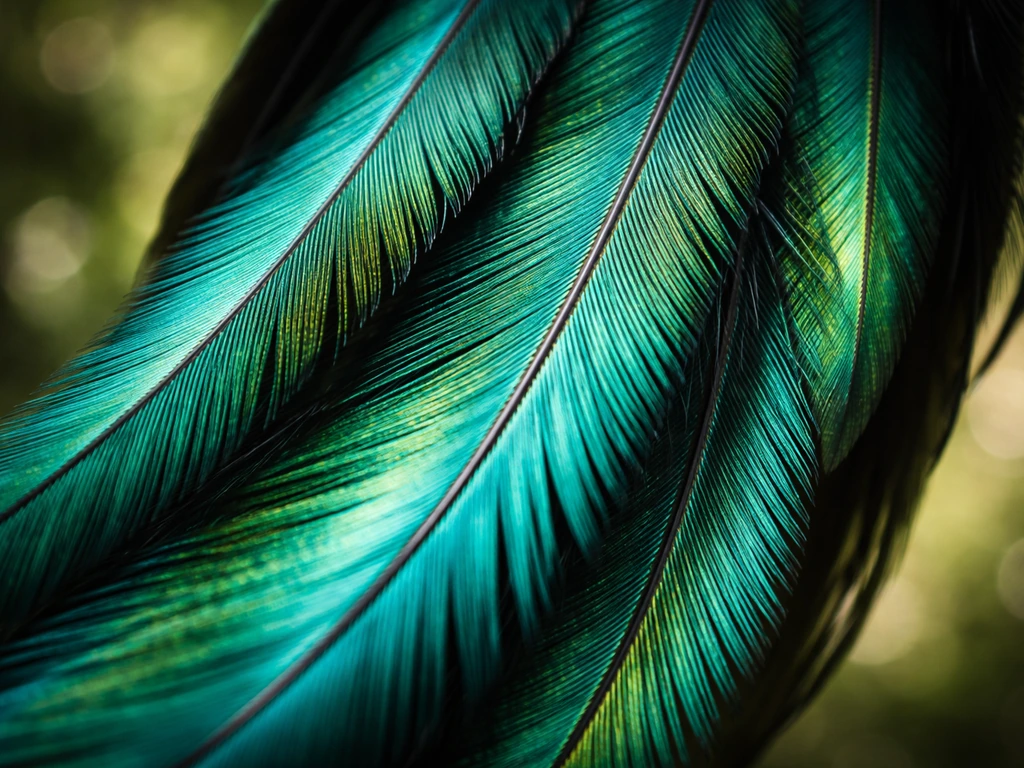
The male resplendent quetzal has iridescent green plumage that shifts color in different light, and during mating season it grows twin tail feathers that form a train up to about one meter (roughly three feet) long. PBS has documented these tail plumes reaching up to 24 inches, edged in white. Scientific American notes that the tail can be nearly twice the length of the bird's body. The female is more muted in color. So when tattoo artists or spiritual teachers reference 'the quetzal,' they're almost always picturing that male bird with the impossibly long tail, which matters because the visual is inseparable from the symbolism.
The spiritual meaning of the quetzal bird
The quetzal's spiritual meanings aren't random associations. They come directly from how the bird was treated in real historical cultures. Here's how each major theme holds up:
Freedom
This is the most commonly cited modern interpretation, and it actually has historical grounding. The resplendent quetzal is notoriously difficult to keep in captivity, reportedly dying when confined. Ancient Mesoamerican cultures used quetzal feathers as tribute but didn't cage the birds. That natural wildness became tied to freedom as a concept. If this meaning resonates with you, it's one of the more defensible ones to work with.
Sacredness and divine connection
The resplendent quetzal was considered the sacred bird of the ancient Maya and Aztec peoples. Killing it was, according to historical accounts, a capital crime. The Mayan name for the bird connected it directly to the idea of preciousness, and the feathers were literally treated as currency and tribute. This wasn't decoration. It was devotion. The sacredness meaning is probably the most historically grounded of all the quetzal's symbolic associations.
Beauty and rarity
The quetzal's iridescent plumage and elusive nature have given it a 'long history of adoration,' as National Geographic puts it. Beauty here isn't vanity. It's the idea that some things are precious enough to protect and admire rather than consume. The Maya considered the male's iridescent tail feathers worth more than gold, which tells you how seriously this meaning was held. For modern uses, this translates well into themes of appreciating rare, authentic beauty in yourself or others.
Life, moisture, and renewal
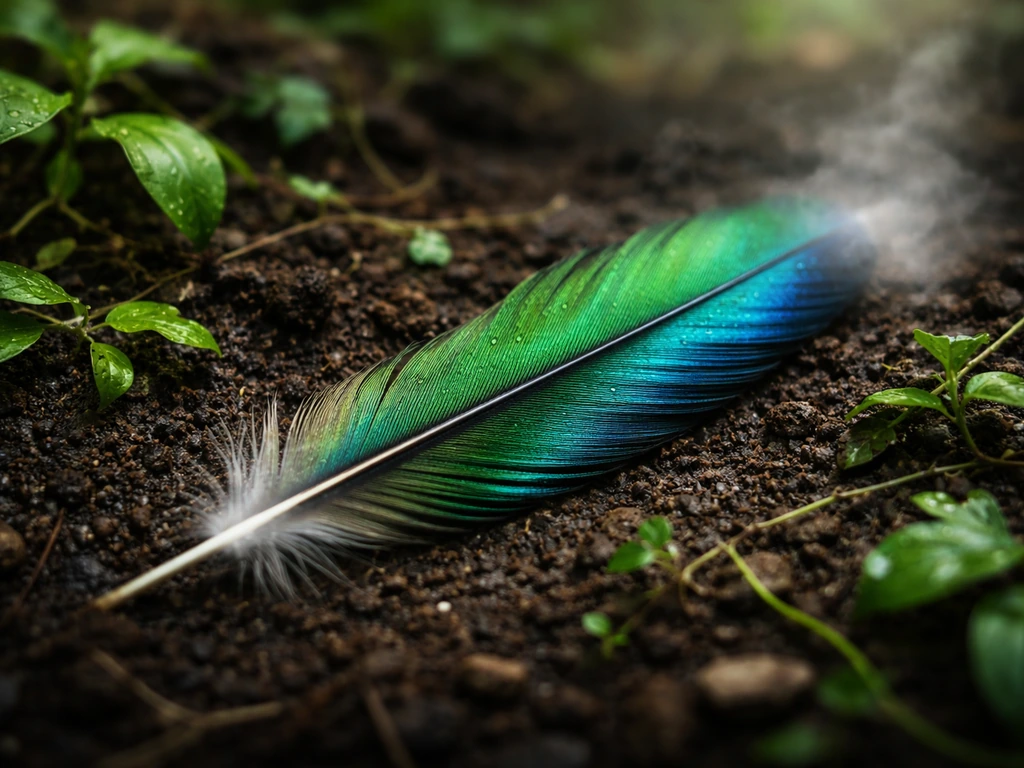
This one surprises people. The British Museum's documentation of quetzal iconography describes the bird's iridescent green feathers as symbols of 'verdant sources of life-giving moisture,' connecting the quetzal to rain, agricultural abundance, and renewal of life. This is less about personal transformation and more about ecological and cosmic cycles. It's a meaning rooted in a specific iconographic system, not a universal 'spirit animal' shorthand.
Status, rank, and spiritual authority
Vatican Museums documentation of Aztec featherwork describes quetzal tail plumes as tributes from the south used to signal 'rank, deity, or alliance.' Feather artists (amanteca) incorporated quetzal feathers into ceremonial shields and headdresses to mark the wearer as connected to divine power. This meaning translates into ideas of earned spiritual authority and alignment with something larger than yourself, not just personal power.
Where the symbolism comes from: Mesoamerican roots
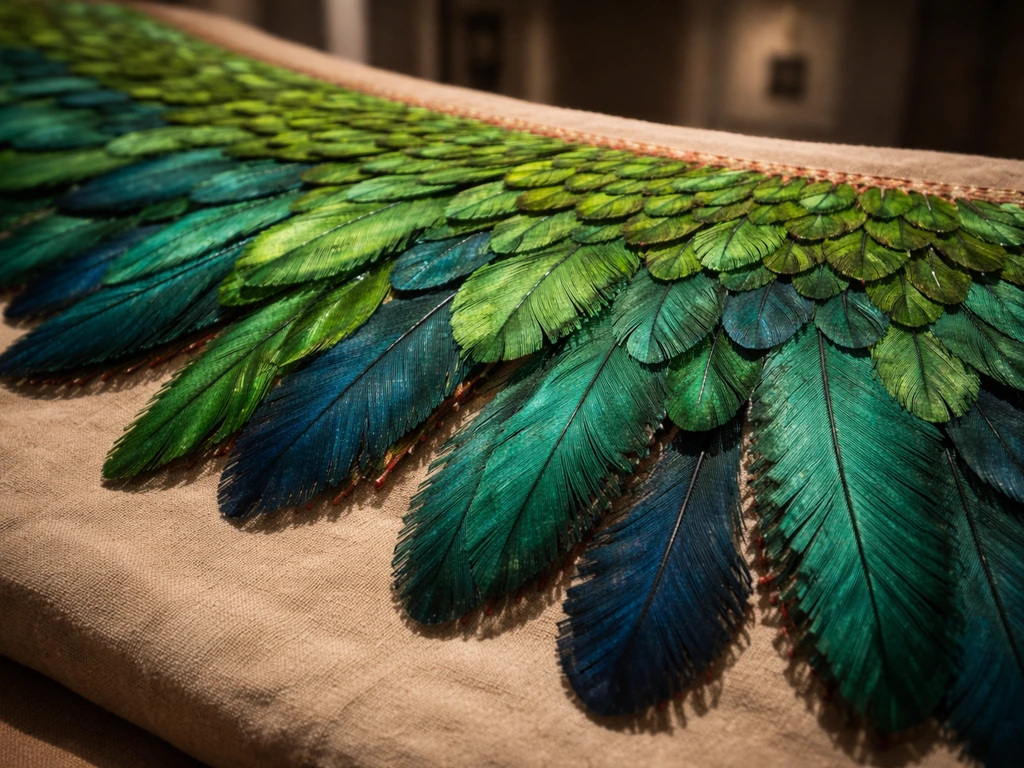
The single biggest source of quetzal symbolism is the Mesoamerican deity Quetzalcoatl, whose name literally comes from the Nahuatl words quetzalli (tail feather of the quetzal bird) and coatl (snake). The result is the 'Feathered Serpent,' one of the most important deities in the ancient Mexican pantheon.
The Met notes that Quetzalcoatl, meaning “feathered serpent,” is a principal deity and appears in monumental architecture, including at Chichén Itzá, in connection with Kukulkan Quetzalcoatl is a principal deity and appears in monumental architecture at Chichén Itzá. The Birmingham Museum of Art and Smarthistory both frame Quetzalcoatl as central to understanding how quetzal-associated iconography works within Aztec and related traditions.
The deity is tied to the sky, the cosmos, wind, and creation, which is why modern spiritual interpretations of the quetzal so often reach toward cosmic or transformative themes.
The Metropolitan Museum of Art notes that depicted feathers in ancient art signal divinity even when the physical feathers haven't survived, which tells you how deeply embedded this imagery was. The quetzal wasn't just a pretty bird in these cultures. It was a living symbol woven into theology, politics, and cosmology. Just like the Zimbabwean bird carries specific national and spiritual meaning tied to its cultural origins rather than being a generic 'power animal,' the quetzal's symbolism is inseparable from the specific Mesoamerican world that created it.
It's also worth noting that Quetzalcoatl's feathered-serpent iconography represents the union of sky (quetzal bird) and earth (serpent). That duality, the meeting of different worlds or forces, is part of why transformation and balance show up so often in modern interpretations of the quetzal. The source is real. The modern simplification, less so.
Quetzal bird tattoo meaning
Quetzal tattoos are increasingly popular, and the meanings people attach to them range from deeply intentional to almost entirely aesthetic. Both are valid starting points, but they lead to different design choices. Here's how to think through what your tattoo is actually communicating.
Common themes in quetzal tattoos
- Freedom and wildness: Often depicted in flight or with wings spread, emphasizing the bird's refusal to be caged
- Sacredness and spiritual protection: Design elements like halos, geometric patterns, or Mesoamerican motifs amplify this reading
- Beauty and rare value: A profile or full-body portrait of the male with the long tail train front and center
- Cultural heritage: Particularly meaningful for people with Central American ancestry connecting to pre-Columbian traditions
- Transformation and renewal: Often paired with water, sun, or serpent imagery to reference the Quetzalcoatl connection
- Rank and spiritual authority: Designs that incorporate featherwork patterns or shield-like compositions
How design choices shift the meaning
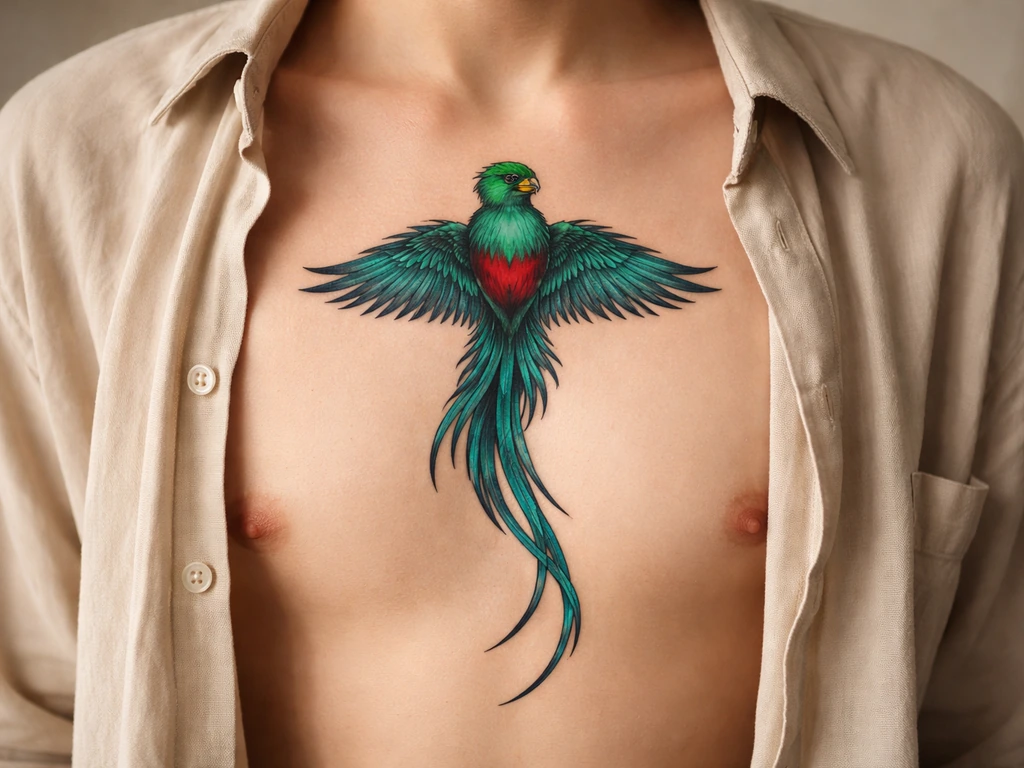
The specific design elements you choose do a lot of work. A simple profile of the quetzal reads as appreciation for the bird's beauty and rarity. A full-body composition with the tail feathers displayed and Mesoamerican geometric patterns surrounding it signals intentional cultural engagement. If you add a serpent (referencing Quetzalcoatl), you're moving clearly into deity-and-transformation territory. Color matters too: the iridescent green-to-blue shift of the plumage is often rendered in watercolor or gradient styles to capture the living quality of the feathers, while black-and-grey interpretations tend to feel more like heirloom or fine-line portraiture.
Placement and what it communicates
Placement choices carry their own layer of meaning. A quetzal on the chest, particularly over the heart, aligns with themes of vulnerability and strength (the heart area is traditionally associated with what you hold most precious, which maps well onto the quetzal's 'sacred and rare' symbolism). The back or shoulder blade works well for the long tail train because the composition needs vertical space. The forearm or calf are common for visibility and for designs that emphasize the bird in flight. Upper arm or sleeve compositions work for more complex pieces that integrate Mesoamerican geometric elements around the bird.
A note on cultural responsibility in quetzal tattoos
This is worth addressing directly. The quetzal's symbolism comes from living Indigenous Mesoamerican traditions, not from a history book that's been closed. Some tattoo artists who specialize in culturally significant work are thoughtful about this. Just as the concept of tā moko illustrates how deeply personal and culturally embedded tattoo traditions can be (and how contentious it becomes when outsiders adopt them without understanding), quetzal symbolism connected to Aztec or Maya religious iconography deserves the same kind of careful approach.
This doesn't mean you can't get a quetzal tattoo. It means you should be honest with yourself about what you're engaging with and choose a design that reflects genuine respect rather than surface-level borrowing. An artist who asks questions about your intention is doing their job well.
Picking the right meaning for you
People come to quetzal symbolism from very different places, and a few quick questions can help you clarify which angle actually applies to you.
- Are you drawn to the quetzal because of personal or ancestral connection to Mesoamerican culture? If yes, lean into the specific cultural and mythological meanings (Quetzalcoatl, featherwork traditions, sacredness) rather than generic 'spirit animal' framings.
- Are you drawn to the quetzal's appearance first and looking for meaning to match? If yes, freedom and beauty are both legitimate and visually expressive themes for a tattoo.
- Are you working with the quetzal in a spiritual practice or ritual context? If yes, the life-giving moisture and renewal symbolism from the Mesoamerican iconographic tradition is richer and more grounded than 'transformation' used as a catch-all.
- Are you getting a tattoo or just exploring symbolism? Tattoo choices need to account for design, placement, and artist. Symbolism alone doesn't determine a good tattoo.
- Do you want something that reads universally, or something that has depth for people who know? A simple quetzal portrait reads beautifully to anyone. A composition incorporating Quetzalcoatl imagery or featherwork patterns requires more context to be understood.
If you're exploring bird symbolism more broadly, it helps to see how other culturally significant birds handle similar layers of meaning. The bennu bird from ancient Egyptian tradition carries its own cosmological weight, deeply embedded in a specific religious system rather than floating as a generic symbol, which is a useful comparison for how to think about the quetzal.
Common misconceptions about quetzal symbolism
A lot of what circulates online about quetzal meaning is either too vague or outright incorrect. Here are the ones worth correcting:
"The quetzal universally means freedom"
Freedom is a modern projection onto the bird's biology (its difficulty surviving in captivity). It's not a primary meaning in ancient Mesoamerican tradition, where the quetzal was sacred, precious, and associated with cosmic deities, not personal liberation. It's a valid contemporary interpretation, but treating it as the definitive or original meaning is inaccurate.
"Any colorful bird with a long tail is a quetzal"
No. As Wikipedia notes, 'quetzal' refers to multiple species across two genera. Tattoo designs that aren't clearly based on the resplendent quetzal may actually be depicting a different bird with a completely different cultural profile. If you're after specific symbolism, make sure your reference image is actually Pharomachrus mocinno.
"The long tail feathers are always present"
The dramatic tail train only appears during mating season in adult males. Year-round depictions of the long tail (which is what almost every quetzal tattoo shows) are stylized rather than naturalistic. That's fine for a tattoo, but it's worth knowing that you're choosing a specific, seasonally-specific feature of the bird and making it permanent and context-free.
"Quetzal symbolism is interchangeable across cultures"
It's not. The British Museum is clear that quetzal feather symbolism operates within a specific iconographic system tied to 'verdant life-giving moisture' and cosmic order in Mesoamerican contexts. When internet content lifts these meanings and presents them as universal spiritual power, it flattens a rich tradition into a vague personal-growth metaphor. The quetzal isn't a generic 'power bird' the way some listicle content treats it.
"Getting a quetzal tattoo with Aztec patterns is neutral"
Incorporating deity-linked iconography (Quetzalcoatl patterns, featherwork shield imagery, Aztec glyphs) is not neutral design. These are symbols with ceremonial and religious significance to living communities. This doesn't prohibit the tattoo, but it does make the design intentional in ways that deserve thought. Cultural appropriation in tattooing isn't about policing aesthetics. It's about whether you understand what you're putting on your body and whether that understanding is honest. Just as the Zazu bird means something very specific in its original cultural context before it became a cartoon character, the quetzal's sacred iconography carries meaning that predates and exceeds any modern tattoo trend.
A quick comparison: quetzal symbolism by context
| Context | Primary Meaning | What It's Based On | Reliability |
|---|---|---|---|
| Ancient Mesoamerican (Maya/Aztec) | Sacred, precious, life-giving, divine rank | Historical records, featherwork tribute systems, deity iconography | Very high |
| Quetzalcoatl mythology | Cosmic duality, transformation, sky-earth union | Religious texts, art, Nahuatl etymology | High |
| Modern spiritual use | Freedom, beauty, rare value, transformation | Mix of historical biology and contemporary projection | Moderate (with caveats) |
| Tattoo symbolism (general) | Whatever the wearer intends, anchored by design | Personal intention plus visual elements chosen | Varies by design |
| Generic internet content | Universal power, good luck, balance | Repackaged mythology without cultural specificity | Low |
What to do with all of this
If you're approaching the quetzal as a spiritual symbol, the most meaningful framework comes from its Mesoamerican roots: sacredness, life-giving beauty, and cosmic connection. Use those as your foundation and build from there based on what personally resonates. If you're planning a tattoo, treat the design choices (species accuracy, tail treatment, accompanying symbols, placement) as decisions that directly shape what the piece communicates, not just how it looks.
And if you're someone drawn to bird symbolism more broadly, the quetzal is a good entry point into understanding how birds become symbols in the first place. For comparison, looking at how a completely different kind of bird carries meaning, like the junco bird in North American folk tradition, shows how much context shapes what any bird ends up representing.
The bottom line: the quetzal's meaning is rich, specific, and worth taking seriously. You don't have to be an academic or have Mesoamerican heritage to engage with it thoughtfully. You just have to be willing to go one layer deeper than 'freedom bird with pretty feathers,' which, given that you read this far, you clearly already are.
FAQ
How can I confirm I’m using the right “quetzal bird meaning” for a tattoo (not just any green bird)?
Start with species accuracy. “Quetzal” can refer to multiple species, so ask your artist what reference image they are using, and whether it clearly matches the resplendent quetzal (Pharomachrus mocinno), especially the male’s long tail train and iridescent green-to-blue sheen.
Is the “long tail” always meant in quetzal tattoos, or is it okay to omit it?
It depends on which symbolism you want to prioritize. The tail train is the visual cue that ties most designs to the male resplendent quetzal and its cultural iconography, but smaller or simplified designs can still work if you accept that you are choosing a less specific, more aesthetic interpretation.
What’s the difference between the quetzal meaning as a spiritual symbol versus a cultural or religious icon?
Spiritual symbolism usually emphasizes personal resonance, like cosmic connection or transformation. Cultural or religious iconography is closer to a specific ceremonial system, so if your design includes deity-linked elements, treat it as meaning-bearing rather than “universal power” decor.
If I want “freedom” as my personal intention, how should I incorporate it without making it the only meaning?
Use freedom as a secondary layer instead of the core claim. A safer approach is to ground the design in sacredness and preciousness first (species-accurate bird, respectful placement), then let “freedom” be the personal intention you set, not the historical origin of the symbol.
Are black and grey quetzal tattoos “less authentic” than colorful ones?
Not necessarily, but they shift the emotional register. Color gradients often aim to replicate the iridescence that the bird is known for, while monochrome styles tend to read as heirloom or fine-line portraiture. If color is reduced, decide whether you still want the “life/renewal” mood or you’re aiming for a more subdued, architectural look.
What should I avoid if I’m concerned about cultural appropriation in quetzal tattooing?
Avoid designs that mix Mesoamerican deity or glyph elements loosely while claiming they are “just aesthetics.” If you include Quetzalcoatl-related cues, ask your artist what each element is referencing, and choose a concept you can explain in a respectful, informed way.
Is it a mistake to get a quetzal tattoo that looks “year-round” accurate to the bird’s seasonality?
It can be a factual mismatch, but it’s not automatically wrong for tattoo art. The key is intention. If your artist depicts the male tail train year-round, understand that it is a stylized convention, and decide whether you want that stylization to represent the bird’s iconographic role rather than a literal seasonal moment.
What placement is best if I want the tattoo to emphasize “what I hold precious” or sacredness?
Many people choose the chest, especially over the heart, because it visually anchors “preciousness” to the area associated with what you value most. For a vertically oriented composition that foregrounds the tail, shoulder blade or back placement can better fit the train without crowding the design.
How do I decide between a simple quetzal profile and a full Mesoamerican patterned composition?
A profile usually reads as appreciation for rarity and beauty. A full composition with surrounding geometric patterns signals intentional cultural engagement. If you want the meaning to feel more personal and less icon-system focused, keep it simpler; if you want earned-spiritual-authority or cosmic alignment, consider adding context elements carefully and deliberately.
Can I combine a quetzal tattoo with other bird symbolism (like “power bird” ideas) without losing the meaning?
Yes, but treat it as a layered intention, not a mash-up. If you add another bird with its own independent cultural meaning, decide what the combined narrative is (for example, renewal plus earned authority), and avoid blending symbols in ways that flatten either tradition into generic “spiritual power.”
How should I talk to tattoo artists about quetzal meaning so I get a design that matches my intent?
Bring three specifics: the species you want to reference (resplendent quetzal), the element you consider central (tail train, iridescence, or deity-linked iconography), and where you want the meaning to land (sacredness, life-giving beauty, cosmic connection). A good artist will ask clarifying questions and suggest references that match your goals.
Next Article
Perched Bird Meaning, Literal, Symbolic, Usage, Examples
Perched bird meaning: clear literal and symbolic definitions, usage differences, examples, and quick reference.