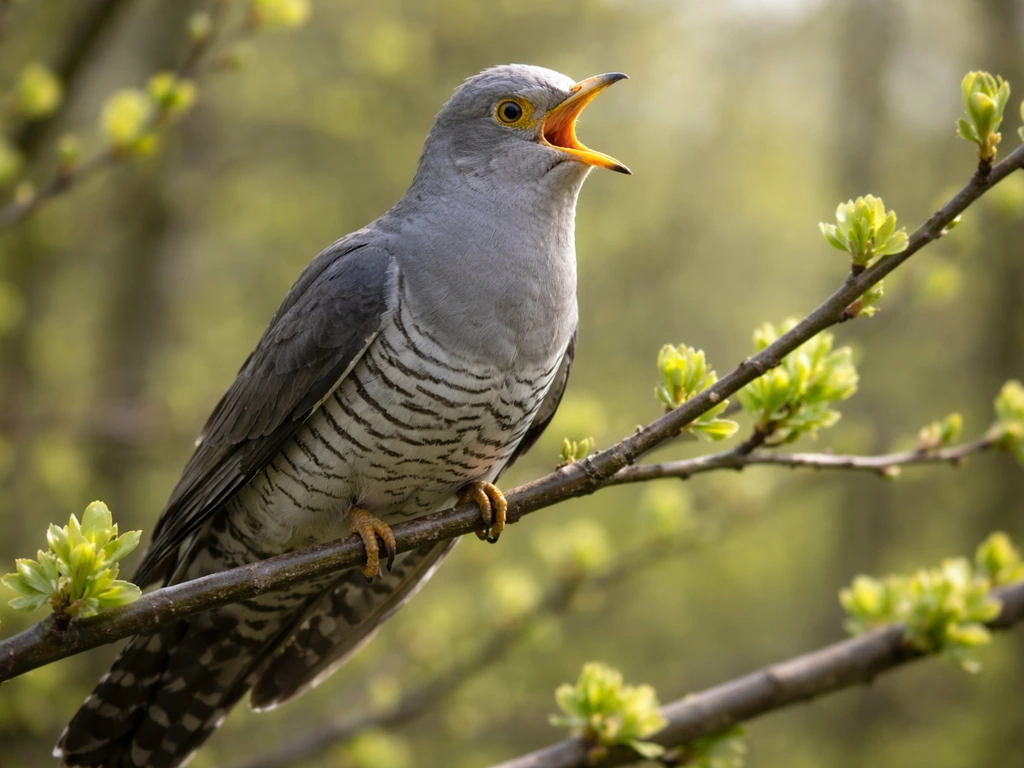
When someone says "coo coo bird" or "cooing bird," they are almost always doing one of two things: describing a real bird that makes a soft, low cooing sound (most often a dove or pigeon), or referencing a folk and cultural tradition where "coo-coo" is a nickname for the cuckoo. Which meaning is intended depends almost entirely on context, and once you know what to look for, it is surprisingly easy to sort out. Here is a direct breakdown of everything you need to know.
Coo Bird Meaning: What Cooing Bird Usually Refers To

Marcus Whitley
15 Apr 2026
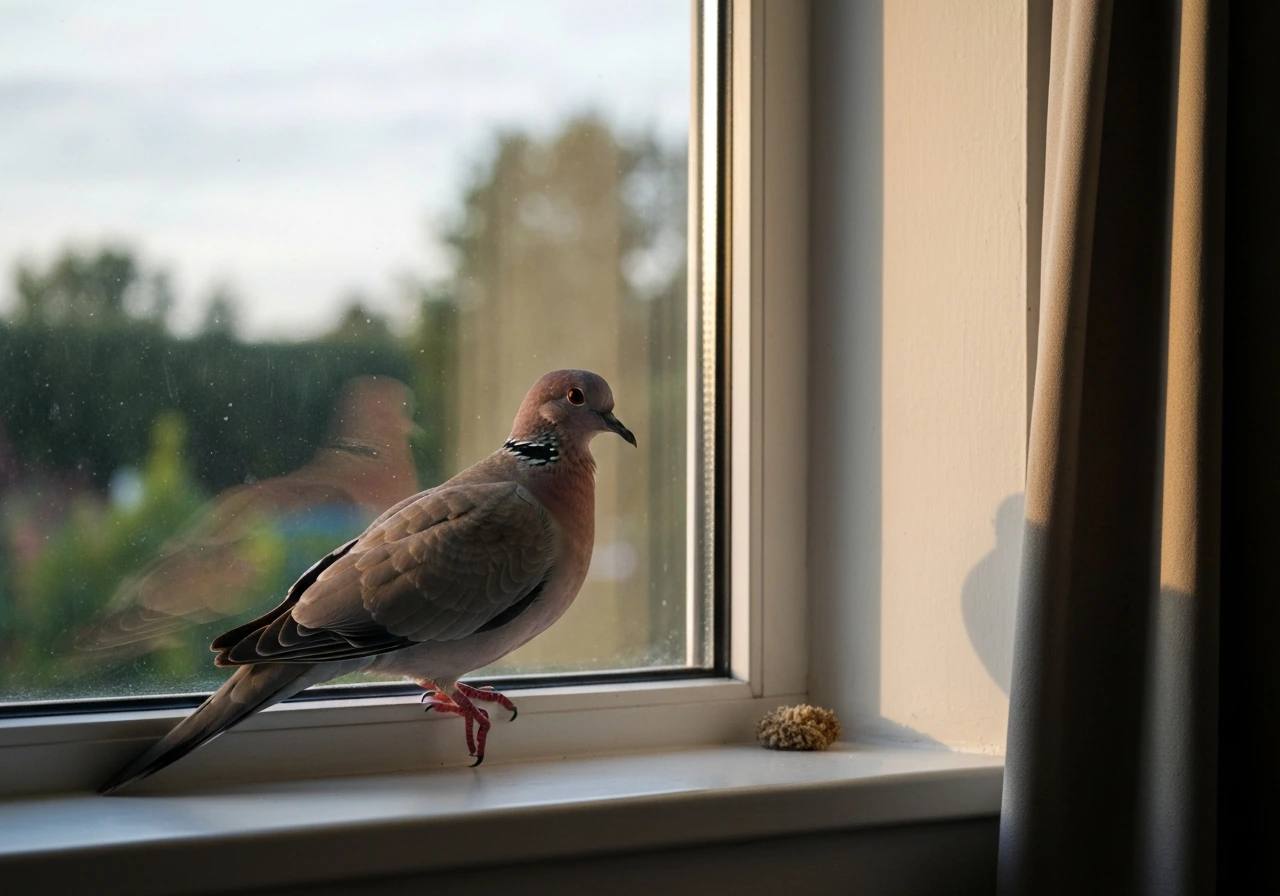
What "coo coo bird" and "cooing bird" actually mean in plain English
"Coo" is an imitative word, meaning it sounds like the sound it describes. Merriam-Webster defines it as a low, sweet murmuring sound made by a dove or pigeon. When you hear someone say "cooing bird," they are almost certainly picturing that gentle, rhythmic sound, the one that drifts through a quiet morning or filters in from a windowsill. Dictionary.com defines "cooing" simply as making those coo sounds, and Vocabulary.com reinforces that the word is onomatopoeic: the word itself mimics what the bird does.
"Coo coo bird" is a slightly different animal, so to speak. The doubled syllable, "coo-coo," has a long folk music history where it serves as a name for the cuckoo bird. Smithsonian Folkways records include a track literally titled "Coo-Coo Bird (Cuckoo Bird)," and Wikipedia lists "The Coo-Coo Bird" as an alternate title for the traditional Appalachian folk song more commonly called "The Cuckoo." So while "cooing bird" is a descriptive phrase about sound, "coo-coo bird" in a song, rhyme, or rural American storytelling tradition is almost always a roundabout way of saying cuckoo.
Which real birds people usually mean when they say "coo"
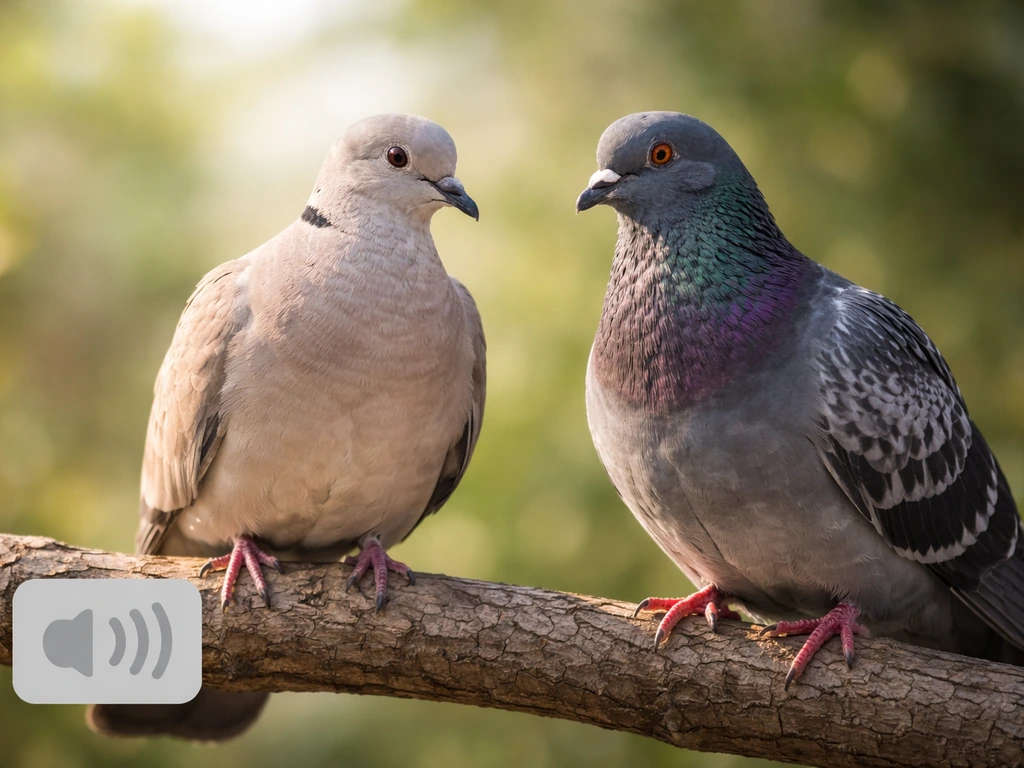
In natural, everyday conversation, "cooing bird" defaults to doves and pigeons. Cambridge Dictionary defines coo as the low, soft sound made by birds such as doves and pigeons when they coo Cambridge defines “coo” as the low, soft sound made by birds such as doves and pigeons when they coo. Both produce that characteristic low, rolling vocalization that gave the word its shape. Mourning doves, rock pigeons, ringneck doves, and collared doves are all classic examples. If you are standing in a park, a garden, or near a city building and you hear what someone calls "cooing," it is almost certainly one of those species.
The cuckoo is different. Cuckoos do make a two-note call that sounds like "coo-coo" or "ku-koo," which is exactly why they lend their name to cuckoo clocks and folk songs. The kuku bird meaning connects directly to this tradition, since "kuku" is simply another regional spelling of the same imitative name. So when the doubled syllable appears, especially in music, poetry, or children's content, the cuckoo is the more likely referent than a dove.
A few other birds coo as well, including some species of owl, certain ground doves in tropical regions, and even some pigeons found in South Asia. If you are reading something with a South Asian or Middle Eastern cultural setting, it is worth knowing that the surkhab bird meaning comes from a tradition where particular bird calls, including cooing-adjacent sounds, carry deep poetic and romantic weight. Context and geography matter when you are trying to pin down exactly which bird is being described.
How to figure out which bird is meant from the context around you
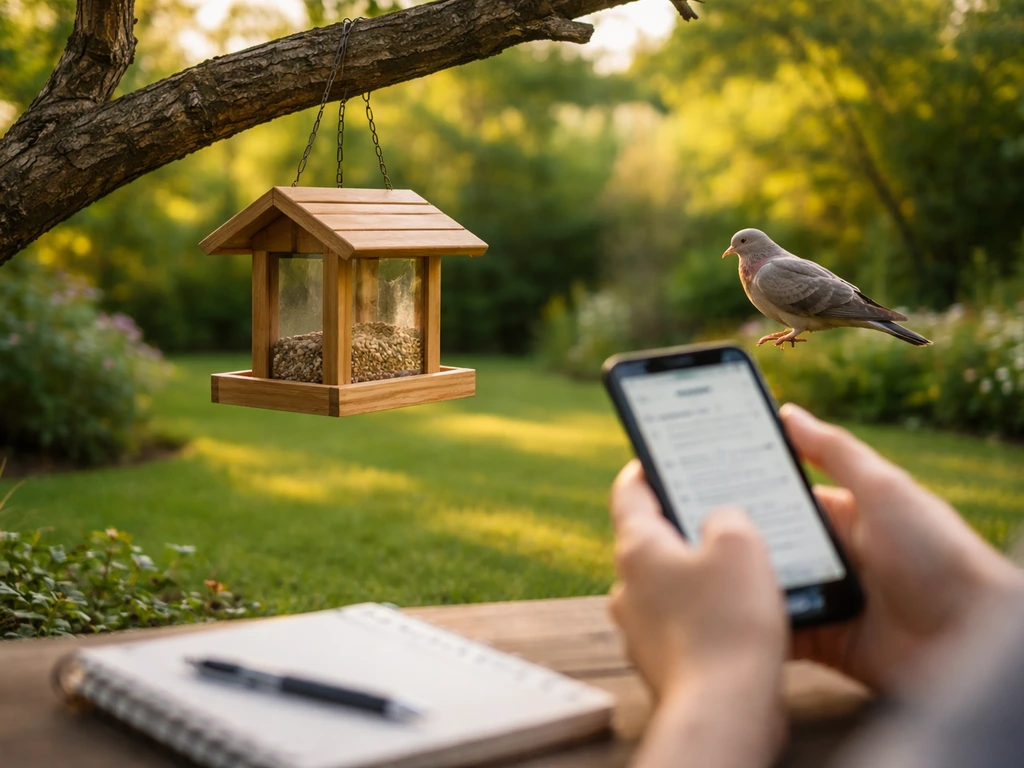
This is where being a careful reader pays off. Here are the main context cues to watch for:
- Nature writing, captions about wildlife, or someone describing their backyard: almost certainly a dove or pigeon.
- A folk song, Appalachian ballad, children's rhyme, or a lyric with the doubled syllable "coo-coo": almost certainly the cuckoo.
- A romantic scene, a lullaby, or an affectionate description of someone's voice: figurative cooing, meaning soft and tender speech, not a specific bird at all.
- A cultural or mythological text from South or East Asia: likely a dove or turtle dove, both of which carry strong symbolic weight in those traditions.
- A story or poem where the bird signals a season changing (especially spring): strongly suggests the cuckoo, since its arrival has marked the beginning of spring across Europe and Asia for centuries.
If the phrase appears in a social media caption under a photo of a bird, look at the image first. Most of the time the species is right there and the caption is simply describing what the bird sounds like. If you are in a song lyric with no image, the grammar helps too. "The cooing bird outside my window" is descriptive (likely a dove). "The coo-coo bird is calling" with a repeated syllable and seasonal language is almost certainly the cuckoo tradition.
What cooing birds symbolize across cultures
The symbolism tied to cooing birds is remarkably consistent across cultures, which makes it one of the easier bird symbols to interpret. The soft, unhurried quality of the sound itself seems to drive the meaning: wherever you find cooing birds in cultural tradition, you tend to find associations with peace, love, home, and calm.
Peace and calm
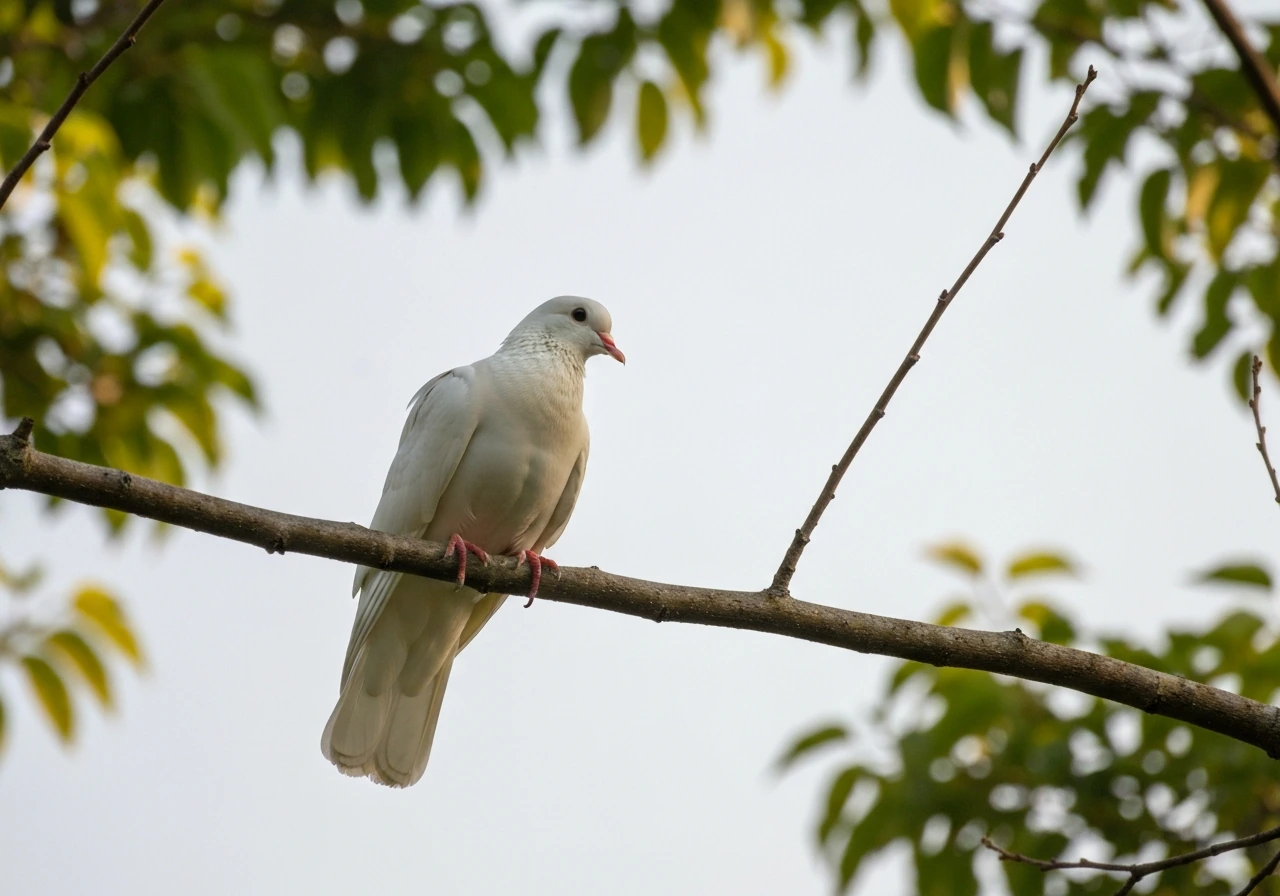
The dove is the most universally recognized peace symbol in the world, and its cooing sound reinforces that association. In Christian tradition, the dove appeared at the baptism of Jesus as a symbol of the Holy Spirit, and the image of a dove cooing in a garden became shorthand for divine peace and reconciliation. In ancient Greek and Roman mythology, the dove was sacred to Aphrodite and Venus, goddesses of love, so its cooing carried romantic as well as peaceful connotations. Even today, hearing doves coo is widely described as calming, and the sound is frequently used in meditation recordings and sleep music for exactly that reason.
Love and romance
In many cultures, cooing doves are specifically paired with romantic love. Hindu tradition associates the dove and its gentle call with Kamadeva, the god of love, making a cooing bird in a poem or story a signal that love or longing is the theme. In Native American traditions, the mourning dove's coo is often linked to the spirit of a loved one calling out, blending grief and love together in a single sound. The sankofa bird meaning from West African Akan tradition speaks to a different but related idea: the importance of returning to what you love and value, and cooing birds in West African storytelling can carry that same sense of longing and return.
Home and arrival
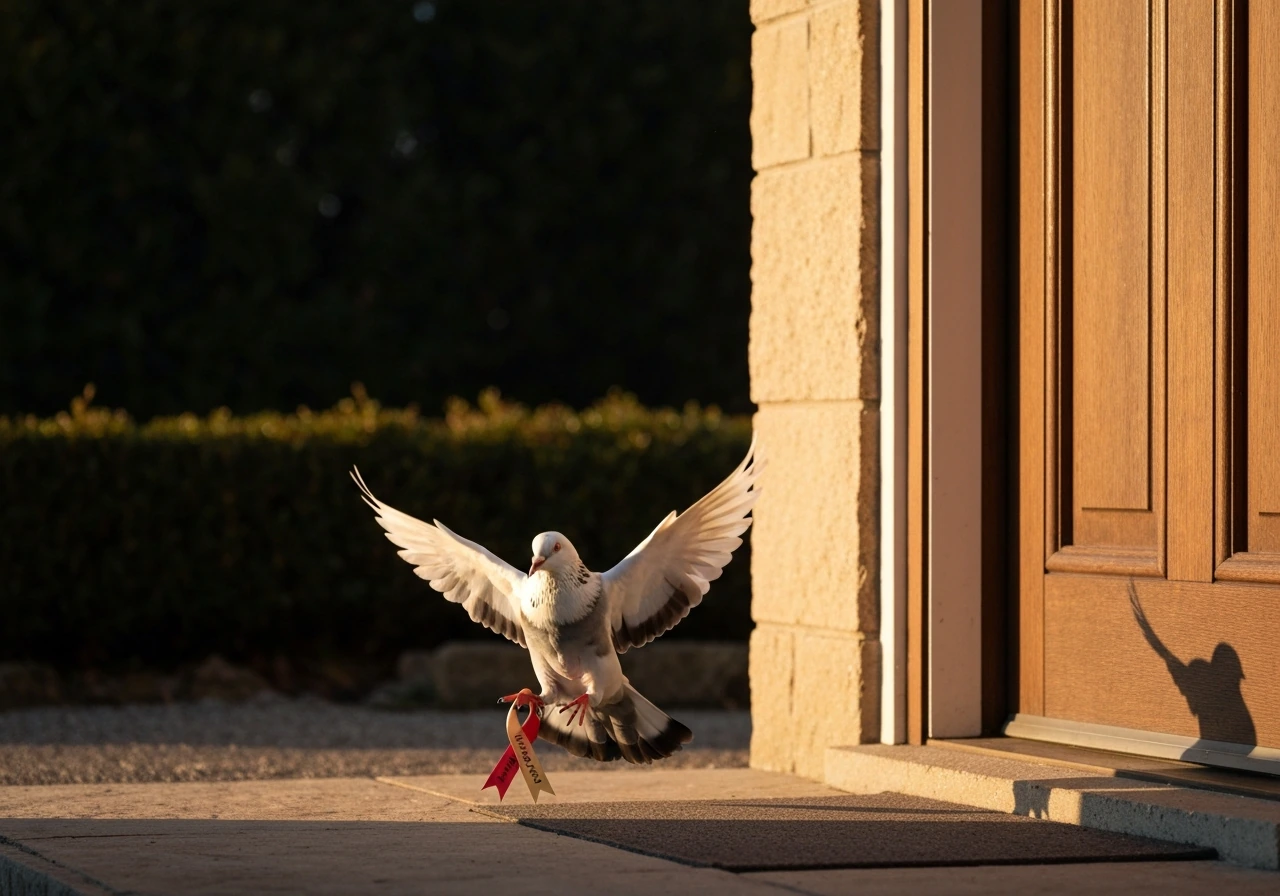
Because pigeons (a cooing bird) have been used as messenger birds for thousands of years and have a legendary ability to find their way home, cooing birds also symbolize homecoming and safe return. Hearing a dove or pigeon settle and begin cooing is, in many folk traditions across Europe and Asia, considered a sign that a traveler will return safely or that the home is protected. In Japanese culture, the cooing of doves near a shrine or temple is considered a favorable omen, signaling harmony and continuity.
Fertility and new life
In several Mediterranean and Middle Eastern cultures, cooing doves were closely linked to fertility and the nurturing of new life. Their habit of building nests close to human dwellings and their attentive care of eggs and young made them symbols of domesticity and abundance. The Britannica Dictionary notes that even humans, particularly parents talking softly to babies, are described as "cooing," and this extension of the word into human behavior reflects how deeply the sound is associated with tenderness and the care of the young.
How "cooing bird" shows up in sayings, literature, and everyday speech
In literature, cooing birds most often set a mood rather than carry a plot point. When a Romantic-era poet places a cooing dove in a pastoral scene, the bird is doing atmospheric work: it signals that the setting is peaceful, possibly melancholy, and probably connected to love or longing. Shakespeare used the turtle-dove (a cooing species) repeatedly as a symbol of faithful love, and that association stuck through centuries of English-language writing.
In everyday speech, "cooing" most often appears as a verb describing human behavior. Saying someone is "cooing over a baby" means they are making soft, affectionate, wordless sounds. Saying two people are "cooing at each other" means they are speaking in that gentle, private-world tone that new couples use. This is a direct metaphorical borrowing from the bird's sound, and it carries zero ambiguity in modern English: it always means soft and affectionate, never harsh or aggressive.
In folk music, the "coo-coo bird" tradition is its own distinct thread. The folk songs in this tradition, recorded from Appalachia to the British Isles, use the coo-coo bird's call as a harbinger of spring and often as a warning: the cuckoo's arrival signals a change of season, sometimes joyful, sometimes bittersweet. Interestingly, the cuckoo bird meaning in symbolic terms often carries a hint of disruption or change alongside the seasonal announcement, which is why coo-coo bird songs so often have a wistful or cautionary tone even when they sound cheerful.
Superstition also plays a role in how cooing birds appear in language. Across parts of Africa and the Middle East, specific bird calls, including cooing sounds, are interpreted as omens or messages. The superstition around the thick-knee bird also known as dikkop is a good example of how a bird's call can accumulate layers of cultural meaning beyond the literal sound, and similar dynamics apply to cooing birds in traditions around the world.
Phrases you can actually use and mistakes to avoid
Here are natural, correct ways to use these terms in sentences:
- "I woke up to a cooing bird outside my window, probably a mourning dove." (Literal, descriptive, clearly a dove/pigeon context.)
- "The old folk song talks about the coo-coo bird calling in spring, which is really just the cuckoo announcing warmer weather." (Folk/song context, cuckoo is the right read.)
- "She was cooing over her new nephew, completely enchanted." (Figurative, human behavior, soft affectionate speech.)
- "In many traditions, a cooing dove near your home is seen as a symbol of peace and protection." (Symbolic/cultural context, dove is the referent.)
- "The poem opens with a cooing bird in the garden, setting a tone of quiet longing before the narrator begins." (Literary, atmospheric use.)
The most common misinterpretation is assuming "coo-coo bird" always means a dove or pigeon when a folk song is involved. It does not. In song and folklore, coo-coo is almost always the cuckoo. The reverse mistake also happens: some readers assume "cooing" in a romantic or affectionate context is about a specific bird, when it is actually just a metaphor for soft speech. If the sentence has a person as the subject ("she was cooing"), it is figurative. If the sentence has a bird or a natural setting as the subject ("a cooing bird settled on the branch"), it is literal.
One more thing worth flagging: some symbolic bird terms that look or sound similar can trip people up. The kaur bird meaning and the cuntimal bird meaning are examples of regional bird names that carry their own distinct symbolic traditions and should not be conflated with the cooing dove or cuckoo tradition just because they involve bird sounds. Similarly, the sak yant bird meaning comes from a Thai sacred tattoo tradition with a completely different symbolic framework. Every bird term has its own cultural container, and cooing birds are no exception.
The short version if you need a quick answer
| Phrase | Most likely bird | Most likely meaning |
|---|---|---|
| Cooing bird (nature context) | Dove or pigeon | Literal bird sound; calm, peaceful, often romantic setting |
| Coo-coo bird (song or folk context) | Cuckoo | Seasonal announcement, spring arrival, sometimes bittersweet change |
| Cooing (human subject) | No specific bird | Figurative: soft, affectionate, tender speech |
| Cooing dove (symbolic/cultural) | Dove | Peace, love, homecoming, fertility, divine blessing |
The term "coo coo bird" or "cooing bird" is genuinely flexible, but it is not vague once you know what to look for. Start with the subject (bird or person?), then check the setting (nature, song, or affectionate scene?), and you will have your answer in seconds. The symbolism that flows from it, peace, love, home, calm, is one of the most consistent in bird language across human cultures, which makes it a genuinely useful phrase to understand and use well.
FAQ
If I see “coo coo bird” in a children’s rhyme, should I assume it means a cuckoo or a dove?
Most often it points to the cuckoo tradition, especially if the rhyme emphasizes a repeated two-note call. If the line also mentions daytime stillness, a garden window, or a single low “coo,” it may be a dove or pigeon instead, so scan for cues like repetition, seasonality, and where the bird is “present” in the scene.
How can I tell the difference between literal “cooing” and “cooing” used for people?
Use the subject. If the subject is a person or a relationship, it is figurative (soft, affectionate sounds or tender talk). If the subject is a bird, branch, tree, or natural setting, it is literal. A quick check is whether the sentence describes sound production in the air (bird) or communication style (people).
Does “cooing bird” always imply peace symbolism, even in dark or ominous stories?
Not always. While cooing commonly signals calm, home, love, or longing, literature can flip the mood. If the surrounding text mentions warning, loss, or an approaching seasonal change, the symbol may be used as atmosphere that signals melancholy or disruption rather than comfort.
Are there cases where “coo” could be confused with a different bird call?
Yes. Some owls and regional pigeons can produce coo-like tones, and people often describe many similar calls with the generic word “coo.” If you have only the phrase in writing, rely on wording patterns: dove and pigeon descriptions tend to sound smooth and continuous, while cuckoo references often involve a clearer “two-syllable” repetition.
When “coo coo” is written as “cuckoo,” how strict is the spelling?
Spelling is usually less important than structure and context. “Coo-coo,” “ku-koo,” and similar imitations often refer to the cuckoo when they appear as repeated notes in song, poetry, or spring-season stories. If the text frames it as a bird nickname within folk tradition, the spelling variation still usually signals cuckoo.
What is the fastest way to interpret “cooing bird” in a social media post?
Look at the image first, then match the caption grammar to the subject. If the photo shows a dove or pigeon, the caption is almost certainly describing the sound. If there is no bird shown and the caption is poetic or seasonal, the phrase may be symbolic or referencing the cuckoo folk motif, not necessarily the literal species.
If a writer says “the cooing was in the distance,” does that change the meaning?
It can. Distance cues can make dove or pigeon cooing feel more natural and ambient, since those calls are often described as drifting through neighborhoods. For cuckoo references, writers more often spotlight timing (spring, hours, the call “arriving”), because the cultural tradition emphasizes the cuckoo’s call as an event rather than background noise.
Can “cooing bird” mean “romantic love,” or is it only about tenderness?
It can include both, but romantic love is more likely when the writing includes longing, waiting, pairing, or devotional themes connected to affection. Tenderness alone usually appears with babies, caretaking, or gentle human speech, while romance shows up through motifs like devotion, yearning, or courtship imagery.
Should I assume “cooing” in human speech means the same thing every time?
Generally yes, it means soft and affectionate, but the intensity can vary by context. “Cooing over a baby” is caretaking, “cooing at each other” is usually flirting or new love, and “cooing” in a heated argument is rare and likely ironic, so check for tone markers like sarcasm or contrast words.
What common mistake should I avoid when reading bird-sound phrases in folklore?
Do not generalize “coo-coo” to always mean a dove or pigeon. In folk music and rhymes, repeated “coo-coo” is commonly a cuckoo marker, while “cooing bird” in everyday descriptive writing more often means doves or pigeons. Checking whether the text is about a specific recurring call versus general ambient sound usually clears it up fast.
Next Article
Cuckoo Bird Meaning: Call and Sound Explained Simply
Cuckoo bird meaning explained: what its call sounds like, plus seasonal omens, luck lore, and how to identify it.