The cuckoo bird means different things depending on how you ask. As a real bird, the cuckoo (most famously the Common Cuckoo, Cuculus canorus) is a slender, hawk-like migratory bird best known for its two-note call and its sneaky reproductive strategy of laying eggs in other birds' nests. As a symbol, hearing the cuckoo's call has meant everything from the arrival of spring to a countdown of years left in your life, depending on which folk tradition you grew up with. And in everyday language, 'cuckoo' has taken on a life of its own as a word for someone who's lost the plot entirely. This article walks through all three layers so you leave with a clear, grounded answer.
Cuckoo Bird Meaning: Call and Sound Explained Simply

Marcus Whitley
3 Apr 2026
What the cuckoo bird actually is
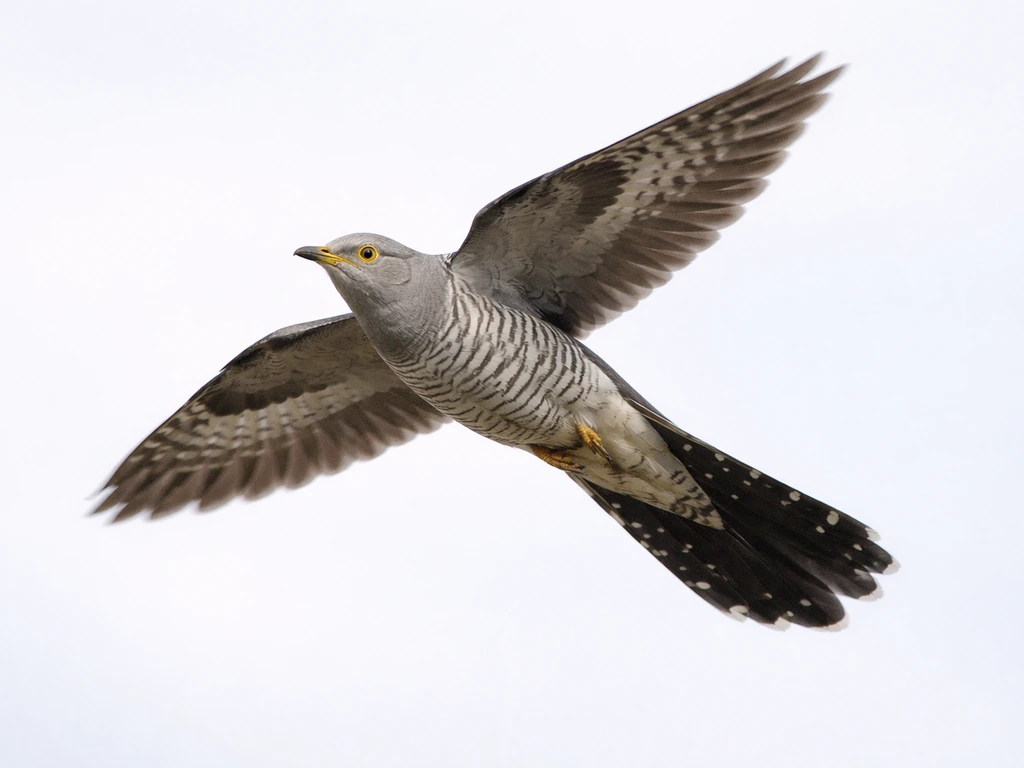
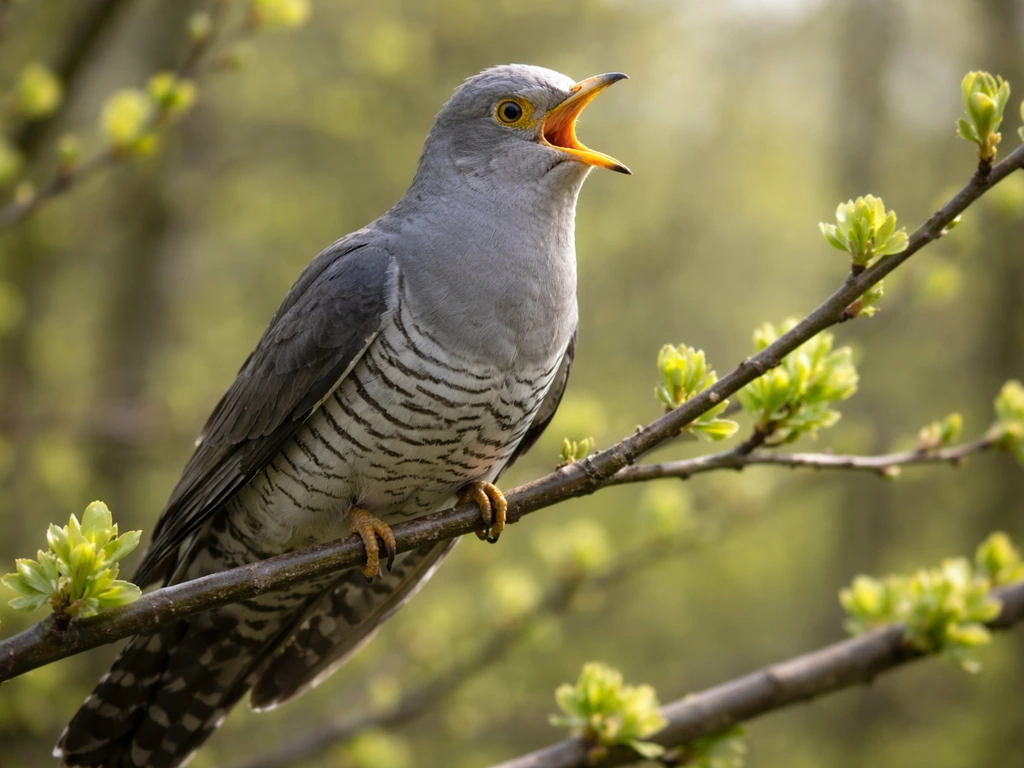
The Common Cuckoo is a medium-sized bird, roughly the size of a small dove, with a barred grey-and-white underside and a long tail that gives it a hawk-like silhouette in flight. It's a migratory species that spends winters in sub-Saharan Africa and arrives in Europe and Asia in spring, which is exactly why its call became so tangled up with seasonal symbolism. You almost never see one. In the Reddit discussion of “What common birds have you never seen?
| r/UKBirds,” one user shares a first-hand account of having “never seen a … cuckoo,” matching the experience that cuckoos can be very hard to spot You almost never see one. .
The British Trust for Ornithology explicitly points out that cuckoos are 'rarely seen,' meaning that for most people, the call is the entire experience of encountering this bird.
The cuckoo's most defining behavioral trait is brood parasitism: females lay their eggs in the nests of other bird species, leaving those hosts to raise the cuckoo chick. The cuckoo chick then ejects any other eggs or young from the nest, monopolizing the foster parents' attention. It's this behavior, rather than any malice, that gave the cuckoo its complicated cultural reputation as a symbol of deception and intrusion. Worth knowing: there are cuckoo species all over the world, including the Yellow-billed Cuckoo across North America, so 'cuckoo bird' doesn't always refer to the same species depending on where you are.
What the cuckoo call sounds like (and which version you're hearing)
The iconic call is a clean, far-carrying two-note 'cuck-oo,' repeated several times in a row. Males produce it during the breeding season as an advertising signal, basically announcing their presence to females and rival males. Scientifically, this is described as a two-note 'cu-coo' call, though a three-note version ('cu-cu-coo' or 'cuck-cuckoo') also occurs in some situations and has been documented in field recordings. The call is surprisingly simple compared to most songbirds, but that simplicity is part of why it carries so far and sticks in the memory.
Female cuckoos make a completely different sound: a soft, bubbling, repeated cooing used in courtship contexts. Pairs can also produce rattling or clicking calls. If you're only familiar with the classic 'cuck-oo' and assumed that was the full picture, it isn't. The coo bird meaning is relevant here too, because some of the softer cuckoo vocalizations blur into the general category of 'cooing birds' that listeners often struggle to identify precisely.
If you're in North America, the Yellow-billed Cuckoo sounds nothing like the European 'cuck-oo.' Its call is a rapid 'ka-ka-ka' series that slows and drops at the end, sometimes described as a hollow knocking sound. It doesn't match the clock-like two-note call at all, which means if someone in the American South tells you they heard a cuckoo, they're describing something sonically quite different from what Shakespeare was writing about.
What people have believed about the cuckoo call across cultures

Folk traditions around the cuckoo's call are remarkably consistent across Europe: the call signals spring, and counting the number of times the bird calls tells you something about your future. A paper indexed in ScienceDirect found that across large parts of Europe, folk belief holds that the number of times the cuckoo repeats its call tells you how many years you have left to live, or how many years until you marry, depending on the tradition. Farmers also used the call as a practical seasonal timer, treating the first cuckoo call as a signal for planting and sowing decisions, linking the bird's arrival to agricultural timing in a very concrete, useful way.
The English seasonal association is especially strong. A traditional English rhyme goes something like 'In April the cuckoo comes,' and Shakespeare explicitly invoked the cuckoo in spring-themed verse, most notably in Love's Labour's Lost, where the bird is paired with the word 'cuckold' in a springtime courtly song. In England, hearing the first cuckoo of the year was genuinely considered a meaningful event, something worth noting in a letter or diary. That cultural weight is why the cuckoo call feels significant to so many listeners today even without knowing the specific folk belief behind it.
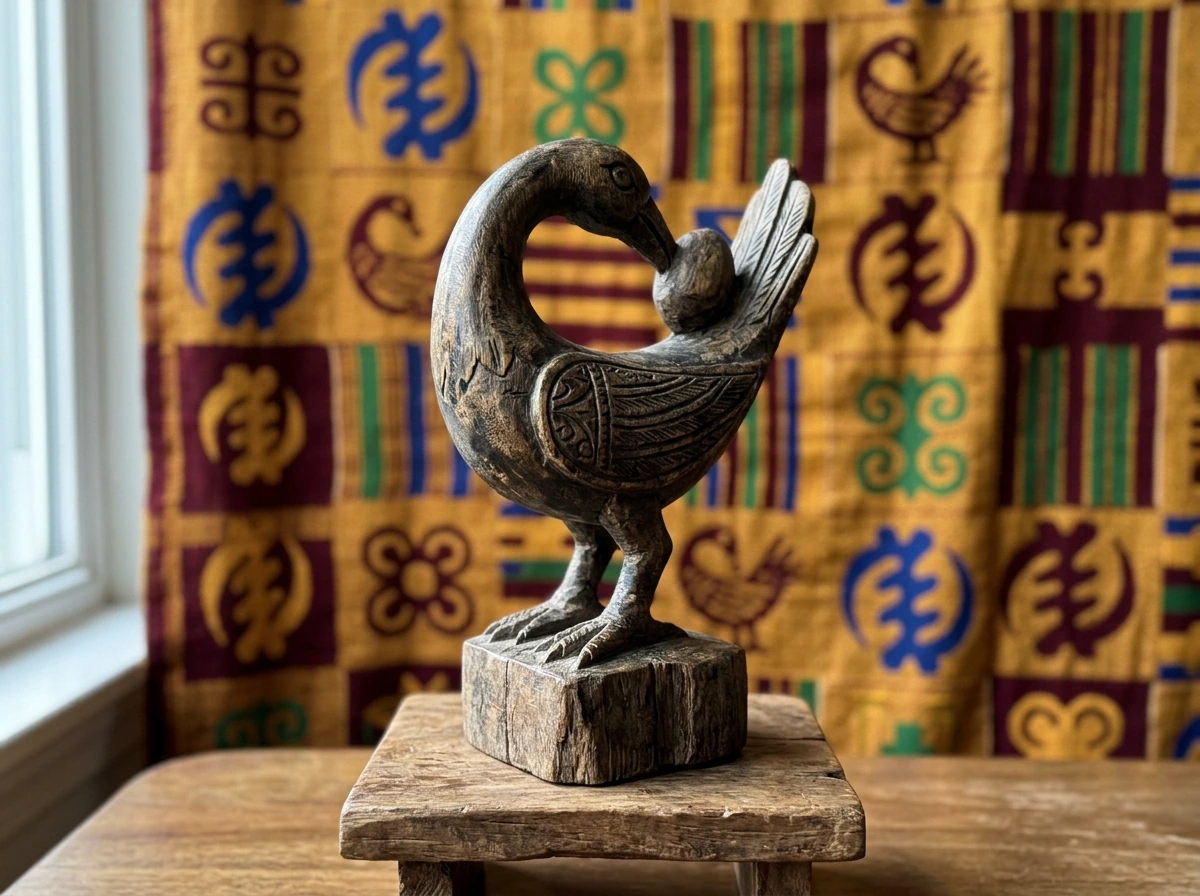
Outside Europe, the cuckoo appears in symbolism traditions elsewhere too. The idea of a bird that arrives unexpectedly, calls loudly, and disappears again maps onto themes of transformation, transience, and messages from beyond the everyday world. If you're drawn to the symbolic side of bird meaning broadly, you'll find comparable structures in traditions like sankofa bird meaning, where birds function as carriers of deeper cultural memory and instruction.
The cuckoo in language: from cuckoo clocks to calling someone crazy
The word 'cuckoo' has had a parallel life in language completely separate from the actual bird. The cuckoo clock, which imitates the Common Cuckoo's call using a mechanical bird fitted with bellows and pipes, turned the cuckoo's sound into one of the most recognizable audio signals in domestic life. The clock's hourly 'cuck-oo' kept the sound culturally present even in places where the actual bird never called.
The slang use of 'cuckoo' to mean crazy or foolish goes back further than you might expect. The adjective meaning 'crazy' is recorded in American English from 1918, and the noun form meaning a stupid person appears as early as the 1580s. The connection is probably the bird's unvarying, repetitive call: something that just keeps mechanically repeating the same thing without any apparent awareness of context. It's an easy metaphor. The same folk instinct that made people count the cuckoo's calls for fortune-telling also noticed that the bird never seemed to vary its message, which landed it in the same semantic territory as 'broken record.'
Then there's 'cuckold,' one of the most direct linguistic footprints the cuckoo has left on English. The word comes from Old French terms connected to the cuckoo's echoic name, and the link is the bird's brood parasitism: a cuckold, traditionally, is a man whose partner has been unfaithful, just as the cuckoo 'sneaks' its offspring into another bird's nest. Etymologists trace this connection clearly, and Shakespeare was absolutely aware of it when he put the cuckoo into that spring song alongside romantic themes of deception. The bird's biology became a metaphor that survived into modern English almost intact.
Compared to some bird symbols that carry only positive or only negative associations, the cuckoo is fascinatingly ambivalent. Like the surkhab bird meaning in Persian tradition, where the bird carries both romantic longing and a sense of the unattainable, the cuckoo occupies a space where joy (spring has arrived!) and unease (brood parasite, cuckold, crazy) sit right next to each other.
How to figure out what you actually heard

If you heard something and you're wondering whether it was a cuckoo, here's how to work through it practically. Context matters more than you'd think.
- Check the season first. Common Cuckoos are only present in Europe from roughly April to July. If you heard a cuckoo-like call in January in England, it almost certainly wasn't a cuckoo. In North America, Yellow-billed Cuckoos arrive later in spring and are most vocal from May through August.
- Note the call structure. The classic two-note 'cuck-oo' is pretty distinctive: the first note is higher, the second drops. A three-syllable version exists but is less common. If what you heard had three evenly spaced notes in a low, droning rhythm, you may have heard a Collared Dove instead.
- Consider your location. The British Trust for Ornithology specifically names the Collared Dove as a common confusion species for the cuckoo. The Collared Dove's call is a three-note cooing that early-season listeners sometimes mistake for a cuckoo, especially when they want it to be a cuckoo.
- Listen for repetition and distance. The cuckoo's call carries far and is repeated multiple times in succession with a clear pause between each 'cuck-oo.' It sounds deliberate and rhythmic, not soft or dirge-like.
- Use a sound archive to compare. Platforms like Xeno-canto hold thousands of recordings of different species' calls organized by region, which is the fastest practical way to match what you heard against actual cuckoo recordings versus other candidates in your area.
- Check what species actually occur near you. All About Birds from the Cornell Lab organizes calls by species and geography, so you can quickly confirm whether a Common Cuckoo or Yellow-billed Cuckoo is even plausible where you live before you commit to an identification.
Diurnal and seasonal calling patterns matter too. Studies on cuckoo calling activity show that males call most intensively during the breeding season and have predictable peaks in calling during daylight hours. If you heard the call at dawn or mid-morning in late spring, that's exactly when and where you'd expect it. A cuckoo-like sound at midnight in October is a different question entirely.
Common misunderstandings and how to get a more accurate read
The biggest misunderstanding people bring to 'cuckoo bird meaning' is treating it as a single, fixed symbol when it's actually three or four overlapping things: a specific bird's biology, a folk belief system, an English-language metaphor cluster, and a practical sound identification challenge. Collapsing all of these together leads to confusion.
For example, if you're asking 'what does it mean to hear a cuckoo?' from a folk belief angle, the answer is almost entirely shaped by your cultural context. European traditions lean toward spring and fortune-counting. Other traditions may emphasize different themes entirely. There's no universal bird-omen rulebook. The superstition around the thick-knee bird also known as dikkop is a good parallel: its meaning is intensely regional and varies dramatically depending on which African tradition you're drawing from, and the same is true for cuckoo omens across different European cultures.
Another common error: assuming the spring call you heard was definitely a cuckoo because 'it's that time of year.' Collared Doves cooing in early spring are frequently misreported as Common Cuckoos, and the BTO has noted this specifically. Seasonality alone is not enough to confirm the identification. You need to match the call structure too.
There's also the question of which 'cuckoo' you mean. The kuku bird meaning in East African contexts, for instance, refers to local cuckoo species and carries its own distinct symbolic weight that doesn't map directly onto European cuckoo traditions. When you search for 'cuckoo bird meaning,' you're often blending sources from multiple traditions without realizing it.
Some bird traditions encode meaning through visual symbolism rather than sound, and it's worth knowing the difference. The sak yant bird meaning in Thai sacred tattooing tradition, for instance, is about the bird's form and its spiritual protective qualities, not about the bird's call at all. Cuckoo meaning, by contrast, is almost entirely call-driven in folk tradition. You don't see the bird; you count what you hear.
A quick comparison: Common Cuckoo vs. Yellow-billed Cuckoo meaning

| Feature | Common Cuckoo (Cuculus canorus) | Yellow-billed Cuckoo (Coccyzus americanus) |
|---|---|---|
| Range | Europe, Asia, winters in Africa | North and South America |
| Iconic call | Two-note 'cuck-oo,' far-carrying | Rapid 'ka-ka-ka' series, hollow knocking sound |
| Three-note variant? | Yes, 'cu-cu-coo' documented | Not the same structure |
| Female call | Soft bubbling coo | Soft repeated cooing in courtship |
| Folk symbolism | Spring arrival, fortune-counting, cuckoldry metaphor | Rain predictor in some American folk traditions (called 'rain crow') |
| Seasonal presence | April to July in Europe | May to August in North America |
| Main confusion species | Collared Dove | Varies by region; other cuckoo species |
If you're in Europe and you heard the classic two-note call in May, you're almost certainly hearing the Common Cuckoo, and the folk traditions around it are rich and well-documented. If you're in the eastern United States, the Yellow-billed Cuckoo is your bird, and its symbolism is less elaborated in mainstream Western culture but still present in regional American folklore. Both are genuinely interesting, just different animals with different cultural histories.
What the cuckoo meaning actually comes down to
The cuckoo is one of those rare birds that manages to be scientifically fascinating, culturally loaded, and linguistically influential all at once. Its call means spring is here, your clock is ticking, or someone's acting crazy, depending entirely on the frame you're using. Shoreham District Ornithological Society describes the Common Cuckoo as famous for its distinctive two-note call and notes it is typically heard mainly in April, June Common Cuckoo's distinctive two-note call. None of those meanings is wrong; they're just operating at different levels.
The most practical takeaway: if you heard something and want to know whether it was a cuckoo and what it 'means,' start by confirming the identification using a sound archive or a regional bird guide, then layer in the cultural context that fits your tradition. Xeno-canto’s Common Cuckoo species page provides labeled recordings with timestamps and metadata that can help you compare the call structure you hear in the field.
Don't count your years of life based on a Collared Dove. And if you're interested in how other birds carry similarly layered meaning, the kaur bird meaning and the cuntimal bird meaning are worth exploring as examples of how specific, place-bound bird names accumulate symbolic weight over time in ways that don't always travel well across cultures. The cuckoo, for better or worse, is one of the few birds whose meaning has traveled almost everywhere.
FAQ
If I heard a “cuckoo” sound, how can I tell whether it was really a cuckoo (and not a Collared Dove)?
Don’t rely on season alone. Common cuckoos give a distinct two-note pattern (“cuck-oo,” often repeated in a run), while Collared Doves typically produce a smoother, continuous cooing that lacks the clear two-note structure and call spacing. If you can, note the exact cadence (how many beats between notes) and the time of day, then compare to recordings from your region.
Does the “cuckoo bird meaning” about counting years only apply in Europe?
In practice, yes. The “years left” or “years until marriage” idea is tied to specific European folk traditions and doesn’t function as a universal rule. If you want to use the symbolism, match the tradition to where you learned it (or where the belief is documented), rather than assuming every culture treats the cuckoo call the same way.
What does it mean if I hear cuckoo-like calls but the bird never appears?
That’s normal for many people. Cuckoos are often heard more than they are seen, so absence of a visible bird does not automatically disprove the identification. Still, you should confirm by call characteristics, because several other birds can be misreported as “cuckoo” sounds, especially when you heard it briefly.
Why do some recordings describe a “three-note” cuckoo call instead of the classic two-note sound?
Call structure can vary by situation. A three-note version (“cu-cu-coo” or similar) can occur in certain contexts, so the “two-note only” assumption is a common mistake. If you hear three notes, treat it as a plausible variation rather than rejecting the identification immediately, but verify using regional recordings.
If I heard the call at midnight in October, should I still assume it was a cuckoo?
Probably not without more evidence. The breeding-season call peaks and typical daytime calling patterns matter. A cuckoo-like sound outside the expected season or at unusual hours could be another species, a different regional cuckoo species, or even a sound source like a clock or device, so double-check timing and call pattern.
Are the meanings different for male and female cuckoo calls?
Yes, the sounds often indicate different behaviors. Males are strongly associated with the loud advertising call during the breeding season, while females are linked to softer, bubbling cooing used in courtship. If you’re using “meaning,” it is more consistent to tie it to the behavior implied by the call type, rather than treating every “cuckoo” sound as the same message.
What’s the difference between “cuckoo bird meaning” and “cuckold” or “crazy” slang meaning?
They come from different layers. Folk symbolism is tied to the sound and cultural timing (spring, counting). “Cuckold” and “crazy” are language metaphors that use the cuckoo’s brood-parasitism reputation or repetitive, context-free calling as an analogy. If your question is about an omen, don’t let slang meanings take over your interpretation.
If I’m in North America, does “cuckoo bird meaning” automatically refer to the Yellow-billed Cuckoo?
Often, yes, but you should still confirm the species by sound. The Yellow-billed Cuckoo’s call (a rapid “ka-ka-ka” series with a changing end) is very different from the European two-note “cuck-oo.” Treat “cuckoo bird meaning” as a name for both bird symbolism and identification, and verify the call to avoid mixing traditions.
Can “cuckoo” symbolism be purely visual in some cultures, like other bird traditions?
Generally, cuckoo folk meaning is sound-driven. Some traditions use birds in visual or shape-based symbolism, but with cuckoo specifically, the classic associations are linked to hearing the call and then interpreting its timing or repetition. If you’re considering a non-sound interpretation, treat it as an exception tied to that particular cultural context.
What’s the quickest practical way to get a reliable answer when I search “cuckoo bird meaning”?
Do it in two steps. First, verify identification using a regional bird guide or sound archive (match cadence, number of notes, and timing). Second, apply symbolism only after you know what species and what local tradition you’re drawing from. This prevents the most common mix-up: assigning European folk meanings to a different cuckoo species or to a misheard dove.
Next Article
Sankofa Bird Meaning: What It Represents and How to Use It
Learn sankofa bird meaning: learn from the past, honor roots, retrieve what was lost, and apply it in decisions.