
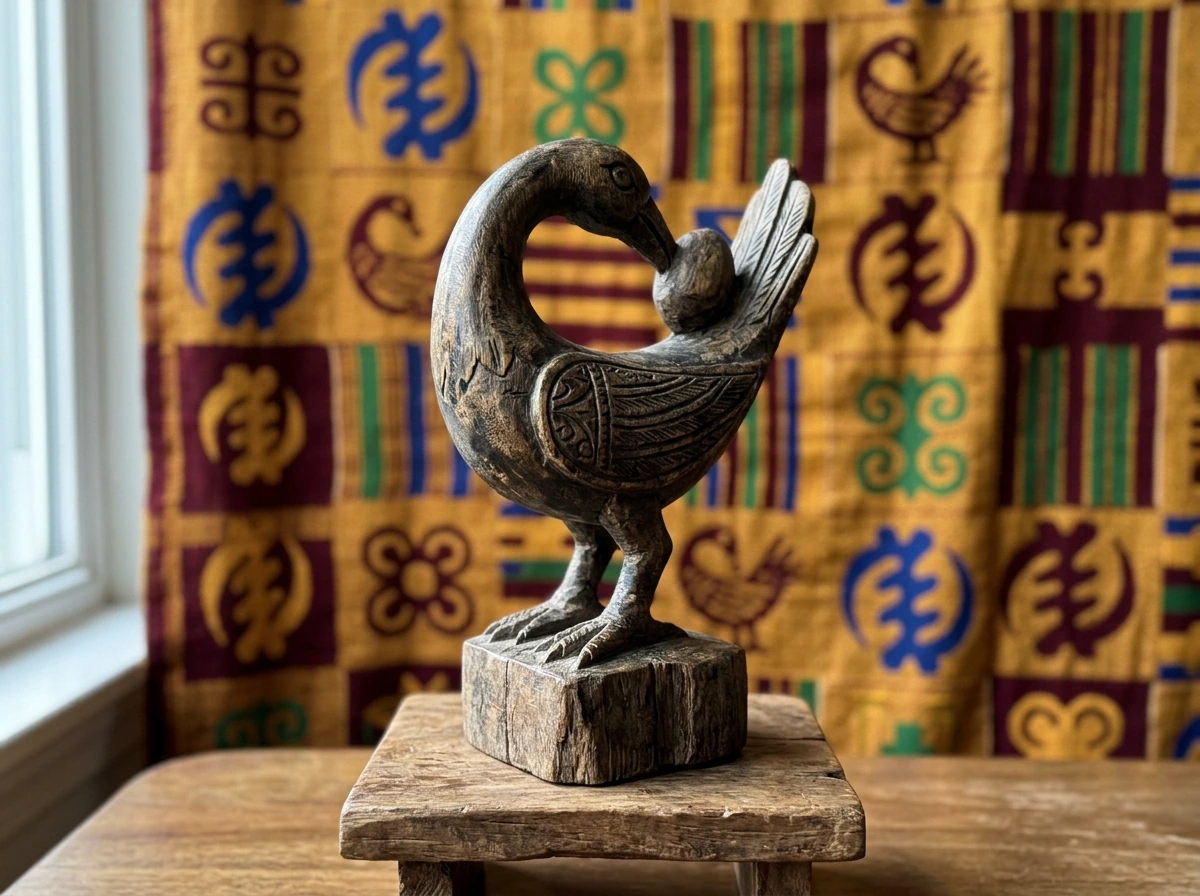
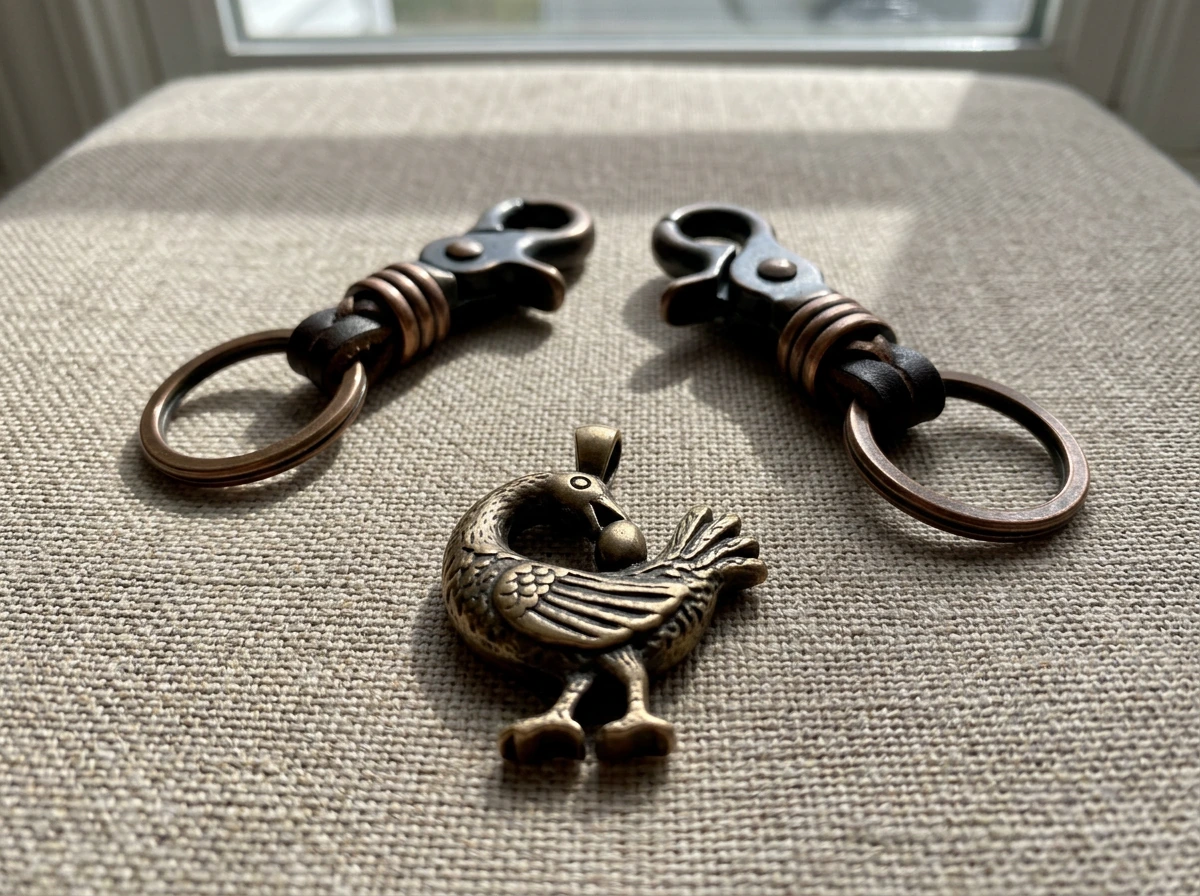
The Sankofa bird is an Akan symbol from Ghana that depicts a bird moving forward while looking back, often shown carrying a precious egg in its beak or on its back. The core meaning is simple but powerful: it is not wrong to go back for what you have forgotten. That single idea, rooted in the Akan proverb 'Se wo were fi na wosan kofa a yenkyi,' has made the Sankofa one of the most widely recognized Adinkra symbols in the world, especially across African and African-diaspora communities.
Sankofa Bird Meaning: What It Represents and How to Use It

Marcus Whitley
23 Mar 2026
What the Sankofa bird actually is
Sankofa comes from the Akan language of Ghana. The word breaks down into three morphemes: 'san' (return), 'ko' (go), and 'fa' (fetch, seek, or take). Put together, the most direct translation is 'go back and get it.' It belongs to a broader system of symbolic imagery called Adinkra, a visual language used by Akan people to communicate proverbs and values through patterns, carvings, and art.
The bird itself is not a real species. Multiple authoritative sources, including the Smithsonian Institution, describe it as a mythical or symbolic bird motif used in Akan art rather than any specific zoological bird. There are two main visual forms: one is the bird turning its head all the way back while its feet point forward, and the other is a stylized heart shape. Both communicate the same concept. The egg the bird carries represents something valuable being retrieved, specifically the knowledge, lessons, or identity that might otherwise be left behind.
The symbol gained significant visibility in the United States through the African Burial Ground National Monument in New York City, where the National Park Service uses Sankofa explicitly to frame the site's educational mission: look to the past to inform the future. That institutional context matters because it anchors Sankofa as a named, culturally specific proverb-symbol, not just a decorative motif.
What the symbol means at its core
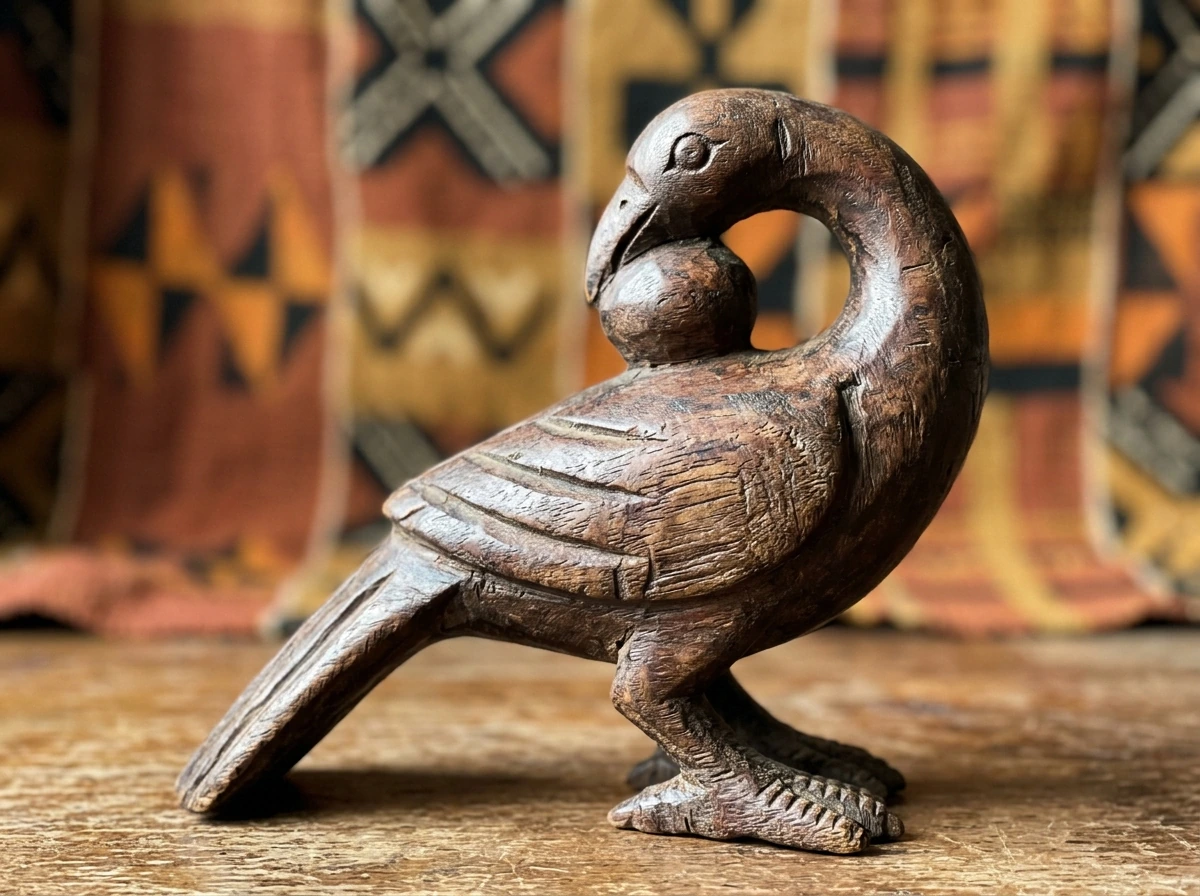
Every element of the Sankofa image is doing meaningful work. The feet point forward, representing movement into the future. The head turns backwards, representing a deliberate return to forgotten or abandoned knowledge. The egg or precious object in the beak or on the back represents what is retrieved and carried forward. Nothing about the image suggests staying in the past or wallowing in what went wrong. It is entirely about the act of retrieval for future benefit.
The five core themes you will see across every serious treatment of Sankofa are consistent:
- Learning from the past rather than ignoring or erasing it
- Retrieving and reclaiming knowledge, identity, or cultural memory that was lost or forgotten
- Using history actively to build a better future, not just as something to observe
- Honoring ancestry and roots through conscious memory and reflection
- Balancing backward-looking reflection with forward-facing progress, the two are not in conflict
The Smithsonian frames it cleanly: 'learn from the past as a way to move forward into the future.' That past-to-future relationship is the central logic. It is not about guilt, regret, or being stuck. It is about informed movement.
What Sankofa represents in practice
On a personal level, Sankofa represents the value of honest self-examination. Not the kind that paralyzes you, but the kind that surfaces lessons you have been moving too fast to notice. The proverb at its root, 'it is not wrong to go back for that which you have forgotten,' treats this kind of retrieval as a corrective act, something acceptable and wise, not something shameful.
In community and diaspora contexts, Sankofa represents a commitment to cultural memory. Wikipedia notes its adoption in African-American and African-diaspora settings specifically as a framework for reflecting on the past to build a successful future. The African Burial Ground application is a strong example: Sankofa is used there not as decoration, but as an educational practice grounded in memory work and historical honoring of ancestors.
In behavioral and healing contexts, Sankofa has been applied as a framework for taking painful or complex past experiences, bringing them into the present with clarity, and then using them as a guide for future decisions. One African American behavioral health framework describes the approach as: take what's in the past, bring it to the present, and use it as a guidepost to go to the future. That three-step sequence captures how the symbol functions beyond art, as an active decision-making orientation.
How to actually use this in your own life
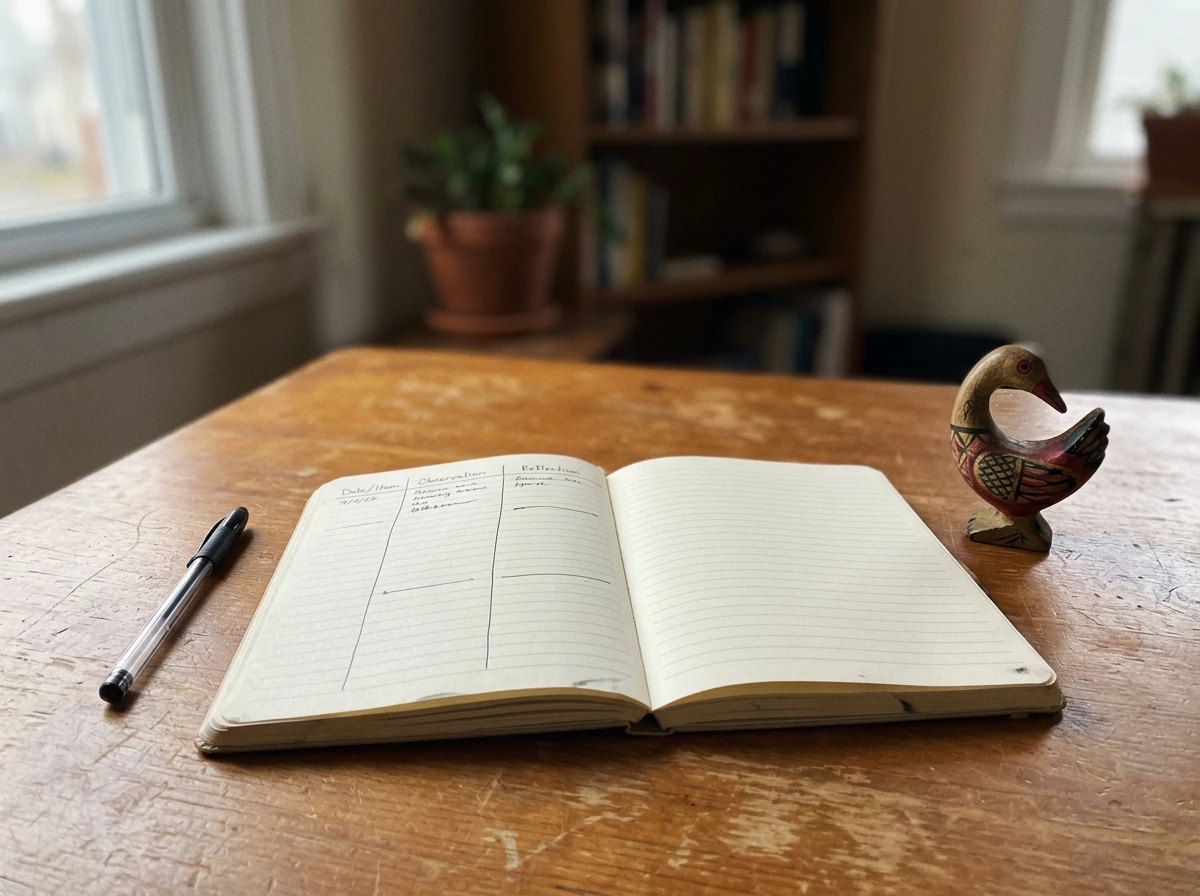
The Sankofa concept translates into practical personal reflection more naturally than most symbols do, because the imagery already contains the action: look back, pick something up, keep moving. Here is how to put that into real use.
Use it as a reflection prompt
When you are facing a big decision, a career change, a relationship question, or a creative project, ask yourself: what have I already lived through that is directly relevant here? What did I learn from a past version of this situation that I am at risk of forgetting? The Sankofa framing makes this feel productive rather than regressive. You are not going back to live there. You are fetching something useful.
Use it to reframe negative past experiences
Academic reflections on Sankofa, including work published in the Journal of Applied Christian Leadership, interpret the bird's posture as a model for transforming past negative experiences into new behaviors. The feet still move forward. The lesson changes how you move, not whether you move. If you have been avoiding thinking about a failure or a loss, Sankofa gives you a framework for engaging with it intentionally and then continuing forward.
Use it for cultural and family reflection
On a broader scale, the symbol applies to how you engage with family history, cultural heritage, or community narratives. Royal Museums Greenwich explicitly uses Sankofa to frame the practice of reflecting on traditional narratives as a way to move a community forward. That might look like asking older family members about their lives, researching your cultural background, or engaging with community history you were not taught in school.
Build it into a regular habit
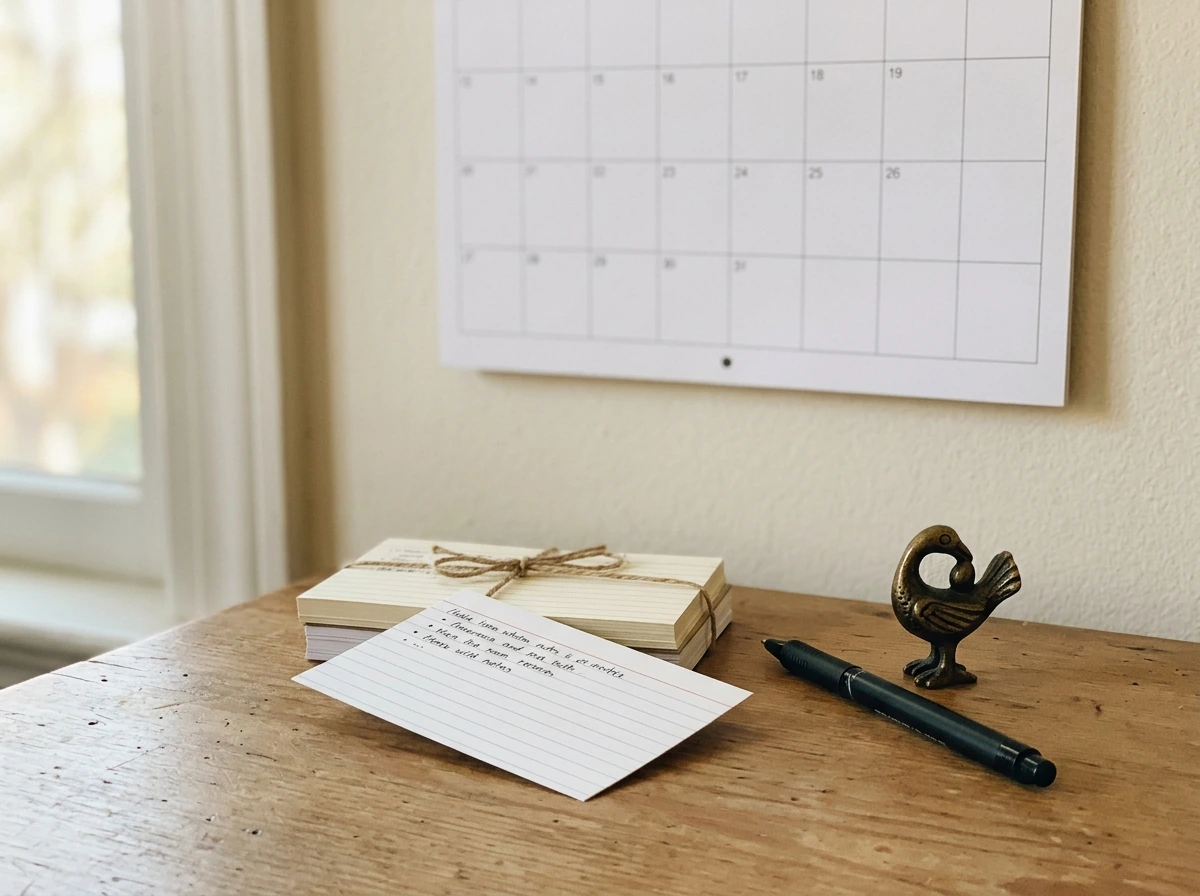
A practical structure: at the end of each month or quarter, spend a short time reviewing what you intended, what actually happened, and what lesson you want to carry forward. That is a Sankofa practice in structure, even if you never call it that. The point is deliberate retrieval, not passive nostalgia.
The misconceptions worth clearing up
A few misreadings of Sankofa show up frequently, and they are worth addressing directly so you are working with the actual concept.
| Common Misconception | What Sankofa Actually Means |
|---|---|
| Sankofa means 'go back in time' | It means retrieve or reclaim something forgotten, not reverse your position in time |
| The bird represents regret or failure | It represents corrective learning, the proverb literally says returning is not wrong |
| Sankofa is a generic good luck symbol | It is a specific Akan proverb-symbol with a defined ethical message about past-informed progress |
| Looking back means being stuck in the past | The feet always point forward; backward-looking is a tool for forward movement, not a destination |
| The egg is just decorative | The egg represents the valuable knowledge or identity being retrieved and carried into the future |
The most important correction is probably the 'good luck logo' issue. Because Sankofa imagery is visually striking, it gets used decoratively without any of its meaning attached. The National Park Service and the Smithsonian both present it as a culturally grounded proverb-concept with a specific ethical stance. When you strip that context, you lose everything that makes the symbol meaningful. If you are using Sankofa imagery in any public or creative context, understanding and communicating its Akan origins is part of using it correctly.
A related point on respectful use: because Sankofa belongs to the Adinkra symbolic tradition of the Akan people of Ghana, grounding it in that context when you reference or display it is important. If you are wondering about the kuku bird meaning, that question is closely related to how Sankofa is used as a proverb symbol rather than a literal bird species Adinkra symbolic tradition. Using it as shorthand without the meaning attached turns a rich cultural proverb into pure aesthetics. Knowing where it comes from and what it actually says is the baseline for engaging with it well.
The bottom line
The kuku bird meaning: you can move forward and look back at the same time, and doing so is not a weakness. If you are also curious about other bird-symbol interpretations, you might look up cuckoo bird meaning as a related point of comparison kuku bird meaning. If you are also curious about other bird-symbol interpretations, you might look up coo bird meaning as a related point of comparison. cuntimal bird meaning The Akan proverb behind it tells you plainly that returning for what you have forgotten is acceptable, even necessary. The egg in the bird's beak tells you that what you retrieve has value. This is why people often search for the surkhab bird meaning when they see similar symbolism about looking back and carrying forward what matters. And the feet pointing forward tell you that the whole point is what you do next. If you are drawn to this symbol, the most honest way to honor it is to actually use the practice it describes: look back deliberately, retrieve something real, and let it inform where you go. kaur bird meaning. sak yant bird meaning
FAQ
Is Sankofa about forgiveness and letting go, or more about holding on to the past?
Yes, but do it as retrieval, not rumination. A helpful check is, “What specific lesson or information am I going back to retrieve?” If you cannot name the retrieved item, switch to a concrete action (write the lesson, identify the pattern, or gather the missing fact) so you do not get stuck in generalized regret.
How can I use Sankofa when my past reflection triggers shame or anxiety?
If you are worried your “look back” will become self-blame, use a boundary. Set a time limit for reflection (for example, 10 to 20 minutes), and end with one forward step, such as one decision, one conversation, or one change in behavior.
What is a practical way to translate sankofa bird meaning into a decision-making worksheet?
In personal use, treat it like a decision tool. For any choice, write three columns: relevant past facts (what happened), retrieved meaning (what it taught you), and forward action (what you will do differently). This turns the symbol’s imagery, look back, pick up value, keep moving, into a repeatable method.
Can Sankofa help with relationship or family pattern work, not just history or culture?
Yes. It fits especially well for relationship patterns (for example, how you show up, how you interpret conflict, what you avoid). The “egg” is often a personal rule or belief you formed earlier, like “I must be perfect to be safe,” that you can revisit and revise for the present.
What exactly does the egg represent in sankofa bird meaning, knowledge only or something else too?
A common mistake is assuming the “egg” is always a literal object or that it represents only knowledge. Many traditions interpret it more broadly as anything of value you need to retrieve, such as an identity practice, a cultural memory, a lesson, or even a lost skill, as long as it is something you carry forward to inform future choices.
How should I reference or use Sankofa in a design, tattoo, or social post respectfully?
If you use the image publicly, you should communicate the proverb-concept and its Akan roots, not just the visual. A simple approach is to include a short explanation of the meaning, and avoid treating it as a generic “good luck” or “success” icon disconnected from its cultural context.
Do the different Sankofa bird designs (head position, stylized shapes) change the meaning?
The posture matters because it encodes the ethics of action: feet forward, head turned back. If you are looking for meaning in an illustration variant, prioritize that consistent message (deliberate return for retrieval and forward movement) over which exact style the bird has.
What should I do if my Sankofa practice feels too general, like I am just thinking about the past?
You can make it less vague by converting “remember” into “retrieve.” Examples include gathering specific documents, asking one family member a targeted question, re-reading a journal entry from a past event, or listing one lesson you keep repeating. The goal is a concrete retrieval you can use later.
How does Sankofa work for intergenerational healing, and how do I avoid getting overwhelmed?
Yes, and the symbolism can help you work with intergenerational issues without re-living trauma. Consider focusing on one theme at a time (values, language, parenting lessons, community narratives), and end with a forward choice that is protective and practical, such as a new family boundary or a support plan.
I like the monthly reflection idea, but how can I practice Sankofa weekly without it becoming exhausting?
If you do not want to wait for a month or quarter, use a smaller cycle. For example, at the end of each week, ask: “What did I almost forget that matters for next week?” Then choose one retrieved lesson to guide one concrete action.
Next Article
Perching Bird Meaning in English: Definition & Examples
Perching bird meaning in English: definition, anatomy, perching vs perched, usage examples and cultural notes.