"Cheel" in English means kite, specifically the large soaring bird of prey you see circling overhead across South Asian cities and countryside. The word comes from Urdu and Hindi (چیل / चील), and its direct English translation is "kite", most precisely the Black Kite or Common Pariah Kite (Milvus migrans govinda), which is the species nearly every South Asian is picturing when they say "cheel."
Cheel bird meaning in English: what it refers to

Marcus Whitley
20 May 2026
Quick English meaning of "cheel bird"
In Urdu and Hindi, چیل (cheel) translates directly to "kite" in English. Classic Urdu lexicons, including J. T. Platts-style dictionaries and the Rekhta Urdu dictionary, all give "a kite" as the primary English gloss. Some broader definitions also list "bird of prey" because the word occasionally gets used loosely for any large raptor, but the core, dictionary-level meaning is kite. If you're reading a poem, story, or folk lyric in Urdu or Hindi and you hit the word "cheel," swap it with "kite" and you'll be on solid ground.
Which bird "cheel" typically refers to (and how to tell)
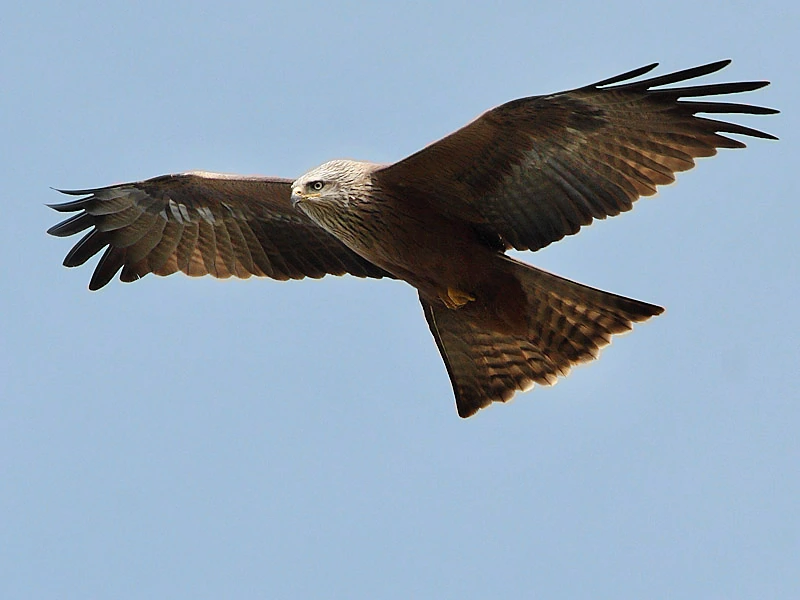
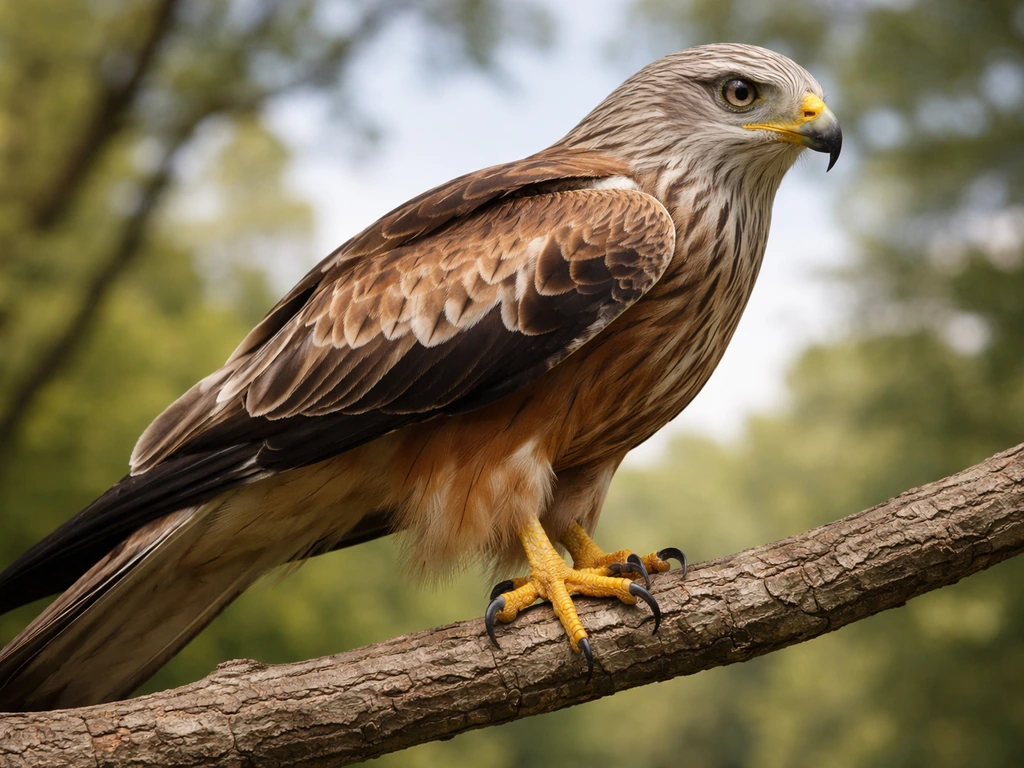
The specific bird behind "cheel" is almost always the Black Kite, scientific name Milvus migrans, and more precisely its South Asian subspecies Milvus migrans govinda, which has its own English common name: the Common Pariah Kite. Old British-era ornithological records from India, including journals of the Bombay Natural History Society, list "Cheel" as the Hindustani name for this exact bird. Merriam-Webster defines the pariah kite as "a scavenger kite of India," and that scavenging, urban-dwelling reputation is core to how South Asians understand the cheel.
You can spot one confidently by looking for two key features: a shallowly forked tail and long, angled wings that give it a triangular silhouette in flight. This forked tail is the cheel's signature, it's what separates it from eagles and hawks at a glance. The plumage is a warm reddish-brown, and the bird is medium-to-large in size. If you see a big, brown raptor riding thermals over an Indian city, wheeling lazily above a market or rubbish pile, that's your cheel.
English equivalents and translation tips

When translating "cheel" from Urdu or Hindi into English, you have a few options depending on the context and how specific you want to be.
| Context | Best English equivalent | Notes |
|---|---|---|
| General poetry or literature | Kite | Simplest, most direct — understood by all English readers |
| Scientific or ornithological writing | Black Kite / Common Pariah Kite | Milvus migrans govinda; use if species precision matters |
| Casual conversation or story | Kite (bird of prey) | Adding "bird of prey" helps if the reader might think of the flying toy |
| Idioms or figurative language | Kite or hawk | "Hawk" sometimes works better in English idioms about sharp vision |
One practical pitfall: English speakers often associate "kite" with the toy they flew as children. If you're translating a line of Urdu poetry for an English audience, it's worth specifying "kite (the bird)" or using "Black Kite" to avoid that confusion. Some translators use "hawk" or "eagle" to get the right feeling across, but technically those are different birds, baaz is hawk, and uqab is eagle in Urdu. For cheel, kite is the right call.
Cultural symbolism and meanings of the cheel
The cheel occupies a complex symbolic space in South Asian culture. On one hand, it's seen as a sharp-eyed, powerful predator, the bird that drops like a stone to snatch food. On the other hand, because it's a well-known urban scavenger (circling above markets, swooping on scraps), it can also carry associations of opportunism and cunning. This dual nature makes it a rich figure in folklore and storytelling.
In terms of power and vision, the cheel's soaring, watchful presence has made it a symbol of keen sight and aerial dominance. A bird that can spot a piece of meat from hundreds of feet in the air naturally becomes a metaphor for perceptiveness and focus. Some cultural and anthropological accounts describe the kite as a kind of elder figure among birds, commanding, experienced, watching everything from above.
Across broader South Asian raptor symbolism, the kite/cheel overlaps with the baaz (hawk/falcon), which is associated with royalty, courage, and a hunter's precision. If you've come across this theme while exploring related bird terms, like the symbolism around the chickadee bird or what "chill bird" means in other contexts, you'll notice how dramatically different cultures load different birds with meaning. The cheel sits firmly in the "powerful and watchful" category, rather than the gentle or gentle-spirited bird archetypes.
Where you'll see it in language: folklore, stories, idioms
The cheel appears in South Asian folk sayings, stories, and poetry in predictable ways. Because it's a raptor that watches, waits, and swoops with precision, it shows up in expressions about sharpness, opportunity, and predatory awareness.
One widely used Hindi and Urdu proverb structure uses birds and animals together to describe a complete picture of skill: "cheete ki chaal, baaz ki nazar" (cheetah's speed, hawk's sharp gaze) is a compact phrase people use as a compliment for someone who is both quick and perceptive. One language-focused writeup notes that cheel is often used broadly for raptors and appears in idiomatic expressions like “baaz ki nazar” to convey sharpness and power of sight.
The cheel/kite imagery feeds into this same cultural vocabulary of raptor-as-excellence.
In folk stories and children's tales from the subcontinent, the cheel often appears as the swooping, surprising visitor, the bird that takes something precious in a flash. This is rooted in real behavior (kites really do snatch food from hands), and storytellers have leaned into it for centuries. The cheel in a story is rarely a villain in a serious sense, but it's always an agent of sudden change, the moment when something shifts because a quick, sky-borne force intervenes.
In classical Urdu poetry, the cheel appears as a symbol of restless, soaring longing, a bird always in motion, never settling, watching the world from a distance. This reading layers onto the physical reality of the bird, which spends most of its time on thermals, circling, rarely perching for long.
How to verify the species when "cheel" is used locally
If you encounter "cheel" in a local field report, wildlife document, or a poem that seems to be describing something more specific than just "kite," here are reliable ways to pin down the exact species being referred to. For practical field verification, rely on official or compiled local wildlife lists that directly map the local name “Cheel” to the Common Pariah Kite (Milvus migrans) official/compiled local wildlife lists that map “Cheel” to Common Pariah Kite (Milvus migrans).
- Check official wildlife lists and annexures: Many regional wildlife management plans and biodiversity registers include a column that maps local vernacular names to scientific names. The entry for 'Cheel' in these lists will consistently point you to Milvus migrans (Black Kite / Common Pariah Kite) for most of South Asia.
- Use the forked tail as your field ID anchor: In any visual description — whether in a text or a sighting report — look for mention of the forked tail and angled wings. That combination locks you into Milvus migrans and separates the cheel from eagles (which have rounded or wedge-shaped tails) and from the Red Kite, which has a much more deeply forked tail.
- Cross-reference with Urdu/Hindi lexicons: Rekhta's dictionary and comparable Urdu reference tools give the English translation alongside classical usages. If a text uses the variant spellings chiil or چیل, these all map to the same bird.
- Use the Merlin Bird ID app for live sightings: If you're in South Asia and you're trying to confirm whether a raptor you're watching is the cheel, open Merlin (from Cornell Lab of Ornithology), set your location, and use the photo ID or sound ID feature. Birders across India commonly recommend this for sorting out cheel/kite versus eagle confusion in real time.
- Compare with related raptor names: In the same language context, baaz means hawk or falcon, and uqab means eagle. If someone is using "cheel" rather than one of those terms, they're almost certainly talking about a kite, not a hawk or eagle — this process of elimination is itself a useful verification step.
The bottom line is that "blank" rel="noopener noreferrer">cheel" is not an ambiguous or mysterious term once you know where it comes from. The chill bird meaning is often used online as a casual phrase, but in traditional usage the cheel refers to a kite, especially the Black Kite or Common Pariah Kite. It's a kite, specifically the Black Kite or Common Pariah Kite that any visitor to South Asia will spot within an hour of arriving in any city.
This symbolism is sometimes discussed in popular culture references such as Hi Ho Cherry O, where the line is often interpreted through the idea of a bird-like figure circling and watching kite. It carries rich cultural weight as a symbol of sharp sight, scavenging intelligence, and aerial power, and it shows up in folk speech and poetry in ways that reflect all of that.
When you're translating it, go with "kite" for general use, "Black Kite" if precision matters, and keep "hawk" in reserve only for English idioms where "kite" doesn't carry the right connotation. People also search for the hi ho cherry o bird meaning, but it is usually discussed as a playful phrase rather than a strict translation of “cheel. ”.
FAQ
Is “cheel” ever translated as “hawk” or “eagle” in English?
In English, “kite” can mean the flying toy or a bird. If your text is about a real bird, use “kite (the bird)” or the more specific “Black Kite/Common Pariah Kite” to remove the ambiguity.
What if the Urdu or Hindi line uses cheel in a poetic way, can it still mean kite?
Yes, but only if the source language is using a broader, poetic sense. In standard dictionary-level usage, cheel means kite, and “hawk” or “eagle” will usually shift the image to a different kind of raptor, so reserve those for idioms where “kite” sounds wrong.
How can I tell which bird someone means if they say “cheel” but I am not sure which raptor it is?
A common error is seeing any large brown raptor and calling it cheel. The easiest quick check is the shallowly forked tail plus long, angled wings that create a triangular look in flight, which fits the Black Kite more than most hawks or eagles.
When translating cheel, should I write “kite” or “Black Kite”?
If you are writing for international readers, “kite” is the safest general gloss. If you are writing for a bird-focused audience, “Black Kite (Common Pariah Kite)” is best, because it matches what most people in South Asia picture when they say “cheel.”
What should I include in a translation or field note to avoid confusion with other raptors?
For wildlife notes or field reports, add location context and, if possible, the bird’s key field marks (forked tail, triangular silhouette, warm reddish-brown tones). That way, even if someone else interprets “kite” loosely, your description locks the meaning to the cheel bird.
People also search “chill bird meaning,” is that the same as “cheel bird meaning in English”?
Online searches often mix up “cheel” with “chill bird” because they look similar in English. If the original text uses Urdu or Hindi spelling (چیل or चील), treat it as “cheel,” not “chill,” unless the source clearly says “chill.”
Does cheel symbolism in stories usually emphasize hunting, scavenging, or vision?
In cultural symbolism, cheel often gets read as both a sharp predator and an opportunistic scavenger because it circles above markets and hunts from the air. If you are interpreting a metaphor, consider whether the surrounding lines mention scavenging or sudden swoops, which tend to align with kite behavior.
Should I keep cheel distinct from baaz when translating South Asian proverbs?
If the text is quoting proverbs or idioms, keep the raptor category consistent. Cheel aligns with “kite,” while baaz aligns with hawk/falcon imagery, so swapping them can change the intended compliment, especially in phrases like “speed” versus “sharp gaze.”
Next Article
Chickadee Bird Meaning: Spiritual, Cultural, and Practical Guide
Chickadee bird meaning explained: resilience, hope, curiosity, community trust, plus spiritual omens and practical how-t