When people talk about chickadee bird meaning, they're almost always pointing to the same cluster of ideas: resilience, curiosity, community, and a kind of cheerful boldness that seems outsized for such a tiny bird. Whether you spotted one at your feeder this morning, came across the word in a poem, or heard someone use it as a term of endearment, the chickadee carries a remarkably consistent symbolic weight across folklore, spiritual traditions, and everyday language. Here's what it actually means, and how to interpret it depending on your context.
Chickadee Bird Meaning: Spiritual, Cultural, and Practical Guide

Marcus Whitley
18 Apr 2026
The quick answer: what chickadee usually means
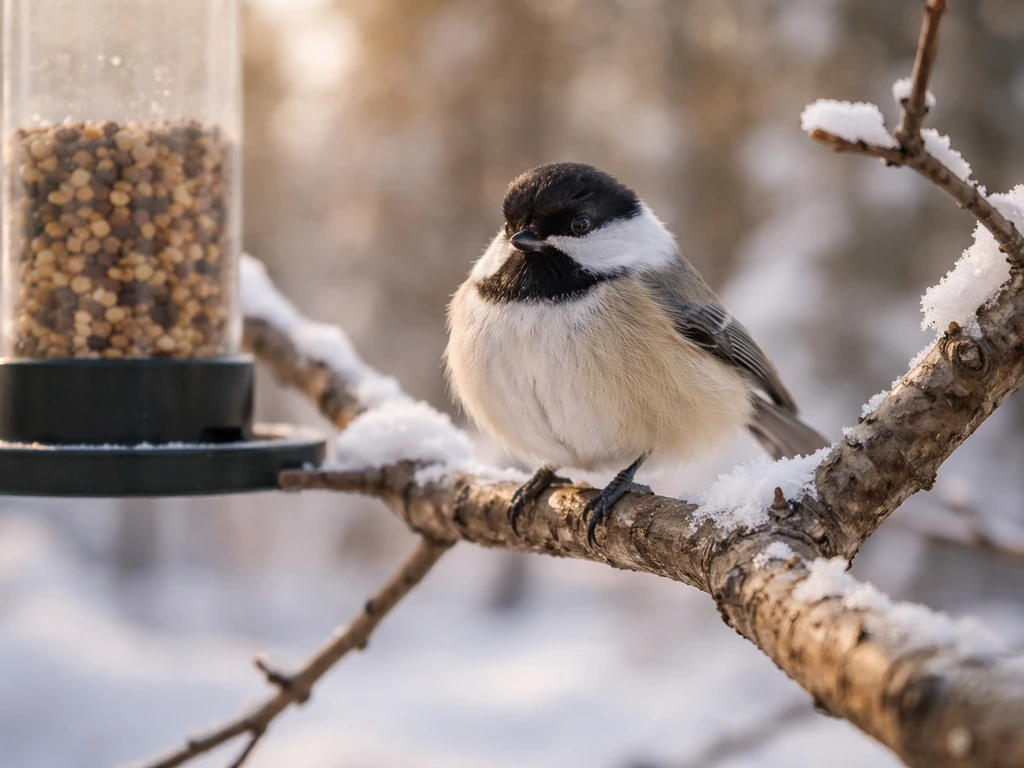
At its core, the chickadee symbolizes "small but mighty" energy. It's a bird associated with surviving hard conditions, staying curious, communicating clearly, and thriving in community. When someone references a chickadee, symbolically or literally, they're almost never pointing to danger or loss. The chickadee is a good-news bird, a sign of adaptability and resilient cheer. In spiritual contexts especially, it typically signals that you're being encouraged to stay alert, lean on your community, or trust your instincts even when conditions are tough.
What the chickadee actually does (and why it matters symbolically)
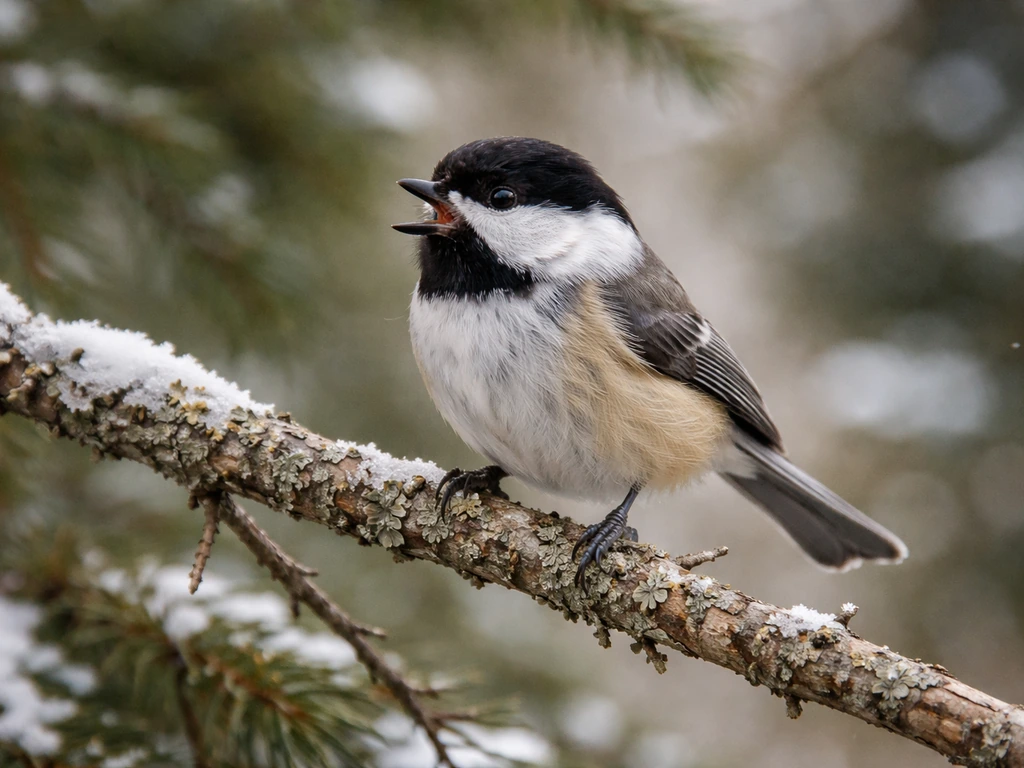
You can't really understand what a chickadee means without knowing a bit about what it does, because the symbolism is grounded directly in the bird's behavior. Black-capped chickadees are year-round birds across much of North America. They don't migrate south when winter hits. Instead, they cache thousands of seeds in autumn, hiding them in bark crevices and foliage, and then remember those locations well enough to retrieve them months later through some of the most impressive spatial memory documented in any animal. Research published in Science and covered by the University of Nevada found a direct link between memory quality and chickadee lifespan, meaning the sharpest rememberers literally live longer. That's the behavioral foundation for all the "wisdom" and "foresight" symbolism people attach to this bird.
Their social behavior is equally striking. In winter, chickadees form small mixed-species flocks, often joined by nuthatches, creepers, and kinglets. The flock moves tree to tree, and the chickadee's call functions as the glue holding everything together. The "chick-a-dee-dee-dee" alarm call is far more sophisticated than it sounds. According to research summarized by the Smithsonian, the number of "dee" notes at the end actually encodes information about the threat level of a nearby predator. More dees means more danger. The flock listens, adjusts, and moves accordingly. That's why chickadees have become symbols of clear communication, community trust, and collective intelligence.
The symbolism unpacked: hope, resilience, curiosity, and community
Resilience
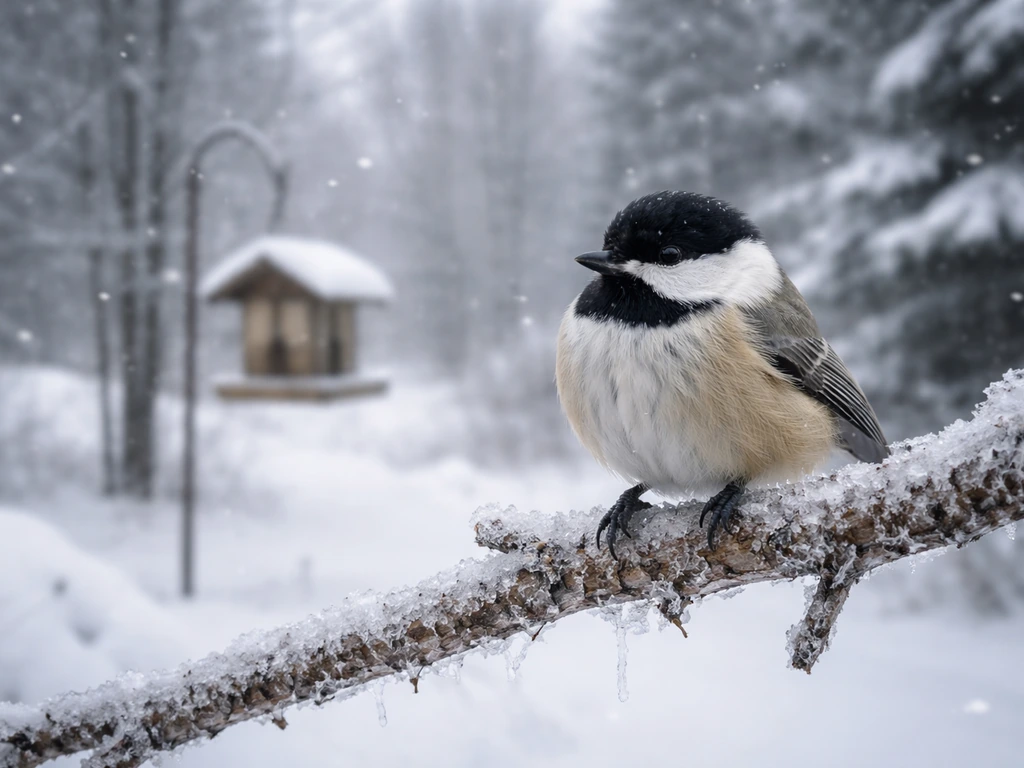
The chickadee's refusal to leave in winter is probably the single strongest root of its resilience symbolism. The Alutiiq word for the black-capped chickadee, "Uksullaq," literally means "winter one," which tells you everything about how Indigenous Alaskan people perceived this bird. It shows up when everything else has left, stays active when other species go quiet, and keeps calling. For anyone going through a difficult season, the chickadee is an easy, honest symbol of enduring without retreating.
Hope and cheerfulness
There's something about the chickadee's energy that people consistently describe as uplifting. It's one of the boldest birds at a feeder, often approaching humans closer than almost any other wild bird, and its call is bright and recognizable even on the coldest days. Because it appears in winter and keeps singing, it functions naturally as a symbol of hope: life and light even in the hardest months. This is a bird that doesn't wait for spring to act cheerful.
Curiosity
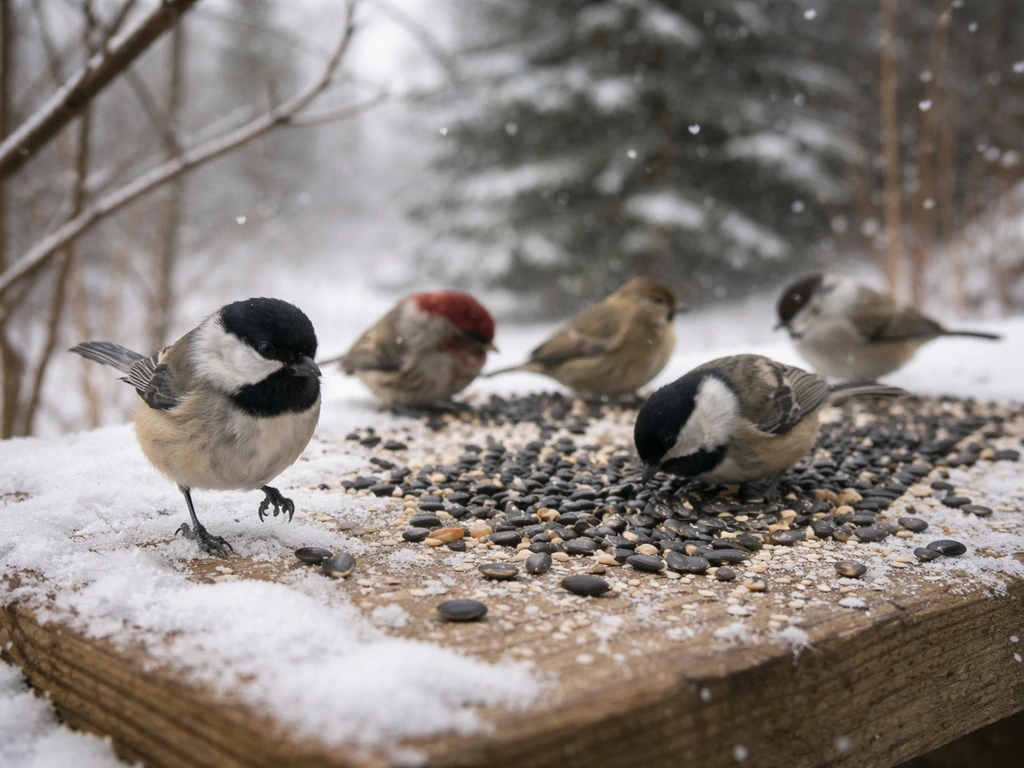
Chickadees investigate everything. They'll examine a new object in their territory, check out a human hand holding sunflower seeds, and explore unusual sounds. That behavioral boldness maps directly onto curiosity as a symbolic value. If you're being encouraged to "think like a chickadee," you're being told to stay alert, investigate rather than assume, and approach the unfamiliar with interest rather than fear.
Community
The mixed-species winter flock is a beautiful piece of real ecology that gives the community symbolism real grounding. Chickadees don't just flock with their own kind. They lead and communicate for an entire mixed group. Their alarm call isn't just for other chickadees. It's a shared language for the whole winter community. If the chickadee shows up as a symbol for you, one interpretation worth sitting with is: who's your flock, and are you communicating clearly within it?
Cultural meanings and folklore
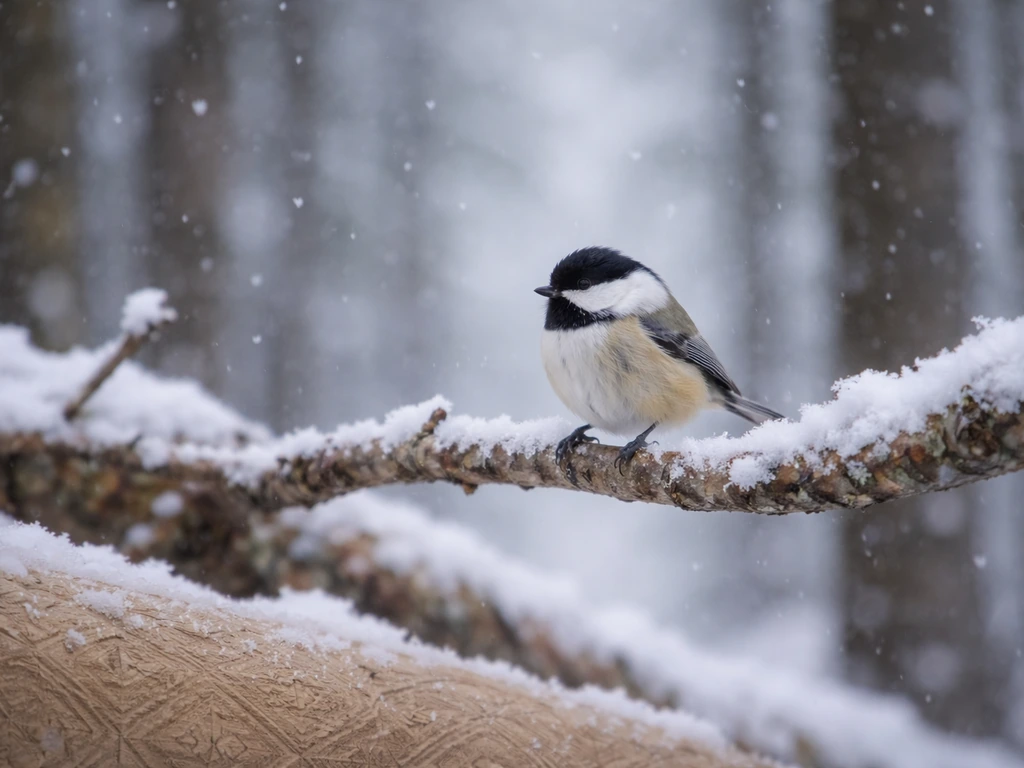
The chickadee appears most prominently in Indigenous North American traditions, and the meanings there are specific and worth knowing. In Cherokee tradition, the chickadee holds a notable place as a "news bringer and truth teller." One of the most famous Cherokee stories involves a Carolina chickadee defeating Spearfinger, a powerful and feared witch, by revealing the location of her heart. The bird's willingness to speak a hard truth in the story became the foundation of its identity as a truth-teller. This reputation carries through into how the chickadee appears in written accounts of Cherokee oral tradition, with writers connecting the bird's frank, persistent call to its role as a messenger.
The name itself predates English usage. The Cherokee word "tsigili'i" (recorded in several spelling variations) was documented before the English word "chickadee" entered common use. Before the early 1800s, English speakers generally lumped chickadees under the broader term "titmouse," which gives you a sense of how long it took English-language culture to recognize the chickadee as symbolically distinct. The Cherokee tradition had already been doing so for much longer.
In Crow storytelling traditions, the chickadee appears in a different role: as a model of deep listening. The phrase "follow the listening way of the chickadee" shows up in cultural teaching narratives, connecting the bird's constant alertness to the practice of listening as a spiritual discipline. This framing makes the chickadee less about speaking truth and more about receiving it, which is a useful counterpoint to the Cherokee version. The same bird can embody both sides of communication.
In literature, Louise Erdrich named a character in her Anishinaabe-language novel after the chickadee, using the bird as more than decoration. The character is described in reviews as "resourceful," which aligns almost perfectly with the survival-and-cleverness symbolism the bird carries in Indigenous traditions. The chickadee name doesn't just sound charming in that context. It's a statement about who that character is. If you want to understand how bird names carry symbolic weight in contemporary fiction, thinking about what a "chill bird" communicates as a cultural label versus a name like "chickadee" shows how much is packed into a single word choice.
Why the word "chickadee" sounds the way it does
The word "chickadee" is onomatopoeic, meaning it comes directly from the sound the bird makes. The call, "chick-a-dee-dee-dee," was essentially transliterated into a name. This puts the chickadee in a category of birds whose English names are sound-based, where the name itself is a kind of imitation. The American Ornithological Society notes that many North American bird common names work this way, as the bird "says its name." Merriam-Webster's entry for "chickadee" includes an etymology section that traces the word to this call, and the connection is about as direct as etymology gets.
What makes this linguistically interesting is that the Cherokee word "tsigili'i" is also onomatopoeic, documented explicitly as such in transcribed Cherokee texts. So both the English name and the Cherokee name for this bird are sound-based, arrived at independently. That's actually rare, and it reinforces how distinctive and recognizable the chickadee's call is. Two completely different linguistic traditions heard the same bird and arrived at similar naming logic. This is relevant to the symbolism because it means the chickadee's identity is literally encoded in its voice. Its name is its call. Its call is its identity. That kind of self-announcing clarity is part of why the truth-teller archetype sticks so naturally to this bird.
For comparison, it's worth knowing that some bird names carry entirely different kinds of meaning depending on cultural framing. The way the cheel bird's name translates in English shows how bird naming across cultures can reflect either sound, appearance, or cultural role, and the chickadee happens to hit the sound-based category particularly hard.
Chickadee in everyday language, sayings, and metaphors
Outside of folklore and spiritual symbolism, "chickadee" shows up in a few distinct everyday uses. The most familiar is probably as a term of affection. Calling someone "my little chickadee" has been in use long enough to become a cultural reference in its own right, with a W.C. Fields song title cementing the phrase in American pop culture. The connotation is warmly diminutive but fond, suggesting someone small, lively, and endearing. It has a slight old-fashioned feel today, but it persists.
In older nature writing aimed at children, the chickadee's call was frequently "translated" into words. Nineteenth and early twentieth century books like "Our Bird Comrades" and "Stories of Birds" both feature passages where the chickadee is described as calling its own name, as if introducing itself. This was a pedagogical device to teach children to recognize bird calls, but it also reinforced the bird's identity as self-expressive and communicative, always making itself known. That literary tradition is part of why the chickadee feels like a particularly legible, friendly bird in Anglo-American cultural memory.
As a metaphor, "chickadee energy" (if you see that phrase in journaling or spiritual communities) almost always means cheerful persistence, the ability to stay active and communicative even when conditions are harsh. You'll also see the bird used as shorthand for adaptability in nature writing and as a symbol of local loyalty, since it stays put when others migrate. Some readers have also noted parallels between the chickadee's nuanced alarm call and the idea of calibrated honesty: not screaming danger when there isn't any, but also not staying silent when there is. That's a specific and useful metaphor for communication in relationships.
It's worth noting that birds used symbolically in games and media can carry very different meanings from their natural history counterparts. If you've come across bird references in unexpected contexts, understanding what the bird means in Hi Ho Cherry O, for example, shows how bird symbolism gets reframed entirely when it enters a play context.
What it might mean if a chickadee shows up near you
Spiritually, a chickadee appearing near you is generally read as a positive omen. Across most traditions and contemporary spiritual interpretations, the message falls into a few consistent categories: you're being reminded to stay curious, you're being called to communicate more clearly, or you're being invited to lean on your community rather than go it alone. Some interpretations also read the chickadee's winter hardiness as a direct message: you're more resilient than you think, keep going.
The specific circumstances matter. A chickadee that lands unusually close to you, which does happen since they're among the boldest wild birds, is often interpreted as a signal of trust or intimacy, an invitation to be present. A chickadee calling loudly from nearby might point toward the truth-teller symbolism, something you need to hear or say. A chickadee appearing repeatedly over several days is often read as a sustained message rather than a passing one, worth paying more active attention to.
It's worth being clear that these interpretations vary widely by tradition. The Cherokee and Crow associations are specific and culturally grounded, while contemporary spiritual readings are more freeform. Neither is more valid than the other, but knowing where an interpretation comes from helps you decide how much weight to give it. The Hi Ho Cherry O bird meaning is a good example of how the same bird symbol can carry completely different weight depending on the cultural container it's placed in.
How to actually use this: journaling prompts and next steps

If you want to move beyond abstract symbolism and actually interpret what a chickadee encounter might mean for you right now, the most useful thing you can do is slow down and record what you observed before you interpret it. Audubon's approach to nature journaling suggests a three-part structure: "I notice," "I wonder," and "It reminds me of." That sequence works especially well for bird encounters with symbolic weight because it forces you to separate observation (what actually happened) from association (what it triggered in you) from interpretation (what it might mean).
Here's how to apply that framework specifically to a chickadee encounter:
- Write down exactly what you observed, not what it meant, but what literally happened. Where were you? What was the bird doing? How close did it come? How many times did you see it? Did it call? Was it alone or with others?
- Note what was happening in your life at that moment or in the days around it. The OSU Extension's nature journaling framework points out that context is everything. A chickadee appearing during a period of isolation reads differently than one appearing when you're already surrounded by community.
- Apply the symbolism to your observation. If the bird was calling loudly, lean into the truth-teller or communication angle. If it was caching seeds, think about foresight and preparation. If it was leading a mixed flock, consider community and collective care.
- Ask the core question: what aspect of "small but mighty" is most relevant to where you are right now? Resilience, curiosity, community, or clear communication?
- Write one concrete action you could take based on that symbolic prompt. Not a vague intention, but something specific: a conversation to have, a decision to stop avoiding, a relationship to re-engage.
A multi-sense observation approach can also help ground the experience. Rather than jumping straight to meaning, notice the full sensory context: the temperature, the sounds around the bird, the light. This prevents the common trap of projecting a desired meaning onto an experience before you've really looked at it. The BLM's nature journaling guide includes a useful prompt: "What do you observe from this perspective?" That single question can reset a tendency to interpret before you've actually seen.
Chickadee symbolism at a glance
| Symbolic Theme | Rooted In | What It Points To |
|---|---|---|
| Resilience | Year-round winter survival; Alutiiq name 'winter one' | Enduring through difficulty without retreating |
| Clear communication | Alarm call encoding threat level with 'dee' notes | Calibrated honesty; saying what needs to be said |
| Community and trust | Mixed-species winter flocks; collective listening | Leaning on your support network; shared communication |
| Curiosity and boldness | Behavioral willingness to approach humans and investigate | Staying alert and open rather than defensive |
| Truth-telling | Cherokee folklore; Carolina chickadee as news bringer | Delivering hard truths; being a reliable source |
| Foresight and memory | Seed-caching behavior; memory tied to survival | Planning ahead; trusting what you've already learned |
| Hope | Winter singing; active presence in cold months | Finding cheer and activity in difficult seasons |
The chickadee is one of those birds where the symbolism and the actual biology line up unusually well. It doesn't just represent resilience because people decided it should. It represents resilience because it caches thousands of seeds, remembers them through harsh winters, communicates in a nuanced alarm language, and leads mixed flocks through cold months when most birds have left. The meaning was already there in the behavior. People across cultures just noticed it and named it.
FAQ
How can I tell if a chickadee sighting is meant as a “message” or just a normal winter visit?
Look for the behavior pattern, not just presence. A chickadee calling while staying in one area is often about “listen closely” (clear information), while repeated hop-and-investigate behavior near you usually points to curiosity and trust. If it flies off and you never see it again, treat it as a transient coincidence rather than a sustained omen.
Does the chickadee alarm call mean different things depending on what it sounds like?
“Chick-a-dee-dee-dee” is not a generic alarm. The final number of “dee” notes correlates with threat level in the chickadee’s alarm system, so a louder, higher-intensity alarm pattern generally maps to higher perceived risk. For practical use, pause and scan for a real cause (hawks, cats, dogs) before turning it into a purely spiritual lesson.
How should I apply chickadee bird meaning to a real-life situation like conflict or stress?
If you’re using the symbolism for reflection, base it on your situation and the bird’s observable actions. For example, if you are stuck or avoiding hard conversations, pair “truth teller” (asking or saying the hard thing) with the practical layer of “clear communication” (specific, calm phrasing). If you’re anxious, pair it with “keep your cues” (observe first, then interpret).
Can chickadee meaning be both about listening and about telling the truth?
Yes. In some cultural traditions the chickadee is explicitly tied to listening, and in others to telling truth, but both can fit the same moment. A helpful way to integrate them is, first listen for information (what the other person is signaling), then speak only what you can support with facts or direct experience.
What if a chickadee omen feels negative or unsettling to me?
The article frames most encounters as positive omens, but “positive” can still mean discomfort. If a chickadee calls insistently near you, it can be a prompt to address something you have been avoiding (communication, boundaries, or admitting uncertainty), not a guarantee that everything is easy.
What are common mistakes people make when interpreting chickadee bird meaning?
Avoid forcing a “sign” when the context doesn’t match. If you saw the bird only briefly, at a distance, or during normal feeding, keep the interpretation light and use it as a mood check (curiosity, resilience) rather than a specific prediction.
Does repeated chickadee presence over several days change how I should interpret it?
Multiple days of visits usually matter more than a single moment, but you can test whether it is meaningful by recording a pattern: time of day, where it appears (feeder vs. yard edge), and what you were doing emotionally when you noticed it. If your behavior changes in a useful direction after a few days, that’s stronger evidence than matching a single “feeling” to the bird.
What if I do not live in an area where chickadees are year-round?
If you’re in a place that sees chickadees only seasonally, “local loyalty” can be weaker as a metaphor. In those cases, anchor meaning to memory and communication (prepare, store what you need, speak clearly) rather than assuming the bird is a personal tie to a specific location.
How does “calibrated honesty” from chickadee symbolism show up in everyday communication?
If you want to use chickadee meaning in relationships, treat the idea as calibrated honesty. It implies sharing what is accurate and timely, and not escalating with unnecessary alarm. A simple check is, “Am I communicating to inform and connect, or to create panic?”
Is it okay to use Indigenous chickadee meanings if I’m not from those communities?
Many people assume the English “chickadee” meaning is the only relevant one. If you are drawing on Cherokee or other Indigenous meanings, keep the context in mind and avoid claiming direct authority over ceremonial or community-specific interpretations. Use it as a learning prompt for your own reflection, not as a substitute for cultural guidance.
Next Article
What Does the Bird Mean in Hi Ho Cherry-O?
Explains what the bird means in Hi Ho Cherry-O, from lyrics and metaphor to common symbol variations and how to verify y