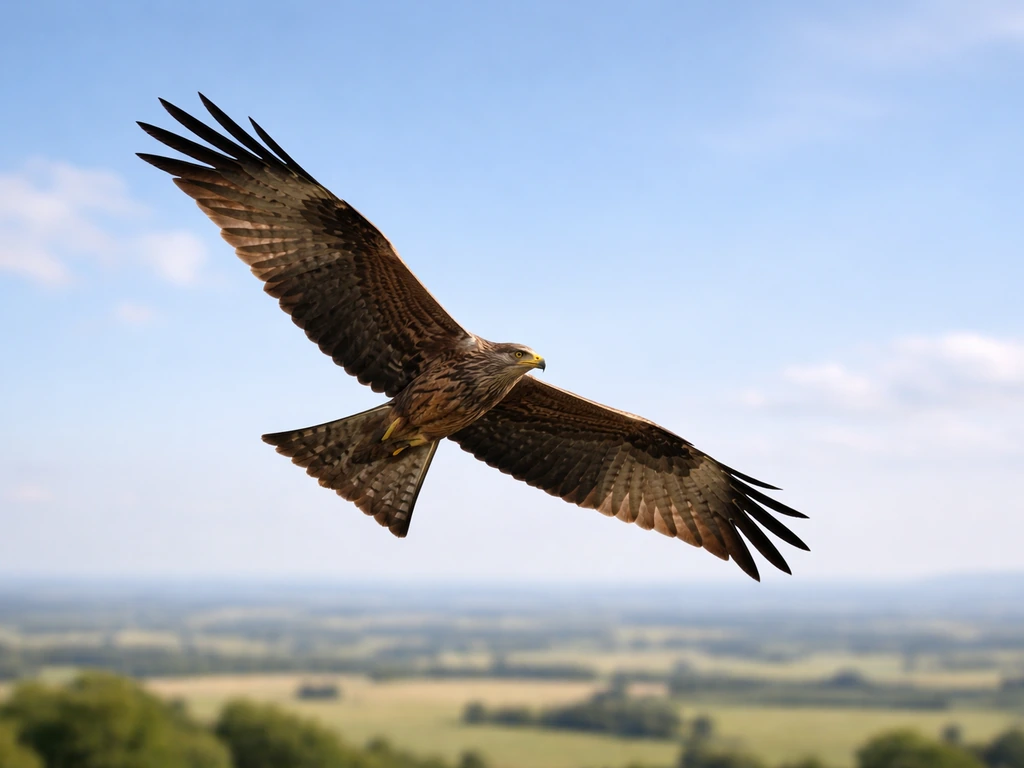
A chirpy bird is, at its most literal, a small bird that makes bright, sharp sounds. Figuratively, 'chirpy bird' is an affectionate way to describe a person (or a bird) that is upbeat, talkative, and full of energy. The adjective 'chirpy' on its own simply means happy and active, and when you attach it to 'bird' you get either a precise description of a singing sparrow or a warm, playful nickname for your most cheerful friend. It is not a fixed idiom you will find in a dictionary, but it is instantly understood in everyday English, and its close cousin in Hindi, 'चहकती चिड़िया' (chahaktee chidiya), carries exactly the same warm energy.
Chirpy Bird Meaning: Literal, Figurative & Cultural Guide

Marcus Whitley
24 Jul 2026
The definition in plain terms
Meta title: Chirpy Bird Meaning: Literal, Figurative, and Cultural Explained
Meta description: What does 'chirpy bird' mean? Explore its literal, figurative, and Hindi cultural meanings, etymology, synonyms, and usage examples in plain English.
Short definition: 'Chirpy bird' describes either a literally vocalizing bird making short, sharp calls, or a cheerful, lively person being compared to one. The core word 'chirpy' is a standard English adjective meaning 'happy and active,' traceable directly to the sound a small bird makes.
Literal versus figurative: the quick version
These two meanings feel close but serve very different purposes, so it helps to separate them before diving deeper.
| Meaning type | What it refers to | Typical context |
|---|---|---|
| Literal | A bird that actively chirps, sings, or vocalizes | Nature writing, birdwatching, biology |
| Figurative | A cheerful, perky, talkative person | Everyday speech, literature, journalism, nicknames |
| Affectionate nickname | A term of endearment for a lively child or friend | Informal conversation, children's literature |
The literal sense is grounded in observable bird behavior: you hear the sound, you describe the bird. The figurative sense is a metaphor that has been so widely used it feels almost automatic. When someone says 'she's a chirpy little bird this morning,' no one stops to picture an actual sparrow. The image is there, but it works as a feeling, not a visual.
What birds actually do when they chirp
Merriam-Webster defines 'chirp' as a short, sharp sound made especially by a small bird or insect, and the verb form means to produce that sound. In practice, ornithologists draw a useful distinction between songs (longer, more complex vocalizations used for territorial defense and attracting mates) and calls (short, functional sounds for alarms, contact, and coordination). The Cornell Lab of Ornithology describes calls as the everyday working vocabulary of a bird's life, the sounds they use to stay in touch with a flock or signal danger, while songs are the more elaborate performances.
When we say a bird is 'chirpy,' we are usually pointing to the call end of that spectrum: quick, repeated, bright little notes. Think of a sparrow hopping along a fence rail, a budgerigar chattering in a cage, or a robin sounding off at first light. Research on bird vocalizations confirms these short vocalizations serve several purposes: territory signaling, mate attraction, alarm responses, and simple contact calls that help a flock stay coordinated. So a chirpy bird is not just a noisy one. It is, biologically speaking, a communicative and socially engaged one.
Small passerines (perching birds) are the classic chirpy birds: house sparrows, wrens, finches, warblers, and budgerigars. These are the birds most people picture when they hear the word. Larger birds like herons or eagles do not usually earn the label 'chirpy.' The word implicitly carries a size cue: small, quick, bright.
The figurative meaning: what it says about a person
Cambridge Dictionary defines 'chirpy' as 'happy and active,' with the example 'She seemed quite chirpy this morning.' That example sentence captures the register perfectly: it is conversational, slightly observational, and mildly affectionate. Calling someone chirpy is not just saying they are happy. It implies a particular quality of happiness: animated, vocal, a little bouncy, the kind of cheerfulness that fills a room rather than sitting quietly in a corner.
A 'chirpy bird' used figuratively layers the avian image back onto that human quality. It is warmer and more playful than just saying 'chirpy.' The bird image adds a note of lightness, even slight whimsy. You might call a child a 'cheerful little chirpy bird' and it sounds affectionate rather than clinical. Cambridge's corpus also records the phrase 'chirpy cockney attitude,' showing it can describe an upbeat personality style tied to a specific cultural context, in that case the traditionally optimistic, quick-witted persona associated with East London.
It is worth noting that 'chirpy bird' is not a recorded fixed idiom in Cambridge, Collins, or Merriam-Webster. You will not find it listed under idioms the way 'early bird gets the worm' appears. It is a collocation: two words that naturally go together and are immediately understood, but do not have a locked-in, specialized meaning beyond the sum of their parts. That is fine. Plenty of meaningful phrases work exactly this way.
Where 'chirpy' comes from
The etymology here is satisfyingly straightforward. 'Chirp' is an echoic (onomatopoeic) word, meaning it was formed in imitation of the sound it describes. It traces back to Middle English 'chirpen' or 'chirken,' words that were trying to spell out what a small bird actually sounds like. The word evolved to mean making that kind of short, sharp, cheerful sound.
The adjective 'chirpy' appeared around 1825, according to Etymonline, formed simply by adding the suffix '-y' to 'chirp.' The literal meaning was 'full of chirping,' and the figurative leap to 'cheerfully perky' followed almost immediately. By the mid-nineteenth century, you could use 'chirpy' to describe a person without any confusion, because the association between a bird's bright calls and a person's upbeat mood was already intuitive.
A variant form, 'chirrupy' (from 'chirrup,' which is itself a variant of chirp), appears in older Collins and Random House dictionaries. It carries the same meaning and is still occasionally used, especially in British English. For modern writing, 'chirpy' is the standard and most widely recognized form. The noun 'chirper' also exists informally, usually referring to the bird doing the chirping, though it occasionally appears as a nickname for a cheerful, talkative person.
Synonyms, antonyms, and tonal differences
If you are writing and want to avoid repeating 'chirpy,' it helps to understand which synonyms carry the same energy and which shade slightly differently.
| Word | Tone / nuance | Best used when... |
|---|---|---|
| Chirpy | Warm, animated, bird-associated | You want the avian image or a British-English informal feel |
| Perky | Upbeat, slightly energetic | Describing someone lively in a modern, casual context |
| Bubbly | Effervescent, social | The cheerfulness is outward-facing and social |
| Cheery | Gentle, pleasant positivity | The mood is calm and friendly rather than animated |
| Lively | Active and energetic | Describing behavior more than emotional mood |
| Morose (antonym) | Gloomy, withdrawn | Opposite: a person giving off no warmth or energy |
| Dull (antonym) | Flat, unengaging | Opposite in terms of expressive energy |
The Merriam-Webster Thesaurus groups 'chirpy' with 'perky,' 'cheery,' and 'bubbly.' The key difference between 'chirpy' and, say, 'cheery' is energy level. 'Cheery' is a pleasant warmth; 'chirpy' implies movement, sound, activity. A cheery person might smile quietly. A chirpy person is probably talking, moving, filling the space. That is the bird energy coming through.
Common confusions and related searches worth knowing
People who search for 'chirpy bird meaning' sometimes arrive via related or misspelled terms, and it is useful to map those out, both for readers who landed here by accident and for writers who want to be sure they are using the right word.
Chick vs. chirpy
'Chick' and 'chirpy' overlap in that both can be used affectionately for a young or lively person, and both have bird origins. But 'chick' refers specifically to a young bird (or, in informal slang, a young woman, though this usage is considered dated and can feel dismissive in modern contexts). 'Chirpy' is purely about temperament and energy, not age or gender. You would not call a grumpy elderly person 'chirpy,' but 'chick' is about youth more than mood. The chick bird meaning and chirpy bird meaning come from different directions, even if both draw on bird imagery.
Chil and chip: accidental variants
Searches for 'chil bird meaning' and 'chip bird meaning' often come from people who typed quickly or are searching for a specific regional or phonetic variant they half-remember. 'Chil' is a transliteration sometimes used for the Hindi word for kite (the bird of prey), so if you found 'chil bird' and ended up here, the bird you are thinking of is likely different from anything chirpy. 'Chip' as a bird term most commonly refers to chip notes: the short, flat call notes made by warblers and sparrows during migration, often the only clue to a bird's presence in the dark. Neither 'chil' nor 'chip' overlap meaningfully with 'chirpy,' but they live in the same phonetic neighborhood, which explains the search confusion.
Chidiya: the Hindi connection
'Chidiya' (चिड़िया, pronounced approximately 'chee-dee-yah') is simply the standard Hindi word for bird, especially a small bird. Many people searching 'chidiya bird meaning in English' want a translation rather than a figurative interpretation, and the answer is straightforward: chidiya means bird. But the cultural resonance is richer than a one-word translation suggests, which is worth exploring separately below.
Cultural notes: chidiya, Indian usage, and the chirpy bird in other contexts
In Hindi, the phrase that most closely translates 'chirpy bird' is 'चहकती चिड़िया' (chahaktee chidiya). The verb root 'chahakna' (चहकना) specifically describes the happy, musical chatter of birds, so it maps almost perfectly onto the English 'chirpy.' Hindi children's rhymes and primary school textbooks feature चिड़िया prominently: the image of a small singing bird waking early, hopping about, and filling the morning with sound is a beloved motif in Indian children's literature. Phrases like 'चिड़ियाँ चहचहाती हैं' ('chidiyaen chahchahaati hain,' meaning 'the birds are chirping cheerfully') appear regularly in elementary Hindi curricula, which means the association of a small singing bird with brightness and morning energy is deeply familiar to Hindi speakers from childhood.
In everyday Indian Hindi usage, calling someone a 'chidiya' can be affectionate, sometimes directed at children or a lively, quick-moving person. It does not carry the gender-specific edge that the English slang 'bird' or 'chick' can have. Because chidiya simply means the animal, the affectionate use is closer to 'little sparrow' as a term of endearment in English: sweet, fond, and linked to smallness and liveliness rather than any more loaded implication.
It is worth being careful not to overextend cultural generalizations here. The cheerful small bird is a positive image in many cultures, but the specific symbolism varies. In some South Asian folk traditions, certain birds carry auspicious or inauspicious meaning depending on species, direction, and timing of their call. That is a separate conversation from the everyday affectionate use of 'chidiya' as 'little bird.' The chirpy bird, in both English and Hindi everyday usage, is simply warm and bright. Deeper regional or ritual symbolism belongs to specific traditions and should not be generalized across an entire language community.
How 'chirpy bird' appears in literature and everyday language
Corpus searches through Google Books and digitized historical newspapers show that 'chirpy bird' appears most often in children's literature and as affectionate nicknames, not as a fixed literary idiom. Early twentieth-century children's stories occasionally featured characters named 'Chirpy Bird' or referred to a small bird as 'the chirpy bird' in a tone that was clearly warm and approachable. This is consistent with the nature of the phrase: it is accessible, pleasant, and very well suited to children's writing and nature-focused prose.
In journalism and everyday speech, 'chirpy' tends to appear on its own rather than in the full collocation 'chirpy bird.' Cambridge's corpus includes an example from Hansard (British parliamentary records), showing the word used to describe a person's attitude as 'cheerfully positive in demeanor.' That journalistic and parliamentary use confirms the word operates comfortably in neutral to formal registers, not just casual conversation. When you add 'bird' back in, the register tips slightly more informal and affectionate, but it never becomes slang.
Practical guidance for writers
If you want to use 'chirpy bird' in your writing, here are a few things worth keeping in mind.
- Use 'chirpy' alone when describing a person in neutral or semi-formal writing. The full phrase 'chirpy bird' adds warmth but also informality, so it suits direct speech, children's writing, or affectionate description better than a news report.
- Prefer 'chirpy' over 'chirrupy' in modern contexts. Both are correct, but 'chirpy' is the standard and universally recognized form. 'Chirrupy' can feel slightly archaic.
- Do not confuse the adjective 'chirpy' with a fixed idiom. You are using it as a vivid descriptor, not invoking a culturally loaded phrase. That means you have creative flexibility with it.
- When writing for Hindi-speaking audiences or in bilingual contexts, 'चहकती चिड़िया' (chahaktee chidiya) carries the same warmth and is the natural equivalent.
- If your piece is about bird behavior specifically, pair 'chirpy' with accurate detail: note the species, the type of vocalization (call vs. song), and the behavioral context, so the word does real descriptive work rather than vague decoration.
A quick comparison of related 'ch-' bird terms
| Term | Origin / language | Meaning | Register |
|---|---|---|---|
| Chirpy bird | English (adjective + noun) | A cheerful, vocalizing bird; a lively person | Informal, affectionate |
| Chick (bird) | Old English 'cicen' | A young bird; informally, a young person | Literal / informal slang |
| Chidiya | Hindi (चिड़िया) | Small bird (general term) | Everyday / affectionate |
| Chil | Hindi transliteration | Kite (bird of prey) | Regional / specific |
| Chip (bird call) | Echoic English | A flat, short call note of warblers/sparrows | Technical birdwatching |
The table above shows how these terms cluster phonetically but point in different directions. Chirpy and chidiya share the warmth. Chick carries youthfulness. Chil and chip are specific: one is a Hindi bird name, one is a technical birdwatching term. Knowing which one you actually mean saves a lot of confusion, especially in writing that spans English and Hindi contexts.
Image and media suggestions
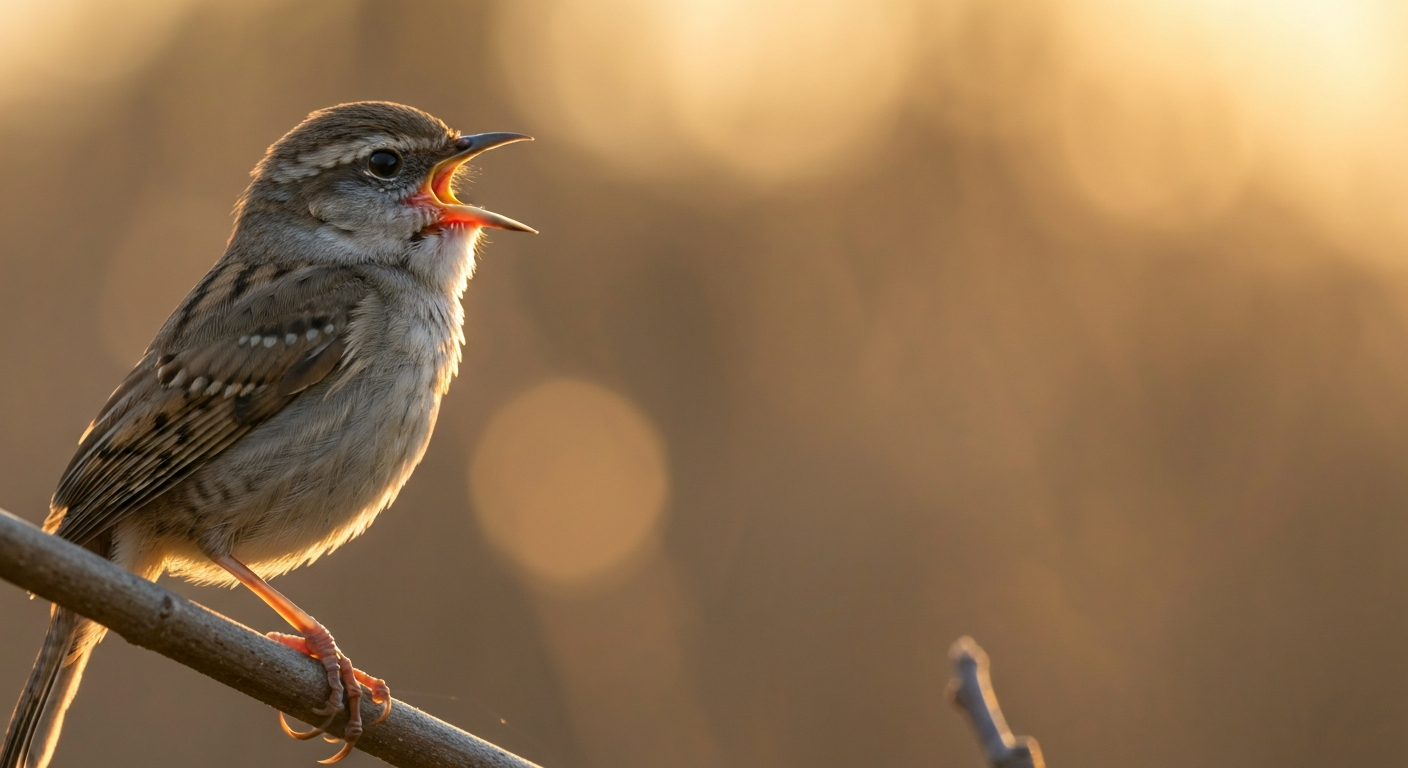
For an article on chirpy bird meaning, the most effective hero image is a small passerine bird (house sparrow, wren, finch, or budgerigar) caught mid-song, beak open, on a natural perch. This image does the interpretive work before the reader reads a word. Stock sources like Getty Images and Shutterstock have extensive selections under searches like 'bird singing' or 'sparrow chirping. Getty Images, bird singing (stock photos) indexes thousands of licensed images searchable with terms like 'bird singing' or 'chirpy bird' suitable for hero images when budget allows and licensing/attribution rules are followed blank" rel="noopener noreferrer">Getty Images — bird singing (stock photos). ' For no-cost options, Pixabay offers CC0 bird images, and Wikimedia Commons hosts freely licensed audio files including budgerigar chirping recordings (released to public domain). If embedding audio, a short clip of a house sparrow or wren call is more illustrative than a complex song, because 'chirpy' maps best to those short, bright contact calls rather than elaborate melodies. The blank" rel="noopener noreferrer">Macaulay Library (Cornell) is the largest scientific archive of natural‑history audio and video, hosting millions of sound and media records used by apps like Merlin and Bird Academy. Always include caption metadata: species name, behavior, contributor, and license.
FAQ
What concise definition and meta title/description should the article include for 'chirpy bird'?
Definition: 'Chirpy bird' — literally a bird that chirps (makes short, sharp vocalizations); figuratively an informal/metaphorical label for a person who is cheerful, perky, or lively. Meta title (example): "Chirpy Bird — Literal and Figurative Meanings, Usage & Cultural Notes". Meta description (example): "Learn the literal meaning (bird vocalizations), figurative senses (cheerful, perky), etymology, Hindi equivalents, common variants/misspellings, usage examples, and writing tips for 'chirpy bird'." Sources to cite: Cambridge Dictionary (chirpy), Merriam‑Webster (chirp), Etymonline (etymology).
Which authoritative lexical sources should be cited for the definitions and senses?
Primary dictionary sources: Cambridge Dictionary (defines 'chirpy' as 'happy and active'), Merriam‑Webster (entry for 'chirp'—short, sharp sound), Oxford Learner’s Dictionary and Collins (entries linking bird sound → human temperament). Use these to support literal (sound) and figurative (cheerful/perky) senses. Also cite thesaurus mappings (Merriam‑Webster Thesaurus/Cambridge) for synonyms and register guidance.
What etymological facts are important and which source backs them?
Key etymology: 'chirpy' formed from chirp + -y, attested ca. 1825 meaning 'cheerfully perky', with 'chirp' echoic in Middle English (chirpen/chirken). Source: Etymonline. Include notes on historical variants (chirrup/chirrupy) with Collins/Random House as references.
What biological/literal facts about bird sounds should be included and which references support them?
Cover that 'chirp' describes short, sharp bird sounds (calls) and that bird vocalizations serve functions such as territory defence, mate attraction, alarm, and contact. Distinguish calls (short, functionally varied) from songs (longer, courtship/territory). Cite Merriam‑Webster for acoustic definition and peer‑reviewed literature (e.g., Animal Behaviour review / Catchpole & Slater syntheses) and Cornell Lab of Ornithology (All About Birds) for practical, species‑specific distinctions and recordings.
Which multimedia resources are recommended for embedding audio and images, and what licensing notes are needed?
Audio: Macaulay Library (Cornell) for licensed, authoritative bird sound recordings; Wikimedia Commons and Freesound for many freely licensed or public‑domain chirp recordings (check file license). Images: Getty/Shutterstock for commercial hero images; Pixabay/Wikimedia Commons for free/CC0 images. Always include caption metadata (species, behaviour, date, location, contributor) and follow license/attribution rules for each file.
What sample everyday usage examples and literature citations should the article include?
Provide short examples: literal—"A little sparrow is a chirpy bird at dawn"; figurative—"She was a chirpy bird at the meeting, lightening the mood." For evidence, use Cambridge example sentences and Google Books/Project Gutenberg occurrences showing 'chirpy bird' or similar collocations in children’s literature and newspapers. Note that major idiom dictionaries do not list 'chirpy bird' as a fixed idiom—treat as collocation/metaphor rather than set phrase.
Next Article
Chil Bird Meaning in English: What It Really Refers To
Get the chil bird meaning in English, clarify what CHIL refers to, and learn typical uses, context, and origins.