When someone searches "boobrie bird," they are almost always referring to the Boobrie: a creature from Scottish folklore described as a gigantic, shapeshifting water bird that haunts the lochs of western Scotland. It is not a real species you can find in a field guide. It is a myth, and a genuinely fascinating one. That said, there is a real bird called the booby (think blue-footed booby), and because the two words sound so similar, searches and conversations can blur them together. The key is knowing which one the context is actually pointing to.
Boobrie Bird Meaning: What It Refers to and How to Tell

Marcus Whitley
9 Jun 2026
What "boobrie bird" most likely means

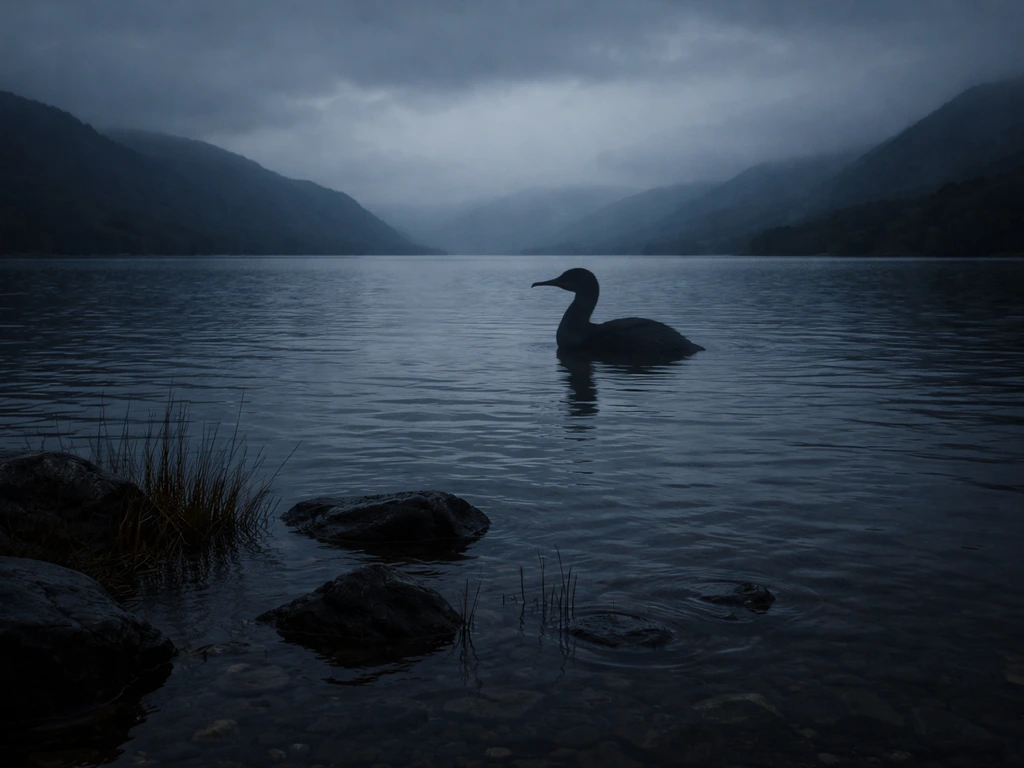
The Boobrie is a creature from Scottish Gaelic folklore, specifically tied to the lochs and coastlines of western Scotland. Accounts describe it as a monstrous, shapeshifting water bird that takes its most recognizable form as something resembling an enormous cormorant or great northern diver. Some tellings give it a bellowing, bull-like call, which scholars have connected to the booming cry of the common bittern. In typical folk accounts, the Boobrie preys on livestock and other animals near the water's edge, which gives it a distinctly ominous character compared to most bird mythology.
The word itself comes from Scottish Gaelic, and because the Gaelic language uses sounds and spellings that do not map neatly onto English, the name has been written down in many different ways over the centuries. George Henderson alone recorded variants like bo'eithre, boidhre, bo-oibhre, and several others. Modern English speakers typically settle on "boobrie" as the standard spelling, but you will encounter alternatives depending on who is writing and what source they are drawing from.
Today the term also shows up in fantasy gaming contexts, particularly in Dungeons and Dragons-style bestiaries where the Boobrie appears as a massive water-bird monster. For example, Monster Manual 2 material includes a D&D-style write-up of the Boobrie, showing modern gaming usage of the term a massive water-bird monster. So if you come across "boobrie" in a gaming forum or monster manual, that is a direct borrowing from Scottish folklore, not a separate invention.
Common misspellings, mishearings, and alternative forms
The biggest source of confusion is the word "booby," the real seabird. The two words are close enough in sound that people mishear or mistype one as the other constantly. A booby is an actual seabird in the family Sulidae, and species like the blue-footed booby are well known and widely photographed. Its name comes from the Spanish slang word "bobo," meaning foolish or stupid, a label sailors gave these birds because they appeared easy to catch and seemingly unafraid of humans. That is a completely different origin and a completely different creature from the mythological Boobrie.
- Boobrie (correct spelling for the Scottish myth)
- Bo'eithre, boidhre, bo-oibhre, baoidhre, baoighre (historical Gaelic variant spellings)
- Booby (the real seabird, and a common mishearing of boobrie)
- Boobie (informal or misspelled version of booby)
- "Boobrie bird" (the full phrase people search when they want identification or meaning)
If you are trying to pronounce it correctly, "boobrie" sounds roughly like BOO-bree, with the stress on the first syllable. That slight difference from "booby" (BOO-bee) is enough to cause mix-ups in conversation, especially in noisy settings or online voice notes.
How to figure out the intended meaning from context

Context is your best tool here. The two possible references, the mythological Boobrie and the real booby seabird, live in very different worlds, and the surrounding words almost always give away which one is meant.
| Context clue | Points to Boobrie (myth) | Points to booby (real seabird) |
|---|---|---|
| Location mentioned | Scotland, lochs, western Scotland coastline | Tropical coasts, Galapagos, open ocean |
| Setting | Folklore, mythology, horror, gaming | Wildlife, birdwatching, nature documentary |
| Behavior described | Shapeshifting, predatory on livestock, bellowing | Diving for fish, distinctive feet, unafraid of humans |
| Tone | Ominous, monstrous, legendary | Curious, ecological, sometimes comedic |
| Associated words | Loch monster, shapeshifter, giant water bird | Blue-footed, Sulidae, seabird, Galapagos |
If someone mentions "the boobrie" in a Scottish folklore discussion, a horror thread, or a fantasy RPG context, they mean the myth. If someone is posting a photo asking "what bird is this?" and the image shows a tropical seabird with blue feet, they almost certainly mean booby, even if they spelled it oddly. Geography and tone will rarely steer you wrong.
The Boobrie as a real (mythological) creature: identification and background
The Boobrie is not a living species, but within Scottish folklore it has consistent, recognizable traits that make it identifiable as its own distinct legend. Think of it the way you would think of the kelpie or the selkie: a creature deeply embedded in the supernatural landscape of Scotland, with specific behaviors and a specific habitat.
- Appears most commonly as a gigantic version of a cormorant or great northern diver
- Can shapeshift, making it a broader water monster rather than a fixed bird species
- Associated with lochs and the western coastline of Scotland
- Known for a bellowing, bull-like cry (possibly inspired by the booming call of the common bittern)
- Preys on livestock, otters, and other animals near water
- Some scholars believe early Boobrie sightings may have been misidentifications of the now-extinct great auk
The great auk connection is particularly interesting. The great auk was a large, flightless seabird that went extinct in the mid-1800s, and its imposing size and waterbird shape could plausibly have contributed to the Boobrie legend. Early 1900s accounts of Boobrie sightings in Scotland line up roughly with a period when great auk memory was still fresh. That kind of layered origin, part real bird, part embellished legend, is typical of how many cryptids and folklore creatures develop.
Symbolism and cultural meaning of the Boobrie
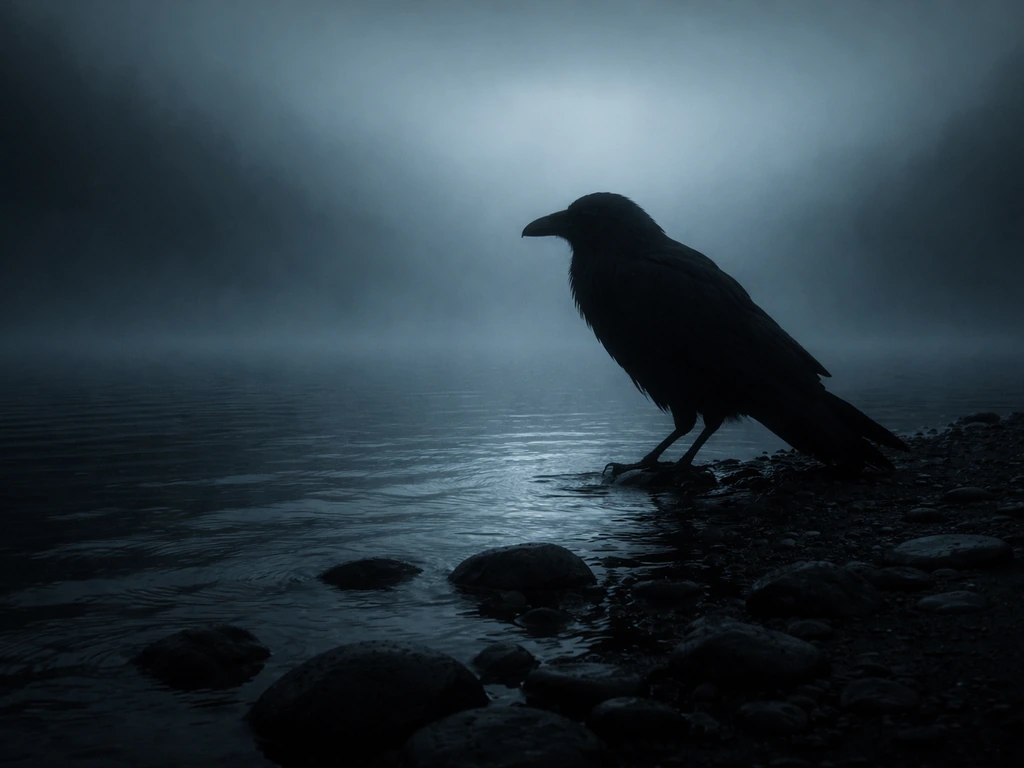
Because the Boobrie is a shapeshifter and a predator, its symbolic register sits firmly in the world of danger, the uncanny, and the wild unknown. In Scottish tradition, water-dwelling supernatural creatures like this one often represent the unpredictability of nature and the risks of the liminal space between land and water. The loch is not just a body of water in these stories; it is a boundary zone where the human world meets something older and less controllable.
The Boobrie's bird form carries specific weight. In many cultures, enormous birds are associated with omens, whether of death, disaster, or significant change. The Boobrie fits that archetype while adding the shapeshifting element, which makes it even more unsettling because you can never be entirely sure what you are looking at. People who are looking for the bohemian bird meaning usually want to connect the phrase to how a bird image can symbolize freedom, creativity, or an outsider vibe. That ambiguity is the creature's real symbolic power: it represents a threat that does not stay in one shape, a danger that refuses to be pinned down or categorized.
In modern usage, particularly in horror writing and fantasy gaming, the Boobrie functions as a symbol of ancient, predatory wilderness. It shows up when a creator wants to invoke authentic Scottish mythology rather than reach for a more generic monster. That specificity is part of its appeal. Unlike terms such as the "bonny bird" (a term of endearment in Scottish and English dialects) or the real-world "booby bird" (whose symbolism is more comedic and tied to sailors' folklore), the Boobrie occupies a distinctly dark corner of bird-related cultural meaning. If you are looking for the demi bird meaning, this Boobrie usage is the kind of cryptid reference people often have in mind.
How people actually use the term in real life
You are most likely to encounter "boobrie" or "boobrie bird" in a few specific settings. Here is how it tends to show up: If you meant “buxom bird,” that phrase has a different meaning and usually refers to a very different kind of bird-related slang buxom bird meaning.
- Scottish folklore and mythology discussions: "The Boobrie is one of the lesser-known water monsters of the Scottish lochs, but it is just as terrifying as the kelpie."
- Horror and dark fiction: "She heard a bellowing from the loch and remembered the old stories about the Boobrie lurking near the shore."
- Tabletop RPG communities: "I used a Boobrie encounter in my campaign set in a Celtic-inspired world and the players had no idea what it was until it shifted shape."
- Cryptozoology and creature wikis: "The Boobrie is sometimes classified alongside the great auk as a possible inspiration for Scotland's water monster traditions."
- Bird identification misfire: Someone posts a photo of an odd-looking waterbird and captions it 'some kind of boobrie?' usually meaning they just cannot identify the bird and are reaching for a word that sounds vaguely right.
That last example is worth noting because it shows how the word travels even when people are not sure what it means. The sound of "boobrie" feels evocative and strange enough that it gets borrowed casually, which is exactly how folk terms survive and spread.
Quick checklist: steps to confirm the meaning today
If you come across "boobrie bird" and want to confirm what the person actually means, run through these steps quickly:
- Check the location or setting: Scotland, lochs, or a fantasy world points to the mythological Boobrie. Tropical coasts or wildlife photography points to the booby seabird.
- Look at the tone: Is it ominous, folkloric, or gaming-related? Myth. Is it curious, ecological, or wildlife-focused? Real bird.
- Check the spelling: "Boobrie" almost always means the Scottish legend. "Booby" almost always means the seabird. Variant Gaelic spellings (boidhre, baoidhre, etc.) confirm the folkloric reading.
- Look for associated words: Shapeshifter, loch monster, cormorant-like, Scotland, bellowing all point to the Boobrie myth. Blue feet, Galapagos, Sulidae, diving seabird all point to the booby.
- Consider the platform: A horror thread or a tabletop gaming forum strongly suggests the myth. A birdwatching subreddit or a nature photo post strongly suggests a real bird.
- When still unsure, ask directly or search with the added word "Scotland" or "folklore" to narrow it down fast.
The Boobrie is one of those terms where a little context goes a long way. Once you know it is a Scottish water-bird monster from Gaelic folklore, the word stops being ambiguous and starts being genuinely interesting. It has a real mythological tradition behind it, a plausible origin in misidentified real birds, and a modern life in horror and fantasy that keeps it circulating. Whether you came across it in a novel, a gaming book, or a Scottish travel piece, you now have everything you need to understand exactly what it means.
FAQ
Is “boobrie bird” the name of a real bird species?
No. “Boobrie” is a Scottish folklore creature, not a species in modern ornithology or field guides. If you are looking at a photo, a distribution map, or bird-watching lists, it is almost certainly referring to a real seabird, usually “booby.”
How can I tell if someone means Boobrie (myth) or booby (real bird) from a sentence?
Look for nearby cues about place and genre. Mentions of lochs, shapeshifting, hunting livestock, or horror, fantasy, and bestiaries point to the Boobrie. Mentions of tropical species, blue feet, seabird behavior, or photography typically point to the booby.
What is the correct pronunciation difference between “boobrie” and “booby”?
Say “boobrie” as BOO-bree (stress on the first syllable), and “booby” as BOO-bee. In text-only conversations this gets lost, so if clarity matters, ask the person to share the context they saw it in.
Why do people keep misspelling “boobrie” as “booby”?
They are matching the sound more than the spelling. Since “booby” is a familiar real-word term associated with well-known seabirds, many writers and even autocomplete systems default to it, even when the topic was Scottish folklore.
Does “boobrie” have any connection to “boobie,” the body-related slang term?
Only indirectly, through English spelling confusion. The folklore term is “boobrie” (BOO-bree), and the real bird is “booby.” If someone brings up explicit or sexual slang, they are almost certainly not talking about Scottish mythology or the seabird.
If I’m researching, what language should I expect the word to come from?
Expect Scottish Gaelic influence, which is why multiple spellings exist in older accounts. When you search databases, try variations, since the same creature may appear under different English spellings across historical sources.
Is “boobrie” ever used as a symbol like an omen or archetype in stories?
Yes. In many modern horror and fantasy uses, it functions as a symbol of predatory wilderness and liminal danger, the boundary between land and water. Writers often use the shapeshifter angle to create uncertainty about what the character is actually seeing.
What should I do if a fantasy text uses “boobrie bird” but doesn’t explain it?
Treat it as a folklore borrowing and read surrounding description for traits. If the text describes a monstrous water-dweller, shapeshifting, or aggressive hunting near shorelines, it is almost certainly the myth. If it emphasizes coastal habitat and recognizable seabird traits, the author may be blending it with “booby.”
Can “boobrie bird” be confused with other “bird meaning” phrases like “bonny bird” or “bohemian bird”?
Yes. Those phrases are usually idiomatic or symbolic in different ways, not cryptid names. If the discussion includes Scottish folklore, lochs, or monster-bestiary framing, prioritize the Boobrie interpretation rather than the general “bird meaning” symbolism.
Is the “great auk connection” something I should assume is factual?
No. It is an explanatory theory for why a large extinct seabird might have influenced folk descriptions. Treat it as a plausible layering of real and imagined elements, not as definitive proof of origin.
Next Article
Buxom Bird Meaning: What People Mean and How to Tell
Understand buxom bird meaning: curvy sense of buxom plus slang or metaphor uses of bird, context and tone tips.