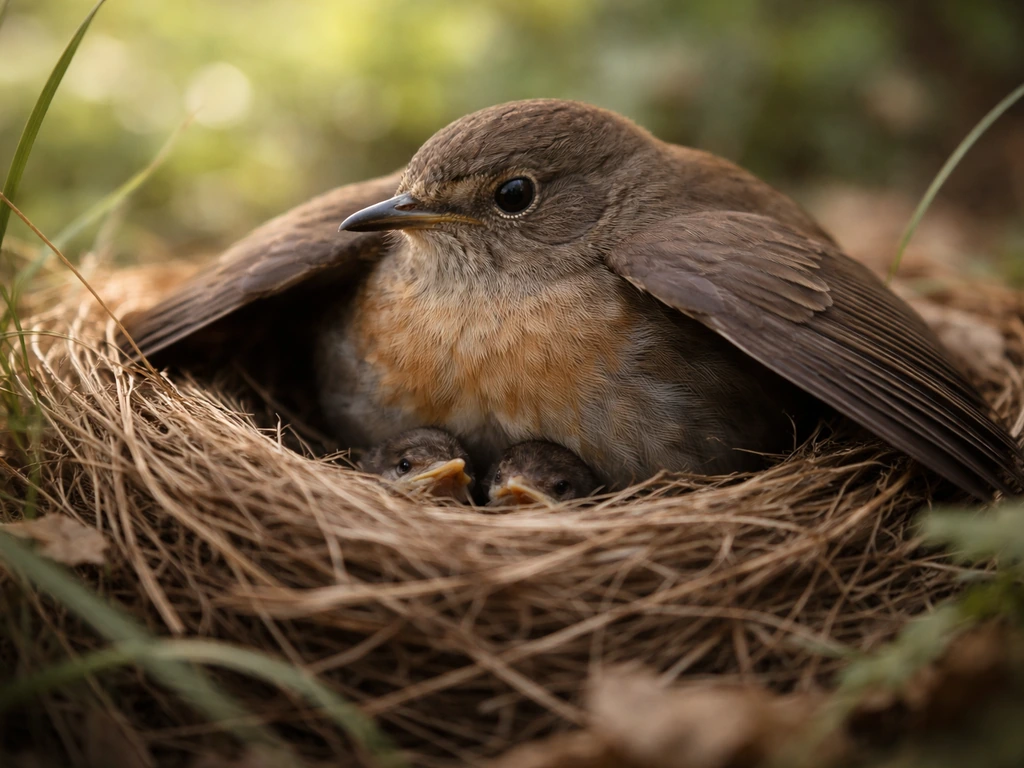
A myna bird (also spelled mynah) is a bold, vocal, highly adaptable bird from South Asia that has spread across much of the world, and when people search for its meaning, they're usually asking one of two things: what does it symbolize culturally, or what does it mean when one actually flies into their home. The phrase “mother bird meaning” is sometimes used to ask for the deeper symbolism behind birds associated with care, guidance, and protection. Both questions have real answers, and this article covers them fully.
Myna Bird Meaning: In House, Omens, and What to Do

Marcus Whitley
11 May 2026
Myna vs. Mynah: Clearing Up the Spelling First
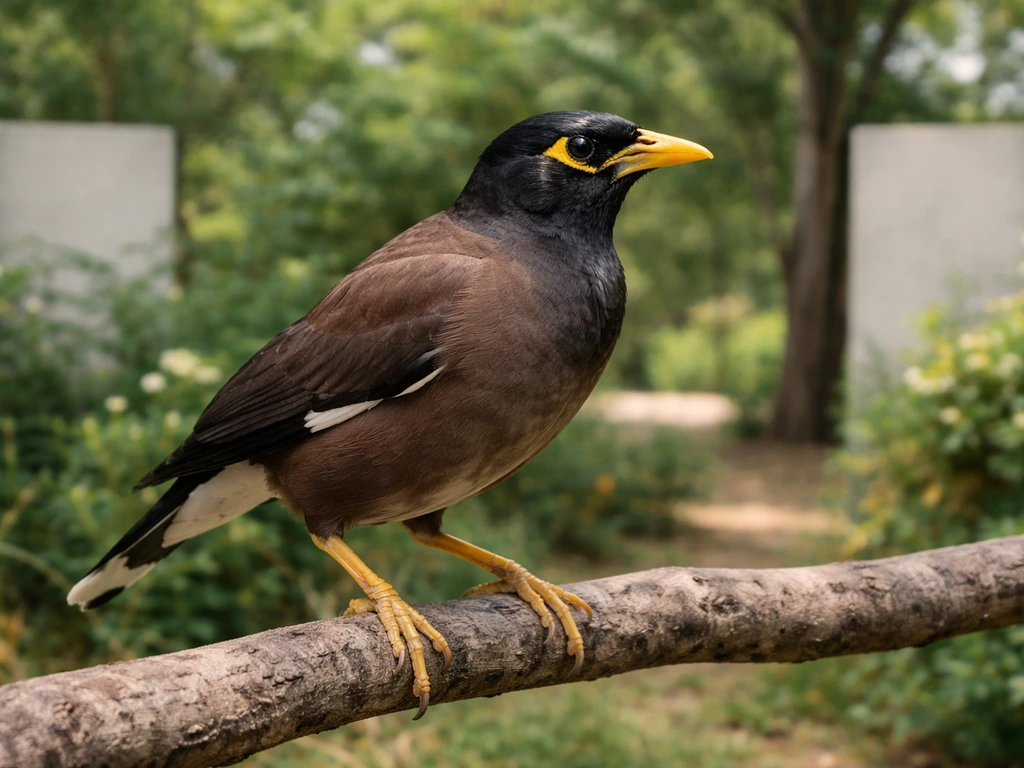
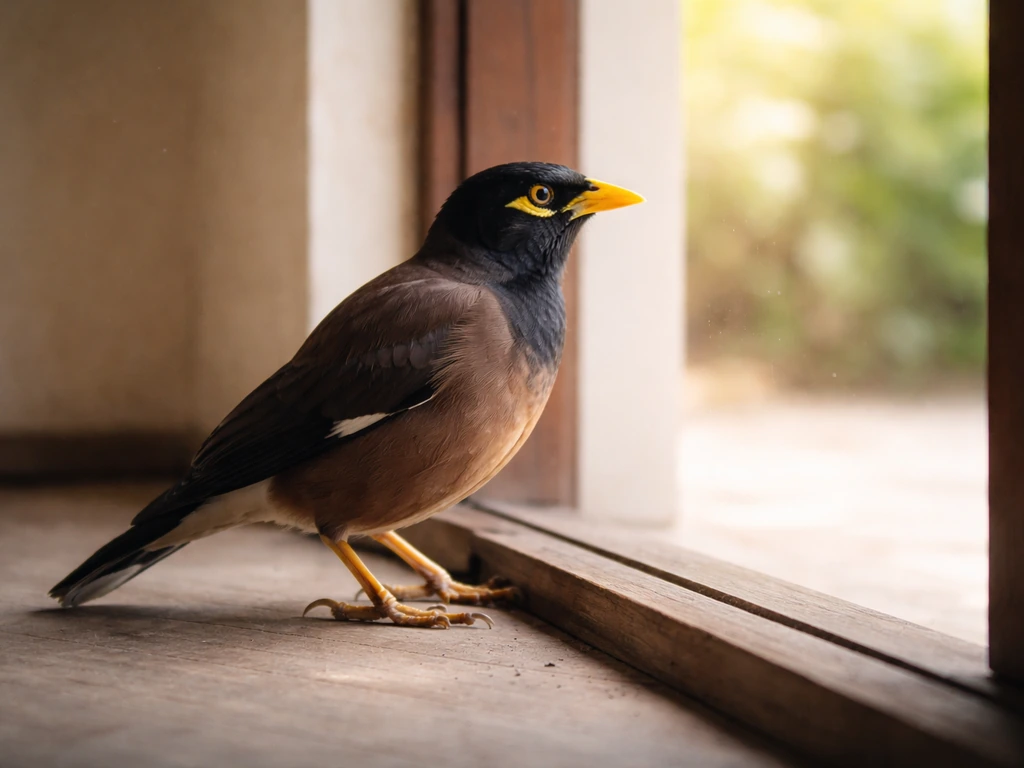
Both spellings are correct, and both refer to the same bird. "Myna" and "mynah" are used interchangeably in English dictionaries, with Merriam-Webster listing "myna" as the standard entry. The word comes from the Hindi and Urdu word mainā, which itself traces back to Sanskrit madana. When people write "myna bird meaning" or "mynah bird meaning" online, they're almost always asking about the same species: the Common Myna, also called the Indian Myna, with the scientific name Acridotheres tristis.
The Common Myna is a medium-sized, dark-brown bird with a bright yellow beak and yellow eye patches. It's loud, opinionated, and extraordinarily comfortable around humans, which is probably why it ended up carrying so much cultural weight. Sanskrit literature even gave it the descriptive name kalahapriyā, meaning "one who is fond of arguments," which tells you something about how long people have been paying attention to this bird's personality. If you've also seen the related term "meaning of mynah bird" explored elsewhere, you'll find the symbolism overlaps significantly with what's covered here.
What the Myna Bird Symbolizes
Mynas carry a surprising range of meanings depending on where in the world you're reading them. In South Asian traditions, where the bird originates, the myna is closely associated with communication, gossip, and social intelligence. Its talkativeness is treated as a feature, not a flaw. In Indian folk culture, pairs of mynas are considered auspicious, particularly for love and partnership. A single myna, by contrast, is sometimes read as an omen of bad luck or loneliness, while two together signal good fortune. This two-vs-one distinction shows up repeatedly in folk sayings and regional superstitions across the subcontinent.
In broader cross-cultural ornithomancy (the practice of reading omens from birds' behavior), mynas fall into the general category of communicative birds whose actions are treated as messages. If the bird is calling loudly, some traditions read that as a warning or announcement. If it lands near you calmly, it's more likely interpreted as a positive sign, a visitor coming, or good news on the way. These readings aren't unique to mynas; they're part of a wider tradition of reading meaning into bird behavior that goes back thousands of years across multiple cultures.
In parts of East Asia and Southeast Asia, where the myna has also been a common companion bird for centuries, it represents cleverness and eloquence, partly because hill mynas in particular are famous for mimicking human speech. The ability to copy and transmit language made these birds natural symbols of communication between worlds in some traditions.
What It Means When a Myna Enters Your Home
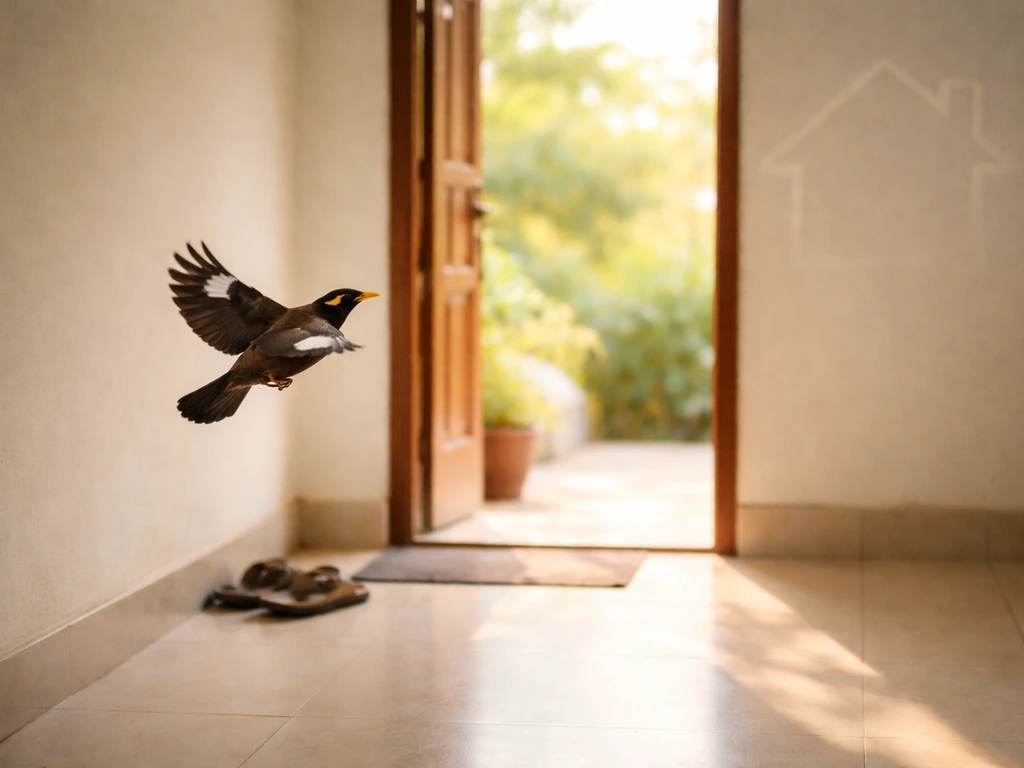
A myna flying into or found inside the house is the most searched variation of this topic, and the folklore around it is layered. If you're wondering what does mine that bird mean, the most common explanation starts with how people interpret a myna's behavior as a message or omen.
The most widely reported symbolic reading, documented across Southern Appalachian, European, and South Asian folk traditions, is that a bird entering a home signals an impending visitor, a significant change, or in older European belief, even a death in the family. These readings typically get adjusted based on the bird's behavior: if it flies in and immediately finds its way back out, it's read more neutrally or even positively (a message delivered and received).
If it gets trapped, panics, or can't leave, that's where the darker omens tend to come in.
In South Asian spiritual contexts specifically, a myna entering the home is more commonly framed as a message about the household, often related to family dynamics, relationships, or news coming from outside. If you're also looking up mama bird meaning, many people connect it to how nesting and family symbolism is read alongside these birds. Given the myna's traditional association with communication and pairs, some regional readings treat it as a nudge about an unresolved conflict or a relationship that needs attention. That kalahapriyā nickname, "fond of arguments," is worth keeping in mind here.
It's also worth being honest about the limits of these interpretations. Snopes has documented the "bird in the house equals bad luck" belief as a longstanding superstition with enormous variation across cultures and time periods. Mainstream wildlife biology offers no mechanism by which a bird's indoor visit would predict human events. The meanings are real as cultural artifacts and as ways people process surprising or unsettling experiences; they're just not predictions. Whether you treat a myna in the house as an omen, a message, or simply a confused bird depends entirely on your own framework, and both are valid.
Why a Myna Actually Enters Buildings
Setting symbolism aside for a moment: there are very practical reasons a myna ends up inside your home. Common Mynas are urban foragers by nature. They spend a lot of time on the ground near human structures, scavenging for insects and food scraps, which already puts them close to doors, windows, and open garages. They're also cavity nesters, meaning they actively seek out small enclosed spaces for roosting and breeding, and they're not shy about using man-made structures to do it.
- Open doors and windows left unscreened, especially in warmer months when mynas are actively foraging
- Light attraction: mynas, like many birds, can become disoriented by artificial light at night and fly toward bright indoor spaces
- Window and glass confusion: reflective or transparent glass looks like open space to a bird, and they fly straight into it or through open-frame areas nearby
- Nesting proximity: if a myna has nested near or on your home, it may enter an open space while exploring nesting options or during territorial disputes
- Food sources: kitchens with accessible food smells, pet food left near open entrances, or bird feeders too close to windows can all draw mynas closer than usual
Common Mynas also gather in large communal roosts in the evening, sometimes numbering in the thousands, which means that in urban and suburban areas where these birds are established, the odds of one wandering into an open home at some point are genuinely higher than they'd be for less human-adapted species.
What to Do Right Now If There's a Myna in Your Home
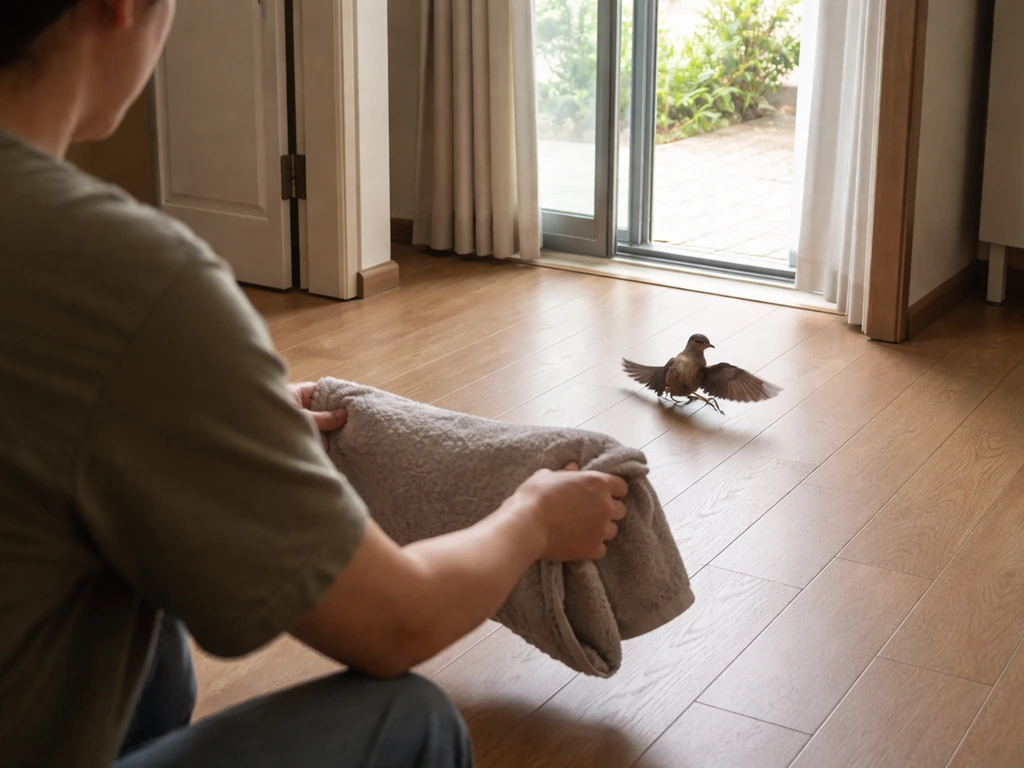
The good news is that getting a myna out of your home safely is usually straightforward if you follow a few steps. The key principle is to work with the bird's instinct to move toward light rather than trying to chase or grab it.
- Close off the rest of the house. Shut interior doors so the bird is contained in one room. This makes guiding it out much easier.
- Turn off all the lights in that room. Darkness removes distraction and makes the bird focus on finding light.
- Open one exit: a window or exterior door. Make it the brightest, clearest exit available.
- Step back and wait quietly for 10 to 15 minutes. In many cases, the bird will find the light source and fly out on its own.
- If it doesn't leave, hold a large sheet or towel at head height and walk slowly toward the bird from behind, using the sheet as a gentle barrier to guide it toward the open exit. Don't rush or flap the sheet; slow and steady works.
- If the bird appears injured (not flying, sitting on the floor, tilting), don't chase it. Place a ventilated box over it gently, slide cardboard underneath to secure it, and contact a local licensed wildlife rehabilitator.
- Once the bird is out, close the exit and figure out how it got in before opening things back up.
The Canadian Wildlife Federation and U.S. Fish and Wildlife Service both endorse the light-and-sheet method as the safest approach for the bird and for you. Avoid trying to catch the bird bare-handed unless it's clearly injured and unable to move; a panicked myna can scratch, and it will exhaust itself trying to escape.
How to Stop It From Happening Again
Once you've gotten the bird out, a few practical changes go a long way toward preventing a repeat visit.
| Problem | Fix |
|---|---|
| Open windows without screens | Install or repair window screens; this is the single most effective barrier |
| Glass confusion (bird flies toward or into windows) | Apply window decals or Feather Friendly-style dot patterns to break up the reflective surface; space markers no more than 2 inches apart vertically |
| Night-light attraction | Turn off nonessential interior and exterior lights at night, especially during spring and fall migration seasons; switch to downward-facing fixtures |
| Open garage or shed doors | Keep them closed when not in use; if ventilation is needed, use mesh rather than leaving gaps open |
| Food attractants near entry points | Move pet food and bird feeders well away from doors and windows; seal outdoor waste bins |
| Nesting near the home | Check eaves, roof vents, and gaps in siding; seal openings larger than 1 inch with hardware cloth or metal mesh before nesting season begins |
Window decals and marker patterns work by making glass visible to birds as a physical object rather than an open flight path. The American Bird Conservancy and All About Birds both recommend this approach, and it genuinely reduces collisions and confused entry attempts. The key is density: a single sticker in the middle of a large window doesn't do much. You need a pattern across the full glass surface.
When It's More Than a One-Off Visitor
Most myna-in-the-house situations are one-time events that resolve in under an hour. But there are cases where the situation is bigger and needs more attention.
If a myna has built a nest inside your home, in a roof void, wall cavity, or attic space, that's a different problem entirely. Common Mynas are persistent cavity nesters and can be aggressive about defending a nest site. Removing an active nest yourself may be restricted by local wildlife laws depending on where you live; contact your local wildlife agency or a licensed pest management professional to find out what's permitted and what the safest approach is.
There's also a health dimension worth knowing. Indian Myna Action, a research group in Australia, flags that Common Mynas in close contact with human habitation pose a potential risk from bird mites and fecal dust. If a myna has been in your home for an extended period or has been nesting nearby, wash any surfaces it contacted, vacuum the area, and wash your hands after any handling. These risks are manageable but they're real, especially for anyone with respiratory sensitivities.
And if a bird is injured, either from a window strike or from an unknown cause, the right move is always to contact a licensed wildlife rehabilitator rather than trying to treat it yourself. The U.S. Fish and Wildlife Service directs people toward local licensed rehabilitation facilities for exactly this reason. You can find one through the National Wildlife Rehabilitators Association or your regional wildlife agency. An injured myna sitting on your floor is not a DIY situation; a rehabber has the tools and permits to handle it properly.
FAQ
Does the myna bird meaning change depending on what it does inside the house?
Yes, a myna’s “meaning” changes with behavior. A bird that flies in, lands calmly, and then leaves on its own is usually read as a neutral message (a visitor, a delivered update). If it repeatedly hits windows, panics, or cannot find an exit, the darker omen stories often kick in, but practically it also signals you should use the light-and-sheet method and check for additional closed-off rooms it could get stuck in.
Is “myna bird meaning” always about the Common Myna, or could it be another species?
In most places, “myna” refers to the Common Myna (Acridotheres tristis). However, other birds in the myna family can be confused in photos or descriptions. If you are trying to apply symbolism based on “myna,” compare physical traits (dark brown body, yellow beak, yellow eye patches for Common Myna) because different species can lead people to different folklore associations.
What does it mean if there are two mynas instead of one?
If you see more than one myna, folk readings often use a pair-versus-single distinction for South Asian symbolism (two together is usually seen as auspicious for love or partnership, while a lone bird can be read more negatively). If you are treating it as an omen, treat the number as part of the pattern, not the whole story, and also consider whether it is a communal roost day in your area.
How should I balance myna bird meaning folklore with safety and reality?
People often mistake the superstition for a prediction. A safer approach is to separate emotional meaning from action steps: interpret it as a cultural sign if you want, then handle the real-world situation (open an exit, reduce window hazards, and sanitize if it has been in contact with surfaces). That way, you respect the folklore without assuming it can forecast events.
What should I do if the bird is trapped in one room?
If the myna is trapped in a room, do not try to chase it through hallways repeatedly, it can end up cornered under furniture or behind doors. Instead, close off other escape routes, open one clear exit route toward the light, and keep the rest of the home calm so it chooses the opening.
Do window decals really work for mynas, and where should I put them?
Use the window decal guidance strategically. Place the pattern across the full window surface at bird-eye level, and avoid relying on a single small sticker. If the bird still tries to enter, add temporary barriers like closing blinds partially or covering the most reflective areas until the bird leaves.
What if the myna leaves droppings or nesting material in my home?
If you notice droppings, feathers, or nesting materials, treat it as more than a one-time “visitor.” Clean with gloves, remove droppings with a method that minimizes dust (wipe and bag waste, then vacuum if needed), and wash hands thoroughly. If you have respiratory sensitivities, consider wearing a mask during cleanup.
What if there’s a nest or it keeps coming back to the same spot?
Yes, persistent cavity nesting can require legal and professional handling. If you suspect an active nest in walls, roof voids, or an attic, do not attempt removal immediately, local wildlife rules may apply and mynas can be aggressive defending a nest. Contact a local wildlife agency or licensed pest management for what is allowed in your area.
What should I do if the myna bird looks injured?
An injured myna is an exception to most DIY approaches. Signs like inability to perch, bleeding, or severe disorientation mean you should contact a licensed wildlife rehabilitator. If you must keep it safe briefly, use a ventilated box and minimize handling, but do not try to treat it yourself.
What if the myna stays inside for more than an hour?
If the bird stays indoors for hours, the message folklore might become louder, but the practical reason is usually access and exit choice. Double-check for closed windows, screens, room doors, and skylights, then confirm there is one open, well-lit exit route the bird can see from where it is standing.
Next Article
Mother Bird Meaning: Literal Definition and Symbolism
Learn mother bird meaning: literal female bird caring and nesting, plus symbolism of protection, guidance, home, and saf