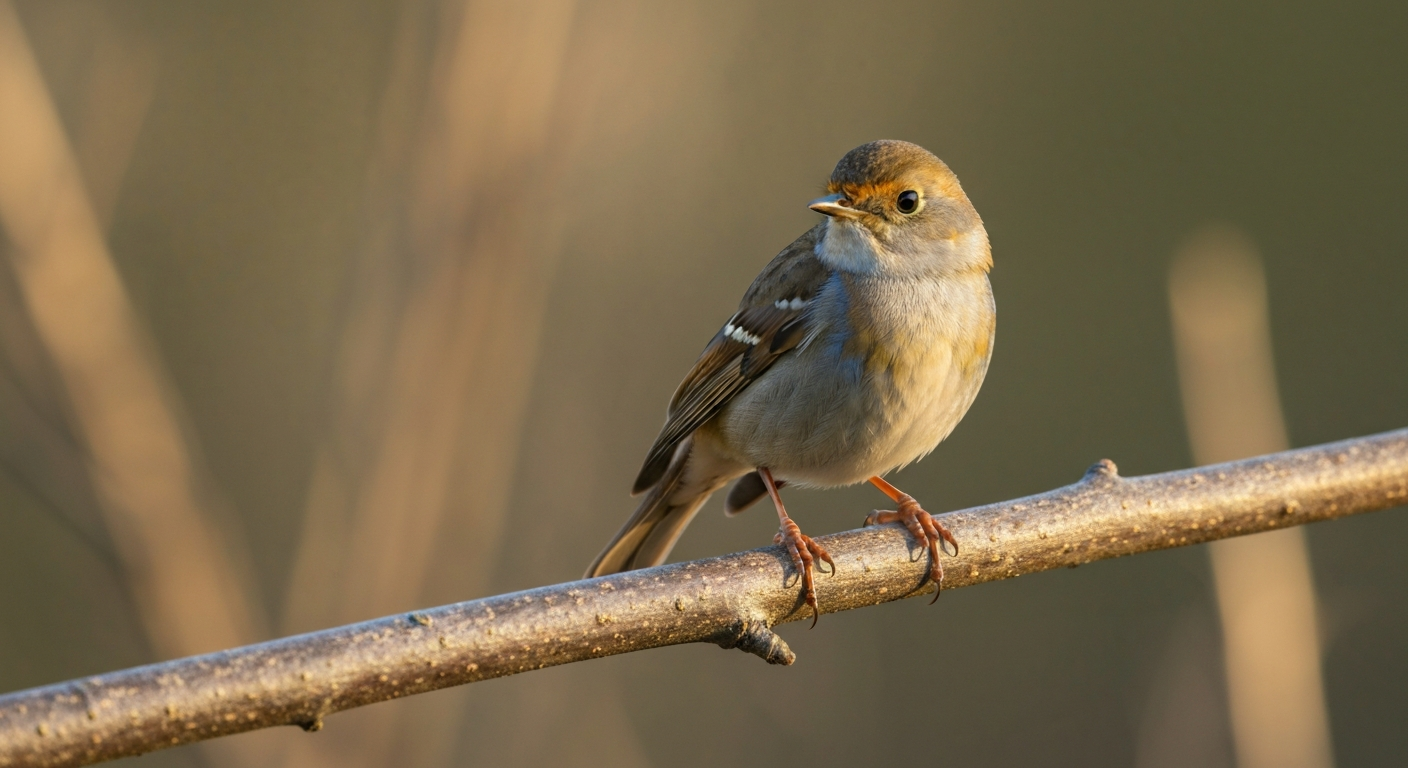
The phrase "great speckled bird" is not describing a bird you'd find in a field guide. It is a theological metaphor rooted in the Old Testament, popularized by a Southern gospel hymn, and carried into broader culture through country music, literature, and even alternative press. If you've run into this phrase in a song, a sermon, a book title, or casual conversation and weren't sure what it meant, here is the direct answer: it refers to a community or group of people (most often the church, or spiritual believers) that stands apart from the surrounding world and is therefore persecuted or treated as an outsider. The speckles are the marker of difference, not a physical description.
Great Speckled Bird Meaning: Definition, Origins, Symbolism

Marcus Whitley
11 Apr 2026

Literal bird vs. figurative phrase: what you're actually dealing with

To be clear upfront: there is no specific bird species called "the great speckled bird." Plenty of birds have speckled plumage. If you're watching your backyard feeder and you see a heavily spotted visitor, you might casually call it a speckled bird, and that's just a descriptive tag. The woodpecker bird meaning is a good example of how a bird's name and appearance can take on symbolic weight, but "great speckled bird" is different. It skipped the ornithology phase almost entirely and landed straight in metaphor.
When someone uses "the great speckled bird" in writing, song, or speech, they are almost always drawing from a biblical and cultural tradition that treats the phrase as a symbol for an outcast community, a persecuted church, or a person or group visibly different from those around them. The image works because a speckled bird in a flock of uniform birds sticks out. That visibility is the whole point of the metaphor.
"Speckled bird" vs. "great speckled bird": there is a difference
The bare phrase "speckled bird" comes directly from the King James Version of Jeremiah 12:9, which reads: "Mine heritage is unto me as a speckled bird, the birds round about are against her; come ye, assemble all the beasts of the field, come to devour." In this verse, the speckled bird stands in for God's heritage or inheritance, which is being attacked by those surrounding it. The speckled bird is the odd one out, surrounded by enemies. That's the core meaning. It carries connotations of being marked, different, singled out, and vulnerable but also belonging to something significant.
"Great speckled bird" is the expanded version, and the word "great" does real work here. The hymn tradition took that raw Jeremiah image and amplified it into something triumphant rather than merely tragic. The "great" qualifier turns the outsider into something worth celebrating, almost defiant. Hymn studies show that the song pictures the church as a speckled bird whose enemies are against her, but the emotional register is pride and faith, not defeat. The difference in nuance is meaningful: "speckled bird" alone reads as vulnerable and marked, while "great speckled bird" leans into the identity as a badge of honor. Think of it as the difference between being called an outcast and choosing to call yourself one.
Where the phrase comes from

The origin is Jeremiah 12:9 in the Hebrew Bible, and it's worth noting that the Hebrew word translated as "speckled" appears only once in the entire Old Testament. Scholars debate whether it means speckled, striped, or simply odd-colored, which actually deepens the metaphor: the exact nature of the difference doesn't matter as much as the fact of it. The bird is visibly unlike the others. That uniqueness, not the specific markings, is the point.
The phrase made the jump from scripture to popular culture largely through one man: Roy Acuff. The hymn "The Great Speckled Bird" had lyrics written by Rev. Guy Smith and was transcribed by singer Charlie Swain, but Acuff's recording on October 20, 1936 is what gave the phrase mass reach. Wikipedia notes that Roy Acuff recorded “The Great Speckled Bird” in 1936, with lyrics attributed to Rev.
Guy Smith and transcribed by Charlie Swain Acuff's recording on October 20, 1936. The song helped Acuff land a recording contract and became one of the defining early tracks of country music.
By the late 1930s, if you were in the American South, "great speckled bird" was a recognized phrase that carried both religious weight and cultural familiarity. Later recordings by artists like Johnny Cash and Kitty Wells in 1959 kept it circulating into subsequent generations.
Historians of country music have noted that Acuff's performance of the song was explicitly connected to Jeremiah in public discourse, including in media coverage of the era. A thesis from East Tennessee State University traces specifically how the song moved "great speckled bird" from a non-secular religious context into the mainstream of country music, which made the phrase recognizable to people who had never opened a Bible. The PBS documentary on country music describes Acuff launching into the song and calls it directly "a religious song with lyrics based on a passage from the book of Jeremiah," which tells you exactly how the cultural transmission worked: the religious meaning traveled inside a popular song.
What the phrase symbolizes
The symbolism of the great speckled bird has layered over time, but a few themes show up consistently across interpretations.
- Identity and difference: The bird's speckles represent visible distinctiveness. Applied to a community, this means being recognizably different from the mainstream, whether religiously, socially, or culturally.
- Persecution and resilience: Jeremiah's bird is surrounded by enemies trying to devour it, so the image carries a message about surviving opposition. This is why the phrase gets used in the context of minority communities or countercultural groups.
- Faith and belonging: In the hymn tradition, the great speckled bird is the church, and being part of it is a privilege despite the hardship it brings. The symbolism flips the outsider status into a source of identity and pride.
- Justice and divine protection: The Jeremiah context frames the speckled bird as God's heritage, meaning something precious and under divine care even when under attack. This adds a layer of ultimate justice: the bird will survive because of whose it is.
- Fundamentalist self-perception: During the Fundamentalist-Modernist Controversy in American religious history, the phrase was used as an allegory for how fundamentalist Christians saw themselves: marked, different, opposed, but righteous.
The phrase also picks up a freedom connotation in some uses. A bird can fly away. Even a marked, pursued bird has the capacity to escape, which gives the image an undercurrent of agency that purely victimhood-focused readings miss. This is part of why the hymn sounds triumphant rather than mournful.
How people use the phrase today

You are most likely to encounter "great speckled bird" in one of four places: religious or theological writing, country music contexts, literary references, or as a named institution or publication. Each context carries slightly different weight.
In theology and church contexts, the phrase is still a live metaphor. Church of God discussions use it to describe spiritual Israel or the church under pressure. Journals in the Adventist theological tradition include phrases like "on the wings of the great speckled bird," treating it as a recognized shorthand for a persecuted but faithful community. Founders Ministries and similar denominational voices use the Jeremiah framing to make moral arguments about the church's role in a hostile world.
In music, the reference spans decades. Roy Acuff is the anchor, but the phrase shows up in lyric allusions in later country songs, including references by David Allan Coe. Modern recordings labeled "Great Speckled Bird" appear on platforms like Bandcamp and SoundCloud, treating the phrase as a recognized poetic image rather than a religious claim. Smithsonian Folkways hosts a version from a Holiness Church, which shows how the phrase lives simultaneously in folk, religious, and archival music spaces.
In literature, W. B. Yeats titled an unfinished novel "The Speckled Bird," drawing directly from Jeremiah 12:9. W.
B. Yeats titled an unfinished novel “The Speckled Bird,” taking the name from Jeremiah 12:9 (“Mine heritage is unto me as a speckled bird…”) Yeats titled an unfinished novel “The Speckled Bird”.
That's a perfect example of how the phrase migrates into secular literary use while keeping its biblical DNA. The connotations of the outsider, the marked individual, and the misunderstood visionary travel with the phrase even when the religious framing is stripped away. If you're thinking about how birds carry symbolic meanings across literary traditions, it's worth comparing this to the pied bird meaning, which also uses unusual or mixed markings as a marker of distinction in folk traditions.
As an institutional name, "Great Speckled Bird" was used by an Atlanta-based alternative newspaper that ran from 1969 to 1971. The staff adopted the name after hearing the old gospel song, and in that context it signaled countercultural identity, community opposition to the mainstream, and a kind of defiant outsider pride that tracked perfectly with the original Jeremiah metaphor. That's a clean example of the phrase doing its cultural work in a totally secular space.
Similar phrases and how they compare
| Phrase | Origin | Core meaning | Tone |
|---|---|---|---|
| Speckled bird | Jeremiah 12:9 (KJV) | Marked outsider, persecuted heritage | Vulnerable, poetic |
| Great speckled bird | Southern gospel hymn, 1936 | Church/community as proud outsider | Triumphant, defiant |
| Odd bird / odd duck | English idiom | Eccentric or unusual person | Light, often affectionate |
| Black sheep | English idiom | Family or group outcast | Neutral to negative |
| Ugly duckling | Hans Christian Andersen | Misunderstood individual who is later recognized | Redemptive, hopeful |
The great speckled bird sits closest to "black sheep" in meaning but with a theological upgrade. The black sheep is an outcast without redemption built in; the great speckled bird is an outcast whose difference is divinely sanctioned. That's a meaningful distinction when you're trying to understand how someone is using the phrase in context.
How to figure out which meaning applies to what you're reading

The first thing to check is genre. If the phrase appears in a hymn, a sermon, a Bible study, or theological commentary, you are almost certainly in the Jeremiah tradition and the meaning is the persecuted-but-faithful community. If it appears in a country music context, same thing: treat it as a religious-cultural metaphor with a triumphal, resilient tone. If it appears in literary fiction or poetry, the speckled-bird-as-outsider reading applies but may be secularized, with the religious layer present as undertone rather than explicit claim.
The second thing to check is whether "great" is included. "Speckled bird" alone tends to read as more directly biblical and more vulnerable in tone. "Great speckled bird" carries the hymn tradition's triumphalism with it. When someone uses the full phrase, they are usually invoking the song, consciously or not, and with it comes the community-pride dimension.
The third thing to check is whether the phrase is being applied to a person, a group, or an institution. Applied to a person, it means something close to "visionary outsider" or "marked individual who doesn't fit in." Applied to a group or church, it means a community that is persecuted for its distinctiveness but holds its identity as a point of pride. Applied to a publication or organization, it's usually a deliberate nod to countercultural identity, drawing on the hymn's cultural resonance.
A common misconception is that the phrase is purely about victimhood. It is not. The Jeremiah passage is dark (the bird is surrounded and threatened), but the hymn transformed that image into something the singer is proud to identify with. When you hear someone call a community the great speckled bird, they are not saying "we are helpless victims." They are saying "we are different, we are opposed, and we own that." That's the emotional logic behind the phrase, and missing it makes the phrase sound passive when it is actually assertive.
One more thing worth knowing: because the Hebrew word for "speckled" in Jeremiah 12:9 appears nowhere else in the Old Testament, there is genuine scholarly uncertainty about what it precisely means. Some translations render it as "hyena" instead of "speckled bird," which changes the image entirely. This is unusual enough that it's worth mentioning: if you're doing close literary or theological analysis, don't assume the King James "speckled bird" is the only valid reading of the underlying text. That said, for nearly every practical cultural, musical, or literary use of the phrase in English, the KJV version is the operative source, and the speckled bird metaphor is what matters.
Connecting the phrase to related bird symbolism
The great speckled bird belongs to a rich tradition of birds as symbolic stand-ins for human communities and spiritual states. If you're interested in how bird behavior gets mapped onto human meaning, the bird pecking meaning is worth exploring, since pecking behavior in flocks is actually a direct parallel to the Jeremiah image: the dominant birds attack the one that looks different. That's exactly what Jeremiah 12:9 describes, and it's one reason the metaphor has felt so viscerally true to readers across centuries.
The broader symbolic language around speckled or marked birds is also interesting cross-culturally. In some traditions, a marked or unusual bird is treated as a messenger or omen precisely because it stands out. The peyote bird meaning offers a different cultural example of how a bird's unusual appearance can elevate it into sacred or symbolic territory. The underlying human instinct, assigning special meaning to birds that look different, runs across very different traditions, which is part of why the great speckled bird metaphor translates beyond its specific biblical context.
You also see the "pecking" dynamic reflected in how communities use the great speckled bird phrase. When a group describes itself as the great speckled bird, they are implicitly describing others as the pecking flock. The pecking bird meaning and the scratching bird meaning both touch on how birds' physical behaviors became metaphors for social dynamics, aggression, and survival, the same emotional territory that makes the Jeremiah image so resonant. Even the concept of a pecker bird meaning taps into this same cluster of ideas about birds singling out individuals and the social hierarchy of the flock.
What to take away from all this
If you encountered "great speckled bird" and weren't sure what you were looking at, here is the short version: it is a metaphor, not a bird. If you are really asking for the pecker bird meaning, the same outsider-and-identity idea is what people usually mean when they use similar phrasing.
Its home base is Jeremiah 12:9 in the Old Testament, its cultural launch came through Roy Acuff's 1936 recording of the Southern gospel hymn "The Great Speckled Bird," and its core meaning is a community or individual that is visibly different, surrounded by opposition, but proud of and committed to that difference. The "great" in the phrase tips toward triumph; the bare "speckled bird" tips toward vulnerability.
Both versions are doing the same fundamental work: using the image of a marked, unusual bird among a flock to talk about identity, belonging, and what it costs to be different.
FAQ
Is “great speckled bird meaning” ever literal, like a real bird name?
In most cases, it is not literal, it is shorthand for a religious or cultural identity. If the phrase appears in a sermon, hymn, church newsletter, or a lyric, assume it points to a persecuted or embattled community that frames its difference as faithfulness or calling, not just “being different.”
What does the phrase mean when it is used as an organization or publication name?
Yes, but only in specific contexts. If “great speckled bird” is used as the name of a church group, publication, or organization, it usually signals countercultural pride or a deliberate nod to Jeremiah and the hymn, and you should read it as a brand of identity rather than a generic metaphor.
How can I tell whether the speaker means vulnerable outcast or triumphant pride?
Look at tone and surrounding claims. If the speaker emphasizes vulnerability, being targeted, and endurance, it matches the “speckled bird” vulnerability frame. If they emphasize victory, courage, and ownership of the label, they are likely drawing on the “great” (hymn) triumphant nuance.
Does the phrase always mean persecution, or can it be used more loosely?
Not always. Some uses implicitly compare an embattled group to the speckled bird and the surrounding society to the attacking flock, but other writers use it more poetically for a “marked visionary” without emphasizing persecution. The safest approach is to check whether the text also mentions opposition, enemies, or hostility.
Is the meaning different if someone says “speckled bird” instead of “great speckled bird”?
“Speckled bird” alone usually reads closer to Jeremiah’s marked vulnerability. Adding “great” generally invokes the hymn tradition’s sense of dignity and defiant faith. If someone quotes only part of the phrase, ask yourself which tone they are trying to borrow.
Why do scholars sometimes disagree about what the bird is in Jeremiah 12:9?
Yes, and it is an important edge case. Some alternative translations of the underlying Jeremiah wording do not map cleanly to “speckled bird” as modern readers imagine it, and scholars debate the original term. In practical cultural usage, English-language readers still track to the KJV image, but for serious analysis you should treat “speckled” as a translation-dependent picture.
What is the most common misunderstanding people make about this phrase?
Don’t assume it is only about being a victim. The hymn-shaped usage often flips the emotion toward agency, identity, and loyalty, even while acknowledging pressure. A quick test is whether the wording includes “owning,” “standing,” “defying,” or “belonging” language.
What does it mean when someone applies the phrase to an individual person?
If the phrase is applied to a person, it typically means a marked individual who does not fit in and may face backlash, but it is still framed as meaningful or divinely sanctioned rather than random embarrassment. If it is applied to a group, expect a church or faith-identity reading with outsiders as the implicit contrast.
Can “great speckled bird” include a freedom or escape theme?
Yes. The symbolism can also include “escape” or flight, since birds have mobility even when they are threatened. When the surrounding text stresses hope, escape, or deliverance, that additional layer is usually in play rather than a purely suffering-focused reading.
How should I use the phrase in my own writing so I do not mislead readers?
If you are using the phrase in writing or speech, define your intent early through context. For example, if you mean “outsider pride,” pair it with words about identity and belonging. If you mean “embattled faith,” reference hostility or “enemies” themes. Without that context, readers may misread it as either generic rebellion or mere victimhood.
Next Article
Perched Bird Meaning, Literal, Symbolic, Usage, Examples
Perched bird meaning: clear literal and symbolic definitions, usage differences, examples, and quick reference.