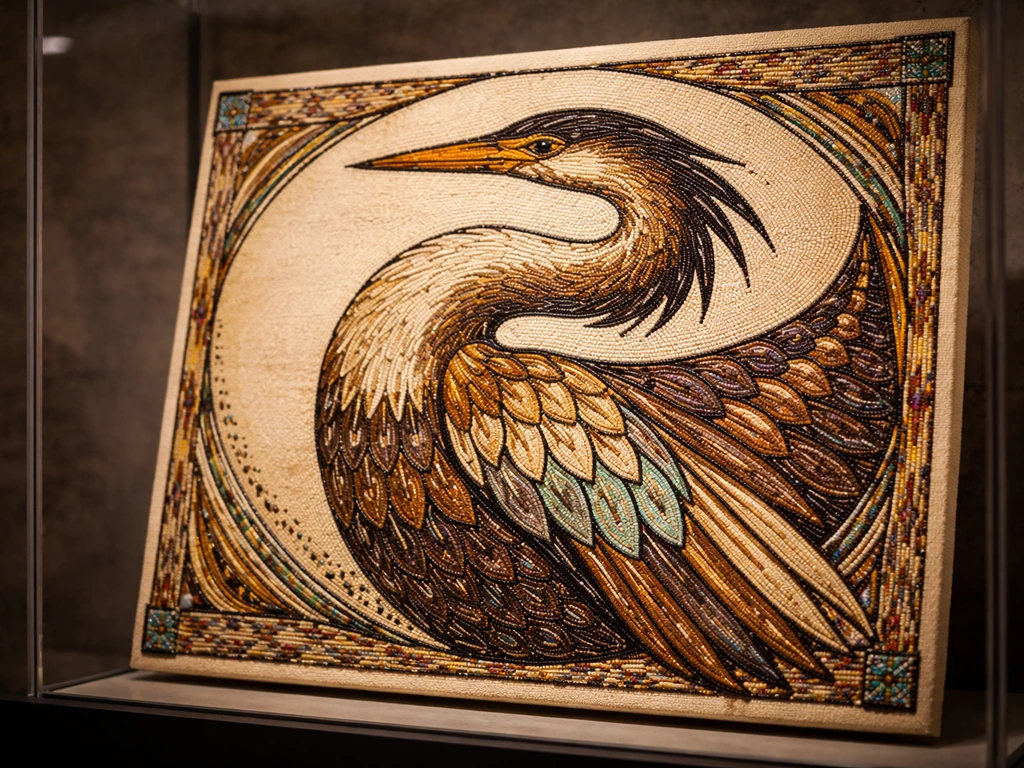
A woodpecker showing up in your life, whether it's drilling into your siding, drumming on a metal gutter at 6 a. m. , or appearing repeatedly in your yard, carries meaning on two levels: the very real, behavioral explanation for what the bird is doing, and a rich symbolic layer that spans dozens of cultures and centuries of folklore.
Woodpecker Bird Meaning Explained: Symbolism, Signs, and More

Marcus Whitley
21 May 2026
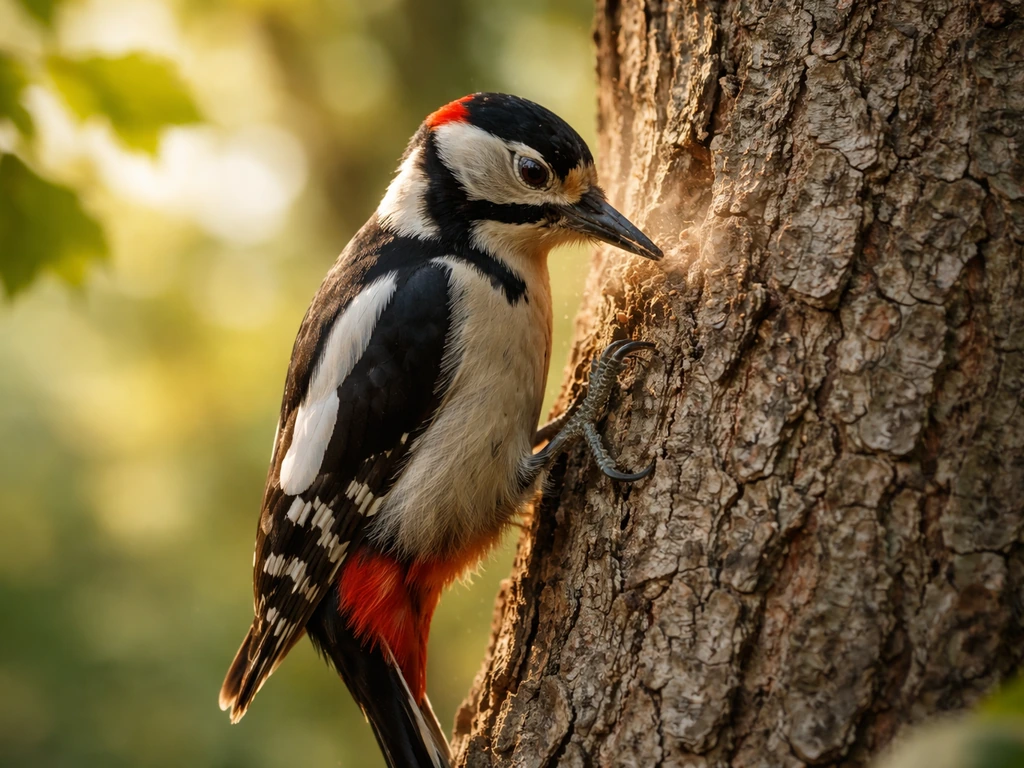
This is where the pecking bird meaning you may be noticing can be interpreted, both as what the bird is doing and as the messages people read into it behavioral explanation. Most of the time, when people search for woodpecker bird meaning, they're trying to make sense of both at once, and that's a completely reasonable instinct.
This guide walks through all of it, from what's actually happening in your yard to what the bird has meant to people throughout history.
What a woodpecker is actually doing (and why you're noticing it)
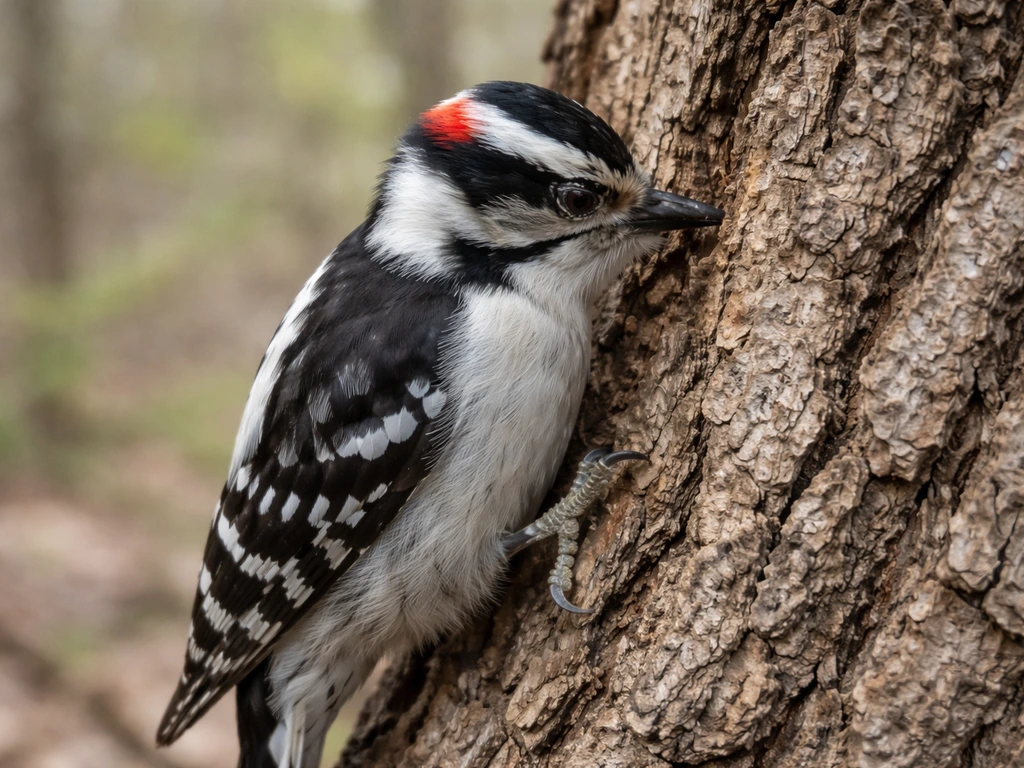
Before diving into symbolism, it helps to understand what the bird is physically doing, because the behavior itself is part of the meaning. Woodpeckers make two very different sounds for two very different reasons. The first is drumming, which is a rapid, sustained sequence of loud pecks on a resonant surface. According to Cornell Lab's All About Birds, drumming functions almost exactly like a songbird's song: it advertises territory, attracts a mate, and maintains contact between a bonded pair. The second is drilling, where the bird methodically chips out wood to excavate food, or to create a cavity for nesting or roosting.
That distinction matters a lot in practice. If you're hearing a fast, loud, almost machine-gun burst of tapping, especially in early spring, that's almost certainly drumming. The bird isn't eating your house; it's essentially announcing itself to the world. [Connecticut wildlife authorities note that woodpeckers will drum on hollow trees, yes, but also on metal gutters, chimney flashing, aluminum siding, and wood trim](https://portal.
ct. gov/deep/wildlife/nuisance-wildlife/problems-with-woodpeckers), basically anything that resonates loudly enough to carry the message across a territory. Drumming rarely causes significant structural damage and typically winds down after a few weeks in early spring. Drilling, by contrast, leaves distinct excavated holes and can appear near eaves or on multiple sides of a structure.
Downy and Hairy woodpeckers, two of the most common backyard species, are laying four to five eggs in tree cavities by May, so nesting-related excavation activity tends to peak right around that time.
What woodpeckers symbolize across cultures
Globally, the woodpecker sits in an interesting symbolic space: it's associated with persistence, communication, rhythm, and the connection between the sky and the earth. Cultures that relied on forests for survival tended to develop deep symbolic relationships with this bird, and the meanings they assigned tracked closely with the woodpecker's most visible behaviors.
The woodpecker as a good omen
In Roman mythology, the woodpecker (Picus) was sacred to Mars, the god of war, and was seen as a protector. The legend of Romulus and Remus, founders of Rome, actually features a woodpecker as one of the animals that helped sustain them, which gave the bird strong positive connotations around protection and providence.
Many Native American traditions, particularly among Plains peoples, associated the woodpecker's drumming with the heartbeat of the earth or the rhythm of thunder, making it a bird tied to vitality and natural power. In some Eastern European folk traditions, the woodpecker was believed to foretell rain, which in agrarian communities made it a welcome, useful bird, a positive sign for crops and livelihood.
More broadly, the woodpecker's relentless persistence at finding what it needs has made it a near-universal symbol of determination, opportunity-seeking, and the rewards of steady effort.
When the woodpecker carried a warning
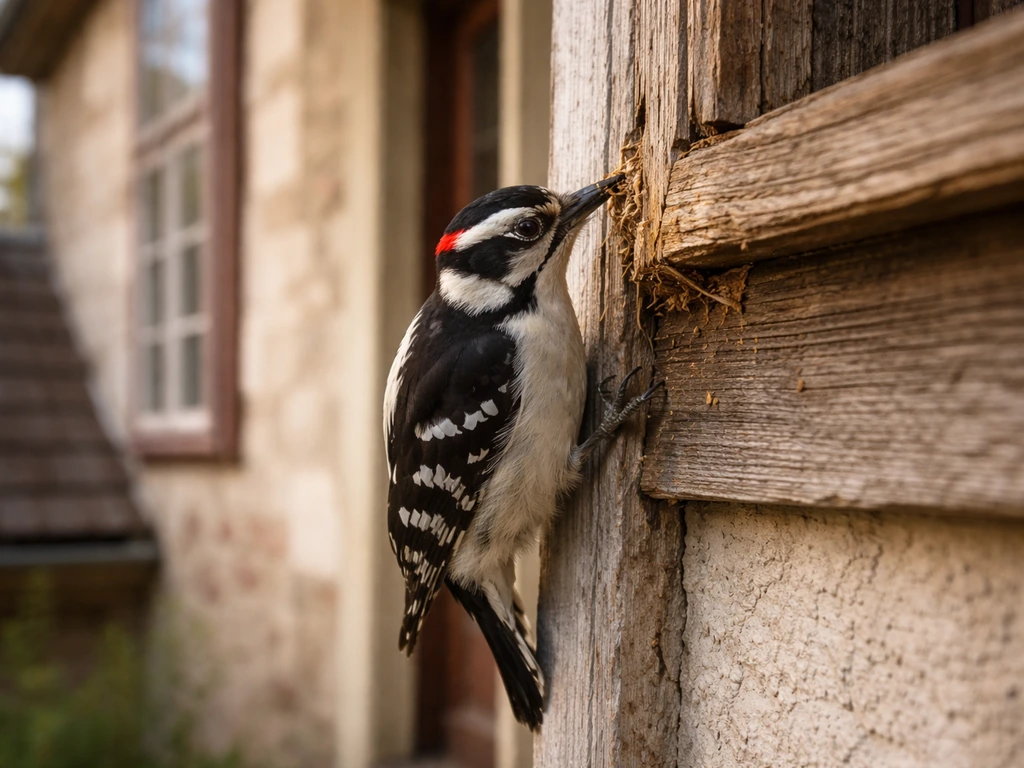
Not every tradition welcomed the woodpecker's knock. In some European folk beliefs, a woodpecker pecking on a home signaled an impending death or illness in the household, placing it alongside other birds, like owls, that were read as harbingers of bad news. This interpretation likely grew from the sound itself: a persistent, unsolicited knocking on a house is eerie to hear, especially before anyone understood the behavioral reasons behind it.
Some Slavic traditions also connected the woodpecker to storms and turbulent change, treating its appearance as a signal that disruption was coming, not necessarily catastrophic, but worth noting. The warning interpretations tend to be localized and older, and they exist alongside the positive ones in the same cultures, which tells you that the woodpecker's meaning was always context-dependent rather than fixed.
Spiritual and folk sign interpretations
For people who engage with birds as personal signs or spiritual messages, the woodpecker carries some of the most specific and consistent meaning of any common bird. The core spiritual themes attributed to the woodpecker are: persistence and the willingness to keep working toward a goal, the importance of communication (especially speaking up or making yourself heard), and attunement to rhythm and timing. The drumming behavior is so central to how the bird moves through the world that many spiritual traditions essentially read its appearance as a message about those same themes in your own life.
In dream interpretation, a woodpecker typically signals that you need to pay attention to something you've been ignoring, or that an opportunity requires persistent follow-through rather than a single attempt. A woodpecker pecking at a door or window in a dream is often read as an urgent message trying to break through your awareness. In synchronicity frameworks, repeatedly encountering a woodpecker (or its sound) during a period of decision-making or creative work is commonly interpreted as reinforcement to keep going, to trust the rhythm of your own effort. If you're drawn to these interpretations, it's worth noting that they align remarkably well with what the bird is actually doing behaviorally: it's literally drumming a persistent message out to the world.
Folk traditions around woodpeckers sometimes connect to the tree itself. Because woodpeckers work at the boundary between the outer and inner wood, between what's visible and what's hidden, some shamanic traditions treated them as guides to hidden knowledge or resources. The bird finds what's concealed inside the bark, which made it a natural symbol for insight, resourcefulness, and the ability to uncover what others overlook.
Why you might be noticing woodpeckers right now
There's a psychological phenomenon called the frequency illusion, sometimes called the Baader-Meinhof effect, where something you've recently noticed or thought about seems to suddenly appear everywhere. If woodpeckers have become meaningful to you for any reason, you'll start consciously registering every drum you hear or flash of red you see. Some people also explore peyote bird meaning, but the underlying idea is similar: repeated sightings are often treated as a prompt to pay attention and keep moving forward.
That doesn't make your experiences less real, but it's worth knowing that woodpeckers are active year-round in most of North America, and their drumming is loudest and most frequent in early spring during territorial and mating seasons. You weren't imagining them before; you just weren't tuning in.
There's also a habitat angle. Woodpeckers are drawn to dead or dying trees, insect infestations in wood, and areas with suitable drumming surfaces. If you're seeing them near your home or a specific tree repeatedly, there may be a very practical reason: something in that environment is attracting them. A tree with carpenter ants, a wall cavity with insects, or simply a gutter that happens to produce exactly the right resonant sound. Noticing what they're specifically doing in the moment, whether drilling into a particular spot or drumming on a hollow surface, gives you useful information about whether there's an underlying condition worth investigating.
What a woodpecker means depending on where it appears
Woodpecker at your home or on your house
Spiritually, a woodpecker targeting your home is often read as a prompt to look more closely at something within your domestic life, a situation that needs more attention, persistent communication, or honest excavation of what's underneath the surface. Practically, if the bird is drumming (fast, loud bursts on your siding or gutters), it's using your house as a resonant amplifier for its territorial song. If it's drilling (slower, methodical, leaving actual holes), it may have found or be seeking insects, and that's worth a closer look at whether you have a wood-boring pest issue.
Woodpecker pecking at a window
A woodpecker pecking at a window is almost always a territorial behavior: the bird sees its own reflection and perceives it as a rival. This tends to happen in spring and is genuinely more about the bird's biology than any message directed at you. That said, the symbolism of a bird insistently knocking at the window of your home has been interpreted in many folk traditions as a message trying to get through, something that deserves your notice. You can hold both of these truths at once. The bird behavior has an explanation; the timing and repetition may still feel meaningful to you, and that's a legitimate way to engage with it.
Woodpecker in literature and idioms
In literary and figurative language, the woodpecker is almost always deployed as a symbol of relentless persistence, often with a slightly comic or stubborn undertone. The image of a bird hammering away at the same spot, oblivious to the noise it's making, maps easily onto any person who simply won't give up, for better or worse. The cartoon character Woody Woodpecker leaned hard into this: chaotic, persistent, impossible to ignore, and effective precisely because of the sustained irritation.
In poetry and literary fiction, the woodpecker's drumming often appears as a counterpoint to human overthinking, the bird just does the thing, rhythmically and without apology. The related concept of bird pecking, when examined symbolically in its own right, touches on some of the same themes of insistence and targeted focus.
Misconceptions worth clearing up
- Drumming on your house does not mean the woodpecker is nesting in your walls. Drumming is a communication behavior performed on resonant surfaces; actual excavation (drilling) would produce visible holes and wood debris.
- A woodpecker pecking at your window is not targeting you personally. It's a territorial response to a reflection. Covering or treating the glass temporarily usually solves it.
- Not all woodpecker symbolism is ominous. The majority of global traditions treat the woodpecker as a positive or neutral sign, and the negative folk interpretations are highly localized.
- Seeing a woodpecker during a meaningful moment doesn't require a purely supernatural explanation, but dismissing it entirely as coincidence isn't necessary either. Both the behavioral facts and the symbolic resonance can coexist.
- Woodpecker damage to a home almost always falls into one of two categories: noisy but superficial drumming (annoying, low-damage), or drilling that signals an insect problem worth addressing. The bird is not the root cause in the second case; the infestation is.
- The word 'pecker' as shorthand for woodpecker is distinct from its slang usage, though if you're exploring related terminology, the symbolic meaning behind the term pecker bird as a bird reference has its own interesting cultural context worth understanding separately.
How woodpecker meaning compares to similar bird symbols
The woodpecker sits in an interesting cluster of bird symbolism alongside related concepts. Bird pecking more broadly, as a behavior rather than a species, carries overlapping themes of persistence and focused attention. The scratching bird carries earthier, more grounded symbolic associations. What's distinctive about the woodpecker specifically is the combination of rhythm, loudness, and the act of breaking through a surface to find what's hidden inside. That combination is what makes woodpecker symbolism so consistent across cultures: the bird is not just pecking, it's communicating deliberately, excavating purposefully, and making itself impossible to ignore.
What to do when a woodpecker appears
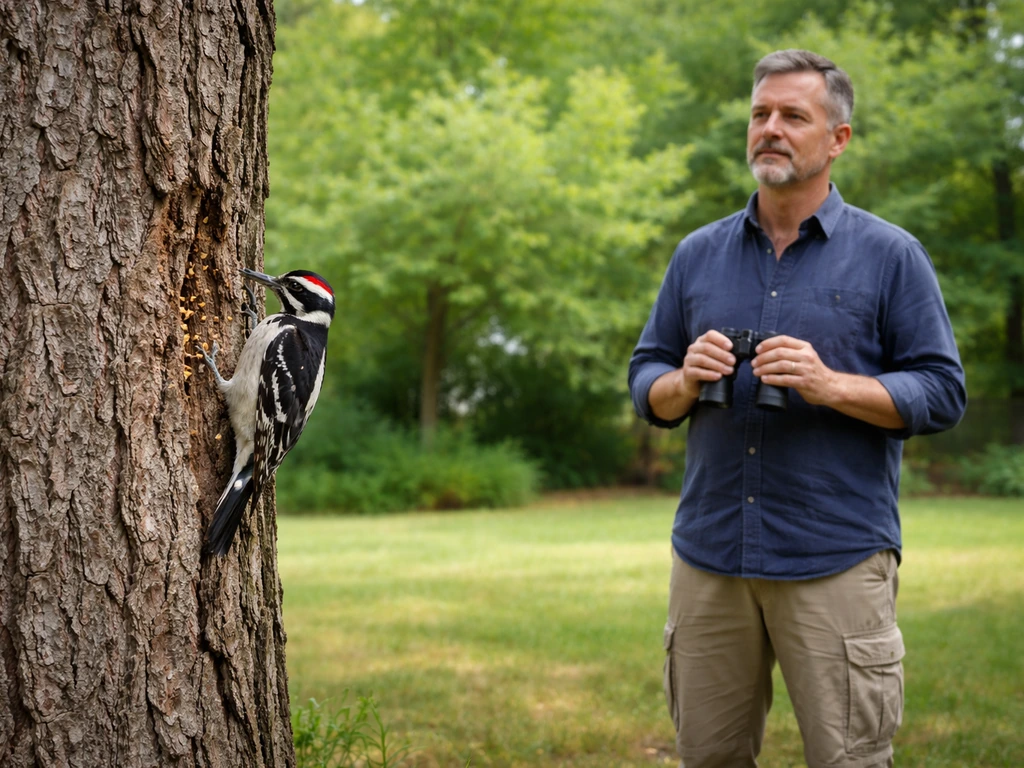
Whether you're approaching this symbolically, practically, or both, here are clear next steps depending on your situation. If you're also curious about specific meanings for particular patterns, you may want to compare this with great speckled bird meaning, which is often interpreted through coloration and behavior in similar folk and spiritual frameworks. If you keep seeing the same bird and wondering about the pied bird meaning, it can help to compare its specific behaviors and timing to what this woodpecker symbol tends to represent.
- Observe what the bird is actually doing. Is it drumming (fast, loud, repetitive bursts with no visible damage) or drilling (slow, methodical, leaving holes)? This distinction shapes both the practical and symbolic interpretation.
- If it's drumming on your house: note the surface it's choosing. Metal gutters and flashing amplify sound the most, which is exactly why woodpeckers seek them out in spring. No action is usually needed beyond waiting out the territorial season, typically a few weeks.
- If it's drilling into your home: inspect the area for signs of carpenter ants, wood-boring beetles, or other insects. The woodpecker may be responding to an infestation that's worth addressing at the source.
- If a woodpecker is pecking at a window: temporarily obscure the reflective surface with tape, netting, or a window cling. This addresses the territorial reflection problem directly.
- If you're engaging with the symbolic meaning: sit with the core themes the woodpecker represents, persistence, communication, rhythm, and the willingness to break through to what's underneath. Ask yourself honestly where those themes are relevant in your life right now. The symbolism works best when you let it prompt genuine reflection rather than just looking for a yes/no omen.
- If the woodpecker appears repeatedly or in a context that feels personally significant: treat it as an invitation to pay closer attention, not a verdict. Note when and where you're encountering it, what you were thinking about, and whether a pattern emerges. That kind of attentiveness is the actual practice behind working with animal signs.
- If you're researching the meaning for creative or literary purposes: the woodpecker's core associations with persistence, hidden resources, and rhythmic communication are well-established enough to work with confidently across a wide range of contexts.
FAQ
How can I tell if a woodpecker sighting is “message” versus just mating or territory behavior?
Yes, but use timing and sound as the decision aid. If you hear fast, sustained drumming (often early spring), it is usually territorial signaling, not “a sign” about your health. If you see methodical drilling that leaves fresh excavated holes and dust near eaves, it is more likely food or nesting behavior, which can also indicate an insect or cavity issue to check.
What should I do differently if the woodpecker drums on my gutter versus drills into the siding?
Match the behavior to the house part. Drumming on gutters, flashing, or aluminum siding is often an acoustic choice because those surfaces resonate well. Drilling near eaves or trim with repeated hole-making is more likely cavity-related work. This matters because the practical follow-up differs: no repair is needed for drumming, but holes can prompt an inspection for pests or entry points.
Is woodpecker pecking at a window a spiritual sign or a reflection problem?
Look for non-romantic indicators of the “window pecking” scenario. If the bird keeps hitting the glass in short bursts and it coincides with spring light, it’s frequently reacting to its reflection. A quick test is to observe whether it changes behavior when clouds or lighting shifts; if it does, reflection is a strong culprit.
Why does it feel like the woodpecker is “focusing on one area” of my house?
Consider whether the bird is targeting the same exact spot across days, that consistency points to a real resource nearby (a cavity, insect activity, or a resonant surface). If the activity shifts around your property, the meaning is less likely to be “about one thing in your life” and more likely tied to foraging and territory range.
When is woodpecker activity most likely to be normal seasonal behavior, not unusual?
If it is late winter to early spring, drumming frequency usually increases because of territorial and mate-related timing, so repetition can feel personal even when it is seasonal. Outside that window, frequent sightings can still occur, but you may want to check for dead wood, insect infestations, or damaged areas that create nesting potential.
Do different woodpecker species or behaviors change the meaning?
A good mistake is treating every woodpecker as the same “message.” Bird species and what they are doing can change the likely intent: for example, a bird excavating holes suggests nesting or feeding, while a bird only drumming suggests communication. If you can, note whether there are fresh holes, insect-like debris, or nearby cavities.
How do I avoid over-interpreting the symbolism while still taking it seriously?
Try a two-track approach. Track the practical facts (date, time, sound type, exact location) and separately reflect on the personal theme you notice, like persistence or communication. The fresh detail to keep you grounded is that woodpeckers are active year-round, so “meaning” often shows up as a reflection of your focus rather than a one-to-one prediction.
Could a woodpecker be telling me there is a real problem on my property?
Use the probability filter: if there are fresh wood chips, small entry holes, or increasing bird visits to one spot, it is rational to have a pest or exterior inspection. Woodpeckers can exploit insect infestations in wood, so your best “next step” is addressing the attractant rather than trying to deter the bird only.
What is a sensible next step if I keep seeing a woodpecker during a stressful decision?
Before taking spiritual action, check for a realistic “trigger.” For example, if the bird appears near a specific reflecting window or a particular resonant gutter, that explains the repetition. If you then still feel drawn to a message, make it practical by choosing one concrete action aligned with persistence or honest communication.
How do I know if the woodpecker is actually showing up more, or if it is just that I noticed it?
If you want a less “psychology-driven” read, focus on what you can verify: drumming versus drilling, and whether there is a repeated location. Also remember the frequency illusion effect, meaning your awareness can sharpen after the first meaningful encounter, making subsequent sightings feel more targeted than they are.
Next Article
Peyote Bird Meaning: Symbolism, Spiritual Context, and Guidance
Peyote bird meaning explores symbolism, spiritual context, modern interpretations, and respectful ways to reflect on ome