If you just took the D.O.P.E. Bird Personality Test and landed on a result that says 'Dove,' 'Owl,' 'Peacock,' or 'Eagle,' your assigned bird is a shorthand label for a specific cluster of personality traits, communication tendencies, strengths, and blind spots. The 'meaning' of your result is simply what that bird type says about how you tend to think, interact, and make decisions. bird with leaf emoji meaning This guide breaks all four types down in plain language so you can actually use what the test is telling you. bird with leaf emoji meaning dodo bird emoji meaning. dope bird test meaning. doe doe bird meaning. dope bird 4 personality types meaning
Dope Bird Personality Test Meaning: Decode Your Bird Type

Marcus Whitley
23 Mar 2026
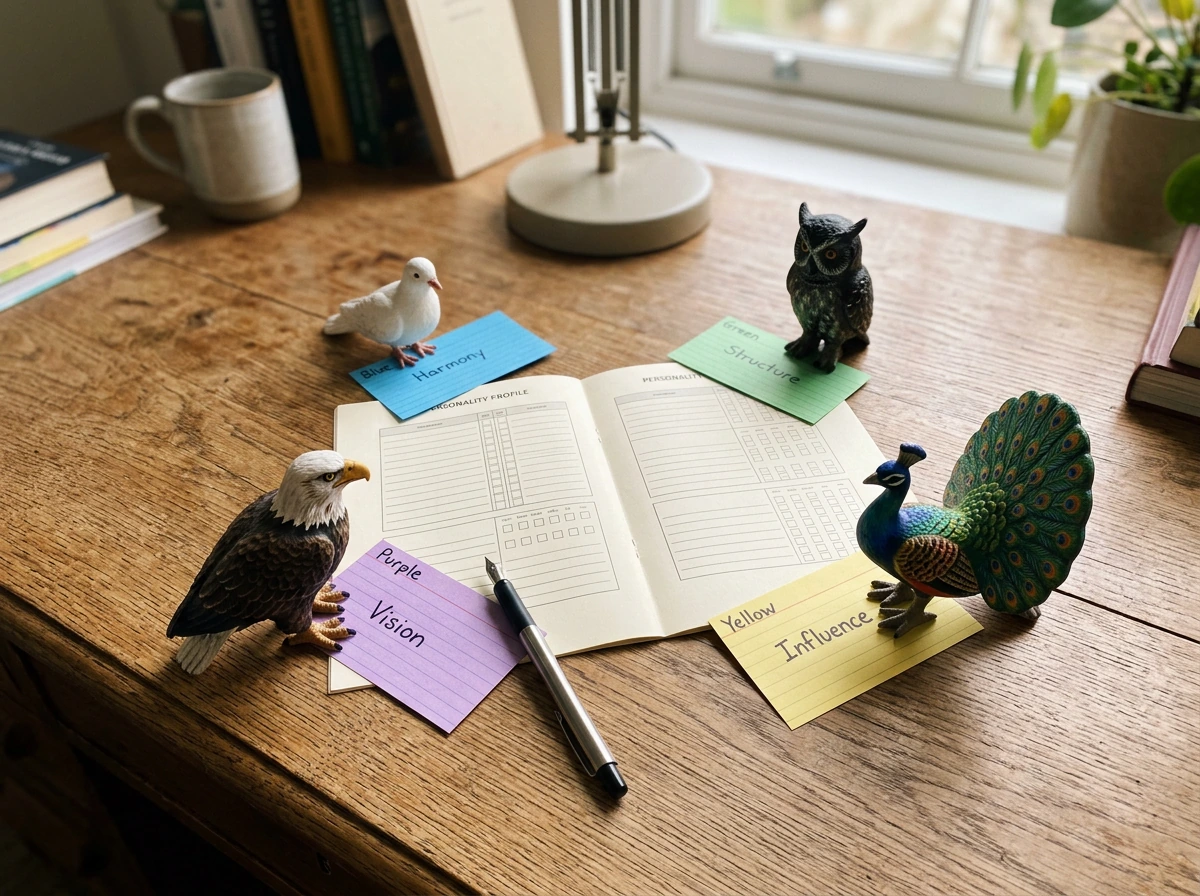
What the D.O.P.E. Bird Personality Test actually is
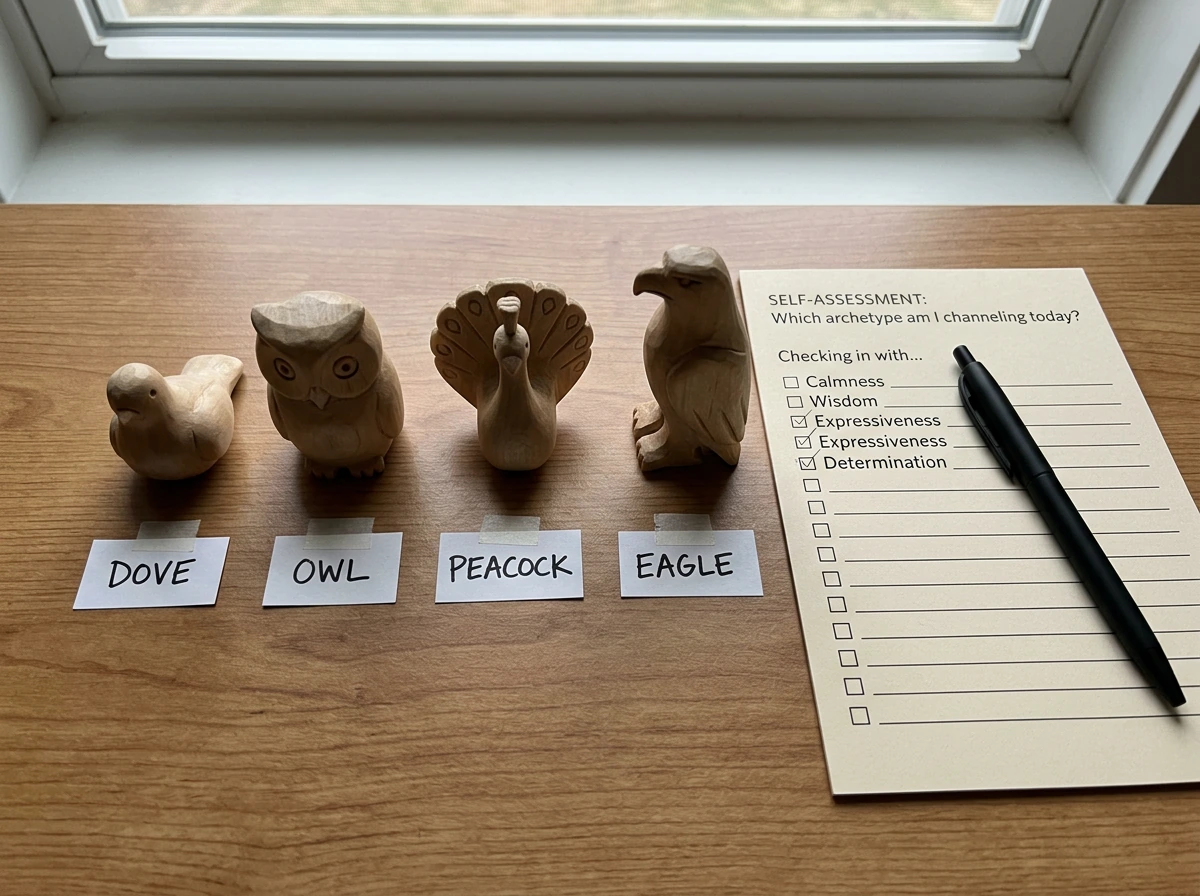
D.O.P.E. stands for Dove, Owl, Peacock, Eagle. The test is a short self-assessment built around four bird archetypes, each representing a distinct personality style. The official D.O.P.E. Personality site presents each bird as its own category with dedicated trait descriptions. The most widely used online version, hosted by RichardStep, consists of 20 questions with four word choices each. You pick the word that best describes you, and your answers map directly onto one (or more) of the four bird types. The whole thing takes about five to six minutes.
The test is explicitly positioned as a communication-style and self-awareness tool, not a clinical psychological instrument. RichardStep's own page describes it as 'not a $300/hour psychological assessment,' and frames it as fun, useful, and straightforward. That framing matters when you're deciding how seriously to take your result, which we'll get to later.
What each bird result actually means
Each bird maps to a combination of two dimensions: introversion vs. extroversion, and emotional vs. goal-oriented drive. Once you know where your bird falls on those axes, the specific traits start to make a lot more sense. The wave and bird emoji meaning is also commonly interpreted as a quick shorthand for mood, identity, or social intent.
Dove: introverted and emotionally driven

The Dove is described as 'blank" rel="noopener noreferrer">the bird of peace' on the official site, and labeled 'INTROVERTED - EMOTIONALLY CHARGED.' If you got Dove, the test is saying you are people-oriented, loyal, friendly, and a natural team player who works hard and cares deeply about relationships. If you want the full dope bird 4 personality types meaning behind each archetype, keep reading through the Dove, Owl, Peacock, and Eagle sections. The flip side: you tend to avoid confrontation, resist change, shy away from risk, and can struggle to be assertive when you need to be. The growth direction for Doves is building confidence, reducing anxiety around conflict, and learning why others (especially more goal-driven types) make the decisions they do.
Owl: introverted and goal-oriented
The Owl is 'INTROVERTED - GOAL ORIENTED.' Getting Owl means the test sees you as logical, detail-oriented, methodical, and leaning toward perfectionism. Owls love data, process, and getting things right. If you're also curious about a related symbol like doe doe bird meaning, compare how the quiz’s Dove-oriented take on gentleness and social comfort aligns with that idea. The tradeoff is that this same precision can make decision-making slow and your thinking inflexible when the rules and logic point one way but reality needs a different approach. Owls are not big risk-takers, and they can get stuck in analysis mode when action is needed.
Peacock: extroverted and emotionally driven
The Peacock is 'EXTROVERTED - EMOTIONALLY CHARGED.' If this is your result, the test is flagging that you are enthusiastic, optimistic, passionate, and you genuinely enjoy being the center of attention. Peacocks bring energy and inspiration to any room. The weaknesses the test points to are real ones: talking too much, struggling with details, and poor time management. The official site even quotes the old proverb about two ears and one mouth as guidance for Peacocks. Career examples listed include stylist, graphic designer, massage therapist, and nurse, all roles that lean on interpersonal energy.
Eagle: extroverted and goal-oriented
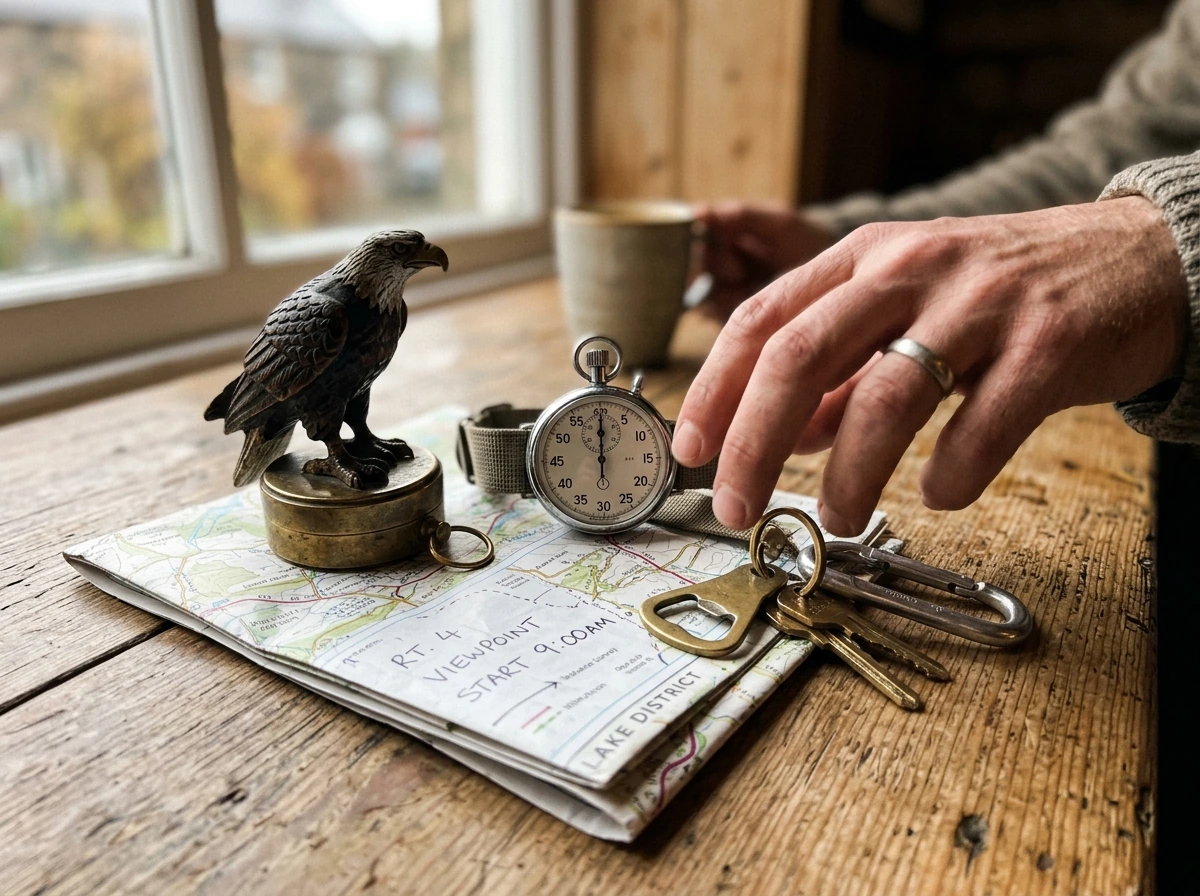
The Eagle is 'the strong hunter,' bold and decisive. Eagles are extroverted and goal-oriented, meaning they combine outward confidence with a drive for results. If you got Eagle, the test is describing you as someone who takes charge, makes decisions quickly, and keeps their eye on outcomes rather than feelings or process. The weaknesses that typically come with this profile include impatience, a tendency to steamroll others, and undervaluing the emotional or procedural concerns of Doves and Owls.
Traits, strengths, and weaknesses at a glance
| Bird | Orientation | Core Strengths | Common Weaknesses |
|---|---|---|---|
| Dove | Introverted / Emotional | Loyal, friendly, team player, hardworking | Avoids conflict, resists change, low assertiveness |
| Owl | Introverted / Goal-oriented | Logical, detail-focused, methodical, precise | Slow decisions, inflexible, over-analyzes |
| Peacock | Extroverted / Emotional | Enthusiastic, optimistic, inspiring, passionate | Talks too much, poor with details, time management issues |
| Eagle | Extroverted / Goal-oriented | Bold, decisive, results-driven, confident | Impatient, can be domineering, dismisses feelings |
Most people are not a pure single type. RichardStep's results include your dominant bird plus your secondary influences, and some test-takers find their score is close across two types. That's normal. Personality is rarely a clean single bucket.
How the test is scored and what can change your result
The scoring logic is straightforward: each of the 20 questions gives you four word options, and each word corresponds to one of the four bird types. Every time you pick a word, that choice adds a point toward the associated bird. At the end of 20 questions, whichever bird has the most points wins the 'dominant type' label. Your other point totals show up as secondary influences.
What can shift your result is mostly about how you read the questions. RichardStep's instructions specifically say to use the word meanings shown under each word and to answer honestly for 'useful results.' If you interpret a word differently than intended, or if you answer based on who you want to be rather than who you actually are, you'll push your result toward a different bird. Mood also plays a role. Taking the test on a high-pressure day might nudge Eagle or Owl answers higher than usual. That's one of the most common reasons a result 'doesn't feel right.'
How to actually use your result
In relationships
The most practical use of a bird result in relationships is understanding friction. If you're a Dove paired with an Eagle, the Dove's conflict-avoidance will repeatedly clash with the Eagle's directness. Naming that dynamic makes it easier to talk about. RichardStep explicitly positions the test as a way to 'stop misunderstandings' by helping you adapt your communication approach to different bird types. If you know your partner, friend, or family member is a Peacock, you know they need to feel heard and appreciated before they can focus on solving a problem. That's actionable.
At work or school
RichardStep's printable results include a section called 'Accelerate Your Career,' which is about placing yourself in roles where your bird type's natural tendencies are assets rather than liabilities. Owls thrive in analysis, research, and quality-control roles. Eagles do well in leadership, sales, and high-stakes decision-making. Peacocks belong in client-facing, creative, or team-motivation roles. Doves are strong in support, counseling, HR, and collaborative project work. If you're choosing a major, evaluating a job offer, or trying to figure out why a certain role drains you, your bird result can add one useful lens to that conversation.
For self-improvement
The most honest use of any personality test result is to look at the weaknesses section and ask whether they're true. If you're a Dove and you recognize that you really do avoid hard conversations, that's a concrete growth target, not just a quiz label. The official D.O.P.E. site frames each bird's growth direction specifically: Doves need to build confidence and assertiveness, Owls need to loosen up on decision-making, Peacocks need to develop listening skills and follow through on details, and Eagles need to slow down and genuinely consider other people's needs. Pick one weakness from your result and treat it as a practice area for the next 30 days.
Is it accurate, or just for fun?
The honest answer is: somewhere in between, and that's fine. The D.O.P.E. test is not a validated clinical instrument like the Big Five or a full Myers-Briggs assessment backed by decades of psychometric research. It's a 20-question word-choice quiz that takes five minutes. User reactions bear this out. In personality communities, you'll find people who feel their result is spot-on and others who think it missed entirely, sometimes in the same thread, with the same result.
That said, dismissing it as meaningless isn't quite right either. The four-bird framework is built on real dimensions (introversion/extroversion, emotional vs. goal orientation) that show up in legitimate personality science. The categories are broad enough to be relatable and specific enough to point toward genuine behavioral tendencies. Think of it like a simplified communication style map rather than a psychological diagnosis. Use it as a starting point for self-reflection and conversation, not as a final verdict on who you are. If you are also trying to decode the dodo bird emoji meaning, you can use a similar lens to connect the symbol to the traits it is being used to represent.
Where to find the test and what to do if your result feels off
There are two main places to take the test right now. The official D.O.P.E. Personality site (dopepersonality.com) has its own version accessible via the 'Take the Test' link on the main page. The RichardStep version at richardstep.com offers both an online test and a printable PDF version, and you can choose whichever format works for you. RichardStep has noted that there are multiple versions of the test floating around online, including a 'super short quiz' that redirects to the current version, so if you land on something that looks outdated or incomplete, follow the link to the currently available version.
If your result doesn't feel right, here's a practical checklist before you dismiss it or retake it:
- Read the word definitions shown under each question option. If you skipped those and guessed at meaning, retake the test using those definitions.
- Answer based on your default behavior, not your ideal self or how you behave under stress.
- Check your secondary bird type. RichardStep's results show your other influence scores. Your second-highest type might actually feel more accurate, or the combination might describe you better than the dominant type alone.
- Take the test on a neutral day. High-stress or unusually positive circumstances can temporarily shift your word choices.
- If you're using the result for a specific purpose (workplace, relationship, self-development), note that RichardStep's pre-test questions ask about your intended use. Keeping that purpose in mind while answering can sharpen how you interpret the results.
The test is free, short, and retakeable. If you are wondering what the dope bird test meaning is, start by reading the Dove, Owl, Peacock, and Eagle descriptions for your dominant and secondary types. If your first result feels wrong, trying again with more deliberate attention to the word meanings costs you five minutes and gives you a second data point. Two consistent results in a row are a much stronger signal than one.
FAQ
What does the “D.O.P.E. bird personality test meaning” actually describe about me?
“Dope bird personality test meaning” usually refers to how your D.O.P.E. outcome translates into communication habits and likely behavior under stress. It is not meant to label your values, mental health status, or identity permanently, treat it as a snapshot of your typical style in this specific framework.
Is my bird “meaning” only my top result, or do secondary types matter too?
The meaning is strongest when you use your dominant bird plus your secondary influences. If you only read the headline bird name, you can miss the exact weakness or relationship dynamic that your runner-up score is pointing to.
Why might I get a different bird type if I retake the test, and how can I prevent that?
It can happen, and the article mentions mood. A practical fix is to take it when you are not rushed, not emotionally heightened, and not trying to “perform” an identity. Use the word meanings under each choice, then answer based on your first honest read rather than overthinking.
What should I do if my results are close between two birds?
If your result is close across two types, focus on the combined pattern. For example, if your totals put you near Dove and Owl, you may be both people-sensitive and detail-driven, so your growth plan should include one relationship skill and one decision-making process.
How do I apply the dope bird personality test meaning in real life, not just read it once?
Use it as a communication tool, not a verdict. In conflict or planning discussions, try one adaptation from the “weakness” section for a week, then review outcomes. If your approach improves outcomes or reduces misunderstandings, that is useful evidence the framework fits you.
Can I use my bird result to explain or diagnose mental health or trauma?
Yes, but set boundaries. The test is not clinical, so avoid using it to justify harmful treatment of someone or to diagnose issues like anxiety, ADHD, or trauma. If you need help for mental health concerns, use qualified professional support rather than quiz results.
What if my result feels wrong, but I still want to be honest when retaking it?
If you feel “off,” check whether you answered based on how you wish you behaved. A quick re-take with deliberate attention to the word definitions can help, but consistency across two attempts is a better signal than changing answers randomly.
Why might my result differ from someone else’s, even if we both took the “dope bird” test?
Most online versions map the 20 word choices to the four birds, but different sites and “short quiz” variants can change question wording or logic. If you used a version that looked incomplete, confirm you are using the current full test before comparing scores to older posts.
How can I use my bird meaning to reduce relationship friction without blaming my partner?
In relationships, use the meaning as a friction guide, not a blame script. For example, if you are Dove with an Eagle, pre-agree on how decisions will be discussed (time to think, how to phrase concerns, and when directness is welcome).
What’s a practical way to turn the “weakness” section into an actual 30-day plan?
Pick one weakness to train for 30 days, then pair it with a concrete behavior. Examples: a Dove can practice one assertive statement per conversation, an Owl can commit to a decision time box, a Peacock can do a “listen then recap” step, and an Eagle can ask one follow-up about feelings or impact.
Can the dope bird test meaning help with choosing a major or job, and how should I use it responsibly?
Because it is a communication-style map, using it for career choices works best at the task level, not as a job-title destiny. Think “which daily tasks fit my default strengths,” then test with a small assignment or internship rather than assuming the result guarantees long-term satisfaction.
Next Article
Bird with Leaf Emoji Meaning: What People Usually Mean
Meanings of the bird with leaf emoji: nature, calm green vibes, growth or environment, and how context changes it.