If you got a message with 👋 or 🐦 and you're trying to figure out what the person actually meant, you're in the right place. Both emojis are simple on the surface but carry a surprising number of meanings depending on context, tone, and even which platform you're on. EmojiNet describes extracting emoji sense labels and context words from the web, and discusses how emoji meanings vary by context and platform context-dependent meaning. Here's exactly what they mean and how to read them correctly in any conversation.
Wave and Bird Emoji Meaning: Real Chat Interpretations

Marcus Whitley
23 Mar 2026
What the wave emoji (👋) usually means
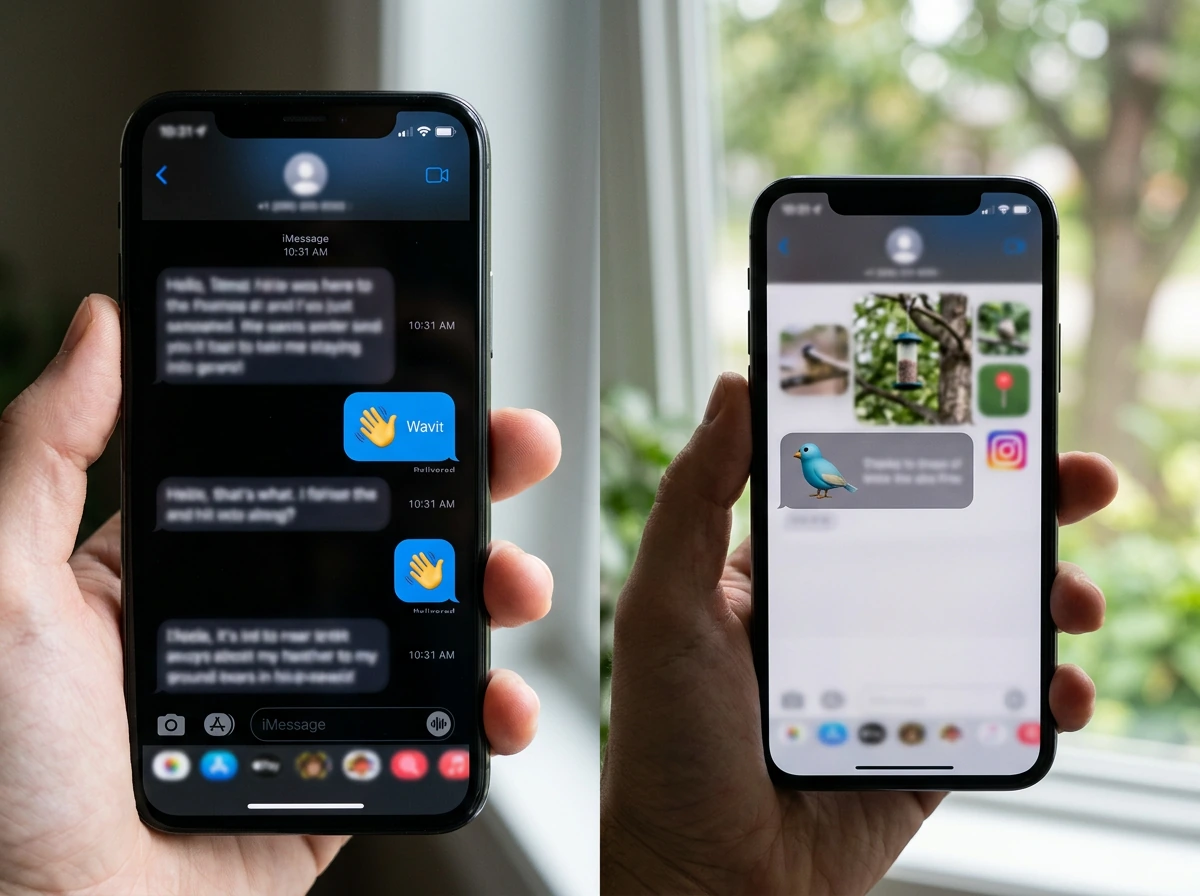
The short answer: 👋 almost always means 'hello' or 'goodbye.' That's it. Emojipedia lists the Waving Hand emoji (Unicode U+1F44B, approved in 2010) as a greeting or farewell gesture, and that covers the vast majority of real-world uses. If someone opens a conversation with 👋, they're saying hi. If it shows up at the end of a message thread or after 'see you later,' they're signing off.
There's also a softer use that falls between those two poles: acknowledgment. Think of it as a nonverbal nod, like spotting someone across the room and waving without necessarily starting a conversation. In group chats or comment sections, 👋 can mean 'hey, I see you' without requiring a full reply.
What the bird emoji (🐦) usually means
The bird emoji (Unicode U+1F426) officially means just that: a bird. If you meant the dodo-style “old or obsolete” usage, see doe doe bird meaning for the exact takeaway. But in practice, people use it to mean three very different things. First, the literal one: actual birds, nature, tweets from real animals, or anything birdwatching-adjacent. Second, and hugely common until recently: Twitter/X. The little blue bird was the platform's logo for years, so 🐦 became shorthand for 'I'm on Twitter,' 'check my tweet,' or 'follow me there.' Third, it pops up as a general vibe emoji, especially when someone wants to signal something free-spirited, light, or fleeting.
There are also culturally specific uses. The dove variant (🕊️) leans heavily into peace, love, and calm, and Dictionary.com notes it's sometimes used for excitement or affection even when the sender isn't thinking literally about doves. The dodo (🦤) has its own lane entirely: people drop it to mean something is outdated or obsolete, as in 'still using that app? For the full dodo bird emoji meaning, see our dedicated guide. The dodo bird meaning is usually about something being old, outdated, or obsolete, similar to how the dodo emoji is used. It's 🦤.' If you’re looking for the dope bird personality test meaning, that’s the gist. If you keep seeing the dope bird test floating around, the meaning is essentially about how people use that bird emoji as a playful prompt dope bird test meaning.
All the common meanings in context
Wave emoji meanings
- Greeting: 'Hey!' or 'Hi there!' — almost always the default when it opens a conversation
- Goodbye: 'See you later' or 'I'm out' — usually appears at the end of a conversation or with words like 'bye,' 'later,' or 'take care'
- Acknowledgment: 'I see you' or 'noted' — a casual, low-stakes recognition in group chats or comment threads
- Passive dismissal (rare): in sarcastic or cold contexts, a wave can signal 'and we're done here,' especially when paired with dry punctuation or silence afterward
- Friendly vibe: used the way some people use 😊, just to keep a message warm and approachable
Bird emoji meanings
- Literal bird: talking about wildlife, pets, or nature
- Twitter/X reference: posting, tweeting, following someone, or pointing to a social media post
- Freedom or lightness: 'I feel free,' 'going wherever the wind takes me,' or general positivity
- Peace (dove 🕊️ specifically): sending good vibes, wishing someone well, or expressing love/sympathy
- Obsolescence (dodo 🦤 specifically): calling something outdated, dead, or irrelevant
- Slang 'the bird': flipping someone off — almost always spelled out or accompanied by a rude comment rather than the standard 🐦, but worth knowing
Which exact emoji are we talking about? The variants matter
People search 'wave emoji' or 'bird emoji' as if there's just one, but there are actually several distinct characters that get lumped together. Knowing which one you're looking at changes the meaning.
| Emoji | Unicode Name | Common Meaning |
|---|---|---|
| 👋 | Waving Hand (U+1F44B) | Hello or goodbye (primary use) |
| 👋🏼 / 👋🏾 | Waving Hand + skin tone modifier | Same as above, just personalized |
| ✋ | Raised Hand | Stop, high five, or 'wait a moment' |
| 🤙 | Call Me Hand / Shaka | Hang loose, chill, casual acknowledgment |
| 🐦 | Bird (U+1F426) | Literal bird, Twitter/X reference, or free spirit |
| 🕊️ | Dove of Peace | Peace, love, sympathy, or calm |
| 🦤 | Dodo | Obsolete, extinct, outdated |
| 🦅 | Eagle | Strength, patriotism, or power |
| 🐧 | Penguin | Cute/playful; also Linux community reference |
The wave-adjacent hand emojis (✋ and 🤙) are worth flagging specifically because people sometimes use them interchangeably with 👋, but they carry meaningfully different vibes. A raised hand (✋) is a 'stop' or 'hold on' more than a greeting. A shaka (🤙) is 'cool' or 'no worries,' not really a wave at all. If you received one of those and thought it was a wave, that's where confusion creeps in.
How to tell what someone actually meant from the message
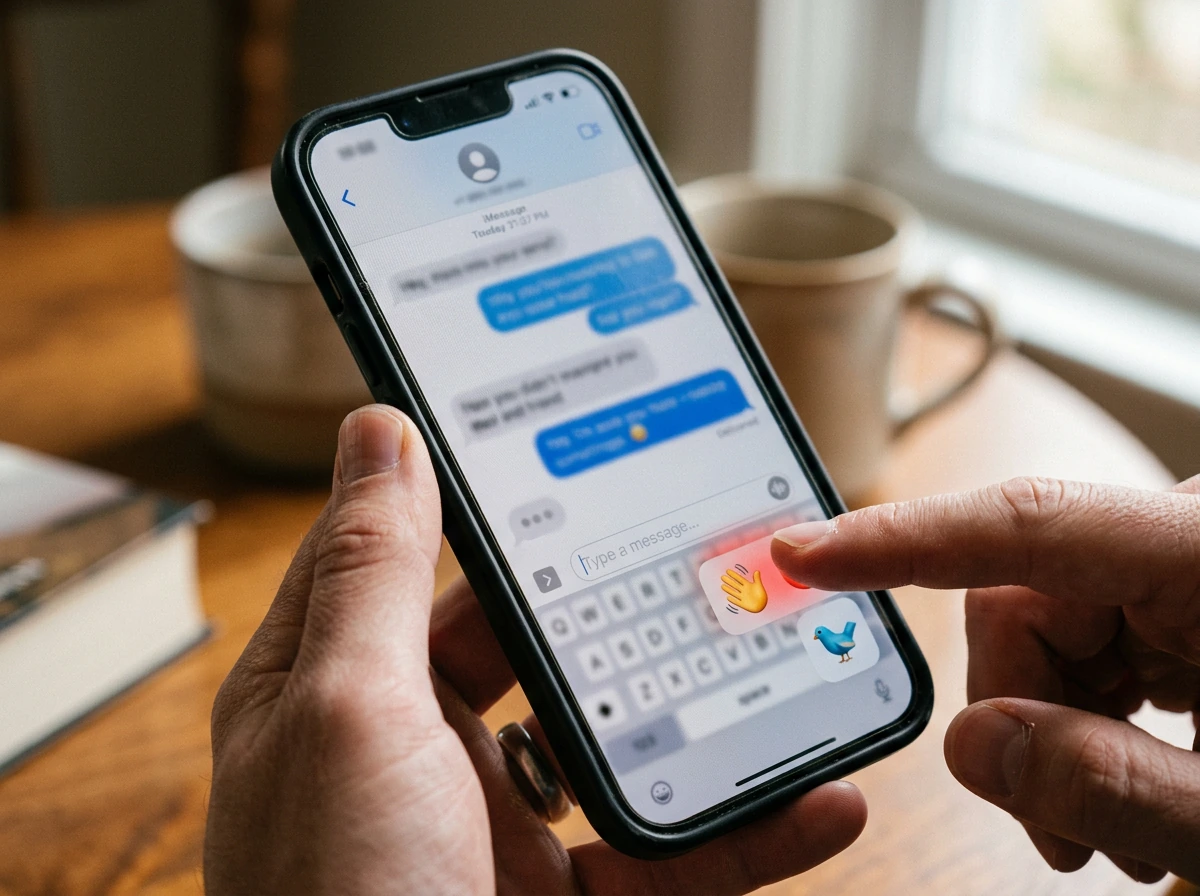
Context does most of the heavy lifting. Here are the practical signals to look at.
For the wave emoji (👋)
- Position in the conversation: at the very start = hello; at the very end = goodbye; in the middle = acknowledgment or friendly tone
- Surrounding words: 'hey 👋' = greeting; 'gotta go 👋' = goodbye; 'thanks 👋' = warm sign-off
- Punctuation and tone: lots of exclamation marks suggest enthusiastic greeting; minimal punctuation or no words at all could be a casual 'hey' or even a cold dismissal depending on your relationship with the sender
- Who sent it and when: a friend starting a new chat = almost certainly a hello; someone replying to your final message = almost certainly a goodbye
For the bird emoji (🐦)
- Look for social media keywords: 'tweet,' 'follow,' 'DM me,' 'my page,' 'retweet' next to 🐦 = Twitter/X reference
- Look for nature keywords: 'outside,' 'garden,' 'spotted,' 'feeder,' 'morning' next to 🐦 = literal bird
- Look for emotional tone: peaceful, loving, or condolence message + 🕊️ = peace/sympathy meaning
- Look for sarcasm or shade: 'still using [outdated thing]' + 🦤 = obsolescence joke
- No clear keyword? Assume the most literal or platform-relevant meaning based on where you're talking (Twitter thread vs text message vs Discord server)
Real-world examples
| Message | Most Likely Meaning |
|---|---|
| 'Hey 👋 haven't talked in a while!' | Friendly greeting / re-opening contact |
| 'Alright, talk later 👋' | Goodbye, signing off |
| '👋' with no other text | Either a hello opener or a cold dismissal — check conversation history |
| 'Check out my new post 🐦' | Twitter/X link or reference to a social post |
| 'Saw the most beautiful 🐦 this morning' | Literal bird sighting |
| 'You're still using that? Total 🦤' | Calling something outdated/obsolete |
| 'Thinking of you 🕊️' | Sending peace, love, or sympathy |
What to reply, and how to clarify if you're still not sure
For a wave emoji, the easiest reply is almost always just matching energy. If it's a greeting, reply with 'Hey!' or 'Hi, what's up?' If it's a goodbye, send back a 'Take care 👋' or 'Talk soon.' If you genuinely can't tell which it is, a simple 'Hey, what's going on?' covers both cases without making things awkward.
For the bird emoji, your reply depends on what you think they meant. If they're pointing you to a social post, ask for the link or go looking for it. If it's a literal bird conversation, just engage normally. For the bird emoji, your reply depends on what you think they meant. If they're pointing you to a social post, ask for the link or go looking for it. If it's a literal bird conversation, just engage normally. If it's a dove in an emotional message, something warm and brief works well: 'Thank you, that means a lot 🕊️.' If you actually can't tell what they meant, it's completely fine to ask: 'Is that a Twitter thing or are you talking about an actual bird?' People find that funny more often than confusing. If you actually can't tell what they meant, it's completely fine to ask: 'Is that a Twitter thing or are you talking about an actual bird?' People find that funny more often than confusing.
If you're still unsure after reading the context, the simplest move is to respond to the most charitable or obvious interpretation and leave space for correction. Something like 'Hey back at you!' after a 👋 covers greeting and acknowledgment at the same time. You rarely need to overthink it, but when the stakes matter (like a work message or someone you don't know well), a quick clarifying question is always fair game.
For deeper dives into specific bird emoji variants, it's worth checking <For deeper dives into specific bird emoji variants, it's worth checking <what does the bird emoji mean> in its own right as a standalone symbol, since meaning shifts quite a bit between the standard bird, the dove, and rarer picks like the dodo. what does the bird emoji mean Each has its own cultural weight, and knowing the difference saves you from misreading a perfectly friendly message.> in its own right as a standalone symbol, since meaning shifts quite a bit between the standard bird, the dove, and rarer picks like the dodo. Emojipedia notes that the dodo emoji (🦤) is used for an outdated or obsolete style meaning blank" rel="noopener noreferrer">the dodo emoji can signal an outdated or obsolete meaning. what does the bird emoji mean Each has its own cultural weight, and knowing the difference saves you from misreading a perfectly friendly message.
FAQ
How can I tell if 👋 is a real greeting versus “I’m done here” or “bye for now”?
Look at placement and punctuation. A standalone 👋 with no extra text is usually “hi,” but a 👋 immediately after a closing phrase (like “talk soon,” “gotta go,” or “no worries”) reads as a sign off. If it appears after you stop replying, it often functions as a polite exit rather than a request for more conversation.
What does 👋 mean when it’s sent after I’ve already replied to the person?
Often it’s acknowledgment rather than starting a new topic, similar to a quick “seen.” A good low-effort response is a mirror like “Sounds good 👋” or a one-line follow up (“Got it, thanks”). If you were expecting details, ask directly for the missing info.
Can 👋 ever mean “stop” or “wait” like ✋ does?
Yes, but it’s rarer. The stop vibe is much more common with ✋, because it visually resembles a halted hand. If the sender uses 👋 in a tense exchange, treat it as likely “acknowledgment,” but if boundaries matter, rely on their words and ask for clarification instead of assuming intent from the emoji alone.
Is 🐦 always connected to Twitter/X, even if the person uses other bird-related emojis?
Not always. Twitter/X shorthand is common when the message is about a post, following, or sharing a link, but literal bird talk is also possible. A quick decision aid is to check whether there is a URL, a mention of “tweet,” “timeline,” or “follow,” if not, default to the literal or vibe meaning.
What’s the safest reply if I’m unsure whether 🐦 means “tweet” or “bird vibes”?
Send a clarifying question that stays friendly and low stakes, for example, “Is that a Twitter/X thing or are we talking about actual birds?” This usually lands well because it invites clarification without challenging them.
If someone sends 🐦 or 🕊️ in an emotional message, should I match the tone or keep it neutral?
Match the tone at least slightly. For 🕊️, a warm, brief acknowledgment typically fits best, like “That’s really kind, thank you.” Going overly funny or overly formal can make the message feel mismatched, especially if they shared something personal.
What does 🦤 mean in practice, and is it ever insulting?
People use 🦤 to say something is outdated or obsolete, like “That app is 🦤 now.” It can be teasing, but it may also come off blunt. If it targets a thing you care about, respond with curiosity instead of defensiveness, such as “Outdated how, feature-wise or just not used anymore?”
Do wave-and-bird meanings change on different apps (iMessage, WhatsApp, Instagram, etc.)?
They can, mainly because emoji culture shifts by community and feature. For example, 🐦 as “Twitter/X” depends on whether the sender actually talks about that platform. Platform differences rarely change the core definitions (greeting/acknowledgment for 👋, bird literal plus Twitter shorthand for 🐦), but they change how likely each interpretation is.
What if the sender uses a different bird (dove 🕊️ or dodo 🦤) but still writes “tweet” or “link” in the same message?
Assume the text is the primary signal and the emoji is reinforcing the vibe or category. If they say “tweet” or include a post reference, treat it as social media even if the emoji looks more like dove or dodo. If the text is emotional but includes dove, prioritize the emotional meaning over the literal symbol.
Next Article
Dodo Bird Emoji Meaning: What It Usually Conveys in Text
Decode dodo bird emoji meaning: extinct or obsolete, old or gone, often joked, sarcastic, or nostalgic depending on cont