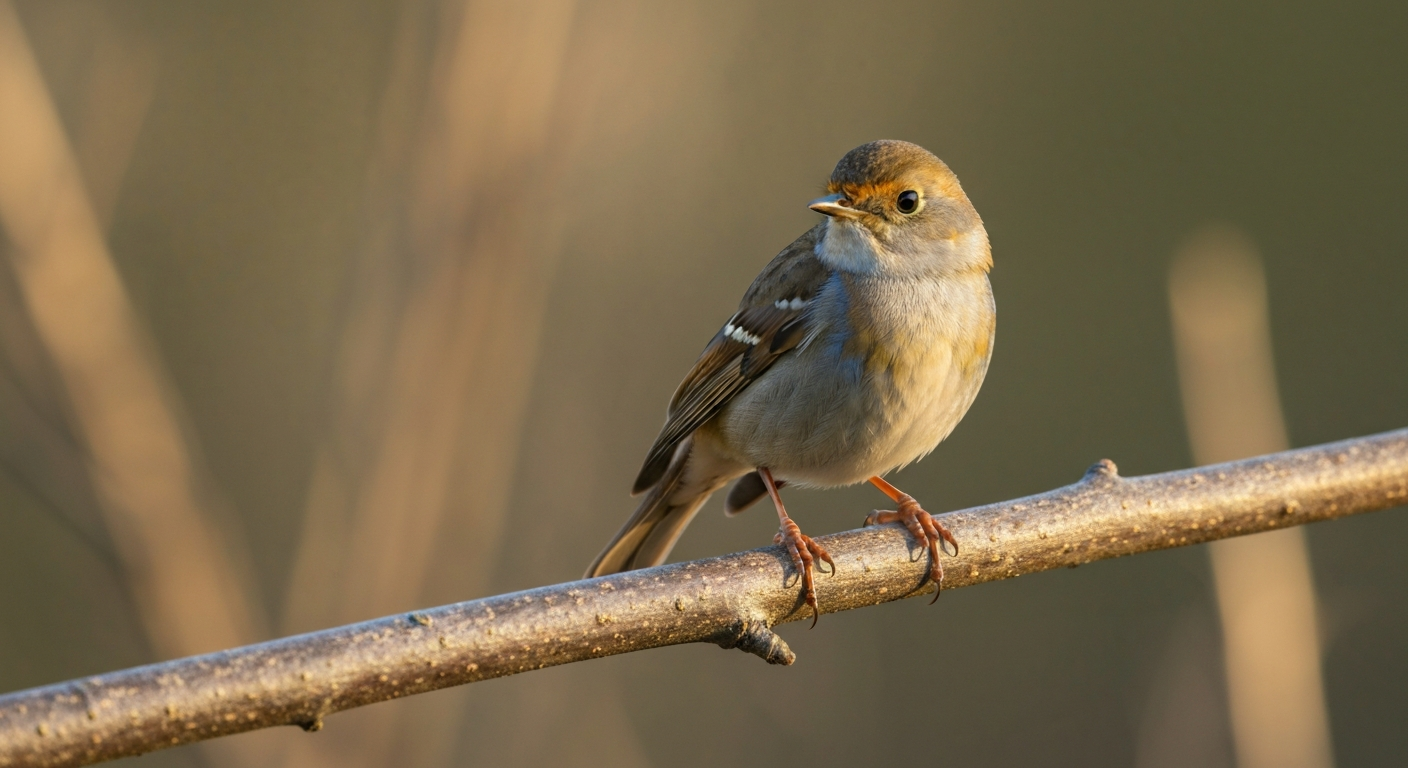
When people search "meaning of dove bird," they usually want one of two things: a simple answer to what a dove actually is, or an explanation of what doves symbolize in culture, religion, and everyday language. The short answer to both: a dove is a bird in the family Columbidae (the same family as pigeons), and symbolically, it most commonly stands for peace, love, purity, and hope. But there is a lot more texture to both of those answers, and getting the full picture is worth a few minutes.
Meaning of Dove Bird: What Doves Symbolize and Why

Marcus Whitley
2 Apr 2026
What a dove bird actually is
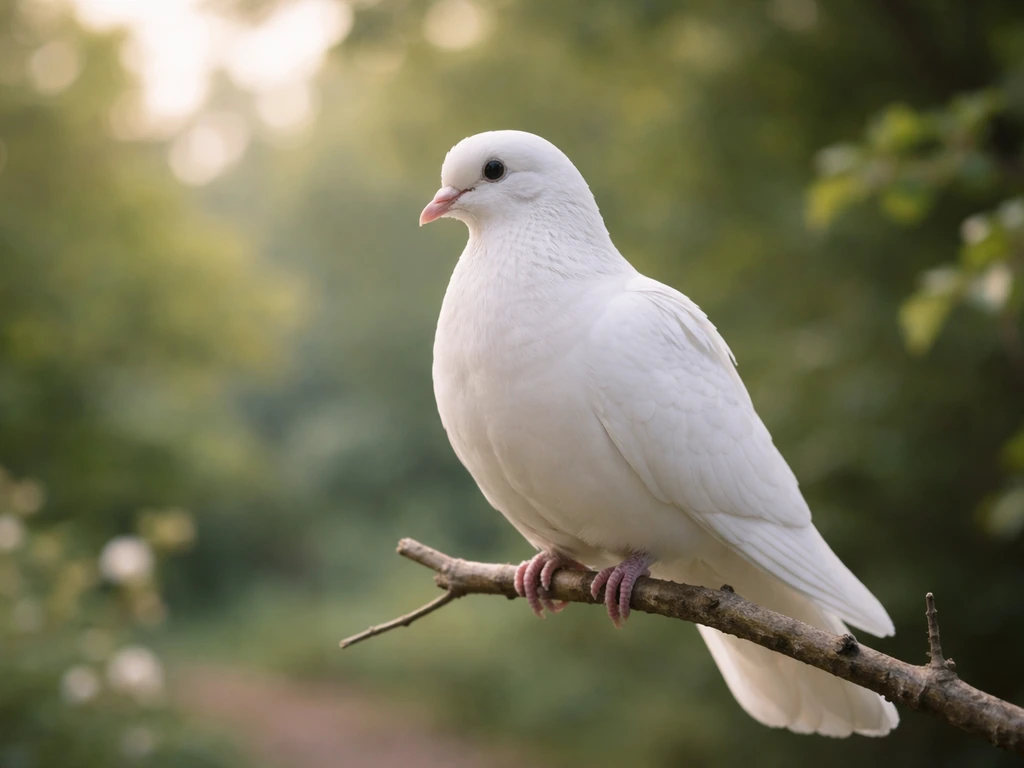
A dove is a bird belonging to the family Columbidae, which includes all pigeons and doves worldwide. There is no strict scientific line between a "dove" and a "pigeon", they are the same family, and the naming split in English is largely informal. Smaller, slimmer species with pointed tails tend to get called doves, while larger, stockier birds get called pigeons. But even that rule breaks down: the domestic pigeon found in every city is also formally known as the rock dove and is the very bird most often depicted as the "dove of peace." For a fuller breakdown of the bird itself, the dove bird definition goes deeper into species, range, and physical characteristics.
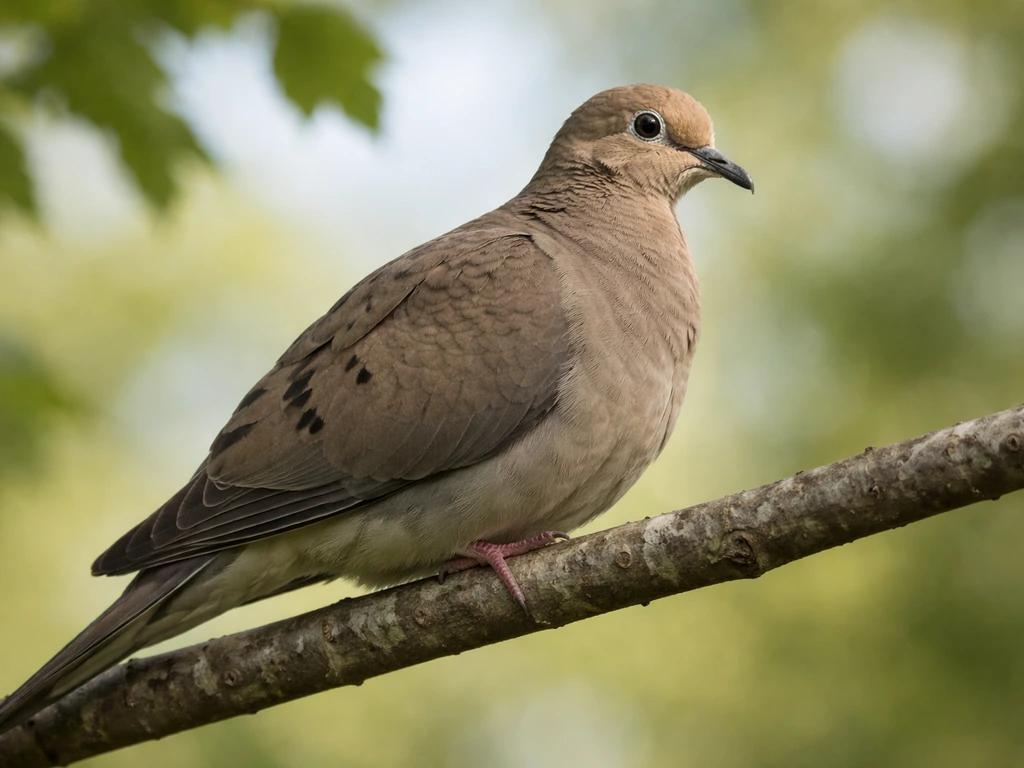
One of the most familiar species in North America is the mourning dove (Zenaida macroura), which the U.S. Fish and Wildlife Service classifies under that scientific name. It has a long pointed tail, a soft cooing call, and subtle violet and pink tones on the sides of its neck. It is technically a member of the pigeon order Columbiformes and is sometimes described as "the common wild pigeon of North America." So when someone says "dove," they could mean a white ceremonial dove, a mourning dove in the backyard, or even the city pigeon, context matters.
The everyday symbolic meaning of a dove
In everyday English, "dove" carries a cluster of positive meanings that most people recognize immediately: peace, love, purity, innocence, and hope. Cambridge Dictionary defines the symbolic sense of dove as "a white or grey bird, often used as a symbol of peace," and that matches how most people use the word when they are not talking about the literal bird.
Dictionary.com also captures a figurative use that has become standard in political and diplomatic language: a "dove" is a person who advocates peace, compromise, or a conciliatory approach, as opposed to a "hawk." You hear this in news coverage all the time, "the doves in the cabinet pushed for negotiations." So the bird's symbolic meaning has been borrowed directly into human description, which is one of the clearest signs of how deep that association goes.
The phrase "as innocent as a dove" is documented in English proverb literature and captures another layer of the symbolism, purity and blamelessness, not just peace. These meanings stack on top of each other, and in most real-world contexts, a dove can carry several of them at once.
Dove symbolism by context: religion, art, weddings, and funerals
Religious symbolism
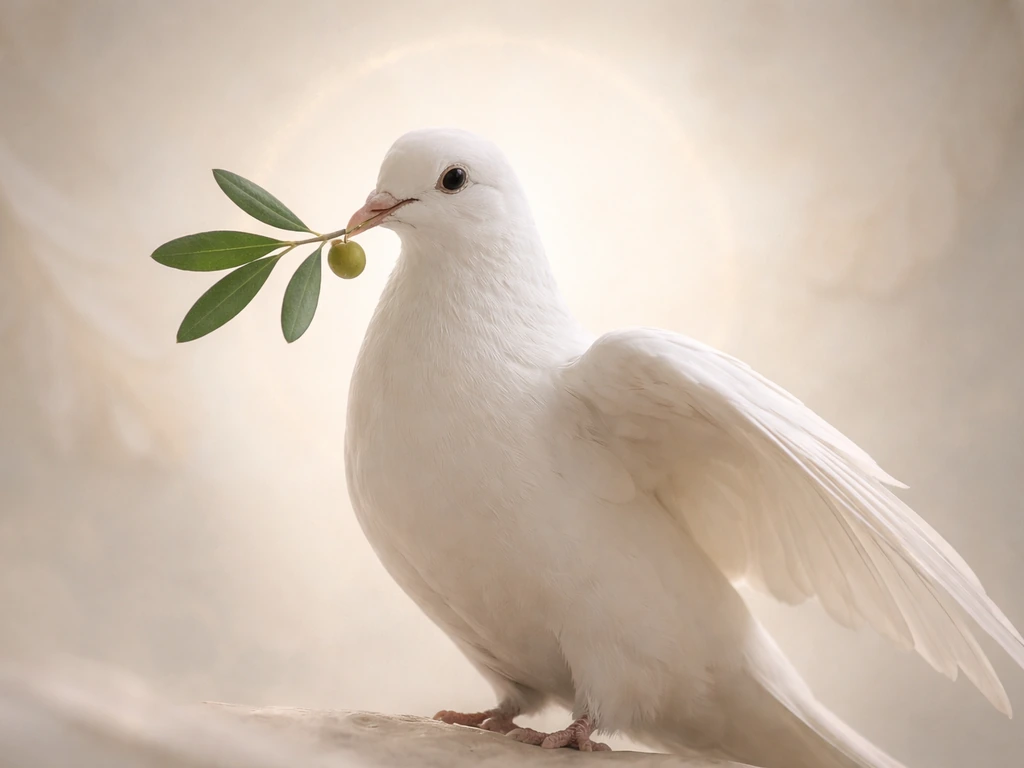
The dove's symbolic weight in Western culture is rooted heavily in two biblical moments. In Genesis 8:11, Noah's dove returns to the ark carrying a freshly plucked olive leaf, signaling the end of the flood and the restoration of peace between God and humanity. That image, dove plus olive branch equals peace, stuck.
Then in Matthew 3:16, the Holy Spirit descends on Jesus at his baptism "like a dove," cementing the dove as a symbol of the Holy Spirit in Christian iconography. Early Christian funerary art in Rome regularly depicted a dove carrying an olive branch, often paired with the word "Peace.
" The UN has described the dove with olive branch as a symbol of "love and peace accepted in many religions and places," which shows how the originally religious symbol crossed into broader secular use.
Art and literature
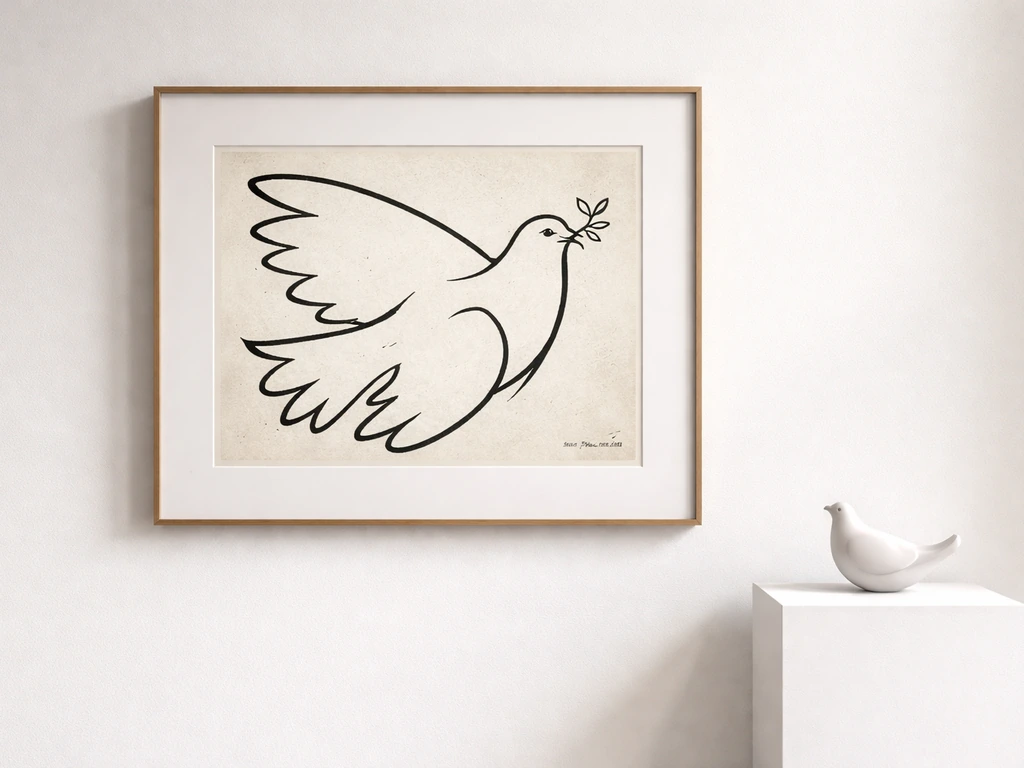
One of the most famous secular uses of the dove as a peace symbol came from Pablo Picasso. In January 1949, he created "Dove," a black-and-white lithograph that was used as the poster image for the First World Peace Congress in Paris later that year. Wikipedia also notes that Picasso’s 1949 “Dove” lithograph was used to illustrate a poster for the 1949 Paris peace congress and became an iconographic image of the period, often described as a “dove of peace.
” Wikipedia notes Picasso’s 1949 “Dove” lithograph. It became an international peace icon almost instantly.
Picasso's lithograph helped transform what had been a primarily religious symbol into a universal shorthand for peace movements worldwide, which is why you still see dove imagery in protest art, anti-war campaigns, and international diplomacy today. In literature, doves appear regularly as symbols of innocence, the divine, or hope arriving after darkness, drawing on all those layered associations.
Weddings
White dove releases are a popular wedding tradition in many cultures. The symbolism is explicit: white doves represent love, peace, and hope, and the release is understood as marking the beginning of a new life together. The visual of two doves flying upward together makes the metaphor almost self-explanatory. This is one context where the bird's appearance is almost entirely ceremonial rather than observational, the dove is there for what it means, not just what it is.
Funerals and memorials
Doves appear in funeral and memorial contexts for related but distinct reasons. The symbolism here shifts slightly toward peace, transcendence, and the soul's passage, the idea of a spirit soaring free. White doves are released at memorial services, and dove imagery appears on headstones, memorial cards, and keepsakes across many different faith traditions. The dove bird meaning in death contexts goes deeper into how the symbol functions specifically in grief and loss.
How dove symbolism varies across cultures and traditions
The peace-and-love meaning of the dove is broadly recognized across Western and many other cultures, but it is not universal. Here is a quick look at how meanings shift:
| Tradition / Region | Primary Dove Meaning | Key Context |
|---|---|---|
| Christianity | Holy Spirit, peace, purity | Baptism of Jesus, Noah's ark, funerary art |
| Judaism | Peace, renewal, hope | Noah's dove returning with olive branch (Genesis 8) |
| Islam | Peace, divine blessing | White birds appear in accounts associated with the Prophet |
| Ancient Greece / Rome | Love, Aphrodite/Venus | Sacred to the goddess of love; appears in romantic poetry |
| Hinduism | Soul of the deceased, love | Doves linked to Kamadeva (god of love); appear in grief contexts |
| Native American traditions | Peace, love, maternal care | Mourning dove song interpreted as a call of sorrow or comfort |
| East Asian cultures | Longevity, fidelity | Less dominant than crane or phoenix; appears in some regional folklore |
| Secular / Modern West | Peace, diplomacy | Political "dove" vs. "hawk" split; protest and peace movement imagery |
The Ancient Greek and Roman association with love is worth noting because it is the origin of why doves appear in romantic contexts today. Aphrodite (Venus in Rome) was frequently depicted with doves, and that connection has persisted through Western art and poetry ever since. So when you see doves at a wedding, the tradition has both biblical and classical roots feeding the same symbolic moment.
If you are specifically trying to interpret a mourning dove, the species you are most likely to see in a North American backyard, the cultural layering is somewhat different from the white ceremonial dove. The mourning dove bird meaning covers those specific associations, including the mournful cooing call and what people read into it.
Why "dove" and not "pigeon", the naming confusion explained
The word "dove" comes from early Middle English and Old English forms connected to Proto-Germanic roots, possibly related to the bird's cooing call or its diving/dipping flight. "Pigeon," by contrast, comes from Old French "pijon," meaning a young dove, which itself traces back to the Latin "pipio", a word imitating the sound of a young chirping bird. So etymologically, both words have sound-imitative roots, but they arrived in English through completely different language paths: "dove" through Germanic languages, "pigeon" through French (which is why English ended up with both).
In modern English, the informal rule is that smaller, slimmer birds get called doves and larger, heavier birds get called pigeons. But as noted earlier, this is not consistent. The rock dove is the same bird as the city pigeon. The turtle dove is not a turtle.
And the mourning dove, despite having "dove" in its name, is described by Britannica as "the common wild pigeon of North America. " The naming is partly historical accident and partly aesthetic, "dove" carries gentler, more symbolic connotations, so it gets used when the symbolism matters.
If you are curious about how the word itself sits between literal and figurative meaning, the question of whether a dove is a bird by connotation or denotation is actually a useful lens for understanding this exactly.
Dove in phrases, idioms, and metaphors
Doves show up in everyday language in several distinct ways. Some are direct idioms, some are metaphors, and some have become so common that people use them without thinking about the bird at all:
- "Dove" as a political label: Calling someone a dove means they favor diplomacy and peaceful resolution over military force. This usage is standard in political commentary and news media.
- "Dove of peace": Used as a fixed phrase or emoji to signal peace, goodwill, or non-aggression. The dove emoji was originally designed with religious resonance (Christian and Jewish symbolism) but is now used casually across contexts.
- "As innocent as a dove": A documented English proverb simile meaning pure, guileless, or free from wrongdoing.
- "The dove returned with an olive branch": A direct reference to Genesis 8:11, used metaphorically to mean a sign of reconciliation or peace after conflict.
- Releasing doves: Used figuratively to describe the start of something new and hopeful, even when no actual birds are involved.
- Dove imagery in poetry and song: Doves appear constantly in love poetry and song lyrics as stand-ins for the beloved, for peace of mind, or for hope arriving after hardship.
When you encounter "dove" in a quote, a poem, or a news headline, the meaning almost always comes from one of three sources: the peace/Holy Spirit tradition (biblical), the love/beauty tradition (classical Greek and Roman), or the political hawk-versus-dove framing (modern). Knowing which context you are reading in usually makes the intended meaning obvious.
How to figure out which meaning applies in your situation
If you saw a dove in real life, read it in a quote, or encountered it in a piece of art and are trying to figure out what it means, here is a practical checklist:
- Identify the context first. Is this a literal bird, a political label, a symbolic image in art or ceremony, or a phrase in writing? Each context pulls from a different layer of meaning.
- Check the color. White doves almost always signal peace, love, purity, or the Holy Spirit. Brown or grey doves (like the mourning dove) are more often connected to grief, sorrow, or spiritual messages in nature-based interpretations.
- Look for the olive branch. If a dove appears with an olive branch, the meaning is almost certainly "peace after conflict" — drawing directly on the Genesis narrative and the Picasso peace movement tradition.
- Check the cultural or religious setting. A dove in a Christian church context likely refers to the Holy Spirit. A dove at a wedding means love and new beginnings. A dove at a funeral or memorial means peace and transcendence. A dove in a news article about foreign policy means someone who favors diplomacy.
- For quotes and literature, ask what the author was contrasting. Dove in opposition to hawk means politics. Dove in opposition to darkness or winter usually means hope or renewal. Dove in opposition to a predator usually means innocence or vulnerability.
- When in doubt, default to peace and love. Those are the most widely shared meanings across nearly every cultural tradition that uses dove imagery, and they are almost never wrong as a baseline interpretation.
The dove is one of those symbols that has been used so consistently across so many cultures and centuries that its core meaning has become genuinely stable. Peace, love, hope, purity, those four come up everywhere. The specific shade of that meaning (Holy Spirit versus political diplomacy versus wedding joy versus funeral comfort) shifts with context, but the underlying warmth of the symbol stays constant. That is actually what makes the dove so useful as a symbol: it is flexible enough to fit many moments, but clear enough that it never really confuses anyone.
FAQ
Does “dove” always mean a literal bird, or can it be purely symbolic in quotes?
In most writing and speeches, “dove” is symbolic, especially in political contexts (a peacemaker versus a hardliner). You can treat it as literal only when the source is clearly describing an animal sighting, a release ceremony, or a specific species like a mourning dove.
What if I see a dove image with an olive branch, is the meaning strictly religious?
It is strongly peace-linked, but the usage often becomes secular over time. Olive-branch doves are frequently used in diplomacy and protest art, where the message is peace and reconciliation even if the author does not intend a biblical reference.
Is the “dove of peace” the same as a mourning dove?
No. The “dove of peace” is more associated with the rock dove symbolism and the common image of a white dove. Mourning doves are real birds in North America and they can carry additional meanings tied to their calls and presence in everyday landscapes.
Why do some people associate doves with innocence, while others focus on hope or the Holy Spirit?
Those meanings often depend on the setting and audience. “Innocence” shows up in proverbs and art, “hope” appears in arrival-after-darkness stories, and the Holy Spirit association usually appears in Christian references or explicitly religious imagery.
If a dove is shown as gray or not white, does that change the symbolism?
It can, but not always in a strict way. Many cultures use dove color loosely, since the symbol works even when the bird is not white. In practice, color may add nuance (gentleness, softness, neutrality) rather than completely switching the meaning.
What does “hawk versus dove” mean, and what kind of person is a “dove”?
A “dove” is typically someone who favors negotiations, compromise, or restraint, especially in foreign policy. It is not the same as being “nice” in general, it specifically describes a strategy preference for less aggressive approaches.
Can a dove symbol mean something negative or ominous in some contexts?
It can, but it is less common. Because doves are widely used as peace symbols, negativity usually comes indirectly, for example when the symbol is used ironically in satire or propaganda, or when it is paired with darker imagery that changes the overall message.
Are dove releases at weddings always “good meaning,” or is there a practical issue people overlook?
They are usually understood as love, peace, and hope, but there can be real-world concerns depending on where the event is held. Consider regulations on release practices and animal welfare, since some areas restrict or discourage releasing birds.
What does a dove at a funeral or memorial commonly signify beyond “peace”?
In memorial contexts, the emphasis often shifts toward transcendence and the soul’s passage, not just peace between people. The imagery can function as comfort, suggesting release from suffering and a hopeful continuation.
If I find “dove” meaning in a headline, how do I tell which sense the writer intends?
Look for nearby clues. Words like “negotiations,” “diplomacy,” or “cabinet” usually signal the political peacemaker sense. Words like “baptism,” “Spirit,” or “olive branch” usually signal the religious peace tradition.
Is the phrase “as innocent as a dove” meant literally or figuratively?
It is figurative, meaning someone is blameless or not harmful in character. People use it as a reassurance about intent, not as a claim about the bird’s behavior or biology.
How should I interpret a dove in art if the artist mixes multiple traditions?
Treat the dove as a “stackable” symbol. Common combinations include peace plus divine presence (religious art), or peace plus universal human rights (modern political poster styles). The safest approach is to interpret the dove based on the most emphasized companion symbols (olive branch, light, ribbon, dove plus dove pair, or specific text).
Next Article
Perched Bird Meaning, Literal, Symbolic, Usage, Examples
Perched bird meaning: clear literal and symbolic definitions, usage differences, examples, and quick reference.