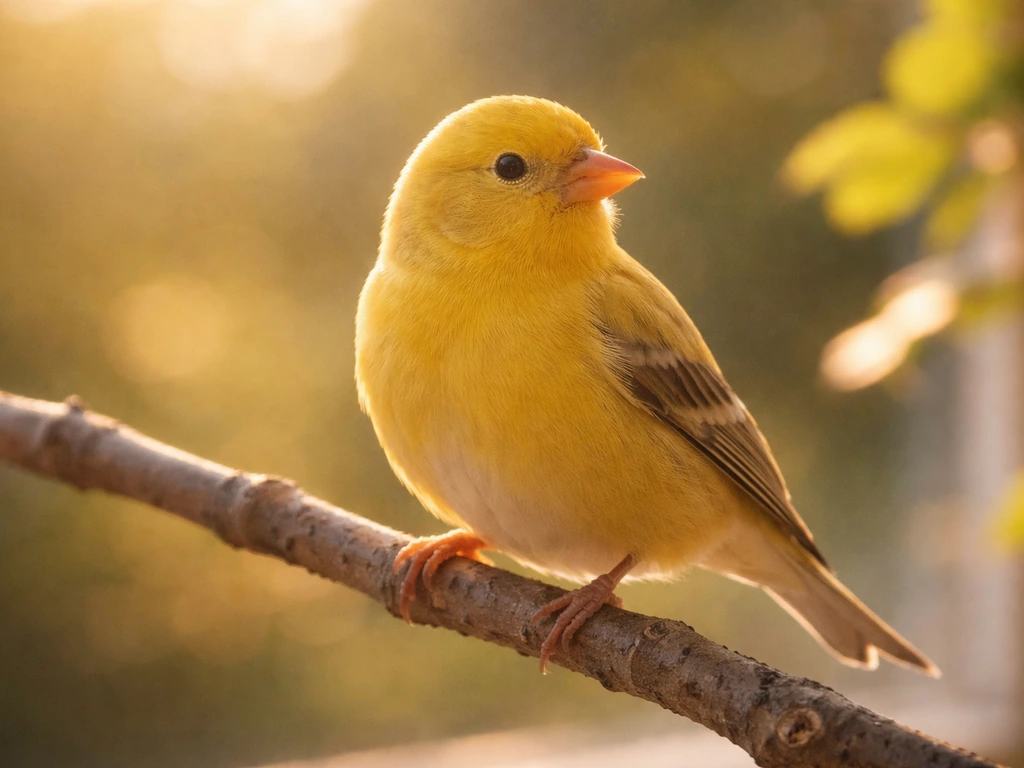
In Jhené Aiko's 'Pretty Bird (Freestyle),' the phrase is used as a direct, tender address to someone who is beautiful but wounded, urging them to survive and eventually fly. The track closes the deluxe edition of her 2014 debut album Souled Out and layers the image of a pretty, crying bird with lines like 'please don't die… please don't cry… you can fly' and 'come fly, un-die, be born again.' That makes the phrase simultaneously a term of endearment, a symbol of vulnerability, and a push toward healing and liberation.
Pretty Bird Jhené Aiko Meaning: Symbolism & Context Explained
Marcus Whitley
11 Aug 2026
Why people search 'pretty bird Jhené Aiko meaning'
Jhené Aiko has always been a lyricist who buries a lot inside simple-sounding imagery. Listeners who catch 'Pretty Bird (Freestyle)' for the first time often feel the emotional weight before they can fully explain it, which is exactly why they end up searching the phrase. They want to know: is she talking about herself? A friend? A community? Is the bird a soul, a voice, something else? This article breaks down the song's lyric context, the verifiable commentary around it, and the broader tradition of bird symbolism that makes lines like hers land the way they do. If you arrived here from related searches about the phrase 'pretty bird' in poetry or other cultural contexts, there is useful comparison material here too.
Literal vs. figurative: what 'pretty bird' actually means
At its most literal, 'pretty bird' is just a description of an attractive bird, the kind of thing you might say at a pet shop when a colorful parrot catches your eye. But as soon as the phrase appears in a song, poem, or term of endearment, the figurative layer takes over. Figuratively, 'pretty bird' almost always does one of two things: it names someone (or something) that is beautiful but fragile, or it functions as a gentle, affectionate nickname. The first sense carries an implicit tension because prettiness and fragility go together, a bird that looks beautiful but cannot or will not fly. The second sense is warmer and more intimate, like calling someone 'sweetheart' or 'dove.' Jhené Aiko's usage blends both: the address is loving, but the emotion underneath is concern, even grief.
Jhené Aiko's 'Pretty Bird (Freestyle)': what the lyrics actually say
'Pretty Bird (Freestyle)' is track 12 on the deluxe edition of Souled Out, released September 9, 2014 on Def Jam. The album version features rapper Common as the sole rap guest, and the track runs approximately 4 minutes and 49 seconds. It was the last thing listeners heard on the album, which is worth noting because closing tracks in R&B and soul often serve as emotional resolutions or final statements.
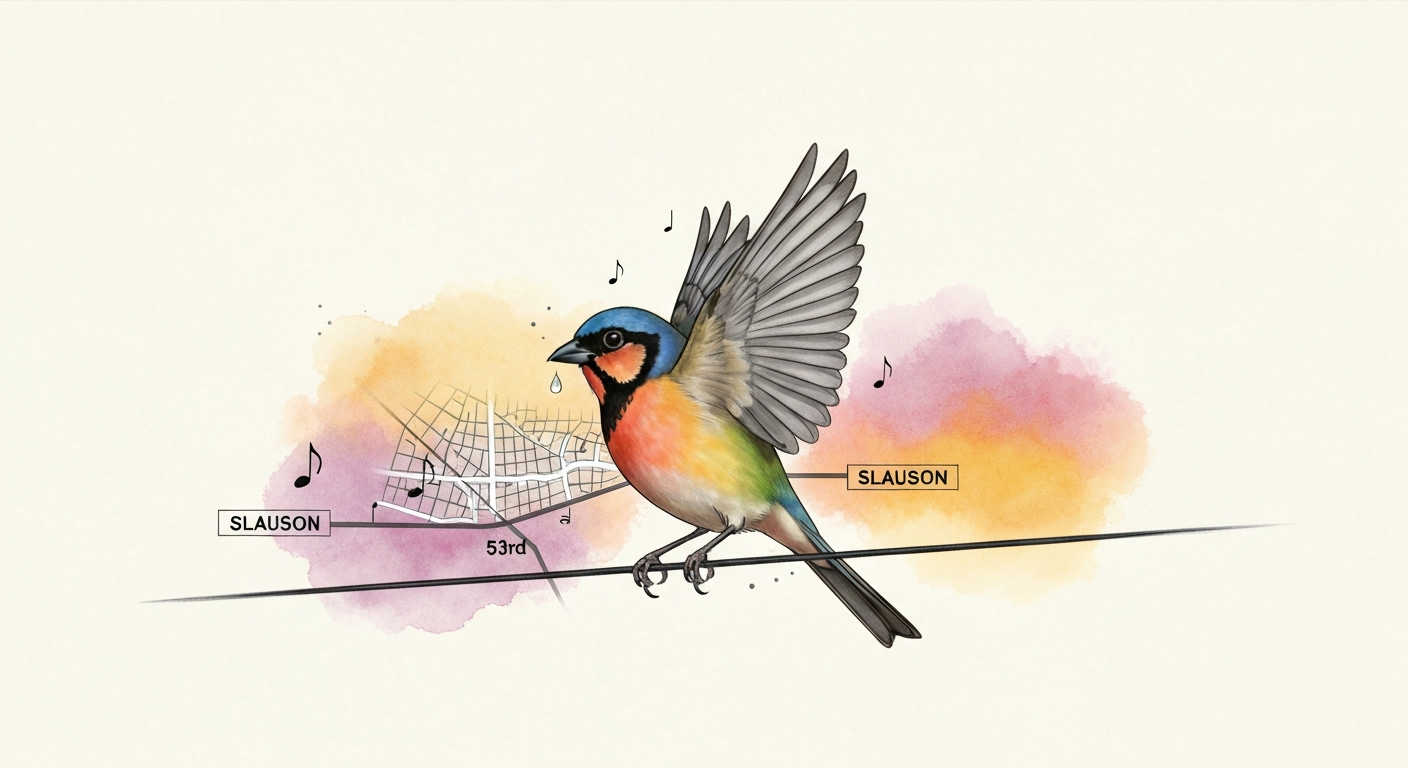
The lyrics center on a repeated apostrophe, meaning the speaker directly addresses an absent or symbolic figure: the 'pretty bird.' The chorus builds around the observation that this bird sounds beautiful even when it cries, but that it never seems to fly. The lines 'please don't die, please don't cry, you can fly' shift the tone from observation to encouragement, almost a plea. Later in the track, the imagery opens outward with spatial references: 'The city heard the sounds of a pretty bird / Yelling from Slauson to 53rd,' grounding the song in a very specific South Los Angeles geography. Pretty Bird (Freestyle), Shazam (full lyrics) lists the credited lyrics, including the Slauson-to-53rd line and the closing 'come fly, un-die, be born again' language Pretty Bird (Freestyle) — Shazam (full lyrics) lists the credited lyrics, including the Slauson-to-53rd line and the closing 'come fly, un-die, be born again' language.. Those streets are real, and placing the bird's cry there turns a private emotional scene into something communal and public. The regenerative closing language, 'come fly, un-die, be born again,' reads as a direct summons toward rebirth.
Jhené Aiko has spoken directly about the track's creation. A short Genius 'Behind the Song' feature captures her describing how the track came together and how producer No I.D. and others responded to it. In interviews around the Souled Out campaign, including a September 2014 Hard Knock TV in-studio session, she discussed the album's sequencing and her choice to make Common the album's only rap guest, underscoring how deliberate the closing track's placement was. These primary-source comments confirm the song was not an afterthought; it was a considered, intentional piece of the album's emotional arc. For readers who want to go deeper into verified artist commentary, the Genius behind-the-song video is the most direct source available.
Critical reception reinforces a symbolic reading. XXL's Souled Out review described 'Pretty Bird' as a dynamic, emotionally charged closer, drawing a comparison to the Beatles' 'Blackbird' and reading the lyrics as reflecting struggle, vulnerability, and a movement toward freedom. That comparison to 'Blackbird' is instructive: Paul McCartney's song uses a bird that cannot fully fly as a metaphor for a person held back by pain or circumstance, urging them toward freedom. Jhené's track operates in the same tradition.
Three readings critics and listeners have proposed
- Self-address: The speaker is the pretty bird, talking to herself about her own pain, survival, and potential. This reading is supported by Jhené's confessional style across the rest of Souled Out.
- Address to another person: The speaker is counseling someone she loves, a friend, a partner, or a community member, who is beautiful but struggling. The intimacy of 'please don't die' fits this reading.
- Communal/civic summons: The South LA street references expand the address outward to a broader community. The city can hear this bird crying, and the call to fly becomes a collective encouragement rather than a private one.
These readings are not mutually exclusive, and that layering is part of what makes the phrase resonate. A good bird metaphor can hold all three at once.
The bird symbolism behind the phrase
Birds have carried symbolic weight in human culture for as long as people have been writing things down. Symbol reference works including J.E. Cirlot's A Dictionary of Symbols and Chevalier and Gheerbrant's The Penguin Dictionary of Symbols both document birds as cross-cultural emblems of the soul, spiritual aspiration, and loftiness. That tradition is not abstract; it shapes how phrases like 'pretty bird' land for listeners even if they have never read a symbol dictionary.
Beauty
A bird described as 'pretty' immediately suggests visible, surface-level beauty, often associated with color, song, or graceful form. But in lyrical usage, this prettiness almost always comes with an undertow. Something that pretty is also delicate, exposed, and potentially at risk. The word 'pretty' itself has an interesting history: it derives from an Old English word, prættig, which originally carried senses of cleverness or cunning before shifting toward aesthetic meaning. That slippage from cleverness to beauty is worth keeping in mind, as it suggests that calling something 'pretty' has never been entirely straightforward.
Vulnerability
Birds are physically small and fragile relative to the world around them. In lyric and poetry, a bird that cries, cannot fly, or is in danger becomes a vehicle for expressing human vulnerability without stating it bluntly. Jhené's line 'sounds so pretty when you cry' specifically pairs the aesthetic quality with emotional pain, and the instruction 'please don't die' makes the vulnerability explicit. This is a creature whose beauty does not protect it.
Freedom
Flight is probably the most universal bird metaphor: to fly is to be free, to transcend limitation, to escape confinement. The repeated injunction 'you can fly' in Jhené's chorus is a direct appeal to that tradition. The tragedy built into the song is precisely that this pretty bird has the capacity for freedom but has not yet claimed it. The 'why I never see you fly' line frames the situation as unresolved, a potential not yet realized.
Healing and rebirth
The phrase 'come fly, un-die, be born again' is the lyric's clearest statement of regenerative intent. Rebirth imagery involving birds appears across multiple traditions, most famously in the phoenix myth but also in the widespread symbolic association of birds with spring, renewal, and the return of life. Healing and rebirth are not the same thing, but in the context of this song they are treated as sequential: first the bird stops crying and survives, then it flies, then it is effectively reborn.
Pretty Bird vs. Painted Bird vs. poems titled 'Pretty Bird' vs. the G.I. Jane bird quote
The phrase 'pretty bird' sits in a cluster of related bird-phrase usages that are worth separating out because they mean quite different things. Readers searching this topic sometimes arrive via the Painted Bird, a poem or film reference, or the bird line from G.I. Jane, and conflating them leads to misreadings. See the discussion of the G.I. Jane bird quote meaning for why that line reads as confrontational and ironic rather than tender. Here is how they compare. For a focused reading of the phrase in poetry, see pretty bird poem meaning.
| Phrase/Reference | Origin/Context | Core meaning | Tone |
|---|---|---|---|
| Pretty Bird (Jhené Aiko) | Closing track, Souled Out (2014) | Beautiful but grounded figure urged toward survival and flight; vulnerability, healing, freedom | Tender, urgent, hopeful |
| Painted Bird (Kosinski) | Jerzy Kosinski's 1965 novel and 2019 film adaptation | A bird painted in bright colors and released to be attacked by its own flock; emblem of othering, trauma, dangerous visibility | Dark, cruel, tragic |
| Pretty Bird (poetry/songs) | Scattered uses in Elizabethan songbooks, folk songs, e.g., Hazel Dickens | Affectionate address to a bird or bird-like figure; beauty and gentleness | Lyrical, affectionate, variable |
| G.I. Jane bird quote | 1997 Ridley Scott film G.I. Jane | A motivational or ironic use of bird imagery in a military/toughening context | Ironic, challenging, confrontational |
The most important contrast here is between Jhené's 'pretty bird' and Kosinski's 'painted bird.' Both use bird imagery to talk about beauty and vulnerability, but they arrive at opposite emotional destinations. Jhené's bird is addressed with love and urged toward survival. Kosinski's painted bird is destroyed precisely because its visible difference marks it as a target. If you want a full breakdown of the painted bird's symbolism and what it means in Kosinski's work, that phrase has its own dedicated exploration worth reading alongside this one. For a focused discussion of the painted bird meaning in Kosinski's work, consult the dedicated analysis of The Painted Bird. Similarly, the G.I. Jane bird reference operates in a very different register, confrontational and ironic rather than tender, and deserves its own context to be read accurately. For readers interested in the poetic tradition of 'pretty bird' more broadly, there is also dedicated material on poems that use the phrase and how those meanings stack up against each other.
Where the phrase comes from: etymology and usage history
The phrase 'pretty bird' has been in active use in English for centuries. Elizabethan songbooks, which date to the late 16th and early 17th centuries, contain lines like 'Thou pretty bird,' used in lyric verse to address a songbird as an emblem of beauty and fleeting song. These early uses set a pattern: the phrase was affectionate, often slightly melancholic, and associated with the combination of beauty and brevity.
The word 'bird' itself has a longer and stranger history. It comes from Old English forms including brid and later burd, and its Middle English form burd was sometimes applied to young women, a usage the Oxford English Dictionary traces as a precursor to the modern British slang sense in which 'bird' means a young woman. That slang sense became firmly established in 20th-century British English and is still active today, though it is considered informal and context-sensitive. This historical arc means that calling someone a 'pretty bird' in casual speech carries faint echoes of both the ornithological and the endearment senses simultaneously.
As a term of endearment, 'pretty bird' sits in a family with 'dove,' 'sparrow,' 'little bird,' and similar bird-based nicknames that are widespread in English and in many other languages. These terms typically combine smallness, beauty, and gentleness, making them feel protective and affectionate rather than grand.
Modern slang senses to keep in mind
- In British English, 'bird' alone (without 'pretty') is informal slang for a young woman. Adding 'pretty' makes it more explicitly a compliment or pet name.
- In American English, 'pretty bird' is most often heard either as literal description of a colorful bird (especially parrots) or as lyrical/poetic address in songs and poetry.
- 'Giving the bird' is a completely separate idiom meaning to make an obscene gesture. Context makes these easy to distinguish, but it is worth knowing they share the same word.
- In some contemporary R&B and hip-hop contexts, 'bird' carries additional slang meanings (including drug-related slang) that are entirely separate from Jhené Aiko's usage.
How 'pretty bird' works in practice: song, poetry, and everyday speech
Because 'Pretty Bird (Freestyle)' is a copyrighted song, quoting its lyrics directly requires care. The safest approach for students, bloggers, or anyone writing about the track is to paraphrase rather than reproduce extended passages, describe what the lyrics do rather than reprint them verbatim, and attribute the work clearly to Jhené Aiko and her songwriting credits. Short quotations for the purpose of commentary or criticism are generally considered fair use in many jurisdictions, but reproducing full verses or the complete chorus crosses into territory that requires licensing. The examples below use paraphrase and description rather than direct quotation.
In the song, the phrase functions as an apostrophe, meaning the speaker talks directly to the 'pretty bird' as if it can hear her. This creates intimacy and also a slight unreality, the way you might talk to someone who is not in the room. The repetition of the phrase across the track builds a kind of incantation, something the speaker is willing into existence rather than simply describing.
In everyday speech, you might hear 'pretty bird' used in the following ways, all of which draw on slightly different layers of the phrase:
- Someone leaning toward a birdcage and saying 'pretty bird, pretty bird' to a parrot, using the phrase as a call or greeting (literal, playful).
- A parent saying 'you're my pretty bird' to a child as a term of affection (endearment, drawing on the gentle/beautiful sense).
- A songwriter using 'pretty bird' as a chorus hook to address someone in emotional pain, urging them to keep going (symbolic, in the tradition Jhené Aiko uses).
- A poet using 'thou pretty bird' in a pastoral lyric to address a songbird as a stand-in for natural beauty and the passage of time (literary, Elizabethan-influenced).
What these examples share is the combination of aesthetic appreciation and emotional directness. Whether the phrase is spoken to an actual parrot, a child, or a metaphorical wounded soul, it carries warmth and a quality of noticing, of paying attention to something delicate.
How to figure out what 'pretty bird' means in whatever you are reading
Bird phrases can be slippery because so much depends on context. When you encounter 'pretty bird' in a song, poem, or piece of writing and you are trying to pin down the meaning, a few questions help narrow things down quickly.
- Who is the speaker, and who is being addressed? If the speaker is addressing a real animal, lean literal. If the address is clearly to a person, or if no specific bird is described, lean figurative.
- What is the emotional register? Tender and urgent language (please don't die, you can fly) points toward the vulnerability-and-healing symbolic reading. Playful or whimsical language points toward endearment or lighthearted compliment.
- Is flight mentioned or withheld? If the bird cannot or does not fly, that withholding is almost always doing symbolic work. Flight denied or deferred means freedom not yet achieved.
- What genre or tradition is this? R&B and soul lyrics tend to use bird imagery for emotional interiority and spiritual aspiration. Folk and country songs often use it for natural beauty and loss. British casual speech may use 'bird' in the slang-endearment sense where 'pretty' is simply an adjective.
- Are there other bird images nearby? A single 'pretty bird' can be endearment or description. But if the text also mentions cages, wings, songs, or flight, you are almost certainly in symbolic territory.
- Is the bird painted, damaged, or marked in some way? If so, the symbolism shifts toward othering or harm, closer to the Painted Bird tradition than to the loving address in Jhené's usage.
- Does the context suggest self-address? In confessional songwriting especially, the 'pretty bird' may be the speaker talking to herself. Look for consistency between the emotions described and what you know about the artist's other work.
When in doubt, the safest interpretive move is to hold two readings at once. In Jhené Aiko's case, reading the 'pretty bird' as both herself and as someone she loves does not contradict the lyrics; it enriches them. The phrase is capacious enough to carry both, and that ambiguity is part of what makes it an effective lyrical device.
One final note on when to prefer the literal reading: if the source is a nature poem, a children's book, a bird-watching text, or a casual spoken greeting to an actual bird, the literal reading is almost always correct. Symbolic readings require a context that signals figurative intent, and that signal is usually not hard to spot. Songs about survival, poems about grief, and literary fiction about trauma are the genres where 'pretty bird' is most likely to be doing its deeper work.
FAQ
What does “Pretty Bird” mean in Jhené Aiko’s song “Pretty Bird (Freestyle)”?
In Jhené Aiko’s track, “Pretty Bird” functions as a compassionate, repeated apostrophe to a vulnerable subject. Read in context (lyrics, track placement as the deluxe edition closer on Souled Out, and artist comments about the song’s making), the phrase works as a delicate metaphor for someone who is beautiful but hurt—encouraged to survive, heal, and take flight. Sources: official track listing (Souled Out deluxe), published lyrics on streaming services, and Aiko’s behind‑the‑song commentary (Genius/Hard Knock TV). Suggested image: cover art of Souled Out (deluxe) or a photo of Aiko in studio.
What parts of the lyric and production support that reading?
Key textual and musical signals: repeated direct address (“pretty bird…”), lines that pair beauty with distress (“sounds so pretty when you cry”), survival injunctions (“please don’t die… please don’t cry… you can fly”), and citywide imagery that moves the appeal from private to public. Critics (e.g., XXL) and the song’s placement as a closing freestyle also encourage reading the bird as a figure for vulnerability, healing, and movement toward freedom. Suggested image: an evocative photo of a small songbird mid‑flight to illustrate the flight/healing motif.
Did Jhené Aiko explain the meaning herself?
Aiko discussed the song’s creation and collaborators in a Genius 'Behind' video and interviews (Hard Knock TV), which document the track’s origin and collaborative context but do not offer a single, definitive symbolic glossary. Her commentary emphasizes the track’s personal, freestyle nature and the emotional atmosphere rather than a fixed allegory, so evidence supports interpretive readings rather than an authorial, exclusive meaning.
Literal vs. figurative: what does “pretty bird” mean?
Literal: a visually attractive bird (the animal). Figurative: a term of endearment or metaphor that names a person’s beauty, delicacy, or vulnerability; in poetic or musical contexts, it often indexes the soul, emotional voice, or potential for freedom (flight). In Jhené Aiko’s usage the figurative reading—a tender, healing metaphor—is most persuasive given lyric cues and symbolic traditions.
How does general bird symbolism help interpret the phrase?
Symbolic reference works (e.g., Cirlot, Chevalier & Gheerbrant) show birds commonly representing the soul, transcendence, and freedom; song and crying can indicate voice or expression; flight maps to liberation or spiritual ascent. Applying these conventions, “pretty bird” accumulates senses of beauty + fragility + possible spiritual/psychological ascent—consistent with the song’s exhortations to survive and fly.
How is “Pretty bird” different from the phrase “Painted bird”?
Pretty bird vs. Painted bird — comparison: 1) Core sense: Pretty bird = endearing/beautiful/fragile; Painted bird = marked, othered, artificial or exposed. 2) Emotional valence: Pretty bird tends toward tenderness/healing; Painted bird (as in Kosinski’s The Painted Bird) carries themes of othering, trauma, and dangerous visibility. 3) Cultural use: Pretty bird appears as a pet name/poetic image; Painted bird is often literary/metaphorical for cruelty or spectacle. Suggested image: side‑by‑side visuals — a natural songbird next to a stylized/painted bird painting.
Next Article
Pretty Bird Meaning: How It’s Used as a Compliment
Meaning of pretty bird as a compliment, flirt, or pet name, plus bird symbolism and quick interpretation checklist.