When someone talks about 'macaw bird meaning,' they're almost always pointing to a cluster of symbolic ideas: brilliant self-expression, freedom, bold communication, and loyal partnership. The macaw's vivid plumage and famously loud voice have made it a natural stand-in for anyone (or any moment) that refuses to be overlooked. Whether you're unpacking a dream, reflecting on a real sighting, or trying to understand why macaws show up so powerfully in Indigenous American traditions, the core message is remarkably consistent across cultures and contexts: this bird is about showing up fully, speaking clearly, and living in vibrant color.
Macaw Bird Meaning: Symbolism, Dreams, Sightings, and More

Marcus Whitley
18 May 2026
What a macaw actually is, and why it punches above its weight symbolically
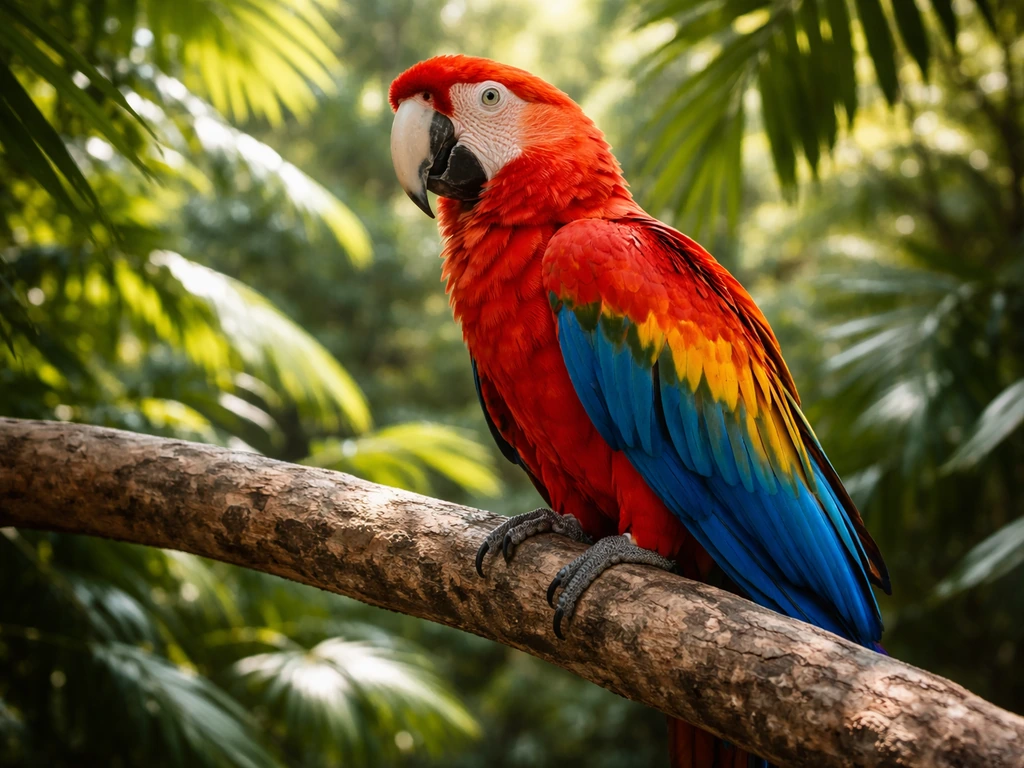
Macaws are a group of large, long-tailed parrots in the family Psittacidae, native to Central and South America. The biggest species, the hyacinth macaw, can reach about 102 cm (40 inches) from beak to tail tip. SeaWorld (United Parks & Resorts) notes that macaws are a large group within the parrot family Psittacidae, with the hyacinth macaw reaching about 102 cm (40 in.) hyacinth macaw reaching about 102 cm (40 inches). They're defined by brilliant plumage, distinctive light-colored facial patches, and voices that can carry across an entire rainforest canopy. That combination of size, color, and sound is exactly why macaws became so symbolically loaded. They're not subtle. You can't miss one.
The word 'macaw' itself traces back through Portuguese to a Tupi or Carib word. The genus name Ara, which covers many common macaw species, is actually an onomatopoeia tied to the bird's call. Even the naming of this bird is rooted in its voice. That's a useful thing to keep in mind when you're trying to interpret macaw symbolism: the sound came first, and the meaning followed.
Symbolically, the macaw stands out from other birds because it hits multiple registers at once. Its feathers signal beauty and status. Its call signals presence and authority. Its pairing behavior signals deep loyalty. And its intelligence (macaws are cognitively complex birds) signals that the boldness isn't just noise. It's purposeful. Compare that to a bird like the dove, which is essentially one-dimensional in its symbolism (peace, gentleness), and you start to see why macaw symbolism requires a bit more unpacking.
The core things macaws are said to represent
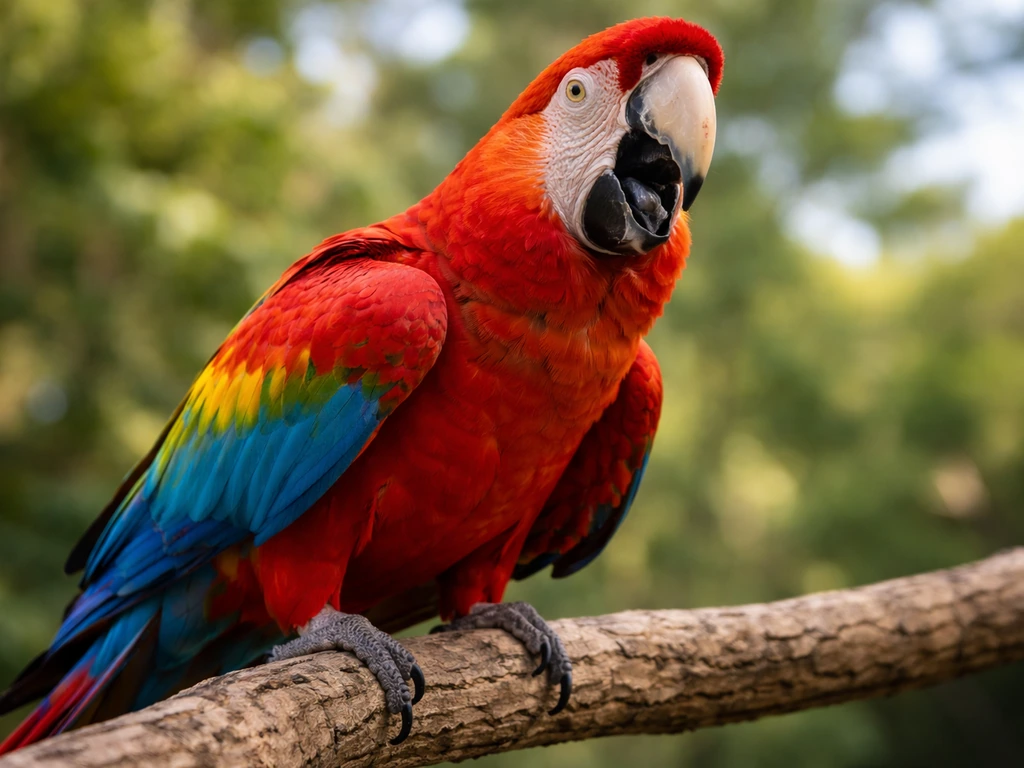
Most symbolic traditions and modern spiritual interpretations converge on the same handful of themes for macaws. These aren't arbitrary, they map directly onto the bird's actual biology and behavior.
- Expression and voice: The macaw's loud, screeching call isn't aggression — it's communication across dense forest. Symbolically, this gets read as a prompt to speak your truth, stop minimizing yourself, and let your real voice carry.
- Freedom: Macaws are birds of vast tropical wilderness. In conservation circles, the scarlet macaw is literally described as a 'winged symbol of remaining wilderness.' That wildness reads symbolically as a push away from confinement, routine, or suppression.
- Vitality and beauty: The brilliant plumage — reds, blues, yellows, greens — is the most visually arresting quality macaws have. Symbolically, that maps onto living fully, embracing color and contrast rather than fading into the background.
- Confidence and inner strength: Several esoteric traditions frame the macaw as an emblem of quiet confidence — not arrogance, but the settled assurance of knowing who you are. The bird doesn't hide. It doesn't need to.
- Loyal partnership: Macaws are famously monogamous. Paired macaws preen each other, call back and forth, and fly in tandem. This behavior is consistently interpreted as a symbol of deep relational commitment and mirroring in partnerships.
- Playfulness and intelligence: Macaws are cognitively sophisticated birds that engage with their environment actively. Symbolically, this translates to creativity, curiosity, and the value of staying mentally alive.
- Boldness (and sometimes 'too much'): The flip side of the macaw's intensity is that it can symbolize excess, overreach, or drawing attention in ways that backfire. Seven Macaw, the villain of the Maya Popol Vuh, is a cautionary figure specifically because of his boastfulness and false claims to greatness. So the macaw can cut both ways — inspiring confidence or warning against arrogance.
Macaw dreams: what they tend to mean and what to actually do with it
Macaw dreams are most commonly interpreted around communication themes: something you're holding back, a message you need to send or receive, or a part of yourself that's being silenced. Dream dictionaries often frame a macaw dream as a sign of 'quiet confidence', the idea that you have more to offer than you're currently expressing. A Jungian-adjacent reading would go further: the macaw in a dream might represent a persona you've constructed that repeats others' words without your own authentic voice underneath (this connects to older parrot-dream interpretations about mimicry and self-deception).
Here's the honest caveat worth keeping front and center: Jungian dream theory is explicit that symbols don't have fixed meanings from one dream to the next. A macaw in your dream means something different depending on your emotional state in the dream, what the macaw was doing, and what's actually going on in your life right now. Researchers also explore how dream imagery can be visually decoded and reconstructed from brain activity, which is useful background context when comparing symbolic interpretations to scientific dream research visual decoded and reconstructed from brain activity. Dream researchers like Deirdre Barrett (a psychologist at Harvard who studies dream imagery) emphasize that dreams reflect waking preoccupations far more reliably than they predict the future.
So use the symbolic interpretation as a prompt, not a prophecy. The useful question isn't 'What does my macaw dream predict?' It's 'What communication or expression issue in my life does this dream want me to look at?' That shift from prediction to reflection is where dream interpretation actually gets practical.
Common macaw dream scenarios and rough interpretive angles
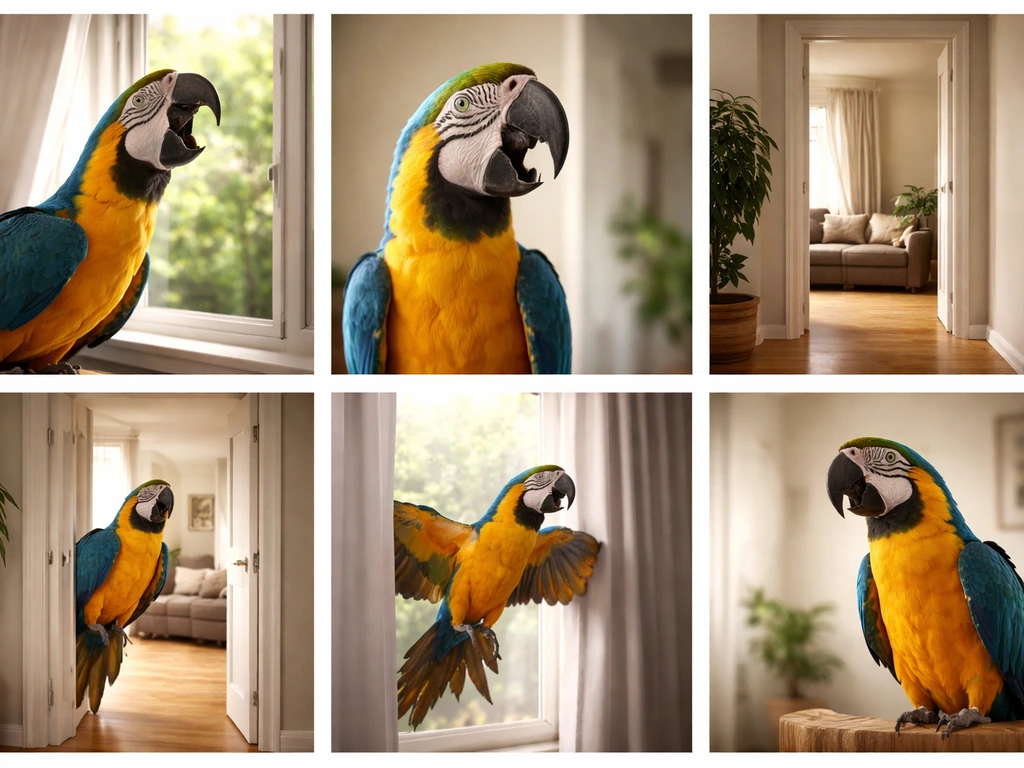
| Dream scenario | What it's often pointing to | Practical reflection prompt |
|---|---|---|
| Macaw speaking or calling loudly | A message you need to send, or one being ignored | What conversation have you been avoiding? |
| Macaw in flight, free | Desire for freedom or release from constraints | Where in your life do you feel trapped? |
| Macaw perched calmly on your hand | Confidence, connection, or a talent coming under control | What ability or quality are you starting to trust in yourself? |
| Macaw that won't speak or is silent | Suppressed voice, self-censorship, unexpressed needs | What are you afraid to say out loud? |
| A pair of macaws together | Partnership, loyalty, or a relational question | How is the primary relationship in your life actually going? |
| Macaw with brilliant feathers on display | Identity, self-presentation, or creative expression | Are you showing up as fully yourself, or performing for others? |
Real-life sightings: flight, calls, pairs, and feathers
If you actually see a macaw in the wild (or even a captive one in an unexpected setting), the symbolic interpretation depends a lot on the behavior and context. Here's how the most common scenarios tend to be read.
Hearing the call before you see the bird
The macaw's call reaching you before the bird appears is consistently interpreted as a 'communication first' signal. The message comes before the messenger. If you're going through a period where you've been waiting to hear back from someone, or where you've been putting off speaking up about something important, the call-before-sight scenario gets read as a nudge toward action on that front.
A macaw in flight
A macaw flying freely, especially if it crosses your path or moves overhead, is almost universally interpreted as a freedom symbol. Given the macaw's association with wilderness, seeing one in flight tends to prompt reflection on where you feel constrained. It doesn't mean pack your bags. It means pay attention to what feels like a cage right now.
Paired macaws or mating behavior
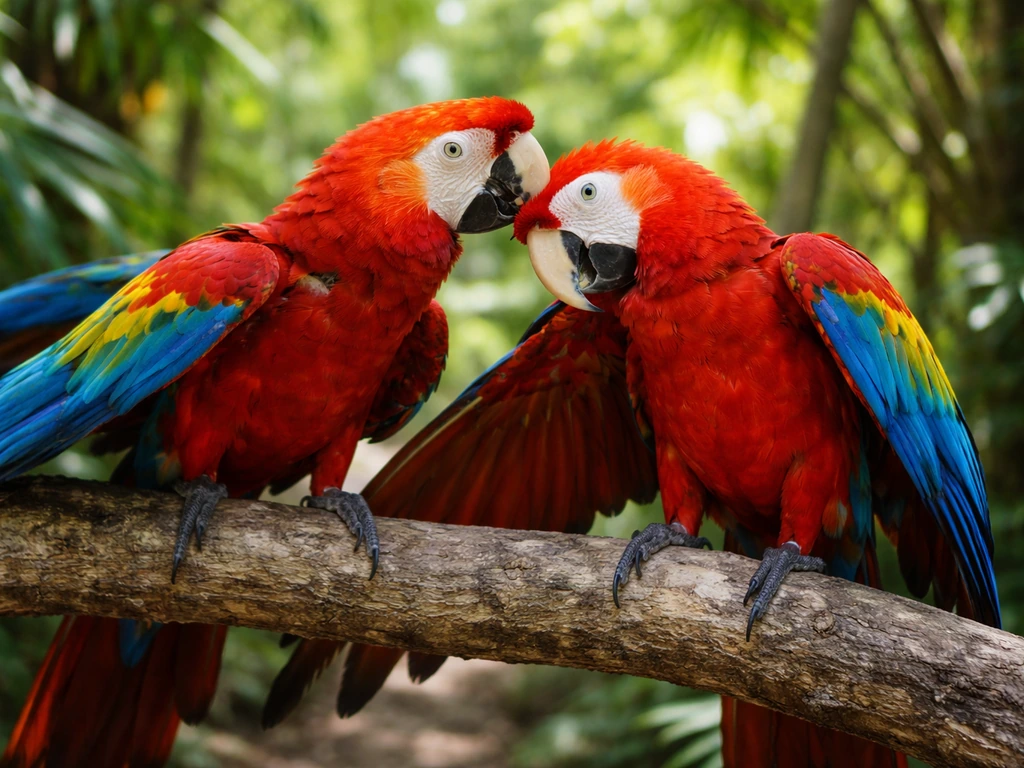
Macaws are genuinely, biologically monogamous. When you see two macaws preening each other, calling back and forth, or flying in tandem, that's a real behavior you're observing, and it's strong material for relational symbolism. The interpretive move here is to use it as a mirror: how is the partnership (romantic, professional, or creative) in your own life doing? Are you and your person actually in sync, or just in proximity?
Finding a macaw feather
Macaw feathers have been prestige objects across the Americas for over a thousand years (more on that below). Finding one is typically interpreted through themes of authentic self-expression and personal truth. The practical, non-mystical note here: if you find a macaw feather in an area with captive birds, you're in feather-drop territory, not necessarily a cosmic sign. Context always matters. But the symbolic layering, beauty, voice, freedom, is worth sitting with regardless.
Repeated sightings
If macaws keep appearing in your life in clusters, in dreams, conversations, images, and actual sightings within a short window, the interpretive tradition suggests amplifying the communication/expression message. Something is trying to get your attention about your voice, your visibility, or your authenticity. Rather than taking it as a literal omen, treat it as a pattern worth examining in your actual circumstances.
How macaw meaning varies by culture and region
The macaw's symbolic weight is not uniform across cultures. It's heaviest where macaws actually lived, in Mesoamerica and the American tropics, and gets thinner and more generalized the further you get from that geographic range.
Mesoamerica and Maya tradition
In Maya iconography and mythology, the scarlet macaw is one of the most powerful bird figures. Seven Macaw (Vucub Caquix in K'iche' Maya) is a central villain in the Popol Vuh, the 16th-century mythical history of the highland Maya. He's a false sun god, brilliant, terrifying, and ultimately brought down because his boastfulness exceeds his actual power. The Metropolitan Museum of Art identifies the Principal Bird Deity in Maya art with this figure. So in Mesoamerican tradition, the macaw isn't just a symbol of expression and beauty. It's also a warning about pride and claiming more than you can deliver.
Ancestral Pueblo cultures of the American Southwest
Archaeological evidence shows that ancient Pueblo communities at Chaco Canyon were importing scarlet macaws from Mesoamerica as far back as roughly 900 A.D. DNA analysis has confirmed that these weren't wild-caught birds but bred animals, suggesting something closer to organized 'feather production.' The Smithsonian has described macaws as cherished emblems in these cultures, with feathers used in ceremonial contexts. The American Museum of Natural History frames macaws in this context as 'cosmologically powerful agents' tied to trade networks and political authority. In short, macaw feathers were prestige currency, and the bird itself was a living status symbol.
Broader Indigenous American traditions
Scientific American has reported on prehistoric feather-farming practices across the American tropics, framing scarlet macaws as 'status symbols and spiritual emblems' used across a wide geographic range. The American Bird Conservancy describes the scarlet macaw today as a 'winged symbol of remaining wilderness,' which connects ancient prestige symbolism to modern conservation identity. In many communities across Central and South America, the macaw remains a symbol of the living forest, its presence signals ecological health, and its disappearance signals loss.
Modern Western and New Age interpretations
Outside Indigenous contexts, macaw symbolism in the modern West is largely channeled through spiritual and esoteric traditions that emphasize communication, freedom, and vitality. These interpretations are real and useful, but they're also more general, they pull from the bird's observable traits rather than from specific cultural mythology. If you're working with macaw symbolism in a non-Indigenous context, this is the tradition you're most likely drawing from, and it's perfectly valid. Just be aware it's a different conversation than what the Maya or Pueblo peoples were doing with this bird.
Macaw vs other parrots: getting the interpretation right
This is where a lot of confusion happens. People searching for 'macaw bird meaning' sometimes end up reading general parrot symbolism and assuming it applies directly to macaws, or vice versa. The two overlap but aren't identical.
Macaw vs parrot (general)
Parrots as a category carry mimicry symbolism heavily, the idea of repeating words without understanding, social performance, or saying what people want to hear. That's the Ibn Sirin-style interpretation of parrot dreams, and it shows up in Jungian frameworks too (the parrot as a mask or persona). Macaws share the parrot family but are bigger, louder, and more behaviorally complex. The symbolism tilts away from mimicry and toward authentic expression.
If the bird in your dream or sighting was clearly huge, brilliantly colored, and loud, you're in macaw territory, and the communication theme is more about speaking your own truth than about borrowed words. The parrot bird symbolism tradition is worth reading alongside macaw meaning, but they're not interchangeable. If you came here for parrot bird meaning specifically, compare how the meanings shift when the bird is a general parrot versus a macaw macaw meaning.
Scarlet macaw vs other macaw species
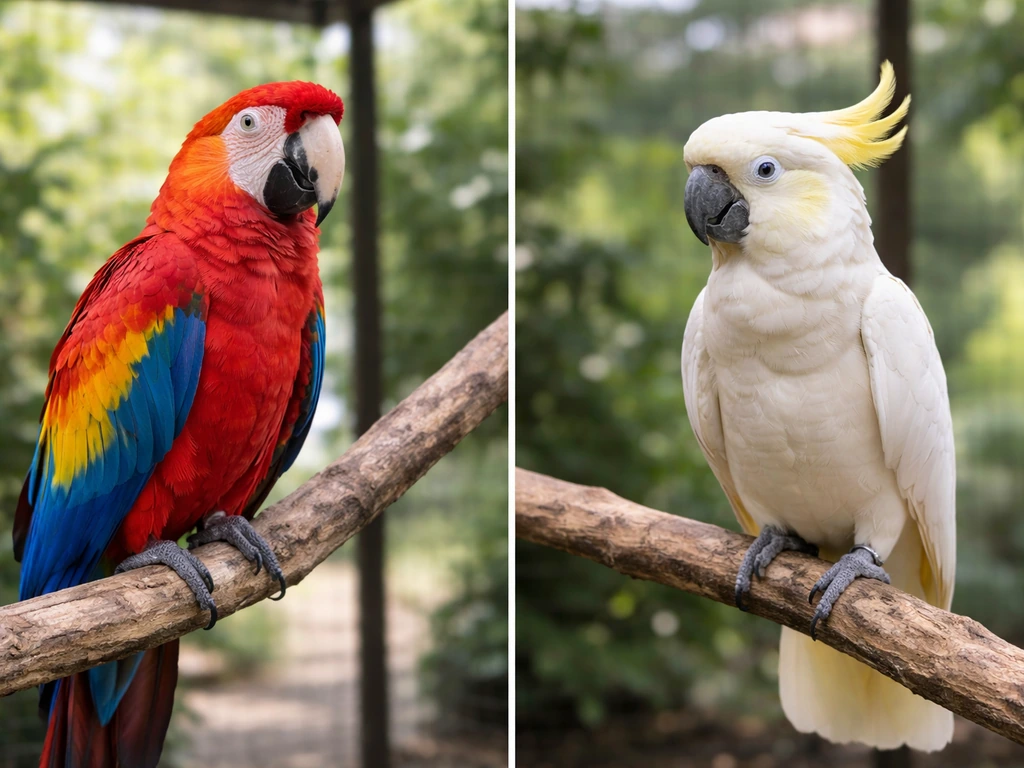
When people picture a macaw, they most often picture the scarlet macaw (Ara macao), red, yellow, and blue, the most iconic species. But there are dozens of macaw species, including the hyacinth macaw (all cobalt blue), the blue-and-gold macaw, and many others. Most symbolic interpretations don't differentiate by species and treat 'macaw' as a unified category. If color matters in your specific context (say, a dream where the blue color felt significant), then the specific species becomes relevant. A hyacinth macaw's all-blue coloring might add layers of intuition or calm to the expression theme. But for most interpretation purposes, the macaw as a type is the reference point, not the specific species.
The 'guacamaya' naming confusion
In Spanish-speaking regions, 'guacamaya' is a common word for macaw, tracing back to a Taino root. But in parts of Mexico, the same word is applied to the thick-billed parrot, which is a different bird entirely. If you're encountering macaw symbolism from a Latin American or Mesoamerican source, it's worth checking whether 'guacamaya' is being used to mean a true macaw or the thick-billed parrot, especially in older or regional texts. The symbolic associations won't necessarily transfer cleanly between species.
Non-bird uses of 'macaw'
Wikipedia's disambiguation page notes that 'Macaw' can refer to things other than the bird, including software tools and other named entities. If your search results are mixing bird symbolism with tech or branding references, you're caught in a disambiguation problem, not a symbolic one. For meaning and symbolism purposes, you want sources that are explicitly discussing the bird.
How to use macaw symbolism practically (without going too far)
The most useful way to work with macaw symbolism is to treat it as a reflective prompt rather than a literal forecast. When a macaw shows up in your dream, your path, or your research, the practical question is always: what in my life right now connects to expression, freedom, partnership, or authentic presence? Let the symbol open the question. Don't let it answer the question for you.
If you want to go deeper into specific macaw-type meaning, it's worth narrowing your focus. Are you most drawn to the voice/communication angle? The partnership/loyalty angle? The cultural-historical weight of the bird in Mesoamerican and Pueblo traditions? Each of those threads has its own rich material. And if you find macaw symbolism resonating, it's also worth looking at how related birds carry their own distinct meanings, peacocks, for instance, share the 'brilliant display' energy but with very different cultural baggage around vanity and pride, while parrots lean harder into the mimicry and social mask territory.
One honest note to close on: macaw symbolism is robust and consistent across many traditions, which makes it more reliable than highly obscure animal symbolism. But no symbolic system is a substitute for paying attention to your actual life. The macaw's message, show up fully, speak clearly, partner deeply, live vividly, is useful whether or not you treat it as anything more than good practical advice. If you are also looking for peace bird meaning, you can use the same reflective approach to see what theme you need to lean into right now.
FAQ
How do I interpret a macaw meaning if I feel neutral or calm in the dream (not stressed or pressured)?
If the dream emotion is steady, interpret the macaw as reinforcement rather than correction. Focus on what you are already expressing consistently, then ask whether you want to communicate more directly (voice) or show more visible authenticity (presence). Neutral emotion usually points to alignment, not an urgent message.
What if the macaw in my dream is silent or I cannot hear it?
Because macaw symbolism often ties to “sound first” (call as presence), a silent macaw usually shifts the emphasis from verbal communication to nonverbal expression. Look for themes like being seen without explaining, creative output, or letting your actions speak while you prepare the words.
Does a macaw dream mean I should confront someone immediately?
Not automatically. A useful decision aid is to match the dream event to your current conflict stage: if you have been waiting for a response, use it as a nudge to draft a message or set a time to talk. If tensions are high, choose a “low-risk first step,” like asking one clarifying question, instead of a full confrontation.
Are macaw meanings different for professional life versus relationships?
The symbolism stays similar (expression, freedom, visible truth, loyalty), but the “partner” meaning should be translated into your context. In work, loyalty can mean dependable collaboration or honest feedback. In romance, it often points to whether you and your partner are synchronized (mutual attention and timing), not just together.
How should I interpret seeing only one macaw repeatedly, without a mate present?
Single-macaw patterns often emphasize self-expression and personal visibility rather than partnership dynamics. Ask what part of your life needs stronger individual voice. If you keep noticing lone birds, it can also reflect independence needs, such as boundaries or choosing your own pace.
What does it mean if I find a macaw feather, but I live far from where macaws are native?
Treat it less as a “cosmic sign” and more as a context check. In many places, a feather can come from captive-bird facilities, crafts, costumes, or trade. If it is clearly sourced from captive or decorative contexts, interpret the meaning as a prompt about authenticity and communication, not about ecological loss in your exact region.
Can macaw meaning be confused with general parrot symbolism, and how do I tell the difference?
Yes, the easiest differentiator is scale and behavior in your experience. Macaw-leaning interpretations emphasize bold presence, loud communication, and purposeful intelligence. Parrot-leaning interpretations emphasize mimicry, social performance, or repeating others’ words. If your “bird” feels like a character performing, treat it as parrot-like; if it feels like a major voice calling you out of silence, treat it as macaw-like.
Do different macaw species change the interpretation, or should I stick to the category meaning?
Most symbolic readings can stay category-level, but color can matter when you clearly felt a specific shade was important. If you recall strong blue, red, or gold sensations, lean into that emotional palette (for example, blue often links to calm clarity, red to bold presence). If you cannot remember color or behavior, use the general macaw themes.
What should I do if search results mix “macaw bird meaning” with software or branding references?
That is a disambiguation problem. Constrain your research to sources that explicitly discuss the bird, genus Ara, or specific symbolism tied to wild or cultural practices. If a page focuses on tools or products named “Macaw,” ignore it for symbolism purposes.
How can I use macaw symbolism practically without turning it into an omen?
Use a “one action, one check” method. First, choose one concrete expression action you can complete soon (send the message, pitch the idea, set the boundary, schedule the talk). Second, check your real constraints (time, safety, relationships). This keeps the symbol reflective while preventing confirmation-bias spiral.
What if the macaw showing up feels negative, aggressive, or intimidating?
Intimidation can still fit the macaw themes, but it often points to underestimated communication needs or boundaries that are overdue. Ask what you have been avoiding saying, and whether your “voice” would require firmness rather than friendliness. If the dream includes threats or loss of control, treat it as a signal to slow down and plan a safer, clearer approach in waking life.
Next Article
Partridge Bird Meaning: Definition, Symbolism, and Uses
Partridge bird meaning explained: definition, symbolism, common idioms, cultural context, and how to disambiguate.