When someone searches for 'pheasant bird meaning,' they're usually asking one of three things: what the pheasant symbolizes culturally or spiritually, what it represents when it shows up in a piece of writing or a phrase, or why a specific brand, place, or name uses the word 'pheasant. ' The short of it is this: the pheasant most commonly symbolizes beauty, display, and sudden alertness, and in East Asian traditions it carries strong associations with nobility and civil virtue.
Pheasant Bird Meaning: Symbolism, Culture, and Usage

Marcus Whitley
3 May 2026
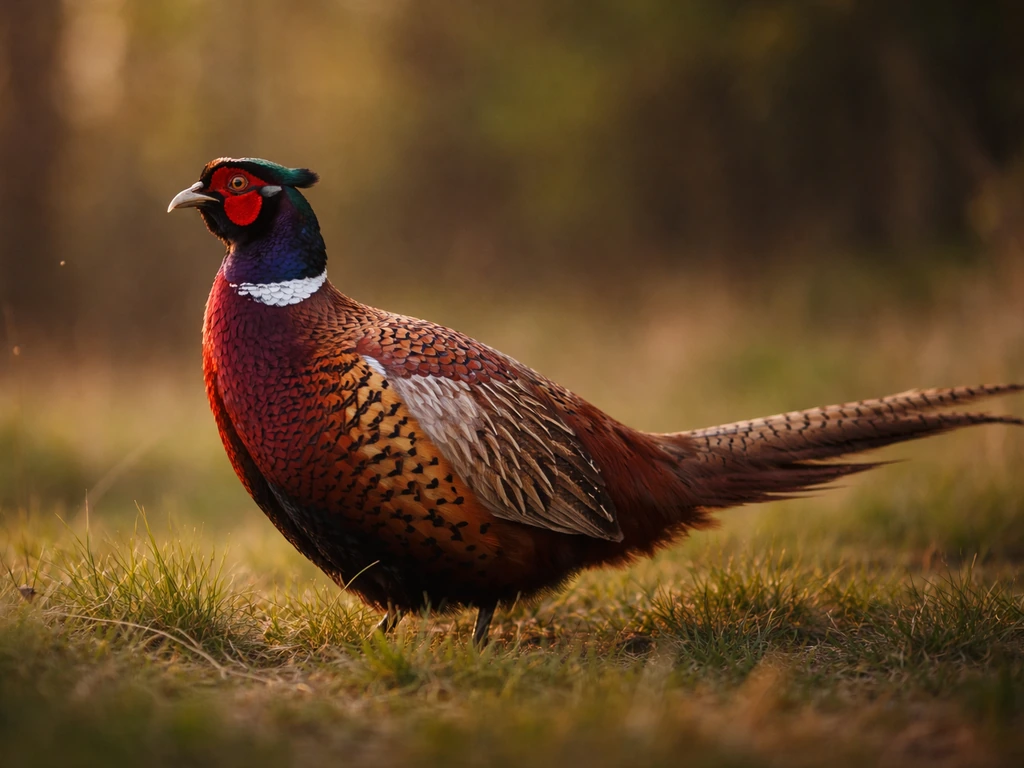
In everyday English, it's almost always a literal gamebird reference first, and the symbolic layer comes from the bird's behavior, which is genuinely dramatic enough to generate real meaning. Many people search for the pura bird meaning in English, but the exact sense depends on context and the bird being referenced.
If you meant the paloma bird meaning specifically, the same idea applies: focus on the cultural and symbolic context around the bird rather than treating it as one universal definition.
What 'pheasant' actually means (the bird and the word)
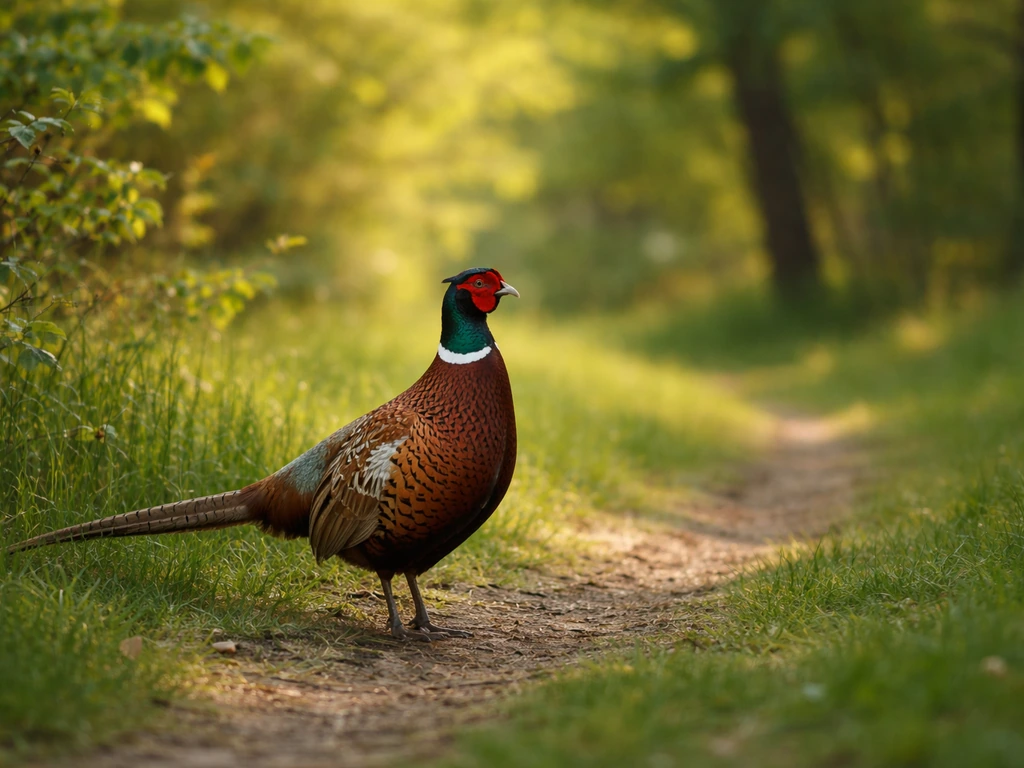
A pheasant is a large, long-tailed bird in the family Phasianidae, originally from Asia and introduced widely across Europe and North America as a game bird. The ring-necked pheasant is the one most people picture: iridescent green-and-copper plumage on the male, a vivid red face, and a tail that can stretch well over a foot.
Females are streaky brown, built for camouflage rather than display. Both Merriam-Webster and Dictionary. com anchor the definition firmly in this literal bird, and Cambridge doesn't diverge from that either. There's no widely established standalone figurative meaning in English the way 'dove' means peace or 'raven' means darkness.
The symbolic weight of 'pheasant' comes from the bird's actual behavior, not from an abstract tradition grafted onto it.
In British English, 'pheasant' can sometimes be used loosely to cover related gallinaceous birds, including partridges and even ruffed grouse in some regional dialects. So if you're reading an older British text and something called a 'pheasant' sounds like it might be a grouse, that ambiguity is real and documented. More on that in the confusions section below.
As a word used metaphorically or as a nickname, 'pheasant' doesn't have a fixed meaning the way 'fox' (cunning) or 'swan' (grace) does in English. When it appears symbolically, you almost always have to read the context to decode it, which is exactly the skill this article is designed to give you.
Pheasant symbolism across cultures
The symbolic meanings attached to pheasants vary quite a bit depending on which culture or tradition you're looking at, so it helps to separate them rather than lump them together.
Chinese tradition: nobility and civil virtue
In Chinese symbolism, the pheasant is strongly associated with high rank, civil-service virtue, and nobility. Historically, different species of pheasants were used to mark the rank of civil officials on their robes (the famous 'mandarin squares'), so the bird became a literal visual code for status and merit. This isn't abstract spirituality; it was a functioning social system where the bird you wore told people where you stood. That history means that when pheasants appear in Chinese art or poetry, they carry a very specific connotation: earned dignity, public virtue, and elevated position.
Japanese tradition: harmony and national identity
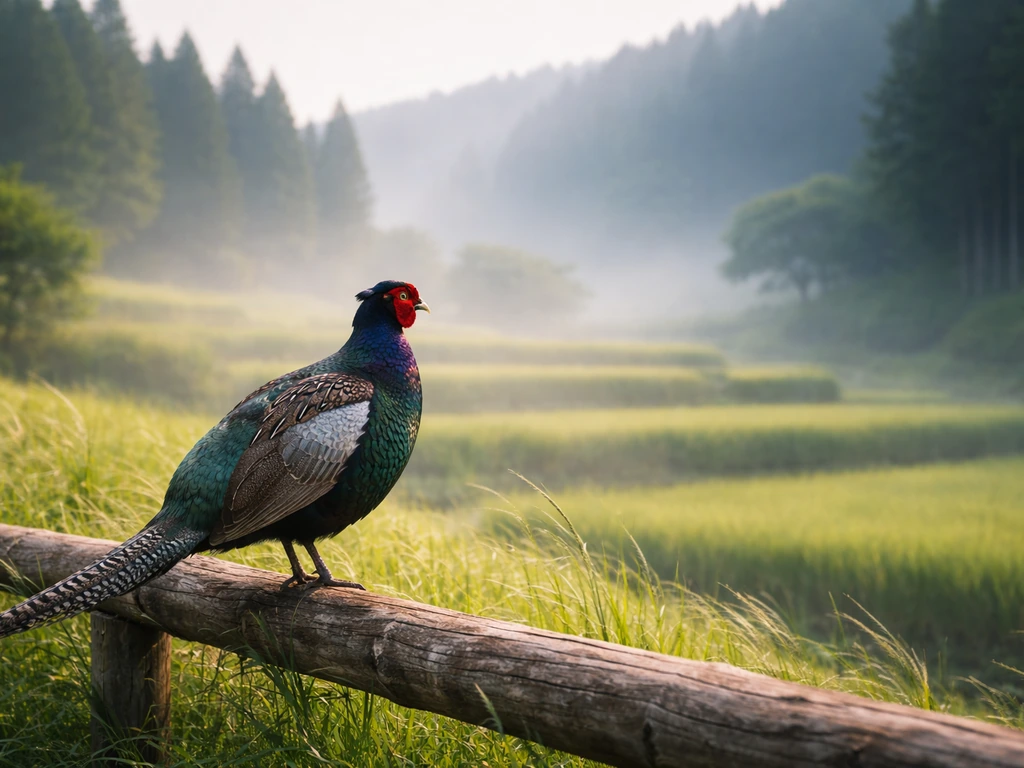
Japan takes this in a slightly different direction. The green pheasant, called kiji, is blank" rel="noopener noreferrer">Japan's national bird. The symbolism there leans toward harmony and family, with the image of a female pheasant walking with her chicks being particularly resonant. The green pheasant also appears in the old folktale 'Momotaro,' where it's one of three animal companions the hero recruits, representing loyalty and courage in service of a greater cause. So in Japanese contexts, 'pheasant' tends to carry warmth, protectiveness, and civic identity rather than the rank-and-status angle you see in China.
Western and heraldic symbolism
In Western heraldry, pheasants appear as charges (the symbols placed on coats of arms) and are generally read as game birds that signal landed status, hunting rights, and the kind of country-estate nobility that went with them historically. If your family crest includes a pheasant, it's typically communicating something about connection to land, hunting privilege, or rural aristocratic identity. It's less spiritually loaded than in East Asian traditions and more socially coded.
Modern spiritual and totem interpretations
Contemporary spiritual-meaning sites frequently list pheasant symbolism as including creativity, confidence, abundance, good fortune, and transformation. These interpretations are real in the sense that people genuinely use them, but they're not standardized or historically anchored the way Chinese court symbolism is. They tend to be derived from the bird's visible traits: the male's extravagant plumage reads as creativity and confidence, its ability to hide and then burst suddenly into flight reads as transformation or alertness. So even in these modern frameworks, the meaning traces back to the bird's actual behavior.
Pheasant in idioms, proverbs, and common sayings
Here's something worth knowing upfront: unlike pigeons, ravens, or doves, pheasants don't anchor many widely recognized English idioms. A search for 'pheasant proverb' or 'pheasant idiom' mostly surfaces niche collection sites rather than mainstream phrases everyone knows. That's not a gap in this article; it's just the honest picture of where pheasant sits in the English idiom landscape.
What does exist is a cluster of game-bird and hunting expressions where pheasants naturally appear: phrases about 'flushing out' something hidden, about sudden action from concealment, and about the pleasure (or challenge) of the hunt. These aren't pheasant-specific idioms, but the pheasant is a starring character in them. When a British writer says someone 'came out of cover like a pheasant,' the image is extremely specific: sudden, loud, fast, and unavoidable.
There's also a documented wordplay-style phrase: 'a pheasant by any other name,' a clear riff on Shakespeare's 'a rose by any other name.' This has been used in academic writing (including a published piece exploring why the bird is called a pheasant at all) more than in everyday speech, but it shows up in search results and can confuse people looking for a real idiom. It's a clever reference, not a genuine standing phrase.
In proverb collections, especially those drawing on Chinese or Central Asian sources, you do find pheasant-related sayings, often about display versus substance (the showy bird versus the plain one). These exist, but they're culturally specific and not directly translatable into English idiom usage.
What pheasants represent in literature and metaphor
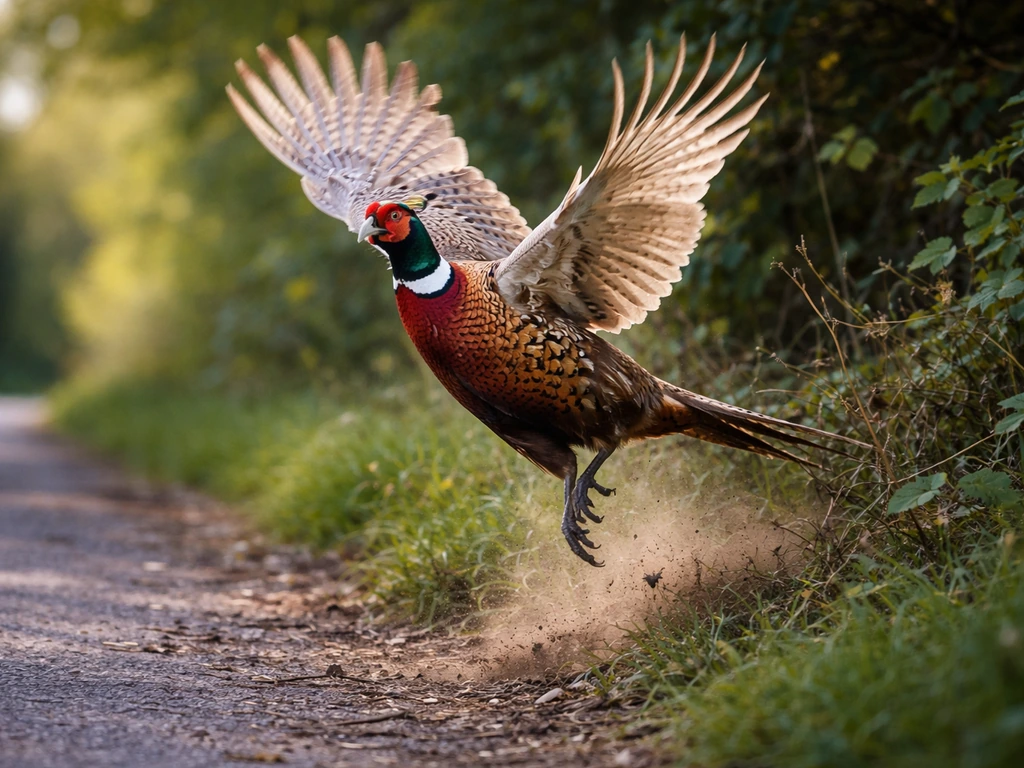
When writers reach for a pheasant as an image, they're almost always after one of two things: glamour/display or sudden emergence. These aren't arbitrary; they come directly from the bird's biology and behavior. In Polynesian bird traditions, the meaning you find depends on the specific bird species and the cultural context they come from Polynesian bird meaning.
The male ring-necked pheasant is genuinely one of the most visually striking birds in temperate environments. Poets and writers use it as a shorthand for extravagant, almost ostentatious beauty: iridescent, impractical, unmissable. That quality makes it useful when describing a character or setting that's lush, excessive, or eye-catching in a way that draws attention regardless of the consequences.
The other literary use is the flush, the moment the pheasant explodes from cover. Brooks Bird Club's ring-necked pheasant PDF describes the field behavior of the species, including the “[flush from cover](https://www. brooksbirdclub. org/uploads/5/2/8/3/52832773/ring-necked_pheasant.
pdf)” style action, making it useful as a long-form reference when you expand that section. Pheasants stay hidden until a threat is almost on top of them, then launch into a loud, whirring flight that startles everyone in the vicinity. That behavioral pattern, hiding then bursting out, maps perfectly onto narrative moments of revelation, crisis, or ambush.
A poem or story that uses a pheasant flushing from a hedgerow is often using it to signal a turning point, the moment something concealed suddenly becomes impossible to ignore. This is the imagery in poems like 'The Pheasant,' where the bird's sudden visibility is the emotional core of the scene.
In East Asian literary and visual traditions, the pheasant works differently: it's about the outer beauty of the bird standing in for inner virtue or high status. Museum scholarship on Chinese art frequently discusses how pheasant imagery in painting and poetry encodes specific social and moral meanings, which is why the same bird can feel decorative in one cultural frame and deeply symbolic in another.
Slang, brand names, and other uses of 'pheasant'
If you searched 'pheasant meaning' because you saw the word in a non-bird context, here are the most common non-symbolic uses you might have encountered:
- Brand names: MacFarlane Pheasants, marketed as America's largest pheasant farm, is a well-known commercial operation. 'Pheasant' in this context means the farm product and game-bird industry, not symbolism.
- Place names: Pheasant, Texas is a real community, and 'Pheasant' appears in street names, parks, and developments across the US and UK. These are usually just named after the bird's historical presence in an area.
- Military vessels: USS Pheasant is the name of a historical US Navy ship. If you hit a reference like this, the meaning is purely nominal (named after the bird) rather than symbolic.
- Usernames and team names: 'Pheasant' is a reasonably common online handle and community name, especially in hunting, birding, and gaming contexts. In these cases the meaning is usually just affection for the bird or a reference to game-bird hunting culture.
- Pub and inn names: In Britain especially, 'The Pheasant' is a classic pub name, typically evoking rural, countryside, hunting-culture associations. You'll find them across England.
None of these uses carry hidden symbolic weight. They're naming conventions that draw on the bird's cultural identity as a game bird and countryside animal, but they don't encode a second-layer meaning the way a dove on a logo implies peace.
How to figure out what 'pheasant' means in a specific phrase
If you landed here because you saw 'pheasant' in a specific sentence or quote and want to know what it means there, use this three-step approach:
- Check for hunting and game-bird language first. If the sentence includes words like 'shoot,' 'hunt,' 'flush,' 'game,' 'field,' 'cover,' 'gun,' or 'shoot,' you're almost certainly in a literal gamebird context. The pheasant here means the animal, and any symbolic meaning is incidental: wilderness, rural privilege, the thrill of pursuit.
- Check for appearance and display language. If the sentence emphasizes plumage, colors, strutting, courtship, or being seen and admired, the pheasant is being used as a symbol of glamour, confident display, or extravagant beauty. This often shows up in character descriptions or in passages about someone who draws attention without being able to help it.
- Check for hiding, stealth, and sudden motion. If the sentence emphasizes concealment, camouflage, surprise, or sudden action, the pheasant is doing its 'flush from cover' work. The symbolic meaning is alertness, sudden revelation, or crisis emerging from something that seemed still.
If you're reading something with an East Asian cultural frame (Chinese poetry, Japanese folklore, or art referencing these traditions), add a fourth check: status and virtue. In those contexts, a pheasant almost always carries the weight of rank, earned nobility, or civil virtue, especially if the bird is described with admiration rather than as prey.
| Context clue in the sentence | Most likely meaning of 'pheasant' |
|---|---|
| Hunt, shoot, flush, field, cover, game | Literal gamebird: wilderness, pursuit, rural life |
| Plumage, strutting, display, colors, courtship | Beauty and confident display: glamour, extravagance |
| Hiding, camouflage, burst, sudden, startled | Alertness and sudden emergence: revelation, crisis |
| East Asian cultural frame (art, poetry, rank) | Nobility, civil virtue, high social status |
| Brand, place name, pub, ship, username | Nominal use: named after the bird, no symbolic layer |
Common confusions: pheasant vs other game birds
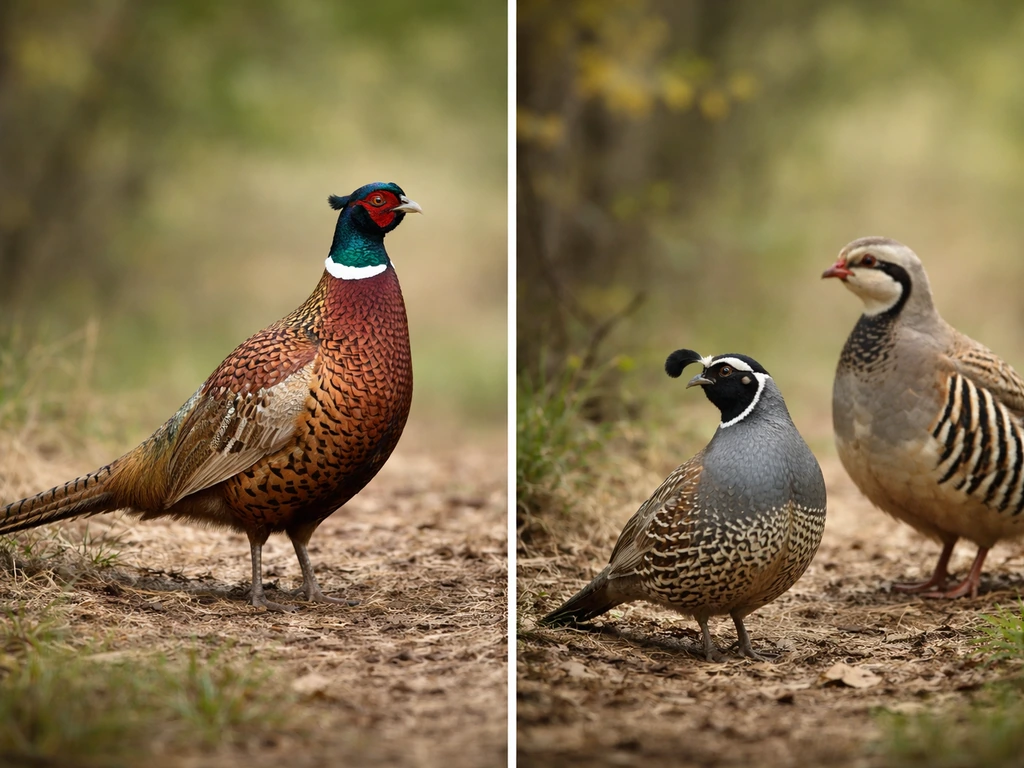
Pheasants sit inside a large group of birds that overlap in appearance, behavior, and symbolic treatment, which creates real confusion when people look up 'bird meanings.'
Pheasant vs quail and partridge
These are all upland game birds in the same broad family, and in some older British texts 'pheasant' can loosely cover partridges. In hunting writing and bird-meaning content, their symbolism overlaps heavily: all three are associated with stealth, sudden flight, and countryside settings. If you're reading something vague about an 'upland bird,' the symbolic frame is similar regardless of which specific species is meant.
Pheasant vs grouse
In some North American regional usage, 'pheasant' is used colloquially for ruffed grouse, which is a different bird. Dictionary.com documents this overlap. If you're reading an older or regional American text and the 'pheasant' seems to be behaving like a forest bird rather than a field bird, it might actually be a grouse. The symbolic connotations are similar (game, wilderness, sudden flight) but the species-specific symbolism, especially anything about plumage display, won't carry over.
Pheasant vs peafowl
This is the sneakiest confusion. Peafowl (peacocks and peahens) are in the same family as pheasants, and bird-meaning summary sites sometimes blend 'pheasant-like' birds together when discussing display and beauty symbolism. The peacock has its own extensive symbolic tradition (immortality, vanity, watchfulness) that is completely separate from pheasant symbolism. If you see 'display' or 'tail' symbolism attributed to pheasants, double-check that the source isn't actually talking about peacocks. Pheasants have impressive tails but nothing like the peacock's fan, and the symbolic traditions are distinct.
Green pheasant vs other pheasant species
The green pheasant is Japan's national bird and carries specific Japanese symbolic meaning: harmony, family, national identity, and loyalty (from the Momotaro folktale). That symbolism doesn't automatically apply to ring-necked pheasants or other species. If a source about Japanese symbolism is using 'pheasant' without specifying the green pheasant, it almost certainly means the kiji specifically. Don't assume that symbolism transfers to the bird you're reading about in a different cultural context.
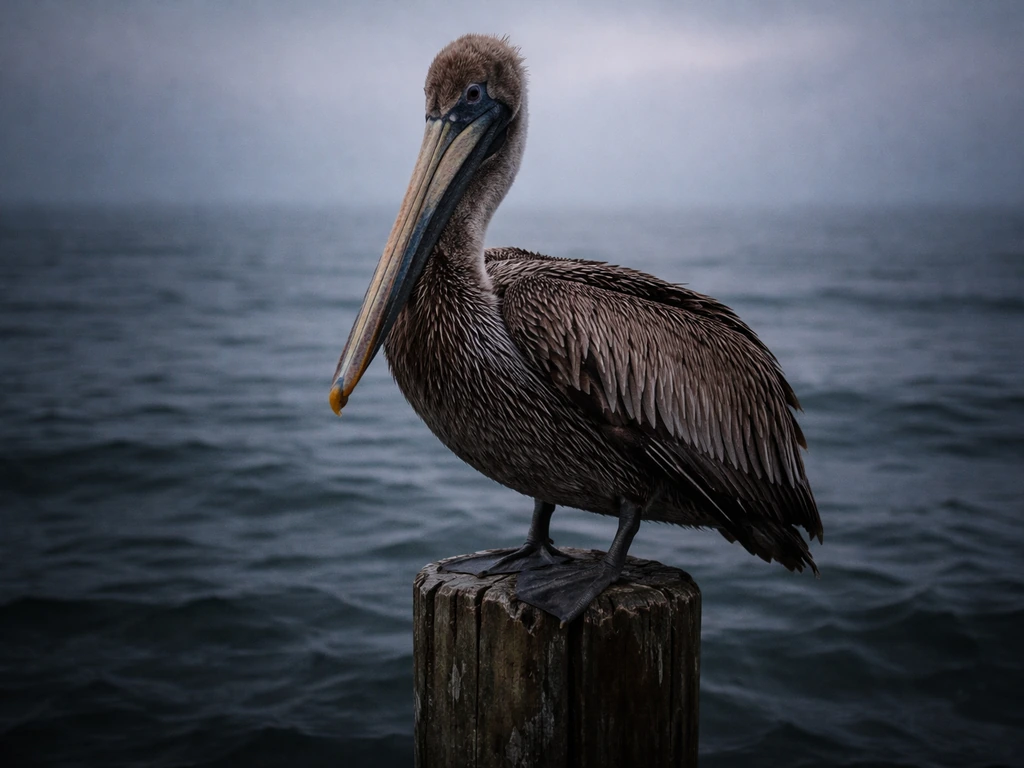
If you're exploring other birds in this territory, you might find it useful to look at how similar 'what does this bird mean' questions play out for birds like pigeons, pelicans, or doves in other cultural traditions. This same kind of meaning-finding approach also applies when you ask what the pigeon bird meaning is in a particular context. Interestingly, many of the same interpretive tools apply: check the cultural frame, check the behavioral cues in the text, and separate the literal animal from the symbolic shorthand. If you’re curious about pelican bird meaning specifically, you’ll want to look at the cultural tradition and the pelican’s symbolic traits in context pelicans.
FAQ
If I’m reading a sentence like “she rose like a pheasant,” is the meaning always symbolic or could it be literal?
It depends on whether the surrounding text emphasizes hunting, countryside setting, or a birdlike action (bursting from cover). If it’s describing behavior (sudden flight, loud flush, fast departure), it’s usually metaphorical from those cues. If the passage is about animals, wildlife observation, or a specific bird species, it may be literal.
What should I do if a site gives a “spiritual meaning of pheasant” but doesn’t mention the bird’s behavior or species?
Treat it as an ungrounded interpretation until you can connect it to something observable, like the male’s display plumage or the bird’s hide-then-flush pattern. Also check whether it specifies a particular species (for example, green pheasant/kiji) because many “meaning lists” quietly mix species and cultural frames.
Does “pheasant bird meaning” mean the same thing in Chinese, Japanese, and Western contexts?
No. In Chinese contexts it often ties to rank and civil virtue through historical court symbolism. In Japanese contexts, the strongest national-image layer usually belongs specifically to the green pheasant (kiji). In Western heraldry, it tends to read more as social and land-linked status than as inward spiritual virtue.
How can I tell whether “pheasant” in a quote is using it for glamour versus sudden emergence?
Look for the descriptive anchor. Glamour meaning will focus on color, shine, extravagance, and being eye-catching. Sudden-emergence meaning will focus on concealment, cover, whirring flight, startling others, or a turning point event in the scene.
Is there a standard English idiom that uses “pheasant” the way “dove” can imply peace?
Not in a widely standardized way. “Pheasant” shows up more often as a vivid descriptor or in hunting-game imagery than as a mainstream idiom with a fixed dictionary-like emotional meaning. If you see a “pheasant idiom” claim, check whether it’s actually a niche collection or a reference people are inventing rather than using broadly.
I found “a pheasant by any other name.” Is that an established phrase I should expect in everyday English?
It’s not a common standalone idiom. It’s mainly a Shakespeare-style wordplay riff used in more academic or literary contexts, so its meaning is usually transparent (a pun on naming) rather than a recurring cultural proverb.
Could “pheasant” in an old British text refer to a different bird like a grouse?
Yes, especially when the writing is vague or uses “pheasant” loosely for related upland gallinaceous birds. If the scene stresses forest behavior or matches a grouse-like setting, you should consider that the species label may be broader than modern strict usage.
If a U.S. regional source calls something a “pheasant” but it seems like a forest bird, what’s the likely issue?
It may actually be referring to ruffed grouse colloquially. Species matters because symbolism tied to plumage display and specific cultural associations may not carry over if the bird isn’t what the label suggests.
How do I avoid confusing pheasant symbolism with peacock symbolism?
Be cautious when the source emphasizes a fan-shaped tail, spectacle-like display, or symbolism traditionally linked to peacocks. Pheasants can represent display and alertness, but peacock symbolism has its own long tradition, so overlapping interpretations on “tail symbolism” often indicate a peacock mix-up.
If a source says “Japan pheasant meaning,” should I automatically assume it refers to the green pheasant?
Usually yes, especially when it mentions national identity or uses Japanese symbolism tied to kiji. If the source doesn’t explicitly say “green pheasant” (kiji), you should verify the species before treating the meaning as applicable to ring-necked pheasants or other pheasant types.
Next Article
Pelican Bird Meaning: Symbolism, Omens, and What to Look For
Interpret pelican bird meaning from Christian sacrifice to folklore, behavior, color, and what to notice when one appear