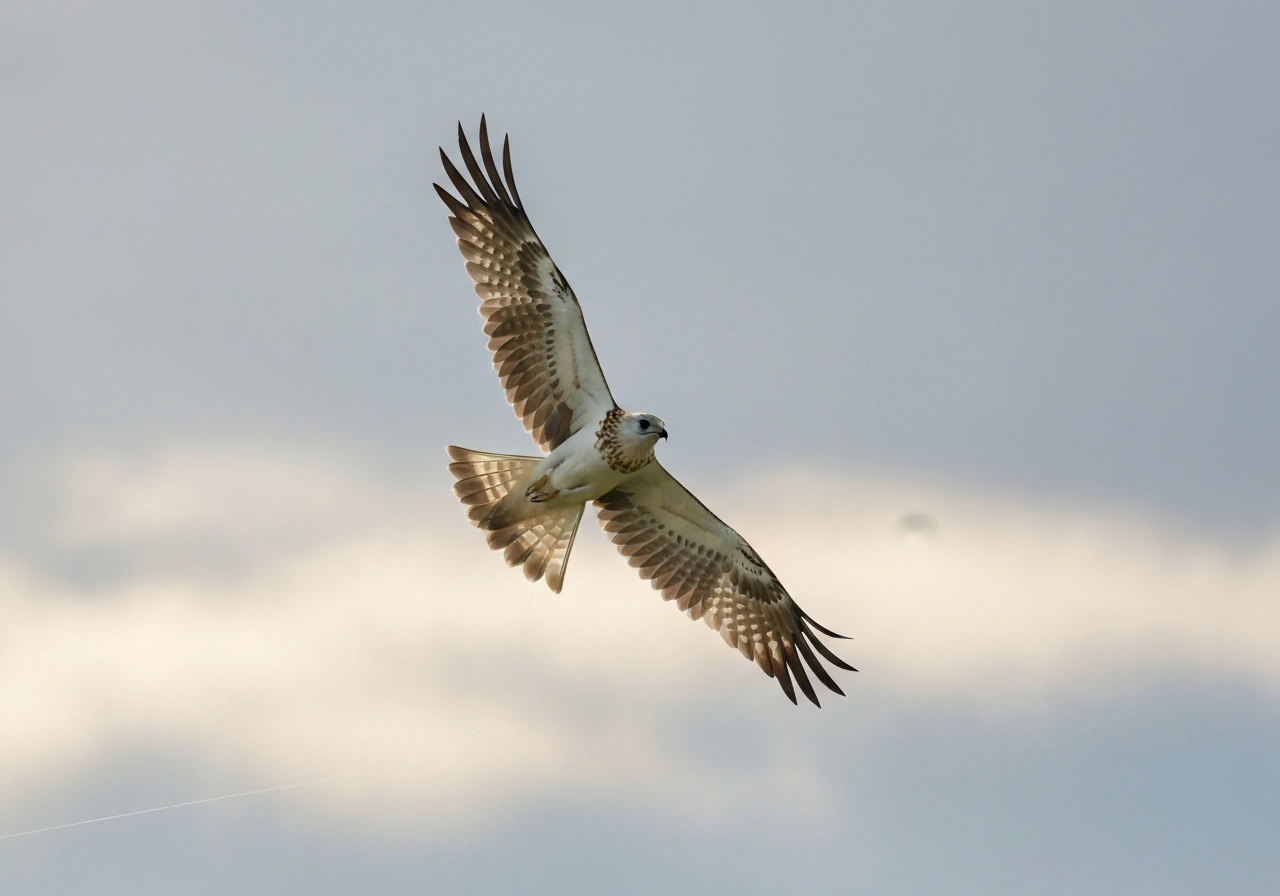
Seeing a kite bird most likely means you spotted a medium-sized raptor, probably a Mississippi Kite or a Swallow-tailed Kite, soaring or hovering overhead. Symbolically, kites are most commonly associated with freedom, sharp focus, higher perspective, and independence. But how you interpret that sighting, whether as a literal wildlife moment or something personally meaningful, depends almost entirely on context: what the bird was doing, where you were, and what was on your mind at the time.
Seeing a Kite Bird Meaning: Literal and Symbolic Interpretations

Marcus Whitley
23 Jun 2026

First, what exactly is a "kite bird"?
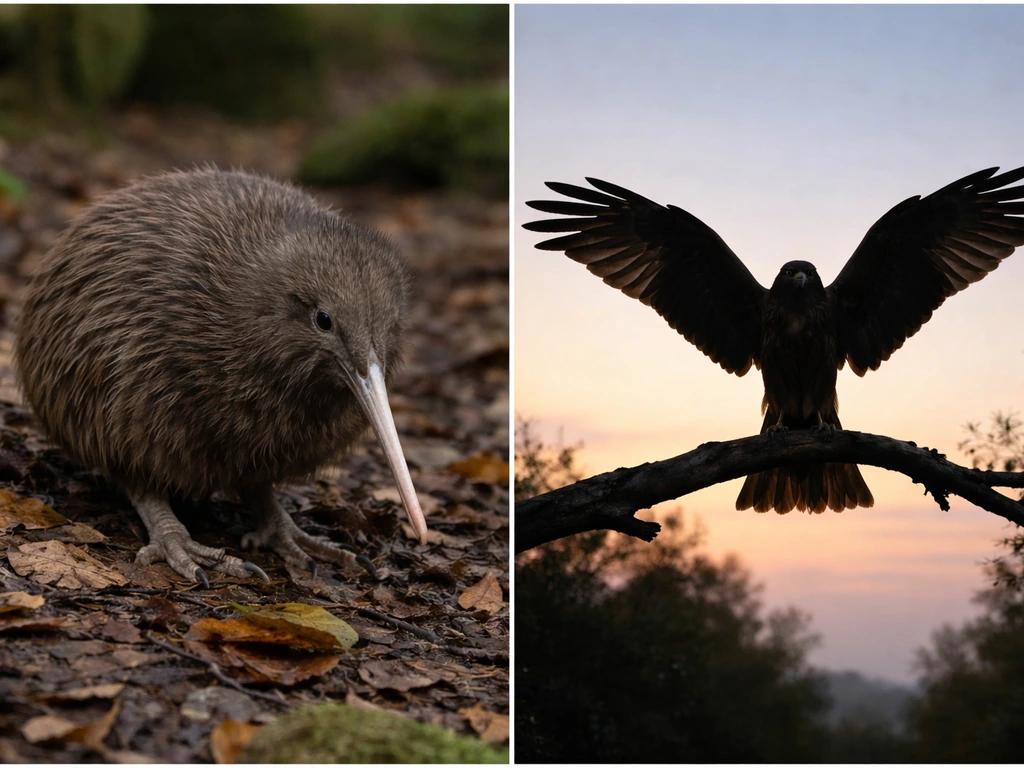
"Kite bird" is one of those phrases that sounds specific but actually covers a lot of ground. If you meant the kiwi bird instead, you can look up the meaning of kiwi bird to understand how its symbolism is typically interpreted. In strict ornithology terms, kites are a group of raptors in the family Accipitridae, which also includes hawks and eagles. The name "kite" is Old English in origin, and it stuck to certain birds of prey based on their appearance and behavior. So when someone searches "seeing a kite bird," they usually mean one of a few things.
The most common possibilities are: (1) they saw what they believe is a bird literally called a "kite," (2) they spotted a bird of prey in general and guessed at the name, or (3) they heard someone use "kite" as a name or nickname and want to know what it refers to. In North America, the two species you're most likely to actually encounter are the Mississippi Kite (Ictinia mississippiensis) and the Swallow-tailed Kite (Elanoides forficatus). Both have a distinctively graceful flight style, which is probably why they caught your attention.
There's also a mythology angle worth mentioning: the Greek figure Ictinus is linked in ancient texts to kite bird terminology, showing that "kite" as a reference to raptors goes back further than modern English birding. And in different regional English traditions, "kite" has sometimes been used loosely to describe other soaring raptors, so don't be surprised if someone in one country means a Red Kite (Milvus milvus) while someone elsewhere is talking about a Swallow-tailed Kite. They're different birds, but the same word.
Mississippi Kite vs. Swallow-tailed Kite: which did you see?
If you're in the central or southern United States and you saw a small, agile raptor hovering or making quick, direct flights, you probably saw a Mississippi Kite. If you saw something with a dramatically forked tail gliding in long, smooth arcs like it wasn't even trying, that's almost certainly a Swallow-tailed Kite. The Swallow-tailed's morphology is built for effortless long-distance gliding, which is why watching one feels almost theatrical. Both species use thermal updrafts to soar, which explains the circling behavior people often report. It's not mysterious, it's physics: warm rising air lets raptors gain altitude without burning energy.
What kite birds symbolize
Across a wide range of symbolic traditions, raptors including kites tend to cluster around the same core meanings. There's a reason for that consistency: these are birds that literally soar above everything, hover with pinpoint stillness, and dive with precision. People have been mapping those behaviors onto human experiences for thousands of years.
- Freedom and soaring: The kite's ability to ride thermals and cover vast distances with minimal effort makes it a natural symbol of liberation, release, and moving beyond constraints.
- Sharp focus and clarity: Raptors have exceptional vision and can spot prey from extraordinary heights. This translates symbolically into seeing situations clearly, cutting through confusion, and recognizing what really matters.
- Higher perspective: Circling high above and seeing the landscape whole is read as a metaphor for stepping back from problems, gaining overview, and avoiding tunnel vision.
- Independence and power: Kites are solitary hunters. They don't flock. Symbolically, this maps to self-reliance, confidence in your own direction, and a kind of quiet, assured strength.
- Guidance and protection: In many raptor-symbolism traditions, a bird appearing overhead is treated as a watchful presence, something that sees what you can't and signals that you're being looked after.
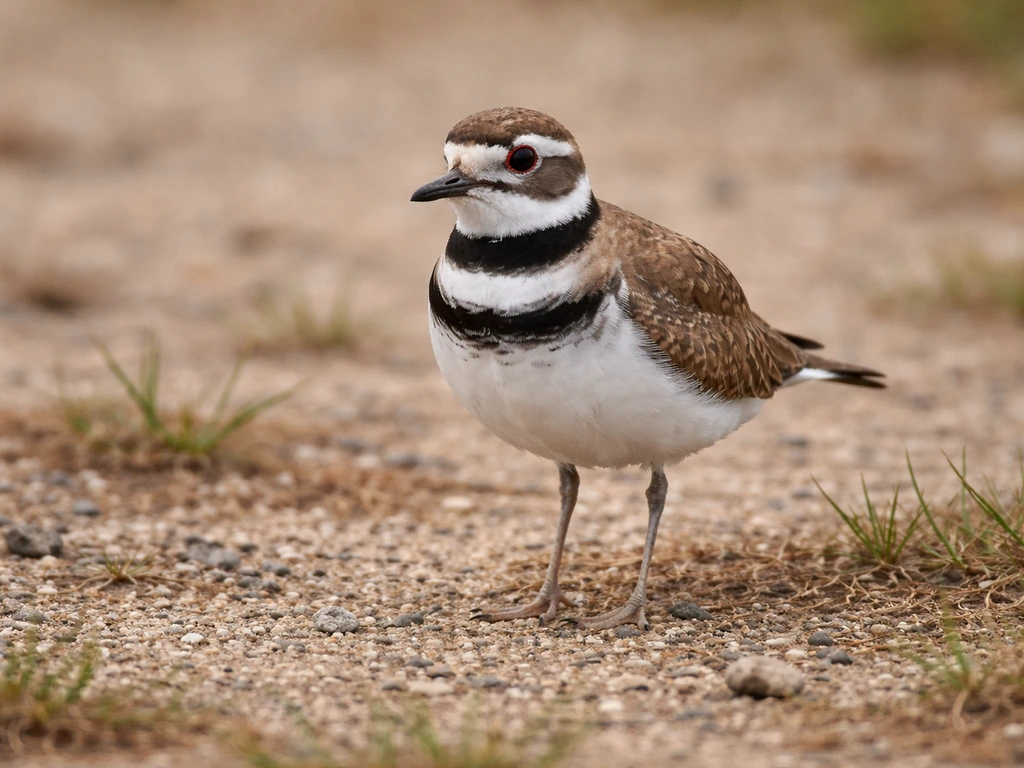
It's worth being honest here: these meanings aren't universally agreed upon. Sources that discuss raptor symbolism vary on whether a kite sighting is a "good omen," a message about a decision you need to make, or simply an invitation to reflect. The themes of focus, freedom, and perspective are the most consistent across traditions, so those are the most defensible interpretations to start with. If you're looking for the specific killdeer bird meaning, it's helpful to look at common interpretations and the context of your encounter.
Cultural and folklore roots of kite bird symbolism
Raptor symbolism runs deep across cultures, and while the kite specifically doesn't always get named in historical texts the way eagles do, it belongs to a broader tradition of hawk and raptor reverence that spans thousands of years.
In ancient Egypt, hawks were sacred and directly associated with gods like Ra and Horus. The hawk-headed god was a symbol of sky, kingship, and divine sight, which is where the "higher perspective" symbolism gets its oldest roots. Ancient Rome used the eagle (aquila) as its supreme emblem of power and authority, and that eagle symbolism eventually spread through Western heraldic traditions, giving raptors in general a flavor of strength and dominion in European cultural memory.
In many Indigenous American cultures, eagles and other raptors hold sacred significance, though it's important to note that meanings vary significantly by nation and tradition. Generalizing all Indigenous raptor symbolism into one tidy meaning is a mistake. What's broadly true is that raptors are treated with deep respect, often seen as messengers between the earthly and spiritual worlds, and their feathers carry ceremonial significance in many communities.
In Greek mythology, the figure of Ictinus appears in connection with kite birds, reinforcing that these birds held enough cultural weight to be woven into ancient storytelling. More modern New Age and neopagan frameworks, popularized in part by books like Ted Andrews's "Animal-Speak," frame animal encounters as personal messages or totems. This is a practice-oriented tradition rather than an ancient one, but it's where much of the internet-era symbolism for kite sightings originates.
What a kite sighting might mean for you personally

Here's where things get genuinely interesting, and also where you have to be careful. Personal interpretation of a bird sighting is essentially a projective exercise: you're taking an emotionally neutral event and asking what it mirrors back about your inner life. That's not a bad thing. It can be a useful thinking tool. But it's worth knowing that's what you're doing. If you want a quick way to narrow it down, start by identifying which kite bird you saw and what it was doing at the time.
If you were feeling stuck or overwhelmed when you saw the kite, the image of a bird soaring above the landscape effortlessly might be your mind's way of recognizing what you need: perspective, breathing room, the ability to zoom out from whatever feels too close and claustrophobic right now. If you were thinking about a decision, the kite's hovering stillness before a dive might resonate as precision, the idea that sometimes you need to pause and assess before committing.
Online communities around bird symbolism often include people who feel the sighting was meaningful to them and people who gently push back, noting the risk of reading too much into coincidence. Both responses are valid. What matters is whether the reflection is useful to you, not whether the bird was literally delivering a message. Think of it as a mindfulness prompt that arrived with wings. If you’re also wondering about kiskadee bird singing meaning, treat it as another clue from the bird’s behavior and your own context.
How to interpret what you actually saw
Context changes everything here. The same bird doing different things in different conditions carries different weight, both symbolically and literally. Before you settle on an interpretation, run through a few variables.
| Factor | What to Notice | What It May Suggest |
|---|---|---|
| Behavior | Hovering, circling, diving, or soaring in a straight line | Hovering often means hunting focus; circling usually means riding thermals or surveying; diving signals decisive action |
| Time of day | Morning, midday, or late afternoon | Raptors are most active midday when thermals build; a rare dawn or dusk sighting stands out more |
| Weather | Sunny and warm vs. overcast and cool | Thermals form on warm sunny days, explaining most circling behavior; unusual weather activity may be more notable |
| Location | Urban area, open countryside, near water | Kites in unexpected urban settings often signal range expansion or habitat change; countryside sightings are routine |
| Your state of mind | What you were doing or worrying about | The most honest filter for personal symbolic meaning; your emotional state shapes what you take from the encounter |
One practical tip: if the kite was circling slowly without flapping, it was almost certainly riding a thermal updraft. That's normal, efficient raptor travel and hunting behavior. If it was hovering in one spot, it was likely locked onto prey below. If it dove and then pulled up, it either caught something or missed. These behaviors have clear biological explanations, and understanding them makes the symbolism feel more grounded rather than less meaningful.
What to do after seeing a kite bird
Journaling prompts to work with the experience
If the sighting felt significant to you, journaling is one of the most practical ways to process it without either dismissing the feeling or over-literalizing it. You can use Psych Central’s anxiety writing approach, which provides worry-to-action journaling prompt guidance to help manage rumination. These prompts draw on perspective-taking and values-clarification approaches used in reflective practices:
- What was I thinking about or worrying about just before I saw the kite? Does the bird's behavior (hovering, soaring, diving) speak to that in any way?
- If the kite's perspective, high up and seeing the whole landscape, were available to me right now, what would I notice about my current situation that I can't see from where I'm standing?
- What does "freedom" or "focus" mean to me right now? Am I missing one of those things in my life at the moment?
- If a trusted friend had seen what I saw and described it back to me, what meaning would they say I was probably looking for?
- What one small action could I take today that reflects the quality I most associate with this bird?
Superstition vs. reality: where the line is
Treating a kite sighting as a message worth reflecting on is a completely reasonable practice. Treating it as proof of a specific outcome, like "this means my situation will definitely improve" or "this bird warned me not to do that," crosses into superstition. The distinction matters because one approach uses the encounter as a thinking tool while the other outsources your decision-making to a bird. Kites are excellent hunters and pilots. They're not oracles. The symbolism is yours to make meaningful, not a fact delivered by the universe.
How to watch kites ethically and safely
If you want to observe the bird properly rather than just catch a glimpse, a few basic rules apply. Keep a respectful distance, the NPS suggests at least 75 feet (about 23 meters) from wildlife as a general baseline. If the bird changes its behavior, looks toward you, or starts to move away, you're too close. Back off. Back away if the bird alters its behavior, prioritizing the raptor's welfare over getting photos, according to the University of Minnesota Raptor Center's raptor-watching ethics Back off.. Audubon's guidance for ethical bird watching is direct: if your presence causes the bird to flush (fly away), you were already too close.
Use binoculars or a telephoto lens rather than walking toward the bird. Raptors near nests are particularly sensitive to intrusion, and disturbing nesting or incubating birds can cause them real harm. Never try to feed or bait a kite or any other raptor. Feeding wildlife disrupts natural behavior and creates dependency and risk for the animal. The most rewarding way to watch kites is to find a comfortable spot with a clear sky view, stay still, and let them do what they do. They'll put on a far better show if they don't know you're watching.
If you want to take this further, the kite's name and symbolism sit in a fascinating neighborhood. Related birds like the kingfisher and killdeer each carry their own distinct symbolic traditions worth exploring, and the broader question of what the kite bird means as a term (versus what it means to see one) opens up a whole separate thread about naming, identity, and the way English speakers have historically labeled birds based on behavior and appearance.
FAQ
If I’m not sure which type of kite bird I saw, how should I interpret the meaning?
Not necessarily. “Kite bird” in everyday searches can mean several different things: a real raptor called a kite (for example Mississippi or Swallow-tailed), a generic “kite” nickname someone heard, or a mistaken ID of another soaring raptor. If you only had a brief look, focus your interpretation on the broad raptor symbolism (focus, perspective, freedom) and avoid tying it to one guaranteed species.
What should I pay attention to in the bird’s behavior to avoid misreading the sighting?
If you were trying to identify the bird at the time, the strongest clue is behavior. Slow circling with minimal flapping usually indicates thermal soaring, hovering can indicate prey inspection below, and a sudden dive with a pull-up often relates to hunting success or a missed strike. These patterns can ground your symbolism so it doesn’t depend purely on luck or a “sign” feeling.
How can I turn a kite sighting into a practical takeaway without making it superstition?
Use your mental state as a “reflection prompt,” not as a verdict. A helpful rule is to ask, “What would this perspective help me see today?” and then convert it into one concrete action (for example, pause before a decision, take a step back, or reassess priorities). Avoid interpreting the sighting as permission to ignore evidence or outsource judgment to superstition.
How do I know whether the “message” is helpful reflection or just coincidence I’m over-assigning meaning to?
Yes, a sighting can feel meaningful even if it’s coincidence. The distinction is what you do after. If the experience leads you to a useful question or better decision-making, it’s acting like a mindfulness prompt. If it becomes proof of a fixed outcome (good or bad), that’s where the interpretation usually goes off track.
Is kite bird symbolism the same everywhere and for everyone?
Common mistake: treating “kite” symbolism as universal across cultures and time. The article notes that raptor symbolism varies, and even within the kite umbrella, people may mean different species. If you want to be consistent, stick to the core themes (higher perspective, focused attention, independence) and let details be personal rather than assumed.
What if my kite sighting also made me feel like I was too close, does that affect the meaning?
If the bird kept distance, stayed calm, and didn’t react to you, your interpretation is more likely to stay grounded. If the kite changed direction, paused to scan you, or seemed to flush or relocate, that can be a sign you were too close. In that case, prioritize ethical viewing and treat the moment as a wildlife encounter first, then symbolism second.
How can I avoid confusing a kite with another raptor and accidentally projecting the wrong meaning?
If you see a similar-looking raptor and wonder whether it’s a kite, compare flight style. Kites are known for graceful, darting movement and, in many cases, long glides aided by thermals. But since “kite” can be used loosely in some regions, when identification is uncertain, avoid claiming a specific species meaning and keep the interpretation general.
What’s a good journaling structure for processing seeing a kite bird meaning?
When journaling, include three fields: what you saw (flight, position in sky, approximate time), what you were thinking about right before and during the sighting, and what action felt most aligned afterward. This helps you separate the bird’s observable behavior from your own emotional narrative, then merge them in a grounded way.
What’s a reliable way to combine the literal explanation with the symbolic meaning?
Use a simple “two-layer” approach. Layer one is literal: the kite was using thermals, hovering to check prey, or hunting. Layer two is symbolic: what that behavior mirrors for you in your current situation (for example, needing space, precision, or a higher viewpoint). That keeps symbolism from pretending to be a scientific explanation, while still letting it be meaningful.
Can I verify whether the kite sighting “means” something specific, or should I treat it as general guidance?
If you want confirmation, look for repeat patterns rather than one-off feelings. For example, see whether you notice similar “focus, step back, pause before acting” themes appearing in your decisions over days to weeks. That’s more trustworthy than concluding one sighting guarantees a specific outcome.
Next Article
Killdeer Bird Meaning: Symbolism, Folklore, and What It Signals
Killdeer bird meaning decoded: symbolism, folklore, and real-life signs behind its call, nest protection, and distractio