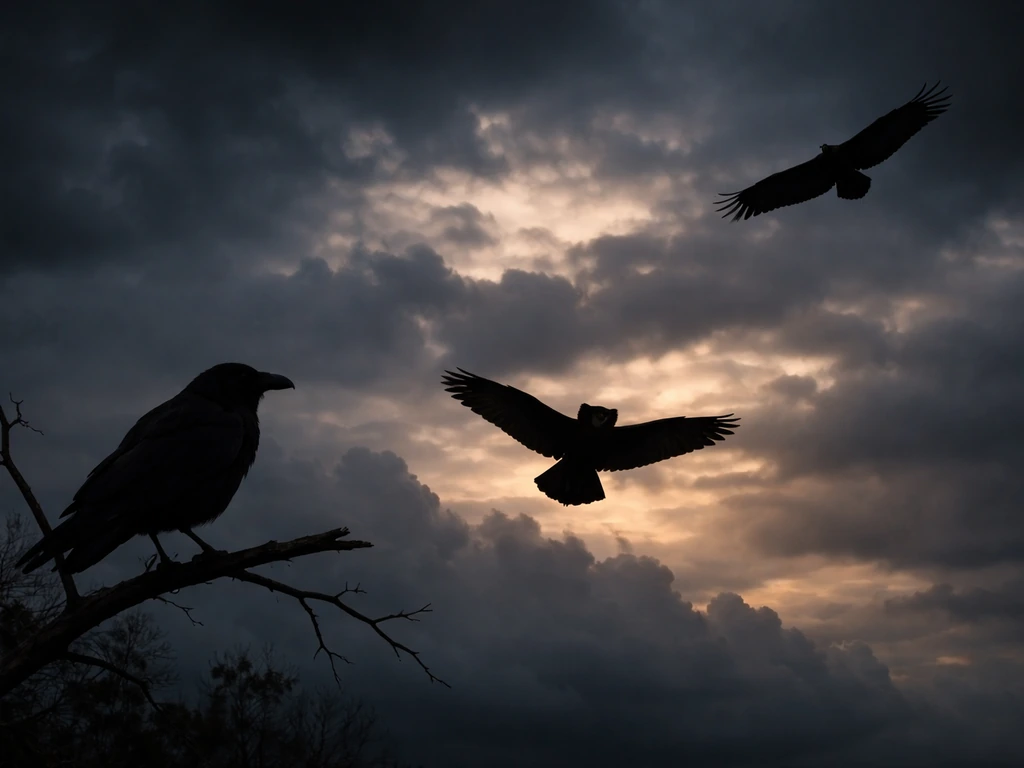
A 'bird of doom' is a bird (real, mythological, or fictional) that signals disaster, death, or catastrophe, either as a literal omen in folklore, a metaphor in literature and music, or a proper title given to a specific creature or character in a story. The phrase is almost always negative: it marks something as a forewarner of terrible things to come. But the exact meaning shifts depending on whether you're reading a poem, playing a game, watching a TV episode, or scrolling through a meme, and those meanings can be very different from each other.
Bird of Doom Meaning: How to Interpret It in Context

Marcus Whitley
3 Jun 2026
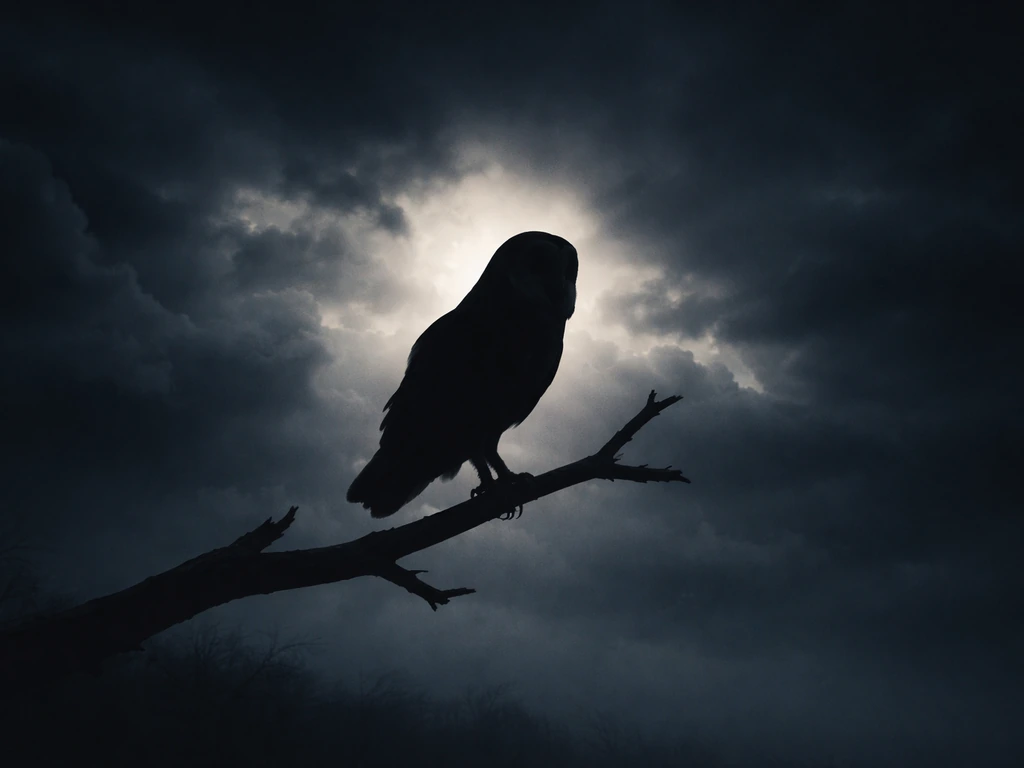
What 'bird of doom' actually means in plain English
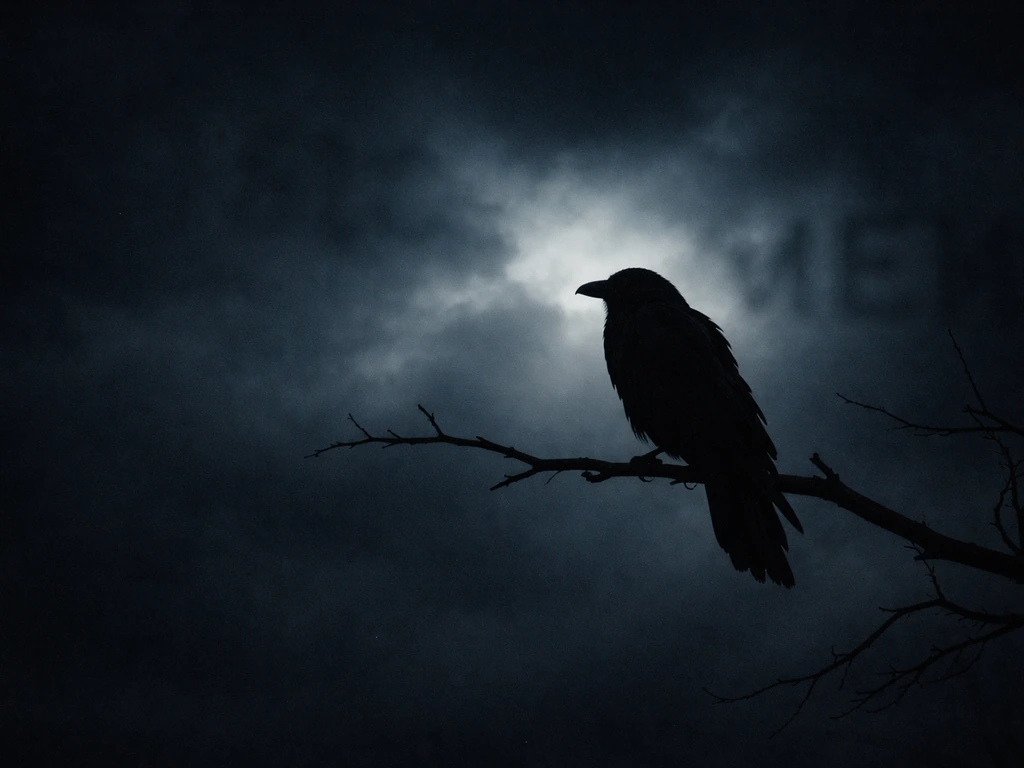
At its core, 'bird of doom' means a bird that foretells something catastrophic. It sits in the same family as 'harbinger of doom,' 'bird of ill omen,' and 'bird of bad omen', phrases that all point to the same basic idea: this creature's presence signals that something very bad is coming. The French phrase 'oiseau de malheur' translates almost directly to 'bird of doom' and is defined as a bird that evokes evil and announces catastrophe. English speakers have been using similar language for centuries.
The phrase can describe a real bird that folklore treats as unlucky, a literary device where a bird stands in for impending disaster, or a proper label slapped onto a specific fictional creature or title. That last use, as a name or title rather than a description, is where most of the confusion in modern searches comes from. Someone searching 'bird of doom meaning' might have just heard a Nick Cave lyric, found a 1949 radio episode, or encountered a barn owl nicknamed 'bird of doom' in a nature blog. All of those are legitimate uses, but they mean different things.
Where the phrase actually shows up
The phrase has a surprisingly wide footprint across different media, and knowing where you encountered it is half the battle for understanding it.
Literature and poetry

Poets have used 'bird of doom' as a direct metaphor for centuries. One scanned 19th-century poetry volume contains the line 'Sail, bird of doom...' using it as a pure literary image of foreboding. The Folger Shakespeare Library notes that the cormorant was 'traditionally portrayed as a bird of doom and foreteller of evil,' which shows how the phrase functioned as a characterization tool in classical literature, the bird doesn't need to do anything dramatic; its presence alone carries the weight.
Music
Nick Cave & the Bad Seeds gave the phrase a significant cultural moment with the lyric 'Where the viaduct looms like a bird of doom', a simile, not a named creature. Academic analysis in the journal Language and Literature treats this line as an interpretive literary device, and the image circulates widely in music discussion and fan reposts. Here 'bird of doom' functions as atmosphere and dread, not as a reference to any specific species or character.
Radio, TV, and fiction

There is at least one old-time radio episode titled 'The Bird of Doom' (Blackstone the Magic Detective, aired July 3, 1949), where 'bird of doom' is used as a proper title. The plot involves a dead inventor and a magic canary named Chirpo, the bird here is a specific story element, not a general symbol. blank" rel="noopener noreferrer">OldTimeRadioDownloads.com lists the Blackstone the Magic Detective episode “The Bird Of Doom” with the air date 07.03.1949 and a mystery synopsis involving a dead inventor and Chirpo the magic canary. blank" rel="noopener noreferrer">Apple TV also catalogs an episode titled 'The Bird of Doom,' showing the phrase functioning as a title/proper noun in contemporary media. In these contexts, 'bird of doom' is a name, and you need to look at the surrounding story to understand what it actually refers to.
Folklore, archaeology, and nature writing
The National Wildlife Federation lists 'bird of doom' among the traditional nicknames for the barn owl, alongside 'ghost owl' and 'death owl.' An Albuquerque Archaeological Society newsletter uses 'The Bird of Doom' as the title for an article about an ancient American chimera figure. Biblical commentary on Isaiah 34:11 discusses ravens and other birds of eerie cry as 'birds of doom' tied to imagery of desolation. In all of these cases, the phrase describes something real (or believed to be real), not a fictional label.
Social media and memes
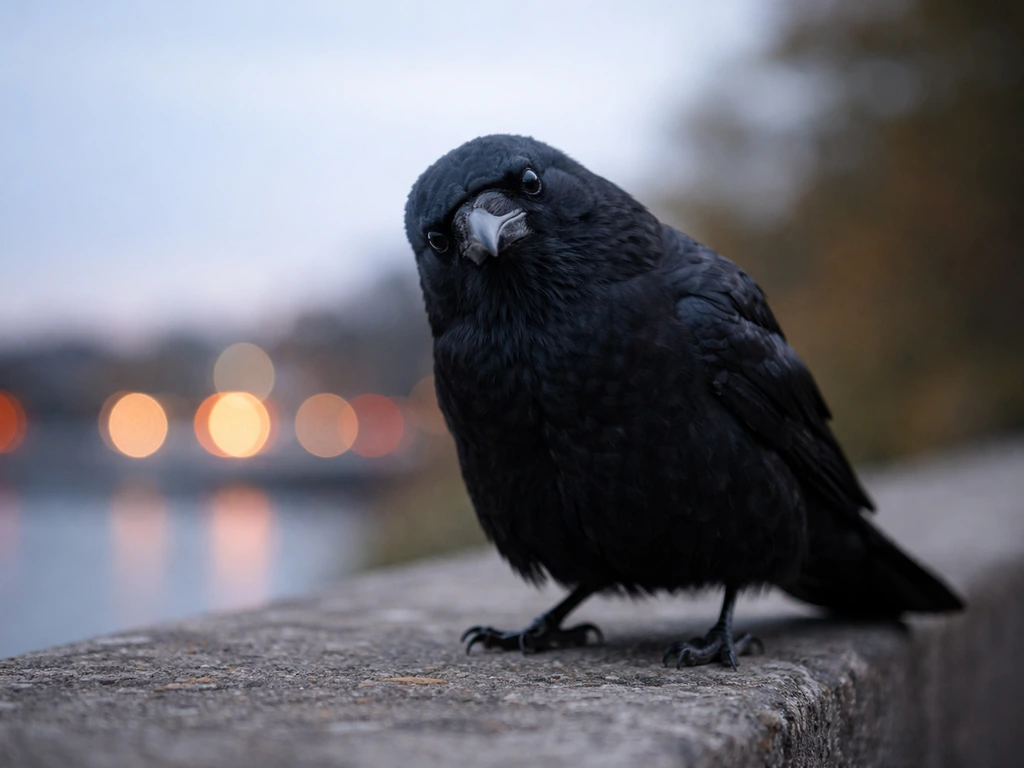
On social media, 'bird of doom' tends to appear in two flavors: someone quoting the Nick Cave lyric (often attached to a moody photo), or someone jokingly labeling a creepy-looking bird, a vulture, a cormorant, a scowling crow, as a 'bird of doom' for comic effect. A Reddit thread about a goth crow-and-blue-jay artwork explicitly connects 'oiseau de malheur' (bird of doom) to the idea of a 'bad omen,' using it with ironic humor. If you're trying to pin down the bird of bad omen meaning, look at whether it's being used seriously, as a title, or as an ironic meme. The tone is usually clear: serious atmospheric use versus playful hyperbole.
The symbolism behind it: death, prophecy, and warning
When 'bird of doom' is used symbolically rather than as a title, it almost always draws on one or more of these overlapping ideas:
- Death: The bird signals that someone (or something) is about to die or has died. Barn owls, ravens, and crows carry this association most strongly across Western folklore.
- Bad luck: The bird's appearance marks the start of a stretch of misfortune. This is close to 'bird of ill omen' — the doom isn't necessarily death, just catastrophe of some kind.
- Prophecy or foretelling: The bird doesn't cause the disaster; it just knows it's coming. This ties to older traditions where birds were seen as messengers between the human world and something beyond it.
- Warning: A more active version of prophecy — the bird is read as a signal to change course or prepare, rather than a passive omen.
Ravens carry the heaviest load here. The Old Farmer's Almanac frames the raven as a long-standing 'harbinger of doom,' and the famous Tower of London legend holds that if the resident ravens leave, the kingdom will fall. Countryfile describes this as a living piece of omen folklore that the British government still officially maintains, the ravens are kept clipped to prevent exactly that scenario. Crows share much of this symbolism: Cambridge literary scholarship links crows to 'bird of ill omen' traditions across European literature, and Korean folklore treats the crow as an omen of death even while also connecting it to solar symbolism.
The cormorant, the barn owl, the buzzard, and even invented creatures like Mothman (which Audubon notes is described by some as 'a prophet of doom' and may be connected to owl sightings) have all been called birds of doom in different contexts. The species matters less than the cultural context around it, almost any bird associated with darkness, nocturnal behavior, or eerie cries can attract this label.
Variants and related phrases
The phrase 'bird of doom' belongs to a cluster of related expressions that are worth knowing, because people use them interchangeably or as substitutes:
| Phrase | Core meaning | Tone |
|---|---|---|
| Bird of doom | A bird (real or fictional) signaling catastrophe | Dramatic, literary, or ironic |
| Bird of ill omen | A bird whose presence foretells misfortune | Traditional, folkloric |
| Bird of bad omen | Same as 'bird of ill omen,' slightly more casual | Everyday, slightly informal |
| Harbinger of doom | Any creature or thing signaling disaster (not bird-specific) | Formal, literary |
| Bird of evil omen | Older literary variant emphasizing moral evil, not just bad luck | Archaic, poetic |
| Oiseau de malheur (French) | Bird of doom / bird of misfortune | Formal French idiom |
| Death bird / doom bird | Direct compound nicknames, often species-specific | Colloquial, descriptive |
The phrase also overlaps with a broader category of bird omen symbolism that shows up across cultures and traditions. If you're researching the general idea of birds as omens (rather than specifically doom-related ones), that's a related but wider concept. Similarly, specific birds like the huma bird from Persian tradition and the moon-bird of certain Asian mythologies carry omen-like associations but don't necessarily signal doom, the connotations can be positive or ambiguous rather than purely catastrophic. If you are asking specifically about the moon-bird meaning in myth, it can point to omen-like symbolism that differs by culture. The huma bird meaning in Persian tradition is often connected with unusual omens or fate, but it does not always imply disaster like a bird of doom.
How meaning shifts by context: personal omen vs. fictional metaphor
This is the real split you need to understand, because 'bird of doom' works very differently depending on how it's being used.
When it's a personal or folkloric omen
In folklore, personal experience, or superstition, 'bird of doom' describes a real bird whose appearance feels significant, a crow tapping at the window the night before a death, a barn owl screaming outside a hospital, a raven landing on a roof. The bird is treated as a messenger or sign from outside the human world. The person using the phrase believes (or half-believes, or is recounting a tradition) that the bird's appearance actually meant something. The symbolism here is sincere, even if not literally believed.
When it's a fictional or metaphorical label
In fiction, music, or poetry, 'bird of doom' is a tool for atmosphere and meaning-making. If you’re trying to pin down the hummingbird bird meaning, the context matters just as much: people may use different “doom bird” ideas in totally different ways bird of doom. Nick Cave's viaduct 'looming like a bird of doom' is a simile, it's using the idea of a doom-bird to convey scale, dread, and oppressive weight. There's no actual bird. In a fantasy game or novel, 'bird of doom' might be the proper name of a creature, a faction symbol, or a character's nickname, and in that case, you need to know the specific story to understand what it means. A doom-bird in one fictional universe might be a terrifying harbinger; in another, it might be played for comedy.
When it's ironic or humorous
Modern internet usage often applies 'bird of doom' with obvious irony, a photo of a very unimpressed pigeon, a turkey vulture staring into a camera, or a grumpy-looking crow. The 'doom' framing is a joke about the bird's energy or appearance, not a genuine omen claim. The tone is almost always the tell here: if it comes with an emoji or a caption like 'he knows,' it's humor, not folklore.
How to quickly figure out the exact meaning you're seeing
Run through these questions in order and you'll have your answer in under a minute:
- Is it a title or a description? If 'Bird of Doom' is capitalized and appears as a title (episode, song, story, game item), it's a proper noun — look up that specific work to understand what bird or creature it refers to. If it's lowercase and in a sentence, it's descriptive.
- What species is mentioned (if any)? If a specific bird is named — raven, barn owl, cormorant, crow, buzzard — check that bird's cultural symbolism. The phrase is almost always doing the same symbolic work as that species' established reputation.
- What's the source or creator? A Nick Cave lyric, a Shakespeare-era text, a folkloric account, a gaming forum, and a nature blog all use the phrase differently. Identify the genre and creator first.
- What's the surrounding tone? Serious and atmospheric = literary metaphor or genuine folklore. Dramatic and worldbuilding-heavy = fictional creature or lore. Light and jokey = ironic meme usage.
- Is it comparative (like a bird of doom) or direct (is a bird of doom)? A simile signals metaphor. A direct label ('the barn owl was called a bird of doom') signals nickname or folkloric description.
- Does context mention death, prophecy, or disaster? If yes, and it's about a real bird, you're almost certainly in omen/folklore territory — closely related to 'bird of bad omen' traditions.
Most of the time, 'bird of doom' means one of three things: a real bird that folklore treats as a death or disaster omen (ravens and barn owls are the most common), a metaphor in literature or music using the idea of such a bird to convey dread, or a proper name or title in a specific fictional work. If you came here looking for the humming bird omen meaning, use the same idea: identify which tradition or story is being referenced and whether it is meant literally or symbolically bird of doom. The phrase itself carries the same core weight in all three cases, something dark, something forewarned, something you probably don't want landing on your windowsill. The context just tells you whether that weight is sincere, poetic, or playful.
FAQ
How can I tell if “bird of doom” is meant literally or just poetic?
Start by checking whether the phrase is acting like a description (“a bird that brings doom”) or like a label (a chapter name, episode title, character name, or lyric shorthand). If it appears as quoted text inside a song or poem, it is usually metaphor or atmosphere, not a reference to a particular species.
Which real bird is most commonly meant by “bird of doom”?
Barn owls, ravens, and crows are the most frequent real-world candidates, but the phrase is not tied to one species across all uses. If someone is naming an “omen bird” on social media or in a legend, match the species to the specific culture or source, since the label travels even when the bird changes.
Why do I see “Bird of Doom” capitalized in some places and not others?
Look for the title versus lyric pattern. If it is capitalized as “The Bird of Doom” in an episode, radio story, or game menu, it functions as a proper noun tied to that plot. If it appears in a line about scenery or dread (even without naming the creature), it is likely a figure of speech.
How do I know whether a post is folklore-style serious or just internet humor?
Tone is the fastest filter. Serious posts tend to frame it as an omen story or folklore claim (sometimes mentioning luck, death, or a specific date or event). Memes usually pair it with a humorous caption, emoji, or a “creepy but funny” photo, where doom is a joke about appearance or attitude.
If I found the phrase in Nick Cave lyrics, does it refer to a specific species?
If the phrase appears alongside a recognized line from Nick Cave, treat it as an image being used for mood and scale rather than evidence of a specific bird species. In other words, the “doom bird” concept is being borrowed to convey oppressive heaviness, not to identify an animal.
Does “bird of doom” mean the same thing in folklore, fiction, and games?
Treat it like a context switch. In folklore or superstition, people often claim the bird’s appearance “meant something.” In fiction, the same wording can become a created creature, a nickname, or a threat-signaling device. In games, it can be faction branding or a boss-related term, so the in-universe rules matter more than real-world omens.
What should I look for in a story to avoid misinterpreting the meaning?
Check whether the work is reusing an older omen tradition or inventing a new one. Even when a story resembles real-world legend, the author may redefine what the bird does, how it behaves, or whether it is supernatural, so the surrounding scene descriptions are key.
Are “bird of doom,” “harbinger of doom,” and “bird of bad omen” interchangeable?
If you see related wording like “harbinger of doom,” “bird of ill omen,” or “bird of bad omen,” expect the same general negative function, but not always the same intensity or target. Some versions imply impending disaster broadly, while others focus on death or a particular event type, so the immediate context usually decides.
Can someone use “bird of doom” without truly believing in omens?
Yes, but only under the right framing. The phrase can be used when someone “half-believes” or reports a tradition, but if the text clearly treats it as symbolism, metaphor, or branding, there is usually no claim that a real bird is forecasting anything. Watch for narrative cues like “as tradition says” versus “this symbolizes.”
I’m getting mixed search results, how can I narrow down the meaning quickly?
If you are searching and keep getting mismatched results, add a disambiguator from your source, such as the media type (lyrics, episode title, book, artwork) or the bird shown (crow, raven, barn owl). This narrows the meaning to either metaphor, proper title, or folklore nickname.
Next Article
Bird of Bad Omen Meaning: What It Signifies and Why
Discover bird of bad omen meaning, symbolism of ravens, crows, owls, vultures, and how to respond without panic.