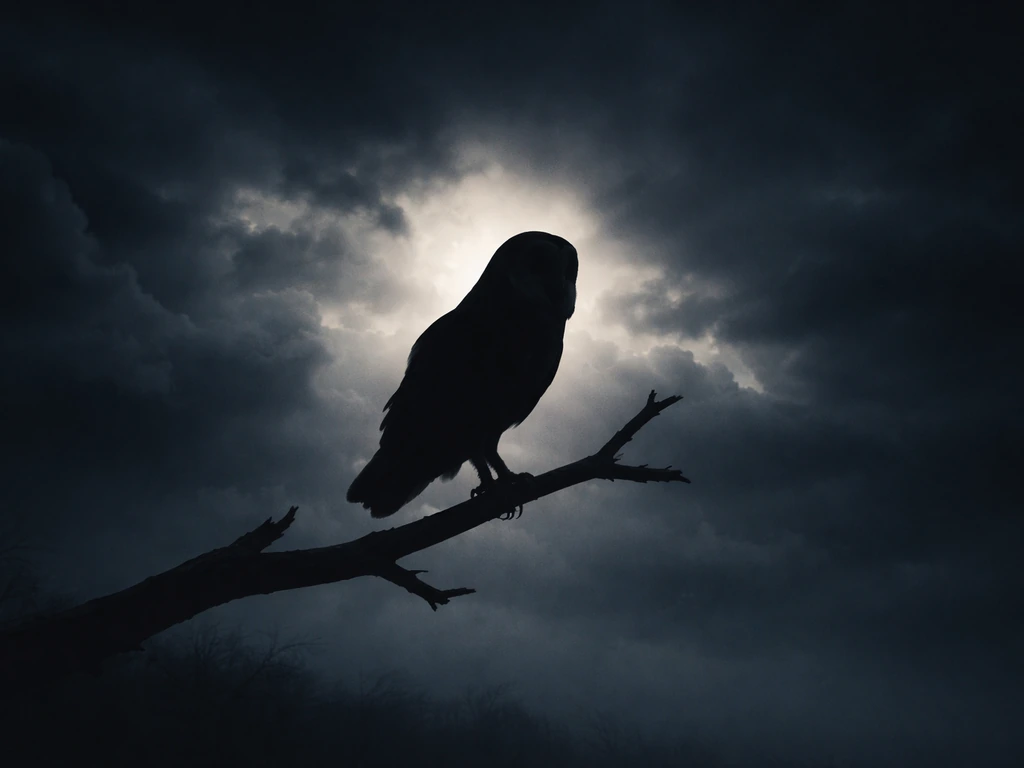
The Huma bird is a mythical creature from Persian and broader Persianate folklore, best understood as a 'bird of fortune' whose shadow, when it falls on a person, is said to confer kingship, lifelong happiness, and divine blessing. If you saw 'Huma' in a poem, a story, a name, or a cultural reference and wondered what it meant, that is the core of it: this is a deeply auspicious bird, the opposite of an omen of doom, and its defining feature is the magical, transformative power of its shadow. Bird of doom meaning is the opposite framing of what the Huma represents, since the Huma is an auspicious bird rather than an omen of doom opposite of an omen of doom.
Huma Bird Meaning: What Huma Symbolizes and Why

Marcus Whitley
29 Jun 2026
How People Actually Search for 'Huma Bird'
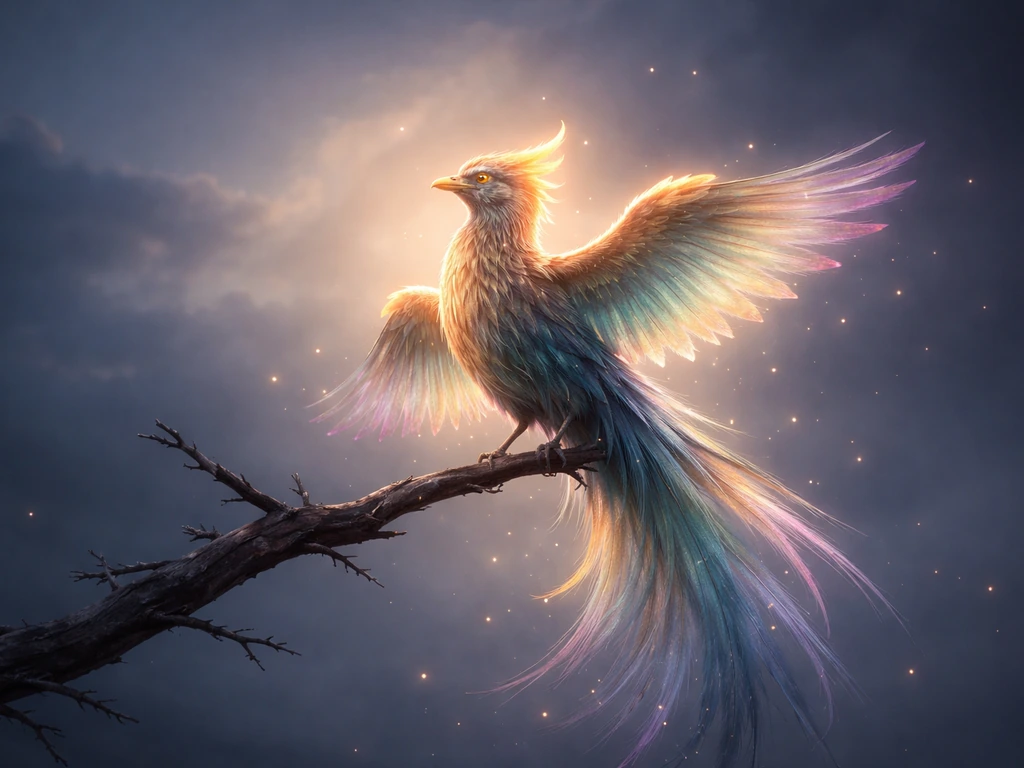
Most people who search 'huma bird meaning' have run into the word in one of a few specific situations: they read a line of Urdu or Persian poetry where 'Huma' appeared alongside words like 'shadow,' 'king,' or 'fortune'; they saw the name Huma (a personal name common in Iran, Pakistan, and Turkey) and wondered if it had a bird connection; or they came across the term in a piece of world literature, a mythology article, or a cultural explainer and could not place it. Some people also land here after searching for 'huma bird omen,' 'huma bird good luck,' or just 'huma meaning in Persian. If you are looking up the bird of bad omen meaning, note that the Huma is understood in Persian tradition as an opposite-of-omen-of-doom symbol rather than a bad sign Huma bird good luck. ' All of these searches are pointing at the same creature, even if the phrasing varies.
The word does not appear in everyday English conversation the way 'dove' or 'raven' might, so finding it out of context can be disorienting. The fact that it gets transliterated differently depending on the source language adds another layer of confusion. But the core meaning is consistent across all of them.
What 'Huma' Actually Refers To
The word 'Huma' (also written Homâ, Homay, Humo, or in Turkish as Hümâ) is a Persian word for a specific mythological bird. It is not a common bird you would find in a field guide. It belongs to the same category of mythical creature as the phoenix or the Simurgh, creatures that carry enormous symbolic weight in the literary and spiritual traditions of the Persian-speaking world and the cultures it influenced, including Urdu-speaking South Asia, Ottoman Turkish culture, and broader Islamic literary traditions.
When you see 'Huma' in a text, it is almost certainly a transliteration of the Persian word هما. The variation in spelling (Homa, Huma, Homay, Humo) reflects the fact that different languages have adapted the same Persian root sound into their own scripts and pronunciation norms. In Turkish encyclopedic sources, for example, it appears as 'hümâ' and is described as a Persian-origin mythological bird adopted into Turkic and Islamic cultural frameworks. The name is also used as a given name for women in Iran, Pakistan, and Turkey, directly because of the bird's lucky and royal associations.
There is also a possibility that someone searching 'huma bird' has misread or mis-heard 'hummingbird' or 'humming bird. If you actually meant the hummingbird bird meaning, remember that the hummingbird is a different creature with its own symbolism. ' That is a completely different creature with its own rich symbolism in the Americas, and it is worth double-checking the original context to make sure you are dealing with the Persian mythological Huma and not a variant spelling of something else entirely.
The Symbolism and Cultural Meaning of the Huma Bird
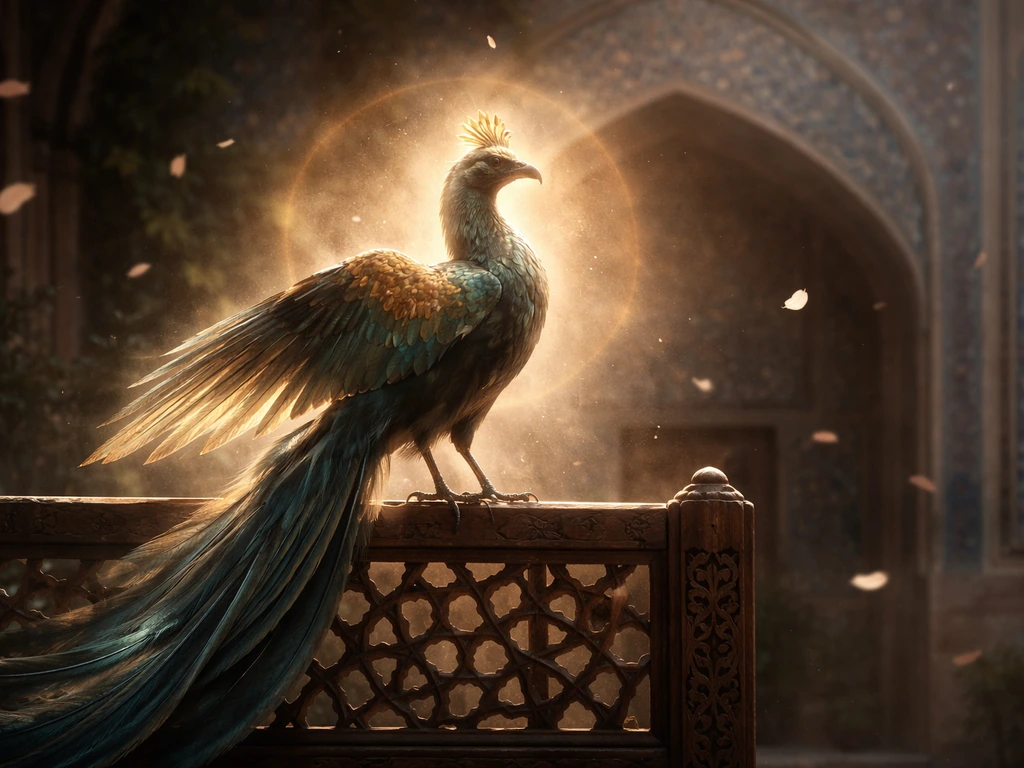
In Persian and Sufi tradition, the Huma is first and foremost a bird of happiness and fortune. Its full ceremonial name is sometimes given as Homay-e Sa'adat, which translates roughly to 'Huma of Happiness.' The central belief attached to this bird is that if its shadow falls on you, you are granted lifelong good fortune, success, and in the most classical formulations, kingship itself. This is not vague good luck in the everyday sense. It is divine legitimacy, the idea that you have been touched by something heavenly and are now marked for greatness.
The Huma is also described as compassionate and benevolent by nature. It never harms anyone. In some retellings, it spends its entire existence in flight, never landing, which adds a quality of rarity and the miraculous to any encounter with it or its shadow. The Collins English Dictionary glosses it as 'a bird in Persian mythology similar to the phoenix and believed to bring good luck,' which is accurate as far as it goes, though it undersells how deeply the shadow motif runs through the literary tradition.
In Sufi and classical Persian poetry, particularly in the tradition running through poets like Attar of Nishapur (author of the famous 'Conference of the Birds'), the Huma appears as a symbol of spiritual aspiration, divine grace, and the longing for blessing. Attar describes a 'shadow-giving Huma' appearing before the assembly of birds, with lines that tie the king's legitimacy directly to having seen that shadow. In a passage presented from Attar’s Conference of the Birds, the “shadow-giving Huma” comes before the assembly, and the lines explicitly tie that sight to the king’s legitimacy, using wording such as “The shadow-giving Huma came before the assembly” and “If the king had not seen your shadow.” Attar describes a 'shadow-giving Huma' appearing before the assembly of birds. The phrase 'saaya-e-baal-e-humaa' in Urdu and Persian poetry, meaning 'the shadow of the wing of the Huma,' is a stock phrase that immediately signals: this person has been blessed with kingship or authority.
The bird also appears in Ivan Bunin's short story cycle 'Bird's Shadow,' where the title itself is a direct reference to the shadow of the Huma Bird. Commentators on that work note that the Huma's shadow, in the Persian literary tradition Bunin was drawing on, brings both majesty and immortality to whatever it touches. The Persian poet Saadi also used the contrast between the Huma as a blessed bird and darker birds like the owl as a way to illustrate fortune versus misfortune. The Huma is explicitly on the side of light, luck, and divine favor in that contrast.
The Huma in Turkish and Central Asian Traditions
In Turkish Islamic culture, the Huma (hümâ) carried over as what is sometimes called the 'devlet kuşu,' or 'state bird,' a bird whose presence was associated with royal power and sovereignty. This reinforces the kingship and legitimacy angle from the Persian tradition, while also showing how the symbol adapted into new cultural contexts without losing its core meaning. Pre-Islamic Turkic belief motifs incorporated similar bird symbolism, and the Persian Huma blended easily into that framework.
How the Huma Shows Up in Everyday Language and Metaphor

Because the Huma is primarily a literary and poetic bird rather than a conversational one, it shows up most often in set phrases rather than casual speech. The main idiom cluster revolves around its shadow. When a poet or writer says someone lived 'under the shadow of the Huma' or 'the Huma's wing cast its shadow,' they are saying that person was blessed, elevated, or chosen for greatness. It functions a bit like saying someone 'was born under a lucky star' in English, but with an added dimension of royalty and divine sanction.
The phrase 'zill-e-humaa,' meaning 'the shadow of the Huma,' is used in classical Urdu and Persian contexts to describe patrons, rulers, and spiritual figures of exceptional fortune and grace. Mughal-era court poetry frequently invoked the Huma to praise emperors, with images of princes seeking the bird's shadow as a way of saying they were seeking divine legitimacy for their rule. If you see a phrase like 'may the Huma's shadow fall upon you,' it is an expression of the highest blessing, wishing someone kingship-level fortune.
The bird is also sometimes called the 'Bird of Paradise' in popular cultural references, which connects it to a broader category of heavenly, unreachable birds that appear in spiritual poetry. If you are trying to interpret a “humming bird omen,” it helps to compare the legend’s meaning to this broader tradition of auspicious bird omens humming bird omen meaning. This framing emphasizes the Huma's quality of being rare, remote, and essentially divine rather than an ordinary creature of the natural world.
Common Confusions: Huma vs. Similar Bird Names and Spellings
The Huma gets confused with several other birds and concepts, and it is worth knowing the main ones so you can sort out what you are actually looking at.
| Bird/Term | Origin | Core Meaning | Key Difference from Huma |
|---|---|---|---|
| Huma (Homâ/Humo) | Persian/Persianate | Bird of fortune; shadow grants kingship and blessing | The original — all others are separate |
| Phoenix | Greek/Egyptian | Rebirth, immortality, resurrection through fire | Phoenix dies and rebirths; Huma never lands or harms anyone |
| Simurgh | Persian | Ancient, wise, divine bird; guide and healer | Simurgh is wise and interactive; Huma is mainly auspicious by proximity |
| Hummingbird (Humming bird) | Americas (indigenous) | Joy, energy, resilience, love in many traditions | Entirely different real bird; confusion is a spelling/phonetic accident |
| Hüma (Turkish) | Turkish adaptation of Persian Huma | Royal/state bird, sovereignty | Same bird, different transliteration — not a separate creature |
The most important distinction to hold onto is between the Huma and the Simurgh. Both are mythical Persian birds of enormous symbolic weight, and they sometimes get conflated in casual references. The Simurgh is a wise, ancient, benevolent giant bird that actively guides and heals; the Huma is primarily defined by its shadow and the passive, almost accidental blessing it bestows. They are related in cultural context but they are not the same creature and they carry different meanings in poetry and literature. Similarly, while the Huma and the phoenix share the 'fabulous bird of legend' category, the Huma has none of the phoenix's death-and-rebirth narrative. Wikipedia's overview of Persian mythology notes that Huma is sometimes equated with other mythological birds like the phoenix or the humā/huma, but it warns they should be understood as distinct creatures to avoid common confusions blank" rel="noopener noreferrer">they are not the same creature and they carry different meanings in poetry and literature. It is a bird of living fortune, not cyclical renewal.
If you are interested in bird omens more broadly, the Huma sits at the opposite end of the spectrum from birds associated with bad omens or doom. Its symbolism is unambiguously positive and auspicious, making it a useful reference point when comparing how different cultures attach meaning to birds.
How to Confirm the Exact Meaning for Your Specific Context

The Huma is one of those terms where the meaning stays fairly stable across contexts, but the emphasis shifts depending on the source tradition. Here is how to lock down the exact interpretation for wherever you saw it.
- Check for the shadow motif. If the text mentions the Huma alongside words like 'shadow,' 'wing,' 'king,' 'crown,' or 'fortune,' you are almost certainly looking at the classical Persian-literary usage: the shadow of the Huma bestows kingship and blessing. This is the most common way the bird appears in poetry and prose.
- Check the language and cultural origin of the source. Persian poetry, classical Urdu poetry (diwan tradition), Ottoman Turkish texts, and Sufi literature all use the Huma in the same basic way. If your text comes from one of those traditions, the meaning is consistent: bird of fortune, auspicious shadow, royal legitimacy.
- Look for alternate spellings in the same text. If the same source also uses Homâ, Homay, Humo, or Hümâ, those are all the same bird under different transliterations. Treat the spelling cluster as one entity.
- Rule out 'hummingbird' as a misread. If the source is not from a Persian, Urdu, or Turkish literary tradition and instead comes from the Americas, nature writing, or contemporary spiritual content about real birds, you may be looking at hummingbird symbolism under an abbreviated or misspelled form.
- If the Huma appears as a proper name (a character or a person's name), remember that the name was chosen precisely because of the bird's lucky, royal connotations. The bearer of the name Huma is symbolically connected to fortune and blessing.
- Cross-check with the context around the word. Phrases like 'may your shadow fall on us,' 'the bird never lands,' 'Bird of Paradise,' or 'bird of happy omen' all confirm you are dealing with the Persian Huma and its standard literary meaning.
In most cases, if you found 'Huma' in any text touching on Persian, Urdu, or Turkic literary and cultural traditions, the meaning is clear and stable: a mythical bird whose shadow grants the highest blessings, whose nature is entirely benevolent, and whose appearance in a text is a signal of fortune, royalty, and divine favor. You rarely need to dig much further than that to get a usable, accurate interpretation.
FAQ
If I saw “Huma bird meaning” in a poem, how can I tell whether it is specifically the Persian Huma and not a generic “auspicious bird” reference?
Look for shadow language. References to saaya (shadow), zill-e-humaa, wing-cast light, or kingship legitimacy strongly indicate the Persian Huma motif. If the text only mentions “fortunate bird” without shadow or royal blessing themes, it may be a broader metaphor using the same bird category.
What does “shadow of the Huma” imply in interpretation, is it literal luck or something more symbolic?
In the classical tradition it is not ordinary chance. It typically functions as divine sanction, meaning you are “marked” for lasting happiness, success, and sometimes authority, rather than receiving a one-time stroke of luck.
Can “Huma” be confused with a real bird or with “hummingbird” or “humming bird omen” stories?
Yes, misreads happen. The safest check is spelling and surrounding context. If the source is Persian, Urdu, or Turkish literature, “Huma/Homâ/Hümâ” likely refers to the myth. If the context is about Americas or describes a bird with hovering wings, it may be aiming at hummingbird symbolism, which is different.
Is the Huma a “bad omen,” or does it ever appear with negative meaning?
It is treated as the opposite of doom in the tradition. If you encounter “omen” wording, it is usually part of an explanatory contrast, not a change in meaning. Negative birds in Persian literary contrast typically include others like the owl, while the Huma stays aligned with blessing.
How is the Huma different from the Simurgh and the phoenix when I see them mentioned together?
The Simurgh is typically active in guidance and healing, it is more explicitly involved in shaping the seeker. The Huma is defined by its shadow granting fortune, it is more passive and “accidental” in the sense that the blessing comes through the shadow motif. The phoenix centers on a life-cycle or renewal narrative, while the Huma does not.
What does “Homay-e Sa’adat” mean, and does it change the interpretation of the bird?
“Homay-e Sa’adat” is an honorific form often translated as “Huma of Happiness.” It narrows emphasis toward joy and blessed fortune, but it still keeps the core motif of benevolent blessing tied to the bird’s presence and shadow.
If “Huma” is used as a person’s name, does it always signal the bird’s meaning, or could it be unrelated?
In many Persianate contexts, the feminine given name Huma is used because of the bird’s auspicious and royal associations. Still, you should confirm origin if you only know the name from an English source, because transliteration can blur whether it is the bird-derived name or another unrelated root.
What does “devlet kuşu” mean in relation to the Huma, and is it the same symbol or a different interpretation?
“Devlet kuşu” translates roughly as “state bird,” and it is used for symbols associated with sovereignty and royal power. It functions as an adaptation of the Huma’s kingship legitimacy theme in Turkish Islamic culture, so it is the same overall symbol in meaning emphasis, but localized in cultural framing.
How do I interpret the Huma when it appears in a modern short story or title, like a “bird’s shadow” theme?
Treat it as an intentional reference to the shadow-as-blessing idea, not just a poetic flourish. If the story focuses on majesty, immortality, or chosen legitimacy tied to a shadow, that aligns with the Persian Huma tradition rather than generic “mythical bird” symbolism.
Are there common spelling variants I should recognize so I do not misread the text?
Yes. Common variants include Homâ, Homay, Huma, Humo, and Turkish hümâ. If the text is otherwise clearly Persian, Urdu, or Ottoman/Turkic in tone, these spellings usually point to the same mythical Huma bird and the same shadow-based meaning.
Next Article
Bird of Doom Meaning: How to Interpret It in Context
Understand bird of doom meaning in context, from ominous omen to specific fictional creature, with a quick disambiguatio