A 'chatter bird' is not one single thing. Depending on where you saw the phrase, it could mean a specific bird nicknamed for its noisy, rapid calls (like a magpie or a jay), a general label for any bird that produces repetitive, talk-like sounds, or a metaphor for a person or character who talks constantly. 'Bird chatter' flips the words but covers the same territory: it can describe the collective sound of birds at a feeder, a specific type of contact call studied in behavioral science, or simply the lively noise of birds going about their morning. The context tells you which meaning fits, and once you know what to look for, it becomes easy to figure out.
Chatter Bird Meaning: What It Is, Origins, and Examples

Marcus Whitley
8 Jun 2026
Chatter bird vs. bird chatter: they're not quite the same thing
It's worth separating these two phrases before going further, because they work differently even though they share the same two words. 'Chatter bird' puts 'chatter' in the describing position, making it a label for a bird. Think of it the same way you'd say 'songbird' or 'wading bird.' When someone writes 'chatter bird,' they're almost always pointing at a particular species or type of bird defined by its vocal style. In some older naming traditions, 'chatterer' was literally applied as a nickname to babblers and certain corvids known for their noisy habits.
'Bird chatter,' on the other hand, is a noun phrase describing the sound itself. It means the chatter that birds produce, not a bird defined by that quality. Scientists at peer-reviewed institutions have used 'bird chatter' in a very specific technical sense: a collection of contact calls generated by multiple birds together, distinct from alarm calls or ambient background noise.
In a peer-reviewed study, “bird chatter” has been operationalized as a collection of contact calls generated by multiple individuals, rather than background noise or alarm calls [bird chatter has been operationalized as a collection of contact calls generated by multiple individuals](https://pmc. ncbi. nlm. nih.
gov/articles/PMC6726132/). Wildlife researchers found that grey squirrels actually eavesdrop on bird chatter to gauge whether a predator is nearby, treating the sound as a reliable safety signal. So 'bird chatter' can range from a casual, poetic description ('the morning was full of bird chatter') to a precise behavioral category in ecology.
What each meaning actually looks like in plain language
Meaning 1: A specific bird nicknamed 'chatter' or 'chatterer'
Certain birds have earned the 'chatter' nickname because their calls really do sound like rapid, almost conversational noise. Magpies are the clearest example. The Black-billed Magpie's alarm call is formally described as a harsh chattering sequence, something like 'wock-wock-wock' repeated quickly. The Eurasian Magpie's most recognizable call is a loud, rattling 'chak-chak-chak' that listeners across cultures have always described as chattering. Jays, including the corvid family broadly, also get this label. The genus name Garrulus, used for jays, literally comes from Latin meaning 'chattering' or 'babbling.' Similarly, the laughingthrush genus Garrulax takes its name from the Latin garrire, meaning 'to chatter,' because these birds are relentlessly vocal. Some vernacular lists for babblers actually include 'chatterer' as an alternate common name.
Meaning 2: Any bird described as chatty or noisy
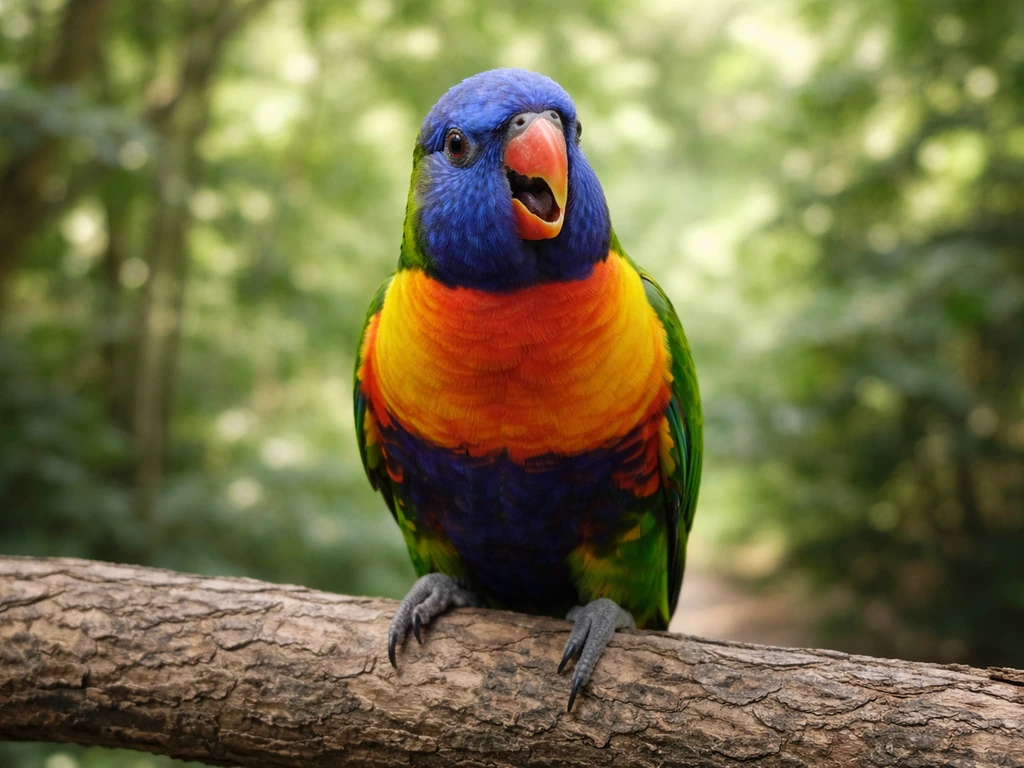
Used more loosely, 'chatter bird' just means a bird that makes a lot of noise in that quick, repetitive, talk-like way. No single species owns this description. Parrots, starlings, zebra finches, and many songbirds all get called chattery by the people who keep or observe them. Veterinary sources note that many pet birds chatter all day, whether they're producing learned words, mimicking sounds, or just doing what bird behaviorists call 'bird speak.' In this usage, 'chatter bird' is more of a personality descriptor than a species label, the avian equivalent of calling a person a chatterbox.
Meaning 3: A metaphor for talkativeness
In literature, idioms, and everyday conversation, 'chatter bird' can describe a person who talks too much or too quickly, especially in a way that's charming but perhaps a bit overwhelming. This is the same metaphorical logic behind 'songbird' meaning a beautiful singer or 'lovebird' meaning a couple deeply in affection. When a novelist calls a character a 'little chatter bird,' they're not talking about ornithology.
A love bird chirping meaning often depends on whether the sounds are soft and social or urgent and alarm-like little chatter bird. They're using the image of a small, frenetically noisy bird to paint a picture of someone whose words tumble out without pause. This usage sits in the same territory as 'chatty bird,' a closely related phrase that leans even more directly into personality description.
If you're wondering about the chatty bird meaning, it usually points to the same idea of nonstop, talk-like bird behavior or a person described that way.
How to figure out which meaning fits: context clues
The good news is that context almost always gives the answer away. Here's a quick way to work through it:
- If the phrase appears in a nature guide, field note, or wildlife article, it almost certainly means a specific bird or call type. Look for whether a species name is mentioned nearby.
- If the phrase appears in a scientific paper or ecology study, 'bird chatter' is likely referring to a defined category of contact calls, distinct from alarm calls or song.
- If it's in a poem, caption, or literary passage, it's probably a metaphor for noisy talkativeness, either describing a character or evoking the atmosphere of a lively morning.
- If it appears in a pet-care or aviary context, it means continuous vocalization behavior, the bird is being described as chatty by nature.
- If the phrase is used to describe a person, it is purely metaphorical and means someone who talks a lot, often with the implication that the talk is rapid and light rather than serious.
Why birds chatter: the behavior and what it signals
Birds don't chatter randomly. The rapid, repeated, staccato calling that we describe as 'chatter' serves real communicative functions. In behavioral ecology, bird chatter at a feeder typically signals that the environment is safe, no predator is nearby, and the flock is relaxed enough to call casually. Researchers have demonstrated that grey squirrels pick up on exactly this cue, using bird chatter as a real-time safety update. When the chatter stops suddenly, that silence is itself a signal.
On the flip side, chattering can also be an alarm. Magpies and jays produce their most famous chattering sequences when they spot a predator, essentially broadcasting a warning to everyone within earshot. This is why you'll sometimes see a single jay producing an insistent, clattering call from a high perch. It looks and sounds like agitated chatter, but it's a very deliberate alarm broadcast. Scientists also note that 'chatter' can function as a collection of contact calls, a way for birds in a group to stay aware of each other's location and state without resorting to louder, more conspicuous song.
For pet birds, chattering is often linked to contentment. Cockatiels and parrots frequently chatter softly when they're comfortable in their environment. This is distinct from alarm calling or screaming. It's closer to what we'd call humming to yourself, a low-level social signal that says 'I'm here, all is well.' Understanding this range of functions is actually useful when you're trying to interpret a phrase: if the chatter being described sounds peaceful and ambient, it likely means social contact calls or general contentment. If it sounds urgent or loud, it's pointing toward alarm or warning behavior.
Cultural meanings: what bird chatter has meant across traditions
The symbolism attached to chattering birds varies considerably depending on which culture and which bird you're looking at. Magpies offer the richest example. In East Asian cultures, particularly Chinese tradition, the magpie's chattering is considered a very good omen. The bird's call arriving in the morning is associated with happiness and good news coming. The Chinese name for the magpie even contains a character meaning 'joy.' In European folk traditions, though, a chattering magpie has sometimes been read as a bad sign, a warning of gossip, theft, or misfortune, reflecting the older association between a chattering bird and unwelcome news being spread.
More broadly, morning bird chatter across many cultures is read as a sign of vitality and a healthy natural environment. The idea that birdsong fills dawn with meaning, that a 'chattery' morning soundscape signals life thriving around you, is close to universal. Some traditions interpret a sudden burst of bird chatter near a home as a visitor approaching. Others read it as a sign of rain or a change in weather.
Indigenous and folk traditions in many parts of the world treat the chattering of certain birds as messages or omens worth paying attention to, though the specific bird involved usually determines whether the meaning is favorable or cautionary. The messenger bird meaning is similar to how people read these vocalizations in context, but it specifically points to a bird regarded as a message-bringer.
In literature and metaphor, chattering birds have consistently been used to represent two contrasting ideas: lively, joyful social connection on one hand, and idle, meaningless noise on the other. A dawn chorus described as 'chatter' can feel celebratory or can feel overwhelming depending on the author's intent. This duality is part of what makes the phrase flexible and durable in both poetry and everyday speech. It's worth noting that this same ambiguity appears in phrases like 'the bird is chirping' and concepts explored in singing bird symbolism, where the line between meaningful communication and pure ambient sound is often deliberately blurred.
Where the word 'chatter' comes from

The word 'chatter' has an appropriately noisy history. It traces back to Middle English chateren, an imitative word built to sound like the thing it describes, much the way 'babble,' 'twitter,' and 'jabber' are also sound-based coinages. Etymologists trace its first recorded uses to the early 15th century, when it described both the rapid chatter of teeth (from cold or fear) and the rapid, light talk of people or animals.
The sound-imitative origin is the key detail here: chatter was never meant to be a neutral descriptor. It carries a built-in sense of repetition, quickness, and a certain lack of gravity. This is why it maps so naturally onto bird sounds, which are often precisely rapid, repeated, and difficult to translate into meaningful content.
The Latin side of things is equally telling. The genus name Garrulus, applied to jays, and Garrulax, applied to laughingthrushes, both derive from the Latin garrire, meaning to chatter or babble. This shows that naturalists naming birds in the Linnaean tradition reached for exactly the same concept when they wanted to characterize these birds' vocal personalities. The fact that this naming convention appears across multiple genera and families tells you how fundamental the 'chatter' descriptor is to how humans perceive and categorize a certain type of bird vocalization. It's not a modern casual usage; it's baked into formal scientific naming going back centuries.
Real examples, common mix-ups, and what to do next
What it looks like in actual usage
- In a field guide: 'The magpie's alarm call is a rapid chatter, distinct from its softer contact calls.' Here, 'chatter' means a specific, recognizable vocalization type.
- In a pet blog: 'My parrot is such a chatter bird; she starts going the moment I uncover her cage.' Here, it's a personality label meaning the bird is habitually noisy and talkative.
- In a poem: 'The little chatter bird on the sill woke me before dawn.' Here, it's evocative and metaphor-adjacent, emphasizing the bird's noise as a personality trait.
- In an ecology paper: 'Squirrels monitored bird chatter to assess predator risk in the area.' Here, 'bird chatter' is a technical term for a defined category of contact calls.
- In conversation about a person: 'She's a real chatter bird once you get her started.' Purely metaphorical, meaning she talks a lot and quickly.
Common misconceptions worth clearing up
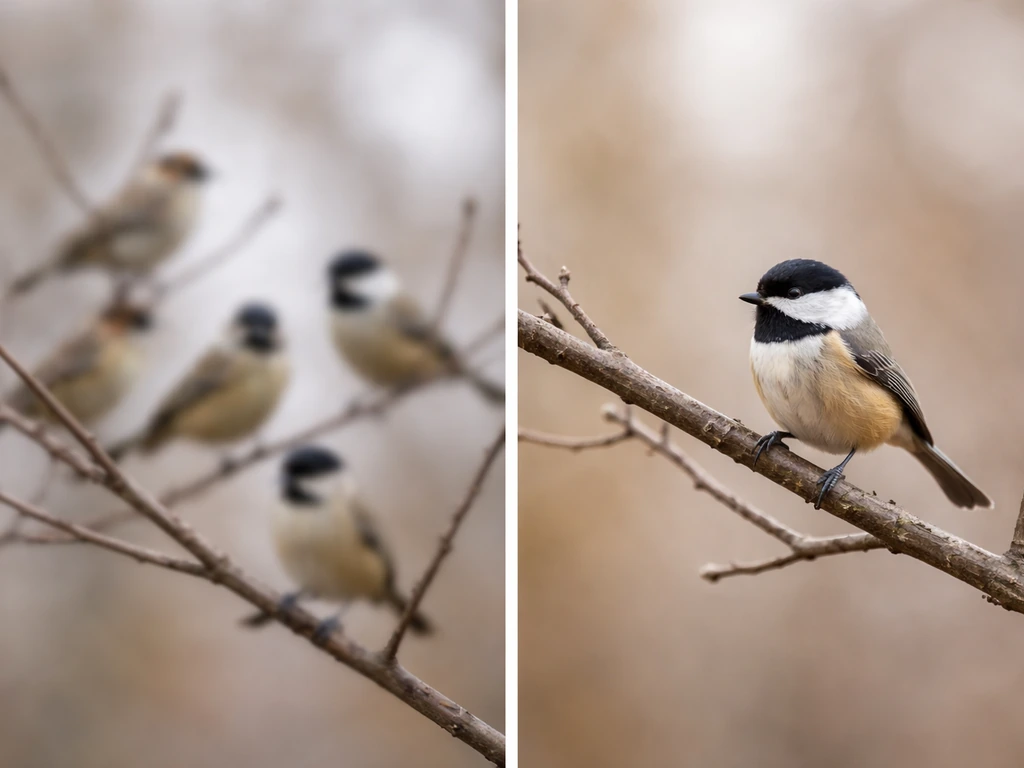
One of the most common misunderstandings is assuming 'chatter bird' refers to one specific species with that official name. There is no single bird officially called 'the chatter bird' in the way that 'robin' or 'kingfisher' names a precise species. The term is descriptive and contextual, not taxonomic. If you see it capitalized in a formal context, check whether it's being used as a vernacular nickname for a particular regional species, but if it appears lowercase and in flowing prose, treat it as a descriptive phrase rather than a species name.
Another mix-up is conflating 'chatter' with 'song. ' These are meaningfully different in both behavior and symbolism. Bird song is typically melodic, structured, and associated with mating and territory. Chatter is rapid, repetitive, and associated with contact calls, alarm signals, or general social noise.
When you see 'chatter bird,' the implication is almost always about volume and frequency of communication rather than musical beauty, which is why it can tip into metaphor so easily. If you are looking for singing bird meaning, it helps to distinguish sound-related phrases like “bird chatter” from descriptions tied to melody.
If you are looking up the siren bird meaning, the same context rule applies because these phrases can be read as either literal bird behavior or a metaphor chatter bird. The singing bird concept and messenger bird symbolism both carry more elevated, intentional connotations than the deliberately casual, almost breathless quality of 'chatter. '
Your next steps depending on where you saw the phrase
- If you saw it in a nature or wildlife context: Search the name of any nearby species mentioned alongside the phrase. Cross-reference with a resource like Cornell Lab's All About Birds, which describes call types including chattering in its species accounts. Look for whether the chatter is described as an alarm call or a contact call, as that tells you a lot about what's being communicated.
- If you saw it in literature or a caption: Read it as a metaphor for talkativeness or ambient liveliness. Ask whether the tone is celebratory (chattering birds as a sign of life and warmth) or slightly critical (chattering as empty noise). The emotional register of the surrounding text will make this clear.
- If you heard it used about a person: It means they talk a lot, quickly, and in a light or scattered way. It's usually affectionate or gently teasing rather than harsh.
- If you're identifying a specific bird by this nickname: Look for regional common names in field guides or online bird databases. Some babblers, corvids, and wrens carry 'chatterer' or 'chatter' as part of their vernacular name in specific regions.
- If you're writing and want to use the phrase: Be intentional about which meaning you're invoking. 'Chatter bird' used as a species-style label works best in nature writing. As a metaphor for a person or atmosphere, it works across most contexts. For technical writing about bird behavior, 'bird chatter' is the more precise phrasing.
FAQ
If I hear the word “chatter bird” online, how can I tell whether it means a specific bird species or just “a noisy bird”?
Check whether the phrase is capitalized or tied to a named region and bird type (for example, “Black-billed magpie chatter bird”). If it appears in lowercase, as part of general description (“the yard was full of chatter bird sounds”), it is being used as a descriptive label rather than an official species name.
Does “chatter bird meaning” ever refer to a real bird called that in scientific records or field guides?
Usually no. “Chatter bird” is not a single formal, universal common name. It is most often a vernacular nickname or a metaphorical description, so field-guide listings may use the species name plus a “chattering” call description instead.
What’s the quickest way to distinguish bird chatter from bird song when someone uses the term in a story?
Treat song as patterned and melodic, chatter as rapid, repeated, and often staccato. If the text mentions alarms, warnings, contact, or “call-and-response” noise among multiple birds, it is more consistent with chatter than song.
When bird chatter stops suddenly, is it always a warning sign?
Not always, but it is often informative. In real-life wildlife behavior, a sudden silence can indicate birds have switched from casual contact calling to listening for danger, or that they have moved into cover. The key is what happens next, for example reappearance of calling after you move away versus continuing silence.
Can bird chatter be “friendly” rather than alarm or predator-related?
Yes. Many species produce low-level chattering or repeated contact calls when they are relaxed, social, or foraging together. For pet birds, similar “soft chattering” is commonly associated with comfort and social presence rather than distress, but context like body posture and timing matters.
Why do magpies and jays get singled out as examples of chattering, even though lots of birds are noisy?
Because their most recognizable vocal sequences are strongly associated with the “chatter” sound pattern people notice, rapid rattling or harsh repeated calls. Many birds are talkative, but not all have call styles that listeners consistently describe as chattering in the same way.
Is “bird chatter” in writing always literal bird sound, or can it mean something else?
It can be either. In more technical contexts, it may refer to a specific category of repeated contact calls produced by multiple birds together. In everyday writing, it can mean the overall soundscape at a feeder or simply lively morning noise.
In symbolism, does a chattering bird always mean a good omen?
No. Cultural readings vary, and even the same species can flip meaning across traditions. For instance, magpies can be read as positive in some East Asian traditions and negative or cautionary in some European folk interpretations, so the culture and the bird species together drive the interpretation.
Could “little chatter bird” mean something different from “chatter bird” in a metaphor?
Usually it shifts emphasis to personality or behavior, “constant talk” or “words tumble out quickly,” rather than the sound pattern of any specific bird. If the character is overwhelming, anxious, or intrusive, the metaphor leans toward uncontrolled talk, if they are playful or charming, it leans toward endearing chatter.
Is “chatty bird meaning” identical to “chatter bird meaning”?
They overlap but are not the same usage. “Chatty bird” more directly treats chatter as a trait (talkative person or creature), while “chatter bird” often points to the chattering quality of a bird or to the general sound concept. If you see “chatty” used like a personality label, expect a stronger metaphor-for-a-person reading.
Next Article
Love Bird Sound Meaning: Calls, Chirps, and What to Do
Decode lovebird call and chirp sounds, spot bonding vs stress or illness, and get quick fixes to help today.