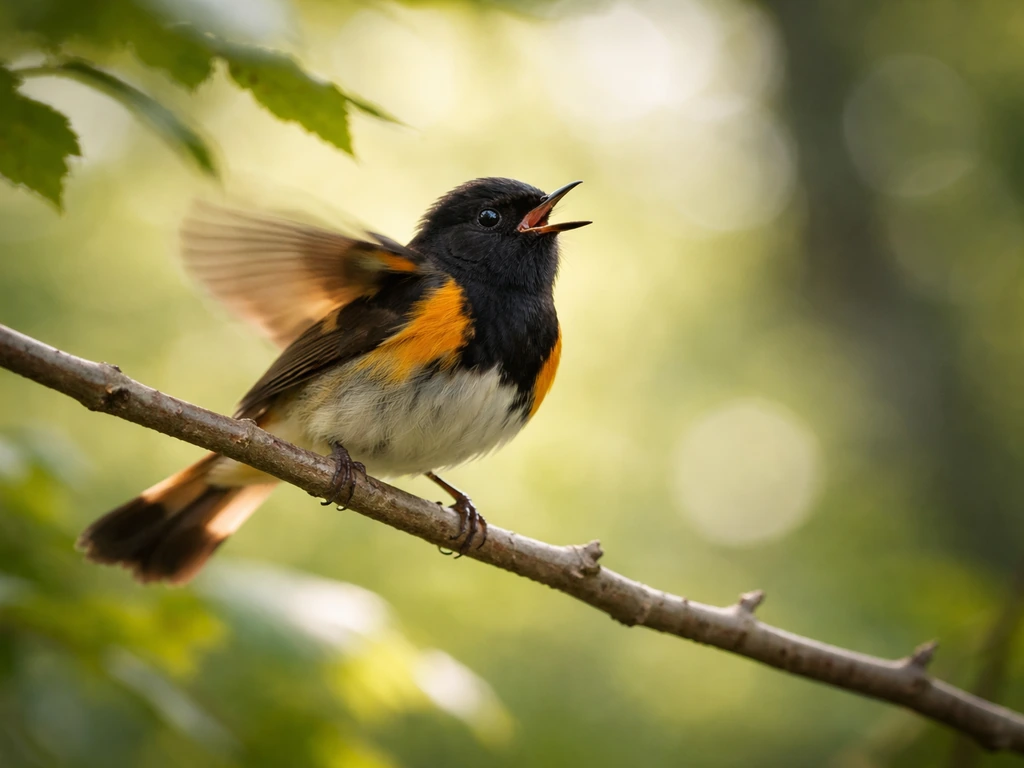
A messenger bird is either a bird literally trained to carry physical messages (think carrier pigeons in wartime) or a bird that people interpret as carrying a symbolic message: news, guidance, a warning, or comfort from the spirit world. Both meanings are real and in active use. When most people search "messenger bird meaning" today, they want the symbolic interpretation, but the two meanings overlap constantly, so it helps to understand both before deciding which applies to you.
Messenger Bird Meaning: Literal Messages and Symbolism

Marcus Whitley
17 Jun 2026

What "messenger bird" actually means in plain language
A messenger is, by definition, something that serves as a means of communication or conveyance. Apply that to a bird and you get two distinct uses. The first is historical and literal: birds, especially homing pigeons, were trained to carry physical notes from one place to another. The second is symbolic and interpretive: a bird shows up in your life, in a dream, or at a meaningful moment, and you read its appearance as a sign, an omen, or a signal of some kind. A 1903 encyclopedia of superstitions and folklore actually lists "messenger-bird" as its own named category of folk belief, which tells you this idea has been around long enough to get its own entry. Today people use the phrase interchangeably for both meanings, which is exactly where the confusion starts.
The cleanest way to think about it: if someone in a history book or war documentary mentions a messenger bird, they almost certainly mean a carrier pigeon. If someone in a spiritual or personal context says "I think I saw a messenger bird today," they mean a bird whose appearance felt significant to them. Neither usage is wrong. They just need to be handled differently.
How birds were actually used to carry messages throughout history
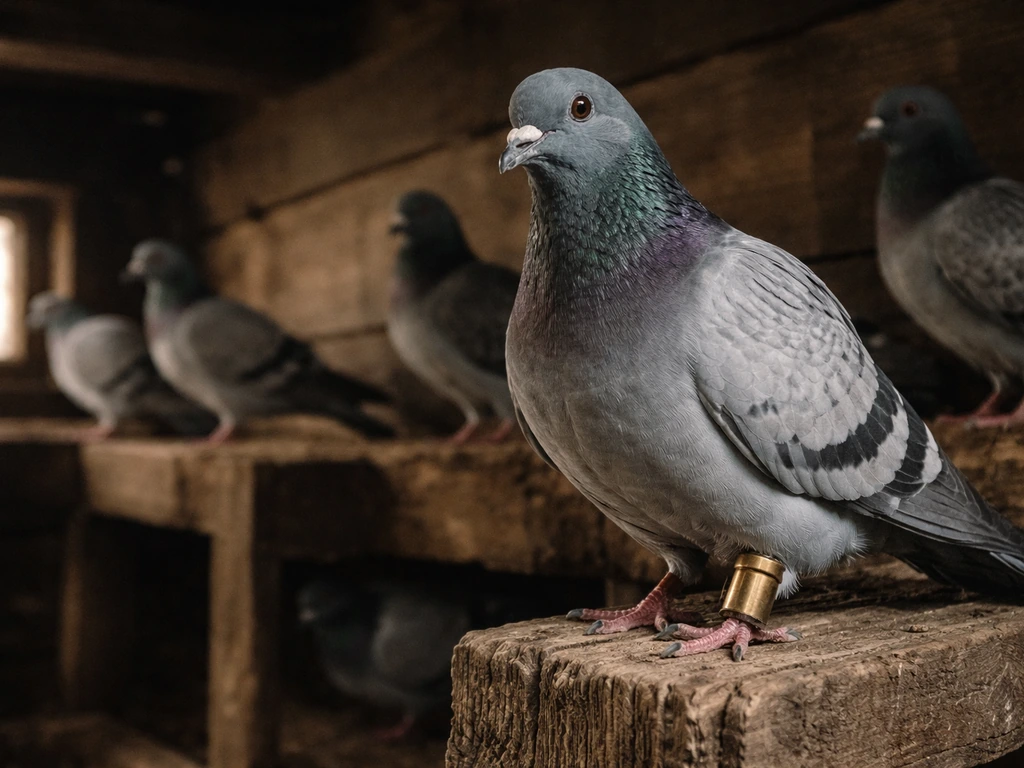
The homing pigeon is the undisputed champion of literal bird-based communication. Its ability to navigate home across hundreds of miles made it invaluable long before radio or telephone. The practice stretches back to ancient times, but the most documented and dramatic examples come from the two World Wars.
During World War I, both the British Army and the U.S. Signal Corps relied heavily on pigeons to deliver critical military information when other communication lines were cut or compromised. The British Army trusted pigeons with some of its most sensitive operational messages. The U.S. Signal Corps reported an overall message delivery rate of roughly 95% for pigeon-carried communications, and a scholarly overview of carrier pigeons in WWI found that losses from all causes combined did not exceed about 5%. That is a remarkably dependable system for a living animal operating in a war zone.
The most famous individual messenger bird from that era is Cher Ami, a carrier pigeon who in October 1918 delivered a message from the "Lost Battalion" of the 77th Division while the unit was trapped behind enemy lines and being accidentally shelled by friendly artillery. That message helped stop the friendly fire and saved hundreds of lives. DNA testing later confirmed Cher Ami was male, correcting a long-standing assumption, but the bird's legendary status was already cemented. Cher Ami's story is the kind of concrete, almost unbelievable example that explains why "messenger bird" became such a charged phrase.
The main symbolic meanings people attach to messenger birds
Outside of military history, "messenger bird" carries a cluster of symbolic meanings that appear across many cultures and spiritual traditions. Chatter bird meaning is similar in that people interpret the sight or call as a sign, but the details depend on the specific tradition and context. They tend to fall into four categories:
- News or incoming change: a bird's arrival signals that something new is on its way, often positive (good luck, an opportunity) but sometimes disruptive.
- Guidance: the bird appears at a crossroads moment and is interpreted as pointing toward a decision or confirming a path you were already considering.
- Warning: the bird behaves unusually, appears in an unexpected place, or is a species traditionally associated with omens, and the interpretation is that something requires your attention or caution.
- Comfort and connection: especially in grief contexts, a bird appearing shortly after a loss is often read as a message from someone who has died, reassuring the living that they are not alone.
These aren't random. These aren't random siren bird meaning. They all connect to one underlying idea: birds move between earth and sky, which in countless traditions makes them natural go-betweens for the physical and spiritual worlds. That sky-earth bridge is exactly why the messenger role feels intuitive when applied to birds rather than, say, squirrels.
Which birds actually get called messenger birds

The carrier pigeon (or homing pigeon) is the definitive literal messenger bird. Full stop. When the term is used in a historical, military, or practical communication context, that is the bird being referenced. Every other bird on this list is a symbolic messenger, interpreted rather than trained.
| Bird | Messenger Role | Type of Meaning |
|---|---|---|
| Carrier/homing pigeon | Physically carried written messages across long distances | Literal/historical |
| Dove (especially white) | Peace, divine communication, hope, comfort from heaven | Symbolic/spiritual |
| Crow or raven | News (often change-related), warnings, protection depending on tradition | Symbolic/omen-based |
| Owl | Hidden knowledge, warnings, transformation themes | Symbolic/omen-based |
| Hawk or eagle | Spiritual vision, guidance from a higher perspective | Symbolic/spiritual |
| Robin | Comfort, reminder you are not alone, divine/angel messenger energy | Symbolic/spiritual |
| Willie wagtail (Australia) | Bad-news messenger in some Aboriginal traditions | Cultural/regional omen |
Worth noting: a hawk is not a literal messenger bird in the historical communication sense, even though people frequently search whether it is. A hawk sighting gets interpreted symbolically, but no one was tying notes to hawks' legs. The confusion between literal and symbolic messenger birds is one of the most common misreadings in this space.
What different cultures and traditions say about messenger birds
Hebrew and Christian traditions
The dove carries some of the oldest documented messenger symbolism in Western tradition. In the Hebrew Bible, the dove Noah released returned with an olive branch, a physical sign that the floodwaters had receded. Scholars note that the dove's "returning home" instinct, the same trait that makes pigeons useful as literal carriers, is part of what made the dove a compelling symbolic communicator in biblical literature. In Christian tradition, the dove is strongly associated with peace and divine presence, and the white dove in particular is widely treated as a messenger from heaven or a symbol of the Holy Spirit.
Indigenous and regional traditions
Bird omenology, the practice of reading birds as divinatory signals, is documented across an enormous range of cultures. If you are also trying to understand a different omen like a singing bird, the same bird-omenology idea can help you approach its singing bird meaning as a related interpretation rather than a literal message. In Borneo, bird omens are described as widespread in guiding decisions. In some Aboriginal communities in Australia's Eurobodalla region, the willie wagtail is specifically identified as a "bad message bird," a designated carrier of negative news in the community's cosmology. These are not vague spiritual associations. They are named, specific, culturally embedded roles for particular birds, passed down through oral tradition.
Modern Western spiritual frameworks
Contemporary spiritual writing often frames birds broadly as what one source calls "animal angels," divine messengers that show up to offer guidance rather than making deterministic predictions. This framing treats the bird sighting as an invitation to reflect, pray, or pay attention, not as a direct instruction or prophecy. Doves in this context are linked to serenity and peace. Cardinals appear in grief contexts. Crows get read as signals of incoming change. The meanings vary by tradition and by the individual's personal spiritual path.
Psychological and Jungian readings

A secular, psychologically oriented reading treats birds-as-messengers as internal symbols rather than external signs. In this framework, a bird appearing in a dream or drawing your attention in waking life is your psyche surfacing something: an intuition, a fear, an unresolved question. The message is from you, not from a divine source. This doesn't make the experience less meaningful, but it locates the meaning inside rather than outside. Both readings, the spiritual and the psychological, treat the bird as a prompt for reflection.
How to interpret a messenger bird sighting in real life
If a bird encounter felt significant to you and you want to interpret it thoughtfully without either dismissing it or over-inflating it, here is a practical approach that draws on what experienced omen-readers and spiritual guides actually recommend. If you are asking about the love bird chirping meaning, it helps to treat the sound as a clue in the same symbolic way people interpret other bird signs messenger birds.
- Note the specifics first: what species was it, what time of day, where did it appear, and what was it doing? Behavior matters as much as species. A crow cawing loudly while making eye contact is a different data point than a crow sitting quietly on a distant fence.
- Ask whether it was unusual: was this bird out of place, out of season, or behaving in a way you have never seen before? Ordinary sightings of common birds in common places require less interpretive weight than genuinely unusual encounters.
- Consider your own emotional state and circumstances: what were you thinking about when the bird appeared? What is happening in your life right now? The most resonant interpretations tend to connect to something already on your mind.
- Look up the bird's traditional meanings as a starting point, not a verdict. Guides to dove symbolism, crow omens, or owl meanings give you vocabulary to work with, but they are not one-size-fits-all answers. Treat them as options to consider, not conclusions to accept.
- Sit with it before acting: if the bird's appearance seems like a warning or a call to change something, give yourself time before making any decisions based on it. Reflection is the appropriate first response, not immediate action.
- Notice patterns over time: a single bird sighting is easy to read either way. Repeated encounters with the same species over a short period carry more weight in most interpretive traditions.
If you are also interested in what specific bird sounds or behaviors mean, similar interpretive frameworks apply to things like a bird's chirping or singing, where the communication angle shifts from presence to vocalization. If you are also wondering about love bird sound meaning, it usually comes down to the context of the chirps, calls, and your bird’s behavior bird's chirping or singing.
Common mistakes people make when interpreting messenger birds
The biggest mistake is treating any bird encounter as automatically meaningful. A hawk flying overhead is a hawk flying overhead. Most of the time it is hunting or traveling, not delivering cosmic news. The bar for treating a sighting as a genuine omen should be some combination of: the bird is out of place, the behavior is unusual, and the timing connects to something real in your life. Without at least one of those factors, you are pattern-matching on randomness.
A close second mistake is locking onto the first symbolic meaning you find and treating it as fixed truth. Bird symbolism varies enormously by culture, region, and tradition. A crow is a bad omen in some European folklore and a clever, protective figure in many Native American traditions. An owl signals death in some cultures and wisdom in others. If you only read one source and stop there, you are getting a partial picture dressed up as a complete answer. If you came here searching chatty bird meaning, the same symbolic approach can help you narrow down what the “message” might be in your own situation.
Third, people sometimes confuse the literal and symbolic meanings entirely. Searching "is a hawk a messenger bird?" and concluding that hawks were historically used to send messages would be a significant misread. Hawks were used in falconry, not in message delivery. The messenger role for hawks is entirely symbolic. Keeping the literal-versus-symbolic distinction clear saves a lot of confusion.
Finally, be cautious about online rabbit holes that stack interpretation on interpretation until a bird sighting has predicted your entire future. Experienced practitioners in omen-reading traditions consistently advise approaching these experiences with calm and curiosity rather than urgency. Expectation shapes perception, and if you go looking hard enough for a sign in a bird, you will find one whether or not anything meaningful is happening. The goal is reflective attention, not prediction. If you are wondering about the bird is chirping meaning, the key is to connect the sound to your specific context and emotions, the same way you would interpret a sighting.
FAQ
Does messenger bird meaning always refer to a trained carrier pigeon?
In the literal sense, it usually means a homing or carrier pigeon type (or historically, any trained bird used to deliver notes). In the symbolic sense, it is about your interpretation of a bird’s appearance, behavior, or timing, not the bird’s ability to “deliver” information.
Is a hawk a messenger bird?
A hawk can absolutely feel like a “message” to you, but it is not a literal messenger bird in the historical communication sense. If you want to avoid the common mistake, ask whether anyone ever used that species for note delivery, and if not, treat the meaning as symbolic only.
What should I do if I saw a “messenger bird” but I cannot tell what it means?
If the encounter felt significant but nothing in your life connects to it yet, treat it as a prompt for reflection rather than an omen with a deadline. A practical check is to write down what you were thinking about within a day of the sighting, and see whether that topic naturally matches any symbolism you associate with the bird.
Does messenger bird meaning apply to dreams too?
Dreams are often best handled like psychological signals or invitation-to-reflect, unless you follow a specific spiritual practice that treats dreams as messages. If you keep it grounded, note the emotion in the dream (comfort, fear, urgency) and what the bird did (land, fly away, call), then compare that to your waking concerns.
How can I tell the difference between a real sign and random bird activity?
Look for 1) unusual behavior (out of season, unusually close, repetitive calling), 2) out-of-place presence (a bird where you normally do not see it), and 3) meaningful timing (a real decision or conflict happening around then). If only one factor is present, it is usually safer to treat it as coincidence or low-confidence symbolism.
How do I avoid choosing the wrong symbolic meaning after a bird sighting?
When people “lock in” too fast, they pick the first interpretation that feels emotionally strong. A better approach is to list 2 to 3 plausible meanings, then choose the one that best matches your actual situation (for example, grief, change, reconciliation) rather than the one that is most dramatic or comforting.
Are bird messenger meanings universal?
Read the bird role through your context and your tradition, not through universal rules. A crow can be read very differently across cultures, so if you are new to bird omenology, start with broad categories (peace, warning, change, guidance) and then refine based on local or personal associations.
What is the difference between messenger-bird symbolism and prophecy-style predictions?
Yes, but “animal angels” framing is usually about reflection, not deterministic prediction. If your interpretation pushes you toward panic or certainty, slow down and reframe it as, “What am I being invited to notice or adjust?” rather than, “This must happen.”
Is it possible for messenger bird interpretation to be unhelpful or harmful?
A good litmus test is whether your interpretation helps you make a wiser choice. If the “message” increases clarity, aligns with your values, and supports calm action, it is probably serving a reflective function. If it creates obsessive searching or fear-based decisions, back off and treat it as internal symbolism.
How can I quickly tell whether I should interpret literally or symbolically?
Because the article distinguishes literal versus symbolic, you can quickly separate them by asking, “Was this bird part of human communication methods in history, or is it an everyday encounter?” If it is an everyday encounter, assume symbolic meaning unless you have a direct link to trained-delivery history in your context.
Next Article
Chatter Bird Meaning: What It Is, Origins, and Examples
Chatter bird meaning explained with origins, idiom use, and examples to tell noise, nickname, or metaphor.