There is no bird in the phrase 'Hi Ho, Cherry-O' itself. The bird people keep bumping into is actually a game piece, an in-game obstacle inside the classic children's board game 'Hi Ho! Cherry-O,' where spinning the bird means a bird steals your cherries and sets you back. The phrase 'Hi Ho! Cherry-O' is a victory call, a short celebratory chant players shout when they pick the last cherry off their tree and win the game. It has nothing to do with bird symbolism, bird idioms, or bird-related slang.
Hi Ho Cherry-O Bird Meaning: Origin, Lyrics, and Confusions

Marcus Whitley
1 Jul 2026
What 'Hi Ho, Cherry-O' actually is

The origin of 'Hi Ho! Cherry-O' is surprisingly specific. An elementary school teacher named Lorraine Landfried from Door County, Wisconsin created the original version, which she called 'Let's Pick Cherries,' after she was inspired while picking Montmorency cherries with her children. Wikidata stores structured information about Hi Ho!
Cherry-O, including metadata that can help verify creators and key dates like when it entered print Lorraine Landfried. She sold the game design to Whitman Publishing in 1959 for $400, and Whitman published it in 1960.
It has been in continuous production ever since, with Winning Moves now handling the modern version, which was still being actively manufactured and updated as recently as mid-2025. A Winning Moves PDF listing provides manufacturing and test date codes, such as production in June 2025 and a test date of July 16, 2025 manufactured and updated as recently as mid-2025.
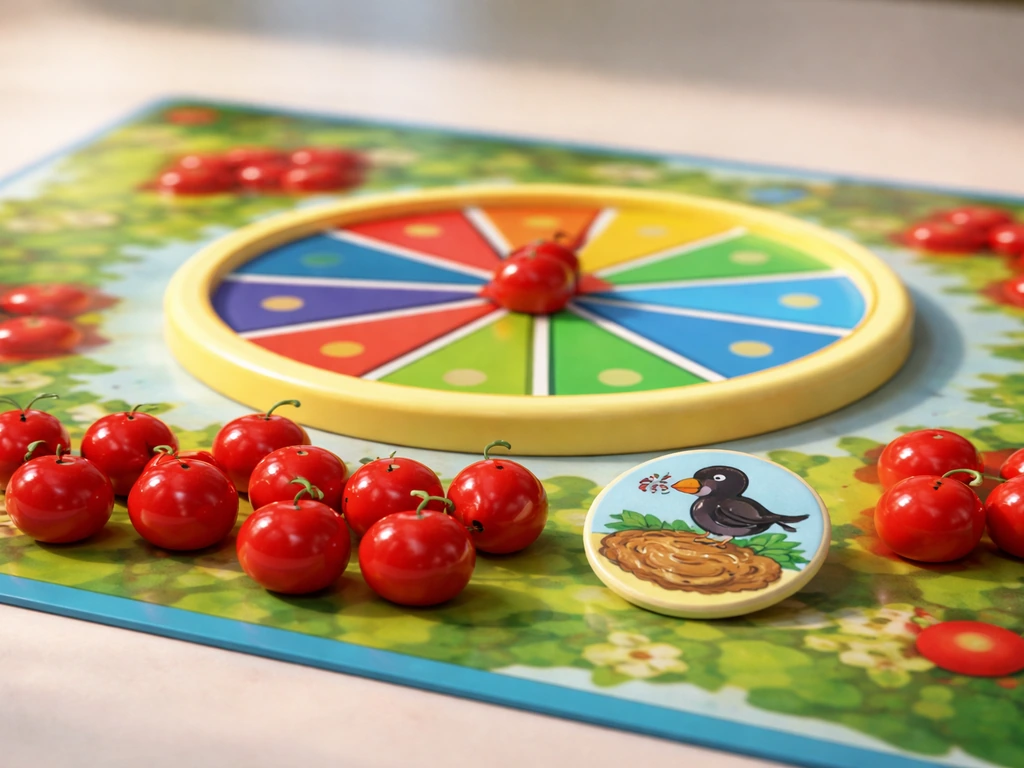
The game itself is a simple counting and probability game for young children. Players spin a spinner, pick cherries off a miniature tree, and drop them into a bucket. The first player to fill their bucket calls out 'Hi Ho! Cherry-O!' to declare victory. That is the full function of the phrase: it is a win-condition shout, the children's game equivalent of yelling 'Bingo!' Reddit threads from nostalgic adults consistently describe it the same way, remembering how they would shout 'hi-ho-cherry-o, I am the winner' when they cleared their tree.
What the phrase means inside the game's language
The 'Hi Ho' part of the phrase carries a rhythm and energy that connects it to a longer tradition of work-call chants. Think of 'Heigh-Ho' from Snow White and the Seven Dwarfs, or the sea shanty tradition of calling 'Hi-Ho' to coordinate group effort. These are phrases designed to mark the start or end of a task with a burst of collective energy. In the game, 'Hi Ho!' functions as that same burst, a bright exclamation marking the moment all the work (the cherry picking) is done.
The 'Cherry-O' portion is essentially a joyful declaration tied to the cherries themselves. The 'O' suffix gives it a sing-song, celebratory quality, something between a triumphant yell and a nursery-rhyme flourish. It is worth noting that 'The Farmer in the Dell,' a classic nursery song, includes the line 'Hi-Ho, the derry-o,' and regional variations swap 'derry' with other words including fruit-adjacent sounds. That nursery-song pattern, 'Hi-Ho + rhyming O,' is almost certainly the template Landfried was drawing on when naming the game, which is also why the phrase feels so natural and singable to young children.
So in terms of meaning, 'Hi Ho, Cherry-O' translates roughly to: 'Hooray, I picked all the cherries!' It is about completion, small triumph, and the reward of finishing a simple repetitive task. Cherries here represent abundance and attainment, the goal you were working toward, not any deeper symbolic layer.
Why 'bird' keeps showing up in searches
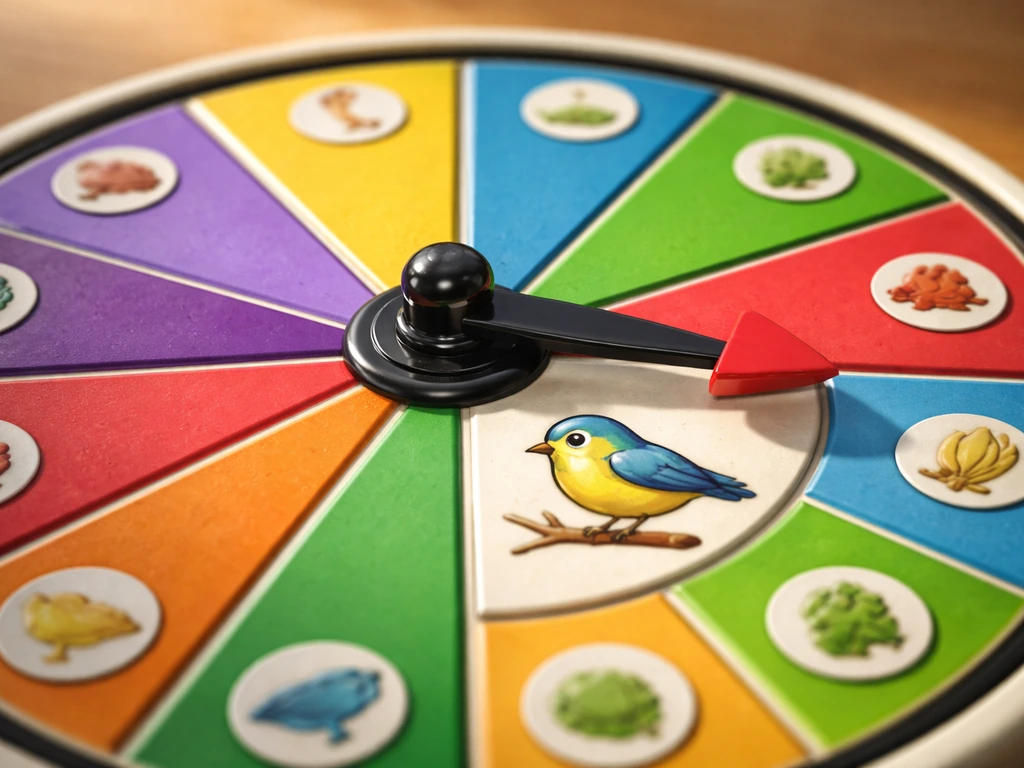
This is the real puzzle behind the search query, and the answer is straightforward once you know the game mechanics. The 'Hi Ho! Cherry-O' spinner has several outcome spaces, and two of the most memorable are the Dog and the Bird. When you spin and land on the Bird, [a cherry-snatching bird](/bird-sounds-and-calls/cheel-bird-meaning-in-english) swoops in and you have to put two cherries back on your tree. It is a setback mechanic, and it is memorable precisely because it is frustrating. Children playing the game hear 'Bird!' called out as a bad result, so 'bird' becomes deeply associated with the game in their memory.
The 2007 cooperative version of the game made the bird even more central, introducing a 'bird puzzle' mechanic where players race to collect their cherries before the bird puzzle is completed. AAC (Augmentative and Alternative Communication) teaching resources that use the game to help children practice language even include the phrase 'Not the bird/dog!' as a target expression, because those two hazards produce such a consistent emotional reaction. So when adults try to remember the game or describe it to someone else, 'bird' is one of the first associated words that surfaces.
There is also a second, less specific reason. People searching for 'hi ho cherry o bird meaning' may be on a bird-symbolism site and wondering whether the phrase contains a coded bird reference, the way many idioms do. Phrases like 'a little bird told me' or 'free as a bird' have genuine symbolic weight. The search could be someone asking: is the bird in this game more than just a game piece?
Does it carry folk meaning? The honest answer is: not really. It is a gameplay mechanic, not a symbol drawn from folk tradition. If you are instead searching for a different phrase, like “chill bird meaning,” the context will change a lot depending on where you saw it.
The symbolism angle: cherries, work chants, and bird-as-thief
Even if the bird in 'Hi Ho! Cherry-O' was not originally designed as a symbol, it lands in a surprisingly rich symbolic space. In folk traditions across cultures, birds stealing fruit, especially from orchards, is a well-established motif. The cherry-snatching bird maps neatly onto the archetype of the trickster or thief-bird: crows stealing from gardens, magpies taking shiny objects, and starlings descending on fruit trees. The game mechanic, whether intentional or not, taps into that same primal frustration. You were about to win, and a bird got in the way.
Cherries as a symbol are worth a moment too. In many traditions, cherries represent brief, sweet abundance, the fleeting reward of a short harvest season. The phrase 'life is just a bowl of cherries' uses the same image to mean something is easy and pleasurable. In the game, picking cherries represents industrious, repetitive work rewarded with a tangible goal, which is exactly the moral the 'Hi Ho' work-chant tradition is built around. You work steadily, you reap the harvest, you shout your victory.
The 'Hi Ho' call itself has the energy of a work song. Compare it to sea shanties or field calls where a single rhythmic phrase marks the collective rhythm of labor. In that context, 'Hi Ho, Cherry-O' is a miniaturized version of the same tradition, a tiny work chant for a tiny harvest, scaled down to a child's tabletop game but drawing on the same emotional logic: effort, rhythm, completion, reward.
How people actually use the phrase today
In everyday use, 'Hi Ho, Cherry-O' shows up mostly as a nostalgia reference. Adults quote it when talking about childhood games, early memories of winning something small, or the simple pleasure of a satisfying task completed. It appears in nostalgic social media threads, parenting discussions about classic games, and occasionally as a shorthand for cheerful, uncomplicated productivity, the adult equivalent of saying 'I got it done, go me.'
Pop culture references to the game tend to lean on the spinning mechanic and the bird/dog hazards as punchlines, since those are the most emotionally resonant parts for anyone who played it as a child. The phrase itself, shouted as a win call, captures a very specific kind of small, genuine joy that adults find charming to recall. It also shows up in early childhood education contexts, since the game is still actively sold in retail stores like Target and Kohl's and continues to be used as a teaching tool for counting and probability skills in pre-K and kindergarten classrooms.
Phrases and games people mix up with this one
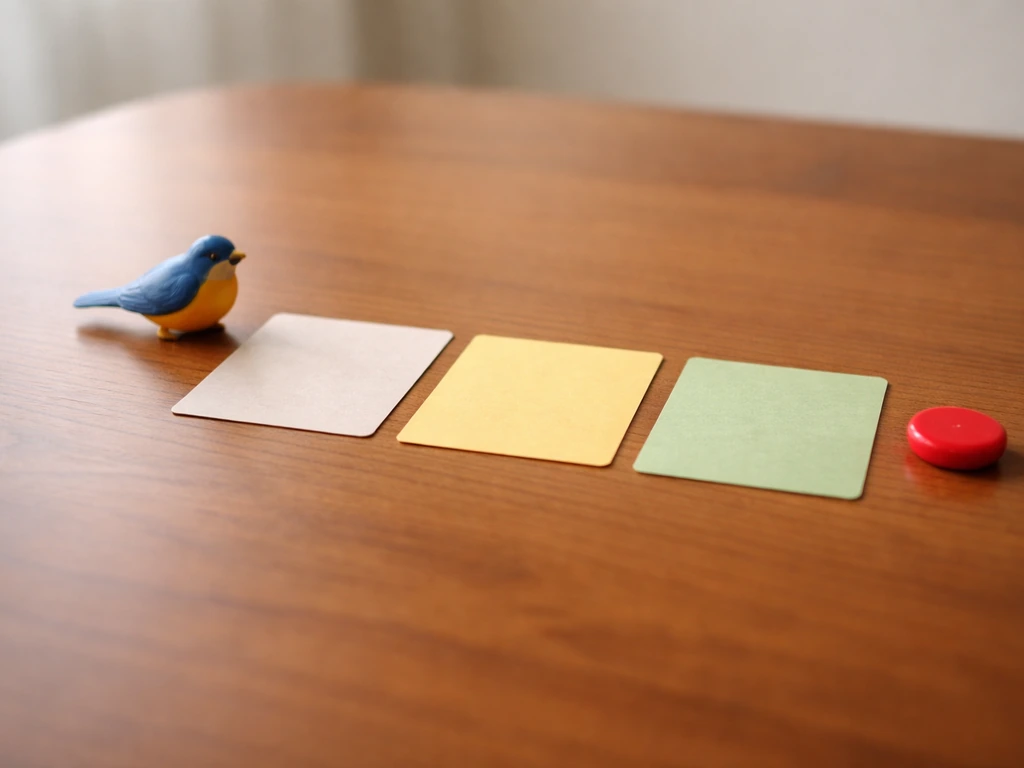
A few mix-ups are worth flagging so you can recognize which one you actually have in mind.
| Phrase or reference | What it actually is | Bird connection? |
|---|---|---|
| Hi Ho! Cherry-O (game) | Children's board game, win-condition shout | Bird is a spinner hazard that removes cherries |
| Hi-Ho, the derry-o (nursery song) | Repeated line from 'The Farmer in the Dell' | No bird; often confused with the game phrase |
| Heigh-Ho (Snow White) | Dwarf work chant, 'it's off to work we go' | No bird; same 'Hi-Ho' work-call energy |
| A little bird told me (idiom) | Common English idiom meaning a secret source told you | Yes, but unrelated to 'Cherry-O' |
| Cherry-pick (idiom) | Selectively choosing only the best options | No bird; but shares the cherry imagery |
The 'Farmer in the Dell' connection is particularly easy to mix up because the rhythm and phrasing are nearly identical. Both use the 'Hi-Ho + O' pattern and both come from a nursery-school tradition. If someone half-remembers a song lyric with a bird in it, they may be thinking of a different song entirely, possibly one with actual birds in the verses, that shares that bouncy call-and-response structure.
It is also worth noting that 'bird' carries specific slang meanings in British English (a term for a young woman) and in various other dialects, none of which have anything to do with 'Hi Ho! Cherry-O.' If you are exploring bird as a slang or cultural term in a different context, that is a genuinely separate investigation from this game reference. Similarly, bird species names that appear in children's songs, like the chickadee or specific songbirds referenced in folk rhymes, belong to a different category of bird meaning entirely. If you are specifically wondering about the chickadee bird meaning, it is a separate symbolism question not tied to the game’s bird mechanic.
Your quickest path to the right answer
If you searched 'hi ho cherry o bird meaning' and wanted to know what the phrase itself means: it is a children's game victory call meaning 'I picked all my cherries, I win,' with no inherent bird symbolism. The bird you are thinking of is the spinner space in the game that makes you put cherries back on your tree.
If you are trying to verify the exact game rules, including the bird mechanic, Winning Moves publishes downloadable rules directly on their site and the game is available at major retailers like Target with current product descriptions. If you are looking for a phrase that genuinely involves birds as symbols or idioms, you are looking for something different entirely, and it may help to search for specific bird species names paired with the word 'meaning' or 'symbolism,' or to look into bird-related idioms like 'a little bird told me' or 'the early bird gets the worm,' which carry genuine folk and symbolic weight.
- For the game's meaning: 'Hi Ho! Cherry-O' is a win shout, not a lyric with hidden meaning
- For the bird connection: the bird is a spinner hazard in the game, not a symbol
- For the 'Hi-Ho' energy: it belongs to a work-chant tradition, like Heigh-Ho or sea shanties
- For genuine bird idioms and symbolism: search specific bird species or phrases, not this game title
- For the game's history: Lorraine Landfried created it as 'Let's Pick Cherries' in 1959, sold it for $400 to Whitman Publishing
FAQ
Is there actually a bird mentioned in the phrase “Hi Ho, Cherry-O” and does it have symbolic meaning?
No. In the game phrase, the bird is not part of the words meaning, it is a spinner hazard outcome. When you land on “Bird,” you lose progress by returning two cherries to your tree, so the word “bird” functions like a label for a specific penalty square.
What does “Hi Ho, Cherry-O” mean when people say it casually?
Most people mean the game’s win call, but in everyday speech it is used more broadly as a playful “we finished” or “I did it” statement. If you see it outside the board game context, it usually implies a completion vibe rather than any literal cherry-picking scenario.
Do the “bird” rules stay the same in every version of the game?
The original version is described as a counting and probability game, where you spin, collect cherries, and declare victory when your bucket is full. If you are looking for exact instruction details for the bird outcome, check the currently published Winning Moves rules, because cooperative editions can change how hazards are handled.
How can I tell whether someone is talking about the board game bird hazard or a nursery rhyme?
If you are trying to confirm the exact meaning behind “hi ho cherry o bird meaning,” ask yourself whether your “bird” reference is coming from the spinner space versus a separate nursery lyric. The phrase “Hi-Ho, the derry-o” in “The Farmer in the Dell” shares the rhythmic “Hi-Ho + O” pattern, but it is not the same reference as the board game bird hazard.
If a site claims “bird” is coded symbolism in “Hi Ho, Cherry-O,” is that accurate?
Not automatically. Bird symbolism sites may treat “bird” as a general motif (thief, trickster, freedom), but the “Hi Ho! Cherry-O” bird in this context is primarily a gameplay setback. Symbolic interpretations are optional overlays, not the phrase’s original function.
What is the most common search mistake people make with this query?
A common mix-up is searching “hi ho cherry o bird meaning” but actually needing “Hi-Ho, the derry-o” meaning or “Farmer in the Dell” lyrics context. The quickest correction is to include “board game” in your search or pair the phrase with “spinner” or “Dog and the Bird.”
Why do some “bird meaning” results feel completely unrelated to the game?
British English slang can use “bird” to mean “young woman,” which can derail searches that are looking for the game. If your results discuss relationships or slang usage, you are likely in a different meaning track than the board game spinner hazard.
Why do some players remember the bird as being more intense than just “a penalty”?`
In cooperative versions, the bird can become more emotionally prominent because players race against a “bird puzzle” timeline. If you remember shouting “Not the bird” or urgent collection pressure, that points to the cooperative edition rather than the basic competitive rules.
How is the phrase used in early education or speech therapy contexts?
If you are using the phrase as a teaching tool, the key practical use is the consistent association children make between “Bird” and “a bad outcome.” Some AAC teaching materials use it as a target phrase, such as expressing “Not the bird/dog,” because the hazards reliably trigger the same response across play sessions.
Next Article
Chill Bird Meaning: What It Really Means and How to Reply
Understand chill bird meaning in texting and memes, spot if it’s a compliment or joke, and reply with examples.