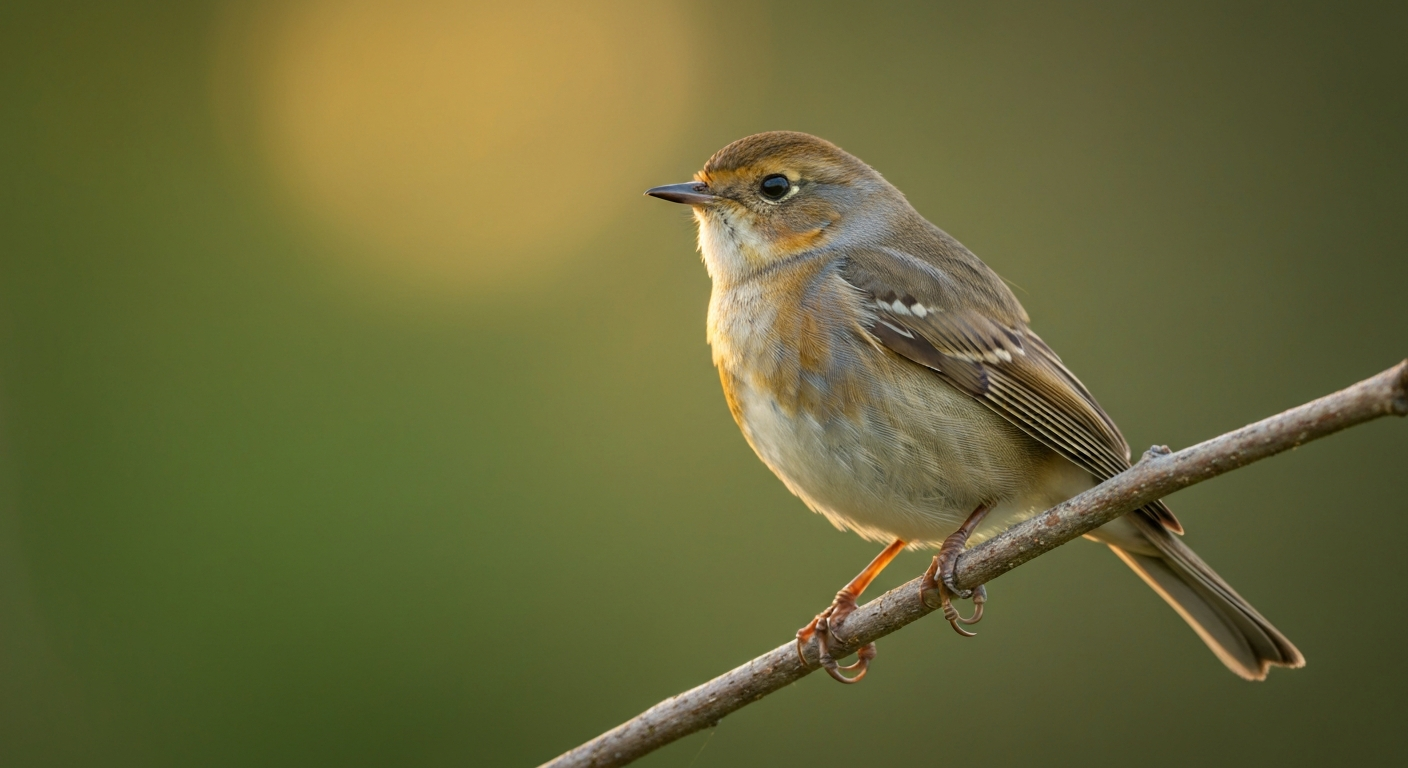
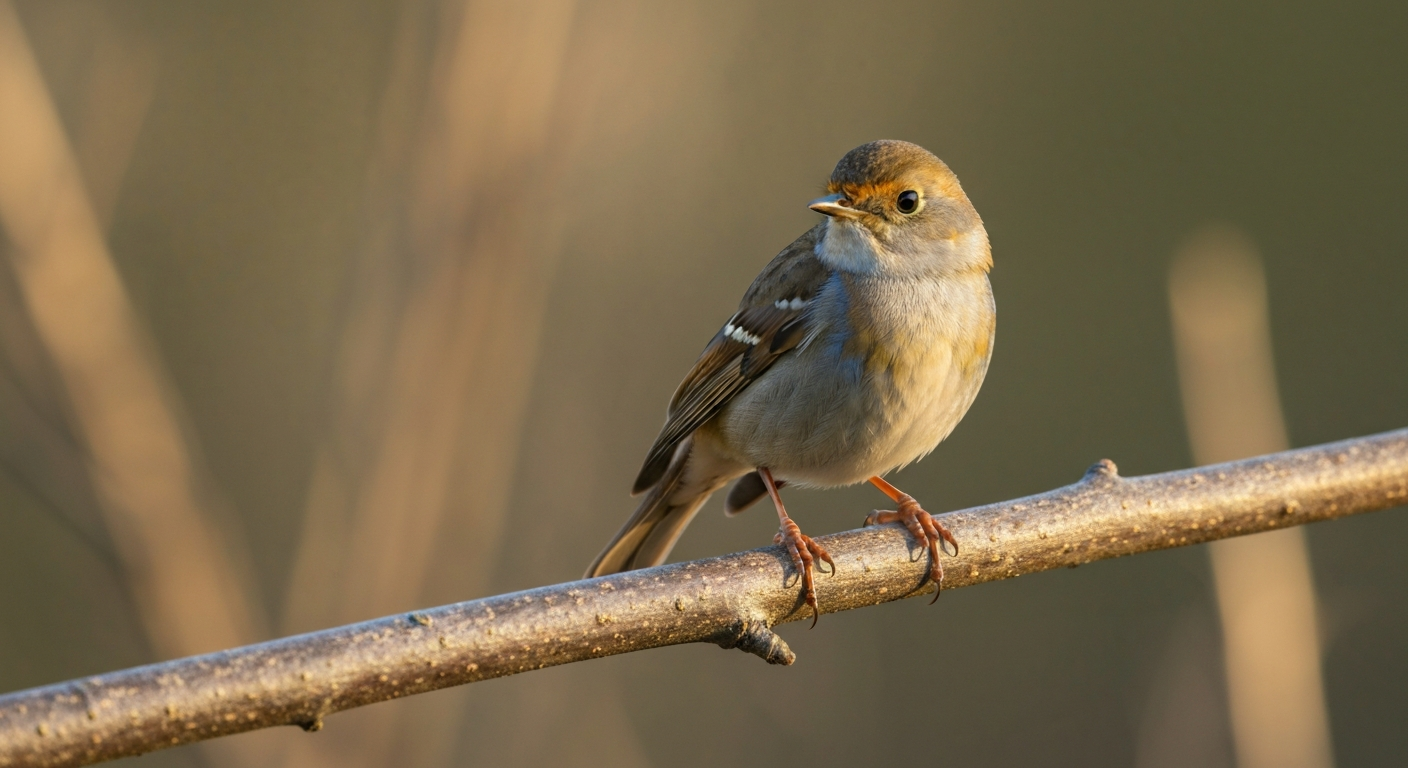
A perched bird is simply a bird that has landed and is resting on a raised surface, such as a branch, wire, fence post, or ledge. The word 'perched' is the past participle of the verb 'perch,' and when used as an adjective before a noun, it describes a bird in a stationary, elevated resting position. Beyond the literal behavior, the phrase carries real weight in birdwatching, grammar, symbolism, and everyday English, which is why so many people search not just for what a perched bird looks like but what it means.
Perched Bird Meaning, Literal, Symbolic, Usage, Examples

Marcus Whitley
12 Aug 2026
What this article covers
This article is a complete reference for anyone who has looked up 'perched bird meaning' and wants more than a one-line answer. Whether you are a birdwatcher trying to read a bird's behavior, a writer choosing between 'perched bird' and 'bird perched,' a translator working with English modifiers, or a curious reader who keeps seeing the phrase and wants to understand its cultural resonance, you will find something useful here. We cover the dictionary definition, the mechanics of how birds actually perch, the distinctions between perching, preening, and peering, the grammar behind different word-order variants, cultural and literary symbolism, practical observer guidance, and a set of ready-to-use example sentences.
Dictionary-style definition: what 'perched bird' actually means
Perch (verb): to alight, settle, or rest on a raised or elevated surface. The past participle form, 'perched,' functions both as a verb (describing completed action) and as a participial adjective modifying a noun. A 'perched bird' is therefore a bird that has alighted and is currently at rest on a surface above ground level.
Perch (noun): a roost or resting place, typically elevated. The noun can refer to a physical object (a branch, a rod, a wire) or, figuratively, to any prominent position (as in 'a new perch as CEO'). Merriam-Webster and Cambridge both confirm this dual literal-and-figurative range, and Cambridge's corpus includes the attested example 'There was a bird perched on the statue's shoulder,' showing how naturally the past participle slots in as a post-noun modifier.
In taxonomy, 'perching bird' is also used informally to describe any member of the order Passeriformes, the largest order of birds, accounting for roughly half of all living bird species. Passerines are sometimes called perching birds precisely because of the anatomical features that make clinging to a branch effortless for them. This taxonomic use is worth knowing because searching 'perching bird meaning in English' can return both the behavioral sense and the taxonomic one.
How perching actually works (the mechanics behind the stillness)
One thing that always strikes me when I watch a small bird sitting motionless on a wire is how effortless it looks. That is not an accident. Perching birds have a built-in locking system: when a bird bends its leg to land, the flexor tendons in the foot tighten automatically, causing the toes to clamp around the perch. This is called the Digital Tendon-Locking Mechanism (DTLM), and it requires no continuous muscle effort. The bird can rest, even sleep, without ever releasing its grip. This is why you can find a robin sitting on the same branch for twenty minutes without shifting, and why raptors can roost through the night without falling. Robotics researchers have found this mechanism so elegant that they actively model it when building perching drones.
Distinguishing related terms: perch, preen, and peer
Three terms cluster naturally around the image of a bird sitting quietly in a tree: perching, preening, and peering. They describe three completely different things, but because they often happen in sequence or simultaneously, they get conflated, especially by newer birdwatchers and writers reaching for precise vocabulary.
Perching
Perching is about position and mechanics. It describes the act of a bird settling onto and resting on an elevated surface. It tells you where the bird is and that it is stationary, not what it is doing with its time there. A perching bird could be singing, sleeping, hunting from a vantage point, or waiting out rain. Comparative research documents that perches are used for resting, preening, singing, hunting from a vantage, and sentinel behavior (Perch exposure and predation risk: a comparative study in passerines, PMC, Behavioral Ecology) Perch exposure and predation risk: a comparative study in passerines — PMC (Behavioral Ecology). The perch itself is just the platform for whatever comes next.
Preening
Preening is a specific maintenance behavior: the bird uses its bill to pull individual feathers through, aligning the barbs, distributing oil from the uropygial (preen) gland near the tail, and removing ectoparasites. It is an active, purposeful grooming routine that keeps feathers aerodynamically sound and properly insulating. Birds often preen while perched because the stable position lets them reach every part of their plumage, but perching and preening are not the same thing. If you want a deeper explanation of preening, see preen meaning bird for details on the behavior and its functions. A bird can perch without preening, and allopreening (two birds grooming each other) can happen between birds sitting side by side. If you want to go deeper on the behavior itself, the preening meaning bird and preen meaning bird pages on this site cover the biological and symbolic angles in full.
Peering
Peering describes a bird's vigilance or scanning behavior, specifically the 'head-up' posture where the bird looks outward, often rotating its head in short arcs to scan for predators or prey. Behavioral ecologists use terms like 'scanning,' 'vigilance,' and 'sentinel behavior' to describe this, and a bird on an exposed perch is frequently in peering mode rather than resting mode. See A classification scheme for mixed‑species bird flocks, PMC (discussion of sentinel/vigilance roles and scanning from perches) for definitions and examples of 'peering' and sentinel scanning from exposed perches A classification scheme for mixed‑species bird flocks — PMC (sentinel/vigilance roles). The distinction matters for interpreting what a bird is actually doing. For a dedicated breakdown of this behavior and what it signals, the peering bird meaning page explores it in more detail.
Quick comparison: perching vs preening vs peering
| Term | What it describes | Body posture clue | Behavioral purpose | Figurative use in English |
|---|---|---|---|---|
| Perching | Bird resting on an elevated surface | Body still, feet gripping a surface | Rest, singing, hunting vantage, territorial display | 'Perched atop a hill' (occupying a high or prominent position) |
| Preening | Bird grooming its feathers with its bill | Bill working through feathers; wing or tail often extended | Feather maintenance, parasite removal, pair bonding (allopreening) | 'Preening' as self-admiration or vanity |
| Peering | Bird scanning its environment with focused gaze | Head raised, neck extended, eye directed outward | Predator vigilance, prey detection, flock coordination | 'Peering' as looking intently or narrowly at something |
Where the word 'perch' comes from
The English word 'perch' in the roost-and-rest sense traces back through Middle English perche (meaning a pole or rod) to the Latin pertica, a measuring rod or long pole. The idea of a bird settling onto a rod or stick is the bridge between the original Latin sense and the modern ornithological one. The word arrived in English well before the 16th century and has been used to describe both the resting place and the act of resting there ever since.
There is an unrelated 'perch' in English: the freshwater fish, which comes from a different Latin-Greek root (perca, from Greek perke). The two words happen to be spelled the same but have completely separate etymological histories. It is worth flagging this if you are writing about birds in a context where fish might also be mentioned.
The grammatical variants 'perched bird,' 'bird perched,' and 'perching bird' each represent a slightly different construction. 'Perched bird' uses the past participle as a pre-noun adjective, which is the most neutral and dictionary-like form. 'Bird perched' places the participle after the noun as a post-modifier, which is more literary or descriptive (common in poetry and prose). 'Perching bird' uses the present participle, emphasizing the ongoing action rather than the resulting state. The phrase 'perching bird meaning in English' often appears in search queries from non-native English speakers navigating exactly this distinction, and the dedicated perching bird meaning in English page on this site addresses that grammatical angle directly.
Usage notes for writers and translators
The difference between 'a perched bird' and 'a bird perched' is mostly a matter of register and rhythm, not meaning. 'A perched bird' is the default noun phrase you would use in field guides, scientific writing, or everyday description. 'A bird perched on the wire' is slightly more dynamic, giving the sentence a photographic, mid-action quality that suits narrative prose. Both are correct; the choice is stylistic.
For translators, the adjectival use of 'perched' can be tricky because not every language has an equivalent participial-adjective construction. In French, for example, you would typically say 'un oiseau perché,' which mirrors the English word order closely. In German or Japanese, the participial modifier wraps around the noun differently. When the source text uses 'bird perched' as a post-modifier (especially in poetic contexts), translators need to decide whether to preserve that slight elevation of tone or normalize it.
Common collocations worth knowing include: perched on a branch, perched on a wire, perched atop, perched motionless, perched silently, perched bird photography, and the noun compound 'perching bird' (passerine sense). The phrase 'bird perched meaning' appears frequently in search queries and usually signals someone looking for symbolic or interpretive content rather than ornithological data.
How to recognize what a perched bird is actually doing
When I am out in the field and I spot a bird sitting still, the first thing I do is watch its head. Head position tells you almost everything. A bird with its head up and eyes scanning in short, deliberate arcs is in vigilance mode, watching for predators or monitoring the flock. A bird with its bill working through its feathers is preening and is comfortable enough in that spot to perform maintenance. A bird with its feathers puffed out and eyes half-closed is resting or conserving heat. A bird in an exposed, elevated position with its bill open and body vibrating faintly is almost certainly singing for territorial or mating purposes.
Perch choice also carries information. A bird on a prominent, exposed perch (the tip of a dead tree, the top wire of a fence) is more likely to be advertising its presence, whether through song or visual display. A bird sitting lower, tucked against foliage, is more likely resting, sheltering, or foraging nearby. Sit-and-wait predators like shrikes and kingfishers deliberately choose commanding perches with clear sightlines to the ground below.
For birdwatchers and students, Cornell Lab's All About Birds guidance is a useful framework: observe posture, perch height, bill activity, and head movement before identifying behavior. Photographers following bird photography guides will recognise the advice to watch for these same cues to anticipate the bird's next move, whether it will stay, sing, preen, or flush.
Behavioral purposes of perching: a quick reference
- Resting and sleeping: the tendon-locking mechanism holds the grip without muscle effort, allowing extended rest on a branch
- Territorial and mating song: exposed perches amplify sound projection and increase visibility to rivals and potential mates
- Hunting vantage: raptors, kingfishers, and shrikes use elevated perches to spot prey below before diving
- Thermoregulation: birds perch in sun to warm up or in shade and wind to cool down, adjusting feather position accordingly
- Sentinel behavior: one or more birds in a flock perch high to watch for threats while others feed
- Preening and maintenance: a stable perch allows access to every part of the plumage
Symbolism and cultural meanings of a perched bird
A bird sitting still has always felt meaningful to people. Part of this is practical: a perched bird is visible and close enough to observe, which makes it a natural focal point. Part of it is symbolic: stillness in a creature that can fly carries a kind of weight. Across many cultures, a bird that chooses to stop and rest near a person has been read as a message, a sign, or an omen.
In Western literary tradition, the image of a perched bird is one of the most enduring in poetry. Edgar Allan Poe's raven perched 'upon a bust of Pallas' is arguably the most famous perched-bird image in English literature. The bird's refusal to leave its perch becomes the engine of the poem's dread. John Keats's nightingale is perched, unseen but heard. Tennyson's eagle is 'clasped' in his perch on the 'crag.' In each case, the stillness of the perch is the contrast that gives the bird's potential flight, or song, or silence, its power.
In many indigenous North American traditions, a bird that lands nearby and remains still is seen as a messenger from ancestors or a sign that the observer should pay attention. The specific bird species shapes the message: a hawk perched nearby might signal strength or a need for perspective; a small songbird might carry a more intimate or domestic meaning. These interpretations vary considerably by tribe and region and should not be flattened into a single 'Native American meaning.'
In East Asian traditions, the perched bird appears frequently in brush painting and poetry as an image of tranquility, presence, and the acceptance of the present moment. A bird on a bare winter branch (a motif with deep roots in Chinese and Japanese ink painting) represents quiet endurance and the coexistence of fragility and stillness. The branch is often leafless to emphasize the bird's choice to be there despite the lack of cover.
In everyday figurative English, 'perched' signals elevated or precarious position rather than ease. 'She was perched on the edge of her chair' conveys nervous, barely-settled energy. 'Perched atop the corporate hierarchy' suggests a high position that requires constant attention to maintain. The figurative uses consistently carry that sense of height plus slight instability, which is interesting given that real perching birds are anything but unstable on their branches.
Practical examples and sample sentences
The following examples show the main variants in natural, attested-style usage. They cover different registers so writers, students, and translators can see how the phrase shifts across contexts.
- Perched bird (pre-noun adjective, neutral/descriptive): 'A perched bird at the top of a dead tree is almost always worth a second look through binoculars.'
- Bird perched (post-noun participial phrase, slightly literary): 'There was a bird perched on the highest wire, not singing, just watching.' (Cambridge-style attested construction)
- Perching bird (present participle, ongoing action emphasis): 'The perching bird gripped the branch instinctively as the wind picked up.'
- Perching bird (taxonomic sense): 'Sparrows, warblers, and finches are all perching birds, members of the order Passeriformes.'
- Bird perched meaning (interpretive/symbolic context): 'Many readers search for bird perched meaning when they notice a hawk sitting unusually close to their window for an extended period.'
- Figurative use: 'The analyst had held his perch at the top of the firm for eleven years before stepping down.'
- Preening while perched (combined behavior): 'I watched the blackbird spend nearly ten minutes perched on the fence post, methodically preening its wing feathers before flying off.'
- Peering while perched (combined behavior): 'The thrush sat perched on the gatepost, peering at the lawn below, head tilted, waiting for movement.'
Idioms and metaphors that use 'perch'
The word 'perch' has generated a modest but durable set of figurative expressions in English. 'Knocked off their perch' means displaced from a dominant or prominent position, often in sports commentary. 'On their perch' suggests someone holding a high-status role with some precariousness implied. 'A new perch' (as in a new job or position) frames career moves in terms of the bird's settled-but-ready posture. These idioms all draw on the same core image: a high position occupied with apparent ease but always subject to disturbance.
Suggested images for this topic
For the lead image, a single passerine (robin, sparrow, or thrush) on a clean branch against a soft background works well because it is immediately recognizable and lets readers confirm they are in the right place. A second image showing a bird in an active peering or preening posture alongside a perched-and-resting posture would reinforce the distinctions made in the comparison table. A third image of a raptor on an exposed perch (fence post or dead branch tip) illustrates the hunting-vantage sense and broadens the taxonomic range of the article beyond small songbirds. All images should have descriptive alt text using the primary keyword and relevant behavioral terms.
FAQ
What is the dictionary-style definition of 'perched bird' (literal meaning)?
A 'perched bird' is a bird that has landed on and is resting or sitting on a raised support (branch, wire, post, rock). 'Perch' as a verb: to alight or rest on a height or edge; as a noun: the roost or support used. 'Perched' is the past participle used literally ('a bird perched on the fence') and adjectivally ('a perched bird'). (Definitions follow standard dictionaries.)
How does 'perch' function grammatically and what about variants like 'bird perched' and 'perching bird'?
Grammatically: 'perch' is a verb (to perch, perching, perched) and a noun (a perch = resting place). 'Perching bird' uses the present participle as a modifier (a bird that habitually or currently perches). 'Bird perched' is often a reduced clause (e.g., 'the bird, perched on the gate, sang') where 'perched' is a participial adjective. Word order affects emphasis: 'perching bird meaning in English' is a search phrase targeting the participial usage; 'bird perched' emphasizes location or a clipped relative clause.
What are the mechanical/physiological reasons birds can stay perched for long periods?
Many perching birds (especially passerines) possess automatic tendon-locking mechanisms in the foot: when the leg flexes the flexor tendons tighten and the toes clamp the perch, allowing grip without continuous muscle contraction. This, plus behaviors like unihemispheric sleep in some species, explains long resting periods on perches. (Supported by biomechanics and avian physiology literature.)
How does 'perching' differ from 'preening' and 'peering' (quick functional summary)?
Perching = resting/roosting on a support. Preening = grooming feathers with the bill to align feathers, apply oils, remove parasites. Peering (vigilance/scanning) = head/eye movements to scan for predators or prey. All can occur while a bird is on a perch, but they describe different activities.
Can you provide a short table summarizing differences between perching, preening, and peering?
Type | Primary action | Typical purpose Perching | Resting on a support | Rest, vantage point, roosting Preening | Using bill to groom feathers | Feather maintenance, parasite removal, social bonding (allopreening) Peering | Head/eye scanning | Vigilance, hunting, territory monitoring (These are behavioral categories; a bird on a perch may show any combination.)
What is the etymology of 'perch' and 'preen' relevant to this article?
'Perch' (sense 'roost/rod') comes from Middle English perche, ultimately from Latin pertica (a pole or measuring rod). The word later gained figurative senses (a high position). 'Preen' stems from Middle English pren/prenen; its primary avian sense (to groom feathers) is old, and by the 19th century it had figurative senses (pride oneself). These etymologies clarify literal vs. figurative uses.
Next Article
Perching Bird Meaning in English: Definition & Examples
Perching bird meaning in English: definition, anatomy, perching vs perched, usage examples and cultural notes.