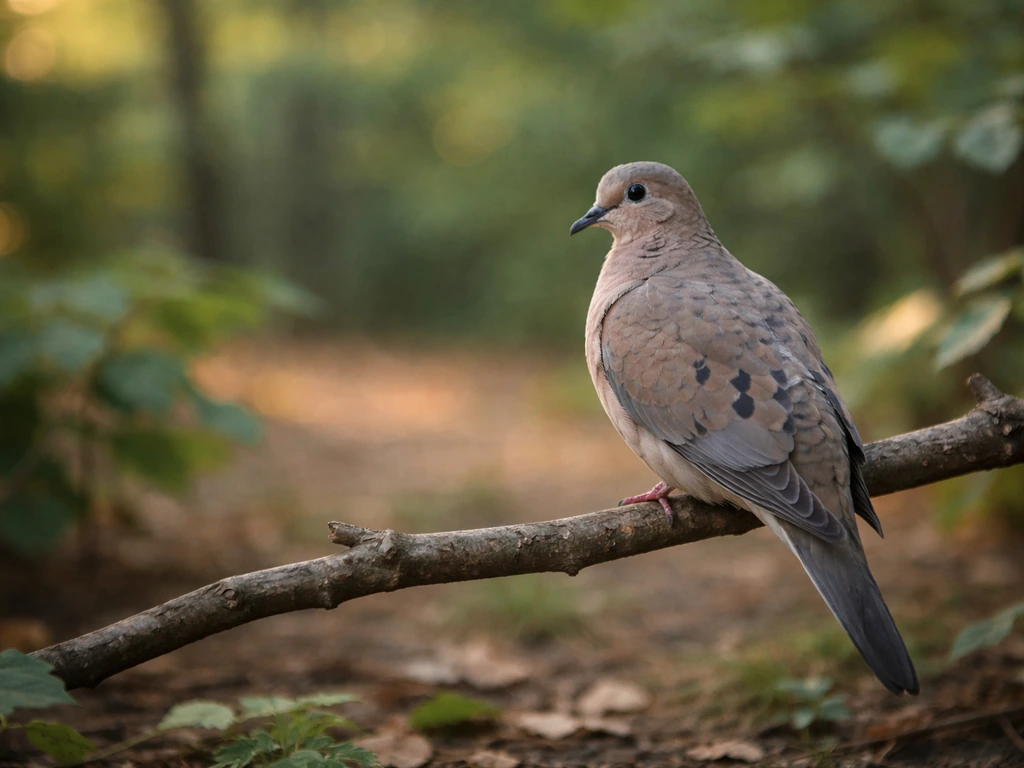
When you see 'dove' in a sentence, it is almost always operating on two levels at once. Its denotation is straightforward: a dove is a bird, specifically any member of the family Columbidae. Its connotation is where things get rich. Depending on context, 'dove' carries loaded associations with blank" rel="noopener noreferrer">peace, innocence, love, hope, purity, and the Holy Spirit. The word you read is a bird; the meaning the writer intends is usually one of those bigger ideas. If you are trying to pin down the meaning of dove bird, focus on the context to see whether the writer is using the literal bird or the symbolic associations meaning the writer intends. Figuring out which one applies in a given sentence takes about five seconds once you know what to look for.
A Dove Is a Bird: Denotation vs Connotation Meaning

Denotation vs. connotation, in plain English
Denotation is the dictionary definition of a word, nothing added, nothing implied. It is the primary, literal meaning you would find if you looked it up right now. Connotation is the cultural and emotional baggage a word carries beyond that definition. It is everything a word makes you feel or think that the dictionary does not technically spell out.
A quick way to keep them straight: denotation is what a word is, connotation is what a word suggests. Merriam-Webster puts it simply by noting that denotation is a word's primary meaning while connotation is the added cultural or emotional coloring. Both can be present in the same sentence. The word 'dove' in 'a dove landed on the branch' is mostly denotative. The word 'dove' in 'she arrived like a dove' is almost entirely connotative. Context is everything.
What 'dove' actually denotes
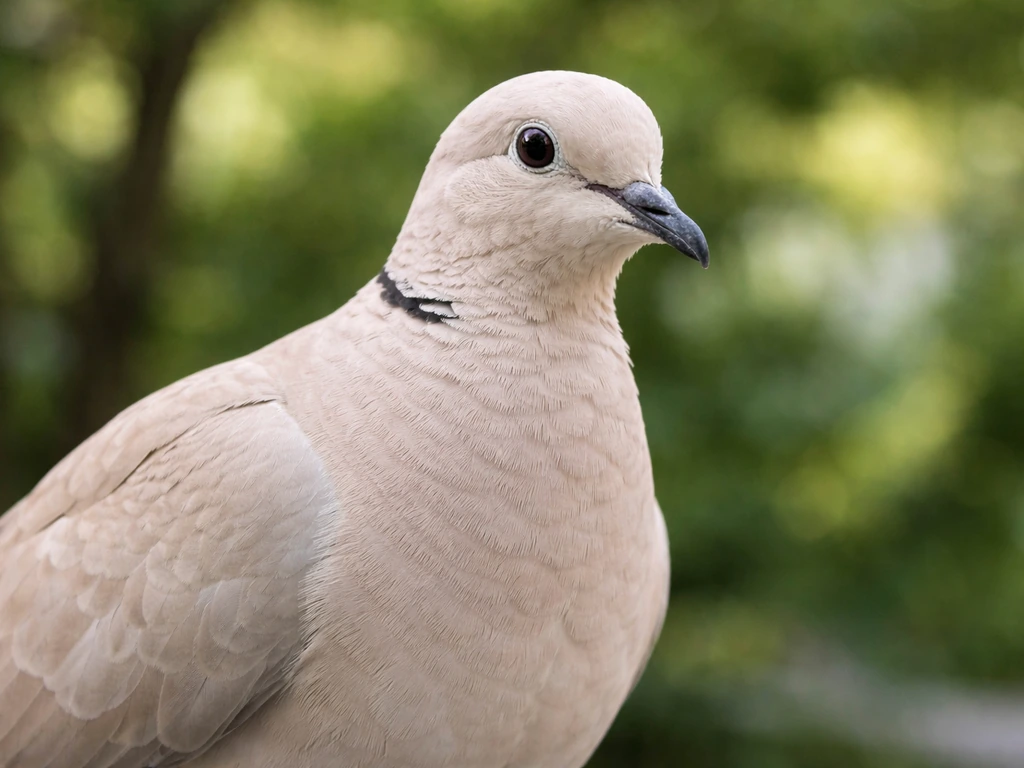
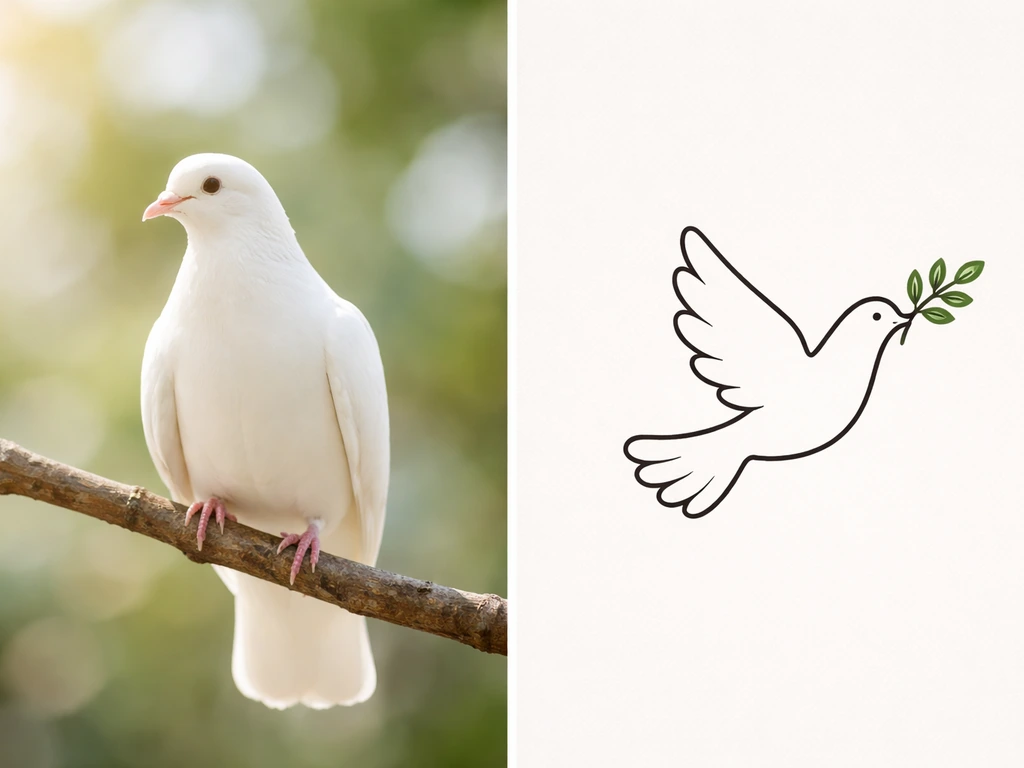
At its most literal, a dove is any bird in the family Columbidae. Merriam-Webster, Cambridge, and Dictionary.com all agree on this baseline. The family includes hundreds of species, and 'dove' is generally used for the smaller, slimmer members of that group, while 'pigeon' tends to describe the stockier ones. In practice, the line between dove and pigeon is blurry and often comes down to common usage and marketing. White homing pigeons released at weddings are called 'doves,' for instance, partly because the word carries better connotations.
Merriam-Webster also lists a secondary literal sense worth knowing: a dove can denote 'a gentle woman or child' or 'an opponent of war,' and these are treated as distinct word senses, not just symbolic flourish. That matters when you are parsing whether a writer is being figurative or simply using an established definition.
What 'dove' commonly connotes
The connotative weight of 'dove' is enormous and remarkably consistent across cultures. Here are the main associations you will encounter, and where each one comes from.
- Peace and freedom: The dove-and-olive-branch image traces directly to Genesis 8:11, where Noah's dove returns with a freshly plucked olive leaf after the flood, signaling the end of God's judgment and the start of renewal. That single moment anchored the dove as a peace symbol for thousands of years across Judaism, Christianity, Islam, and secular culture.
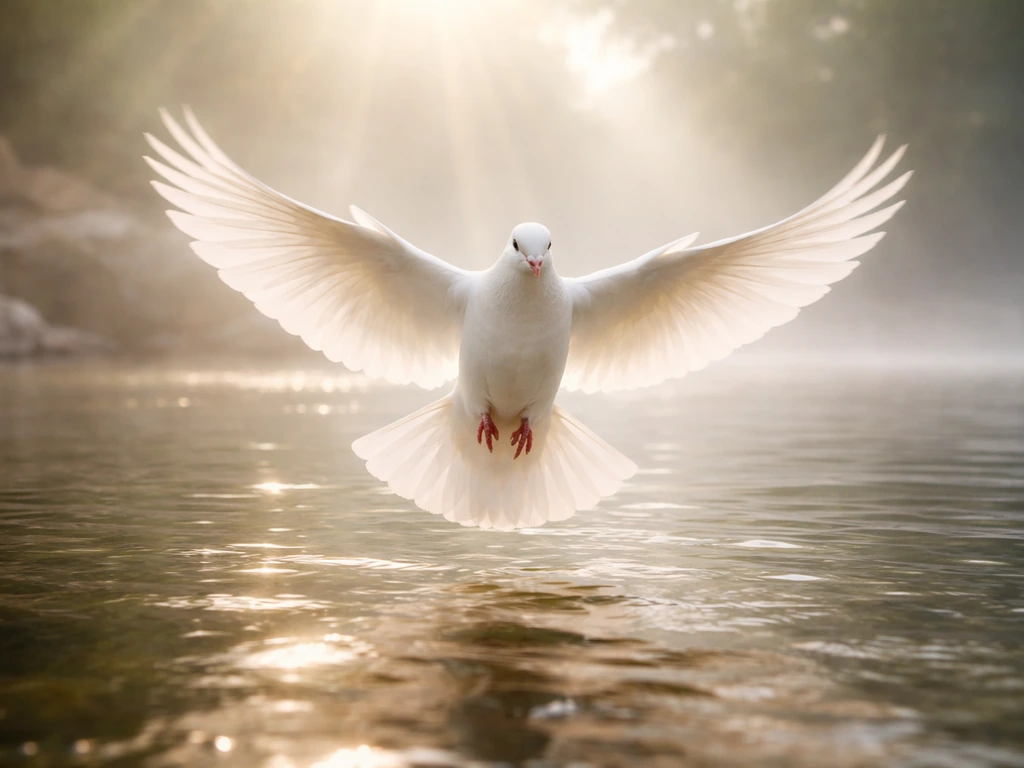
- The Holy Spirit and spirituality: In Matthew 3:16, Mark 1:10, and Luke 3:22, the Spirit of God descends 'like a dove' at Jesus's baptism. This made the dove inseparable from Christian spiritual symbolism. You will see it in church art, baptismal imagery, and hymns almost everywhere.
- Innocence and purity: Doves are white, quiet, and visually gentle. That combination made them a natural shorthand for moral cleanliness and untarnished character. This connotation shows up in wedding ceremonies, poetry, and everyday compliments.
- Love and romance: Live Science connects the dove's romantic connotation to its ancient association with Aphrodite/Venus, the goddess of love. Doves were sacred to her, and the link stuck. Today doves appear in Valentine's Day imagery and love poetry alongside hearts and roses.
- Hope and renewal: This flows from the Genesis story. A dove arriving after disaster means things are going to be okay. When writers reach for 'dove' in a context of recovery or fresh starts, this is the connotation they are pulling.
- Gentleness and tenderness: In Song of Solomon, 'my dove' is a term of endearment, pairing the bird with innocence and beauty. Webster's dictionary cites 'O my dove' from Song of Songs specifically, defining it as an expression meaning pure and gentle.
How context shifts the meaning
The same word does different work in different settings. Here is how the connotation bends depending on where you find it.
Religious texts and imagery
In a biblical or liturgical context, 'dove' is almost never just a bird. The Genesis flood narrative and the baptism of Jesus gave the dove two foundational symbolic jobs: peace/hope and the Holy Spirit. When a sermon, a hymn, or a stained-glass window shows a dove, it is doing theological work. The denotation (bird in the Columbidae family) is technically present, but the connotation is doing all the heavy lifting.
Political language
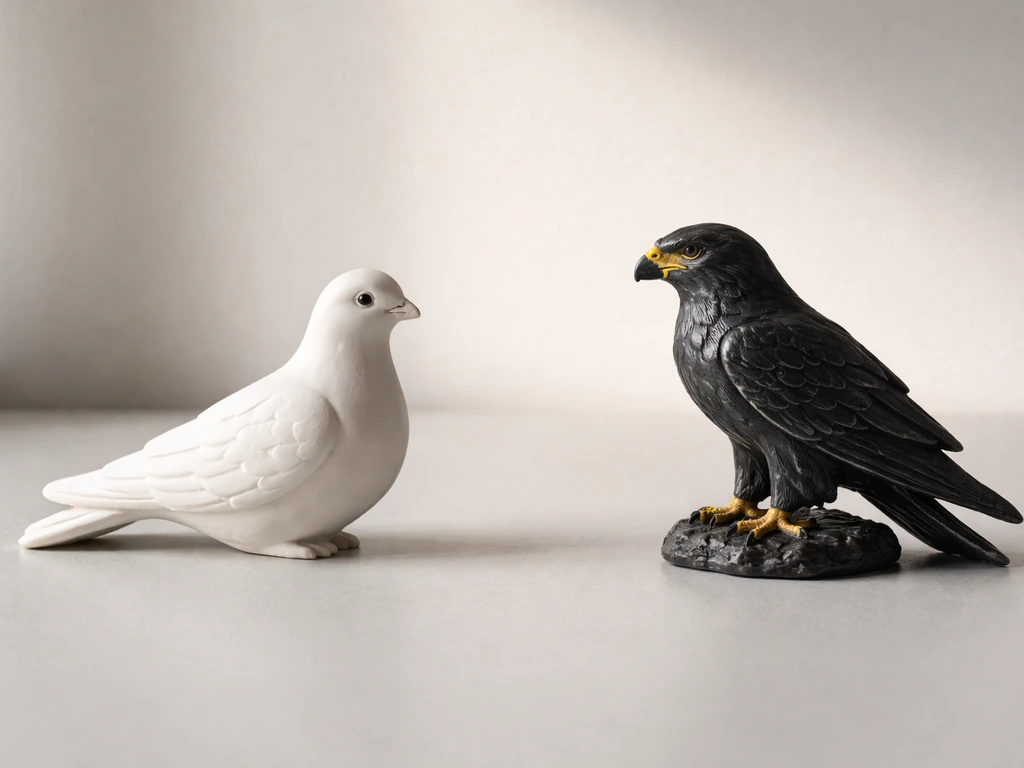
In political coverage and debate, 'dove' denotes a person who favors diplomacy and opposes military action, contrasted with a 'hawk' who prefers aggressive or military approaches. This is actually a formally recognized dictionary sense in Merriam-Webster, not just a metaphor. JSTOR Daily traces the hawk/dove political contrast to deep historical roots, noting that hawks were associated with hunting and war while doves symbolized domesticity and peace. When a headline calls a politician 'a dove on foreign policy,' the writer is using a word sense that sits right on the line between connotation and secondary denotation.
Literature and poetry
Poets love doves precisely because the word arrives pre-loaded with meaning. Song of Solomon's repeated use of 'my dove' as romantic endearment, Picasso's famous peace dove drawings, and countless modern poems use the bird to invoke innocence, love, or hope without spelling those ideas out. When you read a line like 'she was his dove,' the poet expects you to bring the connotative freight yourself. The bird is barely there; the idea is everything.
Weddings and everyday life
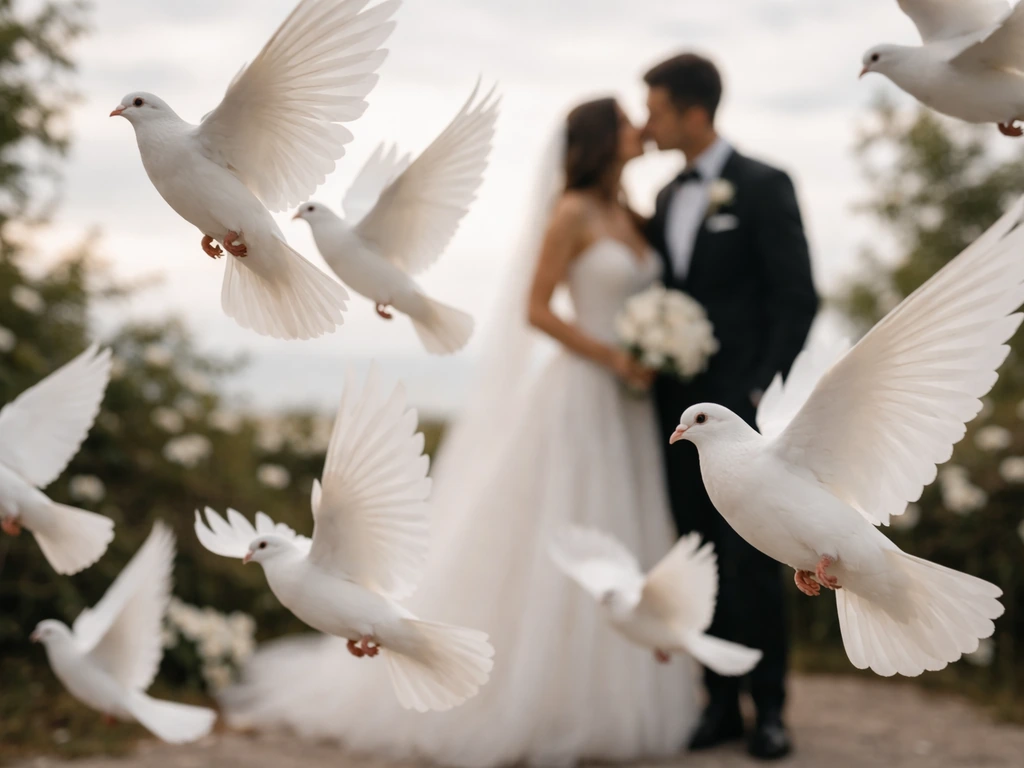
At a wedding, releasing white doves is explicitly symbolic: the gesture is meant to represent purity, new beginnings, love, and peace. The birds are real (they are usually white homing pigeons), so the denotation is present. But nobody at the ceremony is thinking about Columbidae taxonomy. In everyday speech, calling someone 'a dove' or using 'dove' in a brand name (like the Dove soap brand) leans entirely on connotation: gentleness, softness, and purity.
Doves as a metaphor: hawks vs. doves and beyond
The hawks-vs-doves metaphor is one of the most durable political shorthands in English. In debates about war, foreign policy, or even business strategy, calling someone a 'hawk' signals they favor strength and aggression, while calling them a 'dove' signals they prefer negotiation and caution. The metaphor works because both birds already carry strong behavioral and symbolic associations: the hawk hunts, the dove coos. You do not need to explain it. The audience already knows.
Beyond politics, 'dove' appears as a broader metaphor for any person or idea that stands for gentleness or peaceful intent. A character described as 'a dove among wolves' is immediately understood to be innocent and vulnerable in a hostile environment. A country described as 'sending its doves' to a negotiation is understood to be extending goodwill. In all of these cases, the literal bird has vanished entirely and the connotation is carrying the full meaning.
It is worth noting that the same underlying bird, the mourning dove, picks up additional symbolism in folk tradition, particularly around grief, spiritual messages, and the cycle of life and death. Many people look for the mourning dove bird meaning, especially in traditions that connect the bird with grief and spiritual messages. That is a separate but related thread, and it shows how a specific species can accumulate its own connotative layer on top of the general 'dove' connotations.
How to spot denotation vs. connotation in real sentences
Here is a practical checklist you can apply immediately any time you encounter 'dove' in a sentence.
- Ask: is the sentence about an actual bird doing bird things? If 'dove' is flying, nesting, cooing, being fed, or described with physical features, denotation is likely in play. If the dove is not doing anything a real bird would do, you are in connotation territory.
- Look for paired symbols. Olive branch, white color emphasis, flood imagery, or the word 'peace' nearby? That is the Genesis connotation. Words like 'Holy Spirit,' 'baptism,' or 'descending'? That is the New Testament connotation. 'Hawk' nearby in a political context? That is the political metaphor sense.
- Check for possessive endearment. 'My dove,' 'our dove,' or 'little dove' used toward a person is almost certainly a term of endearment drawing on innocence and gentleness connotations, not referring to a bird at all.
- Notice the genre or setting. A biology textbook: denotation. A wedding announcement: connotation. A political op-ed: political metaphor sense. A hymn or prayer: spiritual connotation. Brand name or logo: softness and purity connotation.
- Try substituting the literal meaning. If replacing 'dove' with 'small pigeon-like bird' makes the sentence absurd or loses its point entirely, the writer is using connotation. If the substitution still makes sense, denotation is probably the primary meaning.
- Check whether the sentence still works without cultural knowledge. Pure denotation requires only knowing the bird exists. If you need to know about Noah, Aphrodite, or Cold War politics for the sentence to land, it is connotative.
| Example sentence | Denotation or connotation? | Clue |
|---|---|---|
| A dove landed on the fence post. | Denotation (mostly) | Bird doing a bird thing; no symbolic context |
| The Spirit descended like a dove. | Connotation | Religious context; 'like a dove' signals figurative use |
| She's always been the dove of the family. | Connotation | Applied to a person; draws on gentleness/peace associations |
| The senator is a dove on military spending. | Connotation (political metaphor) | Paired with policy context; hawk/dove vocabulary |
| Open to me, my dove. | Connotation | Term of endearment; innocence and love associations |
| The dove returned with an olive leaf. | Both present | Literal bird, but the scene is the Genesis peace narrative |
That last example in the table is worth pausing on. In Genesis 8:11, a real dove does return with a real olive leaf, so the denotation is present. But the reason anyone quotes that verse is for what it means: hope, peace, and survival after catastrophe. Both layers are active simultaneously, which is actually what makes the image so powerful. Great symbolism often works that way: the literal thing is real, and the connotative weight sits on top of it.
Once you start applying this checklist, you will find that most uses of 'dove' in non-scientific writing are connotative or at least heavily colored by connotation. The word has been doing symbolic work for so long, across so many cultures and traditions, that it almost never arrives neutral. That is what makes it such a useful example for understanding how denotation and connotation interact in everyday language.
FAQ
If I see “dove” in a sentence, how can I tell whether it is the bird species or a figurative meaning?
Ask whether the writer gives biological or behavioral details (taxonomy, cooing, nesting, feathers, a specific setting like a branch or forest). If not, treat it as figurative and look for thematic cues like peace, gentleness, purity, romance, or opposition to war. The more the sentence sounds like an appraisal or label, the more connotative it is.
Can “dove” be both literal and symbolic in the same sentence?
Yes. Religious and classic literary passages often rely on a real dove image while pushing the emotional outcome (hope, reconciliation, Holy Spirit). A common sign is when the sentence includes an observable action (returning with an olive leaf, descending, landing) and then quickly ties it to a message or transformation.
When does “dove” mean “opponent of war” rather than “peaceful person” in general?
In contexts discussing foreign policy, military strategy, negotiations, or political ideology, “dove” usually maps to the hawk and dove model (diplomacy, restraint). If the surrounding wording includes “war,” “military action,” “foreign policy,” or “negotiations,” interpret it as a political stance rather than just general kindness.
Is it accurate to say that “dove” and “pigeon” always mean different things?
Not strictly. In everyday usage, dove often signals smaller, slimmer birds, but the distinction is blurry and can be shaped by marketing and naming conventions. If a text uses “pigeon” with negative or urban associations, it may be playing on connotation, not taxonomy.
How should I interpret “my dove” or “a dove” as an endearment?
Treat it as a conventional romantic or affectionate figure of speech where the bird functions mainly as an emotional label. You can usually ignore literal bird interpretation unless the author mixes the metaphor with concrete details about the animal or environment.
Does the word “dove” change meaning depending on whether it is capitalized?
Capitalization can matter when “Dove” is used as a proper noun (for example, a brand name). In those cases, the connotation you get is tied to the product’s messaging (often softness or purity), not to the bird metaphor in the hawk and dove or religious sense.
What about “doves” in business, marketing, or sports commentary, is it always the political metaphor?
Not always. In business or strategy writing, it commonly borrows the same idea (preference for negotiation, caution, or risk management). But check the terms around it, like “diplomacy,” “aggressive posture,” “military analogies,” or “risk,” to confirm it is using the hawk and dove frame rather than literal birds.
Is “dove” used differently across cultures or religions?
The general connotations (peace, gentleness, hope) are widespread, but specific religious traditions may load the word with additional meanings (for example, Holy Spirit in Christian liturgical contexts). If the text references scripture, rituals, or iconography, assume a tradition-specific symbolic layer is intended.
Why do people sometimes connect the mourning dove to grief and spiritual messages, is that the same as “dove” generally?
It overlaps but is more specific. “Dove” can mean peace or gentleness broadly, while “mourning dove” often brings extra folk associations about grief, messages, or the cycle of life. If the text names “mourning dove,” the author is likely signaling that extra layer.
What is a common mistake when analyzing “dove” for denotation vs connotation?
Assuming the word is always literal because a dove is a real bird, or assuming it is always symbolic even when a passage describes a concrete action or event. The fix is to separate cues: literal cues (observable bird details) vs thematic cues (peace, love, innocence, anti-war stance).
Mourning Dove Bird Meaning: Symbolism, Signs, and Practical Steps
Understand mourning dove bird meaning in stories and symbolism, plus real-world behavior and how to interpret sightings.