Paloma is the Spanish word for dove (or pigeon, depending on context), and when people search 'paloma bird meaning,' they are almost always asking about the symbolic weight behind that word: peace, love, innocence, and spiritual grace. If you are trying to nail down what a “pigeon bird meaning” is in a specific line, name, or artwork, the same context clues apply to paloma too. In everyday Spanish, paloma covers the whole columbid family, but culturally it almost always points to the dove, specifically the white dove that has carried symbolic meaning across centuries of art, religion, music, and romantic tradition.
Paloma Bird Meaning: Dove Symbolism, Phrases, and Examples

Marcus Whitley
12 May 2026
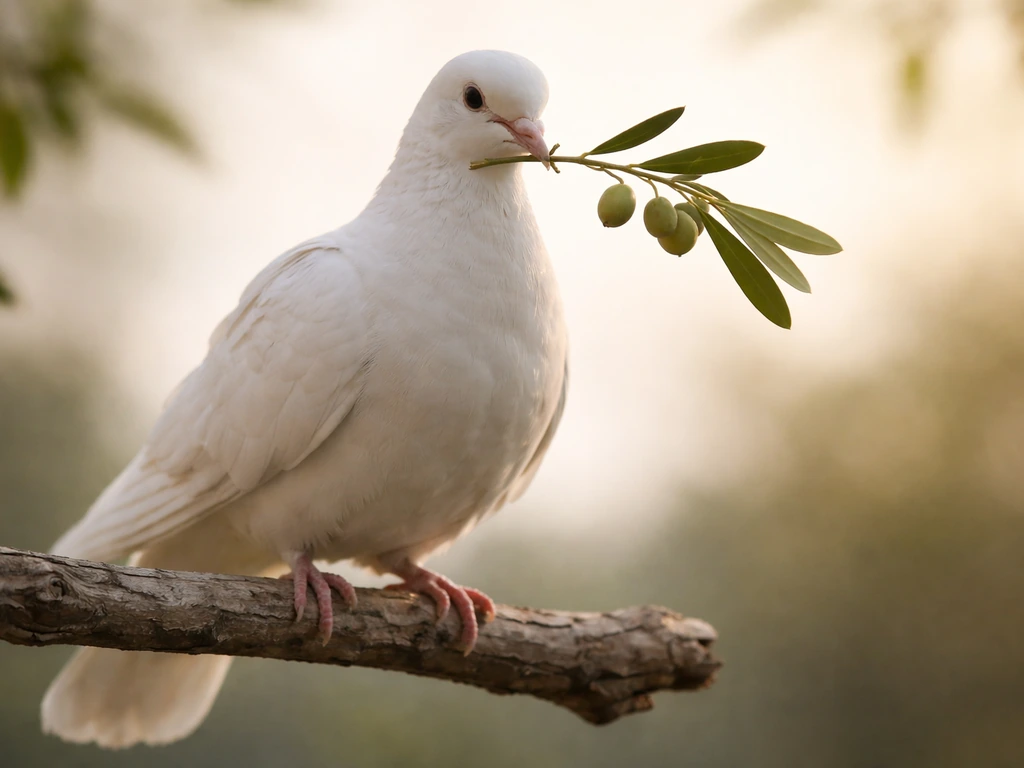
What 'paloma' literally means and which bird people usually have in mind
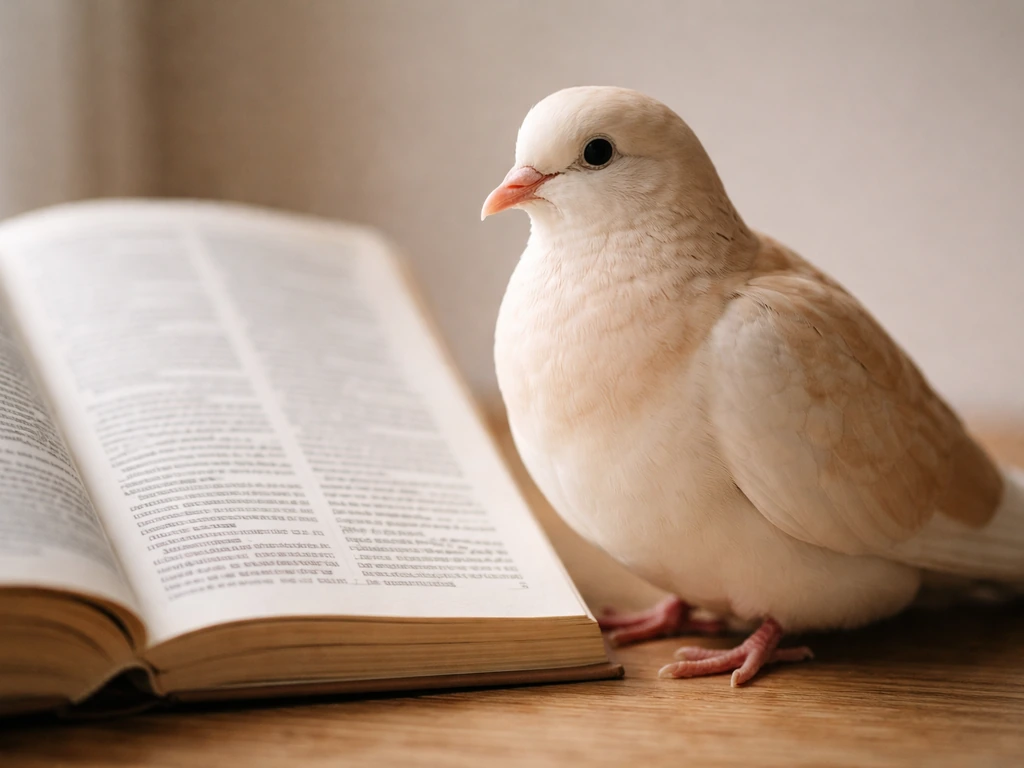
The word paloma comes directly from Latin and has been documented in Spanish since ancient usage. The Real Academia Española (RAE) defines it zoologically as a domesticated bird descended from the wild rock pigeon, and the dictionary lists specific varieties like paloma bravía (rock pigeon), paloma torcaz (wood pigeon), and paloma zurita (stock dove). So technically, paloma is an umbrella term for all birds in the columbid family.
But here is where the cultural layer kicks in: when a Spanish speaker says paloma in a poem, a song, a name, or a heartfelt message, they almost never mean a street pigeon. They mean a dove, usually a white one, loaded with meaning. The distinction between 'dove' and 'pigeon' in English is largely absent in Spanish. Spanish resolves the difference through adjectives and species names rather than separate words. So paloma blanca (white dove) signals symbolism, while paloma torcaz signals a wood pigeon in the forest. The word alone does the job of both 'dove' and 'pigeon' depending on context.
Paloma vs dove vs pigeon: how the term actually gets used
In English, 'dove' tends to carry spiritual and peaceful connotations while 'pigeon' is the bird you shoo away from your lunch. That split does not exist in Spanish. Paloma does the work of both words. This is important because when someone searches 'paloma bird meaning,' they are often translating something they heard or read, and they want to know which version of the bird is intended. If your search is really about the phrase “pura bird meaning in english,” the safest starting point is still the symbolic dove meanings tied to paloma paloma bird meaning. If you are wondering about Polynesian bird meaning, look at how island cultures use birds as symbols of guidance, messages, and spiritual presence.
The short rule: if paloma appears in a name, lyric, tattoo, poem, or anything emotional or symbolic, treat it as 'dove.' If it appears in a news item about a trained carrier bird (paloma mensajera, literally 'messenger pigeon' or homing pigeon), it is the functional bird, closer to the English 'pigeon.' The species-level modifiers tell you everything. Without a modifier, paloma in a symbolic context always leans toward dove.
| Spanish phrase | English equivalent | Bird intended | Symbolic weight |
|---|---|---|---|
| Paloma blanca | White dove | Dove | High: peace, purity, love |
| Paloma mensajera | Carrier/homing pigeon | Pigeon | Functional, not symbolic |
| Paloma torcaz | Wood pigeon | Pigeon (species) | Minimal symbolism, ornithological |
| Mi paloma | My dove / my love | Dove (or none: metaphor) | Very high: term of endearment |
| Paloma de la paz | Dove of peace | Dove | High: peace, harmony |
| Paloma bravía | Rock pigeon | Pigeon (species) | Minimal symbolism, ornithological |
Worth comparing briefly: the pigeon in other symbolic traditions carries its own meaning around messages, loyalty, and homing instinct, but that reading is rarely what people are after when they search 'paloma bird meaning.' The search intent here is almost always rooted in the dove's symbolic register.
What a paloma (dove) actually symbolizes
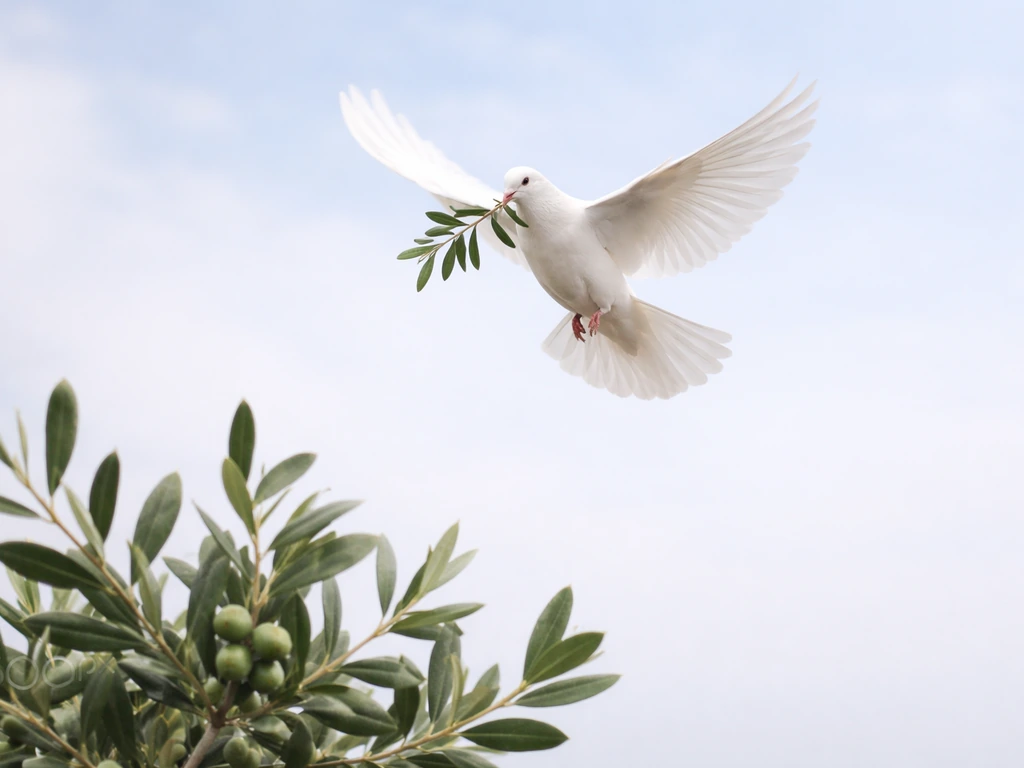
The symbolism of the dove is old, layered, and surprisingly consistent across cultures. Here are the core meanings attached to it and where each one comes from.
Peace
This is the dominant modern meaning, and it has two reinforcing roots. The first is the biblical story of Noah's ark, where the dove returns carrying an olive branch, signaling the end of the flood and the restoration of peace between God and humanity. The second is a much more recent cultural moment: after World War II, Pablo Picasso created a lithograph of a dove that became the emblem of the World Peace Council. That image spread globally and cemented the white dove as a secular symbol of peace. Picasso was so connected to this symbol that he named his own daughter Paloma, and she later named her daughter Paz (Peace), making the symbolic chain literal across generations.
The Holy Spirit and spiritual grace
In Christian iconography, the dove represents the Holy Spirit, based on the Gospel accounts of Jesus's baptism, where the Spirit descends 'like a dove. Dove is also used in Church of Jesus Christ of Latter-day Saints scripture-topic material to connect the phrase “like a dove” with the Spirit descending during baptism-related accounts the Spirit descends 'like a dove. ' This image appears across centuries of Christian art: in baptism scenes, in depictions of the Annunciation, at Pentecost, and in representations of the Trinity. Early Christians used the dove as one of their identifying symbols, and it has remained central to Christian visual language ever since. If a paloma appears in a religious context, a church mural, a baptismal gift, or a funeral remembrance, this is the layer being invoked.
Love, innocence, and devotion
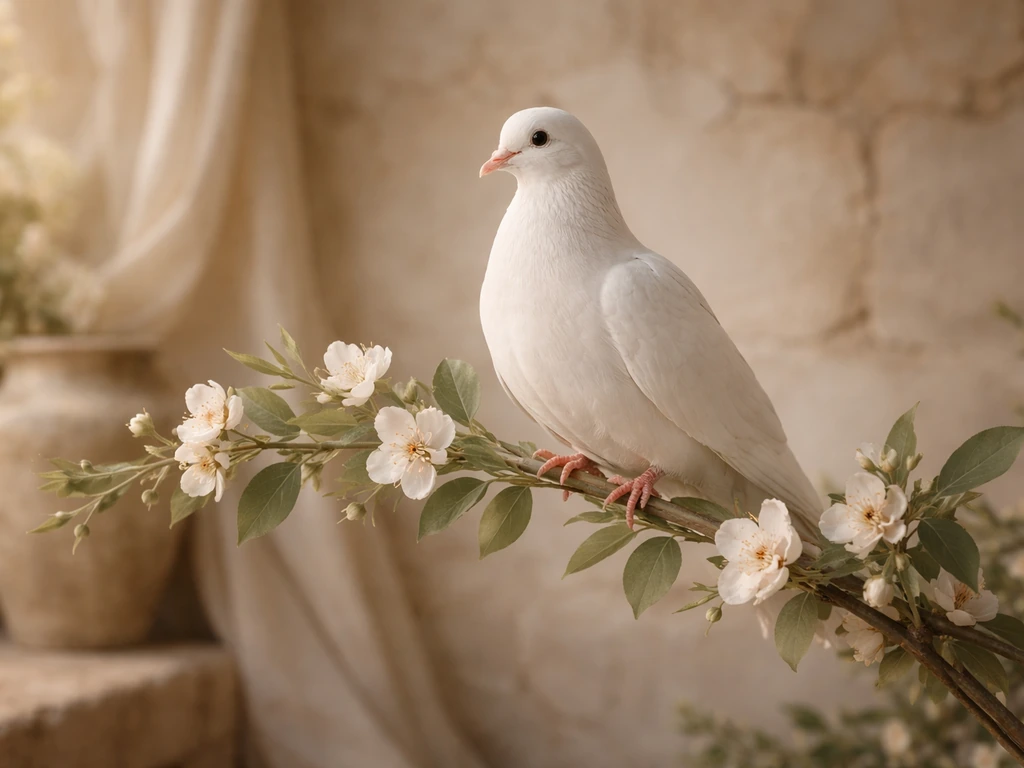
Before the Christian tradition adopted the dove, the bird was already associated with Aphrodite (Venus in Roman mythology), the goddess of love. Doves were sacred to her and connected to tenderness, softness, and romantic devotion. That association never really faded. In Spanish-language tradition especially, paloma is a deeply affectionate term. Calling someone 'mi paloma' is the equivalent of 'my love' or 'my sweetheart.' The bird's calm, gentle behavior makes it a natural stand-in for innocence and purity, which is why it appears in wedding imagery and christening gifts across Latin American and Spanish cultures.
The Spanish and Latin American cultural layer
In Spanish-speaking cultures, paloma carries more emotional depth than the English word 'dove' tends to. It functions as a term of endearment, a poetic figure, a name, and a lyrical shorthand for something precious and beloved. This is not just a translation quirk. It reflects centuries of the bird being embedded in folk songs, Catholic religious practice, romantic poetry, and everyday speech across Latin America and Spain.
There are also regional layers to be aware of. The Diccionario de americanismos (ASALE) documents non-zoological meanings of paloma in various Latin American countries. In some regional and colloquial contexts, paloma carries slang meanings entirely unrelated to the bird. If you encountered 'paloma' in a joking, vulgar, or clearly sexual context, it may be functioning as regional slang rather than any bird symbolism at all. This is worth flagging so you do not misread tone: a paloma in a romantic ballad and a paloma in a crude joke are operating in completely different registers.
The symbolism also shifts slightly by subculture and country. In Mexico, the melancholic and romantic tradition of paloma is dominant, shaped by ranchera music and folk song. In Spain, it appears more in religious art and Catholic tradition, though the romantic usage is just as present. In the Caribbean, paloma in music often carries a nostalgic, yearning tone tied to separation and longing. Across all of these, peace and love remain the anchor meanings.
Where you will actually see 'paloma' used: songs, names, phrases, and tattoos
Famous songs
Music is probably the biggest driver of paloma searches today. 'La Paloma' is one of the most recorded and reinterpreted songs in history, a Spanish melody written in the 1860s that has been covered for over 160 years across dozens of languages. The song uses the dove as a messenger of love and longing. 'Cucurrucucú Paloma' is a classic Mexican folk song where the dove represents a lover's spirit crying out with grief. Its use of paloma is pure romantic metaphor: the dove is not a bird, it is the embodiment of lost love. 'Paloma Blanca' by the George Baker Selection uses paloma blanca as a symbol of freedom and purity. And 'Mi Paloma,' appearing across many artists and traditions, uses the bird as an intimate term of address, the equivalent of calling someone 'my darling.'
Names
Paloma is a popular given name throughout the Spanish-speaking world and beyond, chosen precisely because of its symbolic associations with peace, grace, and gentleness. Picasso's daughter Paloma is probably the most famous bearer. In contemporary Spain, the artist known as Blanca Paloma has used the name as a creative identity, connecting it to folklore and cultural heritage. If you see Paloma as a person's name, the meaning is almost always intentional: the parents wanted those associations of peace, beauty, and love attached to their child.
Lyrics and poetry
One of the most quoted lines in Spanish folk tradition is: 'Si a tu ventana llega una paloma, trátala con cariño que es mi persona' (If a dove arrives at your window, treat it with tenderness, for it is me). This captures exactly how paloma works in poetry and song: the bird is a stand-in for a person, usually a lover, carrying a message across distance. When you see paloma in lyrics or verse, look for that substitution. Is the dove doing something a person would do? Is it carrying longing, delivering a message, arriving unexpectedly? If yes, it is functioning as metaphor, not ornithology.
Tattoos
Dove tattoos are among the most consistently chosen bird designs, and paloma tattoos in particular tend to stack multiple meanings: peace (often chosen after personal conflict or loss), love and devotion (sometimes memorial tattoos for lost relationships or people), spiritual connection (often for people from Catholic backgrounds), and innocence or new beginnings. A paloma tattoo with an olive branch doubles down on peace. One with a heart or a name shifts toward love and remembrance. The design context usually tells you which layer is primary.
How to figure out which meaning applies to your specific situation
If you came here with a specific phrase, lyric, name, or image and you want to know what paloma means in that exact context, work through these questions in order.
- Is there a color modifier? Paloma blanca (white dove) points strongly toward peace, purity, or the Holy Spirit. No modifier? The default symbolic reading still applies in most cases.
- Is there a species modifier? Paloma mensajera (carrier pigeon), paloma torcaz (wood pigeon), paloma bravía (rock pigeon): these are functional or ornithological uses, not symbolic ones.
- Is it a name or nickname? If paloma is capitalized or used as a person's name, the meaning is almost certainly 'dove' in its positive symbolic sense: peace, gentleness, grace.
- Is it in a song or poem? Look for whether paloma is doing something a bird does (flying, cooing, arriving at a window) or something a person does (crying, waiting, carrying a message). If it is doing person-things, it is a metaphor for a beloved person or soul.
- Is the context emotional, religious, or romantic? If yes, you are in dove territory: peace, love, spirituality, or longing. If the context is crude, joking, or explicitly sexual, you may be dealing with regional slang that has nothing to do with birds.
- Is it a tattoo? Look at what surrounds the bird. Olive branch: peace. Heart or dates: love and memorial. Religious symbols: spiritual meaning. Flight or open sky: freedom or new beginnings.
- Still not sure? Search the phrase with the surrounding words, for example, 'cucurrucucú paloma meaning' or 'paloma mensajera significado,' and add the country or cultural context if you know it. The specific phrase will almost always unlock the right layer.
The bottom line is that paloma almost always carries positive, meaningful symbolism. Whether it is peace, love, spiritual grace, or gentle affection, the bird points toward something hopeful and tender. The context around the word is your guide to which of those layers is doing the most work in the specific phrase you are trying to understand. If you are wondering about pelican symbolism instead, that bird has its own distinct meaning in cultural and spiritual contexts pelican bird meaning.
FAQ
If someone says “paloma” in everyday Spanish, does it always mean a dove?
Not always. In many everyday uses, paloma functions as a term of endearment (similar to “my love” or “darling”), even when no bird symbolism is intended. You can usually tell by whether it is used like a nickname (for a person) versus a description in an artwork, lyric, or religious setting.
How can I tell whether paloma is dove symbolism or a real pigeon in a sentence?
Look for cues like “mensajera,” “torcaz,” “bravía,” or any explicit mention of training, delivery, or a specific species. If paloma appears without zoological qualifiers in a poem, name, tattoo, or emotional message, it is far more likely metaphorical (dove) than literal.
What does paloma mean in a tattoo if there is no olive branch or heart?
Without common add-ons, paloma tattoos still often lean toward gentle or affectionate themes, but the dominant layer depends on accompanying details like color (white versus darker), background (church motifs, baptism imagery), and placement (wedding or memorial placements often shift the meaning toward devotion or remembrance).
Can paloma mean something negative or bad in Spanish slang?
In some Latin American colloquial or joking contexts, paloma can appear with meanings unrelated to the bird. If the surrounding wording is clearly crude, sexual, or mocking, treat it as slang rather than symbolic dove meaning.
Does “paloma” always translate to “dove” when I’m translating a song or poem into English?
For emotional or symbolic lines, “dove” is usually the correct choice, but you may need “my love,” “darling,” or “sweetheart” when paloma is used as an address to a person. If the line reads like someone is being spoken to directly, prioritize the endearment function over the literal bird.
What is the difference between “paloma blanca” and plain “paloma” in meaning?
“Paloma blanca” commonly signals the classic white-dove register (purity, freedom, peace), while plain “paloma” is broader and may still imply the dove symbol in poetic contexts. If you want the most specific symbolic reading, the adjective is your key indicator.
If “Paloma” is a person’s name, is its meaning different from the bird meaning?
It usually keeps the symbolic associations. Parents typically choose the name for peace, gentleness, and love. If you’re interpreting the meaning in a story or lyric, assume intentional symbolism unless the character’s background clearly points to a literal bird topic (which is uncommon).
What if paloma appears in a Christian setting, like a baptism or memorial card?
Then it is typically invoking the Holy Spirit or peace-with-faith imagery. You can often confirm by looking for nearby religious cues such as cross, baptism water, dove imagery in artwork, or references to baptism, Pentecost, or the Trinity.
Is the peace symbolism the same everywhere Spanish is spoken, or does it vary by region?
The anchor meanings (peace, love, longing, tenderness) are consistent, but regional emphasis can shift. For example, Mexican music often foregrounds romantic melancholy and yearning, while Spain more often foregrounds religious art traditions. The strongest regional clue is the genre or cultural context around the word.
How should I interpret paloma in “La Paloma” style lyrics, where the dove seems like a messenger?
Treat it as metaphor. The dove is usually standing in for a lover’s spirit, a message of longing, or a voice arriving from distance. If the lyrics describe actions a person would do (telling, calling, returning, crying out), interpret paloma as the symbolic messenger rather than literal ornithology.
Next Article
Pheasant Bird Meaning: Symbolism, Culture, and Usage
Pheasant bird meaning explained: symbolism, culture, idioms and how to interpret it in hunting, beauty, danger contexts.