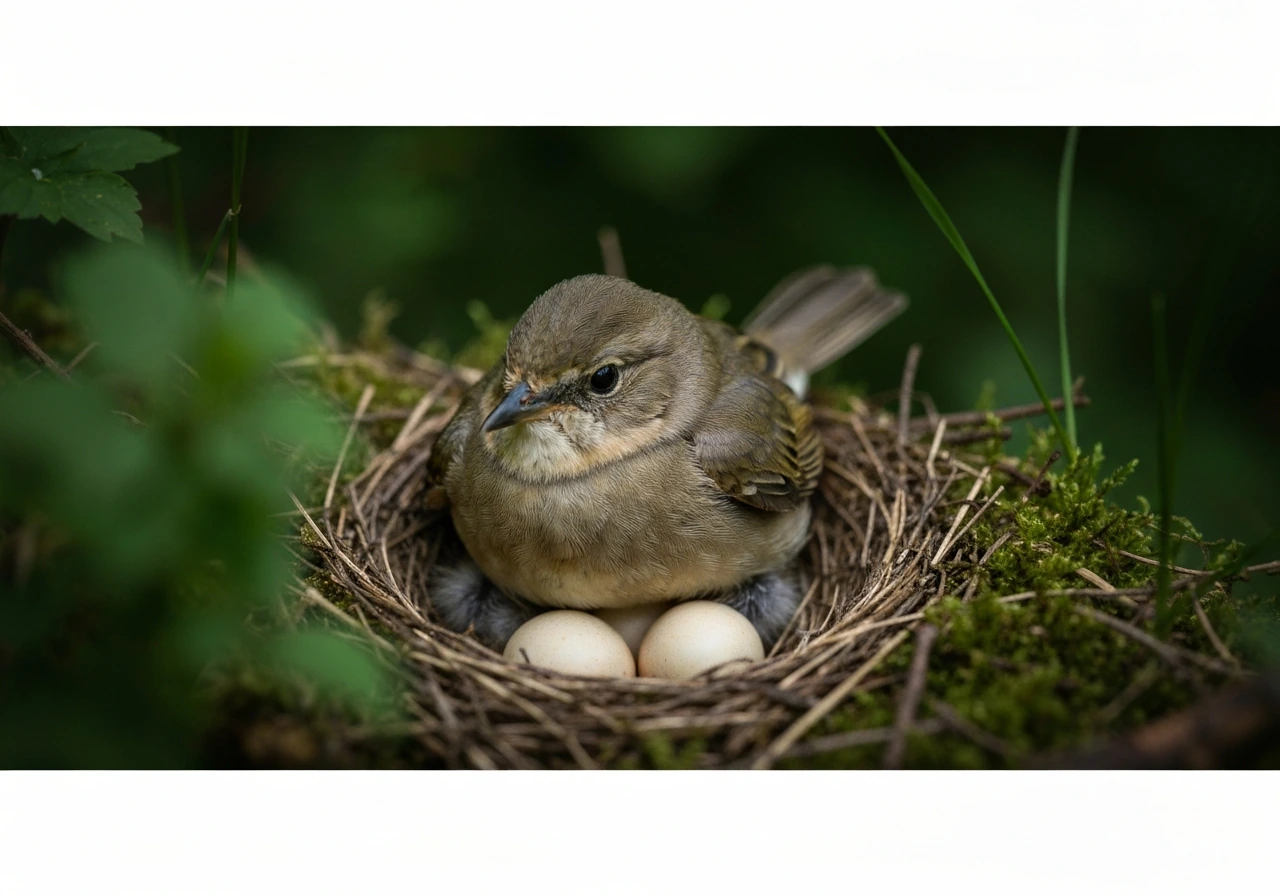
A brooding bird can mean two genuinely different things depending on where you encounter it. In wildlife and biology, a brooding bird is one that sits on its eggs or newly hatched chicks to keep them warm, protect them, and help them develop. In figurative language, poetry, and everyday speech, a "brooding bird" borrows that same image to suggest something heavier: quiet intensity, patience mixed with melancholy, watchfulness that carries a slight threat. Knowing which meaning applies is usually a matter of checking two things: is there a nest nearby, and is the word appearing in a sentence about an actual bird or a mood?
Brooding Bird Meaning: Literal Incubation and Metaphor Explained

Marcus Whitley
26 May 2026
What "brooding" actually means (and where the word came from)
The original meaning of "brooding" was purely physical: sitting on eggs. Merriam-Webster points out that the moodily thoughtful sense people associate with the word today came later, and that the whole emotional weight of the term is essentially borrowed from the image of a bird settled silently over a nest. That origin matters because it explains why the figurative version feels the way it does. When you call someone "brooding," you're comparing them to a bird holding still, keeping something close, and carrying a kind of contained intensity.
In contemporary dictionaries, "brooding" splits cleanly into those two lanes. Cambridge defines it as both the act of sitting on eggs and as a mood-word meaning feeling sad, worried, or angry for a sustained period, or creating an uncomfortable, threatening atmosphere. Dictionary.com adds the sense of being preoccupied with depressing or painful thoughts, plus that image of subdued, heavy light ("brooding hills at dusk"). So when you see the word, it genuinely could go either way.
Why birds brood: what's actually happening in the nest
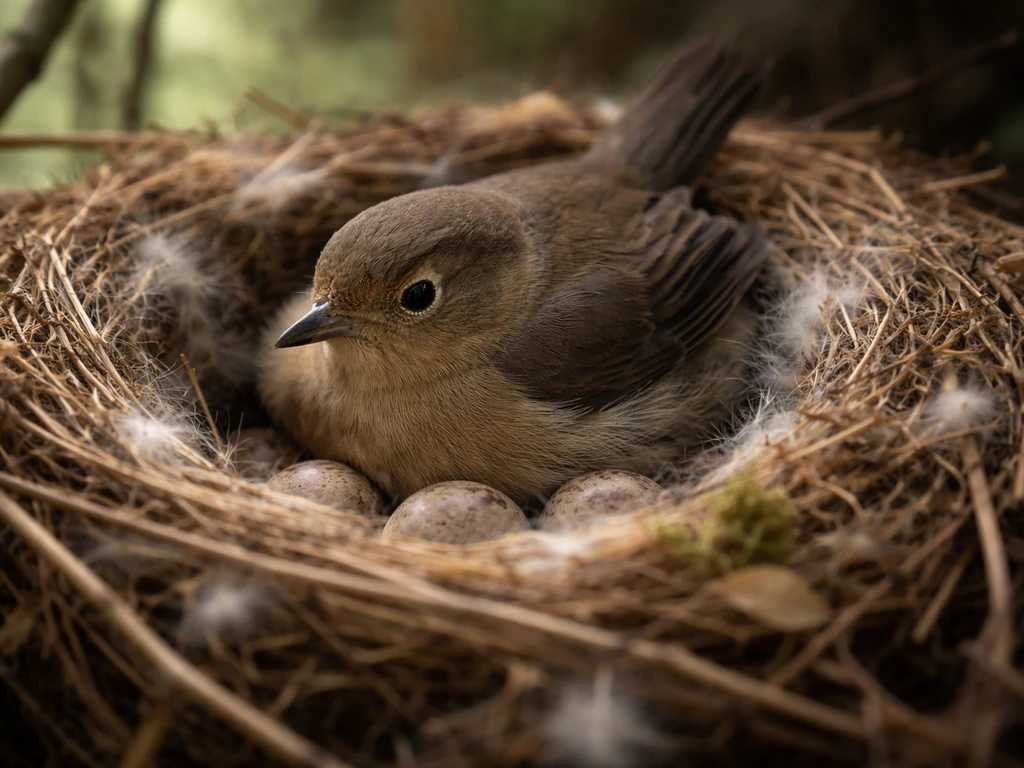
Brooding in the biological sense is active, demanding parental care. It is not just passive sitting. blank" rel="noopener noreferrer">Britannica's zoology definition frames it as a distinct behavioral phase where a bird stops laying eggs and commits to incubating the clutch it already has. The bird is essentially becoming a living thermostat. blank" rel="noopener noreferrer">The British Trust for Ornithology puts the ideal incubation temperature for most birds at around 38°C, and the incubating parent physically adjusts its posture, lifting or lowering itself over the eggs to fine-tune the warmth. Many birds grow a brood patch to help with this: a patch of bare, featherless skin on the breast or abdomen where blood vessels sit close to the surface and transfer heat directly to the eggs.
The stakes are real. BTO notes that when incubation starts directly affects hatching date, which in turn has a profound effect on whether chicks survive. Research on nest attendance shows that parent birds carefully manage how long they sit versus when they leave to forage, sometimes adjusting their rhythm when predator pressure increases. A 2024 paper in the journal Behavior found that modifying those incubation schedules in response to threats is genuinely costly, because egg temperature can only drift so far before it affects development. So brooding is not laziness or simple warmth-keeping. It is a tightly managed biological trade-off.
The behavior also continues after eggs hatch. Britannica notes that in domestic fowl, a "broody hen" describes a bird that first sits on eggs and then stays close to keep her newly hatched chicks warm. That post-hatch phase of close, sheltering care is also called brooding. You can see a vivid example in wildlife footage: a female kestrel returning from a break and shimmying herself carefully over her nestlings to cover them. That shimmy is brooding.
How "brooding bird" gets used as metaphor and mood
Once you understand the physical reality of brooding, the figurative leap is obvious. A brooding bird is quiet, still, watchful, carrying something vulnerable underneath it, and radiating a low-level intensity that warns others away. That combination maps perfectly onto the emotional or atmospheric sense of "brooding" in language. When a writer describes a brooding figure at the edge of a scene, or a brooding sky over a landscape, they are invoking exactly that: stillness that is not peaceful, attention that is not warm, patience that has a dark edge to it.
In everyday speech, calling someone brooding usually means they are quiet, inward, carrying a weight they are not sharing, and perhaps a little intimidating because of it. There is often a beauty to the description, which is why it shows up constantly in romance novels and character descriptions. Cambridge's examples point to a "brooding presence" creating unease, which captures that double quality: attractive and slightly threatening at once. If you are looking for what “shut up bird meaning” points to, it usually centers on that figurative idea of a calm, weighty, sometimes threatening mood brooding presence. The bird imagery underpins all of it without being stated explicitly.
Brooding birds in culture and literature

Nest-sitting imagery has a long history in literature precisely because it carries so much packed meaning: protection, patience, sacrifice, warmth, and waiting. A poem published on Wikisource titled "The Mother Bird" uses the line "Were waiting for the brooding wing," placing the brooding bird squarely in the tradition of maternal vigilance and quiet guardianship. Merriam-Webster's etymology notes even pull a literary excerpt that opens with "Euen as the brooding bird that sits at once," showing how early English poets used nest-sitting as a direct comparison for human emotional states.
Culturally, the brooding bird image recurs across traditions that value the tension between protection and danger, or between nurturing and isolation. Think of ravens and other dark birds perched in contemplative stillness in Romantic and Gothic literature. Think of the way owl imagery in various folk traditions blends protective watch with ominous presence. The bird that stays in one place, focused, unmoving, and quiet, reads differently than a bird in flight. It belongs to the world of secrets kept, things incubated in darkness, and patience that borders on obsession.
It is worth noting that the closely related term "broody bird" carries much of the same symbolic weight but with slightly more emphasis on the personality trait (persistent, internally focused moodiness) rather than the atmospheric sense. If you are exploring the subtle difference between those two phrases, that distinction is worth digging into separately.
Where people actually come across this phrase
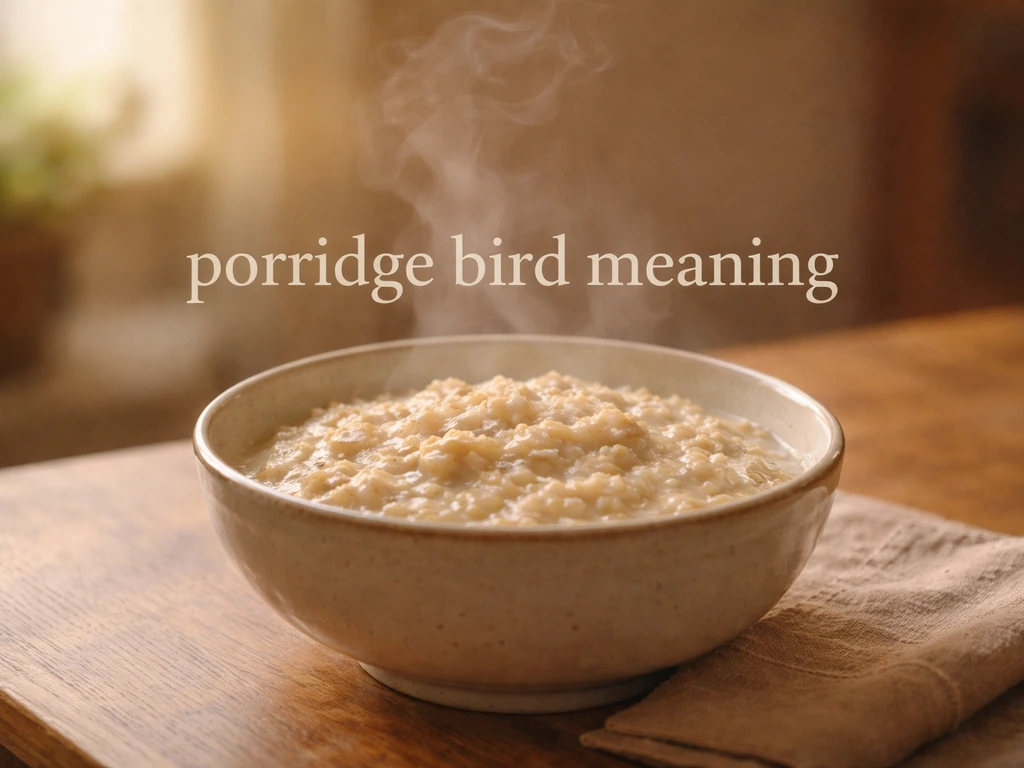
Searches for "brooding bird meaning" come from several very different places, and recognizing which one you are in helps you find the right answer faster. If you are specifically wondering about porridge bird meaning, it usually comes from a different context or reference, so the surrounding text is the key. If you are looking for sade morning bird meaning specifically, it helps to identify whether the phrase is being used literally for nest-sitting or figuratively for a sad, brooding mood. Once you find which context you are in, the sleeping bird meaning becomes much easier to interpret. Night bird meaning can use similar metaphor and mood cues, depending on context.
- Poetry and literature: You read a line where a bird is described as brooding and you want to understand the symbolic meaning the author intended.
- Wildlife content and nature documentaries: You watched footage of a bird sitting motionless on a nest and a narrator or caption described it as "brooding," and you want to know what that behavior actually involves.
- Captions and social media: Someone posted a photo of a dark, still bird with the caption "brooding vibes" and you want to know whether that's literal or aesthetic.
- Crossword puzzles: "Brooding bird" is a legitimate crossword clue, and solvers often search the exact phrase to find the intended answer (typically a hen or a mother bird).
- Character or atmosphere descriptions: A novel or script describes a character or setting as "brooding" and you want a clear definition of what the author is going for.
- Idioms and phrases: You heard someone use "brooding" as an adjective and traced it back to bird imagery without knowing why.
How to tell which meaning you're dealing with
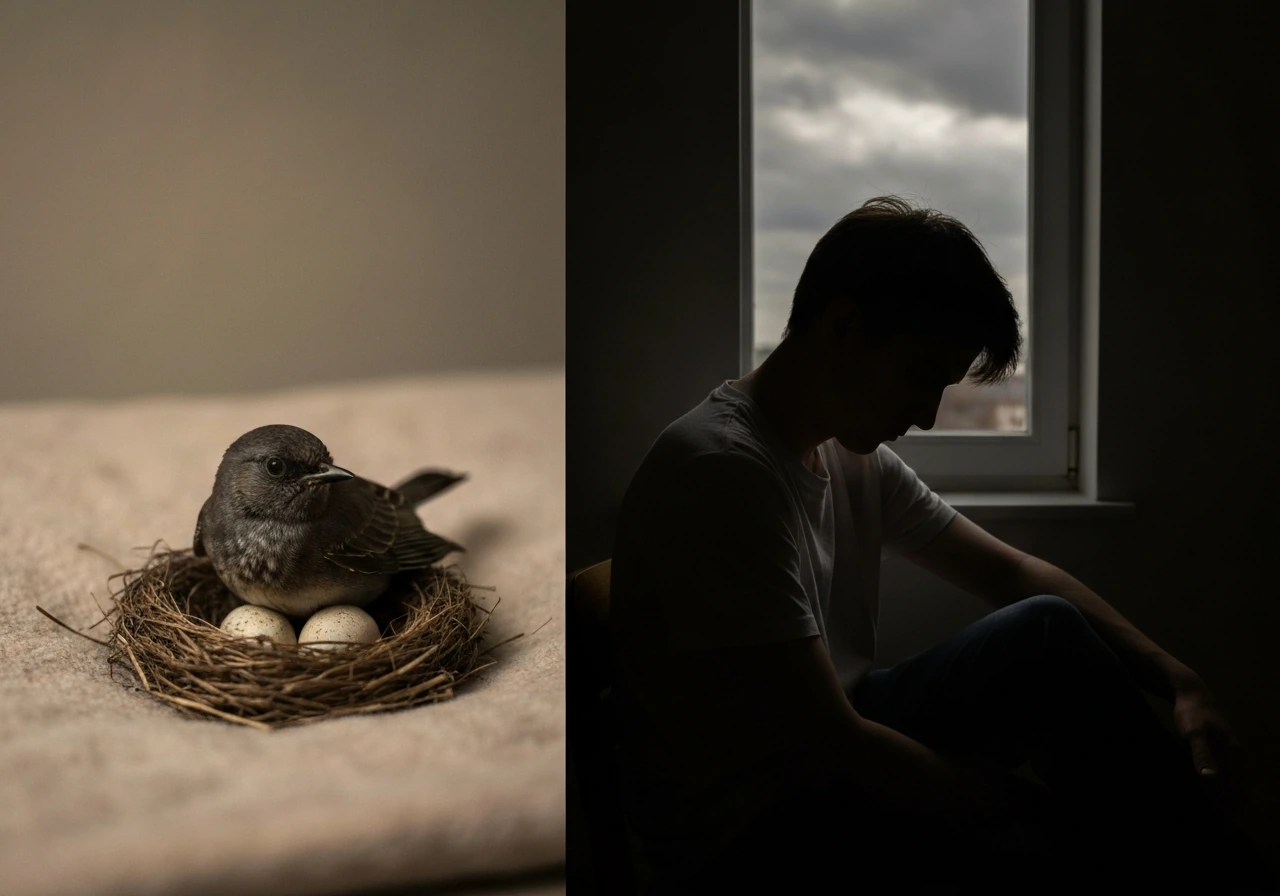
This is the practical part. When you hit the phrase "brooding bird" and you are not sure which sense is meant, run through these quick checks.
| What to check | Points to literal brooding (nest behavior) | Points to figurative brooding (mood/atmosphere) |
|---|---|---|
| Is there a nest or eggs mentioned? | Yes, nest, eggs, chicks, or incubation appear nearby | No nest context; the bird or figure is just present |
| What is the bird doing physically? | Sitting still, covering eggs, on a nest platform, low posture | Perching, looming, watching from a distance, or unspecified |
| What time of year / season is referenced? | Spring or breeding season noted | No seasonal context, or any season used for atmosphere |
| What words surround it in the sentence? | Incubation, warmth, eggs, hatch, chicks, nest | Presence, atmosphere, silence, darkness, melancholy, mood |
| What is the context of the text overall? | Wildlife article, field guide, nature documentary, biology content | Poem, novel, song lyrics, personality description, caption |
| Does it describe a feeling or a behavior? | A specific behavior being observed or explained | A feeling, tone, or character quality being conveyed |
The clearest signal is sentence context. "The brooding bird returned to her nest" is biological. "A brooding bird watched from the dead oak" in a Gothic poem is atmospheric. When the surrounding text uses words like "presence," "atmosphere," "worried," or "heavy," you are in figurative territory. When it mentions eggs, a brood patch, nest attendance, or hatching, you are in wildlife territory.
Putting it all together
The reason "brooding bird" carries so much meaning in both directions is that the original behavior is genuinely evocative. A bird sitting on its eggs for weeks, managing temperature, managing risk, keeping something fragile alive in the dark, is doing something that humans have always recognized as profound. Writers borrowed that image for a reason: it captures a kind of intensity that is quiet rather than explosive, protective rather than aggressive, and weighted with something unseen underneath. Whether you encountered the phrase in a nature documentary, a poem, a crossword, or a character sketch, the two meanings are actually connected. The figurative always points back to the literal nest.
FAQ
How can I tell if “brooding bird” is literal nest-sitting or figurative mood in a sentence?
Check for biological anchors (eggs, nest, chicks, incubating, brood patch, hatching, nest attendance). If those are present, it is literal. If the sentence focuses on atmosphere or a person’s inner state (presence, unease, melancholy, threat, heavy mood) it is figurative.
Does “brooding bird” always refer to the same bird species in real life?
No. The term is about behavior, not a specific species. Many birds, including domesticated fowl, can brood by sitting on a clutch, so any species name nearby would be extra detail, not required.
What’s the difference between “brooding bird” and “broody hen” in meaning and usage?
“Brooding bird” is broader, covering the biological behavior and also the metaphor. “Broody hen” is typically used for the specific domesticated breeding behavior in which a hen stays with eggs and then continues close care for hatched chicks.
Is “brooding” in figurative writing always negative (sad or threatening)?
Often it leans that way, but not always. It can describe contained, intense seriousness that reads as calm and patient, even if the scene feels tense. Look at surrounding adjectives like gloomy, worried, threatening versus steady, watchful, guarded.
Can “brooding bird” be used in crosswords, and how should I think about likely answers?
Yes, but you need to match the clue type. If the clue references incubation, it may point to “broody hen” or “incubating bird.” If it references mood, it may point to something like “brooding” or “moody” rather than an animal name.
If someone says “the brooding bird” but there are no nest or mood words, what should I assume?
Assume ambiguity and infer from indirect cues. Words like “returned to,” “covered,” “kept warm,” or location like “nest” suggest literal. Words like “watching,” “presence,” “silence,” or scene mood shifts suggest figurative.
Is “brooding bird” the same as “brooding presence,” or is that a different phrase?
“Brooding presence” is more purely figurative, it describes an atmosphere or person’s effect. “Brooding bird” can be literal or figurative, but when used like a character description, it functions similarly to “brooding presence” by importing the nest-sitting imagery of watchful intensity.
What common mistake do readers make when interpreting “brooding bird meaning”?
They treat the word as only emotional mood. In reality, the term can describe an active reproductive behavior, so missing or assuming the metaphor without checking for eggs or nest cues leads to misinterpretation.
Does incubation behavior have a timeframe, or can it be described loosely as “sitting”?
It has a real schedule, but writers may summarize it loosely as “sitting” or “staying.” If the text mentions temperatures, timing, hatching dates, or nest attendance rhythms, it is pointing to the specific biological process rather than a vague idea of warmth.
If I see related phrases like “night bird” or “sleeping bird,” how do I apply the same approach?
Use the same context test. Determine whether the phrase is tied to literal behavior (nesting, sitting, warming, chicks) or to atmosphere and mood (dread, calm, mystery, heaviness). The “bird image” often works metaphorically, but the sentence details decide which sense applies.
Next Article
Porridge Bird Meaning: What It Refers To and Where It Comes From
Meaning of porridge bird: possible idiom or regional nickname, breakdown, origins, examples, and how to verify it fast.