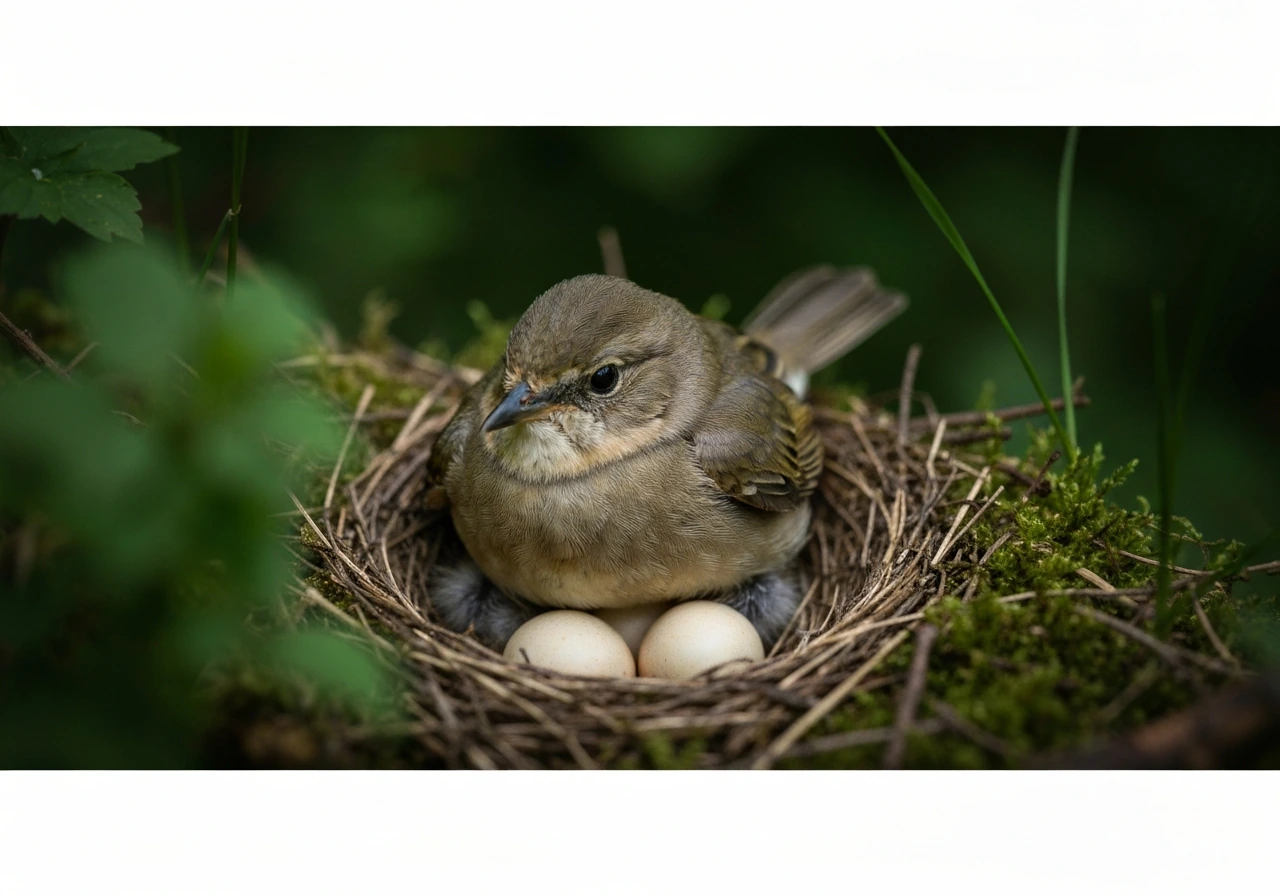
A broody bird is a hen (or other female bird) that has been overtaken by the instinct to sit on eggs and hatch them. She stops laying, plants herself on the nest, refuses to leave, and will puff up and peck at anyone who gets too close. The phrase 'broody bird' almost always refers to this specific behavioral state, driven by hormones, and it's one of the most dramatic personality shifts you'll see in a backyard flock.
Broody Bird Meaning: What It Is and What to Do Today

Marcus Whitley
28 May 2026
What 'broody bird' actually means
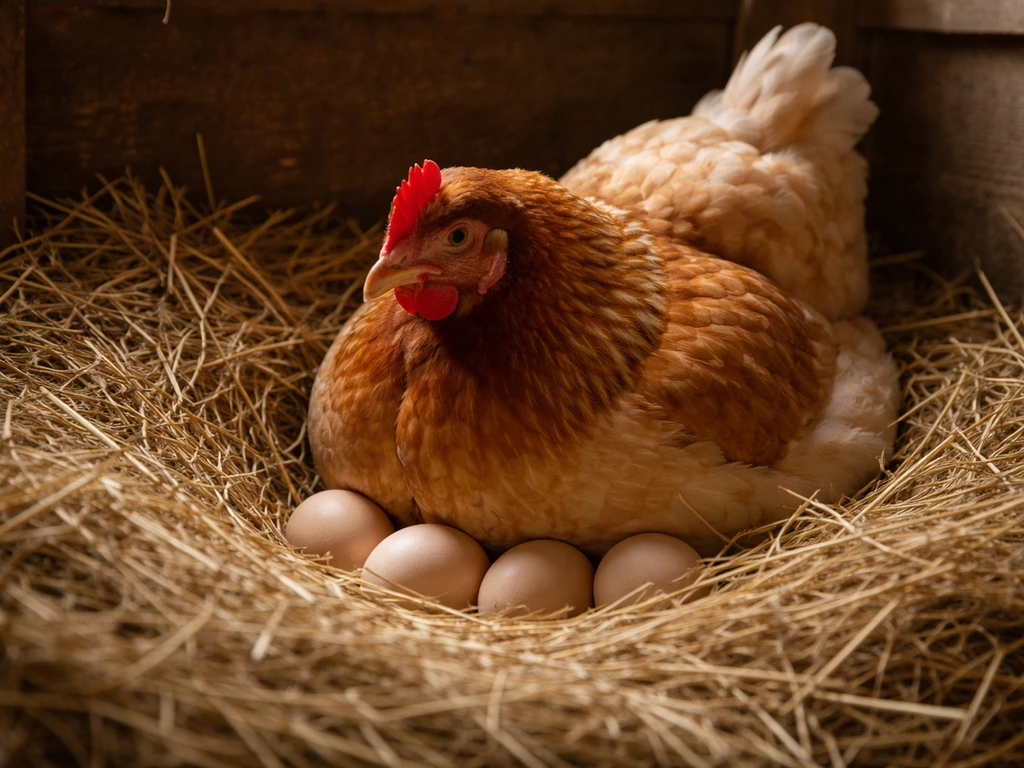
Merriam-Webster defines 'broody' for a hen as being in a state of readiness to brood eggs, marked by a cessation of laying and significant changes in both behavior and physiology. The Merck Veterinary Manual sharpens that definition nicely: a broody hen stops laying so she can sit on eggs, even when no eggs are present at all. That last part matters because it shows you this isn't about the eggs themselves. The drive is internal, hormonal, and often unstoppable once it kicks in.
There's also a secondary, more literary meaning worth flagging here. Merriam-Webster lists 'broody' as an adjective meaning given to introspection, contemplative, or moody. That figurative sense has been around since at least the 1570s, according to Etymology Online, which traces it to the idea of 'incubating something in the mind.' So when someone calls a character in a novel 'broody,' they don't mean she's about to hatch eggs. But on a chicken forum or in a conversation about backyard hens? 'Broody bird' means the incubation state, full stop. If you’re trying to figure out the sade morning bird meaning, think of it as a similar kind of quiet inwardness and anticipation incubation state. The context makes it clear, and the rest of this article is about the animal meaning.
Signs your bird is broody right now
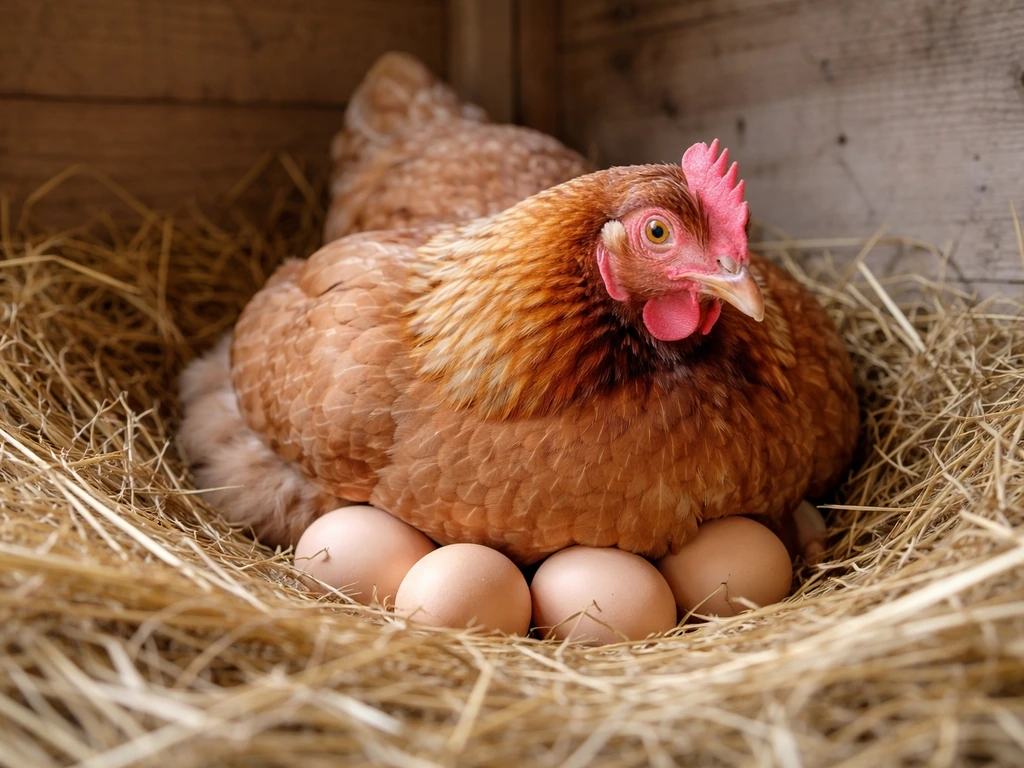
Broodiness isn't subtle. Once you've seen it, you'll never confuse it with normal nesting or boredom again. The University of Arizona Cooperative Extension describes the classic picture: a hen that refuses to leave the nesting spot and defends it aggressively, puffing up, squawking, and pecking at anything that comes near. Here's what to look for today if you suspect your bird has gone broody.
- She's on the nest all day, not just during laying hours. Normal hens spend maybe 30 to 45 minutes in a nest box. A broody hen is there from morning to night.
- She's puffed up like a balloon. Broody hens flatten and spread their feathers to cover as many eggs as possible, which makes them look twice their normal size.
- She growls, screams, or pecks when you reach under her. This is the most reliable sign. The level of attitude is almost impressive.
- She's pulling feathers from her breast. This is called a 'brood patch,' and hens do it to press warm skin directly against the eggs.
- She hasn't laid in several days. The hormonal shift that causes brooding suppresses egg production entirely.
- She's rarely at the feeder or waterer. Broody hens eat and drink much less than usual, sometimes dangerously so.
- Near hatch time, she may start making soft clucking sounds, essentially talking to the developing chicks inside the eggs.
The key distinction from ordinary nesting behavior is duration and intensity. A hen laying an egg will leave the nest within an hour. A broody hen will barely move for days. If your bird has been glued to the same spot for 24 hours or more and is acting like a tiny furious dragon when you approach, she's broody.
Why birds go broody: the biology behind it
Broodiness is driven primarily by prolactin, a hormone that surges in the brain and triggers the incubation instinct. Scientific research published in peer-reviewed journals confirms that elevated plasma prolactin is the key mechanism in broody bantams, and that stimuli from eggs (and even chick vocalizations) influence how that hormone rises and falls. In other words, the longer a hen sits on a clutch, the more her brain reinforces the behavior chemically.
Several factors make a broody episode more likely. Breed matters enormously: Silkies, Cochins, Buff Orpingtons, and Australorps are famously broody breeds, while many modern production breeds like White Leghorns have had the broody instinct selectively reduced. Beyond genetics, warm weather and longer days tend to trigger it, as does accumulating a full clutch of eggs in the nest. If you let eggs build up without collecting them, you're basically sending your hen an invitation.
It's also worth knowing that a hen will sit on nothing. She doesn't need fertile eggs or even any eggs to go broody. The drive originates internally, which is why the Merck Veterinary Manual explicitly notes that hens will sit even when no eggs are present. Once prolactin takes over, she's committed.
Broody hen scenarios: chicks yes or chicks no
Your next move depends entirely on what you want out of this situation. There are two very different paths forward, and they're worth separating clearly.
If you want chicks
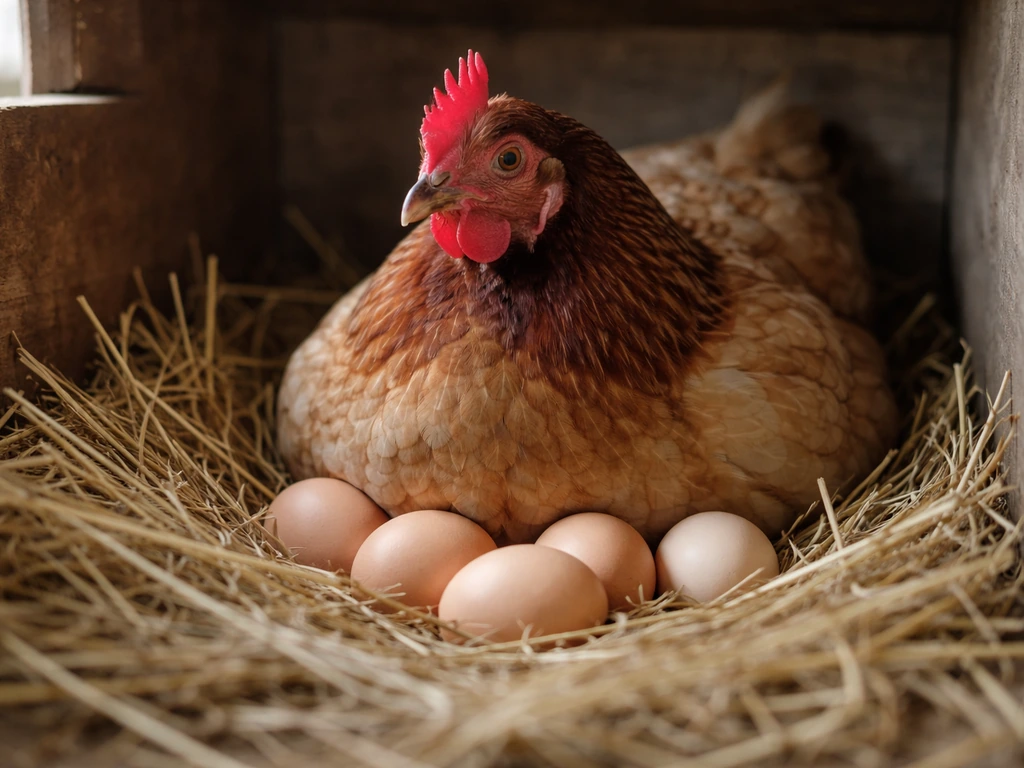
Good news: the University of Maryland Extension describes letting a broody hen sit as the easiest method to hatch eggs. A motivated broody hen is a remarkably effective incubator. But there are a few things to get right before you let her run with it.
- Make sure you have fertile eggs. Grocery store eggs are not fertile and cannot produce chicks. You'll need eggs from a flock with a rooster, or you can source hatching eggs from a reputable breeder.
- Collect and store eggs properly before setting them. University of Maryland Extension advises storing hatching eggs with the big end up for up to seven days without significant loss of fertility, provided storage conditions are stable.
- Set her up in a quiet, separate space. A broody hen in the main nest box can hog the space and stress out other hens. Move her to a private area with her own food, water, and a comfortable nest.
- Mark the eggs she's sitting on. This helps you identify and remove any new eggs other hens sneak in underneath her.
- Candle the eggs around day three. Illinois Extension describes candling as holding the egg in front of a light source in a darkened room. Fertile eggs will show blood vessels; infertile or dead eggs won't. Remove any non-viable eggs early.
- Watch for early embryo death. The Merck Veterinary Manual notes this can result from infertility, improper storage, or extreme temperature fluctuations before incubation began.
After roughly 21 days of incubation (for chickens), you should start hearing the soft clucking exchanges between the hen and the peeping chicks. Let the hen lead. She knows what she's doing.
If you want to stop the brooding
If you're not interested in chicks, a broody hen is a problem. She's not laying, she's barely eating or drinking, and she may be blocking the nest for everyone else. The longer she sits, the harder it becomes to break the cycle. Acting quickly is the right call. If someone says “shut up, bird,” they usually mean “stop talking,” and that can tie into the idea of a bird being annoying or overbearing in a discussion shut up bird meaning.
The Merck Veterinary Manual recommends moving her to a wire cage as soon as you notice broody behavior. The University of Kentucky Extension specifically describes placing her in a wire-bottomed cage in the middle of the coop, which is a method that 'frequently works.' The idea is that the airflow under her body cools the brood patch and signals her system to lower prolactin levels. A solid-floored nest keeps her warm and reinforces the hormonal drive. A wire bottom disrupts it.
Practical steps to manage or break brooding safely
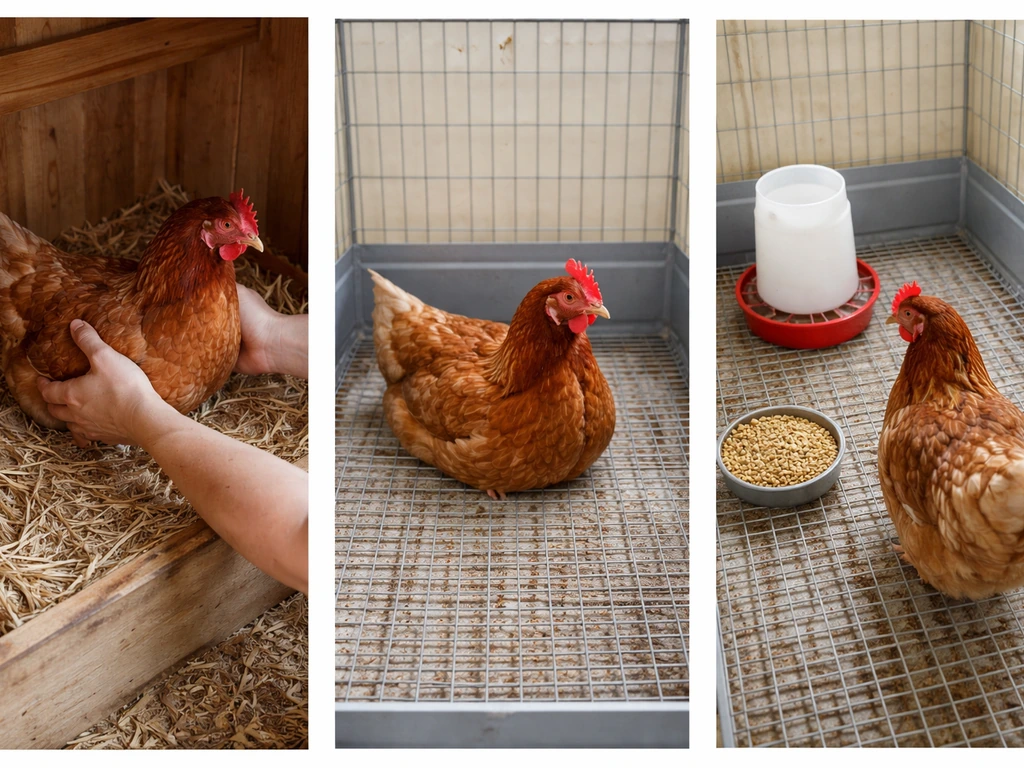
- Remove her from the nest immediately and consistently. Every time you find her on the nest, take her off. This alone can work for mildly broody birds.
- Move her to a wire-bottomed cage. Elevate it slightly so air flows underneath. Keep her there for three to five days, or until she stops showing broody behavior.
- Make sure she has constant access to water and feed during this time. Broody hens already eat less, and the isolation cage can cause dehydration, especially in warm weather.
- Do not put her in a dark, enclosed space. Darkness reinforces the hormonal state. She needs airflow, light, and stimulation.
- Remove all eggs from the nest daily, including the nest box itself if possible. A hen with nothing to sit on is easier to break.
- Reintegrate her carefully once she's eating normally, moving around freely, and no longer puffing up when handled.
One important note: if a broody hen keeps trying and failing because there are no fertile eggs and no intervention, she will eventually stop on her own. But this can take weeks, and during that time she's not laying and may be putting her health at risk. Actively breaking the cycle is almost always the kinder and more practical choice.
Myths and mistakes people make with broody hens
- Myth: grocery store eggs will work if you slip them under her. They won't. Commercial eggs are unfertilized by design and will never hatch, no matter how long she sits.
- Myth: a broody hen is sick or in pain. She's not. The behavior is completely natural, even if it looks alarming. The puffing, growling, and immobility are all normal parts of the instinct.
- Myth: you can break broodiness by just taking her eggs away once. Hens will sit on an empty nest for days. You have to address the behavior, not just the eggs.
- Mistake: using a solid-floored box to isolate her. This keeps her warm and can actually reinforce brooding instead of breaking it. Wire bottom only.
- Mistake: ignoring the broody hen because 'she'll snap out of it.' Some hens will sit for six weeks or more. The longer it goes on, the worse the health consequences from reduced food and water intake.
- Mistake: assuming any breed will go broody reliably. If you need a broody hen to hatch eggs, choose a breed known for it. High-production breeds have often had the instinct bred out of them.
The deeper meaning: 'broody' in language, symbolism, and metaphor
Language borrowed the idea of broodiness from birds a long time ago. Etymology Online traces the figurative use of 'brood' as a verb meaning to 'meditate long and anxiously' all the way back to the 1570s. The connection is visceral and makes perfect sense: a hen sitting motionless on her eggs, utterly absorbed, barely eating, waiting for something hidden to emerge. That image transferred directly into the way English speakers talk about deep, inward-turning thought.
Today, calling someone 'broody' in everyday speech or literature typically means they're introspective, contemplative, maybe a little dark and withdrawn. A broody character in a novel sits alone, thinks too much, and keeps their inner world close to the chest. Merriam-Webster explicitly includes this meaning alongside the hen definition. Both senses come from the same root image: something being held quietly inside, waiting to hatch.
That metaphor of incubation runs deep in many cultures. The idea that ideas, emotions, or plans need to be sat on, held close, and protected before they can emerge is almost universal. 'Hatching a plan,' 'incubating an idea,' 'something brewing beneath the surface': all of these phrases echo the image of the broody bird, doing invisible work in stillness. The broody bird has become a symbol of patience, nurturing, and hidden potential, the understanding that not everything worth having arrives quickly or obviously. In plain terms, the porridge bird meaning points to this same idea of a broody bird symbolism: something held close and waiting to emerge.
This symbolic weight connects 'broody bird' to a broader family of bird-related meanings that people explore when they're trying to understand what a particular bird or bird-related phrase really represents. The stillness of a broody bird shares something with the imagery of a sleeping bird, for example, where the outward quiet masks an inner life. That idea is similar to the sleeping bird meaning, where silence and stillness point to something deeper happening out of sight. And the intensity of the broody state, that fierce protectiveness and single-minded focus, feeds into why maternal instinct across cultures so often gets represented through birds: the hen, the swan, the dove sitting on her nest.
So whether you've come to this phrase from a chicken coop or a piece of literature, the core meaning is the same thing viewed from different angles: a creature holding something precious and potential-filled close, protecting it from the world, and waiting with absolute commitment for it to become what it's meant to be. People also use the phrase "night bird" in everyday speech and symbolism, so it helps to know the night bird meaning too.
FAQ
Does “broody bird meaning” always mean the animal state, or can it be a personality description too?
That phrase almost always points to the real animal behavior, unless you are reading fiction where “broody” is clearly used as a personality adjective. In chicken talk, “broody bird” means a hen that stops laying and commits to incubating, even if the eggs are absent or not fertile.
Can a hen go broody even when there are no eggs in the nest?
Yes. A hen can become broody even without eggs. That means the test is behavior and duration, not egg presence. If she stays on the nest for days, puffs up, and won’t let you near, assume broodiness even if the nest looks empty.
How can I tell the difference between a broody hen and a hen that’s just nesting?
Ordinary nesting usually ends quickly (often within about an hour after laying), while broodiness tends to last for days. Another clue is aggression and “lock-in” behavior, she stays planted and may peck or squawk when approached, not just calmly chooses a spot.
What can I do to prevent broodiness from starting in the first place?
Broodiness is more likely to show up when a hen has access to a full clutch and warm, stable conditions. If you collect eggs consistently and remove eggs promptly (or at least regularly), you remove the main trigger that reinforces the hormonal cycle.
If I want to hatch chicks, what’s the best way to manage eggs under a broody hen?
If you want chicks, don’t leave her with random eggs from other hens, mix-ups can lead to uneven hatching times. Choose eggs from the same laying window, keep them clean and cool until placed under her, and try to keep the nest undisturbed during the incubation period.
What’s the most practical approach if I do not want chicks, and how do I keep her from going broody again?
If you do not want chicks, a wire-bottom cage usually works because it cools the brood patch and reduces the hormonal drive. Put her back in the coop for normal access only after she’s stopped showing broody behavior, and do not return her to a nest area that will quickly re-trigger the cycle.
What happens if the eggs are infertile, will she stop on her own, and is waiting safe?
Don’t rely on waiting it out. If she sits on infertile eggs, she can take weeks to quit, during which she’s not laying and may be at risk from reduced eating, dehydration, or stress. If she is aggressive and unrelenting, break the cycle promptly rather than assuming it will stop soon.
How do I know my intervention is actually working, and what should I watch for?
Expect a clear difference once you disrupt the cycle. She should start standing up more, leaving the nest area normally, and resuming eating and drinking. If her posture and refusal to leave persist, the disruption (cooling and confinement) may need more time or a more effective setup.
Will a broody hen affect the rest of the flock, and how will it change egg production?
Broodiness can reduce egg production immediately because she stops laying while incubating. Also, flock dynamics matter, a broody hen may block access to favored nesting spots or harass other hens, so separating her can also reduce conflict while she’s “in charge” of the nest.
Any common mistakes when handling a broody hen, especially if I need to move her to a cage?
Broody hens can be particularly stressed by repeated handling. If you need to move her, do it gently and efficiently, and avoid leaving her with access to a cozy solid nest surface right away. The goal is to remove the comfort that supports the hormonal cycle, not to exhaust her with long handling sessions.
Next Article
Brooding Bird Meaning: Literal Incubation and Metaphor Explained
Brooding bird meaning explained in wildlife and metaphor, from incubation behavior to melancholic, protective symbolism